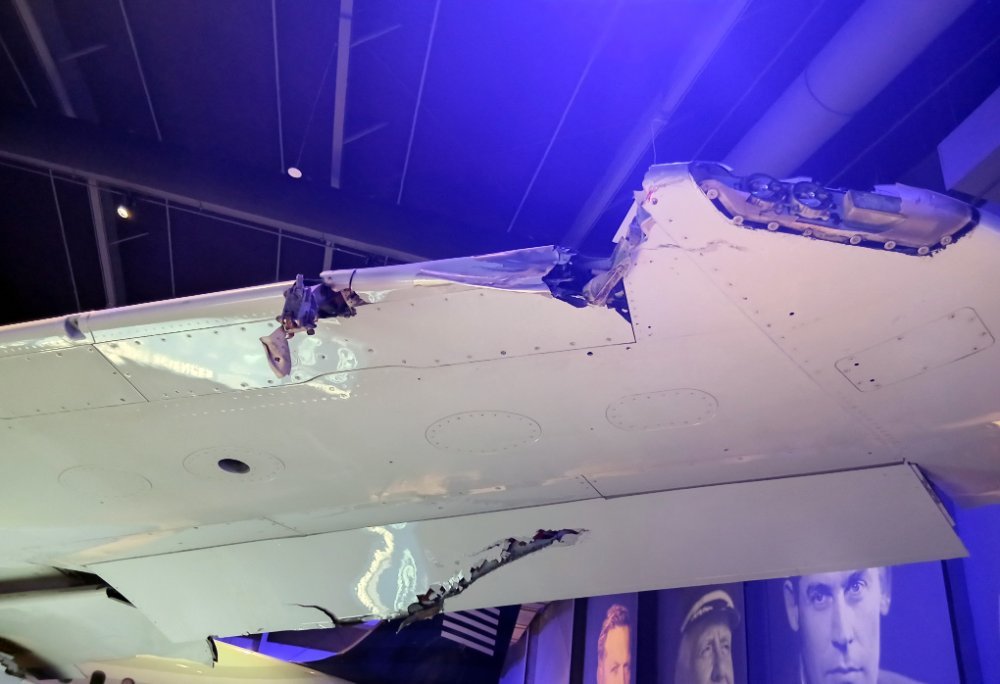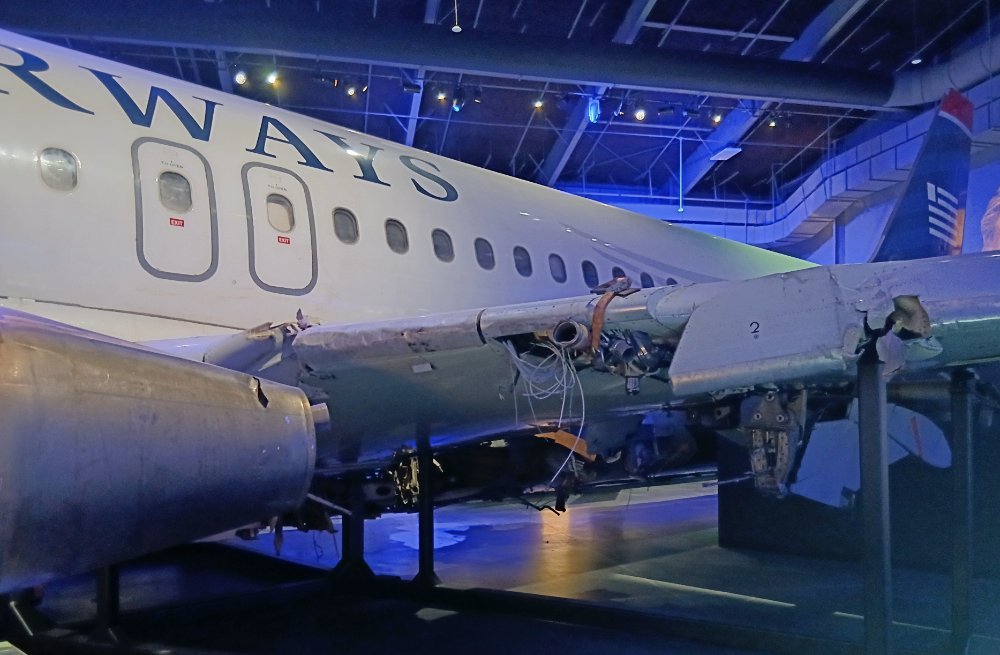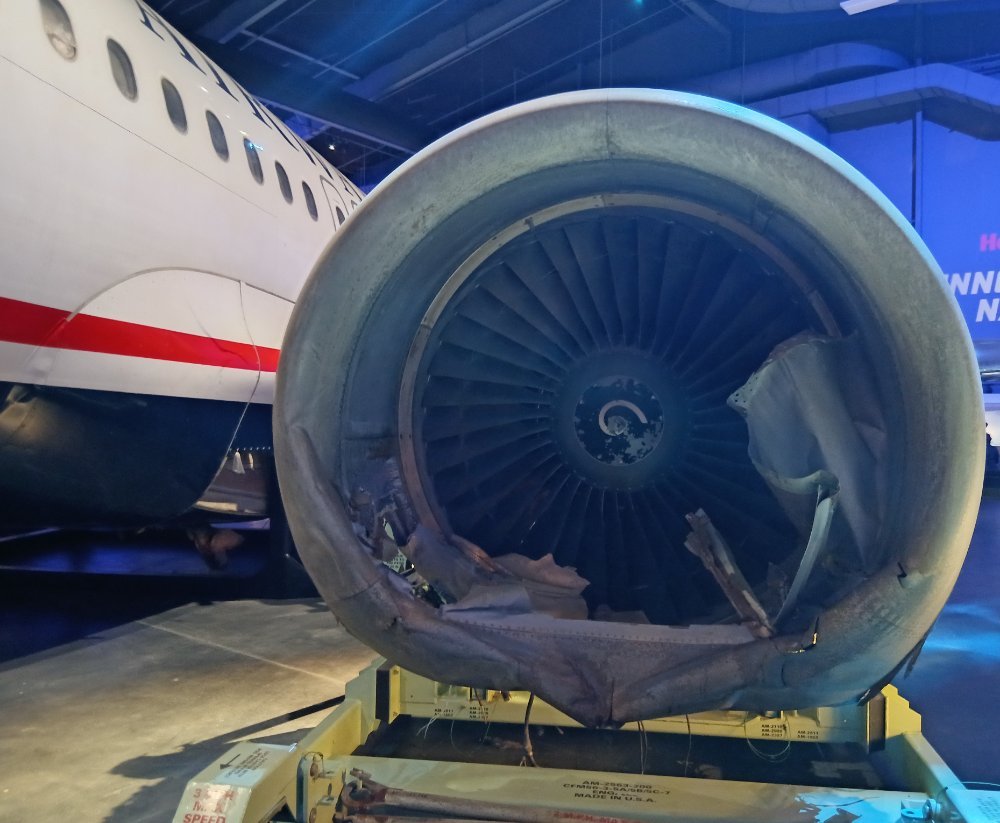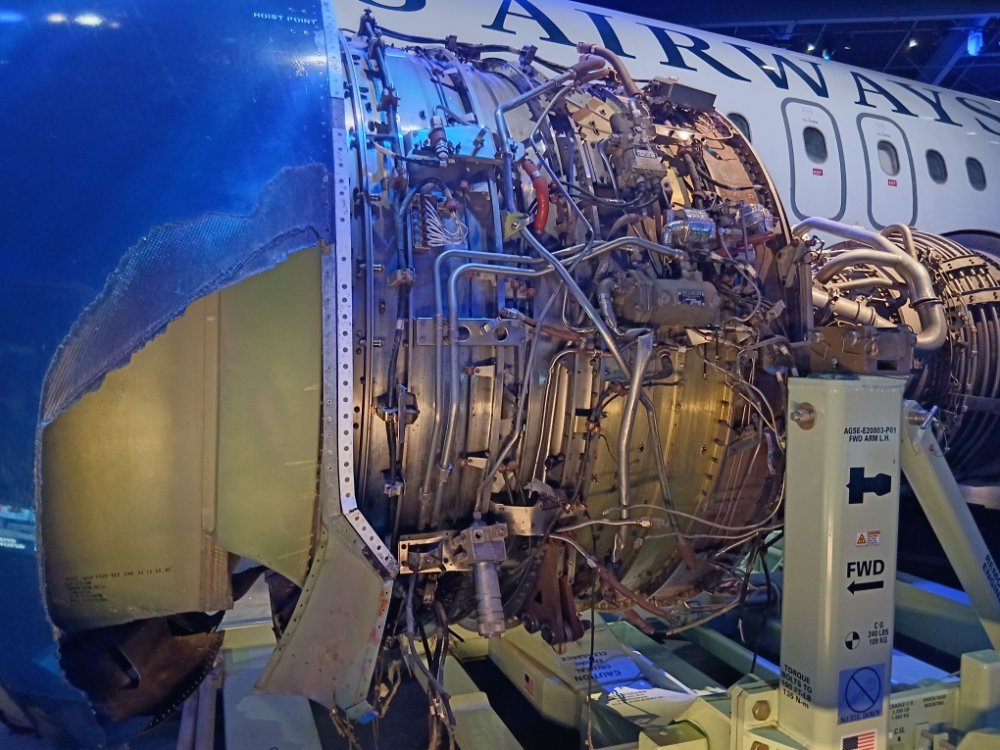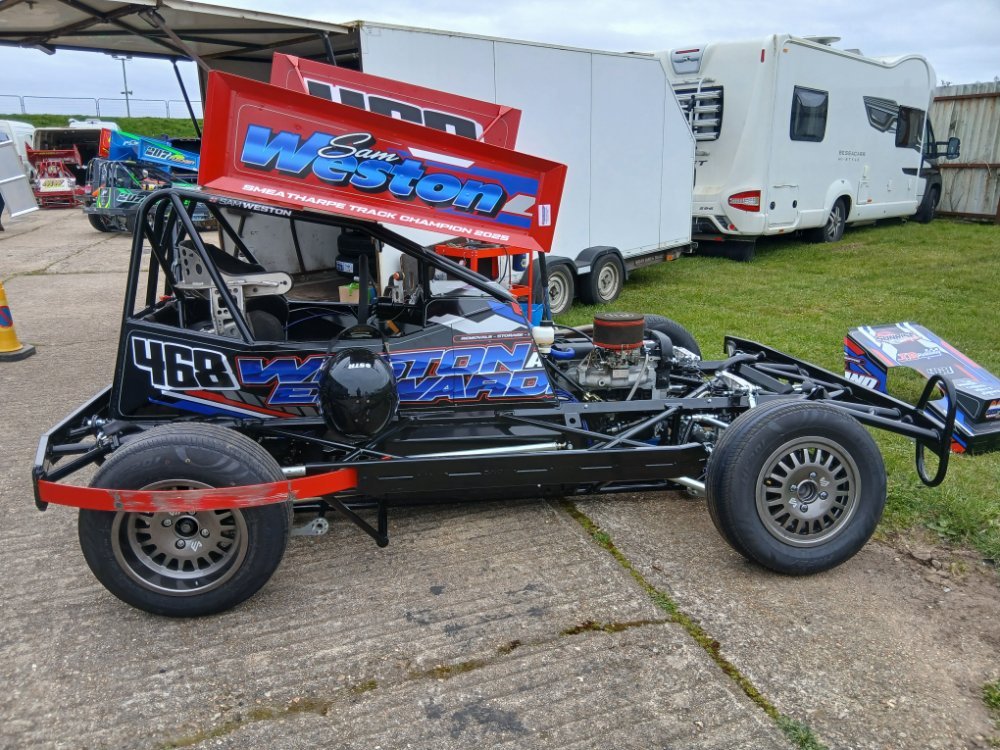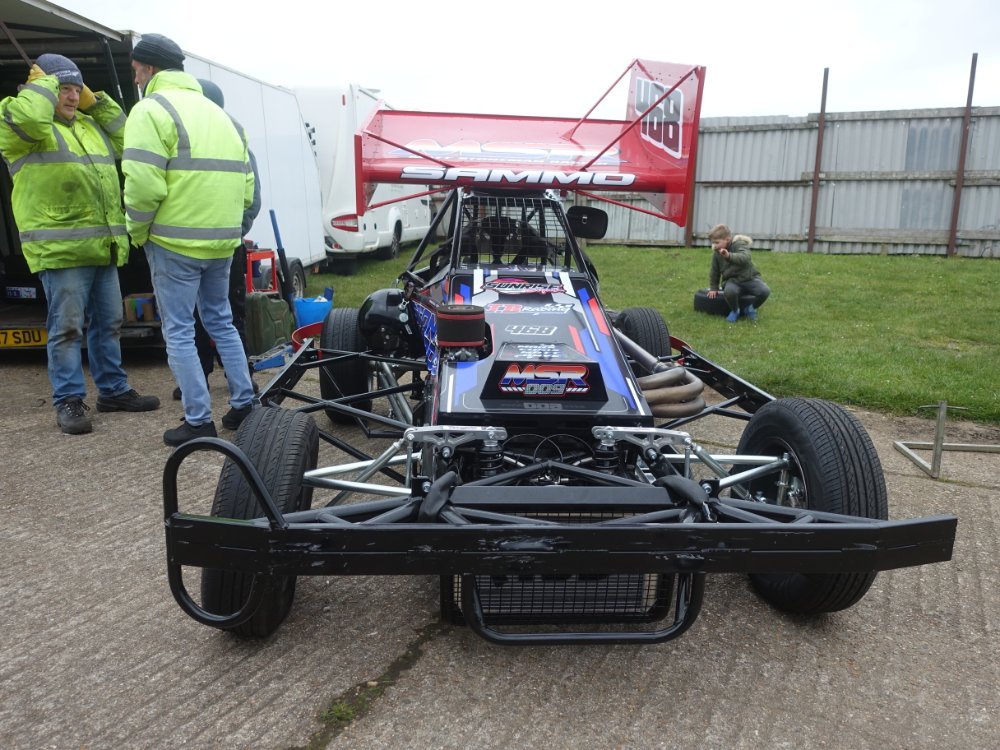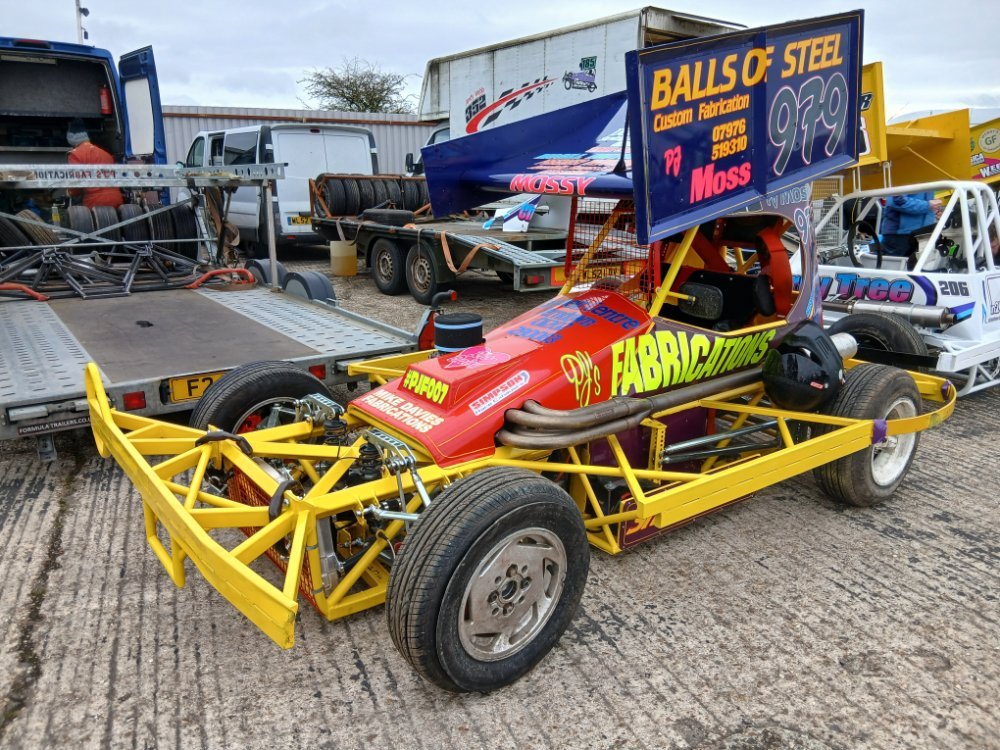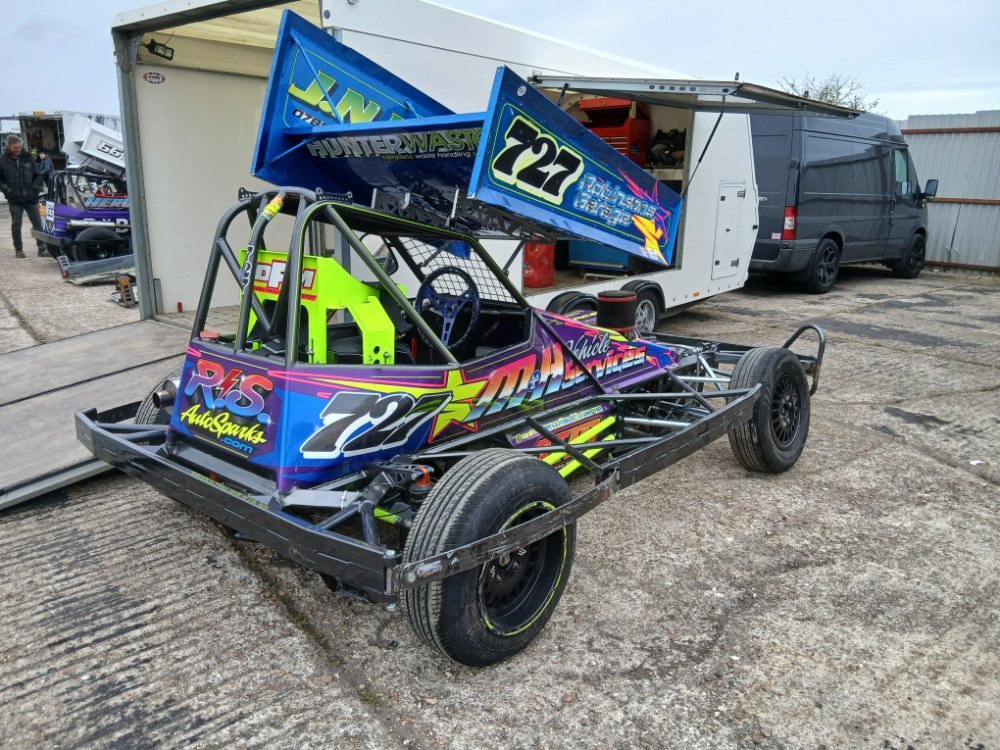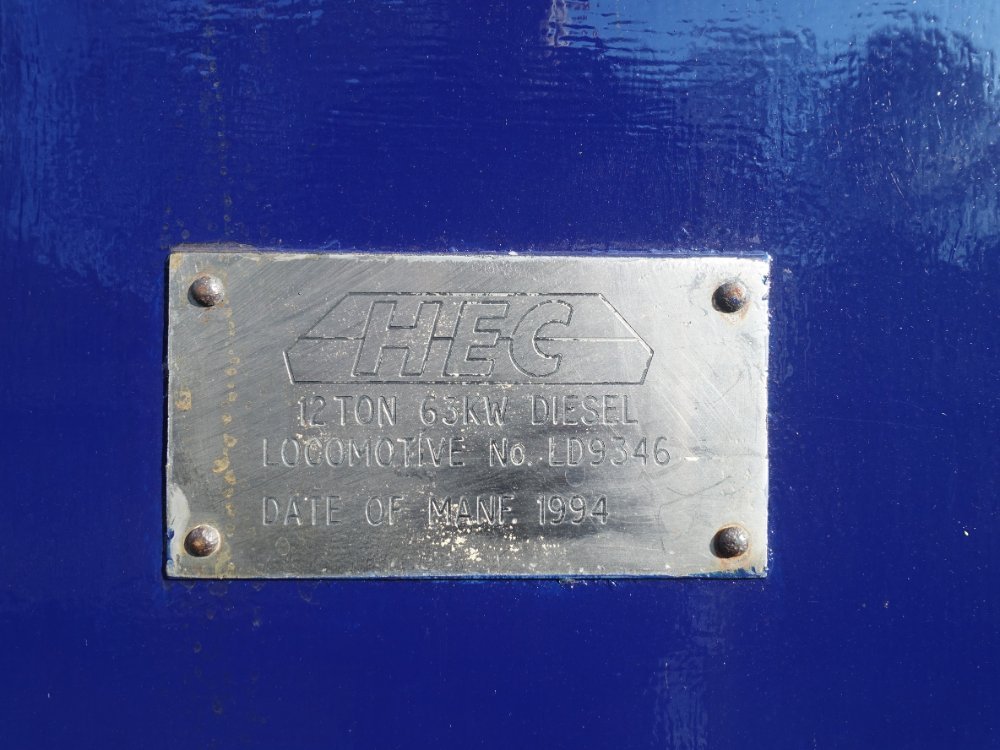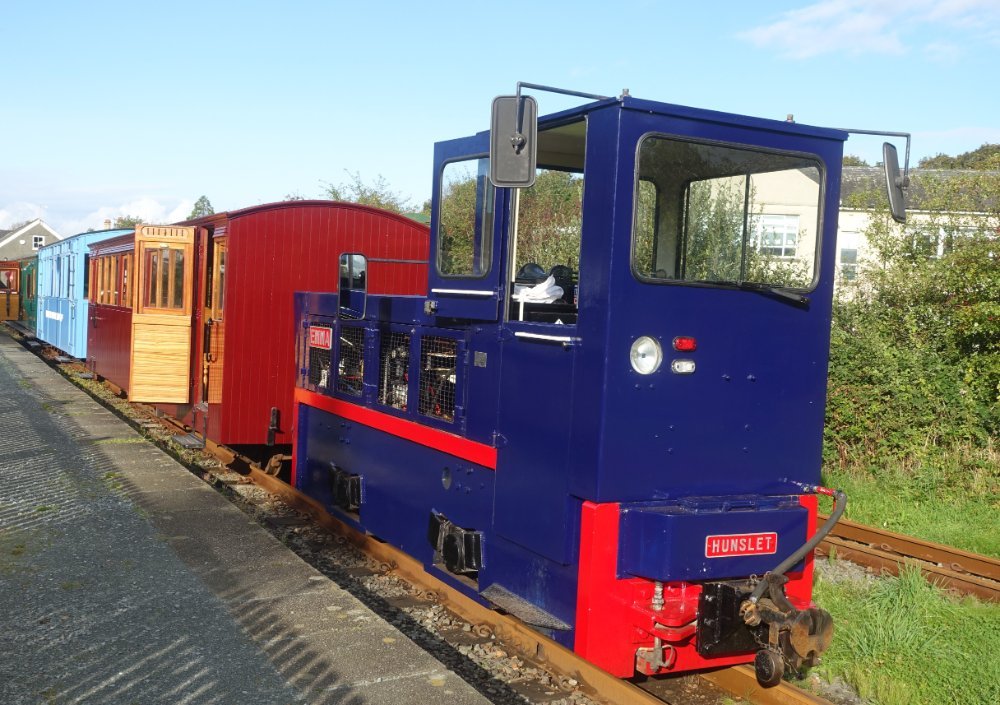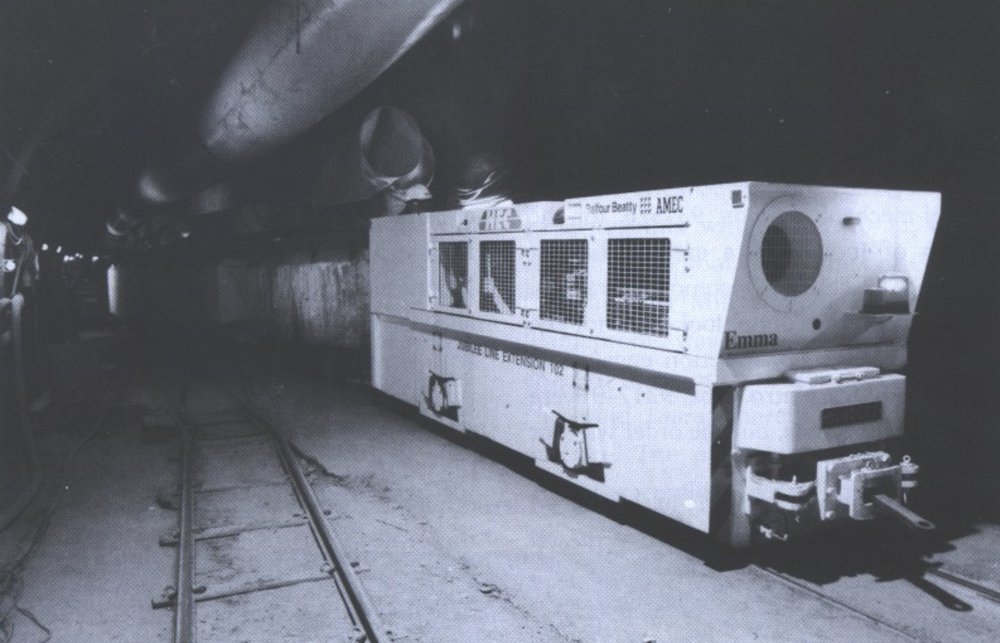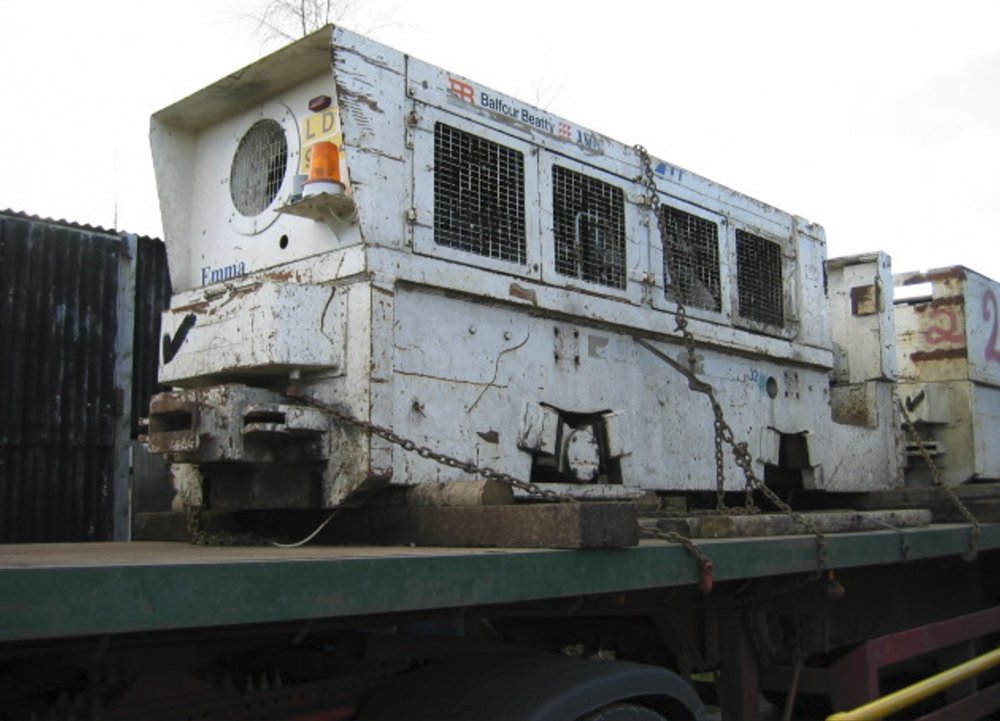
All Activity
- Today
-
 Hi there folks. Welcome to episode 2. In this one: Section 1: F2 pics from St Day Section 2: Out and About - Queens Road Garage 125 Section 3: Martin Auto Museum – Part 2 Section 4: Odds and Ends Section 1 St Day – British Championship - Saturday 20th June 2026 On a dry and increasingly clear and warm day, the United Downs Raceway hosted the first F2 British Championship to be held in Cornwall since 1984. On that occasion, Mike James won at St Austell, and it was a joy that ‘The Music Man' was in attendance. He helped with the preparation for the big race and clearly greatly enjoyed being involved. 46 Fs made it and raced in a three from six format. Unfortunately, the requirement for all of them to attend the drivers’ briefing and draw for qualifying groups meant a late start to the meeting in front of a crowd that steadily built up into an excellent attendance. A few more cars would have been welcome with some surprising non-attendees, but plenty travelled a lot of miles, particularly the quartet of Scottish drivers. 23 cars for heat one led off by lone white grader 267 Robbie Batten who was passed by 844 Jack Prosser a few laps in. Defending champion 667 Tommy Farrell had already clashed with 468 Sam Weston spinning both on the back straight as 647 Chris Burgoyne put the bumper in further back in an attempt to make progress. Batten clashed with 676 Neil Hooper as 27 Kieren Bradford worked to reel Prosser in and was right on his bumper as the lap boards came out. A nudge from Bradford at the turnstile end got him ahead and delayed Prosser enough to allow 926 Josh Wilson through for second. Further back 418 Ben Borthwick sent 213 Tom Bennett very wide on the last bend, Bennett glancing the fence and crossing the line out of the places and with smoke billowing from his car. 127 Matt Stoneman impressed from the reds and got through to fourth with 674 Steven Burgoyne beating brother Chris for seventh. 22 cars for heat two which saw an early turn two pile up in which 24 Jon Palmer climbed over 186 Kasey Jones. 8 Jimi Marshall and 606 Andrew Palmer were also involved with only Jon Palmer able to salvage any qualifying points in fifteenth. 454 Ryan Gardiner led for most of the way before the quick 931 Rebecca Smith got past with the lap boards out. She was swiftly followed by sister 390 Jessica Smith with Gardiner surviving for an impressive fifth. Slim pickings for the higher graders in this one as they chased some quick lower graders. 155 Archie Grindey was the first of them in eighth. Batten once more led heat three away but 315 Charlie Fisher was soon past to build a big lead which was never seriously threatened. Stoneman used the bumper well to get to second passing 288 Paul Ford and Wilson in the second half of the race. Chris Burgoyne clashed with 578 Mark Gibbs on the home straight losing a decent place and Wilson just got past Ford with a last bend lunge for second. Heat four was led by Gardiner once more. 770 Austin Farrell had a back straight tank slapper which collected Weston as the former careered towards the infield. Weston got airtime landing near the pit gate on top of the unfortunate 890 Paul Rice. After a delay to clear the heavily damaged Weston and Rice cars, Gardiner led them away as 355 Aidan Grindey, Bennett, and 183 Charlie Guinchard had a great battle lower down the places. Guinchard eventually gave Bennett a hard hit and began to make progress as did 7 Gordon Moodie. Another stoppage ensued with the lap boards not yet out as 605 Richie Andrews caught the back tyre of 12 Craig Driscoll and flipped over giving the starter and the home straight patrons a close view as he landed upside down with lots of damage. Andrews was quickly out and, typically, in good spirits. Amazingly the car was repaired for the big race. Guinchard took his chance to take over just before the lap boards came out and he beat Moodie and the speedy 992 Harley Burns who shadowed Moodie and seemed just as quick. Austin Farrell led them away in heat five before Fisher got past with Bradford in tow. A well timed turn three lunge saw Bradford through to lead and he wasn't challenged despite a misfire. Jessica Smith did half of the home straight sideways in a pack of cars and was later involved with Ford leading to both spinning out late on. Burns and Guinchard got through for podium spots behind Bradford in a fast race. Heat six was the quietest one of the heats but still had plenty to watch. Batten led for the first couple of laps before 578 Mark Gibbs led a few laps. 980 Charlie Lobb got past before halfway and reeled off the laps for a comfortable win. 935 Nathan Maidment had a spin with the inside rear tyre coming off the rim. 155 Archie Grindey had a good battle with Tommy Farrell, but bad luck befell Steven Burgoyne as he broke down with two to go whilst well placed. Rebecca Smith followed Lobb home with Marshall and Jon Palmer having their best runs of the day behind her. Former Champion Mike James paraded the British Championship trophy through the 31-car grid ahead of the title race, with Paul Rice the only qualifier unable to repair. After an excellent and restrained build up the pack thundered into the pits bend. Around went gold top Moodie, and as the pack swept by, Chris Burgoyne was squeezed up the plating on the home straight and he ended up rolling over after running out of track room entering the home straight. Chris was quickly out and was ruing his bad luck. A complete re-run once again saw the pack thunder in with a big pile up. Pole sitter Bradford spun, and there were early problems for Stoneman, Wilson, Moodie and Rebecca Smith. As the pack sped down the home straight, 220 Freddie Hunter-Johnson was up-ended, and he came to a halt in turn one. The explosive first lap had brought wholesale changes at the front, with Burns, Jon Palmer and defending Champion Farrell emerging as the lead trio. Eventually a yellow flag caution had to be called with Hunter-Johnson seeking assistance, and Andrews stranded against the back straight wall. Burns, Palmer, Farrell, Bennett and Lobb were the top five for the single file restart which saw swift changes to the order when racing resumed, as Farrell shoved Palmer aside and did likewise to Burns to hit the front. Astonishingly, having started as the last car on the first attempt at running the race, Steven Burgoyne had climbed to third. As the leaders approached the end of another lap, they encountered Gardiner, broadside across the track on the exit of turn four. Farrell dived to the outside, Burns went inside the static 454 car, and by the end of the home straight, Burns had wrestled the lead back. With Gardiner having no forward or rearward motion, another race suspension was unavoidable. Burns, Farrell, Palmer and Burgoyne occupied the top four places, but at the drop of the green flag, Burgoyne cruised to a halt, and within a lap, Palmer had leapt forward to second. Little happened during the next segment of the race, with many laps ticking by without notable incident. A clash involving 736 Josh Weare, Bennett and 355 Aidan Grindey saw them momentarily tangle going in to turn one, with Kasey Jones helping to rid them from his path as he advanced three places. Bennett was the unlucky one, as he went no further, and was to remain there for the rest of the race, but having given the thumbs up, the race continued. Having established himself in fourth, Archie Grindey hunted down and got past Farrell by the midway point. However, he was still some way adrift of those ahead, with Burns enjoying a comfortable gap back to the chasing Palmer in second. That gap remained fairly constant until the final third of the race when Palmer visibly started to close. With backmarkers ahead, Palmer managed to keep Burns just about in range, raising hopes of a potential grandstand finish. Burns caught Brimble and was slightly delayed. Palmer closed, but then he had to edge past Brimble. Burns took the two laps to go board with Rebecca Smith directly in front of him. Half a lap later, Burns swept by. As he took the last lap board, it looked for a brief moment that Palmer might try to cannon Smith into Burns, but instead, Palmer dived inside Smith heading into turn one. Palmer clipped the kerb and then tangled wheels with Smith. The pair slowed and ran wide. Burns was away and gone, and once Palmer looked to regain momentum, Archie Grindey was ready to pounce and snatch second on the last bend. Lobb led Farrell and Jones home to complete the top six ending a dramatic and memorable race. Burns was clearly overjoyed at landing his first major title and got an excellent reception from the appreciative crowd which recognised a great drive from the young charger. An excellent day’s racing from a formula which showed how well suited they are to the track. Duncan Wallis Results: Heat 1: 27, 926, 844, 127, 288, 890, 674, 647, 183, 992, 7, 578, 736, 418, 235 Heat 2: 931, 390, 980, 315, 454, 605, 12, 155, 128, 880, 220, 355, 542, 935, 24 Heat 3 315, 127, 926, 288, 24, 667, 676, 155, 606, 935, 736, 418, 542, 844, 206 Heat 4 183, 7, 992, 27, 980, 355, 213, 128, 235, 931, 8, 572, 390 Heat 5 27, 992, 183, 647, 7, 355, 186, 926, 979, 235, 12, 128, 126, 844, 315 Heat 6: 980, 931, 8, 24, 127, 155, 213, 667, 220, 736, 418, 606, 578, 542, 206 2026 British championship sponsored by ACE Trailers 992,155,24,980,667,186,8,12,736,235,7,931 Drivers in attendance were: Alfie Brimble Matt Stoneman Aidan Grindey Andrew Palmer Archie Grindey Ben Borthwick Charlie Fisher Charlie Guinchard Charlie Lobb Charlie Payton Chris Burgoyne Craig Driscoll Gordon Moodie Harley Burns Jack Prosser Jack Witts Jake Ralfs James Lindsay Jamie Avery Jimi Marshall Jon Palmer Josh Weare Josh Wilson Julian Coombes Kasey Jones Luke Johnson Matt Brewer Nathan Maidment Neil Hooper Paul Ford Paul Moss Paul Rice Rebecca Smith Ryan Gardiner Sam Weston Steven Burgoyne Steven Gilbert Tommy Farrell - the defending champ Austin Farrell Fred Hunter-Johnson Jessica Smith Mark Gibbs Robbie Batten Tom Bennett The military were in attendance 390 - Diff trouble during practice 24 - Heat 2 damage 126 - Engine change 7 - Checking the fuel pressure with the meter A nice Scania P280 from the Fasey team A coming together between 890 & 468 in Ht.4 890 back in the pits 890 605 - Also, in Ht.4 a clash with 12 ended with the car rolling 605 605 back in the pits 12 - Lucky to escape engine damage 935 - A flat left rear ended Nathan's race in Heat 6 The Music Man paraded the trophy through the grid The grid An early roll for 647 128 - Another with early race damage The top 3 Harley Burns celebrates on the victory lap Section 2 Out and About Queens Road Garage 125 On Saturday June 6th 2026 Stagecoach celebrated 125 years of historic Queens Road Bus Garage. Opening its doors on 6 June 1901 as Manchester's very first purpose-built electric tram depot, the landmark Queens Road garage has stood as a cornerstone of the city’s public transport infrastructure for a century and a quarter. Since 24 March 2024, Stagecoach has operated the Queens Road facility as part of the region's franchised Bee Network. Today, the garage remains a vital asset to local transport, housing 153 modern vehicles and serving as the workplace for a dedicated team of 504 local employees. A fine line-up Manchester bought many Metro Cammell bodied Leyland Titan PD2s in the fifties and early sixties. 3524, UNB 524, dates from 1958 and is a Leyland Titan PD2/40. Manchester were keen to get the maximum number of passengers on each bus and specified this very upright style of bodywork which was unique to them. UNB 524 is seen here on the north side of South Parade, Rochdale, Lancashire. 4th May 1974. (Photo courtesy of Bob Downham). In Queens Road garage - 1970s. UNB 629, a 1959 Leyland Atlantean with Metro Cammell H44/33F body, this vehicle is from the first batch of Atlanteans for Manchester Corporation Transport Department (Credit to John Stringer) Manchester Corporation 3245, JND646, a 1951 Leyland Titan PD2/3 with Metro Cammell bodywork. Seen in the Gynn Square car park in Blackpool. It passed to S.E.L.N.E.C. in November 1969 retaining its fleet number. (Credit to John Kaye) 3706 VM & BND 874C Manchester took delivery of their last Titan in 1964. These were Leyland Titan PD2/37 with Metro Cammell bodywork with Manchester's very upright front profile. They were also fitted with a form of Cave-Brown-Cave heating hence the grills either side of the indicator. How many fleets with four figure fleet numbers could muster matching four figure registration plate? The number of ex-MCT PD2s was down to single figures by the time of this picture, in fact it may have been the last one. The driver was a friendly chap of the old school and had no worries about being allocated a "back loader" - by this time many of his colleagues would have tried for a changeover at the earliest opportunity. (Credit to Michael Keeley) Manchester City Transport 74 BND 874C, a Leyland Panther Cub PSRC1/1 built 1965 with a Park Royal B43D+8 body BND 874C was originally operated by Manchester Corporation as number 74, Manchester Corporation Transport becoming Manchester City Transport in 1965. Manchester City Transport’s operations were transferred to the Central division of the SELNEC Passenger Transport Executive on 1st November 1969 with BND 874C being renumbered 29 in the SELNEC Passenger Transport Executive’s March 1970 renumbering scheme. It was withdrawn from service in 1970, was acquired by W. Norths (P.V.) Limited (a Sherburn in Elmet based dealer) in 1971 and acquired by Dodds (Coaches) Limited as number DT8 in April 1971. It was acquired for preservation by Chris Lonergan in October 1980. Parked up at the operator's garage on March 20th 1978 carrying an advert for part of the family's other business. (Credit to AndrewHAs) Portland Street, Troon on 21st August 1979. (Credit to Anthony Smith) DBA 214C was first registered on 2nd February 1965 and originally operated by Salford City Transport as number 214. Salford City Transport’s operations were transferred to the Central division of the Selnec Passenger Transport Executive on 1st November 1969. DBA 214C was then renumbered 3060 in the Selnec Passenger Transport Executive’s March 1970 renumbering scheme. The Selnec Passenger Transport Executive’s operations were transferred to the Greater Manchester Passenger Transport Executive on 1st April 1974 due to local government reorganisation. DBA 214C was withdrawn from service in spring 1978 and acquired by Lancaster City Council Transport as number 214 in 1978. It was withdrawn from use in 1983 and acquired by AJ Hewlett, SJ Sutton and PH Smalley (a Heysham based operator who traded as Lonsdale Coaches) in 1983. Lancaster bus station in July 1979 (Credit to John Law) (Credit to Cliff Essex) With Lonsdales of Heysham on the 14th April 1983. The company operated a number of second-hand buses in the early 1980s, specifically on a contract service for the construction company Taylor Woodrow. Presumably for on-site safety reasons, all were painted into an all-over yellow livery, a colour that quickly faded. (Credit to maljoe) (Credit to Stephen Day) (Credit to kwk33f) The bus is pictured making its way along the promenade in Morecambe in 1981. (Credit to Claire Pendrous) In Rawtenstall with Ashtree of Edenfield in 1985. (Credit to urquhart53) Two from Manchester Breakdown Services: DAF XG+ 530 FAS DAF CF440 FA HVM 901F was new to Manchester in March 1968. The ‘Mancunian’ design of 1968 was a trendsetter, the first double-decker designed from the start with one person operation in mind. It still looks modern 52 years later. New to Manchester in November 1984 was B65 PJA. Greater Manchester Transport took delivery of fifty-two Leyland Olympians with Northern Counties 73 seat bodywork, numbered 3034 to 3085, between August and December 1984. They were fitted with 10.45 litre Gardner 6LXB engines. It originally entered service as fleet number 3065 for the Greater Manchester Passenger Transport Executive (GMPTE). Following bus deregulation and corporate shifts, it moved through GM Buses, GM Buses South, and eventually the Stagecoach Group (where it operated under the "Magic Bus" branding). Alexander Dennis Enviro400 MMC operated by Stagecoach Manchester as part of Greater Manchester's Bee Network. Volvo BZL electric single-decker with MCV bodywork Alexander Dennis Enviro200 new in December 2009 to Greater Manchester South The workshop: The current workshop area was constructed in the 1950s, requiring the tram pits to be removed and a sunken workshop to be installed. This reconstruction allowed the original 1928 motor bus garage to be abandoned. The picture shows the pits in use in the early 1960s The wash bay Stagecoach Manchester: 19286 (MX08 GTF) an Alexander Dennis Enviro 400, now converted to a driver training vehicle and painted in Stagecoach corporate (stripes) heritage livery. The fuel bay The same spot as it used to be The current fuelling points were added in the 1950s when it was decided to have all the facilities under one roof instead of being split between three different buildings Former Greater Manchester PTE 1722 (XVU 352M), a Seddon Pennine IV 236 midibus. This entered service in July 1974 on the new Centreline service 4 linking Manchester Piccadilly and Manchester Victoria railway stations with a flat fare of 2p. (Credit to Mega Anorak) Greater Manchester Transport took delivery of one of the nine prototype Leyland Olympians in October 1980. 1451 (NJA568W) was fitted with a modified 75 seat "Standard" body by Northern Counties and was exhibited at the 1980 Commercial Motor Show. It passed to GM Buses Ltd on deregulation in 1986, to GM Buses (South) Ltd when the company was split at the end of 1993 and to Stagecoach Manchester in February 1986. It was withdrawn later in 1986 and saw further service with Black Prince, Morley and MK Metro. It was purchased by the SELNEC Preservation Society in 2000 and restored in its original GM PTE orange and white livery. Also restored were its dot matrix destination and route number indicators which had been replaced by conventional blinds while it was in service. With Black Prince (Credit to sloopjonb 1) Stagecoach East London Alexander Dennis Enviro400 MMC 11377 (SK20 BBF) carries Spirit of London lettering in memory of the victims of the 7/7 bombings. The bombings in 2005 destroyed Dennis Trident/Alexander Dennis ALX400 17758 (LX03 BUF) and that bus was replaced by Alexander Dennis Enviro400 19900 (LX55 HGC). 11377 has since replaced 19000 through fleet replacement. Former Greater Manchester Buses Limited 3253 C253 FRJ, a Leyland Olympian ONLXB/1R built 1986 with a Northern Counties H43/26F body. Note, C253 FRJ was first registered on 10th July 1986 and originally operated by Greater Manchester Passenger Transport Executive as number 3253. Greater Manchester Passenger Transport Executive’s operations were transferred to Greater Manchester Buses Limited on 26th October 1986 due to bus deregulation. Greater Manchester Buses Limited’s operations were divided on 13th December 1993 between Greater Manchester Buses South Limited and Greater Manchester Buses North Limited, C253 FRJ passing to Greater Manchester Buses North Limited as number 3253. Greater Manchester Buses North Limited was renamed First Manchester Limited on 6th May 1998. C253 FRJ was renumbered 30185 in FirstGroup plc’s national numbering scheme introduced in late 2002 and was acquired for preservation in September 2005. C253 FRJ carried a WN sticker indicating it was allocated to the Wigan depot. In Wigan colours Under construction – The tram depot contained almost two miles of track inside the buildings. A view of the main avenue near the main entrance shows the two parallel tram lines with the sets of points leading the parking bays which faced Boyle Street. More than half the floor area had tram pits in it, some of which still remain under the concrete floor. The missing entrance Along the wall there is a bricked-up doorway which once lead from the museum building next door. When the new washing and fuelling building was added in 1935, a large doorway was built into the wall to allow the clean buses to return to the main garage. It was bricked up when the garage was modernised. Crash, Bang, Wallop! The problem with Queens Road is that it was designed and built for trams which ran on rails. The replacement buses drove across new smooth concrete which became slippery when wet. Here the picture shows us the result. The bus collided with one of the pillars supporting the roof which fell onto the bus. The roof had to be jacked up and supported to get the bus out and allow repairs to be carried out. A tail swing alert at the entrance/exit All’s quiet at day’s end This pic was taken a few years ago and shows how the vehicles are parked. The garage currently houses around 153 to 160 buses, though historically and originally the site held significantly more when configured differently or during its tram-depot era (when it could hold over 250 to 275 vehicles). The length of the three main roads shows the size of the area Some pics away from the garage: Earlier in the day GNF 16V moved out of the museum. Former Greater Manchester Buses Limited 8141, a Leyland Fleetline FE30AGR built in 1980 with a Northern Counties H43/32F body. It carried a RE sticker showing it was allocated to the Rochdale depot. This Volvo B10M-55/UTIC B867YOS was once part of the Rodoeste fleet on the Island of Madeira, Portugal, and registered there as MP-87-65, It was new during December 1984 and withdrawn from service in June 2024. Greater Manchester Transport liveried Leyland Titan PD3/14 East Lancs new to Stockport Corporation as their 5871 during 1968 A view inside GMPTE Frederick Rd works in Salford in the early 1980s. Long-since demolished, photos of the interior are not very common. Atlantean no. 7254 is on the left while ex-Stockport Leyland PD3 no. 5871 is in the background. (Credit to Graham Williams) Photographed on Blackpool promenade in the late summer of 1992 is East Lancs bodied Leyland PD3 KJA 871 F presumably in a promotional role. (Credit to Ian Simpson) On a gloomy day in March 1973 (Credit to roger5450) Mayne were for many years the only small independent to run into Manchester on a joint service with Manchester Corporation. In contrast to Manchester's allegiance to Leyland and Daimler products, Mayne was an AEC fan for many years. Typical of their later Regents is 8860VR a 1963 AEC Regent V with East Lancs bodywork. These were the only 30ft rear entrance buses based in Manchester as the corporation never bought rear entrance buses to the maximum dimensions. In a surprise move in 1979, Stevenson's of Uttoxetter loaned two AEC Regent Vs (8859VR & 8860VR) from Maynes of Manchester to assist in covering contract worked secured from Middleton's of Rugeley, who had lost their operator's licence after several run-ins with the Traffic Commissioner. 8859VR is seen in Stevenson's open-parking yard at Spath near Uttoxetter in 1980. (Credit to Claire Pendrous) TXJ 507K - SELNEC and its successors built up a healthy number of Leyland Nationals throughout their years of operation, but no more were significant than fleet number EX30, chassis number 00101 and therefore the first production Leyland National. Uniquely, this was built with a set of centre doors, as was the style at SELNEC at the time, and after a lifetime later spent at Wigan depot under the fleet number 1330, this made it as one of the first Leyland Nationals to be preserved upon withdrawal in the early 1980s. (Credit to SELNEC 72) A third recovery truck from MBS was parked outside. MB21 DAF – XF 530 FAS YLG 717F – A 1967 Bristol RESL6G with a Northern Counties B43F body dating from 1967, one of 6 delivered to Stalybridge, Hyde, Mossley & Duckinfield Transport Board. Northern Counties are believed to have only bodied 11 RESL vehicles. This one passed to SELNEC in 1969. With the 1st Davenport - Mile End scout group (Credit to Howard Wilde) Greater Manchester Buses South Limited 10616 SN16 OWW, an Alexander Dennis E40D built 2016 with an Alexander Dennis Enviro400 MMC body. SN16 OWW was first registered on 27th July 2016 and entered service from Hyde Road bus depot in August 2016. In Stagecoach colours At Heaton Park’s Middleton Road gate there are a set of old tram lines still in existence set into the cobbles. This specific section of track is a significant piece of transport history, representing the UK's only remaining original, first-generation electric tram track still in its original position. Built in 1903, the line originally connected Manchester city centre directly into the park so Edwardian day-trippers could access the grounds. It ran from the entrance to a dedicated passenger tram shelter about 300 yards inside the park. By 1934, buses and motor vehicles grew in popularity. The tram spur was disconnected from the main city network and completely buried under a layer of tarmac to allow buses to use the path. In the 1970s, the Manchester Transport Museum Society (MTMS) successfully unburied the original rails. It ran from the entrance to a dedicated passenger tram shelter about 300 yards inside the park. The first trams entered Heaton Park on 31st May 1903 but to start with there was no shelter for prospective passengers to wait for the return journey home at the end of a day of enjoying the park. This was to change during 1904-5 when the large and impressive shelter was constructed, and this was to remain in place even after the trams stopped running. It would remain there until the 1970s This undated image shows the shelter as it was when built. Open sided at the time it is clear to see it was a substantial structure and would provide plenty of cover to visitors to the park. The tramway siding is in the foreground complete with crossover. This section of track is still in use by the Heaton Park heritage tramway There are a few truncated spurs to be found The Manchester Transport Museum Society started to make plans for trams to return to the old siding in Heaton Park and needed a base of operations. The size of the old shelter made it ideal to convert into a home for trams and between 1977 and 1979 work was undertaken on the structure: During the conversion By 1980 when the first public trams ran on the preserved tramway – the first actual “preserved” tramway in the UK – the old shelter was now a fully functioning home for the trams. Over the years further development has seen a museum and shop added along with the main workshop facilities for the tramway Hull 96 & Manchester 765 stand outside the depot Hull 96 Built in 1901 by Hurst Nelson for the Hull Corporation, 96 originally ran as an open top double deck car. The car was totally enclosed about 1930, having platform doors fitted and bulkheads removed. 96 was cut down to a single decker in 1933 and was used as a stores car and snow plough. The closure of Hull’s tram routes led to 96 being sold with a number of passenger cars to Leeds in 1942-45. Here it ran as stores car number 6, until the closure of Leeds City Tramways in 1959. In 1994 Hull 96 visited the Metrolink depot at Queens Road for its wheels to be re-profiled. It was also on show at the Metrolink depot open day that year. Following an overhaul in 2008 Hull 96 was repainted into its grey work car livery and number carried during its time in Leeds, emerging as Leeds 6 at the end of the year. April 2010 to April 2013 saw Leeds 6 running at Beamish Museum followed by a major bodywork overhaul upon its return to Heaton Park. Appearing once more as Hull 96 the car has become a reliable work horse for the museum, primarily seeing use on cold and wet days aswell as being the mainstay of our Tram driving experiences. Manchester 765 Built in 1914, 765 was one of a third series of combination cars built for routes with low bridges. The combination cars were built with a central saloon and open smoking compartments at each end. The conversion of the ’53’ route to buses in 1930 led to most of the combination cars being sold or scrapped. By 1931 only 6 remained, being confined to works duties. The last – 847 – survived until 1948. The only surviving combination car of those sold was 765. Its body was stored at Pioneer Farm, Blackmoorfoot, near Huddersfield, West Yorkshire. In 1960, members of the then Manchester Transport Historical Collection (later to become the MTMS) set about preserving the tram. After temporary open-air storage at Crich, 765 was moved to Birchfields Road depot at Old Trafford for restoration. Upon completion of 765s restoration it returned to Crich, running for a couple of years before finally returning home to Manchester in 1979 operating regularly until 1985 where it became one of a number of visiting trams celebrating the centenary of the Blackpool tramway. Returning to Heaton Park later in the year 765 settled down into regular service. June 2010 to April 2011 saw 765 once again return to Blackpool celebrating the tramways 125th anniversary. Following completion of the loan to Blackpool 765 moved directly to Beamish, operating for a month before moving back to Heaton Park. 2014 proved to be another busy year for 765, not only celebrating its own centenary, but also being displayed outside Manchester Town Hall for a day in October, commemorating WW1. Following a few more years of regular operation at Heaton Park, 765 was once again moved onto a low loader, returning to Beamish to operate at the 2019 annual steam fair. Returning home a few months later, 765 has once again settled down as a regular performer in the park. 765 on the moors near Huddersfield 765 after arriving at Crich After temporary open-air storage at Crich, 765 was moved to Birchfields Road depot at Old Trafford for restoration (Credit for these three pics to MTMS Archive) Section 3 Martin Auto Museum Part 2 1965 Dodge Coronet Hemi The Dodge Coronet is an automobile that was marketed by Dodge in seven generations, and shared nameplates with the same bodyshell with varying levels of equipment installed. Introduced as a full-size car in 1949, it was the division's highest trim line and moved to the lowest level starting in 1955 through 1959. The Coronet reappeared for the 1965 model year as the intermediate-sized B-body using a 117-inch wheelbase - continuing what had been the Dodge Polara. For 1965, Dodge sold slightly over 209,000 units, making the Coronet the most popular model sold by Dodge that year. Trim levels initially were base Coronet including a Deluxe version, Coronet 440, and Coronet 500. The middle of the Coronet line-up was the 440 which was available as a two-door hardtop, convertible, or station wagon. The 440 designations did not indicate engine displacement as commonly assumed - the nomenclature was a carryover theme from the 1963-64 Polara series. About 87,500 Coronet 440 models were sold in 1965 and included as standard, a V-8 engine (273 cubic inches), exterior trim and badging, bucket seats, padded dash, and chrome floor console. The basic price for the 1965 Coronet 440 was $2,345. Dodge produced only 200 Coronet 440s with a 426 cubic-inch Hemi V-8 engine, making this a very rare car. This Coronet was restored and customized by local car collector Alexander "Ski" Orzechowski. Improvements include custom interior, custom wheels and tires, and more. Spec sheet 426 cubic-inch Hemi V-8 engine 425 horsepower Carter AFB 4-barrel carburettor 4-speed manual transmission 117-inch wheelbase 1957 Cadillac Eldorado Brougham The hand-built Eldorado Brougham really stands out with its brushed stainless-steel roof and unique centre-opening suicide doors that lock automatically when the car is put in gear. In 1957, Cadillac's Eldorado Brougham was as good as luxury motoring got. The Brougham was designed and built to compete with Cadillac and Lincoln's premium-priced Continental Mk Il. In an era when even a Rolls-Royce cost $10,000, the Eldorado Brougham started at $13,074 (equivalent to about $120,000 today). There were choices — paint color and interior fabric, for Only 400 were made in 1957. 365 cubic inch engine 325 horsepower GM Hydra-Matic 4-speed transmission Suicide doors Self-levelling air suspension Cadillac Eldorado Brougham – A Time When Cars Were Art Article and pictures by: ThrottleXtreme.com "Push the Pedal to The Metal" Cadillac Eldorado Brougham was hand-built, limited edition car with every conceivable luxury feature as standard equipment to show that Caddy was the luxury car king. By the time 1957 rolled around, United States was doing fairly well economically, although a slight recession would hit in 1958. Even at that, auto manufacturers continued to market new luxury cars that catered to an even higher echelon of the public than usual. Ford had already come out with the Mark 2 Continental, which was not technically a Lincoln since it had its own division. The $10,000 dream car would only last two model years. Chrysler had the new Imperial Ghia limousine, built in Italy. The Shah of Iran, Jacqueline Kennedy, General Macarthur, Nelson Rockefeller, The King of Saudi Arabia, Pearl Buck, and David Sarnoff were customers. At approximately $19,000, each one sold (132 through 1965) was a money loser. It was more of a marketing tool than anything else, designed to sell regular Imperials. Not to be outdone, Cadillac threw their dream car (and their checkbook) into the fight. Based on a concept vehicle exhibited during the GM Motorama of 1955, the Eldorado Brougham models of 1957 through 1960 were designed to showcase Cadillac’s abilities as a maker of luxury vehicles. The Brougham was the realization of dream car designer Harley Earl, who retired in 1958. The hyper-luxurious Brougham was described by Cadillac management as the most advanced automobile ever built and a mirror of things to come. It was the most complex automobile ever offered to the American public, with features supposedly not yet found on today’s cars. Like what, the cigar humidor and the dual quads? Smoking is bad for you. The Eldorado Brougham was the product of several years of engineering and styling development. It was preceded by a number of experimental Cadillac concept cars nobody in their right mind would have bought including the 1953 Orleans, the 1954 Park Avenue, the 1955 Eldorado Brougham prototype, and the 1956 Eldorado Brougham Town Car. Funny, the final production cars never looked anything like the dream cars, no matter who’s it was, Chrysler, GM, etc. Makes you wonder what kinds of dreams these designers were having. Pass the bong, dude. Among the features awaiting the passengers were radio / telephone, air conditioning controls, women’s vanity, cigar humidor, thermos bottle, and glassware. Sorry, no booze, you had to buy your own. An electronic locking system both secured the doors when the vehicle was in motion and opened the center opening doors when needed. Larger than the 1955 Brougham, it was 219.9 inches long and 55.8 inches high. Wheelbase was 129.5 inches. Although it didn’t much resemble the eventual production model, the Town Car illustrated what was to come for 1957. The price for the Brougham was a lofty $13,074, making it the most expensive American production car of its day. That’s twice the price of the next dearest Cadillac and even more expensive than a new Ferrari or a Rolls-Royce Silver Cloud! Unfortunately, it cost Cadillac $23,000 to build each one. I could never understand why a car company would be willing to lose tens of thousands of dollars on cars sold to people who could probably buy the company outright if they chose to. The 1957 Brougham featured the 365 cubic inch Cadillac engine, equipped with two four-barrel carburettors to help out with gas mileage, no doubt. The mill produced 325 horsepower and about 8 mpg. Hey, who cares, you got the big bucks, you can swing the 20 cents per gallon for 1957 gas. For 1958 they switched to three two barrels and upped the rating to 335 horsepower. For 1959 and 1960, the new 390 cubic inch motor was used with tri power, producing 345 horsepower. The Broughams were typically owned by movie stars, wealthy industrialists, and even a reputed gangster or two. For your money, you took delivery of the most opulently equipped car ever to come out of Detroit. It was equipped with such items as a ladies compact, magnetized drinking cups, cigarette case, lipstick holder, beveled mirror, note pad, lambskin carpet, and a perfume atomizer filled with Arpege de Lavin, Paris. For slightly less, say $10,000 less, you could get most of this AUTOMATICALLY DELETED WORD in a Dodge La Femme leftover. The atomizer was filled with Old Spice aftershave, but what the heck, think of the money you’d save. Obviously, the perfume and the drinking cups weren’t worth 13 large, but it was a nice touch. The items that made the car worth the price included an electronic memory seat position system, an automatic starting mechanism which would start the car without having to touch the key, (car thieves have this system, it’s called a dent puller) automatic trunk release/lock with a control button in the glove box, and of course the usual power assists and air conditioning. Leather seats were optional at no extra cost. This car was strictly for those privileged few who could afford the car of the future while living in the present. The underprivileged few lived in the past and got an old Ford with Dixie cups in the glove box and a half-empty bottle of moonshine. What, no perfume? If you were lucky, maybe somebody would spill Aqua Velva on the seats. Today more than half the total number of Broughams built survive and are in the hands of enthusiasts and collectors the world over. The majority of these vehicles remain in good to very good condition. They represent the finest of GM’s efforts of the day. I don’t know where my old man’s Ford went. 1976 Cadillac Eldorado Convertible The Cadillac Eldorado is a luxury car manufactured and marketed by Cadillac from 1952 to 2002 over twelve generations - this being a ninth-generation car (1971-1978). Throughout its production, the Eldorado was at or near the top of the Cadillac line. The original 1953 Eldorado convertible and the Eldorado Brougham models of 1957-1960 had distinct bodyshells and were the most expensive models that Cadillac offered those years. 1976 was to be the final year for the Eldorado convertible and the car was heavily promoted by General Motors as "the last American convertible". Some 14,000 would be sold, many purchased as investments. The final 200 were designated as "Bicentennial Edition" commemorating America's 200th birthday. These cars were white with a dual-color red/blue pinstripe along the upper bodyside. When GM reintroduced Eldorado convertibles for the 1984 model year, owners of 1976 Eldorados felt they had been deceived and launched an unsuccessful class action lawsuit. Having received a major facelift the previous year, the 1976 Eldorado received only minor styling changes, including a new grille and revised taillamp lenses. In 2002, GM announced the end of the Eldorado line. 1596 red or white convertibles were produced in three batches of 532. The Cadillac Eldorado is a luxury car manufactured and marketed by Cadillac from 1952 until 2002 over twelve generations. The Eldorado was at or near the top of the Cadillac line. The original 1953 Eldorado convertible and the Eldorado Brougham models of 1957–1960 had distinct bodyshells and were the most expensive models that Cadillac offered those years. The Eldorado was never less than second in price after the Cadillac Series 75 limousine until 1966. Starting in 1967 the Eldorado retained its premium position in the Cadillac price structure, but was manufactured in high volumes on a unique, two-door personal luxury car platform. The Eldorado carried the Fleetwood designation from 1965 through 1972, and was a modern revival of the pre-war Cadillac V-12 and Cadillac V-16 roadsters and convertibles. The nameplate Eldorado is a contraction of two Spanish words that translate as "the gilded (i.e., golden) one" — and also refers to El Dorado, the mythical Colombian "Lost City of Gold" that fascinated Spanish explorers. Chosen in an internal competition for a 1952 concept vehicle celebrating Cadillac's golden anniversary, the name Eldorado was subsequently adopted for a limited-edition convertible for model year 1953. Cadillac began using the nameplates "Eldorado Seville", after the city in southern Spain, and "Eldorado Biarritz" after the luxury seaside resort in southern France, to distinguish between the hardtop and convertible models (respectively) while both were offered, from 1956 through 1960 inclusively. The "Seville" name was dropped when the hardtop was initially discontinued (1961), but the Biarritz name continued through 1964. Beginning in 1965, the Eldorado became the 'Fleetwood Eldorado'. 'Biarritz' returned as an up-level trim package for the Eldorado for 1976 until 1991. 1976 was to be the final year for the Eldorado convertible and the car was heavily promoted by General Motors as "the last American convertible". Some 14,000 would be sold, many purchased as investments. The final 200 convertibles were designated as "Bicentennial Edition" commemorating America's 200th birthday. All 200 of these cars were identical, painted white with a dual red/blue pinstripe along the upper bodyside and inside, a commemorative plaque was mounted on the dashboard. When Cadillac reintroduced the Eldorado convertible for the 1984 model year, several customers who had purchased 1976 Eldorado convertibles as investments, felt they had been deceived and launched an unsuccessful class action lawsuit against General Motors. Having received a major facelift the previous year, the Eldorado for 1976 received only minor styling changes, including a new grille, a small Cadillac script on the hood face, revised taillamp lenses and new black painted wheel covers. For 1977, the Eldorado again received a new grille with a finer crosshatch pattern. New vertical taillamps were relocated to the chrome bumper-fender extensions. New 'Eldorado' block-lettering appeared on the hood face and new rectangular side marker lights with 'Eldorado' block-lettering replaced the 'Eldorado' script on the rear fenders. The convertible was dropped (although Custom Coach of Lima, Ohio converted a few 1977 and 1978 Eldorados into convertibles using salvaged parts from earlier models). The mammoth 500 cu in. (8.2L) V8 of 1970–76 was replaced by a new 425 cu in. (7L) V8 with 180 bhp (134 kW) available in all 1977 Cadillacs, except the Seville. 500 cubic-inch V-8 engine 215 horsepower 3-speed Turbo Hydra-Matic automatic transmission 126.3-inch wheelbase 1951 Ford Country Squire Wagon Designed by Eugene Gregorie and Ross Cousins, the Ford station wagon marked the first transition away from the full "woodie". In place of a complete wooden body aft of the firewall, the 1949 Ford station wagon was designed with a steel roof, rear fenders, and tailgate fra. Wood construction remained for the side bodywork and upper and lower tailgate (using mahogany plywood trimmed by maple or birch). Sharing its body with Mercury, the Ford station wagon was offered in Custom trim. To reduce noise and improve sealing, the station wagon was offered with two doors instead of four; however, three seats were used, allowing eight-passenger seating. For the 1950 model year, Ford renamed its model lines; initially, the station wagon was a Custom Deluxe with the all new "Country Squire" name introduced in early 1950. Several revisions were made for 1950 to improve functionality and capability. The second and third-row seats were redesigned, allowing their removal without tools. In another change, the Country Squire also received heavier-duty rear-suspension, wider tires, and a larger fuel tank over Ford sedans. Following its introduction, the Country Squire underwent several revisions distinct from Ford sedans. For 1950, the spare-tire cover was deleted; in April 1950, the lower tailgate was redesigned, changing from all-wood construction to steel construction (with wood trim). For 1951, the Country Squire retained the dashboard of the 1950 Ford (with the 1951 steering column). As a true "woodie", assembly of the Country Squire was labor-intensive, requiring completion at three assembly plants. Initial assembly of the steel body was completed at the Dearborn Assembly Plant, with the incomplete body shipped to the Iron Mountain plant for the fitment of wood paneling; upon completion, the bodies were shipped back to various Ford assembly facilities for final assembly (mounting to frames, fitment of interiors). For 1951, Ford outsourced final assembly of the Country Squire, contracting Ionia Body Company (an assembler of wood-bodied station wagons for General Motors). During its production, the first-generation Country Squire was available with engines shared with Ford sedans. The standard engine was a 226 cubic-inch 95 hp H-series inline-6, with a 239 cubic-inch 100 hp Flathead V8. For 1950, a 3-speed manual was standard, with a 3-speed Ford-O-Matic automatic becoming an option in 1951. The 1951 Country Squire was the last model where actual wood was used on the body. The genuine wood body panels were manufactured at the Ford Iron Mountain Plant in the Michigan Upper Peninsula from lumber owned by Ford Motor Company. For 1952, all-steel bodies replaced wooden body structures to reduce production costs. Subsequently, exterior body trim consisted of simulated woodgrain. The base price of the 1951 Country Squire was $2,021 5.7-liter crate engine 300 horsepower MSD ignition (making ten times the spark) 3-speed transmission 4-wheel disc brakes with power assist for better stopping 1951 Mercury Woody Wagon 3rd Generation The 1951 Mercury Woody Wagon was one of five variants of the Mercury Eight offered at the time; the coupe, convertible, sedan, station wagon and woody station wagon. Hollywood also has a fondness for the Mercury Eight, as it can be found in such movies as Rebel Without a Cause, American Graffiti, Thunderbolt and Lightfoot, and Grease. The 1951 models would prove to be the most popular with more than 300,000 cars sold, including only 3,812 station wagons. This would be the last Ford-produced station wagon that would qualify as a real Woody. For 1949, Mercury introduced its first postwar model line. The first Mercury of the combined Lincoln-Mercury Division, the Mercury Eight now shared its body with the Lincoln (instead of the Ford). Keeping its 118-inch wheelbase, the Mercury was sized between its two divisional counterparts. In place of the updated prewar body, Mercury adopted a "pontoon" body, ending the use of running boards entirely, along with separate fenders. The 239 ci Flathead V8 was carried over, producing more power than in its Ford counterpart. In a change to the model line, the four-door station wagon was replaced by a two-door model; the design of the wagon body structure had shifted to steel, relegating wood to body paneling (still manufactured at the Ford Iron Mountain Plant). An 8 tube AM radio was introduced as an option; full instrumentation was added to the dashboard. A new overdrive system was optional, activated by a handle under the dash. The shift of the Mercury to the Lincoln body proved successful; alongside its Ford counterpart, Mercury broke sales records for 1949. For 1950, the Monterey name made its first appearance, as Mercury introduced a high-end two-door coupe, similar to the Ford Crestliner, Lincoln Lido, and Lincoln Cosmopolitan Capri; the Monterey was intended to compete against the two-door hardtop coupes introduced by General Motors in 1949. The front suspension was independent with stabilizer bars. For 1952, as Mercury redesigned its model line, the Monterey was established as a stand-alone nameplate, with Mercury renaming the Eight as the Mercury Custom. Spec sheet 350 cubic-inch V-8 engine 3-speed automatic transmission Resto-mod Wood side panels are original Power steering and power brakes Dakota digital gauges 10-bolt Chevy rear end 1947 Chrysler Town & Country Sedan The Town & Country Sedan was first manufactured by Chrysler from 1940 to 1942 and from 1945 to 1988, with production suspended during World War II. In the immediate post-war era, the American public was eager to return to normal life. Automakers struggled to keep pace with demand, especially with a shortage of raw materials. But Chrysler had a bit of a head start because they envisioned a wood-bodied Town & Country in 1941. Primarily produced as a luxury station wagon, the Town & Country was also available in "woodie" four-door sedan, two-door hardtop and convertible body styles from 1947 to 1950, 1968 to 1969 and from 1983 to 1986. The 1988 model year was the last for the station wagon until the 1990 model year when Chrysler reintroduced the Town & Country nameplate as the rebadged variant Chrysler Town & Country minivan. From 1947 through 1950 Town & Country was built using structural wood of white ash with contrasting panels of rich Honduran mahogany. The wooden body parts were supplied by Pekin Wood Products from Helena, Arkansas, that were then shipped to Chrysler's Jefferson Avenue plant in Detroit for final fitment and assembly. The wooden framing was built from straight-grained ash, and then hand fit, as every compound curve and wood-to-metal interface had to be created by hand. The roof, however, remained solid steel. In 1947, only 2,651 Chrysler Town & Country Sedans were produced. The Town & Country continued production until 1988. Rick DeBruhl Commentary - The really cool Chrysler Town and Country that's not a minivan! Spec sheet 250 cubic inch, 4.1 Liter 6-cylinder engine 114 horsepower 4-speed semi-automatic transmission 4-wheel hydraulic brakes Car weighs 3,955 pounds 1930 Duesenberg Model J Torpedo Boattail Speedster This car was once owned by John Factor aka Jake "the Barber" Factor. Duesenberg set out to build a car that would compete with the most powerful and luxurious cars of Europe. Known as the Model J, this car represented the finest in American craftsmanship, engineering, and elegance. When it was unveiled at the New York Auto Show on December 1, 1928, the introduction of the Model J was such an important event that trading was halted on the New York Stock Exchange. It was not only the most expensive car in America, it was also the fastest and the most technologically advanced car available. The Model J instantly became a status symbol among the wealthy and famous. Gary Cooper, Al Capone, Jake “The Barber” Factor, Clark Gable, Greta Garbo, Howard Hughes, and Mae West were some of the famous Duesenberg owners. The most infamous person to own this Duesenberg was John Factor, a Prohibition-era gangster and con artist affiliated with the "Chicago Outfit" and Al Capone. Known as Jake the Barber, he later became a prominent businessman and owner of the Stardust Resort and Casino in Las Vegas. Weeks after his staged kidnapping, John Factor turned up, claiming to have escaped from the kidnappers. More recently, this car underwent a four-year restoration by Kevin and Jason Marsh of Utah. Utilizing a combination of original and reproduction components, top Duesenberg experts assisted in the recreation of this elegant car. This Duesenberg has been driven only 75 miles since restoration. Spec sheet Production 1928 to 1937 Assembly Indianapolis, Indiana Produced 481 model J & 36 Model SJ Designer Gordon Buehrig Serial Number J-249 Engine7L 420 ci straight-8 320 horsepower (supercharged) 3-speed transmission Top speed of 135 mph The Legend of the J-249 and John Factor Notes 1950 Engine and panel gauges went to John Morris of SU Carburettors. All body panels formed with .060 3005 H-15 aluminium. Forward section of panel welded to upper panel. Murphy used four door hinges because of the weight of the completed door. We located four original fenders. Vent screen frames were laser cut and fit with stainless steel mesh. Outside rearview mirrors mount to the side wall covers. 1959 Ford Fairlane 500 Galaxie Skyliner This car was used in the filming of a commercial for Arizona Driving Awareness produced by the Arizona Statewide Distracted Driving/Riding - Share the Road/Riding for the Long Haul. The Ford Fairlane 500 Skyliner is a two-door full-size retractable hardtop convertible, manufactured and marketed by Ford Motor Company for model years 1957–1959. However, early into the 1959 model year, its name was expanded to Fairlane 500 Galaxie Skyliner. The retracting roof system was marketed as the Hide-Away Hardtop, and was exclusively sold on this Ford-branded model, for three model years. Ford's 1957 Skyliner was the world's first retracting hardtop convertible to be truly mass-produced by a car company from the factory, coming close to 50,000 sales. Earlier, French car-maker Peugeot had offered several such models in the 1930s, with the help of a coachbuilding company, which sold only in very limited numbers. It also marked the first time the hard roof featured a folding (front) section, to retract and fit inside the car's trunk. Offering the Skyliner Retractable in Ford's Fairlane (500) range, Ford was only the second car-maker in history to produce retractable hardtops in series (following the 1930s Georges Paulin designed Peugeot 401, 402, and 601 "Eclipse Decapotable" models, converted by Carrosserie Pourtout coachbuilders); and the world's first to reach four- and five-digit mass-production numbers. Ford's design was also the first series produced coupé convertible featuring a roof using two segments, and during its production run, the Skyliner was the only hardtop convertible available. The Skyliner's retractable top operated via a complex mechanism that folded the front of the roof and retracted it under the rear decklid. Instead of the typical hydraulic mechanisms, the Skyliner top used seven reversible electric motors (six for 1959 models), four lift jacks, a series of relays, ten limit switches, ten solenoids, four locking mechanisms for the roof and two locking mechanisms for the trunk lid, and 610 ft (185.9 m) of wiring. The top largely consumed available trunk space, limiting the car's sales, though the mechanism operated reliably. Production totaled 20,766 units in 1957, declining to 14,713 in 1958 and to 12,915 in 1959. An electric clock was standard. Fuel consumption was around 14 mpgUS (17 L/100 km; 17 mpgimp) overall. The fuel tank was placed vertically in back of the rear seat, offering increased safety in a rear collision. During the 1959 model year, Ford added the new top-of-the-line Galaxie series to its full-size lineup, and the Skyliner model became part of that series. Although the 1959 Galaxie was designated as a separate series, Galaxies carried both “Fairlane 500” and “Galaxie” badging, on the rear and sides respectively. It came with the standard 292 cu in (4.8 L) 2-barrel 200 hp (149 kW; 203 PS) V8 engine. 352 cubic-inch engine 300 horsepower 3-speed transmission Spotlight side mirrors 1949 Ford Country Squire (Woody Wagon) The 1949 Ford is a line of cars produced by Ford from the 1949 to 1951 model years. The successor to the prewar 1941 Ford, the model line was the first full-size Ford designed after World War II, becoming the first Ford car line released after the deaths of Edsel Ford and Henry Ford. From 1946 to 1948, each of the American Big Three concentrated on the restoration of car production, offering updated versions of their 1941-1942 model lines. Released in June 1948, the 1949 Ford was the first major "postwar" American car line, beating Chevrolet to market by six months and Plymouth by nine. In response to its design, the model line would be called the "Shoebox Ford", denoting its slab-sided "ponton" design. While the design theme had been in use since the late 1920s to streamline automobiles, the 1949 Ford marked its widest-scale use, removing running boards entirely and integrating front and rear fenders into a single, smooth body form. Designed by artist Frank L. Engle, the Ford crest emblem made its first appearance for 1950; in various forms, the emblem was used through the 1991 model year. In other firsts, this generation marked the first use of keyed ignition and the first automatic transmission option in Ford vehicles. The Ford adopted a drop-centre ladder frame; to further modernize its design, the transverse-leaf front and rear suspension (a feature in use since the Model T) was retired, replaced by a coil spring independent front suspension and longitudinal rear leaf springs. The torque tube driveshaft was replaced by a more universally used Hotchkiss drive shaft. Carried over from the previous generation, a 226 cubic-inch L-head inline-6 was the standard engine with an optional 239 cubic-inch Flathead V8. The 1949 Ford debuted at a gala at the Waldorf-Astoria Hotel in New York City in June 1948, with a carousel of the new model line complemented by a revolving demonstration of the new chassis; the new integrated steel structure was advertised as a "lifeguard body". Though wood was again used for external body panels, the "woody" station wagon adopted a steel inner body structure. To increase its body rigidity, the frame of the convertible received an "X member" reinforcement. Alongside the redesign of the car, Ford updated its model nomenclature for 1949. The previous Custom, De Luxe, and Super De Luxe names were replaced by new Standard and Custom trims, with Tudor and Fordor sedans (two-door and four-door, respectively), fastback Club Coupe and Business Coupe (the latter, rear seat delete), Convertible Club Coupe, and two-door Station Wagon styles. In the center of the "Bullet-nose" grille emblem, Ford embossed either a "6" or an "8" on top of a red circle, denoting the fitment of an inline-6 or V8 engine. For 1949, Ford returned to first place among American manufacturers, selling 1,118,740 Ford cars. While bolstered by an extended 16-month model year, the 1949 Ford was met with success. 239 cubic-inch V-8 engine Downdraft carburettor Oil bath air cleaner 3-speed transmission Column-mounted gear shift Third row seat Electronic windshield wipers Clock and radio 1980 Auburn 866 Boattail Speedster (Replica) Auburn was a brand name of American automobiles produced from 1900 to 1937, most known for the Auburn Speedster models it produced, which were fast, good-looking and expensive. However, after the 1929 Wall Street Crash, and the economic downturn that ensued, Auburn's expensive automobiles, along with its also very expensive sister marques Duesenberg and Cord, saw inevitable sales downturns, and all vehicle business halted in 1937. After a 1940 bankruptcy reorganization, the former Auburn Automobile Co. merged with the Central Manufacturing Company into Auburn Central Manufacturing (ACM) Corporation, which received large amounts of World War II production work, so much so, that in 1943, they rebranded ACM as American Central Manufacturing. One of their most notable WW II contributions involved manufacturing the bodies of at least three quarters, or about half a million, of the World War II Willys and Ford 1/4ton jeeps. The original 1935 and 1936 Auburn Speedsters are some of the most sought-after collector cars from the classic car era. With prices north of a half million dollars for Concours quality cars, replica cars - or second generation - became popular. Amenities such as power steering, power brakes, air conditioning and modern V-8 drive trains with independent suspensions were not available on the original cars, but they were on the more recent reproductions of the classic cars. The Auburn Automobile Company was a luxury car manufacturer based in Auburn, Indiana. However, by 1937 the company was facing financial difficulties and was forced to close its doors. In 1938, Detroit entrepreneur Dallas Winslow purchased the remaining assets of the company, including the parts inventory, for $85,000 and an additional $25,000 for the Auburn administration building. He renamed the company the Auburn-Cord-Duesenberg Company (ACD Co.) and began operating it as a parts supplier for Auburn cars. The ACD Co. also offered service and restoration work at the original factory in Auburn, Indiana, using the expertise of former Auburn employees. In the early 1960s, Oklahoma industrial arts teacher and Cord restorer Glenn Pray offered to buy the ACD Company. Pray was able to strike a deal with Winslow, and the remaining inventory of ACD parts were packed up and moved to Broken Arrow, Oklahoma. Pray also acquired the trademark names Auburn, Cord, and Duesenberg. The ACD Co. continued to offer parts and restoration work, but Pray had bigger plans. He wanted to put the 1936-1937 Cord back into production and he did just that. A newly engineered front-wheel-drive Modern Cord 8/10 was available from the ACD Co. in 1964, designed with the help of Gordon Buehrig, the car's original designer. Glenn Pray's accomplishments and the Cord 8/10 story have been featured in many major publications, including Automobile Quarterly and Popular Mechanics Magazine. After Glenn's involvement with the Cord ended, he turned his attention to building a modernized version of the 1935/851-1936/852 Auburn Speedster. Engineering started in 1966, and the prototype Speedster was completed in April 1967. The first public showing was in August 1967 at the annual ACD Club meet in Auburn, Indiana. The car was then road-tested for 40,000 miles, and only minor modifications were needed for the production Speedsters. The new Auburn, known as the 866 Speedster, was made available to the public in 1968 and was priced at $8,450. The 1968 production cars were equipped with a big block 428 Ford engine and came with either an automatic or four-speed transmission. Functional supercharger-style exhaust pipes, power steering, power brakes, and air conditioning were just a few of the modern conveniences offered. After Glenn Pray's death in 2011, the leadership of the Auburn-Cord-Duesenberg Company (ACD Co.) fell to his son, Doug Pray. Since then, Doug has worked tirelessly to rejuvenate the "pickle plant" and ensure that operations continue along with the legacy of the ACD Co. Most recently Glenn’s Grandson and Doug’s son, Adam Pray, has taken over the operations of the company to become the 3rd generation of Prays to lead the Auburn-Cord-Duesenberg Company. Today, the ACD plant is a bustling hub of activity, with work continuing on dozens of restoration and repair projects involving various original Cord and Auburn models. The ACD Co. is still committed to offering some of the world's finest automobile restorations and is still the go-to destination for automobile enthusiasts worldwide seeking new old stock parts. The company's focus on quality, attention to detail, and dedication to preserving the legacy of these iconic brands have made it a leader in the automotive restoration industry. Under Adam Pray's leadership, the ACD Co. continues to be a vital part of the car community, dedicated to keeping these classic cars on the road and preserving their legacy for future generations. The Auburn Cord Duesenberg Company, located in Broken Arrow, Oklahoma, put the Auburn Speedster back into production in 1968. Their cars were referred to as Auburn 866 Speedsters. The "8" was in keeping with Auburns original 8-cylinder series of cars and the "66" from the year 1966 when the engineering started on the New Speedster. The 866 Speedsters were built from 1968 through 1981. Buick 350 cubic-inch V-8 engine Single 4-barrel carburettor 1966 Chevrolet Impala SS Convertible The Chevrolet Impala (fourth generation) are full-size automobiles produced by Chevrolet for the 1965 through 1970 model years. The 1965 Impala was all new, while the 1967 and 1969 models featured new bodies on the same redesigned perimeter frame introduced on the 1965 models. All Impalas of this generation received annual facelifts as well, distinguishing each model year. Throughout the early 1960s, Chevrolet's basic body designs became increasingly subtle, while the bright trim that was part of the Impala package added more than a touch of luxury to the look. The same pattern was followed in the interiors, where the best materials and equipment Chevrolet had to offer were displayed. In short, the Impala was on its way to becoming a kind of junior-grade Cadillac, which, for both the company and its customers, was just fine. The 1966 Impala received only a minor facelift from its predecessor that included a revised horizontal bar grille up front and new triple rectangular taillights that replaced the triple round lights used on full-sized Chevrolets each year since 1958 with the exception of 1959, and chrome beltline strips were added in response to complaints about parking lot door dings on the clean-lined '65 models. The standard column-shift three-speed manual was now full synchronized, and a new 250-cubic-inch six-cylinder engine replaced the previous 230-cubic-inch six while the 195-horsepower 283-cubic-inch Turbo Fire V-8 remained the base V-8 engine. Optional engines included a 275-horsepower 327-cubic-inch Turbo Fire V-8, the 396-cubic-inch Turbo-Jet V-8 rated at 325 horsepower, or two new 427-cubic-inch Turbo Jet V8s of 390 horsepower with 10.5 to 1 compression ratio and hydraulic lifters or the high-performance version rated at 425 horsepower with 11 to 1 compression ratio and solid lifters. A four-speed manual transmission was offered with all V8 engines. The two-speed Powerglide was exclusively offered with the six-cylinder engine as well as the 283 and 327-cubic-inch Turbo Fire V8s. The three-speed Turbo Hydramatic was limited to the 396 and 390-horsepower version of the 427 V-8. The Impala was the #2-selling convertible in the U.S. in 1966, with 38,000 sold. 396 cubic-inch GM "big block" V-8 engine 325 horsepower 3-speed Turbo Hydra-Matic automatic transmission 119-inch wheelbase Custom wheels and tires 1941 Packard 110 Special Coupe The Packard Eighteenth Series 110 was a range of six-cylinder automobiles produced by the Packard Motor Car Company of Detroit, Michigan during the 1940 and 1941 model years. The 110 designation was renamed from the previous Packard Fifteenth Series 6. The 110 shared the wheelbase of the 120 but was given the 110 designations to indicate it was the entry level product. Critics of the Packard 6 and 110 have long maintained they hurt Packard's reputation of being America's premier luxury car maker. Still, the reintroduction of the Model 6 could not have come at a better time for the automaker, just prior to the nation's 1938 economic depression. By offering the less expensive model, the company was able to attract buyers who would otherwise be unable to purchase more expensive cars. Prices ranged from $867 for the Business Coupe to $1,200 for the Station Wagon. Built on a shorter wheelbase than prior models, the 110 was introduced in August 1939. The 110 was available in a broad range of body styles, including both two and four-door sedans, station wagon and convertible. The shortened hood louvers doubled as hood releases, and the running-boards were now optional equipment, as were two-tone paint schemes, air conditioning, radio, and heater. The 110 remained the most popular (and affordable) model in the Packard lineup, with 34,700 sold in 1941. In reality the 1941 Packard 110 Special Coupe stood out from its competitors in the $1,000 to $1,075 price range due to a combination of engineering, design, and value that blended Packard’s reputation for quality with affordability. Here’s how it differentiated itself from key rivals like the Buick Special 8, Hudson Commodore 8, Chrysler Royal 6, and Pontiac Streamliner 8. Engine and Performance: The Packard 110 Special Coupe was powered by a 245-cubic-inch L-head inline-six engine producing 100 horsepower. While this wasn’t the most powerful in its class—competitors like the Buick Special 8 offered an inline-eight with more power—the Packard’s engine was noted for its simplicity and reliability. Its lightweight construction (around 3,300 lbs) allowed for “powerful performance” with “reasonable economy,” as highlighted by Consumers Union Reports, giving it an edge in fuel efficiency over heavier competitors. Ride Quality and Suspension: The Packard featured an independent “Safe-T-Flex” front suspension, a significant advantage over many rivals that still used solid axles. This, paired with four-wheel hydraulic brakes, provided “excellent riding qualities” and superior handling. Competitors like the Chrysler Royal 6 had hydraulic brakes but lacked the same level of suspension refinement, while the Pontiac Streamliner 8 offered a smooth ride but didn’t match Packard’s engineering pedigree. Build Quality and Design: Packard’s reputation for luxury trickled down to the 110, even in its entry-level form. The Special Coupe boasted an all-steel body, a sleek design with integrated headlights, and a tall, distinctive radiator grille flanked by vertical side grilles—styling cues that echoed Packard’s upscale models. In contrast, the Hudson Commodore 8 had a more utilitarian look, and the Buick Special 8, while stylish, didn’t carry the same prestige. The Packard’s interior, though simpler than its senior models, still offered quality materials and optional features like a radio, heater, and even air conditioning—rare for this price point. Value and Pricing: Priced between $867 and $1,200 depending on the body style, the 110 Special Coupe was competitively positioned. Consumers Union rated it the “best buy” in its class for 1941, praising its combination of performance, economy, and ride quality over the Buick, Hudson, Chrysler, and Pontiac alternatives. The optional overdrive, which improved highway efficiency, was another differentiator, making it “preferable” to similarly equipped competitors. Versatility and Options: The 110 lineup, including the Special Coupe, offered a broad range of body styles and trim levels (like the Deluxe option), appealing to a wider audience than some rivals. While the Chrysler Royal 6 and Pontiac Streamliner 8 had their own strengths in styling and power, they didn’t match Packard’s flexibility or the availability of luxury-adjacent features like air conditioning. In summary, the 1941 Packard 110 Special Coupe distinguished itself with a balance of refined engineering, a smooth and economical ride, and Packard’s hallmark quality—all at a price that undercut many competitors while delivering a near-luxury experience. Its recognition as a top value pick underscored its edge in a crowded market. 245 cubic-inch inline 6-cylinder engine 100 horsepower 3-speed selective synchromesh transmission Semi-automatic clutch Hydraulic brakes 122-inch wheelbase 1950 Packard Deluxe 8 Sedan Packard was established in 1899 and quickly became known for producing high-quality, luxury vehicles. By the 1920s and 1930s, Packard was synonymous with prestige and innovation. The 1950 Packard Deluxe Eight is a classic American automobile produced by the Packard Motor Car Company, known for its luxury and engineering excellence. Packard was one of the 'Three P's' of American luxury cars, along with Peerless and Pierce-Arrow. Packard was the only one of the three to survive the Great Depression of the 1930s. By the 1950s, the coachbuilding tradition and made-to-order vehicles of the 1920s and 1930s were replaced by practical factory-built cars. After World War II, like many other manufacturers, Packard resumed civilian automobile production. The 1950 models were part of Packard’s efforts to regain its pre-war market position. Packard had exited World War II in a strong position financially, something that had helped it endure the early-1930s, but it still trailed the Big 3 automakers in styling and design. Slowly, the company's reputation for building the highest level of luxury vehicles eroded, as jet-aged styling and modern overhead-valve V-8 engines took the market by storm. Packard responded by introducing all-new sheet metal with designs that briefly even outsold Cadillac. The Deluxe Eight was introduced as part of Packard’s 23rd series in 1949 and continued into 1950. It was a step above the Standard Eight, offering more luxury features and a more powerful engine. Most 1950 Packards were built on the Standard and Deluxe Eight line. Above them was the Super Deluxe Eight which found 4,722 sales. The top-of-the-line Packard was the Custom Eight Series that found 955 willing buyers, of which 870 were sedans. The 1950 Packard Deluxe Eight featured a conservative, yet elegant design. It had a long hood, prominent grille, and rounded fenders, characteristic of post-war American cars. The interior was plush, with high-quality materials, spacious seating, and advanced features for its time. It was equipped with a 288 cubic inch (4.7-liter) straight-eight engine, producing around 135 horsepower. This engine was known for its smooth performance. It had a robust chassis and an independent front suspension, which provided a comfortable ride. The Deluxe Eight was aimed at the upper-middle class, offering a balance of luxury and performance at a more accessible price point compared to the top-of-the-line Packard models. It was well-received for its build quality, reliability, and comfort. However, by 1950, Packard was facing increased competition from Cadillac and Lincoln, which had more modern designs and V8 engines. The 1950 Deluxe Eight is considered a classic example of post-war American automotive design. It represents Packard’s last successful attempts to maintain its image as a luxury car manufacturer before financial difficulties in the mid-1950s led to its decline and eventual merger with Studebaker in 1954. Today, the 1950 Packard Deluxe Eight is a sought-after model among classic car enthusiasts. Its timeless design, combined with the prestige of the Packard name, makes it a desirable collectible. Restoring a 1950 Packard Deluxe Eight can be a rewarding project, as parts are relatively available, and the car's engineering allows for relatively straightforward repairs and maintenance. Overall, the 1950 Packard Deluxe Eight is a significant model in automotive history, representing the twilight of Packard’s golden era and the challenges faced by luxury automakers in the rapidly evolving post-war market. 288 cubic-inch inline 8-cylinder engine 135 horsepower Ultramatic automatic transmission 122-inch wheelbase Price new $3,975 1936 Packard 120 Convertible Series 12 1st Gen The Packard Twelfth Series One-Twenty is an automobile produced by the Packard Motor Car Company of Detroit, Michigan, from 1935 to 1937 and from 1939 through the 1941 model years. The One-Twenty model designation was derived from the wheelbase, and it was replaced by the Packard 200. The One-Twenty signified the first time that Packard had entered into the highly competitive mid-priced eight-cylinder car market. Packard enthusiasts view the production of the One-Twenty and the Six/One-Ten models as the start of Packard's losing its hold on the market as the premier American luxury automotive brand. It was a marketing strategy shared with GM's LaSalle, the Chrysler Airstream, and the Lincoln-Zephyr. It was introduced after Rolls-Royce brought to market the Rolls-Royce Twenty, which was manufactured between 1922 and 1929 (succeeded by the Rolls-Royce 20/25 which was built until 1936). The introduction of the One-Twenty (and later the Six/One-Ten models) was a necessary move to keep Packard in business during the final years of the Great Depression, expanding on an earlier approach with the Packard Light Eight. Branding the One-Twenty a Packard afforded buyers the cachet of owning a Packard. Other reasons the company decided to forgo the development of a companion brand name to sell the less expensive models may have been linked to its single production line capability at its Grand Boulevard manufacturing plant or to the expense of launching a new brand of automobile. It also ushered in a novel advertising approach, commissioning an advertising "jingle" called "When Heaven Was at the Corner of Sycamore and Main". In its introduction year, the Packard One-Twenty was available in a broad array of body styles including two and four-door sedans, convertible and Club Coupe. The One-Twenty, weighing in at 3,688 lb. (1,673 kg), was powered by an all-new Packard aluminum-head L-headinline eight producing 110 bhp (82 kW) at 3850 rpm. Prices ranged from $980 ($21,779 in 2023 dollars) for the three-passenger business coupe to $1,095 ($24,335 in 2023 dollars) for the Touring Sedan. Introduced in January 1935, the car was an immediate success with consumers, with Packard producing 24,995 One-Twentys, compared to 7,000 of all other type Packards for the year, while competing with the 1935 LaSalle Series 50. For 1936 Packard increased the displacement on the L-head eight, increasing its output to 120 bhp (89 kW), making the car capable of reaching a top speed of 85 mph (137 km/h). The One-Twenty added a convertible four-door-sedan model which was the most expensive model in the range priced at $1,395 ($31,002 in 2023 dollars). A total 55,042 units rolled off the line in 1936, the highest production that the One-Twenty would reach. A built-in radio was available at a cost of $59.50 ($1,311 in 2023 dollars). Engine, 1970-73 400 4 bolt main block. Heads, camel hump heads. Breaker point distributor. Carburettor, Holley spread bore double pumper (unknown cfm) Transmission, Turbo 400 Custom driveshaft to a stock 36 Packard rear axle assembly and leaf springs. Stock 36 Packard front and rear. Front, independent with coil springs, and unequal length control arms. Rear, parallel leaf springs under a live axle. Brakes, front disc's adapted to the 36 Packard spindles and hubs. Rear drums appear to be stock 36 Packard. Steering, GM, Saginaw rear steer power steering box, ited to the 36 Packard front steering pitman arms and tie rods. 1938 Packard Six Touring Sedan 1600 Series Entering the 1930s, Packard attempted to beat the stock market crash and subsequent Great Depression by manufacturing ever more opulent and expensive cars than it had prior to October 1929, and began offering different platforms that focused on different price points allowing the company to offer more products and remain competitive. While the Eight five-seater sedan had been the company's top-seller for years, the Twin Six, designed by Chief engineer Jesse G. Vincent, was introduced for 1932, with prices starting at US$3,650 (equivalent to $84,000 in 2024) in 1933, it would be renamed the Packard Twelve, a name it retained for the remainder of its run (through 1939). Also in 1931, Packard pioneered a system it called Ride Control, which made the hydraulic shock absorbers adjustable from within the car. For one year only, 1932, Packard fielded an upper-medium-priced car, the Light Eight, at a base price of $1,750 (equivalent to $40,000 in 2024), or $735 (equivalent to $17,000 in 2024) less than the Standard Eight. Packard rivals Cadillac and Lincoln benefited from the huge support structure of GM and Ford. Packard could not match the two new automotive giants for resources. The 1920s had proven extremely profitable for the company and it had assets of approximately $20 million in 1932 ($461 million in 2024 dollars) while many luxury car manufacturers were almost broke. Peerless ceased production in 1932, converting the Cleveland manufacturing plant automobile production to brewing for Carling Black Label Beer. By 1938, Franklin, Marmon, Ruxton, Stearns-Knight, Stutz, Duesenberg, and Pierce-Arrow had all closed. Packard had one advantage that some other luxury automakers did not: a single production line. By maintaining a single line and interchangeability between models, Packard was able to maintain low costs. Packard did not change models as often as other manufacturers. Rather than introducing new models annually, Packard began using its own "Series" formula for differentiating its model changeovers in 1923 borrowing a strategy from GM called planned obsolescence. The new model series did not debut on a strictly annual basis, with some series lasting nearly two years, and others lasting as brief as seven months. In the long run, Packard averaged approximately one new series per year. By 1930, Packard automobiles were considered part of its Seventh Series. By 1942, Packard was in its Twentieth Series. The "Thirteenth Series" was omitted due to the western superstition about the number 13. Packard was still the premier luxury automobile, even though the majority of cars being built were the Packard One-Twenty and Super Eight model ranges. Hoping to catch still more of the market, Packard issued the Packard 115C in 1937, powered by a Packard six-cylinder engine. The decision to introduce the "Packard Six", priced at around $1200 (equivalent to $26,000 in 2024), was in time for the 1938 recession. This model also tagged Packards as something less exclusive than they had been in the public's mind and in the long run hurt Packard's reputation of building some of America's finest luxury cars. The Six, redesignated 110 in 1940–41, continued for three years after the war. In 1939, Packard introduced Econo-Drive, a kind of overdrive, claimed able to reduce engine speed 27.8%; it could be engaged at any speed over 30 mph (48 km/h). The same year, the company introduced a fifth, transverse shock absorber and made column shift (known as Handishift) available on the 120 and Six. During this time, Packards were built in Windsor, Ontario by the Packard Motor Company of Canada to benefit from Imperial Preference as well as to build right-hand-drive cars for export. Production started in 1931, with the best year being 1937, with just over 2,500 cars built. Parts manufactured in Canada included tires, upholstery, radiator cores, headlamps, springs, and wheels, while the engines were locally assembled. Production ended in 1939, although the company maintained an office in Windsor for many years. 245 cubic-inch inline 6-cylinder engine 100 horsepower 3-speed manual transmission 122-inch wheelbase 1947 Ford Super Deluxe Fordor The 1947 Fords truly marked the end of an era - since Henry Ford passed away on April 7, 1947. His last personal car was a dark blue 1942 Super Deluxe Fordor sedan with a 1946 Super Deluxe grille. The 1947 Ford De Luxe Fordor (four-door sedan) was part of Ford’s lineup during the immediate post-war era, continuing the streamlined pre-war designs with minor updates. The De Luxe trim was positioned between the base Standard model and the top-tier Super De Luxe, offering a balance of affordability and added style. The 1947 models were largely unchanged from the 1946 lineup, as manufacturers focused on meeting pent-up demand rather than developing new designs. Mid-tier model offering practical design, a comfortable interior, and solid performance for families and professionals. Smooth, rounded lines with subtle chrome accents, a large front grille, and a robust design reflecting pre-war styling trends. The Fordor sedan was particularly popular due to its spacious interior, making it ideal for families and those needing a versatile, comfortable car. Base Price (1947): ~$1,300, adjusted for inflation, this would be roughly $18,000-$20,000 today, depending on optional equipment. The 1947 Ford De Luxe Fordor remains a classic example of practical yet stylish post-war American automobiles. It is prized by collectors for its robust Flathead V8 engine, period styling, and its role in the resurgence of the American auto industry after WWII. Many restored models are seen at vintage car shows today, especially the V8-powered versions. Engine Options: Flathead V8, Displacement: 239 cubic inches, 100 horsepower, Renowned for its durability and smooth operation, the V8 was the preferred choice for many buyers. Inline-6, 226 cubic inches, 90 horsepower, slightly less powerful than the V8 but offered improved fuel economy. 3-speed manual transmission: Operated via a column-mounted shifter (“three-on-the-tree”). Top Speed: ~80 mph Wheelbase: 114 inches Suspension: Front: Independent suspension with a transverse leaf spring, Rear: Solid axle with a transverse leaf spring, Brakes: Hydraulic drum brakes on all four wheels. Standard Features Dual windshield wipers. Sun visors for driver and passenger. Steel wheels with hubcaps. Basic instrumentation, including a speedometer and fuel gauge. Rubber floor mats for easy cleaning. Available Options AM Radio: A factory-installed push-button AM radio. Heater/Defroster: A hot-water heater for cabin comfort and improved windshield defogging. Whitewall Tires: Offered a premium look. Fog Lamps: For enhanced visibility in poor conditions. Turn Signals: Optional on some trims. Spotlight: Mounted for additional functionality. Overdrive: Improved fuel economy and reduced engine wear during highway driving. Bumper Guards: Additional protection for the front and rear bumpers. Exterior Mirrors: Optional side mirrors for better visibility. Luggage Rack: Roof-mounted for additional cargo capacity. Specs & Options our car… 239 cubic-inch modified flathead V-8 engine 100 horsepower 3-speed manual transmission 114-inch wheelbase Holley 4-barrel carburettor Dual exhaust Chrome bumper guards Rear fender stone shields Tan painted steel wheels Wide whitewall tires Section 4 Odds and Ends At Doncaster: Three snowploughs lined up The Structure Gauging Train Jonty Jarvis up front Richard Trevithick heads a rake of VTG hoppers Halifax Joint Station Halifax railway station (located on Horton Street, Halifax, HX1 1QE) is the surviving main station in West Yorkshire, originally built as a joint station serving the Lancashire and Yorkshire Railway and the Great Northern Railway (alongside the Leeds, Bradford and Halifax Railway) The Great Northern Railway (GNR) side of Halifax joint station closed to passenger services in May 1955 and was completely decommissioned during the station's 1969 remodelling. Regular passenger services from the GNR platforms (on the west side of the station) ceased when the Queensbury lines to Bradford and Keighley via Halifax North Bridge closed to passengers. Following the end of passenger trains, the western side of the station remained partially open for parcels and goods traffic. During the 1969 station remodelling by British Rail, the remaining GNR-side platforms and tracks were permanently taken out of use and lifted, reducing Halifax railway station to its single surviving island platform. The last remaining freight services using the surviving section of the GNR North Bridge branch line ended in 1974. Today, the site of the former GNR platforms and tracks on the west side of the station is occupied by the Eureka! The National Children's Museum and its car park, though the disused western platform face opposite the current station building remains visible. A few pics of the surviving parts: Dividing wall and railings This was situated where marked in red on the maps The old signalbox which is just below the red arrow on the old map GNR platform edge The original frontage of Halifax station, now known as the ‘1855 building’ Shortly after closure A bricked up archway to the active platforms Railings surrounding the bricked-up passenger subway between the two sides of the station Steps to the subway The underbridge which had five lines running through it. This is marked as Joint Station on the old map above. US Airways flight 1549 This passenger airliner made an emergency landing in the Hudson River on January 15, 2009, shortly after taking off from LaGuardia Airport in New York City. Five people were seriously injured, but there were no fatalities. The aircraft, an Airbus A320 operated by US Airways, took off from LaGuardia at approximately 3:25 pm. It was destined for Charlotte, North Carolina. On board were 5 crew members, including Capt. Chesley (“Sully”) Sullenberger III, and 150 passengers. About two minutes into the flight, the aircraft flew into a flock of Canada geese. Both engines were severely damaged, causing an almost complete loss of thrust. Repeated attempts to restart the engines were unsuccessful. Sullenberger notified LaGuardia’s air control that he was returning to the airport. However, as the plane continued to descend in a glide, Sullenberger believed that it would be unable to reach LaGuardia. An airport in New Jersey was also quickly ruled out. Shortly thereafter he notified air control that he was going to attempt a very risky and rare water landing, in the Hudson River. At approximately 3:29 pm, Sullenberger announced over the intercom “This is the captain. Brace for impact.” Some 3 1/2 minutes after colliding with the birds, the plane landed in the river. The fuselage’s aft end made first contact, and that section suffered severe damage, notably a rupture that allowed water to enter the aircraft. However, the plane remained buoyant, thanks in part to the fuel tanks, which were not full. Passengers and crew then exited the plane via the forward slide/rafts and walked onto the wings or entered inflatable rafts. Local ferries and emergency responders were on the scene within minutes. A number of the passengers were treated for hypothermia, but only five people suffered more serious injuries. Notably a flight attendant was cut on the leg during the landing and required surgery. While Sullenberger became a national hero to many, some were critical of his decision to land in the Hudson River. However, a lengthy investigation by the National Transportation Safety Board concluded that his decision to ditch in the Hudson had been appropriate. Within days of the emergency landing, the aircraft was removed from the river. It is now on display in the Sullenberger Aviation Museum on the grounds of Charlotte Douglas International Airport in Charlotte, North Carolina. I paid a visit to the museum before flying back to the UK. There are more than 40 aircraft on display over the site. The A320 shared space with a fair few other aircraft so getting an overall photo without anything obscuring it was not possible. Therefore, my pics can only show different sections of the aircraft: The APU bay The Captain significantly improved the outcome by quickly operating the APU which ensured that the associated fly-by-wire flight controls and flight envelope protection systems operated normally. The APU was badly damaged upon impact and was found hanging from the rear fuselage when the aircraft was lifted out of the Hudson River. Centre fuselage damage Port wing trailing edge Port wing leading edge Leading edge slat damage on the port wing The port engine inlet cowling The port engine The Airbus A320 uses two wing-mounted, high-bypass turbofan engines managed by Full Authority Digital Engine Control (FADEC). CFM International—a 50/50 joint venture between GE Aerospace (formerly GE Aviation) and Safran Aircraft Engines (formerly Snecma) built the engines on this aircraft. The port side towards the rear Major damage to the starboard wing The centre flap and flap track faring The wing root and belly fairing The starboard aileron completely torn away The starboard wing leading edge of the wing root fairing was split open The front fuselage and nose section Hole through the nose radome Cockpit damage. The black vertical marks show the location of ten (twelve in total) of the curved aluminium-alloy circumferential frames that form the pressure-hull skeleton that supports the outer skin and interior mounts. Seeing the damage to this aircraft brings home how lucky all on board were to survive. Amongst the treasures elsewhere on display is this stunning DC-3C: Piedmont N44V’s manufacturer Serial Number is 42-4545 and is restored in vintage Piedmont Airlines livery as the "Thomas H. Davis Pacemaker". Built on 19 August 1942 for the U.S. Army Air Forces, the airframe never flew scheduled commercial passenger routes for Piedmont during the airline's original DC-3 era (1948–1963). Piedmont Aviation purchased the aircraft in 1986, registered it as N44V (November 44 Victor), and had former Piedmont employees restore it to the exact configuration of the airline's early "Pacemaker" fleet. Following upgrades in the late 1980s, Piedmont used N44V for corporate travel, promotional appearances, and air shows. After being donated to the Carolinas Historic Aviation Commission, the aircraft became a centrepiece exhibit in the Aviation City hangar at the Sullenberger Aviation Museum. The Republic F-84G Thunderjet The Thunderjet is a straight-wing, single-seat fighter-bomber that entered USAF service in 1951 as the definitive and most numerous variant of the F-84 family. Designed by Republic Aviation as the jet-age successor to the P-47 Thunderbolt, it was the first single-seat fighter-bomber cleared for tactical nuclear weapons. Built in 1953, this airframe (52-3253) served with the U.S. Air Force and was later redesignated as a JF-84G in late 1955 for tactical nuclear weapons testing at Indian Springs Air Force Base and the Nevada Nuclear Testing Facility. Following its military service, it was donated to the University of Florida ROTC in 1957 before eventually making its way to Charlotte. As regards bird strikes over the years I worked on the flight line at BAE Systems we had a few occur on the Tornado a/c. It was mainly seagulls as Warton is located near the coast and the River Ribble. The smell of rotten fish was horrendous if you had to go down the engine intake to inspect the skin/structure for damage. The fan blades always got damaged as the bird went through. That's it for this time folks. Next time: Narrow gauge splendour in North Wales: A look around Charlotte Motor Speedway: Part 3 from Martin:

- Earlier
-
Whilst the gallery is down at the moment here are the pics from the Oct Skegness: Roland Lamb scored his first race win on the Saturday and followed it up with a win on Sunday Casey Englestone fired the 16 car hard into turn 2 on Sunday leaving Mat on his roof Harrison Utley A quartet of victories for Lewis Hunter including the Colin North Memorial race Simon Traves Harry Clayton Thomas Andrew George Crabtree Jordan Rainford Niels Tesselaar Brooke Kitson Chris Cowley Eddie Collins Joelan Maynard Freddie Rogers FWJ Richard Burt Finn Sargent won Heat 2 on Saturday Alex Coupe JJ Tom Harris used the 36 car over the weekend and won Saturday's GN American racer Andy Jankowiak put in an excellent performance in Tom's car Mat Newson Paul Hines Ollie Armstrong Simon Binder Lee Fairhurst won Saturday's Consolation Jack Morris Michael Allard Paul Carter Kyle Gray - The 2026 World Champ Jake Harrhy Micky Randell Callum Thornton won the Tommy Kay Memorial race Jack France James Hall-Morton Danny Wainman was in the 175 car Jason Cull Max Kaye did not race over the weekend Catherine Harris Carlisle's Marc Rodda Nathan Topliff Tom Storrey Many thanks to Andy J (the UK version) for taking these photos 👍 Sheffield pics to follow
-
Calendar is now available on eBay https://www.ebay.co.uk/itm/880109878742
-
Stoxnet Awards 2026 Driver Of The Year 1st - 84 Tom Harris. (5x Driver Of The Day) Joint 2nd - 120 Casey Englestone & 408 Ant Whorton-Eales (3x Driver Of The Day) Track Of The Year (Average RR score) 1st - Mildenhall (7.66) 2nd - Skegness (7.59) 3rd - Scunthorpe (7.48) Meeting Of The Year (Highest RR score) 1st - Skegness 12th July (9.01) 2nd - Sheffield 27th October (8.73) 3rd - Skegness 11th July (8.63)
-
Skegness, 8th November 2026 Driver Of The Day - 515 Frankie Wainman Jnr
-
Skegness, 7th November 2026 Driver Of The Day - 84 Tom Harris Racin' Ratin' - 5.80
-
Photos of Koen Maris, Wesley Schaap, Rian Vronik. Photos of Mark Gray, Bob Staniforth. Photos of Jos Hochstenbach, Lambert Keulen, Laurant Ladouceur. Photo of Gert Elzinga, Koos Peeters, Lambert Keulen, Jan Doornbos. Photos of Allan Barker, Alan England, Mo Smith, Bobby Burns, Ted Janes. Photos of Leroy Clifford, Adam Perkins, Neil Turner, Grant Davison, Danny Smidt, Pieter Langeveld, Tom Maris, Ron Kroonder. Photos of the 1974 World Semi-Final at White City. Photos of Kev Unsworth, Richard Johnson, John Ankers, Lyndon Burnley, Steve Thomas, Tony Williams, Simon Heath, Steven Taylor. Photos from Belle Vue 11th October 2009 and Long Eaton 8th October 1983. Photos of Mark Hobbins, Danny Wainman, Wiel Vondenhof. Photos of Jane Hayward, Rod Smith, Ernst-Jan Wekema, Brian Birchall. Photos of Chris Stafford, Nick Read, Mark Kiff.
-
Photo of the 1967 World Finalists. Photos of Nigel Wallace, Vic Peake, Colin Eardley, Mark Eaton, Dave Cuttler, Paul Montague, Steve Wragg. Updated results for Belle Vue 19th September 1959. New stat page Car turnouts at World Final meetings. Photo of Jim Statham. Full programme for the 1965 World Final. Updated info on Dick Hawkins and Grant Ford. Photos of Simon Black, Mark Clayton, Martyn Walton. Photos of Steve Froggatt, Ron Peploe, Tony Brown, Chrissie Burke, Eddie Roberts, Rod Falding, Pete Fowkes.
-
Photos of Danny Wright, Kevan Reed, Gary Coleman, Tristan May, Mike Dugdale, Andy Minton, Wendy Koopmans. A photo from Stoke 19th April 1997. Photos of Rob Visscher, Pascal Spigt, Geert-Jan Keijzer, Martin Verhoef, Ton Kessels, Jan van der Iest, Rutger Valk. Photos of Stevie Holgate, Willie Skoyles, Drew Lammas, Dan Brooke, Mark Clayton. Photos of Geoff Parker, Rob Tunnah, Michael Steward, Stuart Shevill, Finn Sargent, Darren Sheen, Daz Kitson, Dave Cusack. A couple of photos from Hednesford 9th April 1989. Photos of Richard Simmons, Steve Evans, Nev Woodhull, Johnny Pratt. Photos of Chris Lloyd, Chris Elwell, George Elwell, Ricky Wilson. Photos of Gordon Paxford, Steve Potts, AJ Hemingway.
-
Hi there folks. Welcome to episode 1. In this one: Section 1: F2 pics from Taunton Section 2: Out and About 1 – High Cup Nick Out and About 2 - Minffordd Yard Section 3: Martin Auto Museum – Part 1 Section 1 Taunton – Sunday 29th March 2026 Smeatharpe’s second race day of the 2026 season was a four-formula affair with national formulas at the centre of the action. The British Spring weather continued to surprise and disappoint with chilly weather turning to drizzle later in the day that made track conditions tricky. The race action may have slowed a little, but it certainly didn’t suffer. A cracking entry of 45 Formula Two’s ran a full format meeting with 22 cars taking part in heat one. The two white tops had very different fortunes. 770 Austin Farrell dropped quickly to sixth place but fought back to fourth with a well-timed hit that forced both 828 Julian Coombes and 464 Matt Linfield wide. Farrell then ran wide with a driving error of his own in the next lap and fell to the bottom of the top ten. The other white top, 509 Jordan Butcher, led a few laps but then left a gap up the inside of turn one on the fifth lap which 654 Harley Soper was quick to go through. Soper was chased by 501 Jason Ward who used a bit of bumper to move Soper off-line on the same lap and Ward then pulled clear to a comfortable victory. The remaining interest in the race was the charge from the back of 127 Matt Stoneman who again found a gap to pass 207 Alfie Flecken two laps from the end to finish in second place. Heat two featured the other 23 cars and had white top 262 Charlie Cocks making the early running. None of the yellow grade got close to him and it was a charge from blue that settled the race with 727 Luke Syrett-Barsby, 2026 sensation 220 Freddie Hunter-Johnson and 405 Josh Hamstead all coming through the field in convoy. Cocks was moved wide and surrendered the lead to Syrett-Barsby when a telling hit came in and despite best efforts, Hunter-Johnson was unable to get close enough to his former National Ministox colleague to challenge for the victory. Syrett-Barsby won with Superstar 213 Tom Bennett making a late dash to get amongst the convoy of blues and finish third ahead of Hamstead. 24 of the 25 eligible cars returned for the Consolation which started in scenes of chaos. 185 Jessica Ward crashed out in turn three at the drop of the green flag and was collected hard by 890 Paul Rice whilst 828 Julian Coombes went spinning in the dense field of yellow graders on the home straight and was hit several times. 728 Jack Bunter went skyward off a marker tyre as he took avoiding action. Medical assistance was required to safely get a shaken Coombes from his car, and a complete re-run of the race was ordered. The restart was equally fraught with 128 Jake Ralfs pirouetting down the home straight plating on the opening lap to be hit by 359 Gary Wrench bringing out yellows. Farrell led the restart but left a gap for 234 Tom Shilling on lap three and by the next lap 542 Steven Gilbert was already on the scene using a great push to move from fifth to second in one corner. By half-way, Gilbert had passed Shilling to lead but a lap ten hit from 890 Paul Rice was enough to hand Rice the lead which he converted into race victory. As the damp weather really set in, there were two non-starters in the Final which gridded 28 cars. Gary Wrench was the first of many to misjudge the level of grip and put himself around the turn three plating in the very early stages. Butcher once again had a turn at the front but this only lasted until the third lap when 464 Matt Linfield passed him and pulled clear to build up a decent lead. Butcher held second until just before halfway when he left a space that 979 Paul Moss couldn’t resist on the inside of the pits turn. Moss continued to reel in Linfield and grabbed the lead four laps from the end with Flecken stealing second a couple of laps later. Moss held on at the front despite Flecken gobbling up the gap between him and the leader as the track dried, but that was how they finished at the chequered flag. Linfield was penalised for a blatant jump start, which promoted 194 Luke Johnson to third place and Butcher to fourth. The 29-car Grand National was the biggest grid of cars of the day. Flecken was an early back straight spinner whilst 560 Luke Wrench found the wall hard in turn three and retired with a damaged bumper catching the front wheels, after a clash with 12 Craig Driscoll. The early leaders were a repeat of the Final with Butcher giving way to Linfield after four laps. Further behind, a fierce battle between 355 Aidan Grindey and 27 Kieren Bradford spilled over when Grindey launched Bradford so hard into the pits turn that both ended up hitting the plating hard and Grindey ended up facing where he had just come from. Bradford then got tripped up by the conditions on the next lap, running very wide, where he collected Grindey bringing out the yellows for a race caution. On the restart, Shilling and 468 Sam Weston crashed out together and Driscoll span trying to avoid them. Linfield stayed at the front until the lap boards were showing but was then moved off-line by 736 Josh Weare who survived a spirited attack from Ward at both ends of the track on the last lap to take the victory. A great day of Formula Two action, as Smeatharpe always is! Words by Crispen Rosevear Pics: Kieren Bradford’s new one Charlie Fisher Jake Ralfs Josh Weare won the GN Harley Soper JCB sponsorship for Alfie Brimble Sam Weston Paul Moss Luke Syrett-Barsby won Heat 2 Ryan Hall Gary Wrench – WRC#1 Luke Wrench – WRC#100 Phil Mann Robbie Batten Josh Hamstead Charlie Knight Luke Johnson Reece Bawden Fred Hunter-Johnson Jessica Webb Kasey Jones A self-build from Steven Gilbert JPs shale car on the way home from Scunthorpe the night before Motorworld’s John Harding works on the 27 car during pre-meeting practice A very smart seven year old Scania P280 from LF Vehicle Collections Paul Moss won the Final and a hamper of Thatcher’s from Mike Priddy Section 2 Out and About 1 High Cup Nick Join me as we take a walk through this outstanding area in the North Pennines. High Cup Nick is a dramatic, U-shaped glacial valley (ravine) formed during the last ice age around 20,000 years ago when glaciers carved through hard dolerite rock and softer limestone/sandstone. It is situated in the Cumbrian Pennines and is famously known as "England's Grand Canyon". There are panoramic views towards the Eden Valley from the top of the valley. The surrounding area is a "scarred landscape" featuring shake holes and moorland. The area nearby, particularly around Murton, has a history of 18th and 19th-century lead mining. The area is near an active military firing range (often indicated by a red flag). We start from the village of Dufton (more about the village at the end of the walk) Our 10-mile route clockwise from Dufton Leading us out of the village is an ancient way Huge blocks of stone used to support the pillars of old Lancashire mills are being put to use here and are frequently used in the restoration of footpaths, particularly in Northern England. The flagstones have been reclaimed from the cotton mills of the Lancashire towns of Colne, Burnley and Blackburn Many of Lancashire’s mills are now demolished and have given way for modern developments. During the late 18th Century when the mills were built in Lancashire stone was quarried from the Pennine moorland fringe around Rochdale and Bury. With the introduction of steam power to power the engines in the mills during the early 19th century the building design had to change in order to fasten the huge engines to the floors of the mills. Huge square blocks of Rossendale stone were bought into the mills and placed into the floor. These pieces of rock were used to not only support the cast iron pillars supporting the building but also to anchor the steam engines to the ground. Until now these engine blocks were crushed after the mills had been demolished as there was no further use for them. If you are out walking, take some time to think about the history of the flag stones and how many men, women and children have walked upon them over the past 250 years and the stories they could tell. The path joins a magnificent green lane Some old gate posts Complete with gate hanger. The moss growing on the stonework is a sign of a clean air quality around here. The dry stone wall has been built around this ancient tree The locals The delightful Eller Beck is crossed We are now heading out into the wild country The skill of the drystone wallers of times past The track was used to access mine workings now long disused A lime kiln from the 1700s Here we find an adit. These are a horizontal, or near-horizontal entrance or passageway leading into a mine or underground excavation. Primarily used in mining for access, ventilation, drainage, or ore transport. Adits differ from vertical shafts by allowing entry on a level plane. This next section is a pathless terrain with no visible marker points for a fair distance. In thick fog or driving rain you have to trust your compass as it is so easy to head in the wrong direction. I made a deviation to a trig point (arrowed green on the route map) situated at the highest point. You can just see the trig to the right of two other walkers in the far distance. A trig point, or triangulation pillar, is a 4ft concrete pillar installed by the Ordnance Survey (starting in 1936) on high ground to map Great Britain. They are found on hill summits or high points to ensure clear visibility to at least two other trig points. They enabled precise mapping via angular measurements using a theodolite. There were once about 6,500 trig pillars, built by the early surveyors at OS. Now mostly obsolete due to GPS, they serve as landmarks and targets for hikers. There are still a number of them in good condition dotted around the country However, our one here has suffered the ravages of the extremes of weathering at this spot This one at Hawthornthwaite Fell in the Forest of Bowland has had the base exposed owing to the erosion of the peat surrounding it Vicious winter winds, snow, and ice can coat the pillars in spectacular style The view looking west towards the Lake District We have now reached the stand-out part of our walk High Cup Nick in all its splendour To get into the bottom of the valley involves a descent down the side to begin with Followed by a massive boulderfield to negotiate. Arrowed is a human figure. Nearly at the bottom At the far end looking back On the approach to Dufton is this old water trough T KENNEDY PATENTEE KILMARNOCK St Cuthbert's church is found along the quiet lane between the villages of Dufton and Knock. It is signposted off the road, along a track, nestling at the foot of the high Pennines. The present St Cuthbert's church is late 18th century and replaces an earlier stone building dating back to 1293. Many of the miners who worked in the area are buried in the churchyard, their corpses carried on horseback across the fells. The church is named after St Cuthbert whose body was carried across the North Pennines by monks from Lindisfarne attempting to flee the Vikings in 875 AD. Dufton Dufton is a very attractive village three miles north of Appleby. Many old houses, some from the 17th, 18th and 19th centuries, border the rectangular village green, with its avenue of lime trees marching down the centre. Wesley House was originally built as a Methodist chapel in 1820 and was converted into a private residence during 1935/36. In the days when Dufton had a stone mason living in the village, he made for himself a statue of William Shakespeare. One night someone broke the statue’s feet off. The mason was intending to throw the damaged statue out, but the family who were in the process of converting the chapel heard about this and decided to have a niche built to house it. Lead mining was an important industry in the 1800’s, and the London Lead Company (owned by Quakers) was instrumental in building village cottages for their workers and families. They provided Dufton with a school, a library, and piped water in 1858. There are four taps still in evidence, along with the sandstone trough. Out and About 2 Minffordd Yard Before we head to the yard we’ll have a brief look at a loco at the Welsh Highland Heritage Railway’s Porthmadog terminus. This is an ex-tunnelling loco manufactured by Hunslet Barclay, Leeds. It is four wheeled, just over 16ft long, and weighs in at twelve tons. Built for the mining industry, the locomotive is typical of compact low-speed high tractive effort narrow gauge diesels. The Deutz air cooled engine is of the 912W type widely used underground, and throughout the construction and marine industries. It is a six cylinder in-line engine designed for high torque at low speed, rated at 63kW (84 hp), maximum revolutions around 2500 rpm. The locomotive was named Emma by her previous owners. She was one of the penultimate locomotives built at Jack Lane, Hunslet, Leeds. She last worked on the Jubilee Line Extension project, London, operated by a consortium of Balfour Beatty and Amec, although owned by Hunslet Barclay. When the extension project finished, she was sold along with several other similar locos. Arrival at Porthmadog in March 2003 saw rebuilding commence. Emma has been commissioned with air brakes, couplings and a basic cab. HB 12t shown in construction-company livery. It carries the marking "Jubilee Line Extension 102" Somewhat decrepit but in mechanically good condition, here is the loco on arrival at Gelert's Farm Gelert's Farm Works is the operating centre for the Welsh Highland Heritage Railway (WHHR). It was, as the name suggests, a working farm. After the Welsh Highland Railway Ltd purchased Beddgelert Siding in 1975 from British Rail the ramshackle collection of farm buildings known as Gelert's Farm came up for sale. The farm which is situated between Beddgelert Siding and the Cambrian line was purchased to become the operating centre for the rebuilt WHR Ltd. After possession of the land was obtained in late 1975 track was laid into the site. Over the next couple of years five sidings were laid into the yard and another back towards Pen-y-mount. The old hay barn was converted into a loco shed, and a large pole barn became the carriage shed. The stone buildings were converted to workshops and a machine shop. A third plot of land was purchased in the 1980's and this consisted of the area where the old crossing box, and the attendant keeper’s cottage were located. This also included a short length of track of the Ffestiniog Railway link line. This short length of track makes a physical connection to the WHR just under a mile away We now move to the railway yard at Minffordd. Minffordd Yard is located to the north of the Ffestiniog Railway main line just west of Minffordd station. In old company days traffic was transhipped here to and from the standard gauge Cambrian Railways (later GWR, then BR Western Region). Slate brought down from the quarries on narrow-gauge tracks was shipped out whilst incoming traffic included coal, for the railway's locomotives and for local domestic use. Standard gauge transhipment ended in 1970, and the yard is now the headquarters of the Ffestiniog and Welsh Highland Railways' Infrastructure Department and one of their main depots. The location of Minffordd arrowed in blue The site in the early 1900s The entrance to the yard One of the lineside buildings The view west The junction for the yard Locomotive 5004 on the Ffestiniog Railway refers to a custom-built service vehicle rather than a steam engine. It is a specialized, modern steel-bodied bogie van manufactured at the railway's Boston Lodge Works to support lineside clearance and maintenance projects. The versatile wagon supports right-of-way upkeep by combining a multi-section tool van with an elevating working platform to clear overhanging branches and other obstructions. No 10 Merddin Emrys heads the 11:10 from Porthmadog to Blaenau Ffestiniog Merddin Emrys was the third double Fairlie loco on the Ffestiniog Railway but also the first loco constructed at Boston Lodge in 1879. Left in the shed at the cessation of operations in 1946, Merddin Emrys condition deteriorated such that it required extensive repairs and new tanks before entering service under the new regime in 1961. Reboilered in 1970 and rebuilt, Merddin regained its elegant lines in 1987. A subsequent overhaul completed in 2005 saw boiler repairs and new power bogies paid for by the Ffestiniog Railway Society. Merdddin was withdrawn in September 2015 for boiler overhaul which saw it return to traffic with new chimneys and smokeboxes. In 1875 March 1956 The old goods shed. Note the diamond crossing. The shed in 1887 Linda reversing through Minffordd Yard into the "Coal Hole" in May 1966 to pick up some coal wagons from the exchange sidings with BR. In the goods shed is this HEC diesel loco LD 9349 (also named Stacey) is a narrow-gauge, ex-tunnelling locomotive. It was manufactured by Hunslet Barclay in Leeds, featuring a Deutz air-cooled engine, and like Emma above previously saw heavy use on the Jubilee Line Extension project in London. To the left of the shed Spare bogies dated 1966 Note the spelling on this points lever. In the past only one ‘F’ was used. Llewellyn Wynn Williams, of Darlington, England. Lever for railway points. Crates of rail chairs The exchange sidings. This is a sunken road known as the Coal Hole. Here there is a loop with chutes for coal and ballast. Originally provided for coal delivered by standard gauge wagons and used as such into the 1960s, when the standard gauge side of the yard was closed. They were then mostly used for deliveries of ballast by road. In the early preservation period the FR bought used ballast from BR and this, too, was delivered by rail to the chutes. As the FR moved to buying new ballast, delivered by lorries, so the use of the chutes was adapted. One of the tasks carried out by the Ffestiniog Railway Society London Area Group working party over the Easter weekend in 1964 was unloading spent British Railways ballast in Minffordd yard. When B.R. sold their spent ballast, it really was spent! It contained a mixture of useless mud, dirt and ash besides at least some useful stone. It was better than nothing and certainly superior to the mud and turf that was holding the Ffestiniog Railway track together at that time, but not really what was preferred. Paul Dukes, the Works Manager at the railway's Boston Lodge Works, rigged up a griddle / sieve arrangement in Minffordd Yard where the B.R. wagons were unloaded. The spent ballast was shovelled out of the B.R. wagon onto the top part of the chute which had a fine wire mesh surface. The ballast was scraped over this so that all the dirt, ash and other small bits of muck would fall through into the F.R. waiting below on the left-hand track. The larger bits of usable ballast would then continue down the rest of chute into the wagon waiting on the right-hand track. Later, the F.R. was able to afford new ballast from a local quarry and Paul Dukes's concoction became redundant. March, 1964. Credit to Ron Fisher. Platform edging This item stamped with ‘The Hammond M’F’G Co Cleveland In 1916 the Almond Manufacturing Co. of Cleveland was established to manufacture machinery. It seems likely that they discovered that their name conflicted with that of drill chuck maker T. R. Almond Manufacturing Co., because only a year later the name was changed to Hammond Manufacturing Co. Under that name they made wall and post-mounted radial drilling machines that were especially useful in engine manufacture. The company only survived until about 1922. Axle sets The exchange sidings from the other end Unloading coal from BR to FR wagons in 1961 What remains today In 1961 Prince shunting in 1913. The engine is fitted with Welsh Pony's smokebox at this time. BR Standard 4MT Class 4-6-0 No. 75004 collects three empty coal wagons from the exchange sidings in 1965 The exchange sidings in May 1970 A load more axles Points lever Railings Track panels The far end of the exchange sidings The 1881 census for Wem, Shropshire describes the occupants of a house called Bodwyn in Noble St. as 'Thomas Harrison Seacombe, aged 51, a brickmaker employing 46 men and 22 boys'. His wife Francis, two daughters, a governess, and two servants were also resident. Thomas founded his brickworks at Delph Quarry, Acrefair near Ruabon in 1868. The brickworks were taken over by Wyndham and Phillips in 1883. Following closure in 1995 the site became an opencast coal and clay quarry. The end of this line A 1920s view from the FR main line at Minffordd station looking down onto the Maenofferen wharf within the yard. Notice how much slate is piled up! Minffordd Yard and standard gauge station July 1957. The Maenofferen Shed once had a chimney on the back corner. A turntable survives H & J Ellis, Manchester H & J Ellis (historically known as Samuel Ellis & Co) was a prominent 19th-century British engineering and iron-founding company based at the Irwell Foundry on Stanley Street in Salford, Greater Manchester. Operating primarily between 1832 and 1887, the business was owned and managed by proprietors Hugh and John Ellis. They were well-known for manufacturing steam engines, iron cranes, and industrial turntables. The firm also produced locomotives for the slate quarrying industry in Wales. The works was located next to the River Irwell, at the former 'Irwell Foundry'. A detailed 1848 map shows Irwell Foundry located on Stanley Street between the New Bailey Prison and the River Irwell. The site was by no means large, with an area of approx 80 ft by 240 ft. There was a small central yard, about 45 ft square. This was presumably where large cranes were assembled, and that overhead cranes of more than 45 ft span were made. There are many cases where good products were often produced in difficult circumstances, in small factories which were far from ideally suited to the work. This was evidently the case here. Reference in an 1848 report states that the outline of the eastern half of the building was very similar to that in 1831, at which time the building was labelled as a 'Deaf and Dumb School' and 'Lying-in Hospital'. More is revealed in a report of an 1842 fire: '...the premises now known as the Irwell Foundry but formerly used as the School for the Deaf and Dumb..... the whole pile of building, which was formerly two very large double four-storied houses...'. 'All the floors of the building (except in the basement story) were filled with machinery and machine making tools and implements of various kinds. There were two marine steam engines, in a forward state to which Messrs. Ellis are under a forfeiture of so much per day if not completed within a time fixed. They were totally destroyed. 1872 - 'Fatal Accident in an Engineering Yard. Yesterday morning, while a labourer named Charles Walton, 28 years of age, was at work on a travelling crane in the yard of Messrs. H. and J. Ellis, engineers, Stanley-street, Salford, he was accidentally struck by the break handle and thrown to the ground. He was taken to the Salford Royal Hospital and Dispensary, where it was found that he was severely injured about the head, and he died about an hour after being admitted. In 1884, another major fire broke out at the foundry, seriously damaging the works and causing its closure. It is believed that the foundry did not re-open after this date and in 1887, the foundry and all its remaining equipment and inventory was put up for sale. A boiler succumbing to nature A small amount of used slate A few things of interest in here In an inaccessible part of the site lurks a McLaren KMX Tamper In March 2005 Welsh Highland Railway Construction Ltd announced the purchase of this machine for use in construction of Phase 4 from Rhyd-Ddu to Porthmadog, and the maintenance and upgrading of the existing railway. Built in Austria in 1995, it was metre gauge and had been supplied by Plasser & Theurer's French subsidiary FRAMAFER for use in an underground coal mine in France. Its last such use is believed to have been at the Mines de la Houve at Creutzwald in the Lorraine coalfield; this was France's last deep coal mine, closed in Spring 2004. It was delivered to Minffordd Yard on the FR on 29 March 2005 and taken to Boston Lodge for regauging and overhaul. In the course of the overhaul the unit was also fitted with roof sections for above ground use. Also, various systems were modified or removed; those dispensed with included facilities for aligning turnouts, and a pantograph which had been used to check that the overhead power supply was energised while the tamper was in operation. Although this seems contrary to safe working, it is how the mine safety systems worked, the 400V overhead system had to be live for the tamper to operate. KMX at Harbour Station after a day working on the Welsh Highland Railway - 27 March 2023 Lever frames Levers A Planet with Gardner engine "Ni l'un ni l'autre" (French for "Neither one nor the other") is the inscription painted on this highly unusual, historic vehicle known simply as "The Boat". It was a peculiar, lightweight conveyance built like the section of a boat mounted on wheels. It was designed to run on the railway tracks, specifically powered by a sail when the wind allowed, or pushed along as a form of velocipede/inspection car. The French name "Ni l'un ni l'autre" was given to it because it was neither a true boat nor a standard train carriage. A product from W. Furness & Co W. Furness & Co. was a prominent 19th-century British engineering firm based in Liverpool, specializing in woodworking machinery. Operating out of the Globe Ironworks in Bankhall, the company was historically significant for supplying tools used in the construction of the Great Exhibition hall. They were known for inventing and manufacturing advanced carpentry tools, including combined rack and rope feed saw benches, dovetailing machines, and bandsaws. Back outside the sheds The two sheds in June 1972 with new track laid These were originally slate storage sheds and were not rail served. The roof of the larger, left hand, shed (Maenofferen Mawr) was raised towards the end of 1970 so that it could be used for winter storage of rolling stock, usually smaller vehicles. It is accessed via a 'point' comprising a pair of rails held to gauge by tie rods and able to be slewed to connect to each of the four lines leading into the shed. It is a giant, crude, stub point and requires the rail to be positively aligned at the loose end by short fishplates. Slewing the rails requires a large crowbar and is a back-breaking task for one man! This shed continues to be used to store heritage vehicles, mainly four-wheel carriages. The right hand shed (Maenofferen Bach) had its roof raised a little later and is reached via a 3-way stub point, previously used at Harbour Station, which was possibly an apprentice piece by George Percival Spooner (1850-1917). Signal posts The coal stock is diminishing A brick-spotters paradise! Robert & William Robson, Newcastle upon Tyne, 1863-1908 It has been estimated that a third of all the brick houses in England are built from London Brick Company bricks. The London Brick Company started production just over a century ago and usage peaked in the post-war rebuilding period up to the 1960s. Maximum production rose, at one point, to an amazing 16,000,000 bricks per day. In other words - quite common bricks! Van 51 was built in 1964 as Van 1 by the Midland Area group of the Ffestiniog Railway Society as a replacement for the previous Van 1. It was the first item of coaching stock built under the new administration. It uses running gear components from old quarryman's carriages and couplings from the Ashover Light Railway (these have subsequently been replaced by standard FR chopper couplings). The seats came from Birmingham buses. Vacuum braked, it has a handbrake for running in works trains. As built it had full-length coachwork, no end platform, and was painted green. It was fitted with vinyl covered seating and was sometimes used as the top end vehicle in passenger trains when unbraked bugboxes were used. In the mid-70s it was fitted with a gangway at one end so it could be used with modern stock in a fourth passenger set. In the mid-1980s it was transferred to the Permanent Way Department. In 1987 it had a major overhaul, and the bodywork was shortened leaving an open platform at one end, fitted with a handrail recovered from Glan y Mor yard. It received yellow livery with a grey stripe. In 2000 this was inverted to the correct Howesian corporate style, though with the wrong shades of yellow and grey! It was renumbered from 1 to 51 in the late 1990s, after a replica of the old Van 1 was built. Now regularly used by the S & T department. There is a separate compartment for gas cylinders, hence the small yellow warning panels. The company of J. C. Edwards (Ruabon) Ltd, was based in Ruabon, Denbighshire, and was active from 1903 to 1956 as a brick, tile and terracotta manufacturer from its works at Tref-y-Nant, Acrefair, Albert Works, Rhosllannerchrugog, and Pen-y-bont, Newbridge, Denbighshire. James Coster Edwards (1828-1896) founded the company; it was sold in 1956. The entrance to J.C.Edwards works - the rest of the plant has been demolished. Piles of sleepers The most famous of the industrialists in Wrexham in the late 19th Century was Henry Dennis, who founded the company in 1878 that would later become Dennis Ruabon Tiles Ltd. Dennis, born in Bodmin, Cornwall, studied civil engineering and travelled to Wales to supervise construction of a tramway at a slate quarry near Llangollen. After a stint in Spain at a lead mine, he later returned to Wales after amassing a considerable personal fortune. Dennis became managing director of the Hafod Colliery and by 1878, had established the Hafod Brickworks. By 1893, a new factory which became known as the "Red Works", was constructed on the site where the present-day building still stands. There, workers produced ridge tiles, chimney pots, tiles and other products using 24 coal-fired "Beehive" kilns. The business flourished at a time when demand for the red bricks and terracotta was high. By the time of his death in 1906, Dennis had established himself as a giant of the industry, ensuring that his firm - and the name of Ruabon - had been forever cemented in British architectural history. He also had interests in collieries, lead mines and water and gas, and is thought to have employed up to 10,000 people. Under the control of his son, Henry Dyke Dennis, the Hafod brickworks became a private limited company in 1934 - Dennis Ruabon Limited - and continued to produce materials including tiles, chimney pots and ornamental terracotta. In 1944, Dennis's grandson, Patrick Gill Dyke Dennis, took control and launched a modernisation programme. By the end of the 1970s, brick production had largely ended, and the company concentrated its efforts on making quarry tiles. Carriage 1111 is the Permanent Way Department's mess carriage. It is a key vehicle in their works train, along with the tool van, a welding van and various wagons. The train is hauled by Harlech Castle, the department's diesel locomotive (normally known as Ina). That completes our look around this historic yard. Section 3 Martin Auto Museum - Part 1 Last March on a road trip around Arizona/Nevada I came across the wonderful Martin Auto Museum: Here is the first part of an off-season look at the stunning vehicles in this museum. Mel Martin founded Martin Auto Museum and Event Space in 2005. Martin, 94, created the museum out of a need to share a collection of vehicles that represent significant periods in automotive history. After 12 years, Martin had more vehicles in storage than he did in the museum. That necessitated the move. The new location features more than 170 vehicles, including classic cars, hot rods, customs and imports. The museum also boasts one of the largest collections of auto memorabilia, antique gas pumps and signage anywhere. When Mel was 17, his great-uncle gifted him a Douglas truck. After moving to Mayer, Arizona, Mel opened his first repair garage and gas station. Thus, began a lifelong love affair with the automotive world. At the entrance to the museum is this 1995 Chevrolet C4 Corvette Coupe Even with eleven years already behind it, the C4 Corvette still managed to receive the accolades of enthusiasts and critics alike. It received praise for its jaw-dropping acceleration and equally for its intense road grip and superior handling. However, with the announcement that an all-new, fifth generation Corvette was under development and on track for the 1997 model year, there were few who were surprised by Chevrolet's decision to make minimal changes to the existing C4 Corvette coupe, and to completely eliminate the ZR-1 early in the 1995 production year. That's not to say that there weren't any changes made to the 1995 Corvette. Mechanically, the already robust LT1 engine received additional refinements. The connecting rods were revised to improve strength and weight uniformity, the engine fan was made quieter, and the fuel injection system was improved to utilize alcohol-blend fuels, which began to have an increased appearance at gas pumps around the world at about that same time. Additionally, the new fuel injectors were developed to reduce fuel dripping when the engine was turned off. Beyond the engine, additional mechanical improvements were also made to the drive train and other areas of the car. The electronically controlled four-speed automatic transmission was refined to provide smoother shifting, and the torque converter was made stronger and lighter. Specs… • 350 cubic-inch V-8 engine, 300 horsepower • Multi-port fuel injection • 4-speed automatic transmission • 96.2-inch wheelbase • $36,785 base price new • 20,742 C4 Corvettes produced in 1995, with 15,771 of those being coupes Once inside you are greeted with this glorious sight The Benz Patent-Motorwagen (built in 1885), is widely regarded as the world’s first piston-powered production automobile. On January 29, 1886, Karl Benz patented the three-wheeled Patent-Motorwagen (patent number 37435). Later in the same year, just 60 miles away, Gottlieb Daimler patented an internal combustion engine and began with the construction of a four-wheeled horseless carriage. Neither Benz nor Daimler were aware of the other's work. Karl's wife Bertha Benz, whose dowry financed their enterprise, was aware of the need for publicity. She took the Patent-Motorwagen No. 3 and drove it on the first long distance internal combustion automobile road trip to demonstrate its feasibility. She took her sons Eugen and Richard, fifteen and fourteen years old, on the 121-mile trip in August 1888. As well as being the driver, Benz acted as mechanic on the drive, cleaning the carburettor with her hat pin and using a garter to insulate wire. She refueled at a local pharmacy along the route, taking on ligroin as fuel, making it the first filling station in history. As the brakes wore down, Benz asked a local shoemaker to nail leather on the brake blocks, thus inventing brake linings. Specs... • 9 horsepower engines at 400 pm • Total loss oiling system • Steered by a tiller, not a steering wheel • Top speed of 12 mph • Chain drive on both sides 1915 Ford Model T Convertible The Ford Model T has an extensive history that stretched over nearly 20 years. It is often called the Tin Lizzie, Flivver, Leaping Lena, or Jitney, and is credited with "putting America on wheels." In 1915, the Model T cost approximately $440. Henry Ford, founder of the Ford Motor Company, produced a vehicle that was affordable, but more importantly, mass produced. By using an assembly line to construct parts, rather than the traditional hand assembly, the process was streamlined. With dealerships and factories setup throughout the world, the Model T was mass produced and easily available to many buyers. In 1915, Ford produced 1-million Model T vehicles. Henry Ford conceived a series of cars between the founding of the company in 1903, and the introduction of the Model T Ford. He named his first car the Model A and proceeded through the alphabet up through to the Model T. Twenty models in all, not all of which went into production. The production model immediately before the Model T was the Model S, an upgraded version of the company's largest success to that point, the Model N. The follow-up to the Model T was another Ford Model A, rather than the "Model U". The company publicity said this was because the new car was such a departure from the old that Ford wanted to start all over again with the letter A. The Model T was Ford's first automobile mass-produced on moving assembly lines with completely interchangeable parts, marketed to the middle class. Henry Ford said of the vehicle: “I will build a motor car for the great multitude. It will be large enough for the family, but small enough for the individual to run and care for. It will be constructed of the best materials, by the best men to be hired, after the simplest designs that modern engineering can devise. But it will be so low in price that no man making a good salary will be unable to own one – and enjoy with his family the blessing of hours of pleasure in God's great open spaces. Specs… • Production Oct 1908 through May 1927 • Front-mounted 4-cylinder, 177 cubic inch engine • 20 horsepower • Magneto ignition • Electric start 1909 REO Five-Passenger Touring Car REO was an American automotive manufacturer founded in 1905. Named for its founder, Ransom E. Olds, REO created a wide range of trucks and cars during the company's history. REO is most well-known for its Royale and Flying Cloud models, but it also produced a wide array of trucks and buses. By 1907, REO had gross sales of $4.5 million, and the company was one of the four wealthiest automobile manufacturers in the U.S. After 1908, despite the introduction of improved cars designed by Olds, REO's share of the automobile market decreased due in part to competition from emerging companies like Ford and General Motors. REO was purchased by the White Motor Company and merged with Diamond T Trucks to create Diamond REO Trucks in 1967 - ending the REO brand. Perhaps the most historical REO event was the 1912 TransCanada journey. Travelling 4,176 miles from Halifax, Nova Scotia, to Vancouver, British Columbia, in a 1912 REO special touring car, mechanic/driver Fonce V. (Jack) Haney, and journalist Thomas W. Wilby made the first trip by automobile across Canada (including one short jaunt into northeastern Washington State when the Canadian roads were virtually impassable). This 1909 REO Five-Passenger Touring Car is a running and fully operational vehicle and an excellent example of the brand. Specs… • 213 cubic-inch, two-cylinder • 20 horsepower • Two-speed planetary transmission • Three-quarter elliptic front springs with full elliptic rear springs • Rear wheel drum brakes • 96-inch wheelbase The American rock band REO Speedwagon’s founder Neal Doughty is credited with coming up with the group’s moniker. While taking a class in college on “The History of Transportation,” he saw the term “R.E.O. Speedwagon” written on the blackboard. 1905 Cadillac Model F Touring The Model F was the primary new Cadillac model of 1905. It had a sharper hood and radiator, prompting the update of the Model B (which became the Model C) and even spawning an aftermarket of updates to existing Model A and Model B cars. Models E and F shared the same chassis, although the latter was lengthened by two inches. The Model F was available as either a 4- seater, 2-door touring car with a side-entrance to the fixed tonneau, or a 2- seat delivery vehicle. Both were priced at $950 in 1905. The 1905 Cadillac Model F Touring is a four-passenger car with a 98.2 cubic inch, 9 horsepower, single-cylinder, horizontal engine. The engine is located under the car, and a chain drive powers the rear wheels. The Model F has a top speed of 32 miles per hour, which is notable for the time due to its streamlined body and powerful engine. It has two forward gears and one reverse, and the brakes are controlled externally. Specs… • 98.2 cubic-inch engine • 9 horsepower • Planetary transmission • 4-passenger seating • 2-wheel mechanical brakes • Weight is 1,450 pounds A couple of more recent design are alongside: 2002 Lincoln Continental Concept The 2002 Lincoln Continental concept was a bold, retro-futuristic vision of American luxury sedans, unveiled at the Los Angeles Auto Show in November 2002. Designed as a flagship executive car, it blended sharp, slab-sided styling inspired by the iconic 1961 Lincoln Continental with modern, high-tech elements. Powered by a potent V-12 engine, it promised effortless power and supreme comfort, embodying Lincoln’s ambition to reclaim its throne against European rivals like Mercedes and BMW. Though it generated massive buzz and was seen as a potential successor to the aging Town Car, the rising SUV boom led Ford to shelve production plans. Today, it stands as one of the most lamented “what ifs” in American automotive history—a car that could have redefined Lincoln’s image but remains a static dream. History and Creation Lincoln developed the Continental concept over nearly two years as part of a broader effort to revitalize the brand amid slumping sales and stiff competition. It debuted at the 2002 LA Auto Show, where it stole the spotlight with its elegant proportions and innovative features, drawing praise for evoking the grandeur of mid-century Lincolns while feeling utterly contemporary. Ford built two versions: a fully functional prototype with a running engine and a lighter, non-powered “pusher” display model for easier transport to shows. The concept toured events like the Detroit Auto Show in January 2003, fuelling speculation of a production model by 2005. However, shifting market trends toward SUVs and crossovers doomed it. Lincoln instead pursued more conservative paths, like the Fusion-based Zephyr (later MKZ), which borrowed some interior cues but lacked the concept’s drama. The Continental nameplate was retired until a lacklustre 2017 revival on the Ford CD6 platform. The functional prototype has been in private collections, last auctioned in 2010 for $56,100 at RM Sotheby’s Monterey sale. The display model sold at RM’s 2014 Dallas event from the Sam Pack Collection. As of September 2025, the running prototype was auctioned at Mecum’s “Larry’s Legacy” event in Chicago without reserve, highlighting renewed interest in Lincoln’s lost opportunities. Design and Features The Continental’s design was a masterclass in restrained opulence, with a long, low profile that maximized interior space while nodding to Lincoln’s suicide-door heritage. Its “centre-opening” doors (powered and pillarless) swung outward from the centre, creating a cavernous 6-foot entry for rear passengers—a clever homage to the 1961 model. The exterior featured flush aluminium handles, a full-length chrome beltline accent, and massive 22- inch polished aluminium wheels, all finished in Silver Sea Spray paint that shimmered under lights. Inside, the cabin prioritized serenity and personalization: a full-width dashboard with reconfigurable digital displays for navigation, telematics, and a THX-certified audio system; fibre-optic ambient lighting woven into the headliner and doors; and supple leather seats with a central spine console echoing the ’61 Continental. Rear doors hid bespoke touches like umbrella holders and cigar humidors. The trunk was a showstopper, with a parallelogram-liftgate that kept contents level and revealed three sliding Zero Halliburton aluminium cases for luggage or golf clubs. LED taillights and a Lincoln star badge split the grille, blending tradition with cutting-edge tech for an era when such innovations felt revolutionary. The V-12 delivered smooth, silent propulsion, paired with projected IRS for a plush ride—far beyond the body-on-frame Town Car it aimed to replace. Cultural Impact The 2002 Continental concept remains a touchstone for enthusiasts dreaming of a bolder Lincoln era, often topping lists of “greatest unbuilt cars” for its timeless appeal and missed potential to challenge Cadillac’s Escalade dominance, or BMW’s 7-Series with true American flair. It influenced subtle elements in later Lincolns, like the MKX’s chrome grille, and has inspired modern renders and fan art. In online forums and retrospectives, it’s hailed as a “retro-futurist masterpiece” that could have thrived today amid the EV luxury surge. As the functional example crossed the block in 2025, it reminded us: in a world of crossovers, sometimes what we need is a sedan that looks to the stars. If Lincoln revives the name, this concept deserves a spiritual successor—V-12 optional. Specs... Body Style 4- door luxury sedan (pillarless) Dimensions Length: 214.3 in; Width: 76.8 in; Height: 59 in; Wheelbase: 136.6 in Engine 6.0L DOHC V-12 (Aston Martin-sourced, 414 hp, 414 Ib-ft torque) Suspension Multi-link independent front/rear Brakes 4-wheel anti-lock disc Wheels/ Tires 22-inch polished aluminium; performance tyres 2010 Chevrolet Camaro Transformer Edition On July 22, 2009, to coincide with the release of Transformers: Revenge of the Fallen, GM announced a Transformers Special Edition appearance package for the 2010 Camaro at the 2009 San Diego ComicCon. The US $995 appearance package (RPO code: CTH) could be applied to LT and SS trims with or without the optional RS package and could only be applied to orders made in the Rally Yellow exterior scheme. The package included an Autobot shield badge on the driver and passenger side fenders underneath the Camaro nameplate, an Autobot shield on each of the four wheels’ centre cap, an Autobot shield embroidered on the interior centre console, a Transformers logo on the driver and passenger doors' sill plates replacing the original "Camaro" labeled plates, and high gloss black centre rally stripes with the Transformers ghost logo embedded. This then made the 2010 Camaro resemble the Bumblebee Camaro from the 2007 movie, often referred to as T1 Bumblebee. Production of the add-on package ceased on January 12, 2010, with an estimated 1,500 units produced. 1,916 units were finally produced at the end of 2010. Specs… • 6.2-liter LS3 V-8 engine • 426 horsepower • 6-speed manual transmission • Less than 300 miles when purchased Upon acquiring the car, the Martin Auto Museum reached out to a sculpture artist in Los Angeles to build the "life-size" Bumblebee Transformer sculpture displayed behind the car. The Bumblebee Transformer sculpture took months to build and is constructed of hundreds of car parts and pieces of scrap metal. 1979 Pontiac Firebird Trans Am This matching numbers 1979 Pontiac Firebird Trans Am is powered by a 400ci 6.6-liter V8 engine mated to a BorgWarner Super T10 4-speed manual transmission with the WS6 Special Performance Package. It is also equipped with a posi-traction limited-slip rear end. The WS6 Special Performance Package provided a stiffened suspension and improved handling with new springs, anti-roll bars, rear disc brakes and bushings. Additional options include air conditioning, power steering, power disc brakes, electric rear window defroster, AM&M stereo radio and space-saver spare tire. The 1979 Trans Am WS6 would also be awarded Best Handling Car of the Year from Car and Driver. The 1979 model year also saw the introduction of new aerodynamic styling, along with new wide fender flares for the Trans Am. This example is finished in Solar Gold with gold Trans Am decals and gold trim 15-inch snowflake wheels wrapped in BFGoodrich radial T/A tires. The interior is finished in its original Camel Tan and includes front bucket seats, machined-turned dash and a formula steering wheel. 23,311 miles on the clock. 1960 Ford Fairlane “The Spaceliner” Custom Concept The 1960 Ford Fairlane “Spaceliner” is a one-of-a-kind custom concept car that embodies the retro-futuristic optimism of the Atomic Age, blending jet age aesthetics with mid-century American automotive design. Built as a showpiece rather than an official Ford factory prototype, it captures the era’s fascination with space travel, rockets, and sci-fi visions of tomorrow— think a real-world version of the flying cars from The Jetsons. Despite its wild appearance, it’s a fully drivable vehicle that prioritizes visual spectacle over high performance. History and Creation The Spaceliner started life as a standard 1960 Ford Fairlane four-door sedan, a mid-range model from Ford’s third-generation lineup that year, which introduced sleeker styling alongside the new Galaxie flagship. In around 1963, legendary custom car builders Gene Winfield (known for his work on films like Blade Runner and The Beach Boys vehicles) and Darryl Starbird (a pioneer in show car culture) transformed it into this radical custom at their respective shops. It was never commissioned by the Ford Motor Company but was designed specifically for the booming 1960s custom car show circuit, where it wowed crowds with its spaceship-like flair. The car spent much of its post-show life in storage, resurfacing in 2017 after a meticulous restoration. It debuted at Art Basel Miami that year, earning the Judges’ Favorite award. Since then, it’s been a highlight of the Klairmont Kollections Museum in Chicago. Design and Features Winfield and Starbird radically reimagined the Fairlane’s body to evoke a spacecraft on wheels. Exterior: The roof was chopped off and replaced with twin forward-hinging Perspex (acrylic) bubble canopies over the front seats, inspired by fighter jet cockpits—giving it a panoramic, enclosed vibe but sacrificing some headroom. The original doors were welded shut for a seamless look, with access via the bubbles and a functional rear door. The rear features exaggerated fins, a central “jet thruster” (actually a repurposed 1951 Ford bullet nose ornament acting as a reverse light), and ten taillights sourced from a 1959 Cadillac for a rocket-launch effect. Up front, it retains the Fairlane’s signature quad circular headlights and chrome bumper. The body is finished in Roth Metalflake “Trippin’ See Sic Blue,” a shimmering metallic paint that shifts hues in the light. Wheels and Stance: It rolls on steel wheels with full hubcaps and wide whitewall tires, keeping the stock Fairlane ride height for practicality. Interior: The cabin seats four in white-upholstered bucket seats with fluffy, luxurious accents reminiscent of mid-century modern lounges. The dashboard matches the exterior’s blue hue for cohesion, with simple gauges and controls—no over-the-top gadgets, emphasizing the era’s blend of fantasy and functionality. This design wasn’t just for show; it was engineered to tour exhibitions while remaining street-legal in its time, highlighting the ingenuity of 1960s custom culture. The Spaceliner’s modest powertrain underscores its role as a design experiment—it’s more about turning heads than burning rubber. Cultural Impact The Spaceliner has become an icon of retrofuturism, frequently featured in online communities like Reddit’s WeirdWheels and RetroFuturism, where it’s praised for its quirky charm and historical nod to a time when cars dreamed of the stars. Videos of it have racked up millions of views, inspiring modern custom builds and model kits. It’s a testament to how Winfield and Starbird pushed boundaries, influencing everything from hot rod culture to today’s concept cars. If you’re into automotive oddities, it’s a must-see—pure 1960s imagination on four wheels. Specs... • Base Model: 1960 Ford Fairlane 4-door sedan • Engine: 223 cubic inch (3.6L) inline-6 "Mileage Maker", (original, -90 hp) • Transmission: Ford-O-Matic 2-speed automatic • Body Style: Custom 2+2 coupe (modified sedan) • Weight: ~3,000 Ibs (estimated, similar to stock Fairlane) • Top Speed: ~100 mph (stock performance) • Odometer Reads: 41,830 miles 1948 Tucker 48 SN 1021 “The Car of Tomorrow” This car (21 of only 51 ever built) was originally sold from the Tucker Corporation on February 16, 1949 to one of Tucker’s Californian dealers, Charles De Costa, who loved the Tucker automobile and kept this car until May 1967, when he sold it to another California-based Tucker enthusiast, Gene Clarke, an active member of the Tucker Automobile Club of America. He maintained the car and kept it roadworthy until 2021 when failing health intervened. In 2023, following Mr. Clarke’s passing, No. 1021 was purchased by Mark Lieberman, senior director of the Tucker Automobile Club and noted Tucker historian. An extremely original example, No. 1021 is presented largely in “as found” condition and wears its original colour scheme of black paint and beige interior. The car had been repainted only once in preparation for its role in the movie, “Tucker: The Man and His Dream,” starring Jeff Bridges in the title role. It retains original body paint in its door jambs, luggage compartment, and engine bay. The original carpeting remains inside the luggage compartment as well. The interior was reupholstered just prior to the movie’s production, although the robe rail, grab straps and sun visors remain original and quite exceptional. The Tucker’s engine bay remains largely original with minor deviations added for convenience by Mr. Clarke, including a fuel sight bowl and filter in front of the carburettor, machined valve cover fasteners and a ventilation breather tube. Original vented wheel covers with enameled medallions are at all four wheels. The original radio antenna with red plastic ball remains on the driver’s side fender and is paired to the original early-style Tucker radio by Motorola. Other highlights include an optional under-seat-heater and ashtrays in the doors. The suspension was converted in the late 1960s to coil springs, as there were no replacements available for the Tucker’s OEM Torsilastic rubber system. However, today such parts are now available to convert the car back to the original Torsilastic suspension if desired. A new water pump is in place, the ignition distributor was rebuilt, and recent maintenance work includes a fluid service and installation of a new battery. With just three owners from new, this irreplaceable, investment-grade 1948 Tucker 48 retains all original body panels and floors. Outstanding documentation includes a copy of the original bill of sale from Tucker Corp., an original letter from the first owner offering to sell the car to the second owner, a copy of factory production details, and various other Tucker related documents. Specs: • Assembled in Chicago, Illinois • Air Cooled 335ci, 166 HP, 372 lbs./ft • Y1 4 speed pre-selector transmission • 6-volt system 1951 Studebaker Champion Starlight Sedan This '51 Studebaker was one of six classic cars from the Estate of Senator Howard H. Baker Jr. The Senator loved his car collection. Sparing no expense on their restoration and preservation. He had a special climate controlled garage built to house this car as well as his 1937 Cord B12 Beverly, 1941 Lincoln Continental, 1951 Hudson Hornet Conv., 1962 Ford Galaxie 500 XL Conv., 1963 Lincoln Continental 4-door Conv. His records also showed that all his cars were checked, cleaned, maintained and started weekly, and the miles driven once a month weather permitting. The Senator's restoration documents also showed that he had invested over $40,000.00 in restoring this car. The Studebaker Champion was produced by the Studebaker Corporation of South Bend, Indiana, from the beginning of the 1939 model year until 1958. It was a full-size car in its first three generations, and a mid-size car in its fourth and fifth generation models, serving as the junior model to the Commander. The 1951 Studebaker Champion Starlight Sedan is the 3rd generation Champion which ran from 1947 through 1952, distinguished by its unique design and historical significance in the automotive industry. Design and Styling Body Style: The Starlight Sedan is a two-door coupe characterized by its distinctive wraparound rear window, which provided a panoramic view. This design element was quite innovative for its time and contributed to the car’s futuristic appearance. Front End: The front end of the 1951 model featured a more pronounced “bullet nose” design, which was a carryover from the 1950 models. This was a hallmark of Studebaker’s post-war styling. Dimensions: The car had a relatively low and sleek profile, which contributed to its sporty look compared to other sedans of the era. Specs... Price (New): $ 1644.00 Number Built: 9,444 Engine: Cast-Iron Inline L-Head Six Cylinder 169.6 Cubic Inches Horsepower: (rpm) 85 @ 4000 Transmission: 3-Speed Manual Synchromesh on 2nd & 3rd Gears, Column mounted Shifter with Lock-out 6 Speed High / Low Overdrive Shock Absorbers: Front & Rear Tubular (First Year) Brake Type: Hydraulic Auto-adjusting 4-Wheel Cast-iron Drums 1936 Alvis Firebird Drophead Coupe The Alvis Firebird was a British touring car made between 1935 and 1936, and only 449 were made. The car has an aluminium body on an ash wood frame. As with other Alvis cars, the Firebird was built as a rolling chassis then sent to the coachbuilders Cross & Ellis, to be finished to the customer's requirements — so all Alvis Firebirds are different. In 1939, World War II halted Alvis car production to make aircraft engines. A German Luftwaffe bomb destroyed the Alvis car factory in 1940. This is a frame-off, fully restored, and incredibly rare car. An aftermarket electric radiator fan was installed for the desert heat of Arizona. It is the only known right hand drive Firebird Drophead Coupe in the U.S. The Specs… • Production 1935 to 1936 • Assembly Coventry, England • Sporting chassis, bodied to suit owner's requirements • 1842 cc straight 4-cylinder engine • 118.5-inch wheelbase 1965 Shelby AC Cobra MK III This car is very special to museum founder Mel Martin. It has only six original miles and the dash was signed by the legendary car designer Carroll Shelby (January 11, 1923 - May 10, 2012). The AC Cobra was designed by Shelby to race. He wanted it to be a "Corvette-beater" and it did just that. In 1963, at Riverside International Raceway, Shelby's car outran an impressive field of Corvettes, Jaguars, Porsches, and Maserati's to give the Cobra its first win. Shelby was an American automotive designer, race driver, and entrepreneur. In addition to the AC Cobra, he is also known for his involvement with the Ford Mustang, which he modified during the late 1960s and early 2000s. He established Shelby American Inc. in 1962 to manufacture and market performance vehicles, as well as Carroll Shelby Licensing in 1988, which grew into Carroll Shelby International. The Specs... • Production: 1965 to 1967 • 56 of the 100 planned were produced. Of those, 31 were unsold competition models and were detuned and fitted with windscreens for street use. • Assembly: Los Angeles, CA Shelby America, Inc. • Engine: Ford 427 engine • Power: 500 horsepower • Transmission: 4-speed manual • Brakes: 4-wheel disc • Top speed: 164 miles per hour 1959 Bristol AC Ace Roadster This vehicle was the 46th Bristol Roadster built in model year 1959. London-based AC Cars, Ltd, produced these vehicles from 1956 through 1963. There was a total of 463 produced during this eight-year period with an original list price of $5,649. When Bristol ceased building their 6-cylinder engine in 1961, AC's owner Charles Hurlock was approached by Carroll Shelby to use a Ford V-8 in the Ace chassis, producing the AC Cobra in 1962. Production of the Ace ended the same year. The Specs... • Production 1953 to 1962 • Produced: 463 • Orig. Price: $5,649 • 1,971 cc engine • 125 horsepower • 4-speed transmission • 4-wheel independent suspension • Front disc-brakes 1965 Dodge Coronet A/FX Kentucky Colonels Things were not funny in 1965, at least not to Ford racing management, who called foul when Chrysler engineers went “big” with radical wheelbase changes. The car offered here is one of a handful to survive that era when Super Stock changed “FX” into what the Ford guys derisively called “funny cars.” This vehicle is one of the 101 examples built for Super Stock that year, coming off the assembly line at Lynch Road on January 13, 1965. As a code-W051 race package, the car was sent to Western Dodge Sales and Service in Owensboro, Kentucky, on January 25, 1965. Affectionately considered the seventh 1965 A/FX Dodge and the 13th A/FX Mopar—12 were created directly by Chrysler engineers and a subcontractor named Amblewagon—the Kentucky Colonels Dodge showcases the wheelbase and engine changes that made history, along with the special factory-designed fiberglass fenders, hood with large scoop, bumpers and decklid. Previously on display at the Floyd Garrett Muscle Car Museum, the car has received an extensive restoration to its as-raced configuration, and it retains the legendary outrageousness of the “ultra-stock” revolution. Lift off the hood and find an authentic 426 Hemi race block—dated December 1964—with the A990-correct factory Alcoa-marked aluminum heads, high-dome pistons, Prestolite transistor ignition including the distributor, and Hilborn tall-stack injection. These special engines were designed originally to remove weight for Super Stock and were never again released by the factory in a package car. A forged-steel crankshaft and Crane camshaft are here, but most importantly this car has a set of ultra-rare original S&S A/FX headers. Behind this behemoth of power is a reworked Art Carr race-prepped TorqueFlite transmission with an A990 stall converter and a 4.56:1-geared rear end. Inside are lightweight seats, heater and radio delete, a well-designed roll cage and a period-correct Hurst dual-gate shifter. With fit and finish better than new, a Chrysler Registry report and painted-on race lettering, this A990 Dodge with its “one step beyond” race modifications will be eye-opening to the knowledgeable and curious alike. Highlights This car was Built January 13, 1965 at the Lynch Road assembly plant as a 426 Hemi Coronet W051 Coronet Super Stock. Shipped to Western Dodge Sales and Service in Owensboro, Kentucky on January 25, 1965 along with fiberglass fenders, hood, bumpers and deck lid. It wast he 7th 1965 A/FX Dodge and the 13th A/FX Mopar. Previously on display at the Floyd Garrett Muscle Car Museum. Extensive restoration to as-raced configuration. Factory Alcoa-marked aluminum heads, High dome pistons, Transistor ignition, Forged steel crankshaft, Hilborn injection, Crane camshaft, Original S&S A/FX headers, Original Prestolite distributor, Aluminum racing oil pan, Art Carr race-prepped Torqueflite transmission, Original A990 stall converter, 4.56 geared rear end, Radio and heater delete, Extensive Chrysler Registry inspection report. ENGINE: 426CI, Hemi race block, dated December 1964 TRANSMISSION: Automatic EXTERIOR COLOR: Silver/Blue INTERIOR COLOR: Beige MAKE: Dodge MODEL: Coronet A/FX VIN / SERIAL: W051197574 1931 Cadillac Fleetwood Convertible Model 355A Many consider 1931 to be the pinnacle of the "Classic Era" for Cadillac. As a convertible coupe with a rumble seat, this Fleetwood-bodied car is one of the most desired among collectors. With the introduction of its new V-12, Cadillac became the only car company to offer V-8, V-12, and V-16 models. Cadillac offered 134-, 140-, and 143-inch wheelbases, bodies by Fisher and Fleetwood, three different engine configurations, and the more moderately priced LaSalle as part of its lineup. It arguably began a trend that eventually led to Cadillac's domination of the luxury car field over rival Packard. While the flagship V-12 and V-16 gathered all the fanfare, the V-8 powered models like this convertible coupe sold in steady numbers, helping Cadillac's bottom line during difficult economic times. Cadillac produced a total of 10,717 V-8 models in 1931. All Series 355 Cadillacs rode a new 134-inch wheelbase, six inches shorter than 1930 models giving the cars a sporty appearance. The 1931 Series 355A was very similar to the Series 353 except it was longer and lower, had a longer hood with five hood ports, with matching doors in the cowl. There was a modified coach sill with no compartments in the splash pan. The battery and tool compartment were now under the front seat. Floor boards were made of metal for the first time. The instrument panel was oval with the same gauge groupings as in the Series 353. The Series 355 featured a radiator screen, a single bar bumper and dual horns. The headlight diameter was reduced by one inch. There was a new frame with divergent side rails. The suspension springs now had metal covers. The radiator was mounted lower in the frame and there was now a condenser tank for cooling operation. The engine was the same 353 cu in (5.8 L) L-Head V8 as on the Series 353, thus the series designation no longer matched the displacement and was the basis for the "series" naming convention. Engine horsepower was 95. A five-point engine suspension, similar to the V-16 was used. An intake muffler was added and the distributor was mounted 1.5 in (38 mm) higher. The fan was mounted lower to match the lower radiator. Model year sales totaled 10,717. 353 cubic-inch L-Head V-8 engine Single updraft carburetor 3-speed transmission 4-wheel semi elliptic leaf spring suspension 4-wheel drum brakes 1948 Cadillac Series 62 2-Door Fastback For the 1948 model year, General Motors designers Harley Earl and Frank Hershey struck gold with their new Cadillac line. Fresh, beautiful styling combined with a well-built chassis and robust, though dated L-head V-8 engine. What set the car apart was a subtle design cue that led to one of the most iconic, heavily copied trends in motoring history - the tailfin. The inspiration for the small kicked-up fin at the end of each rear fender came from Lockheed's P-38 Lightning, America's finest heavy fighter plane during World War II. The Series 62 had the broadest range of bodies, including a convertible coupe, four-door sedan, pillarless Coupe De Ville, and the gorgeous fastback two-door coupe, also known as the Sedanette. Series 62 production totaled 34,213 vehicles for the 1948 model year, accounting for 68% of Cadillac's volume. Just 4,764 of the fastbacks were produced, and they stand among the most sought-after and collectible of all post-war Cadillacs. The Series 62 included a lower sleeker body, a new cellular grille insert, and inverted gull wing front bumpers and tapered dagmar style bumper guards. Round jet-style dual exhaust outlets were incorporated into the vertical bumper extensions and the rear bumper was entirely redesigned. An Eldorado-style wraparound windshield was seen on all models. Sedans used a distinctive style of window reveal molding, which created a built-in sun visor effect. For coupes a smoothly curved wraparound backlight was referred to as the "Florentine"-style rear window. A wide ventilator intake was now stretched across the base of the windshield on all body styles and the chrome visored headlamp look was emphasized. The Series 62 could be distinguished by the lack of rear fender louvers. V-shaped ornaments and crests were used in the hood and deck and there were full length body underscores in bright metal. Coupe de Ville script was seen on rear corner pillars of the luxury hardtop, which also had wider sill moldings. The Eldorados had golden identifying crests centered directly behind the air-slot fender breaks and wide fluted beauty panels to decorate the lower rear body sides. These panels were made of extruded aluminum and also appeared on a unique one-of-a-kind Eldorado coupe built for the Reynolds Aluminum Corporation. Also included in the production Eldorado convertible were monogram plates on the doors, wire wheels, and custom interior trimmings with the Cadillac crest embossed on the seat bolsters. Automatic windshield washers, power steering, 12-volt electrical system, and aluminum alloy pistons made the long list of standard equipment for the first time this year. Power steering, windows, seats, and auto headlight dimming were optional. A parking brake release reminder light was new. Popular Mechanics rated the 0-60 mph time as 17.3 seconds. Air conditioning was provided by Frigidaire optionally on sedans and hardtops, which consisted of a self-contained unit that was retrofitted at the customer’s request. Rick DeBruhl Commentary - The fins that started an automotive revolution! 327 cubic-inch L-head inline 8-cylinder engine Highly-modified Cadillac Special paint and custom Interior 500 cubic-inch engine 375 horsepower Turbo 400 automatic transmission Torsion bar front suspension Front disc brakes Original cost of $2,728 1949 Cadillac Series 62 Convertible Coupe Originally designed to complement the entry level Series 61, the Cadillac Series 62 was produced by Cadillac from 1940 through 1964. This car is part of the third generation of the model produced between 1948 and 1953. The Series 62 was also marketed as the Sixty-Two and the Series Sixty-Two. The Series 62 was used to introduce the Cadillac Coupe de Ville and the Cadillac Eldorado, which started out as special appearance packages that were later placed into production. Series 62 Cadillacs had a slightly shortened wheelbase, but the track width was increased by two inches, increasing interior room. The new Cadillac V-8 engine was the big news for 1949, with minor trim differences otherwise. The new engine could handle higher compression levels to take advantage of improved, higher octane post-war gasoline. The major difference between Series 61 and Series 62 models of similar body style was minor trim variations. The higher-priced series again had grooved, front fender stone shields and bright rocker panel moldings. Chevrons below the taillights were no longer seen. The convertible was an exclusive offering. A heater was optional - as shown on the car. 331 cubic-inch V-8 engine 160 horsepower 4-speed Hydra-Matic automatic transmission 126-inch wheelbase New price was $3,496 8,000 Convertible Coupes were produced in 1949 History The first all-new postwar Cadillacs arrived in 1948, sporting tail fins inspired by the Lockheed P-38 fighter plane on a Cadillac. Series 62 Cadillacs had a slightly shortened wheelbase, but the track width was increased by two inches, increasing interior room. However, updated drivetrains would have to wait another year and for the time being, the new Cadillacs were still powered by the same 346 CID flathead V8 used across the board since 1941, which delivered only fair performance (0-60 in 16 seconds with a top speed of 93 mph). Fuel mileage was an estimated 14 mpg highway, 10 mpg city with the Hydramatic transmission, which was rapidly becoming the norm — by 1949, only 10% of Cadillacs were ordered with the 3-speed manual gearbox. Series 62 production totaled 34,213 vehicles for the 1948 model year, accounting for 68% of Cadillac's volume. The 1948 models had been slow to get into production and did not arrive in showrooms until February 1948, consequently Cadillac produced only 50,599 total vehicles for the abbreviated model year. The new Cadillac OHV V8 was the big news for 1949, with minor trim differences otherwise. This 331 cu in (5.4 L) engine produced 160 hp (119 kW) and weighed 200 pounds less than the old flathead V8 in addition to being shorter and lower. The 331 V8 could also handle higher compression levels to take advantage of improved, higher octane postwar gasoline formulations. The major difference between Series 61 and Series 62 models of similar body style was minor trim variations. The higher-priced series again had grooved, front fender stone shields and bright rocker panel moldings. Chevrons below the taillights were no longer seen. The convertible was an exclusive offering. A heater was optional. Sales reached a record 55,643. The Cadillac Series 62 Coupe de Ville was introduced late in the 1949 model year. Along with the Buick Roadmaster Riviera, and the Oldsmobile 98 Holiday, it was among the first pillarless hardtop coupes ever produced. At $3,496 ($44,768 in 2023 dollars) it was only a dollar less than the Series 62 convertible, and like the convertible, it came with power windows standard. It was luxuriously trimmed, with leather upholstery and chrome 'bows' in the headliner to simulate the ribs of a convertible top. 55,643 Series 62 Cadillacs were produced in 1949 out of a total volume of 92,554 vehicles. 1970 Plymouth Roadrunner Superbird The Plymouth Superbird is a highly modified, short-lived version of the Plymouth Road Runner with well-known graphics and a distinctive horn sound. Like the 1969 Dodge Charger Daytona, the Superbird was largely designed for stock car racing. Using information garnered from the Daytona's 1969 season in racing, the Superbird incorporated many engineering changes and modifications. Despite the success of the Superbird on the track, 1970 would be the only year it was made. Base factory pricing for the Road Runner in 1970 was $3,024, while the Superbird started at $4,298. Engine: 440 cubic inch V-8 (correct coded) Power: 375 horsepower Transmission: A727 automatic Paint: EK2 Vitamin C Orange Production: 626 in this configuration Rick DeBruhl Commentary - "This Superbird is Outrageous!" A few facts about Richard Petty and Petty Enterprise Richard Petty, one of the most iconic figures in NASCAR history, has an impressive list of race wins throughout his career. He won a total of 200 NASCAR Cup Series races. Some of the notable races he won include: Daytona 500: Petty won the Daytona 500 a record seven times in his career (1964, 1966, 1971, 1973, 1974, 1979, 1981). Coca-Cola 600: Petty won the Coca-Cola 600, one of NASCAR’s premier events, four times (1961, 1975, 1977, 1984). Southern 500: He also won the Southern 500 at Darlington Raceway a record four times (1967, 1970, 1971, 1974). World 600: Petty secured victories in the World 600 (now the Coca-Cola 600) three times (1975, 1977, 1984). Firecracker 400: Petty triumphed in the Firecracker 400 at Daytona International Speedway seven times (1959, 1960, 1962, 1964, 1967, 1973, 1984). These are just a few highlights from Richard Petty’s illustrious career. His 200 Cup Series wins remain a record in NASCAR’s top division. Richard Petty did consider leaving Plymouth to drive for Ford in 1969. In 1968, Ford introduced the sleek and aerodynamic Ford Torino Talladega, which was designed specifically for NASCAR racing. Richard Petty was impressed by the performance of the Ford Torino Talladega and expressed interest in driving for Ford. However, Plymouth recognized the threat of losing one of its most prominent drivers and worked to retain Petty. They developed the Plymouth Superbird, a high-performance version of the Plymouth Road Runner, which featured a distinctive aerodynamic design with a large rear wing and a pointed nose cone. Ultimately, Petty decided to stay with Plymouth after they offered him a lucrative deal to race the Superbird. His decision to remain with Plymouth was influenced by both financial considerations and his loyalty to the brand. Petty’s continued success with Plymouth, including winning the 1970 Daytona 500 in a Superbird, further solidified his legacy with the manufacturer. Odds and Ends Peak stone from the Cromford & High Peak 70011 leaves Dowlow quarry near Buxton with 6L90 limestone to Norwich Goods Yard on 5th July. Located at 1,2350ft. above sea level, the section in view is the only surviving trackbed of the Cromford & High Peak Railway. (Credit to Ian Pilkington) The story of Standard 143 Blackpool Corporation built a fleet of 42 ‘Standard’ cars during the 1920s in response to both growing patronage on the tram routes and a need to rationalise the assortment of tram types, many originating from the early 1900s. No.143 was built by the Corporation in 1924 as an unvestibuled, open balcony ‘Standard’. Later, in December 1929 the tram received enclosed drivers vestibules and upper deck. The red and cream livery was replaced by green in June 1934. Withdrawal of the Standards began in the 1940s and the numbers thinned out during the 1950s as the Coronation class arrived. However, a handful survived in service as late as 1966 and a number of them survive in preservation. This car has a rather unique history. Withdrawn from passenger duties in October 1957, it was fitted with a bus engine and generator set to allow it to operate separate from the overhead. An inspection tower was fitted on the upper deck and the tram transferred to Engineering car duties. Later renumbered 753 in the works car fleet, it survived on such duties until June 1990 when the engine caught fire and gutted the lower deck saloon. Retained by Blackpool Transport for possible restoration as a Standard car, a project to acquire sister car No.147 from an American museum led to 753 being cannibalised and withdrawn surplus to requirements. Unwilling to see such an historic tram broken up, the car was donated to the Lancastrian Transport Trust in February 2002 and was transferred to our Clifton Road depot on 13 April 2003 to await future restoration. A grant application was submitted to the Local Heritage Initiative in August 2005 for a project to fully restore the tram to original 1924 condition, as an open platform, open vestibule tram, a type not represented by any of the other preserved Blackpool Standards. Work on the project started in November 2005 and 143 returned back to Rigby Road depot in August 2010 for completion by Blackpool Transport. Unfortunately, the pressure of work to upgrade the tramway and the retained double deck cars resulted in no work being undertaken on 143 and the realisation that the extent of heritage operation would be minimal led to BTS not being in a position to honour their pledged partnership agreement dating back to 2005. As a result, car 143 was stored until November 2018 when a revised agreement was negotiated with Blackpool Transport. During the remainder of 2018 and throughout 2019, the work on 143 was completed in a joint project involving Blackpool Transport staff, contractors and volunteers and the car was launched, looking superb, on 23rd September 2019. Unfortunately a motor problem was apparent which has proved time consuming to resolve. With the significant downsizing of the Blackpool heritage tram operation, 143 was placed on loan to the East Anglia Transport Museum nr Lowestoft from February 2026. This move is part of a loan agreement which will see the team at the museum complete repairs to the tram and then it will be completing mileage accumulation in service. 143 departed Rigby Road Depot on Tuesday 24th February on the back of a Reid Freight low loader, having been separated from its trucks to ensure it was low enough to take the most appropriate route (the trucks travelling on a separate lorry). After travelling through the night it then arrived at Carlton Colville the following day – Wednesday 25th February 2026. Soon after arrival it was unloaded from the lorry and placed upon its trucks once again. It was then moved into the depot where the required maintenance work will be undertaken. Over £200,000 has already been spent on the restoration of 143 but the work required will need more outlay. To help achieve this the East Anglia Transport Museum have launched a “Let’s Get 143 Back on Track” fundraising campaign. In its engineering car role: We see 753 – albeit with only the gold 7 visible as its fleet number – at Cleveleys in October 1983. The overhead line crew are on the raised platform of the tram and seem to be undertaking repairs to one of the overhead line bracket arms. In this second image we see the repairs continuing as Balloon 709 approaches from behind as it heads north with a service to Fleetwood. Parked up at Little Bispham loop Fire damaged Looking magnificent in the paintshop after restoration Emerging from the depot Half way in, half way out Transport preparations commence Tractor and trailer unit involved in the transportation One of the cranes/tractor units being used for the lift Low loader parked alongside 143 awaiting the lift Preparing to be craned onto the low loader Off the trucks and onto the trailer Touchdown on the trailer All loaded up Loaded and ready for 300 miles Leaving the depot via the bus entrance Onto Rigby Road Blue skies met 143 at its new home. Its seen here still sitting on the back of the low loader. Back on the trucks, 143 is on East Anglia Transport Museum rails for the first time. (EATM photographs by Tim Major, 25th February 2026) Safely in the depot alongside another Blackpool tram - Brush 634 - The Terror Tram On test That's it folks. Next time: A look around a Manchester depot Part 2 from Martin Auto Museum
-
We are just sorting that out now, should be a link either later tonight or tomorrow. Thanks for asking Colin
-
Hednesford, 1st November 2026 Driver Of The Day - 526 Finn Sargent
-
Buxton, 31st October 2026 Driver Of The Day - 526 Finn Sargent Racin' Ratin' - 7.67
-
Greetings Is it possible to order via the internet?
-
That’s all Folk!
-
Results Summary BriSCA F1 Stock Cars Under 25 Championship Winner - 526 Finn Sargent Second - 368 Callum Thornton Third - 96 Tom Holcroft H248 151 418 569 221 414 453 - 399 550 Heat 1 Winner - 220 Will Hunter H248 94 59 515 552 304 569 312 367 - 311 550 Heat 2 Winner - 96 Tom Holcroft 16 219 418 523 51 267 318 221 1 - 123 453 Consolation Winner - 317 Tom Lloyd 28 1 499 414 550 453 311 131 582 123 NZ34 Final Winner - 515 Frankie Wainman Junior Second - 1 Kyle Gray Third - 220 Will Hunter 8 219 317 523 94 304 318 - 414 312 Grand National Winner - 220 Will Hunter 96 219 1 8 318 16 94 414 523 - 304 H575 National MiniStox Whites & Yellows Winner - 850 Harry Millar 63 202 105 411 14 262 9 31 291 Heat 1 Winner - 642 Alfie Smith 1 23 63 31 317 H421 125 618 176 Heat 2 Winner - 642 Alfie Smith 882 204 H421 850 411 63 158 618 640 Heat 3 Winner - 23 Mason Carberry ? 1 202 850 882 110 158 176 125 Final Winner - 882 John Teddy Foster Second - 642 Alfie Smith Third - 1 Charlie Key 63 204 176 850 H421 618 158 V8 HotStox Heat 1 Winner - 269 Mike Lomax 176 182 478 67 257 328 451 2 20 Heat 2 Winner - 176 Stephen Young 182 478 67 257 328 451 2 20 Final Winner - 67 Henry Robson Second - 269 Mike Lomax Third - 175 Karl Hawkins 257 222 182 478 2 451 176 Grand National Winner - 269 Mike Lomax 182 478 67 451 222 2 567 257 77
-
Grand National Result 220 96 219 1 8 318 16 94 414 523 - 304 H575
-
The winner of the last race of 2026 and Grand National winner is 220 Will Hunter
-
Grand National on Track Whites 317 94 304 Yellows 28 414 550 569 H575 219 Blues 51 453 523 Reds 311 220 318 96 8 Superstars 1 16 Novice 280+ 123+
-
Final Result 515 1 220 8 219 317 523 94 304 318 - 414 312 Trophies presented by Steve Abbott Steve Abbott officially Retired from being a BriSCA F1 Steward today.
-
Final winner is 515 Frankie Wainman Junior after 220 was docked 2 places for jumping the start. Second - 1 Kyle Gray Third - 220 Will Hunter
-
Lap 8 ish yf all ok restart order 220 1 515 219 317 318 8 418 304 311 94 523 312 414 453 550 267 59 nor
-
Lap 6 ish yf all ok restart order 317 28 59 219 220 304 267 51 1 515 8 523 418 94 318 414 552 453 312 311 550 nor
-
Final on track Whites 267 367 499 59 94 304 317 Yellows 28 312 414 550 221 552 569 219 Blues 131 51 523 453 Reds 311 418 220 318 96 8 H248 Superstars 515 16 1 Novice 123+ 582+
-
Consolation Result 317 28 1 499 414 550 453 311 131 582 123 NZ34