
Roy B
-
Joined
-
Last visited
-
Days Won
188
Everything posted by Roy B
-
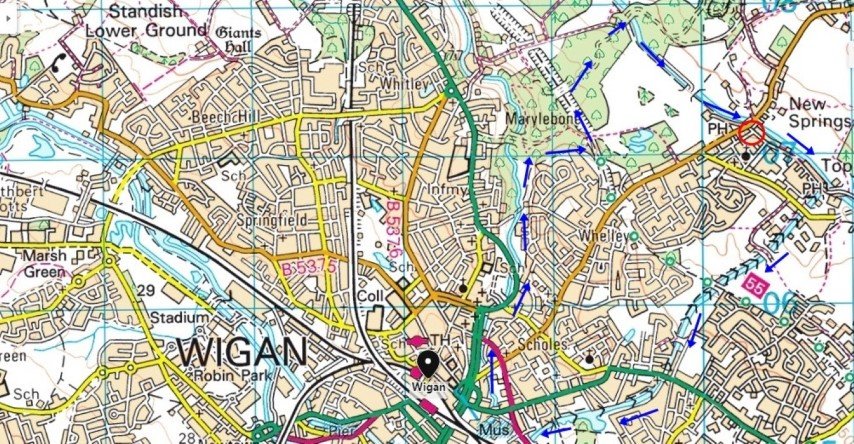
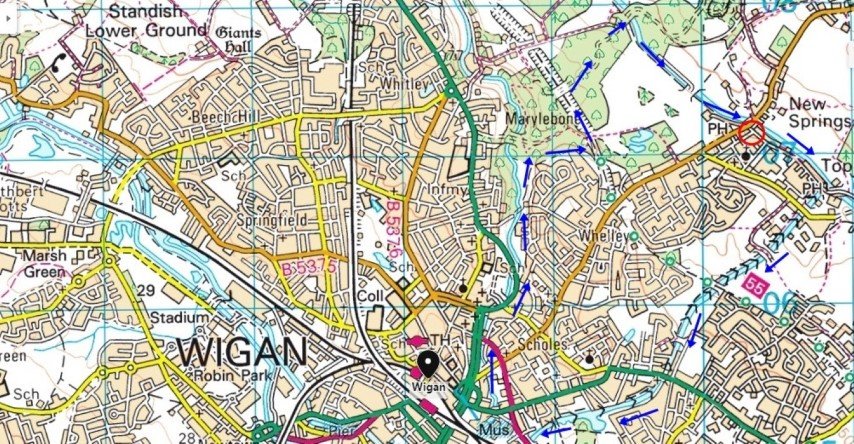
Hi there folks, Let’s head back south and finish off the F2 Crazy Week with a look at the other two meetings at Taunton and Eastbourne. Taunton – Roy Goodman 800 - Tuesday August 13th The entry for this evening was originally around the 40 car mark but owing to damage from St. Day and work commitments etc. this had reduced to 29. The cars were competing for the Roy Goodman Perpetual Challenge Trophy, and the Ash Sampson Memorial Trophy. Amongst the entrants were Robbie Dawson who had won the Final at Birmingham on Saturday using a Zetec for the first time, and regular attendee Aaron Vaight from the north-west. These two were amongst a small number of drivers who had stayed on in the region to race here. Roy Goodman was the man who started it all here at Smeatharpe. After claiming nine National Points Championships he moved into promoting. He constructed the circuit in the winter of 1973-74 at the west end of Upottery Airfield. The first meeting was on Sunday 7th April 1974, and Roy enjoyed 21 years as a promoter under the banner of Five Star Promotions. In the winter of 1994-95 Roy retired from promoting, and Trevor Redmond’s Autospeed took over. He continued to race on for a further ten years. 2003 saw the start of Roy’s incredible achievement of 50 consecutive years of racing. Following his retirement the Perpetual Challenge Trophy has been raced for here. In addition tonight was the first running of the Ash Sampson Memorial Trophy. Ash was Roy’s step –grandson who sadly passed away at an all too young age in June. The trophy was raced for in the GN. Ht.1: Cameron McColm (134) continued his good form with victory in this one ahead of Matt Stoneman (127). Ht.2: The 134 car led a fair distance in this as well until Julian Coombes (828) launched a backmarker into him on the last bend to claim the win. Ht.3: Joe Marquand (689) won this. Behind him a fierce battle was going on between Steven Gilbert (542), Ben Borthwick (418), and 127. It hampered their progress but made for a classic piece of stock car racing. Final: 27 cars took to the track for yet another superb race. Attrition hit most of the fancied runners and it was Robbie Dawson (854) who came through to take the 800 trophy back to Aberdeen. Top 3: 854, Sam Weston (468), and 689. GN: The 21 cars were led onto the track by two of Ash’s cars driven by his grandad Mick Whittle and step-grandad Roy Goodman. Another fine effort by the flying white top McColm sees him bag a top three finish. Dale Moon (302) takes the win. Eastbourne – Wednesday 14th August Onto the last meeting of the quartet now. A first time visit to the Arlington stadium for the F2's. It was billed as, “The Brisca Invasion”. Unfortunately with it being the fifth meeting in a row, summer hols, and a diabolic weather forecast there were only six cars on hand. Even accounting for these factors it was still a very disappointing turnout. Opened in 1955 the track is situated nine miles north of Eastbourne and has excellent facilities. There is a centrally heated covered grandstand on the home straight, and another covered but open one on the back straight. If the weather’s nice there is a mixture of grass banking and terracing around the bends. The circuit is concrete at 350 yards (320m) long with banked corners and an armco fence. The catch fencing is close to the track which means the spectators can also get close to the action. The pits are amongst the trees, and there is plenty of car parking space for spectators. It rained continuously from morning until night and was more like November than August! Not a lot to report about the racing obviously. The Final went to Matt Linfield (464) following on from his victory in the wet at Bristol two days earlier. Top 3: 464, Cameron McColm (134), and Jack Bunter (128). Both heats and the GN went to 134. A qualifying round weekend with Arlington on Saturday, and Aldershot on Sunday would be good to see. It surely would attract more cars as well. So ended five meetings in five days. Three drivers did the first four. Jon Palmer (24), Julian Coombes (828) and Robbie Dawson (854) who won Finals at two of them. He clocked up 1600 miles of travel. Matt Linfield (464) did the last four and also won two Finals. The star of the run however was Cheddar based teenager Cameron McColm (134) who was the only driver to contest the full five. He was rewarded with race wins at each of the last three. Pics in the gallery when it’s back. A return to the north-west now as we head for Wigan. We’ll take a walk along the Leeds and Liverpool Canal into Wigan, and back out along the disused Lancashire Union railway line. The canal is the longest single waterway in Britain. It is 127 miles long and has 91 locks. In the mid 1700’s there was a desperate need for a trans-Pennine canal linking the east and west of England. Trade and industry was flourishing at this time and the busy port of Liverpool needed a cheap supply of coal for their shipping and manufacturing businesses. On the other side of the Pennines the growing towns of Yorkshire wanted to transport their textiles to Liverpool. A decision was made to establish this vital link. Construction was a lengthy process and it was only completed in 1816, some 46 years after work began. A tunnel nearly one mile in length had to be dug at Foulridge nr. Colne. It is the longest in the country to allow passage of canoes. In 1912 a cow fell into the canal near the southern end of the tunnel and swam the full length before being helped out and revived with brandy at the Hole in the Wall pub! Coal was the most important cargo. Over a million tons were delivered to Liverpool in the 1860’s. The locks were built to wider dimensions than other canals which enabled broad gauge “short boats” to navigate the canal. These were capable of carrying twice the payload of conventional narrowboats. Owing to this, and local heavy industry the canal was able to compete successfully against the railways throughout the 1800’s. Traffic began to dwindle with the introduction of natural gas and subsequent closures of the canalside collieries. The last cargo of coal was carried to Wigan power station in 1972. Commercial freight ceased in 1982 with carriage of aggregate from the Trent wharves to Shipley. The canal continues to flourish today with boaters and pleasure craft making use of the recent Ribble link which connects to the Lancaster Canal, and the creation of a passage directly into the heart of Liverpool and its historic Albert Dock. Let’s get going shall we? Here's our route. The red circle is the start and finish point. We start about three miles out and do a circular tour. The first point of interest we come to is Wigan Top Lock. Prior to 1864 when the Liverpool & Leeds took it over this was part of the Lancaster Canal. It continued straight on through to the Wigan Coal and Iron Company nearby. However, only a short partly dried up section exists today. This is the point where the canal takes a sharp right hand turn and starts descending into Wigan. It is a two mile descent of 200 feet and goes through 21 locks. Not long after entering this section we come to the stone abutments of a railway bridge. This was a part of the Roundhouse branch of the London and North Western Railway/Lancashire Union Line. It went across the canal into the splendidly named Kirkless Semet Solvey Coke Works. The line was a link from Roundhouse junction. It got its name from an ancient roundhouse on the site dating back to the Iron Age rather than a railway roundhouse. (When the gallery’s back on there’ll be a late 1800’s map view which shows it well). On the day I was there a steam barge was coming up the locks. It’s called “Whistle Down The Wind” and has a fantastic steam whistle which sounds tremendous. Next to come by were two narrow boats and a dredger. Quite a busy day. As we get into Wigan there are some marvellous old buildings still standing to remind us of its rich industrial heritage. Porcelain and clock making had been its major industries until the time of the Industrial Revolution. It then became known as a major mill town and coal mining district. At its peak there were 1,000 pit shafts within a five mile radius of the town centre, and fifty four collieries. A town councillor remarked that, “A coal mine in the backyard was not uncommon in Wigan”. In 1818 the eight cotton mills in the town saw the introduction of power looms. These mils became infamous for their dangerous and unbearable conditions, low pay and use of child labour. Trencherfield was one such mill. It had the country’s first fire sprinkler systems installed, and its steam engine was the largest of its type. The two halves of the engine were called Rina & Helen. They drove a 26ft flywheel with 54 ropes. It produced 2500hp which was enough to run machinery over five floors, and the central heating system. The mill was very humid to stop the cotton snapping when it was spun. The cotton workers were on a 12 hour, 5 ½ day week. The noise was deafening and they had to stuff cotton from the floors in their ears. Working in bare feet as well to stop sparks from their clogs on the concrete floor setting the cotton bales alight. Children were used to go under the spinning machines to tie the broken threads back together. A steam whistle summoned them to work each morning. The slogan was, “England’s bread hangs on Lancashire’s thread”. The mill is now used for other purposes. Outside close at hand are two items on display from the past. One is an indestructible ventilating fan built in 1910 which was used in the ventilation of coal mines. It was built by Walker Bros of Pagefield Ironworks, Wigan. Like a lot of engineering companies in those days they had a large and varied catalogue of products they manufactured. They were classed as mining engineers, and commercial vehicle manufacturers producing vehicles under the brand name of Pagefield. A steam powered hammer is the other item. It was made by Glen and Ross of Greenhead Engine Works, Glasgow in 1862. Installed at the Clarington Forge in Wigan it was used for many years in the manufacture of crankshafts, connecting rods and printing rollers. Unfortunately both of these are unsuitably located in a car park. There are three warehouses at Wigan Pier. Number 1 (built 1777) was for grain, sugar, spices and dried fruit. Number’s 2 & 3 (1890’s) were for flour, grain, spices, cotton and even cement. All three are under arches so were sheltered from the weather when loading/unloading etc. There is an excellent museum of Wigan life situated in the library. On display is an Ellison’s turnstile. These were manufactured in Salford from 1890 to 1960. Used throughout the land at football, cricket and rugby grounds, swimming pools, amusement parks etc. They fabricated and installed 100 turnstiles at London’s original Wembley Stadium in 1923. We head north out of town now to make our return. Within a very short time we come to some delightful woodland. You would not think that a busy town was so close. It has the unusual name of Bottling Wood. In here can be found the trackbed of the long gone Lancashire Union Railway. This is the same line that used to cross the canal which we passed earlier. The main line ran between Blackburn and St.Helens. It opened to passengers in 1869 but its main use was to carry goods to Garston Docks on the River Mersey, and also to serve the Wigan coalfield. The line we are on was a loop constructed to bypass Wigan on the eastern side. Its name was the Whelley Loop, and was primarily a freight line. Surprisingly two stations were built but they turned out to be the shortest lived in the country. Opened in Jan 1872 and closed three months later! Their goods yards remained open until the line closed in the 1970’s. All lines through Wigan were radial and this loop connected to every one of them. Diverted passenger trains were routed along the loop from time to time to avoid gridlocking the centre. Summer seaside specials to and from Blackpool being a prime example. The part we walk along can get waterlogged very easily as the embankments channel any rainfall straight down. After a while we leave the trackbed at a fine stone and cast iron bridge. The craftsmen have been at work again. Superb stonework. A track leads through the grounds of Haigh Hall. The hall was built between 1827 and 1840 by the founders of the Wigan Coal and Iron Company. Sandstone for the facing was brought by canal and dressed on site using steam driven saws, and all the ironwork was cast at the estate’s own foundry. Soon we come to the canal again and make a right turn back to our start point. This section is absolutely glorious and very quiet indeed. That completes our brief tour. It’s hard to comprehend the amount of industry that was in this area when you see it today. I can heartily recommend a visit to Wigan for anyone interested in the industrial past. Pics in the gallery when it’s finished the upgrade. Next week: A look at the Armadale track, and the Saloons World Final at Cowdie. I’ve got a wee tale to tell you on the way too.

-
It sure is linky
-
Just testing the new upgrade. This week's tale will be on tonight minus pics for the time being 👌
-
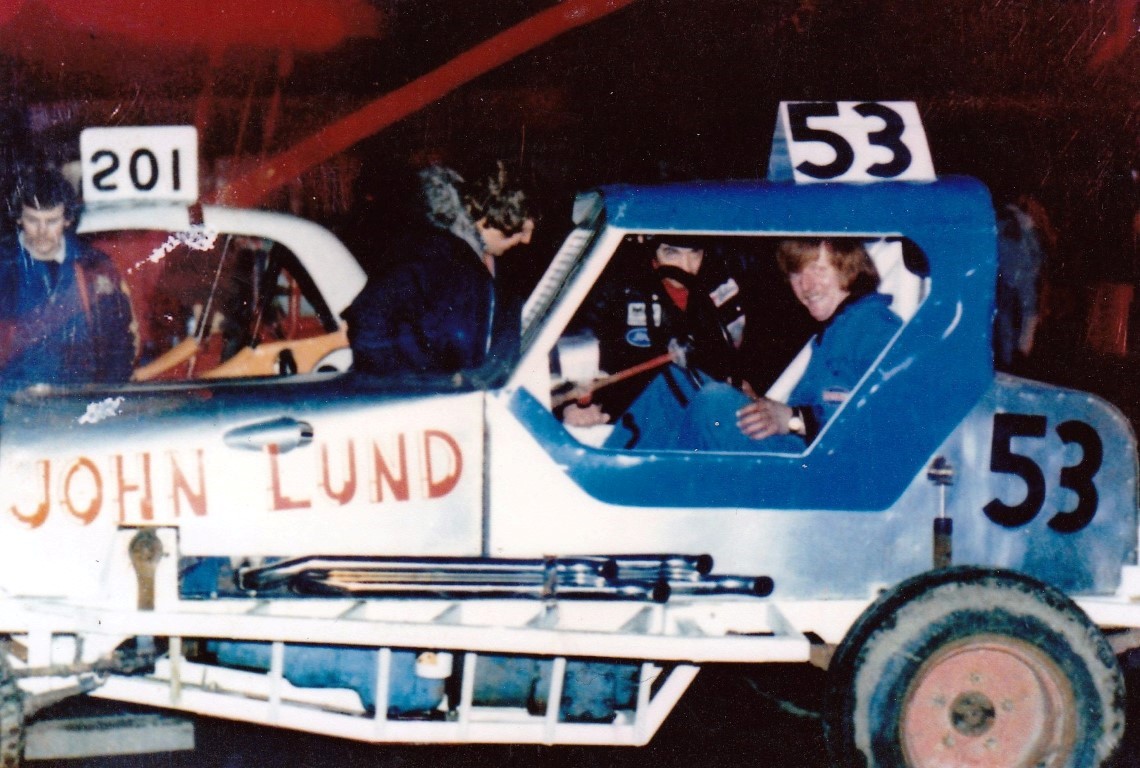
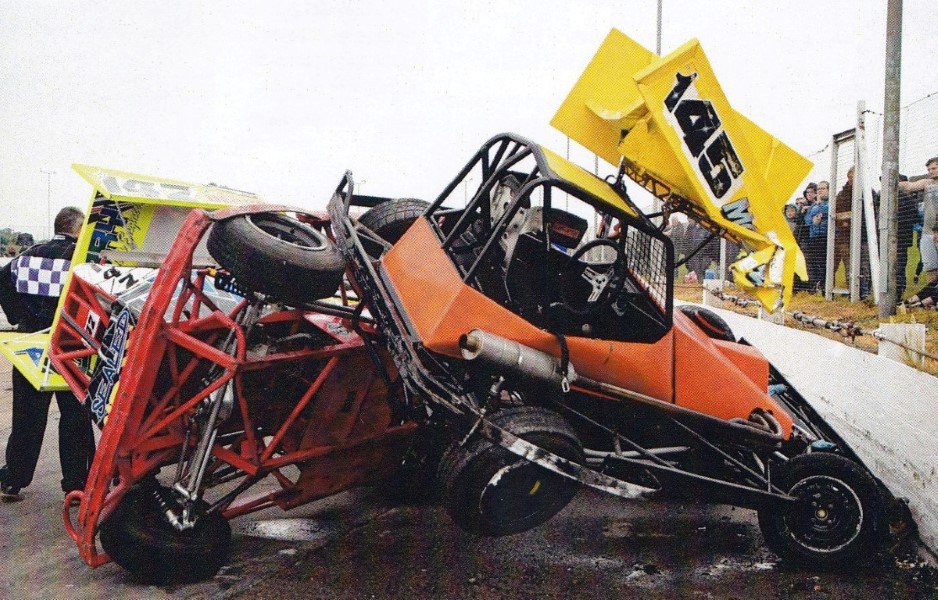
Not sure which track Stuart. It's 1977. Dave Seed (ex 450) is stood alongside the car of Manchester's Nev Davenport (ex 201)
-
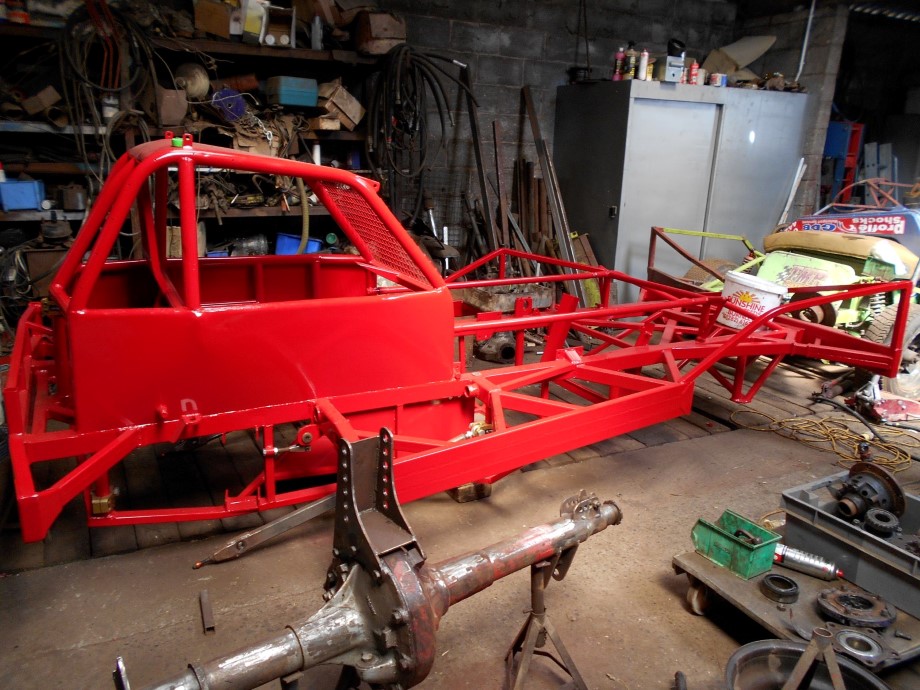
The latest pics from Pascal Spigt's (H6) workshop are in the gallery. More to come soon. I've found a few old photo's that i have acquired over the years. I'll put them in the gallery when i've sorted them out. Here's a good one to be going on with:
-
Thank you for these Chris . Many congratulations to Tom and King's Lynn. Two thoroughly deserving victors in the awards
-
 A crackin' interview. The amount of work Mat puts in to keep his stock car fleet going is phenomenal. He is well overdue a championship that's for sure.
 -
Cheers lads . Nice idea about a book but way out of my league. It would need the expertise of Neil Randon to do it justice.
-
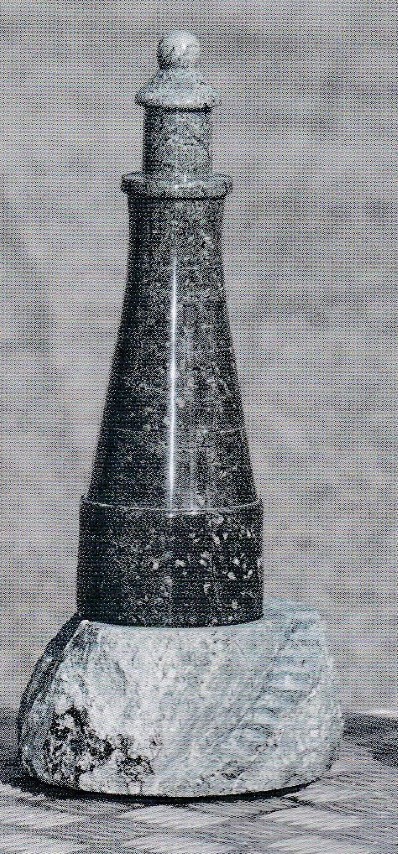
Hi there folks, Get yourselves a brew, put your feet up, and sit back as we‘re going on a road trip this week. Last August the F2 fraternity had a five meetings in five days “Crazy Week”. It all began at Birmingham on Sat 10th and moved south to the Semi-Final meeting at St.Day on Sunday 11th, Bristol 12th, Taunton 13th and Eastbourne on the 14th. Having Bristol on the Monday as opposed to Taunton added time and distance to an already high mileage week as you had to head north from St.Day past Taunton and then back south again on the Tuesday! Co-operation from one of the promoters for the easier option was obviously not forthcoming. The reason being the risk of a shortage of cars at the Tues meeting. The purple and white team would have been quite happy to swap dates however. As it happened the Tues meeting had a higher car turnout than Monday so maybe a bit of karma there. We’ll have a look at the first two of the meetings this week starting with St.Day, and the other two next week. With the Buxton F1 Semi on Sat 10th it mean’t a five and a half hour overnight trip for Sunday’s meeting but at least the roads were quiet. Many people had been waiting years for the Semi’s to be held at the United Downs Raceway. It is a real gem of a track with its five corners. It is similar to the much missed Knockhill Trioval with the unusually shaped bends, and inclines/declines. It is actually pasty shaped which is very fitting given its location. A backdrop of the disused “Ale and Cakes Mine” engine house and chimney complete the unique setting. A track record of 71 cars made this the biggest stock car event in Cornwall since 1976. That was the year of the World Final held at St. Austell. Nine Scotsman were in attendance including Robbie Dawson (854) who broke his mammoth 12 hour journey down with a Final win the previous evening at B’Ham. In the weeks preceding this meeting there were a fair few withdrawals from either shale only drivers, or ones that were not prepared to travel. Extra reserves were therefore added to the list. All Semi-Finalists received miniature stained glass window versions of a tin mine engine house. The top three in the meeting Final were presented with some absolutely stunning Cornish serpentine lighthouses which had been hand turned by a jeweller from the Lizard. Crispen and his team at Autospeed had put a lot of time and effort in the month prior with a programme of tidying, smartening up, and improvements. A new section of safety fence and progress on the VIP/Hospitality area were very evident. Alan McLachlan, one of the most knowledgeable commentators in F2 was on the mike. He is from Edinburgh and is usually to be found at Cowdie and Crimond. At least a 9 hr 30 min journey down for him for this weekend. He regularly commentates at the sister track of Smeatharpe as well. Alan absolutely loves the ferociousness of the Taunton action and wishes his home track’s struggle for cars can improve in the future. The link between Autospeed and the Racewall Cowdenbeath go back to the days of Gordon McDougall when Crispen was a regular visitor and behind the scenes helper. That close bond between the two still exists today. On to the meeting then. The rain came at start time and made for a wet track for the 15 car non-qualifiers heat which saw Marc Rowe (526) take the victory. The cars entered the track for the Semi-Final pre-race parade in their exact grid order which saved a lot of time as they received their trophies and then gridded up in race order which was: 606 7 488 124 101 78 542 527 127 24 578 647 183 26 480 302 400 38 817 828 960 344 689 674 969 854 844 976 Another heavy downpour unfortunately soaked the track just before the start.The inaugural F2 World Champion Roy Goodman in his role as Grand Marshal gave the command to, “Start your engines!” Andrew Palmer (606) was away into the lead from Gordon Moodie (7), whilst Liam Bentham (488) was sent into the wall on turn four before taking the flag. Several others piled in including crowd favourite Jon Palmer (24). Matt Stoneman (127) was now into 3rd from 9th on the grid. The leaders were soon into the backmarkers and Moodie closed up enough for a couple of taps on 606. On lap six however he was through and gone. James Riggall (527), Chris Burgoyne (647) and Robbie Dawson (854) were up in the top ten now. 647 the 2002 World Champ retired soon after though with a trip around the turn four wall. With it being such a wet track few took any chances and the 7 car reeled off the remaining laps to take the victory followed over the line by: 606, 542, 127, 101, 854, 302, 527, 38(in his shale car), and 817. Gordon said, “Once we got away I thought Andy and I will hopefully get a gap. I did’nt want a battle as it brings everybody else up to us”. Andrew had these words to say,” I was going to try and come back at Gordon but I got held up by a backmarker. Buxton is my least favourite track so it means I’ve got to AUTOMATICALLY DELETED WORD go there now!” The track had dried up for the second Semi so some last minute set up changes were the order of the day. Luke Wrench (560) and Micky Brennan (968) only just made the grid which was : 905 560 618 788 629 184 418 564 801 16 980 251 464 895 325 3 105 315 142 968 111 91 468 419 126 41 979 761 The start did not go to plan for Stephen Mallinson (788) as he crashed into the turn four wall causing Matt Linfield (464) to spin, and in the ensuing pile up Liam Rennie’s (3) race ended with him upside down. A complete restart allowed drivers to fix their cars but with no outside assistance. Ben Borthwick (418) who had been turned into the turn one wall was a major beneficiary of this second bite at the cherry. The 560 car had suffered steering damage and Luke was attempting a repair with a rock he had picked up from the St.Day lunar landscape, the sole of his boot, and some brute force. At the start Rob Mitchell (905) made too quick of a getaway and received the black cross. At the end of lap one it was: 905, Ben Lockwood (618), Euan Millar (629) and 418. Lap three saw the 968 car spin across the entrance to the back straight getting collected by Lewis Geach (111) who ended up on three wheels. When racing resumed the aforementioned Borthwick (the track specialist) battled his way into the lead before halfway with a nerf bashing pass on 905. 560 had come up into fifth at this stage and soon demoted 629, 618 and 905 to move into 2nd. The race settled down in the second half and saw Borthwick take the victory and banish his British Championship disappointment of two months earlier. Following him home were: 560, 315, 618, 184, 905 (docked two places), 801, 629, 468 and 895. The 418 car was not declared the winner until after the meeting. The position of the camshafts were under investigation and could not be proved illegal or legal to the regulations! An unfortunate honest human error prevented a defining decision being made so it must fall in favour of the driver. A 28 car Consolation followed which saw a massive turn four crash which almost blocked the track and left Jamie Avery (126) in need of assistance. The victory went to Joe Marquand (689) after the 16yr old novice Harley Thackra (9) had jumped the start and was docked two places. For the Final the qualifiers from the Semi’s had either green or chequered flags attached to denote which Semi they represented. 24 brought the action big time to get the lead before half distance, followed by Charlie Guinchard (183) who chased him all the way, and Justin Fisher (315). The top two remained the same until the finish. 127 was the first man home from the Semi’s claiming 3rd thus clinching the World Final inside line for the Semi 1 qualifiers. That handed pole to the 7 car who failed to finish in the top ten. The GN saw 127 take the victory after long-time leader Cameron McColm (134) was overhauled, and Mark Gibbs (578) despatched on the last lap. Apart from a rain spoilt first Semi the racing was excellent. Whilst wandering the pits during the meeting I witnessed something that brought a tear to the eye. There was a young lad with his carer who was becoming agitated and distressed. They were close to Micky Brennan’s car and he saw what was going on. He invited the lad over and got him to hold the funnel whilst he refuelled the car. The young fella absolutely loved being involved and his mood completely changed. He was then given a t-shirt by the team and went away so happy. It was a joy to see. The Brennan’s are such a kind and thoughtful family. At a Buxton meeting a few years ago my lad wanted a t-shirt and we saw Micky had some on sale. He included a cap for free and asked us if we would like to get on the bus and have some dinner with them! We can’t go wrong with people of this calibre in the sport. Next stop was to drive past Taunton and up to Bristol. A case of the night after the morning before. A rare weekday evening meeting in the Mendip hills saw 19 cars race a two heat, Final and GN format. The meeting started off nice and sunny with both heats run in bright conditions. Jon Palmer (24) won the entertaining first one. Top 3: 24, 127 & 134. Ht.2 saw Luke Wrench (560) take the victory. A roll on the back straight for Dan Kent (576) added the action feature. Top 3: 560, 127 & 24. The heavy rain then started and got progressively worse as the meeting went on. A long delay to extricate a Junior Rod driver saw the Final not starting until 10pm. By this time the track was starting to flood at the bottom of the dip into turn three. Matt Linfield (464) claimed the victory, with Aaron Vaight (184) and Robbie Dawson (854) rounding out the top three. As rivers of water coursed through the pits only six cars made it out for the GN. Cameron McColm (134) scored his maiden victory in this one as the last lap challenge from 184 into turn three saw a tidal wave swamp his car. Only a few pics from this one owing to the deluge. Ok then. Let’s head to the main event. A four hour trip north finds us back in Halifax. A few weeks ago I showed you the opulence of the Town Hall. Grand as it was what you’re about to see is the complete opposite. The derelict delight that is Old Lane Mill. The history of this site is just amazing. The Akroyd family had founded a worsted and wool textile manufacturing firm in the middle of the 1700’s. As early as 1816 Jonathon Akroyd had a mill here. The mill we are going to explore was built in 1825 by his brother James, and pre-dates both the world’s first steam powered passenger railway and the Victorian era. King George IV was on the throne at this time. It was a steam powered worsted mill producing a high quality type of wool yarn. When steam power was introduced into the mills it set off the Plug Riots. The workers feared they would lose their jobs. Groups of men from Bradford and the surrounding districts marched from town to town removing the plugs from the boilers of the mills, and emptying the mill dams as they passed. One of Akroyd’s power loom sheds at nearby Haley Hill came under siege, and one man was killed and several wounded when soldiers were brought in to fire into the crowd. Child labour was prolific at this time. In his mill at Copley (which is around 4 miles from here) a ten year old girl was working on a spinning frame when her clothing got caught in the driving band. She was pulled round the drum and suffered horrific injuries to her legs and feet. She died the following morning. This remaining structure is the oldest and largest surviving example of a stone floored, multi-storey, steam powered, iron framed, textile mill. The stone floor was to support the heavy machinery and was the first of its kind in a mill. There were acres of weaving sheds on this same site but all were demolished many years ago. In 1827 Akroyd built and installed the first Jacquard Looms in England here. He worked on building these in secret in locked rooms. They were a device fitted to a power loom that simplified the process of manufacturing complex patterns. The machine was controlled by a number of linked cards with multiple rows of holes punched through them. A complete card would produce one row of the design required. It was really a very early form of computing hardware. They are a complex machine which has to be set up to the loom so that the punched holes align with rods and hooks which determine the thread weave. The threading of the machine can take several days. A material called camlet which is a combination of silk, cotton and wool was supplied to a Mr Mackintosh of Manchester for use in the production of raincoats of the same name, or Macs as they became known. The night watchman used to fire a blunderbuss each evening to signal that he was on duty! In the mid 1800’s it was the largest textile company in Britain and employed around 2000 combers, weavers and spinners. The Yorkshire Bank owes part of its existence to this very site. Back in 1852 the Woodside Penny Savings Bank was introduced and based within the pay office of the mill. It was a savings scheme for the employees. A penny a week was deposited with an interest rate of 3% per month providing you had at least £1 saved. With there being 240 old pennies to the pound you’d have to save for over four years until you got that first pound! After absorption and takeovers it eventually became the Yorkshire Bank. A pub called the Old Lane Inn and a working men’s club used to exist nearby but both now long gone. The Rawson family became the owners in the late 1800’s, followed by Moxon Kirk and Sons. In 1905 it was listed as Old Lane Dyeworks and was the largest in England. The mill suffered a serious fire at this time but owing to the iron and brick construction the building survived virtually unscathed apart from the roof. That was replaced by asbestos sheeting. After this date the trail goes cold as to subsequent owners etc. but it was eventually used in association with the massive Dean Clough Mills complex. Now it’s time we had a look around. If you’re uneasy about the dark, rats, or falling through, falling out, or falling down things it may be best to sit tight and have another brew. As you walk towards the mill you can sense it knows you’re approaching. All the windows and frames have long gone and you can feel it watching you. The exterior is very clean for its age so I think it has been sand blasted at some point. The boiler house is the first thing to encounter. The stonework on this ruin is superb. It’s just as sharp and well defined as the day it was built. The triple arched frontage is excellent. The roof is missing and has revealed the iron framework. A chimney rises up the centre, and this has a frame around the top. A large crack has appeared at the upper level. The chimney has been capped at some point as it would have been higher than this originally. One side of the chimney has the connection to the boiler, and on the other is an access hole to clean the ash out. Between the boiler house and mill is a large fuel tank. Obviously a later addition when they used diesel or oil to replace steam power. We’ll go in through the basement. It is as black as ink in here. Without a torch you feel as if you have gone blind. Not a chink of light gets in from anywhere. The stone slabbed floor has been removed and it’s left a mass of rubble. You’ll find a lot of mill floor slabs on the moors in the north. They are prevalent on footpaths to prevent erosion, or to get across particularly wet and boggy sections. The Pennine Way has sections where mill floors have been laid down. You can see the holes where the looms etc. were bolted down. Usually there’ll be some rust around the hole edges left from the bolts. Anyway back to it. In this darkness a scurrying sound was heard. Shining the torch around i saw a rats tail disappearing down a hole. At least it was’nt up for a fight! The full length of the basement has to be crossed to get to the engine room. It is very creepy to say the least. Lots of blind corners, passageways, and small rooms. Not only supernatural forces exist down here. There could be an axe wielding maniac around that next corner!! All was going well until I saw the silent girl with the torches. She had long flowing hair, eyes like saucers, and a screaming mouth, but no sound came out. My heart literally missed a beat. I had turned a blind corner and my torch beam focused directly on the life size wall painting of this girl. Every credit to the artist. It had been positioned so it was the first thing the torch beam picked up. In some ways I wish she had been real. She would have made it a fun day. The mill was powered by a 60hp steam engine. In the engine room you can see the semi-circular recess where the huge beam engine flywheel was situated. Ropes, pulleys and belts went up through the floors to power the machinery. The large window in here has a quite fantastic decorative wooden surround still in situ. An amazing place. You can see from the gallery pics that there is an external tower adjoining the centre of the building. This is known as a polygonal privy tower and would have been where the toilets/washrooms etc. would have been situated. Having successfully negotiated the basement we leave the rats and screaming girl behind to terrorise their next victim. Each of the six floors is to an identical pattern so I have’nt taken pics at every level. They are connected by a stone stair well which is nice and solid. However, you can easily fall straight out of the external wall. The steps have been worn down by years of use. Above basement level the whole place is a glorious Health and Safety nightmare and all the better for it. You get a real appreciation of the site in situations such as this. I would never put myself in danger but just use a little common sense to get around. The things to watch for are various holes in the floor where the belt system used to run down to the engine house, trap doors, and machinery attachment points. Openings where the windows used to be, and the lift shaft are obviously the biggest risk. Fortunately all the floors are solid stone. Cast iron pillars interlinked throughout support the whole structure. On the first floor at one end is some unusual arched stonework. It looks to mirror the flywheel dimension but is not situated near it. A strange one for sure. What I love about these places is that you would never consider putting bricks on the ceilings. Well they exist here. All the ceilings are vaulted brick arches. Absolute craftsmanship of the highest order. It was apparently to add strength because of the excessive weight of the looms above, and also to reduce the risk of a fire destroying the whole mill. The upper floors are in a poorer state than lower down. The exterior wall has started to break up, and without a complete roof water is playing its part as well. Having said that the whole place was very dry to the point of being dusty. The very top storey was quite windy. At one end is a doorway with a pulley system which would have been used to move stuff around from floor to floor. The roof is a beautifully constructed iron frame with large stone lintels. The angle of these look as though they could slide off at any moment. The floor has been exposed up here. You can see the top of the cast pillar and how it connects to a cross girder via a wishbone/lynch pin arrangement within the brick arch. Just incredible from nearly 195 years ago. At one of the gable ends is a beautiful round window frame which used to house a clock. Some of the mechanism still exists. From here you can see the stunning Corona (not the virus version) chimney in the distance which has a crown on the top. We’ll go back down to ground level now and have a mosey around outside. Ovenden Brook runs directly under the mill and leads to a mill pond. This must have fed the other mills in the area as water power was never used here. Even the stonework for the brook culverts are of the highest order. A couple of blocked up archways in the external wall are visible. I wonder where they led to? It is a tremendous place to spend a few hours. The amount of labour that went into places such as this. The brickwork, the stonework, the ironwork. Not only did they build them to last but they made them look appealing with arches, decorative chimneys tops, intricate stonework etc. Think of the amount of families and people who spent an entire working life here. Within a short distance is the Dean Clough mill complex. These are truly massive. Refurbished and occupied by many small businesses, bars and leisure facilities. The Corona chimney stands on this site. Built in 1857 and rising to 297 ft it stands proud over the surrounding land. It has a distinctive corona of triangular cast iron plates which gives it its name. Some of the mill buildings reduce in height at one end depending on the gradient they are built on. Truly magnificent. Well that’s it folks. The pics in the gallery show all of the above. If you’ve any questions, or extra info regarding the mill please feel free to comment. Next week: We’ll head south to finish off the F2 tour taking in the remaining two meetings at Taunton and Eastbourne, and then it’s up to a north-western town for a wander in along a canal towpath, and back out on a disused railway line. There’ll be a bit of history thrown in for good measure as well.
-
Thank you for the kind comments lads. A few more pics from the show today. A far better crowd this time. Some great news from Colin North's brother Gary is that he himself is going to carry on with the Teng tools input and take on Colin's role within the sport. The North family chose the top three best in show. A superb trophy to remember Colin was awarded to the first place recipient. This trophy is to stay with Gary for the time being to be displayed at various locations. All three received trophies to keep as well. The top 3 were: 3rd - Jenson Brickley, 2nd - The Yarrow team for the 2 car, and the winner was Matt Linfield F2 464 for the memorial steering wheel. Speaky was present today and was having a look at the new 7 car to see which corner to hit first. Funnily enough Jon Palmer was thinking the same thing about Speaky's new car yesterday That's it folks. Next week (well Friday) we'll pay a visit to the first two meetings of the Brisca F2 "Tour of the South" which took place last August. The St.Day Semi Final meeting and Bristol the following day are our destinations. Next we go off the beaten track once again. You all need to bring your head for heights for this one as we explore an abandoned six storey mill. For anyone involved in Health and Safety you ain't goin' to like this one bit Until Friday then
-
It did'nt seem as busy as last year. For the second year running the gate was'nt opened at 9 owing to an unexplained issue. Finally got in at 9:45! No F1 demo, and a lot more barriers everywhere. Apart from this it was good to meet up with folks and get to see some quality cars from all formulas. Hope you enjoy tomorrow stox74 👌
-
Pics from first day of MWA show in the gallery. Possibly a few more from Sunday to add.
-
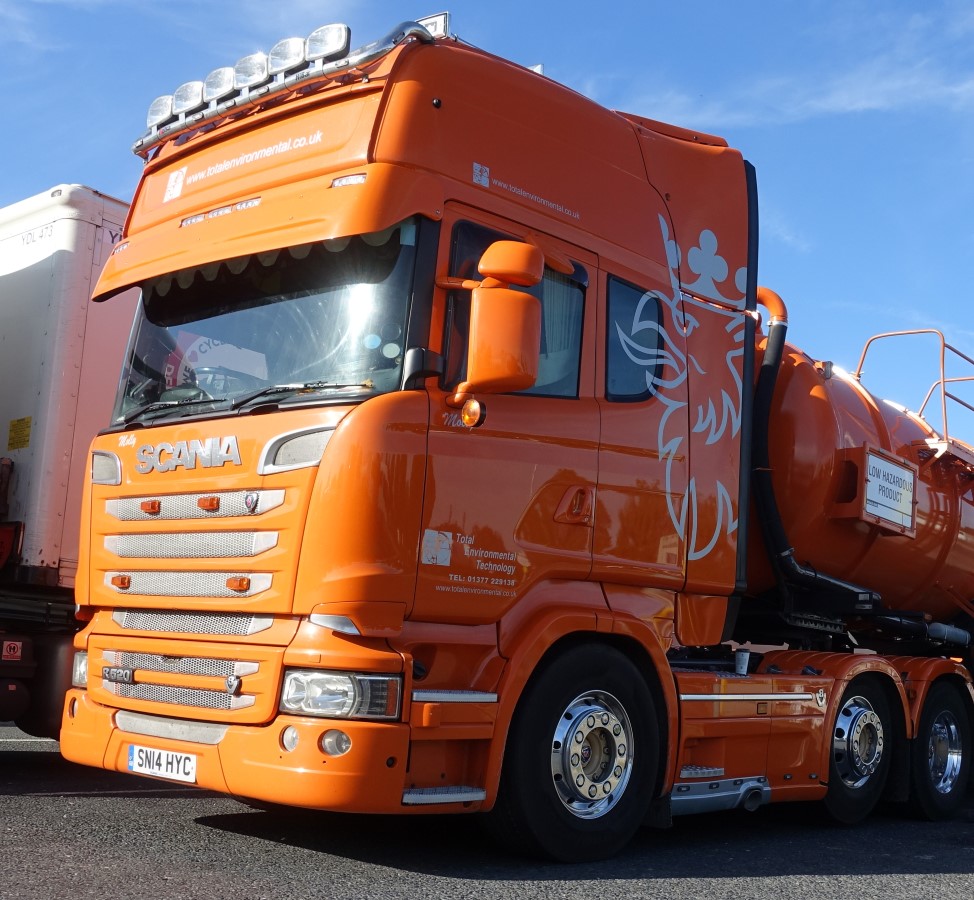
Cheers Bas. Seeing as orange is the colour of the Dutch Royal Family i thought you would appreciate this: Molly, an absolute mint Scania R520 from Total Environmental Technology based in Carnaby in the East Riding of Yorkshire.
-
Hello folks, We start this week with the F2 Qualifier from Taunton on Tues 9th July. Racing here on a school night is an annual event at Smeatharpe for this qualifying round. It is certainly far more exciting than after school detention! With only the final round to go at Skegness on July 18th this meeting would give an indication of who would need to race at the Lincolnshire venue to try and make the semis. St.Day held their Q.R on Sunday so a good number of visiting drivers stayed down for the three days. Notable extra’s for Taunton included former World Champion James Rygor (783) racing from the blue grade for the first time since 2013, Charlie Guinchard (183) fresh from a heat and final double at Buxton on the Saturday, and Liam Bentham (488) in his new Polley built tar car. Add Aaron Vaight (184), Matt Linfield (464), Ollie Skeels (124), and Henry King (78) to the above to give a 45 car turnout. Heat 1: A battle between the main men from the British Championship race at the previous Taunton meeting saw Steven Gilbert (542) hang on to finish ahead of Ben Borthwick (418) by the time the flag fell. This was for 5th place however as up ahead the dynamic duo of Jon Palmer (24) and Charlie Guinchard (183) were decimating the field with some spectacular hits on practically everyone. Tommy Farrell (667) had got away to lead from the yellow grade, but with the 24 car scattering cars everywhere he had to give best to Palmer and ended up 2nd at race end. Where did Guinchy finish you ask? Well after plenty of giving and receiving the bumper he came in 6th. Top 3: 24, 667 and Aaron Vaight (184) Heat 2: Liam Bentham christened his brand new car with a fine victory. Top 3: 488, Paul Rice (890) and Julian Coombes (828) Consolation: A large field of 22 cars for this one. Rob Mitchell (905) took a rare tarmac victory. He had rolled it at St.Day on the Sunday so the win proved all was ok with car and driver. Top 3: 905, Ian England (398) and Joe Marquand (689) Final: An absolute cracker of a race from start to finish. This was hard surface F2 racing of the highest order. Thirty cars on this track is guaranteed to be action packed. 890, 418 and Ben Goddard (895) were all early spinners as 667 hit the front once again. 488 began well, but 183 had already identified him as the man to beat so hoofed him fencewards at the first opportunity. Next on Guinchy’s radar was 184 who resisted the onslaught for a short while before 183 was through and after 667. These two traded blows for a few laps until Charlie gained the upper hand and set sail at the front. Behind him all hell had let loose with up to ten cars battling for the positions. There were some ferocious hits going into the bends, and three and four wide racing into and out of them. As is usually the case with this type of hard racing it can delay the protagonists so they were not able to close the gap. With a lap to go 667 who was lying in 3rd got steamrollered by the 24 car and that allowed 184 through for the position. 183 duly clicked the laps down to claim his second Final in four days. He’d only had two meetings from the blue grade and won both Finals. A truly enthralling race. Top 3: 183, Ryan Sheahan (325) and 184 GN: 21 surviving cars for this one. Another belter to end the meeting with a last bend decider as 418 managed to overhaul 542 for the victory. Top 3: 418, 542 and Dale Moon (302) The top qualifying points scorers at this meeting were: 183 - 30pts, 184 - 29pts and 24 also on 29pts. Another superb meeting from Autospeed. The attached pic is another view of the last meeting tangle up on the back straight. It took some sorting out! Let’s head to Skegness now for the Thurs meeting of Speedweek. 53 cars for this one with plenty of overseas entrants. 5 from mainland Europe and 4 from Northern Ireland. Scotland was well represented with 12 drivers making the trip south. A monsoon swept in prior to the meeting which req’d pumps to clear the track. The pit office was also temporarily marooned by a lake! Ht.1: Paul Rice (890) from the West Country made the most of his yellow grade start to win. Top 3: 890, Daz Seneschall (376) and Robbie Dawson (854) Ht.2: A good battle between Aaron Vaight (184) and Liam Bentham (488) was decided in Aaron’s favour. Top 3: 184, 488 and Craig Wallace (16) Consolation: 27 cars on track. Martin Ford (4) from the yellows managed to hang on for the win despite the attentions of Chris Burgoyne (647) and Jon Palmer (24) Top 3: 4, 647 and 24 Final: A large 33 car grid set off with the 488 car making swift progress from the blues. He soon got to the front and was chased to no avail by the James Riggall (527) and Gordon Moodie (7) RCE’s. Liam would go up to the red grade at the next meeting. Top 3: 488, 527 and 7 GN: Another 33 car field. Jon Palmer hammered his way to the front in his very entertaining hard hitting style. Luke Wrench (560) made an attempt to challenge but no luck. Top 3: 24, 560 and 890 The Saloons were also on the bill and had a very respectable 57 car attendance. 16 from Scotland, and 3 from Northern Ireland. Stuart Shevill Jnr (618) debuted a new car which he took to an inaugural Ht. 1 victory. However an engine change was forthcoming after smoke appeared on the slow down lap. Diggy Smith (116) won Ht.2, and the Consolation went to Euan Mathieson (125). The Shevill team had completed the engine change in time for the Final which saw the 618 car lead into the last bend. Ross Watters (670) & Deane Mayes (730) piled into him though which saw Shevill spin out and 730 take the win. The Allcomers race went to Brad Compton-Sage (902) with a Shevill in 2nd. Graham (661) this time though. From one seaside town to another now as we go east to west to have a look around Blackpool’s Rigby Road tram depot. Blackpool Transport’s history is immense. The tramway dates back to 1885 and is one of the oldest electric tramways in the world. 135 years of unbroken service is an incredible feat. To try and do it justice in one go would mean missing out on many momentous happenings and notable achievements over the different eras of its existence. With that in mind next winter i’ll do a series all about it. Even if you’ve never visited the resort or travelled on its buses and trams it still makes a fascinating and compelling story. The depot we are going to visit was opened in 1935 to replace two earlier ones. It was one of the last to be built in England and also one of the largest. It has a capacity for 108 trams with 18 tracks and a tram washing facility. Storage of buses has also taken place here. It is now used for the “B” fleet (called into service at peak periods), illuminated trams and the 1930’s stock/heritage fleet. There had always been various works on the site from the early 1900’s. A foundry and smelter was one of the first operations to be installed. Castings of tram stops, railings, brake shoes, bases for the overhead standards, and plates to hold the tram rails were just a part of the output. The Engineering and Body Workshops constructed and modified many trams over the years. A saw mill was set up to produce thousands of wooden sleepers, and to provide the seasoned timber required for the frames of the tramcar bodies. In recent times there has been a depot constructed at the south end of the line. This is for the new trams, or light rail as they are called nowadays. I hope to have a look around there in the near future. I hope you enjoy the pics. The black and white shots are courtesy of John Woodman and show the finished building, and testing of the tracks and overhead. The trams used for this test were housed in another two depots and would not be based here. Next week: It’s showtime! All the pics from the MWA show at Peterborough.
-
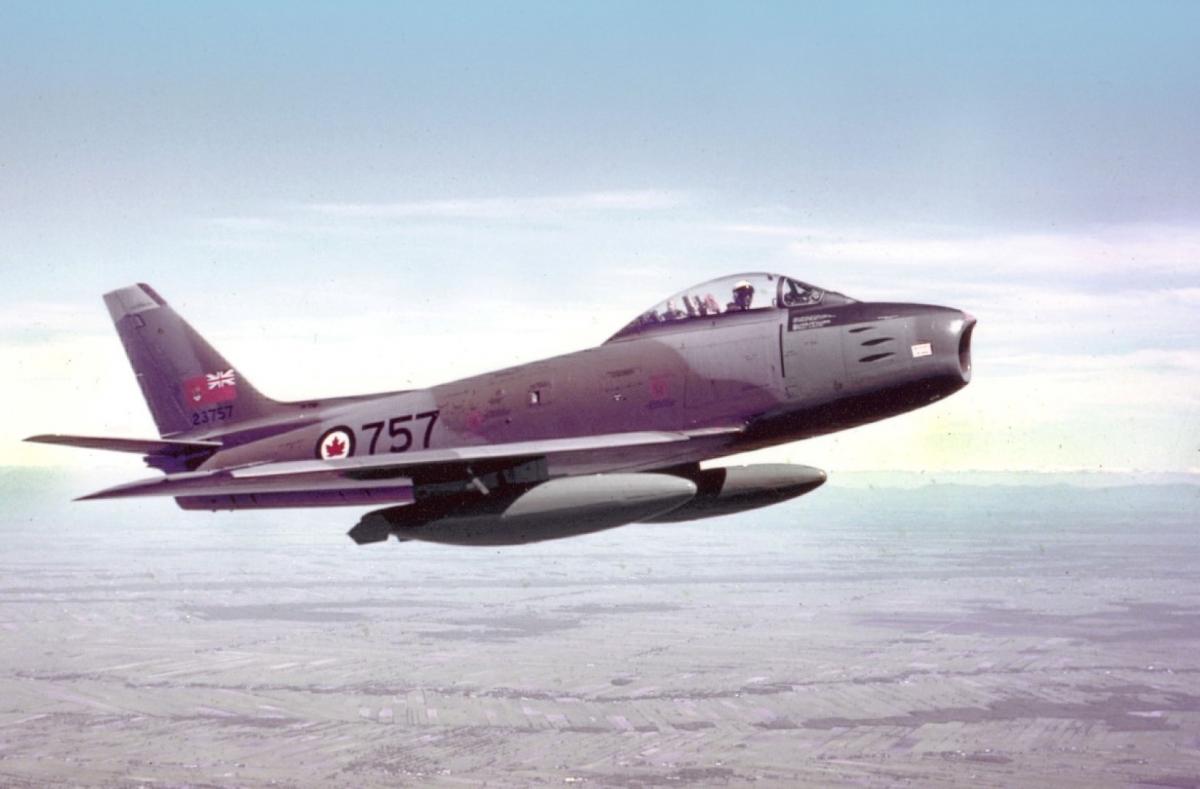
Hi folks, Great news about Birmingham is’nt it? I certainly did’nt expect that! You’d better take a seat as there’s a lot to get through this time. We’ll start this week with today’s visit to the TMR Open Day at Fulshaw Head Farm, Barrowford, up in the hills of East Lancashire. It was a glorious morning with just a touch of ice around to make things interesting. A friendly welcome greeted everybody with plenty of brews and even some homemade TMR cupcakes! Here’s a list of the cars on show: Brisca F2’s 446 Josh Vickers (whose wife had made the cakes) 962 Martin Bentley 905 Rob Mitchell’s new shale chassis 735 Mick Howarth Warton F2’s A brand new no expense spared car with a Rover V8 in it! and 767 Colin Parr (raced as a Brisca F2 previously) Outlaw 241 Andrew Carter Waller In the “for sale” shed were F2’s: 202 Will Knight 969 Bart Smeets 598 Jamie Taylor An unraced TMR shale chassis and a Junior grass tracker with a Vauxhall engine. Pics in the gallery. 53 Philip Mann and 788 Mally popped in for a look round. 219 Chris has sold his kit and has no plans to race partly owing to Belle Vue and Stoke going but also he has two young’uns that he wants to spend more time with. However, 905 Rob is continuing. It’s well worth a visit if you’re local and a nice way to spend a few hours on an out of season weekend. Barrowford has quite a history. It is situated on the old Marsden to Long Preston turnpike. One of the original toll houses dating from 1804 is still situated at the junction with the road to Colne. There is even an old packhorse bridge which dates back to the late 1500’s! From that early date the village became a centre for textile production. The manufacture of woollen cloth was the main industry until around 1780 when cotton became king. One of the cotton mills was powered by a water wheel and the mill reservoir survives as the ornamental pond in Barrowford Park. Along the village’s main road are the handloom weavers’ cottages which saw cotton cloth woven for nigh on 50 years. In the 1820’s power looms turned it into a factory industry and production moved from the home to massive weaving sheds. One of the last examples of a working weaving shed until quite recently was at the East Lancs Towel Company which still produced Terry towelling on Lancashire looms. However, they have now ceased production in the UK and the former mill has become a Booths supermarket. Sounds familiar eh? Within a couple of miles is Nelson. Apart from the legendary stock car track the town is also known for the William Roberts heavy engineering works at Phoenix Foundry established in 1862. They produced many of the steam engines that powered the cotton weaving and spinning mills around the district. Coal mine and waterworks pumping engines were also manufactured there. The foundry closed in 1954 and is now a car park. Did you know that Nelson also produced Jelly Babies and Victory V’s? The package holiday company of Airtours, which unfortunately for them became part of Thomas Cook also started life here as Pendle Travel. As we’ve seen an Outlaw at TMR’s we’ll just nip up to Barford for last May’s meeting. Only a few cars in attendance and the races were won by the promoter Cyril Whitfield’s son Charlie in 301. Only a few pics from this one. With Swaffham being a hot topic at the moment we’ll shoot down there next for the April meeting. This was the first of three planned F2 meetings for 2019. It was run under the Skegness Stadium banner and 16 cars were present. The flying white top of David Shearing (564) won both heats and the Final with Jason Cooper (682) in the borrowed Bradley McKinstry (747) car following him home each time. Jason has plenty of experience here from his Superstox days. Luke Wrench (560) won the GN. Mick Sworder and family were on hand to see youngest son Harry win in his Ninja Sprint Kart. It’s a great pity that Brisca won’t be there in 2020 but fingers crossed for the future. Just a handful of pics from here. We’ll start to make our way back north now towards the highest point of the A57 midway between Glossop and Sheffield. Before we get there though we’ll make a detour and call into the rural village of High Bradfield which is only 5 miles from Owlerton. There is an abandoned farm I’d like to tell you about. About 30 mins walk from the village centre brings us to the ruins of Rocher Head farm which dates from 1741. The buildings have walls but no roofs. Rusting farm machinery still stands where it was left. The Saddington family occupied the property from at least the 1800’s and had 11 children! A brother and sister were the last people to live there and were forced out after Agden Reservoir had been built. The farm is in the water catchment area for the reservoir and was not served by mains sewerage. Sick Brook (nice name) runs past the farm and eventually empties into the resy, and much of their waste water probably ended up in the brook. It seems to have been standard practice for the Water Corporation to move people off their land around its drinking water reservoirs in order to reduce the risk of contamination. It makes good sense, but it must have been a wrench for them to have to leave. There are a few pics in the gallery including another toilet shot! Honestly it’s just a coincidence after the Halifax Town Hall one last week. The comparison between the two could’nt be more different though. This one is outside and it must have been horrendous on a cold winter’s night with the amount of snow they must have got up there. Ok, let’s get to Snake Pass and park up at the top. We’re here to find the wreckage of two F-86 Sabre jets which were lost here in the Peak District. The Sabre was a transonic jet fighter developed and produced by North American Aviation in the late 1940’s. It was the United States first swept wing fighter that could meet the challenge of the Soviet MiG-15 in high-speed dogfights. It was considered as one of the best and most important aircraft in the Korean War (1950-53). It proved itself many times until the last active operational examples were retired by the Bolivian Air Force in 1994. It was the most produced Western jet fighter with a total production of 9,860. Prior to the design stage the United States Army Air Forces had stated a requirement of a top speed of 600 mph for any jet developments. The idea of the swept wing achieved this aim. The F-86 set its first official world speed record of 671 mph in 1948. It was produced as a fighter-interceptor and fighter-bomber. The prototype had an engine built by GM’s Chevrolet division but production was given over to Allison. Various modifications were carried out and a thrust of 9,250 lbf was achieved. The Allison company was eventually sold to General Motors, and then in 1995 Rolls Royce acquired it. The fighter-bomber version could carry up to 2000lb of bombs including an external tank that could carry napalm. Both interceptor and bombers carried machine guns in the nose with electrically boosted feed, or cannons on the later versions. Armour piercing incendiary rounds containing magnesium which were designed to ignite on impact were used in the Korean War. The swept wing and jet engine configuration made for a totally different flying experience compared to the propeller driven fighters of the time. The technical developments throughout its long production history resulted in some significant handling differences between the various F-86 variants. As a result of one of these design changes an increase in combat performance was achieved but a dangerous and often fatal handling characteristic upon take off called “over-rotation” was created. This occurs when the nose wheel lifts off the ground too early and the aircraft continues to rotate nose up until the tail hits the runway. An accident caused by this over-rotation occurred at an airshow in Sacremento in 1972. A privately owned Sabre failed to take off and over-ran the runway. It ripped through a chain link fence rupturing the external underwing fuel tanks causing a massive fireball. The aircraft continued across a main freeway colliding with a car and struck an ice cream parlour at 150 mph. Twenty two people inside lost their lives, plus the two occupants of the car. The pilot suffered a broken arm and leg. The accident investigation ruled pilot error due to lack of experience as the cause. He had accrued less than four hours flying time in the Sabre. Even experienced pilots were involved in accidents and incidents in this transition period between props and jets. The remains of the two aircraft we are here to see were built under licence from North American Aviation by Canadair at their Montreal plant. They produced a total of 1,815 airframes in six variants. The Mk.4 was destined for the RAF and overseas air forces. The RAF took 428 jets between December 1952 and December 1953 under a mutual aid programme equipping eleven squadrons. The majority served in West Germany with NATO, with two squadrons being based in the UK as part of RAF Fighter Command. In 1956 they were replaced with Hawker Hunters, and the surviving Sabres were overhauled here and handed to the USAF who had funded these aircraft. ZD707 & ZD730 are the serial numbers of these two here in the Derbyshire Peak District. On the 22nd July 1954 four RAF Sabres from Number 66 Squadron had been taking part in “Exercise Dividend”. Air defence practice against a simulated nuclear attack on Britain by Soviet nuclear bombers kept the crews busy. It was the largest undertaking since the war and a total of 6 aircraft were lost across the country that day. At completion of the exercise the jets were returning back to base at RAF Linton-on-Ouse near York. Flying in pairs Flying Officer James Horne led Flight Lieutenant Alan Green down through dense cloud at around 18:00hrs. The Sabres were seen tearing above the Kinder Reservoir apparently unaware of the steeply rising plateau corner of Kinder Scout directly in front of them. It appears that the lead aircraft’s pilot saw the slope at the last minute and did a sudden pull up to try and get over the top. Details are sketchy about the actual impact. At least one of the jets hit the corner of the plateau and then both somersaulted out of control down onto Black Ashop Moor on the other side. There are a number of theories as to what happened: 1. Did the lead jet clip the ground and bring the other one down? 2. The following jet could have seen his leader’s wingtip go vertical and just got too close. 3. Perhaps both simply failed to clear the hillside. No one knows for sure. In flying formation they would have been cruising at 500mph with ten feet of clearance between wingtips so hardly any room for error. Their bodies and wrecked aircraft were not discovered for three days until a passing hill walker noticed a partially opened parachute billowing in the wind. The crash site is about 90 mins walk from the highest point of the Snake Pass. It’s not easy to find as the wreckage has been there for 66 years and has a fair bit of ground cover growing around it by now. There are not any big pieces that can be seen from a distance so it’s a case of a needle in a haystack time. The terrain is very rough and has a lot of dips and hollows in it which does’nt help. One of the jets ended up a fair bit further along the moor. With a pair of binoculars you can just about see from one wreck site to the other. It was a sobering thought standing amongst it as there was no guarantee that both pilots were killed instantly. Pics in the gallery. Next week: It’s back to Taunton for the F2 Qualifier, and then off to Skeggy for the Thurs of Speedweek to see who came from overseas. After that we’ll meet back here and I’ll take you on a behind the scenes tour of Blackpool’s 1935 built Rigby Road tram depot.
-
Hello folks, Great news regarding F.1’s at Bristol, and a provisional Knockhill date. This week we pay a visit to Gordon Smith’s (a.k.a the Halifax Hurricane), and son Eliot’s hometown of Halifax and have a look around inside the Town Hall. First though it’s back to Birmingham for the 2019 Gala night pit scene. Following Colin’s tragic accident I have been in touch with his brother Gary a couple of times within the past few weeks. He stressed that Colin would have wanted everyone to carry on as normal, and not to let time stand still. It is not easy to do this though as we have lost a true and loyal friend to the oval racing family whose contribution to the sport was unmatched. I was not sure how people would react to the pit pics going on, but after speaking to Gary I do feel encouraged. If anyone is unhappy about them being uploaded just let me know and I’ll take them off. I really hope that these won’t be the last pics from Wheels. I always enjoy going there and would really miss the place. The pits for this meeting were as full as I’ve seen them. 53 & 445 who were amongst the last to arrive had to park up right down the bottom of the top pit road! I took this in 2017 and it made its debut at this meeting: We now head off to the West Yorkshire town of Halifax for a look around the grade ll listed Town Hall. It is a building of immense architectural significance and has been voted one of the top ten Town Halls in the country. It was designed by Charles Barry, who also designed the Houses of Parliament which it was said he used as practice and perfected his craft at Halifax. 24,000 tons of local stone from Ringby Quarry were used, and the final cost for the site, building and furnishing amounted to £54,487.6s.7d. It was built to be the most grand and significant building in the town reflecting the affluence of 19th century Halifax. 358 trains brought 70,000 people to a two day session of openings and visits during the 3rd and 4th August 1863. The Prince of Wales, later King Edward VII performed the official opening ceremony. The weather did its best to put a dampener on proceedings quite literally. The Halifax Courier reported that,” the rain descended in torrents, ceaselessly, pitilessly. It would be impossible to calculate the amount of real misery experienced here”. The building externally has a wealth of ornate stonework and carving. The tower and spire are decorated from the top to its base. Four 7 foot high angels stand at each corner of the spire. The main hall downstairs is named after Queen Victoria. The ceiling has twelve panels of stained glass, and the floor is stone with coloured marble. The local area has links with the Duke of Wellington’s Regiment, now called the Yorkshire Regiment. The Books of Remembrance for the First and Second World Wars are displayed here. A page is turned every day. The grand staircase is lit from a large and spectacular dome made of blue glass and gold star sections. The clock and bells were installed in 1862. The great bell weighs almost 80 cwt/4064kg, around the weight of four small cars. A vintage lift is still in existence with the scissor type folding doors. It is very unusual as it has two doors set at right angles to one another. Owing to the layout of the building it was impossible to provide access to the lift on the same side at each floor level. The Upper Victoria Hall is decorated with mirrors to give the impression of a larger area. Elaborate plasterwork around the hall depicts industry. The most stunning room is the Council Chamber. It was originally the Magistrates’ Court. However, in 1903 it was altered to assume its present role. The full stained glass ceiling shows the earliest version of the Halifax Coat of Arms. Dark mahogany panelling surrounds the room. The Mayor’s Parlour came into being in 1901 after major alterations to this part of the building. It has a magnificent plaster ceiling. The furniture and fireplace are of light and medium oak. The room contains some special pieces that have been gifted to the Council over the years. The carpet was manufactured by John Crossley & Sons of Dean Clough. Starting in the early 1800’s they became the greatest carpet making business in the world. They also had the largest carpet mill in the world which stretched for an unbroken half mile, employing over 5,000 people. In 1982 the whole lot closed but thankfully the huge complex of buildings survives. Various uses have been found for the 20 acre site such as business, theatres, music and a hotel. With the loss of Crossley’s it symbolised the drastic decline of industry in the place famously known as “the town of 100 trades”. The Town Hall basement at the time of opening housed the entire police force of 35 people and the cells. They are still recognisable today with bolts, heavy ironwork and spyholes. During WWII it was used as the Air Raid Patrol Control Room. It is now used as store rooms and strong rooms. Public access is not permitted to this area. If you’ve a couple of hours to spare it’s well worth a visit. Next week: A visit to the 2020 Team Mitchell Racing Open Day. We’ll follow this with, “they were built in Montreal, but crashed and written off in the UK”. Join me as we go off the beaten track to see what we can find of this aviation accident.
-
Continuing with the railway theme this week we’ll have a look at two places within a short distance of each other, but both with a different story to tell about their railway past. First though it’s back to Taunton for the F2 British Championship weekend. F2 British at Taunton – Sat/Sun 22nd/23rd June A truly impressive 66 car entry for this two day event. Saturday saw the qualifying heats for the following day’s big race. Each driver raced in three of the eight heats. The meeting saw the customary long distance travellers out in force at this Smeatharpe venue, which provides the absolute best of hard surface F2 racing anywhere bar none. Two from Ireland, five Scots, and the first appearance at the track for Charlie Guinchard (183), who along with Jon Palmer (24) can be relied upon to entertain. The wait for a west country winner of the title has been a long one. It’s been thirteen years since Tim Farrell won it at Bristol. Some of the contenders were Matt Stoneman (127) who is one of the quickest around here, Steven Gilbert (542) who had a solid performance in the corresponding race four years ago, and Justin Fisher (315) who did finish fourth in that event. Throw in the aforementioned Mr. Palmer with his brand new WRC car, and Ben Borthwick (418) who had his first Final win the previous week at St.Day and the odds were looking good. Saturday: Ht.1: The first victory of the night to Guinchy. He was into the lead very quickly from his yellow grade position and drove away from the field. The blue tops had a rather unsatisfactory start which req’d a full restart. Fellow yellow top Ryan Sheahan (325) came in 2nd, with defending champion Chris Burgoyne (647) from the very back the first red home in 3rd. Ht.2: The clash of bumpers echoed around at the start of this one. Steven Gilbert (542) in his new car debuted the previous week, was flying through the field. Up to 5th after a handful of laps when a caution flew for a pile up which saw Jamie Avery’s (126) car leap frog on top of Andy Walker (328). At the restart Kelvyn Marshall (101) passed Gilbert and headed for the front. The race ended with a win for the 101 car, followed by 542, and Andrew Palmer (606). All three appeared reluctant to mix it with each other for fear of losing qualifying points. Ht.3: Sheahan, the second placed man from Ht.1 went one better in this to claim the victory with six to go. Marshall finished in 2nd after sending Luke Wrench (560) towards the fence. Smeatharpe specialist Wrench eventually coming in 5th. Third went to Sam Weston (468). Ht.4: Another yellow top victory. Jack Cave (801) this time. James Riggall (527), and Gordon Moodie (7) got within striking distance near the end but the 801 car held on. One-time British Champion Craig Wallace (16) had a heavy hit into the back straight wall after getting turned across the front of fellow Scot Euan Millar (629). Ht.5: Win number two for the rapid 183 machine. Mike Priddle (14) had led until the three quarter distance when Guinchy arrived on the scene to shove him out wide. Gilbert, and Bradley McKinstry (NI747) were close behind but not near enough to dislodge the 183 car. Ht.6: Jack Prosser (844) brought out the caution in this at halfway. He suffered his second heavy hit of the night when he was rattled around the plating at full speed, leaving him with a bent car. Adam Rubery (700), who had won the British on its previous staging here four years earlier quickly relieved leader Paul Rice (890) to hit the front. Mayhem ensued behind as Riggall ran wide, Moodie and Ben Borthwick (418) got involved in a scrap, and Steven Burgoyne (674) was turned across early leader Rice and into the home straight wall. To cap this Marshall then ended up getting shot across the track and into the infield marker tyres. By this time Riggall had rejoined a lap down behind Rubery which gave the 700 car a cushion between himself and 2nd place finisher Moodie. 606 came home 3rd. Ht.7: Aaron Vaight (184) took Joe Marquand (689) into the turn four wall at the start of this one. They remained locked together for the whole race smoking the tyres trying to disentangle. Gilbert made early progress through the field once again but was passed by Wrench at half way. Priddle and Matt Linfield (464) were the lead duo. 560 used the bumper to demote 464 but only came upon token resistance from the 14 machine as he went into the lead followed by Gilbert, and eventual 3rd place man Linfield. Wallace and McKinstry lost valuable points after tangling together on the back straight and spinning out of top six places. Ht.8: The last qualifying race of the night. It was that man again in the 183 machine who took his third victory of the meeting. An incredible performance to take a hat trick and pole position for the main event. Riggall, Moodie and Chris Burgoyne delayed each other as they battled their way through allowing the 183 car to build another winning margin. In the eventual sort out 7 & 527 finished 2nd & 3rd. Sunday: The weather took a turn for the worst on this second day. A recurring theme for the F2 and Saloon championship races through the season. Heavy rain came down just prior to the contenders leaving the pits. A hurried change of tyres and set ups ensued. Unfortunately it also led to the grand parade being cancelled. The rain stopped briefly as the grid formed up. 183 & 542 on the front row with 7 & 560 on row two. At the drop of the green the rain started again and continued throughout the race. Wet track expert Gilbert went into the lead with Wrench into 2nd. Moodie ran Guinchard wide with Chris Burgoyne and Marshall up into 5th and 6th. A few cars were spinning and crashing in this first lap sort out. At the start of the second lap Guinchard cannoned Moodie into some parked cars in turn 1 but ran wide himself. The 7 car repaid the hit on the following lap and retired to the infield. However, it was’nt over for the recovering Guinchy as he got involved with Tommy Farrell on the back straight which ended up with 667 in the wall and retirement for both. After a caution period Gilbert led from Wrench, Burgoyne, and Marshall with Borthwick up to 6th from a 14th place grid start. In search of grip Burgoyne took an outside line bouncing along the wall but picked up some damage in the process. A thrilling few side-by-side laps followed as Wrench ran on the inside of the 647 machine with neither man getting ahead of the other for long. Borthwick was the man on the move though and he arrived on the scene to demote Wrench down to 4th and continue the side-by-side running with Burgoyne. At half distance he cleared the 647 car and set off after Gilbert the leader. He caught him with around seven to go and nosed ahead. Gilbert tried to push him wide but to no avail. 418 started to pull away but unbeknown to him his right wheel guard had become detached which means a technical disqualification. Race control became aware of it with two to go, but waited another lap to verify it. Therefore as Borthwick came round to receive the chequered flag he was shown the tech dq flag instead. Gilbert was shown the chequered as he crossed the line in 2nd place. It was a gut wrenching way for Borthwick to lose out, as he was easily the quickest on track and had fought through the field magnificently. To his great credit he accepted the situation and said afterwards, “It’s just one of those things, I suppose you’ve just got to keep smiling. It is what it is.” It was’nt the way Gilbert wanted to win it either. “I had nothing for him. I don’t want to win like that but the rules are the rules and I have. I’ll take it any way I can get it”. The top six after Borthwick’s dq were: 542, 647, 101, 560, 468 and 801. A full three heat meeting followed. Ht’s going to James Rogers (544), Adam Rubery (700), and Paul Rice (890). The Consi had only just started when there was a major coming together on the back straight between three cars. One of which half rolled and ended up sandwiched with another perched on top. An entertaining challenge to disentangle them followed. Jon Palmer (24) took the win at the restart. Final time saw a captivating battle for the minor places between Palmer, Moodie, Marshall, Borthwick and Ben Lockwood (618) with bumpers flying in from all parties. Luke Wrench had broken clear early on and took the win, with Moodie escaping the bumper blows to finish 3rd behind Dale Moon (302). Jack Cave (801) won the GN to complete yet another tremendous weekend at this circuit just inside the Devon border. Now, who has heard of Grotton then? A great name I’m sure you’ll agree. Let us head north to this area in the eastern part of Greater Manchester. Historically it was a rural hamlet close to the Lancashire boundary and part of the West Riding of Yorkshire. Grotton Hall, a former manor house was the centre of affairs and there are a few 17th and 18th century buildings remaining. Grotton was involved in light industry including textile mills and a brickworks. All now long gone. A time of change however during the Industrial Revolution, and the building boom that occurred in the 1930’s. It has now reverted to a residential suburb of Oldham. Let’s go back to 1849 and the opening of the London and North Western Railway’s line which connected Oldham, Greenfield, and Delph to the main Huddersfield to Manchester line. Grotton was one of the nine stations on this route, and was listed as Grotton and Springhead. At its peak twenty-two trains a day stopped here besides freight and expresses passing through. The line became known as the, “Delph Donkey”. It was said that in the early days a donkey was used to pull the carriages. The route used part of the main Manchester to Huddersfield line so it is doubtful that horses or donkeys would have been permitted. It was a two carriage service pushed or pulled by a tank engine depending on direction of travel. The line closed to passengers in 1955, with freight continuing until 1963. The last stationmaster used to nip down to the Grotton for a quick pint between trains! Obviously there must have been a lot less traffic on the line towards the end. Heading east after leaving Grotton the line entered Lydgate tunnel. This was built in the mid 1800’s and is still completely intact. After lifting the track it was decided that it would be too costly to collapse or infill the tunnel as there was considerably more construction such as housing above it than when it was built. A planned maintenance programme with routine inspections has been implemented. The line continued to Delph with a twice daily stop at the newly opened Measurements Factory. The business was established by Alfred Hirst in 1884 as a watch manufacturer in Oldham. They produced timepieces, jewellery, and precision watchmaker’s tools. The First World War saw optical instruments, revolution counters and aircraft parts added to the list. They were tasked by the Ministry of Munitions to devise an alternative way of bomb drop. Pilots were dropping them by hand at this stage so they created the first ever bomb rack. After the war they moved into the new factory and by 1920 were turning out radio sets and counters/meters for the gas industry. WW2 saw further munitions and aircraft instrumentation work. The end came in the 1970’s however with the site demolished in the mid 1980’s. I was travelling to a Sheffield meeting earlier last year and thought I’d stop off to see what was left of the railway side of things. I also wanted to see how the access was to get into the tunnel at a future visit. A turning off the main road leads down Station Road to the site of the old goods shed. The station building is still there as a private residence and the platform edges are just about visible. The trackbed leading to the tunnel is very overgrown but mercifully free of litter and rubbish. The embankments are quite steep so any water collects at the bottom. This was the main obstacle as for about half its length it was like a swamp. At the tunnel entrance itself the ground is reasonably dry. Like a lot of disused tunnels the access to this one is gated and fenced off, and liberally painted with anti-climb paint. A very sticky treacly type substance. Occasionally at some locations you can get lucky and find these gates open but any return visit with old clothes is a necessity here. In the gallery pics is a map from the late 1800’s which shows the mills and goods shed. The photo of the train shows it heading east from Grotton to then eventually enter the tunnel and continue to Delph. We’ll continue our explore now with a short journey of around 7 miles to our next location of Godley, a suburb of Hyde, Greater Manchester. Although it’s the railway stuff we’re here for there is a neat bit of history I’d like to tell you about. In the early 1880’s a man by the name of John Broomer developed an early form of margarine called Butterine. It was a mixture of the local farm milk and imported olive oil. He set an establishment up in an old hat factory on the Mottram Road which he called the Olive Tree Margarine Works which was eventually taken over by Maypole Dairies in 1902. They added ice cream to the product listing. In 1925 along came the Unilever giant of Walls who took over adding their famous pork pies and sausages to the range. Nowadays all that’s left is a very small part of the factory which is occupied by Kerry Foods. The dairy having been demolished many years ago. Is’nt it amazing that wherever you go in this country there is always a great story to be found. Even the smallest of places have had an illustrious past. Many of the world’s first and greatest inventions were started in countless locations such as this throughout our wonderful island. Imagine being able to go back in time and seeing all this first hand as it was actually happening. Ok, back to the reason we’re here then. It’s a real good spot. In amongst woodland situated close to the A57 Mottram Road between Hyde and Hattersley is the site of Godley Junction marshalling yard and turntable. During the 1860’s the Cheshire Lines Committee (CLC) was formed and became the second largest joint railway in the country. The Manchester, Sheffield and Lincolnshire Railway (MS & LR) joined forces with the Great Northern Railway (GNR) to break the stranglehold on rail traffic held by the London and North Western Railway. It operated 143 miles of track in Cheshire and Lancashire. A decision was made to open a west to east link between Woodley and Godley Junction. This gave the MS & LR access to the Port of Liverpool without the need to go via Manchester. Godley then became the point where freight traffic from as far away as Merseyside met with traffic going to and from the Pennines. Two exchange sidings were laid either side of the station. Ours was known as Brookfold Sidings and also had a turntable installed. The station had four platforms. Two on the Manchester line and two for the CLC lines. (Have a look at the route map in the gallery as it is a bit confusing unless you know what’s what. I’ve arrowed the location of the turntable. It shows two stations at Godley Junction but it was on the one site.) The electrification of the Woodhead line in 1954 gave Godley a strategic importance as it was the point where steam, and then diesel on the CLC line met with the electric services. The primary use of the line we are looking at was to carry traffic from the Yorkshire coalfields to Fiddlers Ferry power station in Warrington. The turntable was used to exchange locomotives and became absolutely necessary after electrification. Class 76 electric loco’s would haul the train from the main line onto the CLC branch and uncouple. Originally a steam (and then diesel) loco would appear and take the train on for the remainder of the journey. The turntable was taken out of use in 1969, and by the late 70’s the sidings had become overgrown. After freight services over Woodhead, and the through route to Sheffield was closed in 1981 the line became redundant and the track was lifted in 1985. Access to the turntable site from the Godley end is restricted by the customary gated fence. However, there is a way around this via a field off Brookfold Lane and an easier to get through fence. I’ve marked this spot on the O.S map which shows the turntable as a black circle. Failing this there’s no problems coming in from the Hyde end of the disused line as it is an off-road cycle route. There is a definite atmosphere of the past here as it still has remnants on site. It’s a glorious place to spend an hour or two. Two fantastic pics in the gallery show it in use. Compare the two together and you’ll see how the area in the far distance on the colour photo has started to become built up. Nowadays it is virtually unrecognisable and it is hard to visualise a railway ever existed. Next week: Different car and driver combinations (incl. Lundy’s red one) from the pre meeting pit scene at the 2019 Gala Night meeting from B’Ham, plus we’ll have a look around a civic building where tradition and style still reign supreme.
-
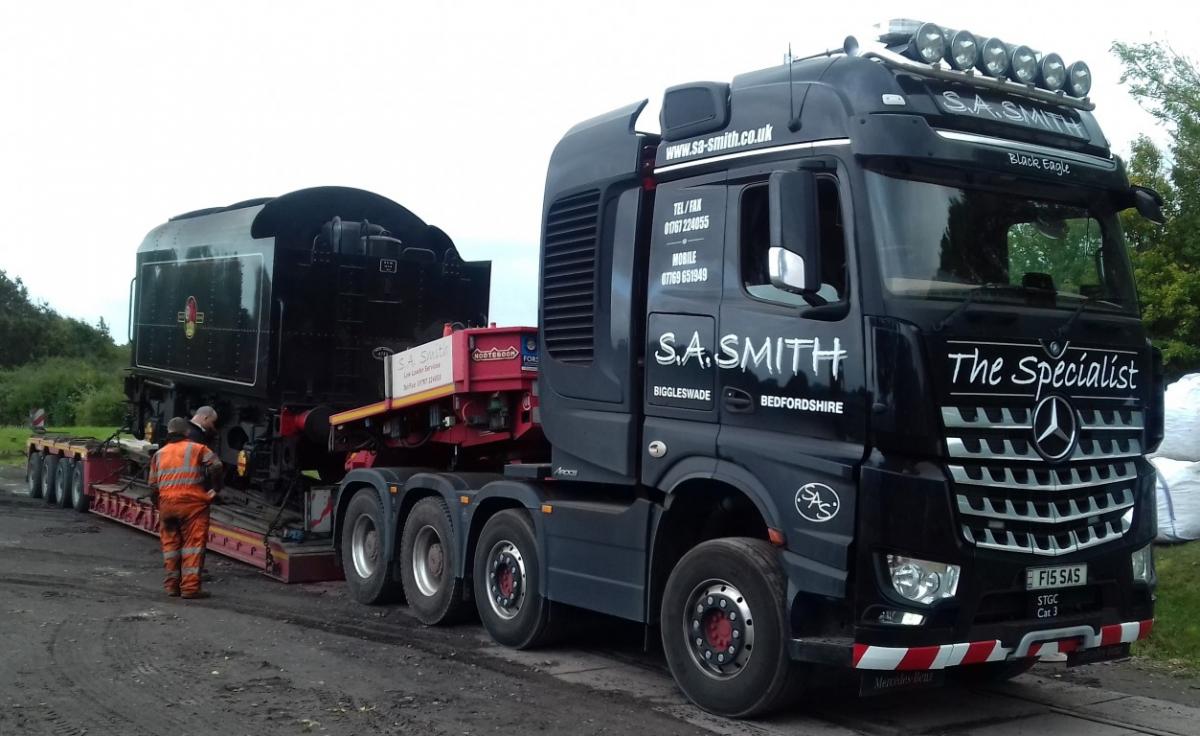
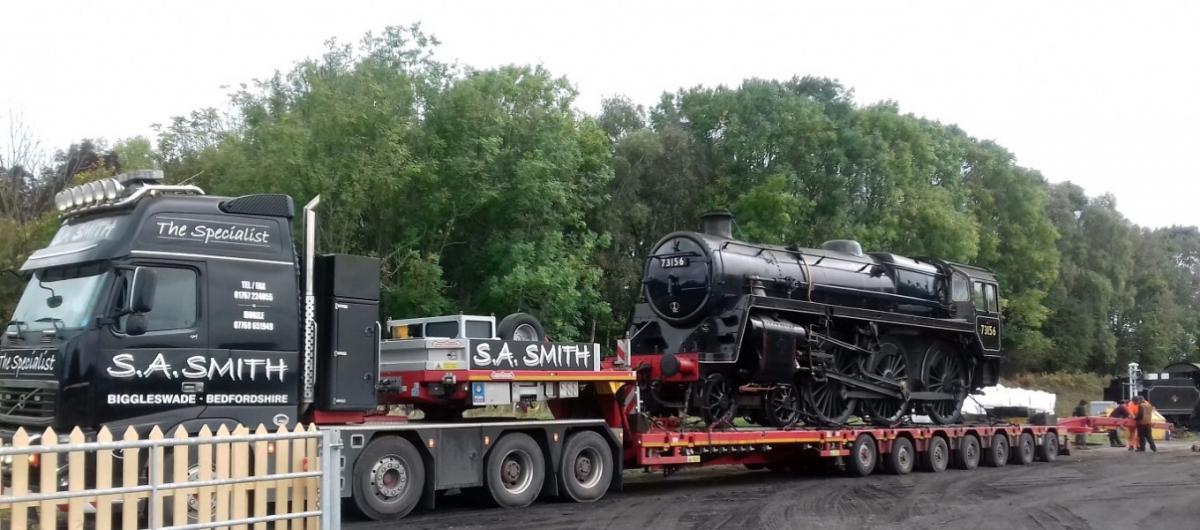
Their Merc, "Black Eagle" took the tender down.
-
Happy New Year folks. Many thanks Bas. Yes there will be a few truck pics later this winter. Here’s a couple to be going on with for you. A pal at work is part owner of a Standard 5 steam loco. It is based at the Great Central Railway in Loughborough. Back in October it made a trip down to the Swanage Railway to take part in a steam gala. S.A.Smith heavy haulage took it down overnight using their “Black Magic” Volvo and Nooteboom trailer. The loco had been in use that day and still had steam coming from the chimney as it travelled down the motorway!
-
LIVE FROM THE WORKSHOP WITH 512 MICHAEL STEWARD.4.1.2020
Roy B replied to bm7921's topic in Essential Information
Great stuff Bryan, especially with Derek and Bezz. Derek's views on the sport were spot on. The idea of interviewing ex drivers would be so good. You could start with Graham Blundell. He has some wonderful tales to tell. -
Cheers Steve . I can imagine Crispen's reaction
-
This week: I hope you all had a good Christmas. Whose got loads of food left over? We’ll start off at Mildenhall with the National Championship for the Saloons combined with an F2 QR, and then a look around the Lakeland Motor Museum. The Mildenhall weekend over the 15th/16th June was one that many look forward to. Camping is encouraged on site and the bar is open on the Fri and Sat night. It certainly helps the long distance travellers. Graeme Shevill (661) was the defending champion having won it on the Cowdenbeath tarmac in ’18. A whole host of top names were on hand to make it a good prospect including Diggy Smith (116), Deane Mayes (730) and Michael Allard (349). Saturday: 37 cars in the pits to do battle in three of five qualifying heats. At this time of year the Saloons were in the midst of a busy period and numbers were a little on the low side. Six overseas contenders were in attendance. Four from NI, and two from the Netherlands. In addition to the aforementioned Shevill, regular shale man Barry Russell (600) had travelled from Scotland. Ht.1: Ryan Santry (389) took the win from his “B” grade start, followed over the line by Daniel Parker (306), and Tommy Barnes (26). Ht.2: Another victory from the yellow grade. Matt Fuller (270) this time. Early battles in this one included Simon Venni (570) being spun out by Kieran McIvor (811) on the pit bend, and 730 tangling with 349 on the back straight. “C” graded Austin Freestone (341) had led until the final bend when 270 dived inside to grab the lead. It was his first win in over a year. 2nd and 3rd places fell to 811 and 116. Diggy had retired from Ht.1 so needed a good finish. Ht.3: A pit bend pile up at the start delayed a handful inc.306. Maikel Maas (H390) led until a lap down car drove him into the home straight wall. Maas took another trip to the fence on the back straight soon after. Cole Atkins (399) and 600 took over at the front with 6 to go. After a caution for a stranded car Russell passed Atkins for the win, with 730 in 3rd. “I like the ups and downs of racing”, Russell said afterwards. He had gone through the fence, and then won the Final the next day at King’s Lynn a week earlier. Ht.4: With under 5 to go in this one Trent Arthurton (610) was fired up the wall on the turn two exit and left hanging off the fence which brought out the caution. Timmy Barnes (131) went on to win from Shane Emerson (888), and Tyler Bloomfield (502). Parker finished 4th after spinning Smith out. The Barnes’s team had performed an engine change on Timmy’s car without missing a race so his victory was a well deserved reward. However, he suffered a scare when he was initially excluded for failing post race checks, before being reinstated. Ht.5: The last heat of the night saw Barnes on a charge again getting inside Venni and Emerson for the lead only to spin out with Emerson on the last bend. Venni claimed the win with Parrin and Russell completing the podium. Russell’s race finishes during the evening had earned him pole for the main event the next day with Parker alongside and Emerson and Parrin behind. Barnes and Venni from row three would be a threat. Highest grid placed overseas driver was Kieran McIvor on row four . Sunday: The low entry of cars mean’t the last chance qualifier was not run and any non-qualifiers allowed to start from the very back. With two non-starters 35 cars took the start. At the drop of the green 306 drifted wide letting Emerson through into 2nd behind Russell. World Champ Max Stott (157) spun on the pits bend, whilst Shevill’s hopes of defending his title ended when he went around on the back straight. Meanwhile, Russell had opened up a gap but was soon amongst the backmarkers on such a small track. He dealt with the traffic well but by half distance Parker had started to reduce the gap. Towards the rear of the field Santry gave Darren Mansi (19) a close up look at the fence in retaliation for being taken out the night before. 5 to go. A duel between Russell and Parker was clearly how the race was panning out. 4 to go and 306 nosed inside 600 to take over at the front. Russell tried to stay with Parker but caught the spinning Santry car delaying himself momentarily. A last bender was still possible for 600 until a back marker spun in front of him on the last lap allowing Parker a clear run to the flag. Russell held on to 2nd, followed by, Venni, Emerson, Mayes and Barnes (131). Owing to a 23rd starting spot Diggy Smith could only manage a 7th by race end. Parker now needed to find room for a third gold stripe to go with his twin stripes for the W.O.Shale victory, and his red and yellow checks for the Euro Champion. The F2’s were taking part in a WCQR and had 47 cars in attendance. Long distance men at this one were Gordon Moodie (7) from Scotland, with Chris van der Elst (H103) and Sjoerd Kranenberg (H126) from the Netherlands. Saturday: Heat 1 went to: Ollie Skeels (124), and Liam Aspin (394) claimed his career first victory on his first appearance of the year in Ht.2. Consi to Dave Massey (977), and GN to Gary Leech (131), another maiden victory. Danny Ford (12) had crossed the line first but was disqualified for a loose wheel guard. The Final saw yellow flags almost immediately after five of the “A” grade piled in at the end of the home straight. 394 led them away on the restart. Suffering front suspension problems the 394 car was oversteering badly into the corners but Liam was keeping ahead of the following pack. Andrew Palmer (606) was flying however and took the lead at halfway. Aspin spun on the 13th lap handing 2nd place to Liam Bentham (488) who closed the gap slightly but this was owing to 606 pacing himself. Palmer was still the length of the straight clear at the chequered. 7 came home 3rd. Sunday: With 43 cars still present 124 continued his winning ways with another heat victory, and a first ever in the Consi for Bart Smeets (969), the Dutch driver who is exiled in England. Stefan Miller (88) claimed his maiden Final victory holding off the challenge from the star men. It was that man again in the GN as Skeels took his third victory of the weekend. Lakeland Motor Museum The museum has been located in Backbarrow, Cumbria since 2010. It was established in Grange-over-Sands in 1978 as part of the attractions at Holker Hall and moved to its current home after 30 years. The site it now occupies used to be the Reckitt’s Blue Dye works carton packaging sheds. Reckitt’s had to relocate here from their Kingston works in 1941 after bombing destroyed the packing dept. It employed around 50 women and 7 men filling cartons of various sizes with Ultramarine Blue powder for export around the world. It was used as a whitener to keep cotton fabric from yellowing. Other uses for the blue pigment were: paints and enamels, make up, textile printing, wallpaper printing, inks, and sugar refining. The actual blue pigment started in manufacture in some old cotton mill buildings nearby in 1890. Despatch was by road and rail to Liverpool and the export markets of Freetown and Lagos in Africa, and Madras, Bombay and Calcutta in India. The factory closed in 1982. My dad used to deliver fridges, freezers and cookers around the electrical retailers of Ulverston and Barrow during the early 70’s and during the school holidays I used to go with him. He drove either an old Leyland FG (threepenny bit cab) or a new Leyland Terrier when available. We used to stop for a break alongside the blue dye works and will always remember the blue powder covering all the trees and undergrowth. A tame Robin used to land on the arm of the mirror for feeding and it actually had a blue breast! Going off subject a bit we had to take the firms Land Rover to a breakdown on the M6 one Sat night. It was an old Commer which had a modified propshaft beam. The bracket holding the assy was continually cracking and had been welded up a few times. It had given up completely just south of Keele Services on the northbound side. The heavy stuff had gone on ahead to hook up and we were mainly rear gunners. The driver of the towing vehicle was known as 18”. He only had one and a half feet (the other half had been lost in a pit accident). The prop had been tied up with rope to the underside of the vehicle so all was set. We got going with us following. The traffic was very light at that time fortunately. After a short distance the rope broke and the prop dropped down. As it dug into the road surface it sent showers of sparks and shrapnel flying out of both sides. A very spectacular show. It lit up the night sky a treat. Before it stopped the prop had hooked one of the brake pipes and ripped the lot out. They were a tangled mass wrapped around it. After re securing it all with a couple of chains the rest of the journey went off relatively smoothly. I had a Saturday job in the yard fuelling up the vehicles from 45 gallon drums with a hand pump, and also topping the rads up. A brook ran alongside the yard and I used a watering can on a rope which I had to throw into the water and haul it back. The filler necks were beneath the windscreens in those days so I had to stand on the bumper to reach it. Returning to Backbarrow now. The production of iron in this area was a very important part of its history. The first furnace in the north of England was built there in 1710. One of its most famous sons, John Wilkinson, built the world’s first iron barge and could be considered the father of all modern shipping. He invented a lead pipe drawing machine and a cannon barrel boring mill. These and other inventions changed the world we live in today. There were two gunpowder works. These provided over a third of the powder used in the Napoleonic wars. A fascinating history for a rural backwater. Back to the present day. The museum houses a collection of classic cars, motorcycles, bicycles, pedal cars, and an exhibition dedicated to the land and water speed records of Sir Malcolm Campbell and his son Donald. Next week: Taunton for the F2 British Championship, and we go off the beaten track to have a look at a couple of disused railway locations.
-
I'll do them this week Will. Thanks for reminding me
-
For some reason all the apostrophes and underlines/dashes etc have disappeared from the text folks. I'll add them back in a.s.a.p
-
This week: A few pics from the H6 workshop, and then well have a walk up to the final resting place of WJ615, an English Electric Canberra. I had planned to put some pics on from Mildenhall and the Saloons National Championship this week, but Pascal Spigt has sent me the first set of pics from his workshop which I am sure youd rather see. The team decided to strip the car down after Kings Lynn. Although Pascal had a good weekend they were not happy overall with the car. Some damage to the block was discovered. This has been professionally repaired. The engine is a small block 440 Chevy. The sump guard has been removed and replaced with a chrome moly one. Also work on the suspension links and brackets. The car will receive a general cosmetic make over in the weeks to come. Pascal would like to thank the team who are: Mum and Dad, lost without them. Best brother crew chief. Marco master mechanic. Patrick ace mechanic #2. Sjoerd warehouse manager. Uncle Aad not a job too big for him. Desmond always there. Youri their youngster. Job crewing for 10 yrs. Dennis Jeroen Michel And his wife Nathalie, and children Mika and Senna. More updates to come from Pascal later in the off season. The story of Canberra WJ615 I am a time served aircraft fitter by trade, and one of my first tasks as an apprentice was working on Canberra wings for a few weeks. This was a refurb job and did not involve the aircraft in this article. The Tornado was just starting in production at that time so I was drafted into the assembly and test hangar and spent the next forty years involved with testing, engine running and flight line work. I never get that Monday morning feeling in this job. Theres loads of variation. Standing next to a jet on double engine runs up to max chat re-heat is a never to be forgotten experience. Kidney belts have to be worn as the vibration from the engine pulse reverberates through the body. Flightline work involved marshalling jets in and out of the bays.Theres nothing colder than a windswept airfield on a sub zero winters day. The only way to try and keep warm is to huddle around the exhaust pipe of the ground power unit but then you end up getting gassed with diesel fumes. However, you cant beat the blast of warm air from the jet pipe as it turns to taxi to the runway. The smell of burnt aviation fuel coming out of that pipe is something else. Perfume of the gods. Ive attached a video showing a lad marshalling jets for a charity event. It is quite amusing. When he crouches down its not for fun though, as the blast from the jet pipe will literally knock you off your feet. Hes in vest and shorts at the end, and it was absolutely freezing that day. Notice how he warms his hands as the last jet goes. https://youtu.be/Vz7FI_S0_NE Anyhow back to the Canberra. I was going up to Crimond one weekend and had heard about a Canberra that had crashed many years ago in the high ground close to the Braemar region of Aberdeenshire. With a decent weather forecast predicted I decided to have a look for it. The Canberra aircraft were developed by English Electric in the mid-to-late 1940s. It was classified as a first generation jet powered medium bomber. It was the RAFs first jet bomber for high altitude and speed. During the 50s it set world records for high altitude, and non-stop transatlantic flight. It had a lengthy service life, serving for more than 50 years. In June 2006 the RAF retired the last of its Canberras, 57 years after its first flight. WJ615, the one we are involved with is a B2 which was the initial bomber variant. It was operated by 35 (Madras Presidency) Squadron Royal Air Force. On the 22nd Nov 1956 the two man crew were detailed to fly a 3 hour night sortie. At 18:02 the aircraft took off from RAF Upwood (Cambridgeshire) and departed for Kinloss (Scotland). Weather conditions were good for the whole trip. At 19:00 the aircraft made radio contact with Kinloss and performed a normal visual circuit and runway overshoot. At 19:21 the aircraft climbed away from a height of 300ft. Kinloss Air Traffic Control passed two regional pressure readings and the Flying Officer replied, Thank You. Good Night. This was the last communication from the aircraft. It was seen to climb away for its return to RAF Upwood. At approx. 19:30 witnesses from near Braemar heard it pass at an unusually low altitude for that area. A witness saw the tail light and the outline as it headed south with the engines sounding normal and on a level course. A few minutes later the same witness saw a flash as it struck the hill. It was a clear night with just a few scattered clouds. Around thirty volunteers guided by the Police and the Queens gamekeepers, and two RAF Service Mountain Rescue Teams comprising of thirty two men and a helicopter were engaged in the search. At 08:40 on the 23rd November a search party were just approaching the wreckage when the helicopter also sighted it. Both crew members were killed in the impact. Officially the wreckage was recovered to RAF Edzell for accident investigation, component recovery and scrapping. However, substantial pieces of wreckage remain at the site. The Court of Inquiry was unable to determine the cause of the accident. So lets see what we can find. On the A93 between Braemar and Ballater is a turn off down a single track road to the Spittal of Glenmuick. At the end of this is a small car park next to the River Muick. If its between May and Sept do not leave your car door open as swarms of midges will get straight in to share the next journey with you. They are voracious nippers. With the river close by its the ideal environment for them. If youve been at Northampton when the corn flies are around youll know how itchy they make you feel. Well they are playing at it. These Scottish ones are the real deal. The wreck site is high in the Lochnager hills and makes for a long day walk in a superb location so an early start is the best option. The pics in the gallery show some of the scenery to be found. I left the car park under a black cloud of hungry midges, and didnt stop again until I was away from the river and on higher ground. It was a warm day with hardly a breath of air, and I soon noticed a few black flying dots on their approach so legged it before they hitched a ride. The route to the site is simply glorious with views as far as the eye can see. The summit of Carn an t-Sagairt Mor is where the aircraft came to grief. Wreckage is strewn around both sides of the mountain. I had chosen the side where some big pieces of wing remain. The rest is on the far side and at a lower altitude so would have meant descending and then climbing back up again. This was not really an option as the distance and time to get back to the finish was limited by daylight hours. Ill return another day to have a look at the far side from a different start point. It is mainly wing parts which remain at the point I visited and the aircraft number is still visible. It is a surreal sight to see the wreckage in such beautiful surroundings. One unexpected thing happened. I took my back pack off to have a bite to eat and when I opened it a load of midges flew out! They must have got in at the start. Fortunately there was a slight breeze at this height and as they cant handle that they soon dispersed. I had taken a direct route to the top via a steep climb up a gully. This would have been quite time consuming to go back down so opted for a longer but easier return route. This followed a stalkers path and went alongside the full length of Loch Muick. A truly stunning location. I got back to the car park around 12 hrs after setting off and hadnt seen one other human being all day. I did see six ptarmigan, a couple of sandpipers, a fleeting glimpse of a hare, and a fair few deer though. This short video shows the magnificence of the area: https://youtu.be/U5WIsGxZLsU Next week: Mildenhall for the Saloons National Champs, and a visit to a former Cumbrian dolly blue site that now houses a unique collection. Have a good Christmas folks.