Hi there folks.
Welcome to episode 1.
In this one:
Section 1: F2 pics from Taunton
Section 2: Out and About 1 – High Cup Nick
Out and About 2 - Minffordd Yard
Section 3: Martin Auto Museum – Part 1
Section 1
Taunton – Sunday 29th March 2026
Smeatharpe’s second race day of the 2026 season was a four-formula affair with national formulas at the centre of the action. The British Spring weather continued to surprise and disappoint with chilly weather turning to drizzle later in the day that made track conditions tricky. The race action may have slowed a little, but it certainly didn’t suffer.
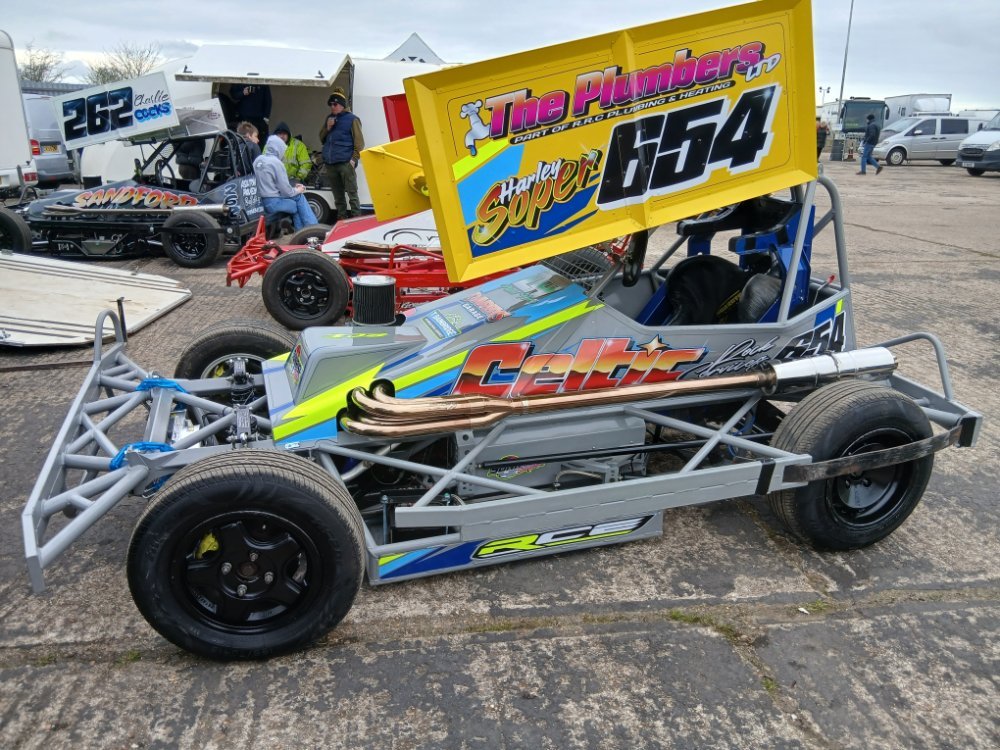
A cracking entry of 45 Formula Two’s ran a full format meeting with 22 cars taking part in heat one. The two white tops had very different fortunes. 770 Austin Farrell dropped quickly to sixth place but fought back to fourth with a well-timed hit that forced both 828 Julian Coombes and 464 Matt Linfield wide. Farrell then ran wide with a driving error of his own in the next lap and fell to the bottom of the top ten. The other white top, 509 Jordan Butcher, led a few laps but then left a gap up the inside of turn one on the fifth lap which 654 Harley Soper was quick to go through. Soper was chased by 501 Jason Ward who used a bit of bumper to move Soper off-line on the same lap and Ward then pulled clear to a comfortable victory. The remaining interest in the race was the charge from the back of 127 Matt Stoneman who again found a gap to pass 207 Alfie Flecken two laps from the end to finish in second place.
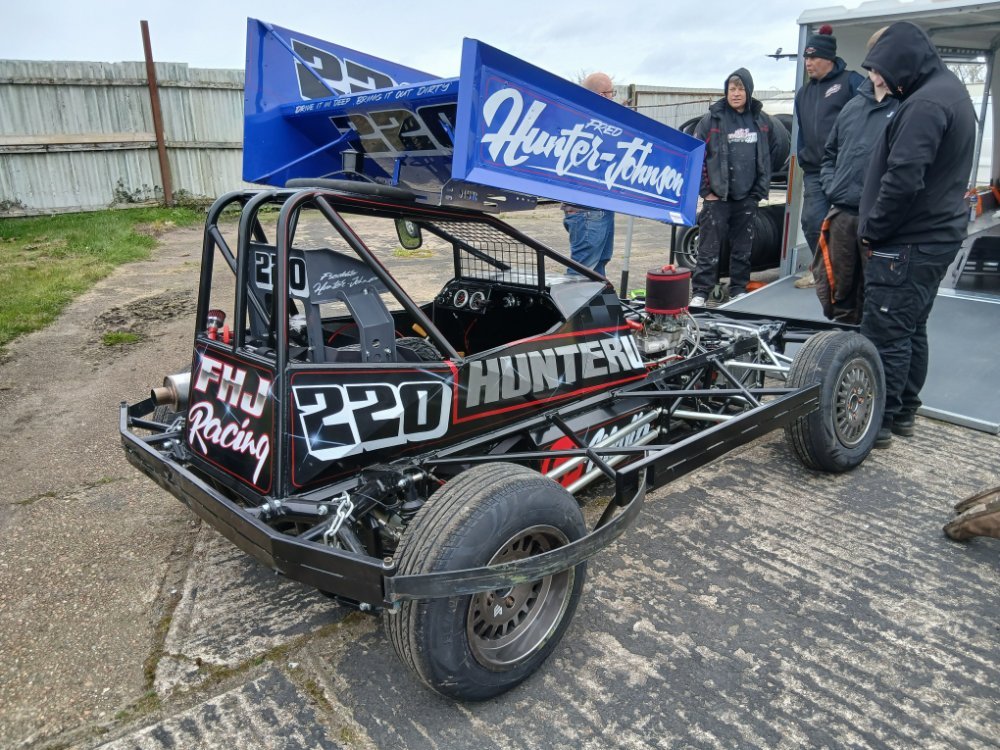
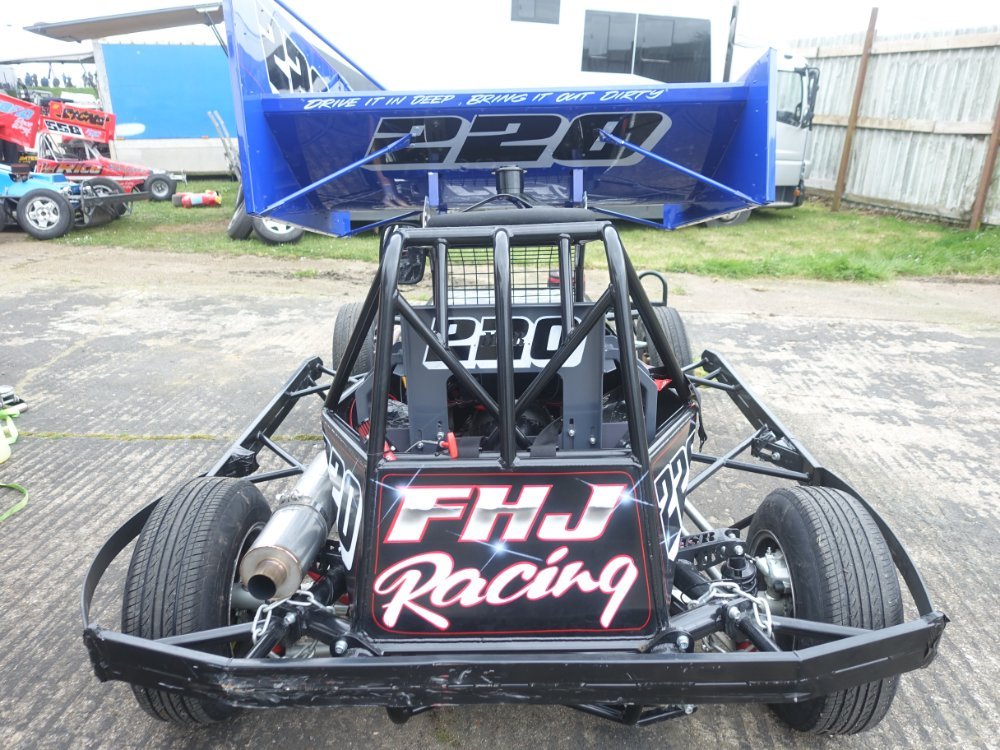
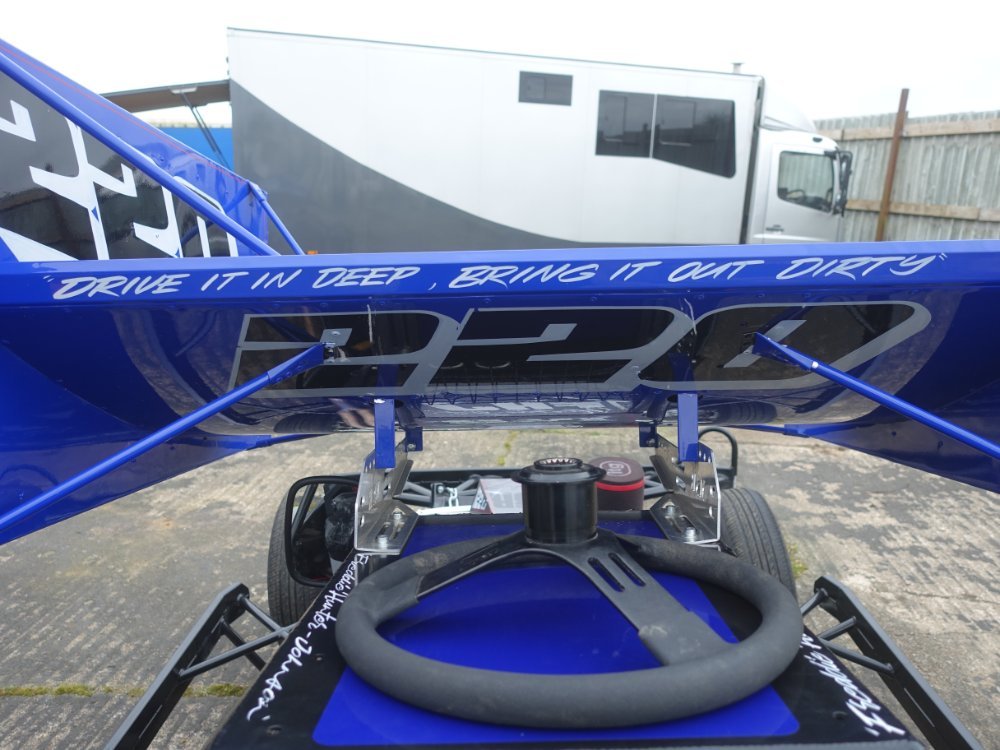
Heat two featured the other 23 cars and had white top 262 Charlie Cocks making the early running. None of the yellow grade got close to him and it was a charge from blue that settled the race with 727 Luke Syrett-Barsby, 2026 sensation 220 Freddie Hunter-Johnson and 405 Josh Hamstead all coming through the field in convoy. Cocks was moved wide and surrendered the lead to Syrett-Barsby when a telling hit came in and despite best efforts, Hunter-Johnson was unable to get close enough to his former National Ministox colleague to challenge for the victory. Syrett-Barsby won with Superstar 213 Tom Bennett making a late dash to get amongst the convoy of blues and finish third ahead of Hamstead.
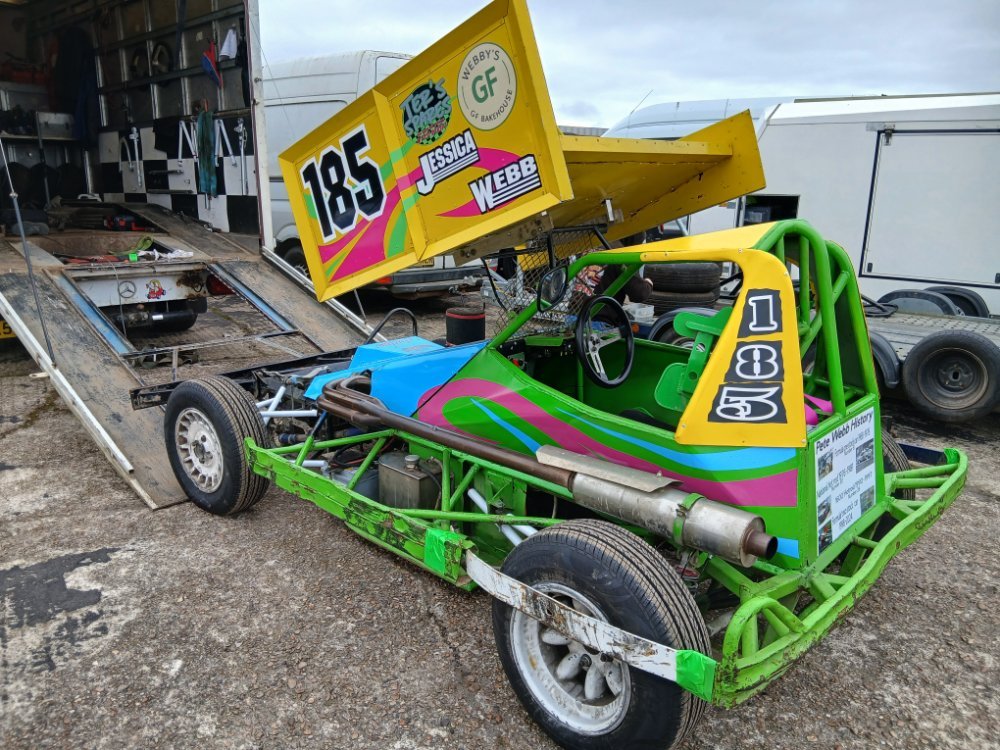
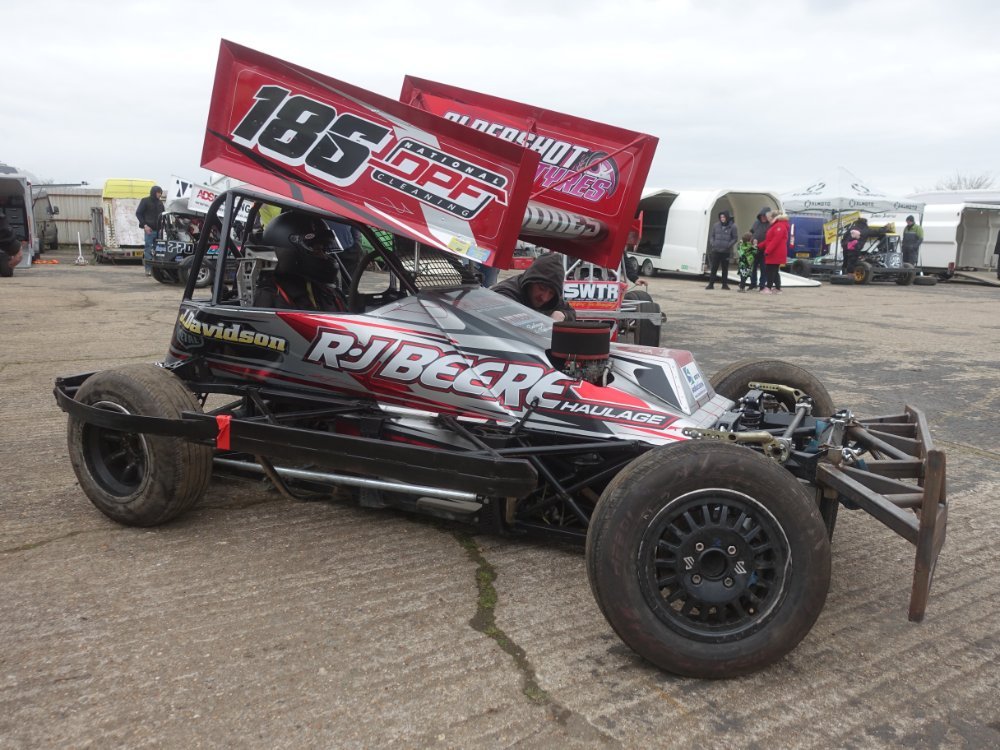
24 of the 25 eligible cars returned for the Consolation which started in scenes of chaos. 185 Jessica Ward crashed out in turn three at the drop of the green flag and was collected hard by 890 Paul Rice whilst 828 Julian Coombes went spinning in the dense field of yellow graders on the home straight and was hit several times. 728 Jack Bunter went skyward off a marker tyre as he took avoiding action. Medical assistance was required to safely get a shaken Coombes from his car, and a complete re-run of the race was ordered. The restart was equally fraught with 128 Jake Ralfs pirouetting down the home straight plating on the opening lap to be hit by 359 Gary Wrench bringing out yellows. Farrell led the restart but left a gap for 234 Tom Shilling on lap three and by the next lap 542 Steven Gilbert was already on the scene using a great push to move from fifth to second in one corner. By half-way, Gilbert had passed Shilling to lead but a lap ten hit from 890 Paul Rice was enough to hand Rice the lead which he converted into race victory.
As the damp weather really set in, there were two non-starters in the Final which gridded 28 cars. Gary Wrench was the first of many to misjudge the level of grip and put himself around the turn three plating in the very early stages. Butcher once again had a turn at the front but this only lasted until the third lap when 464 Matt Linfield passed him and pulled clear to build up a decent lead. Butcher held second until just before halfway when he left a space that 979 Paul Moss couldn’t resist on the inside of the pits turn. Moss continued to reel in Linfield and grabbed the lead four laps from the end with Flecken stealing second a couple of laps later. Moss held on at the front despite Flecken gobbling up the gap between him and the leader as the track dried, but that was how they finished at the chequered flag. Linfield was penalised for a blatant jump start, which promoted 194 Luke Johnson to third place and Butcher to fourth.
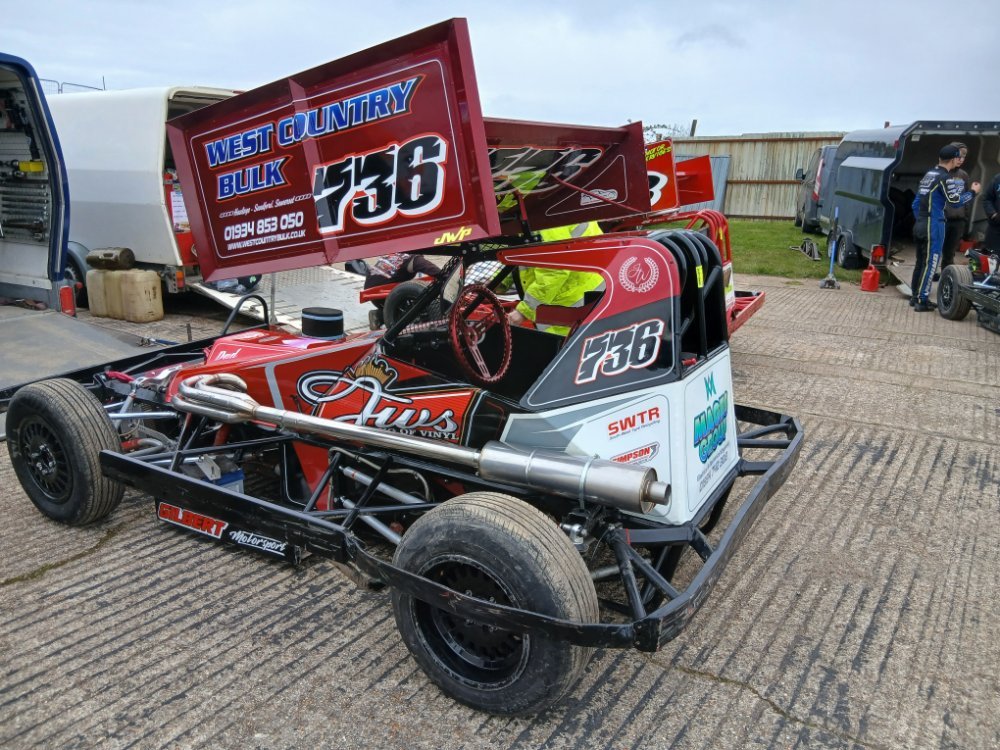
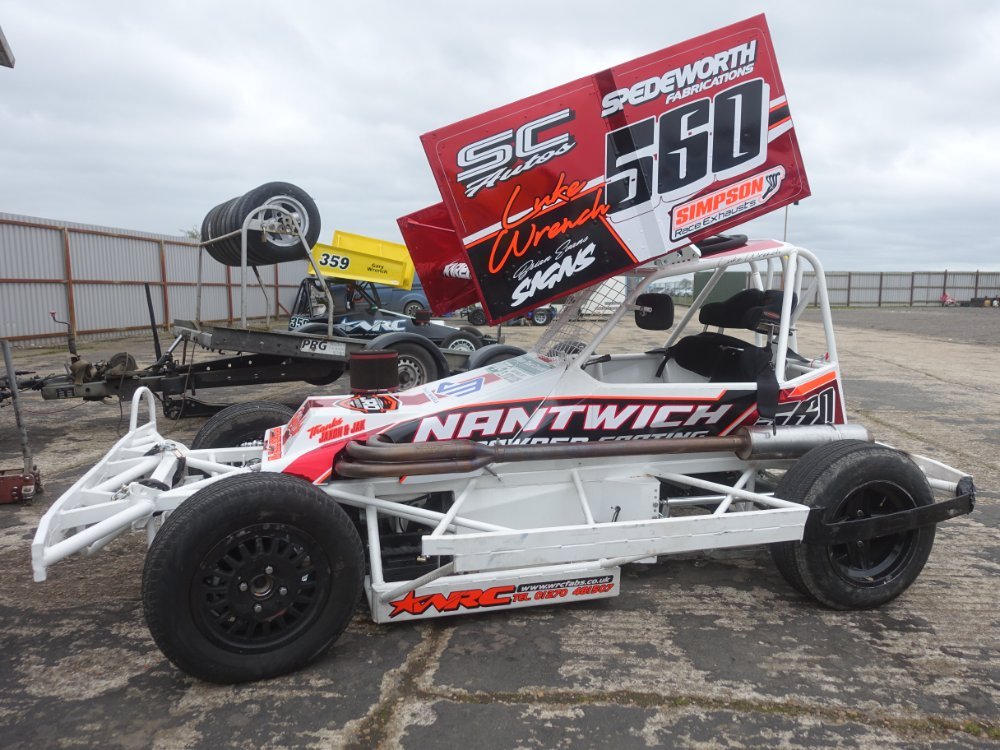
The 29-car Grand National was the biggest grid of cars of the day. Flecken was an early back straight spinner whilst 560 Luke Wrench found the wall hard in turn three and retired with a damaged bumper catching the front wheels, after a clash with 12 Craig Driscoll. The early leaders were a repeat of the Final with Butcher giving way to Linfield after four laps. Further behind, a fierce battle between 355 Aidan Grindey and 27 Kieren Bradford spilled over when Grindey launched Bradford so hard into the pits turn that both ended up hitting the plating hard and Grindey ended up facing where he had just come from. Bradford then got tripped up by the conditions on the next lap, running very wide, where he collected Grindey bringing out the yellows for a race caution. On the restart, Shilling and 468 Sam Weston crashed out together and Driscoll span trying to avoid them. Linfield stayed at the front until the lap boards were showing but was then moved off-line by 736 Josh Weare who survived a spirited attack from Ward at both ends of the track on the last lap to take the victory. A great day of Formula Two action, as Smeatharpe always is!
Words by Crispen Rosevear
Pics:
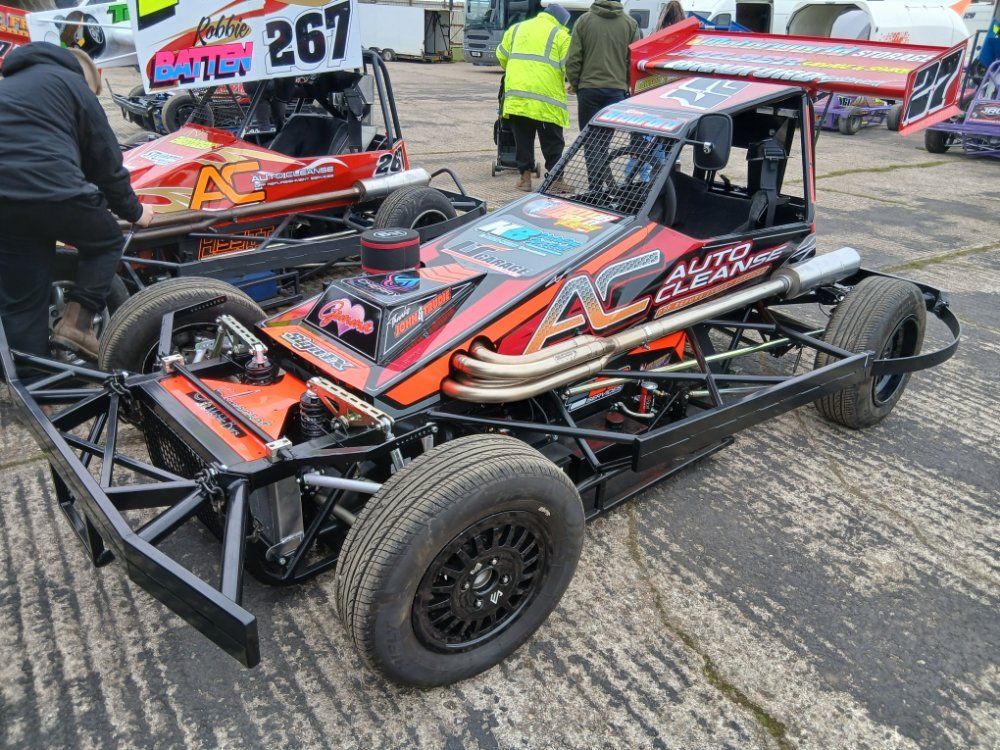
Kieren Bradford’s new one
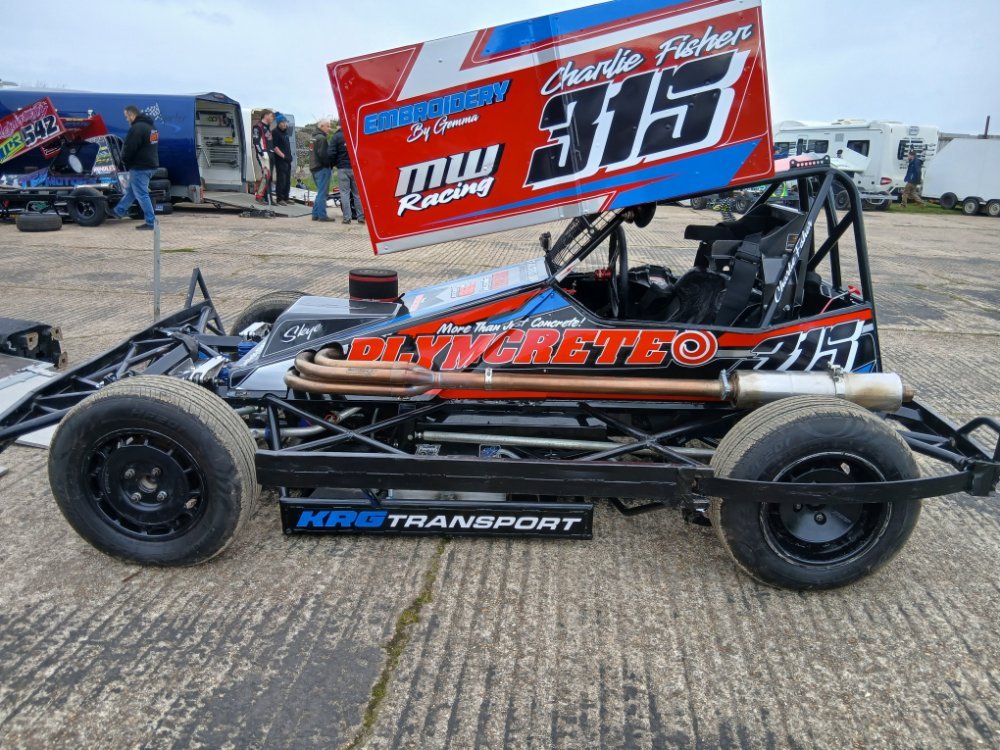
Charlie Fisher
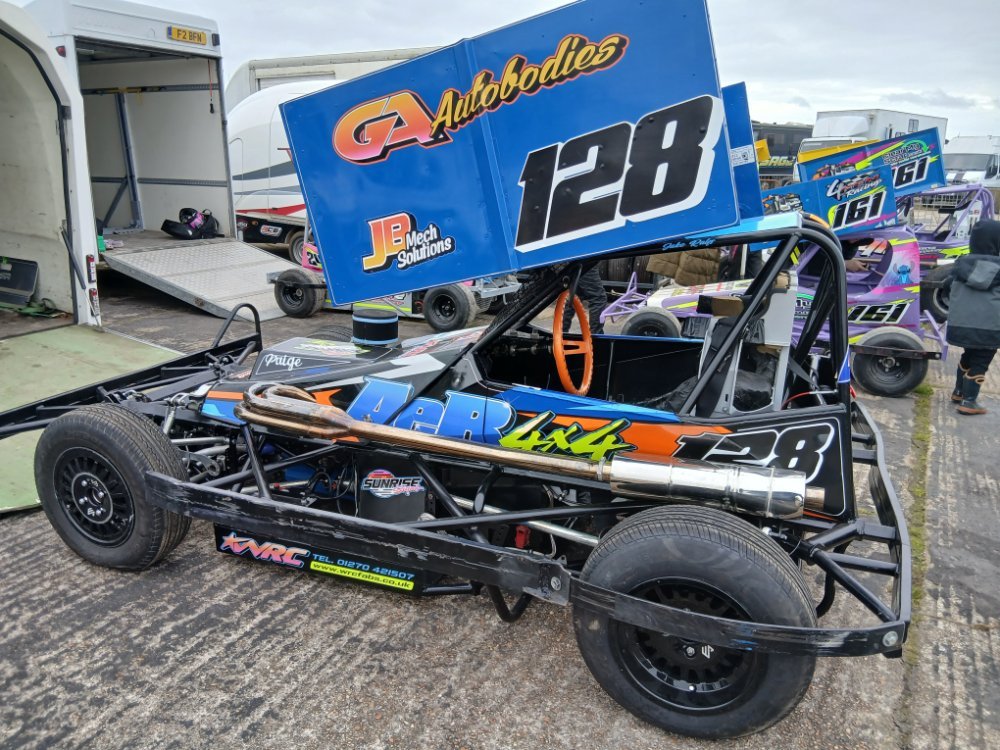
Jake Ralfs
Josh Weare won the GN
Harley Soper
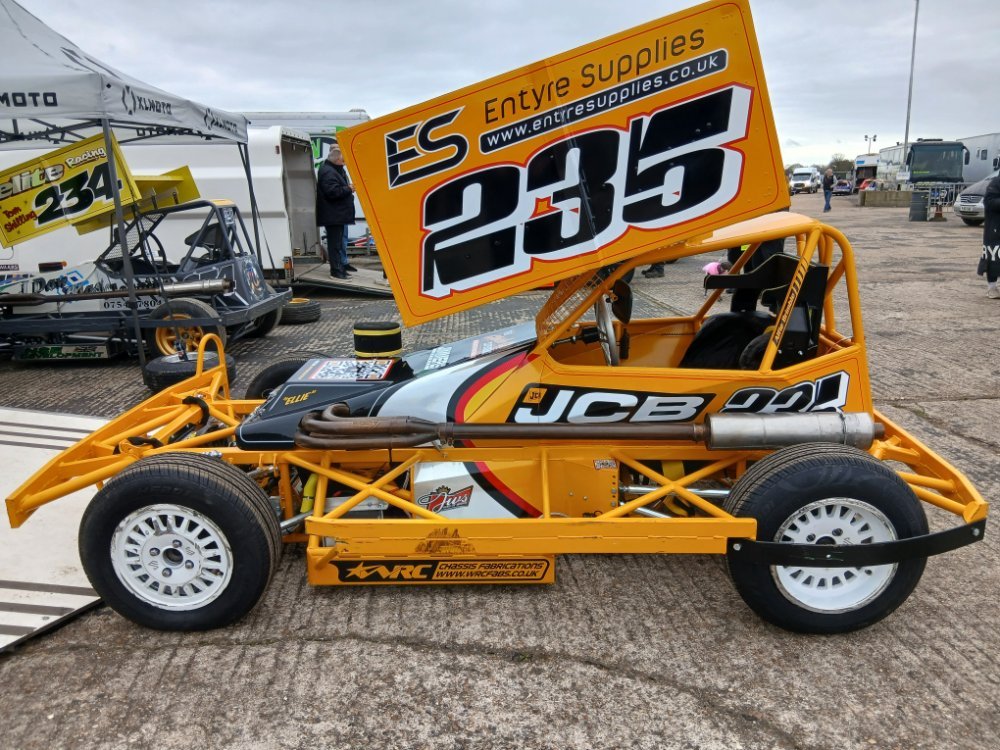
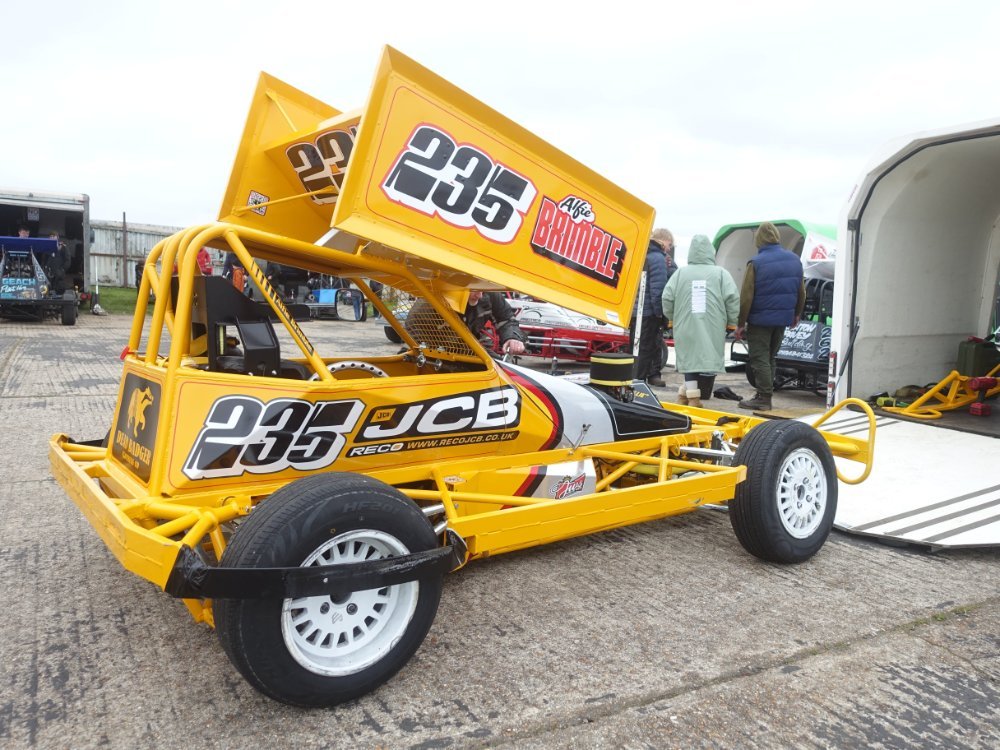
JCB sponsorship for Alfie Brimble
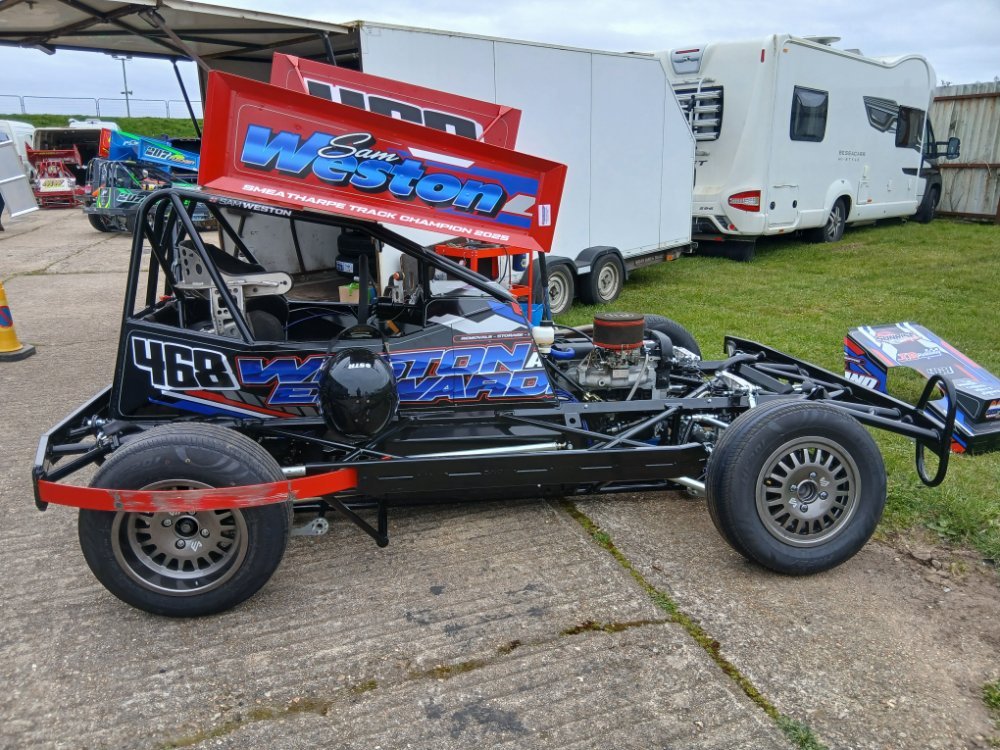
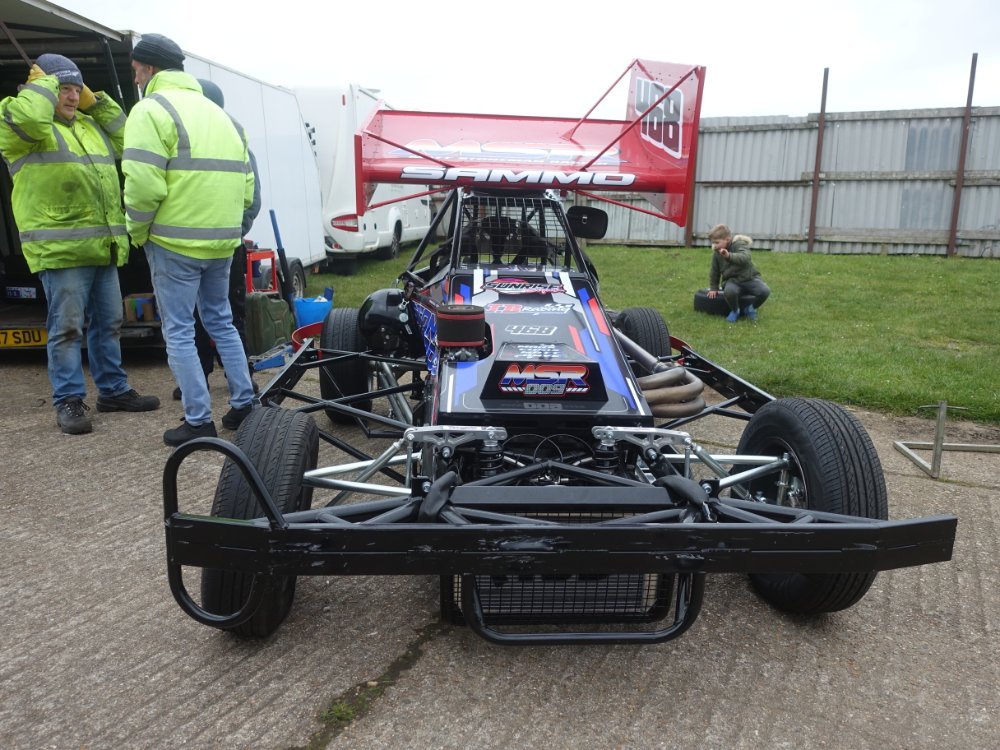
Sam Weston
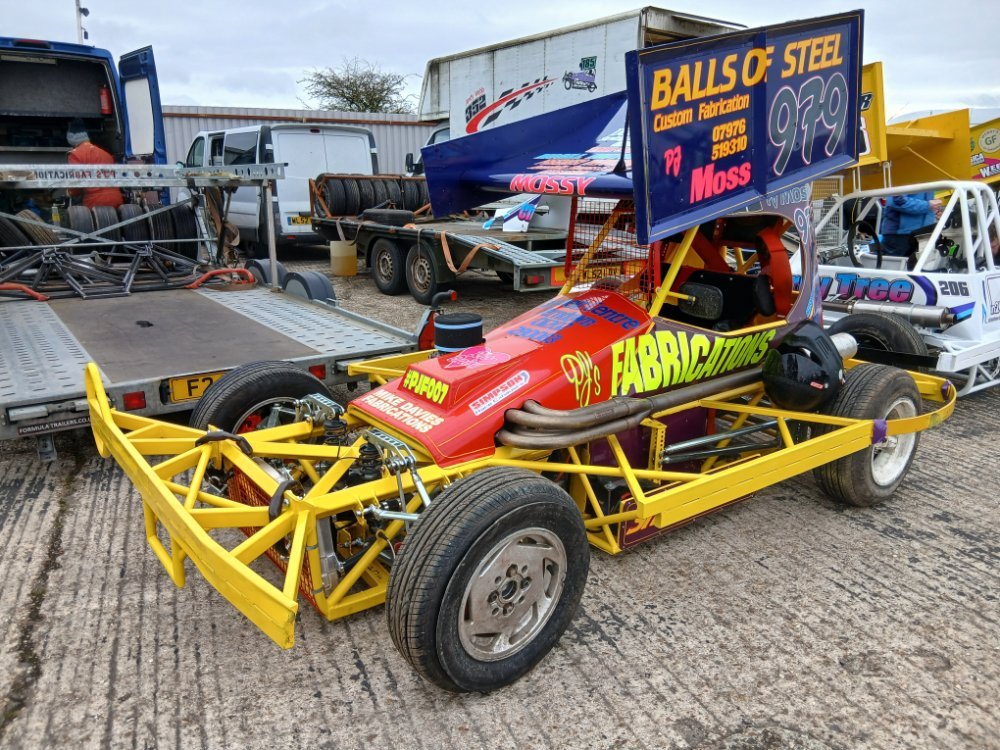
Paul Moss
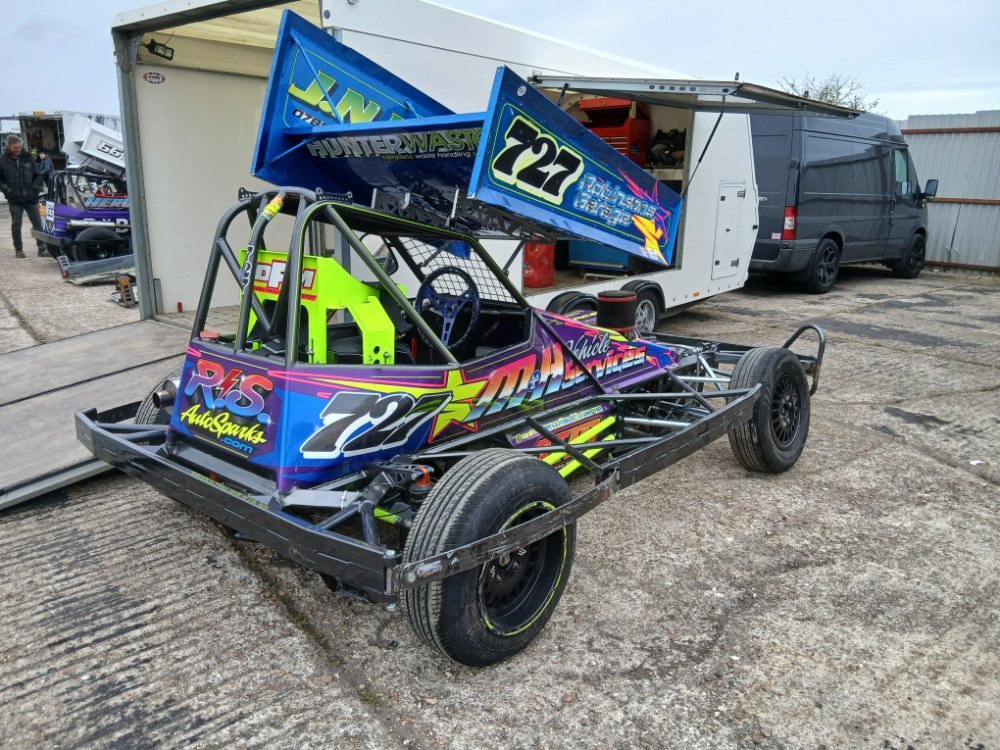
Luke Syrett-Barsby won Heat 2
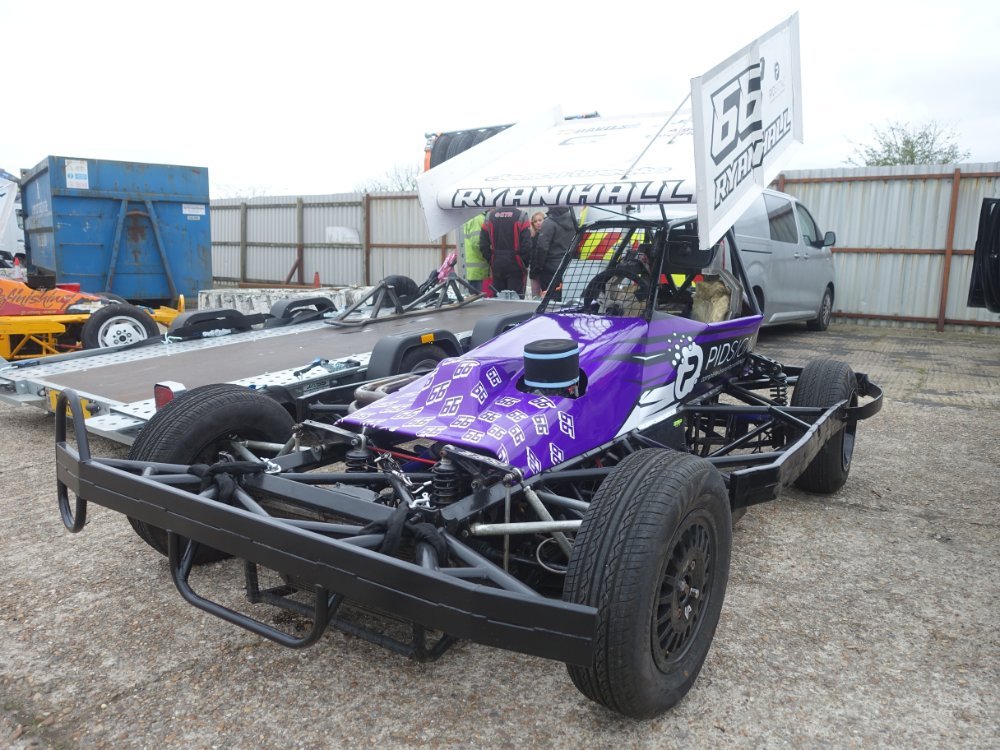
Ryan Hall
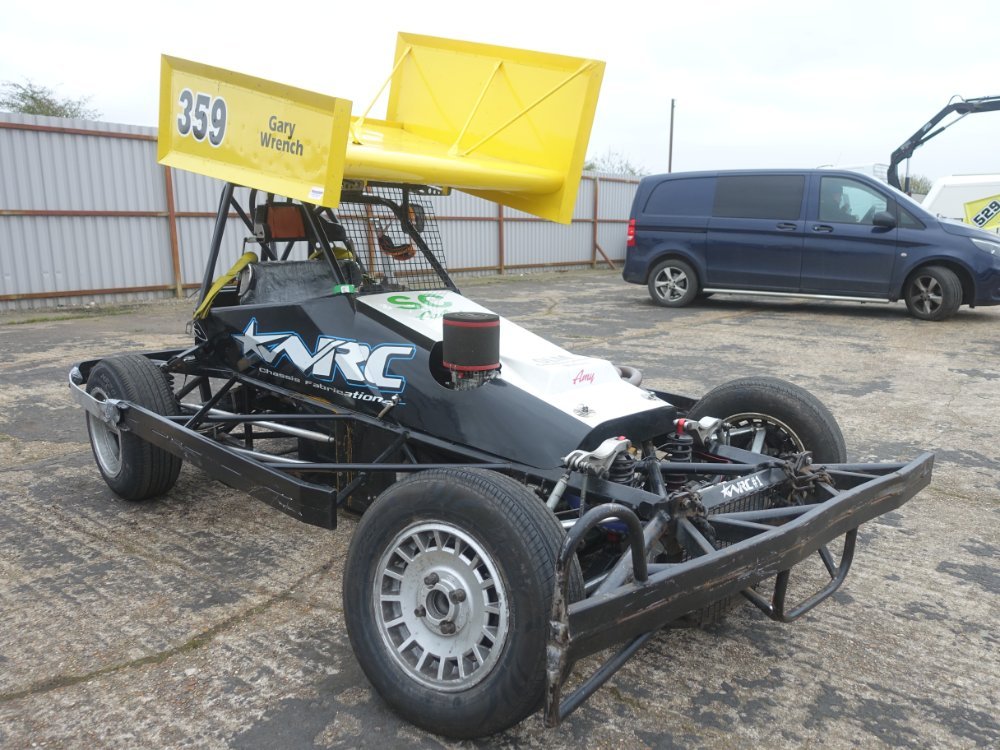
Gary Wrench – WRC#1
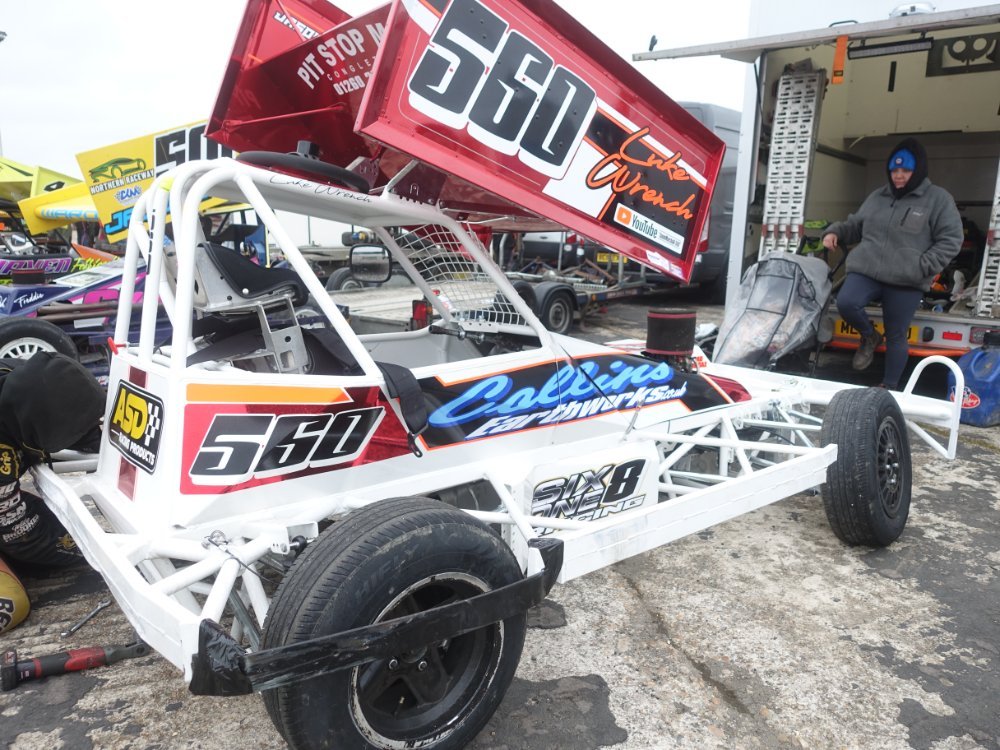
Luke Wrench – WRC#100
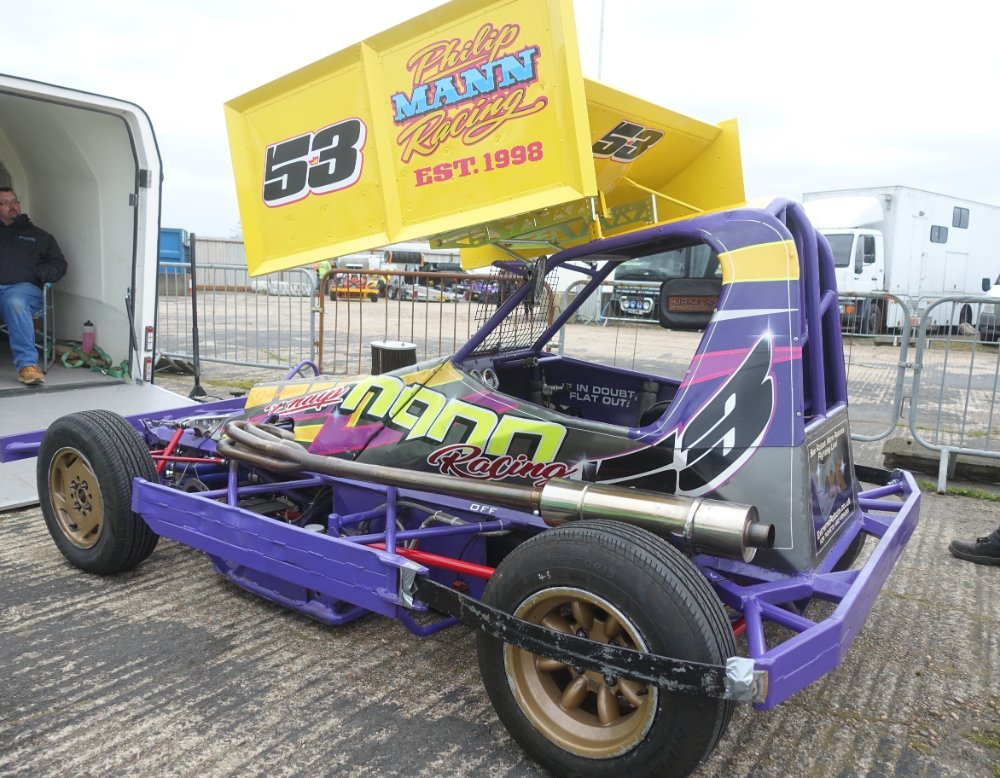
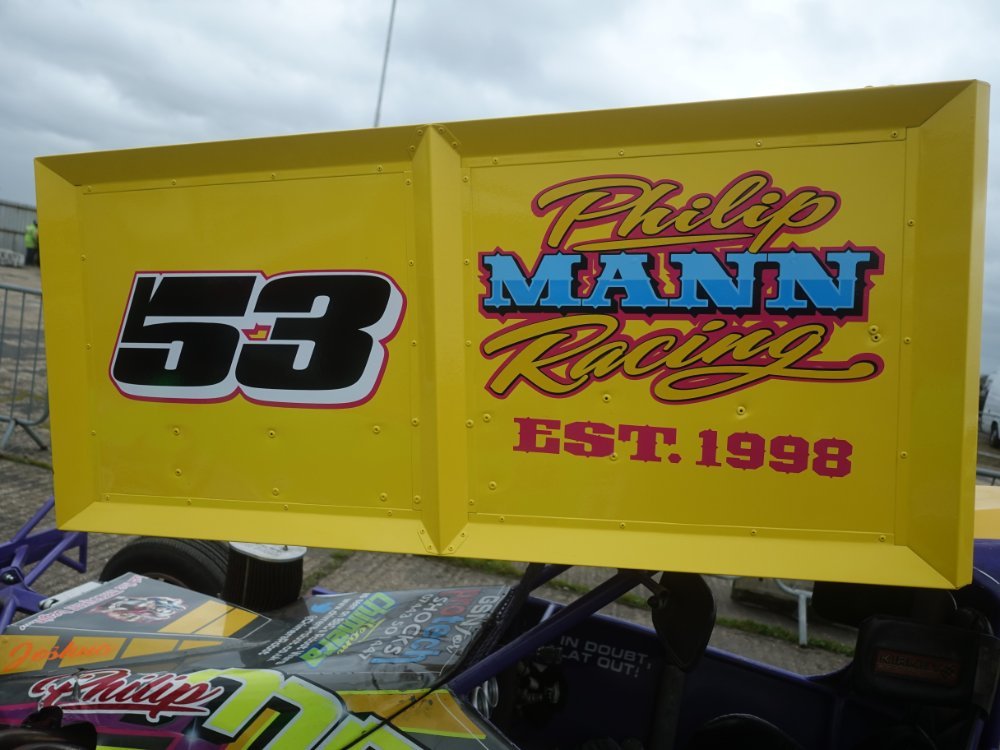
Phil Mann
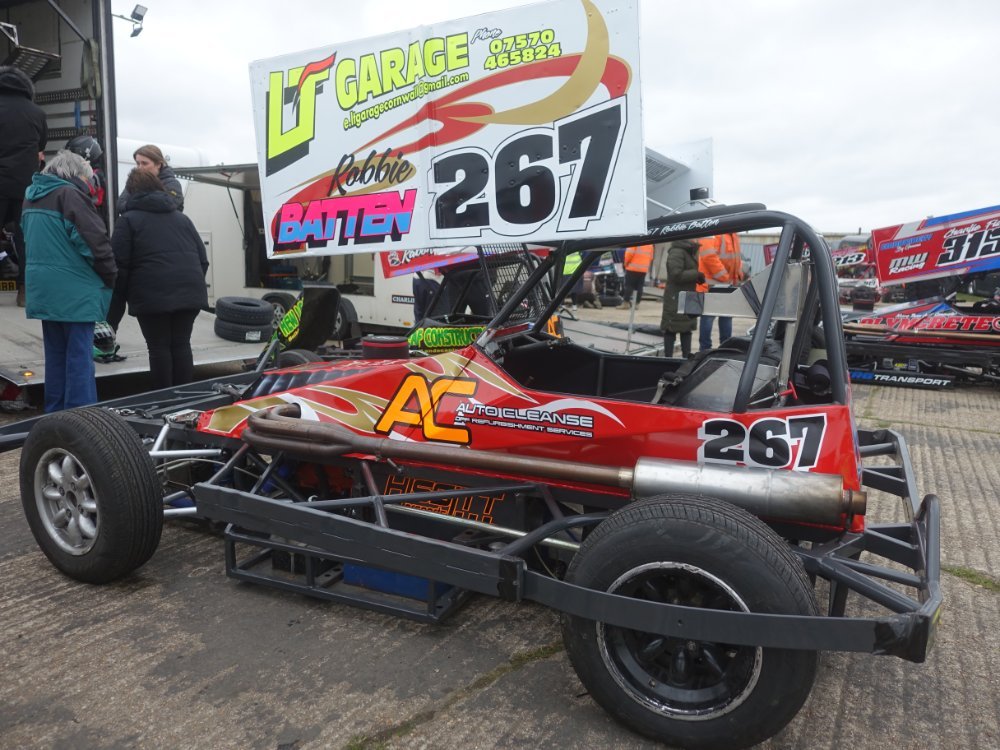
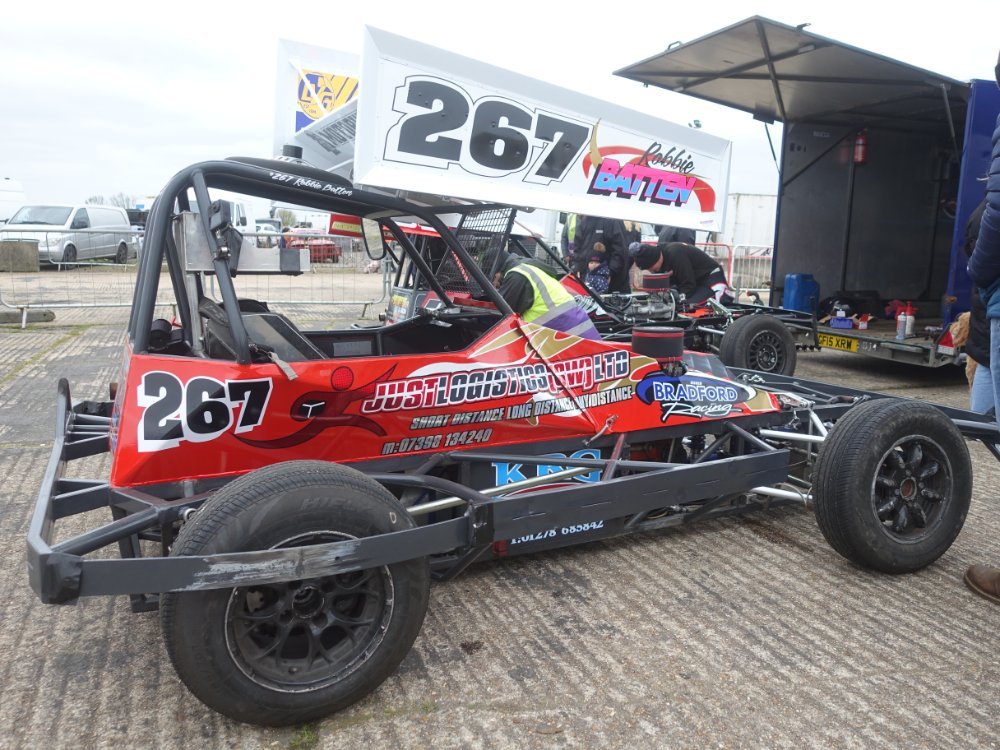
Robbie Batten
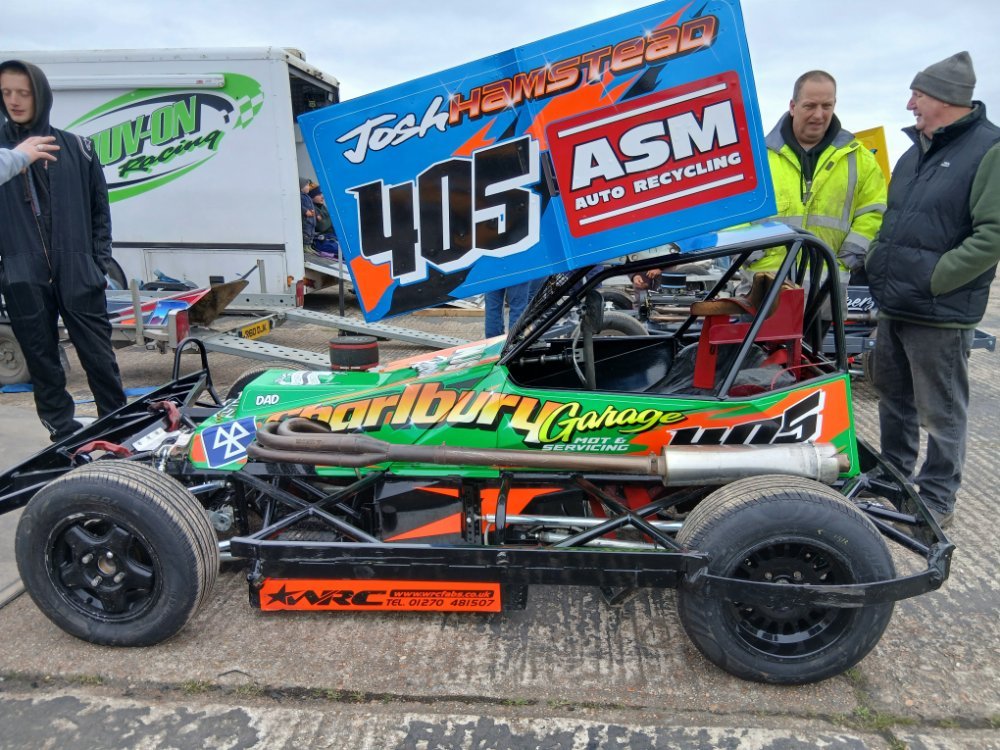
Josh Hamstead
Charlie Knight
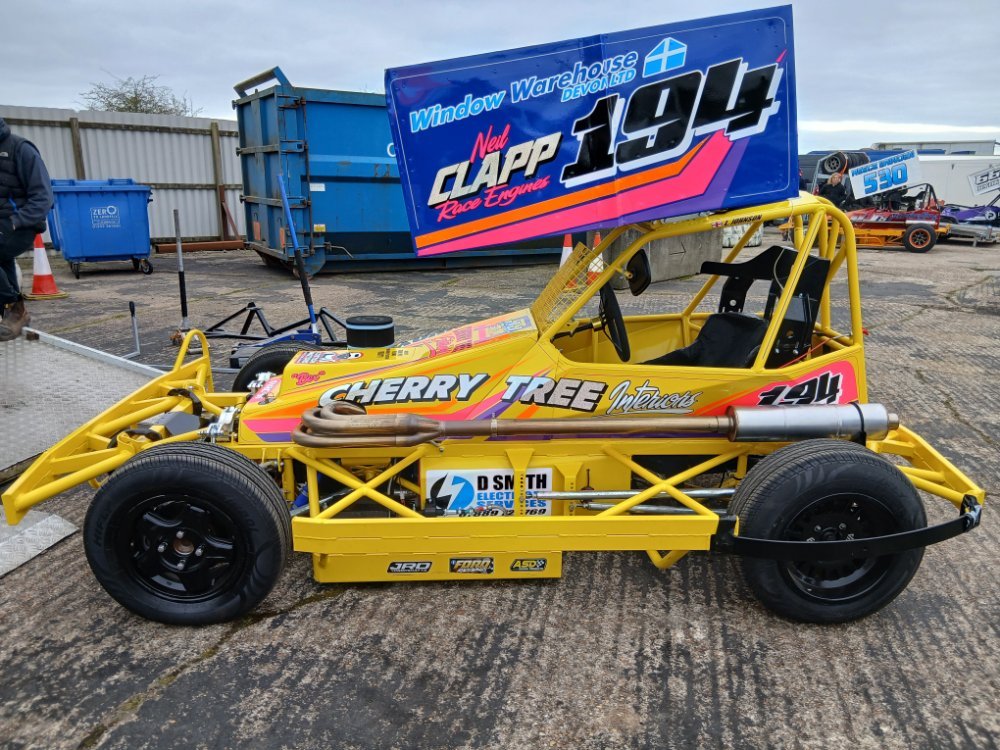
Luke Johnson
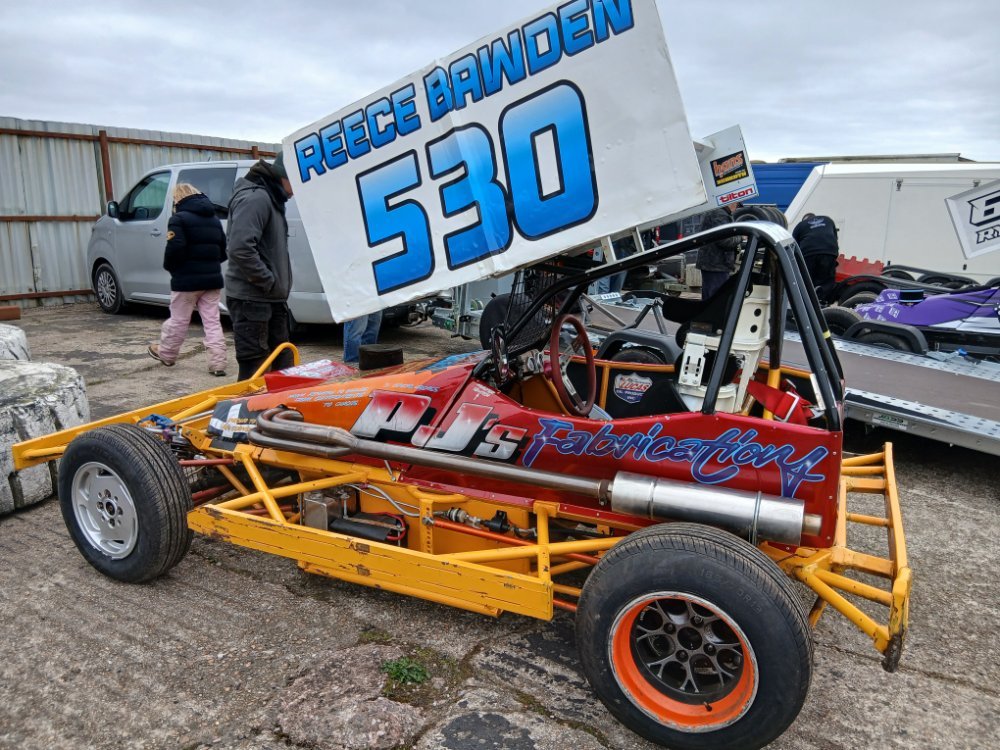
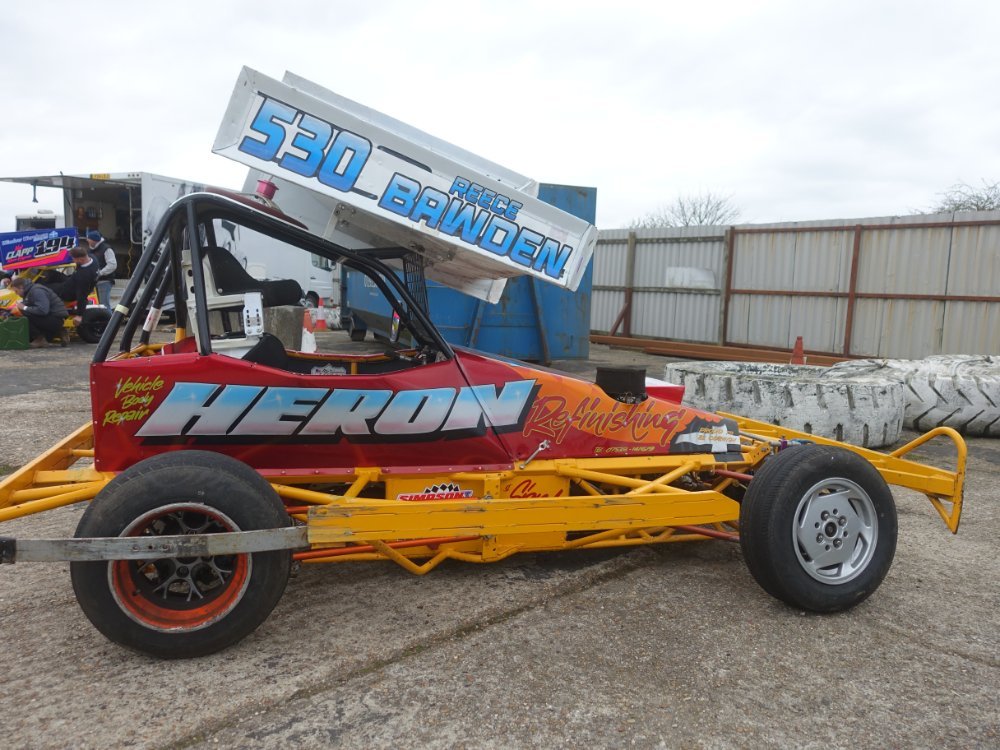
Reece Bawden
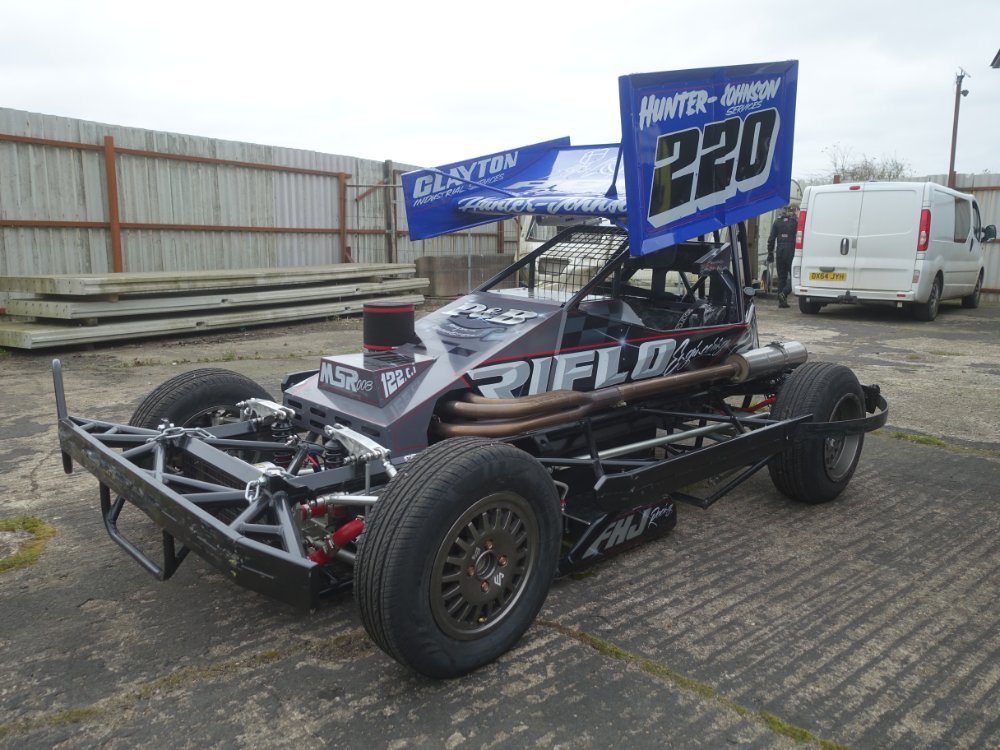
Fred Hunter-Johnson
Jessica Webb
Kasey Jones
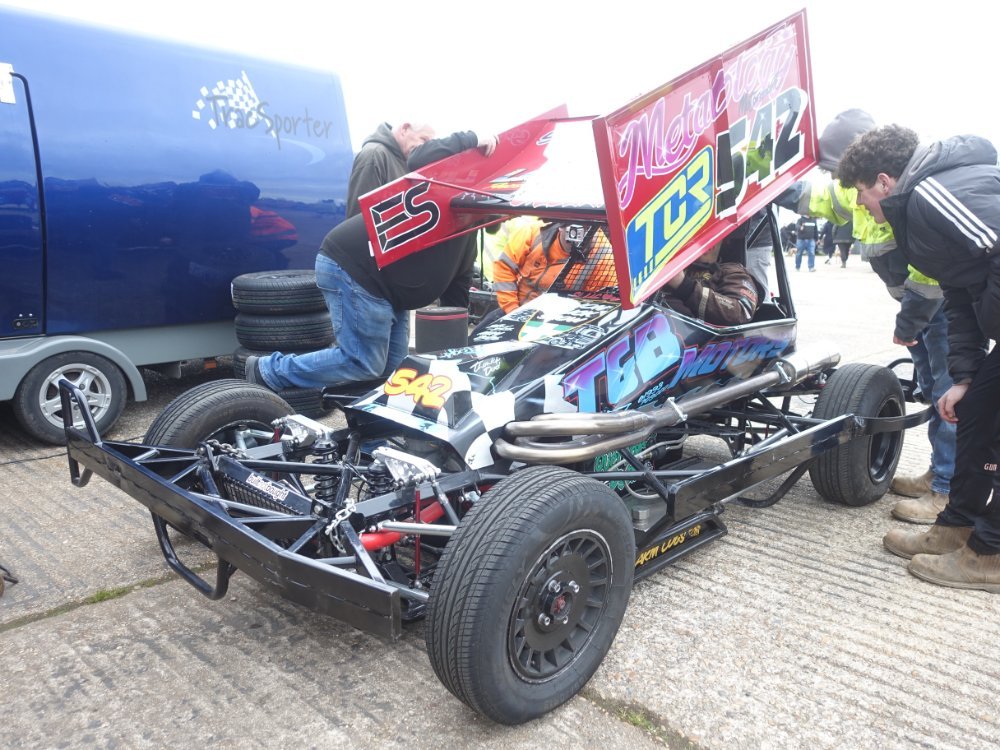
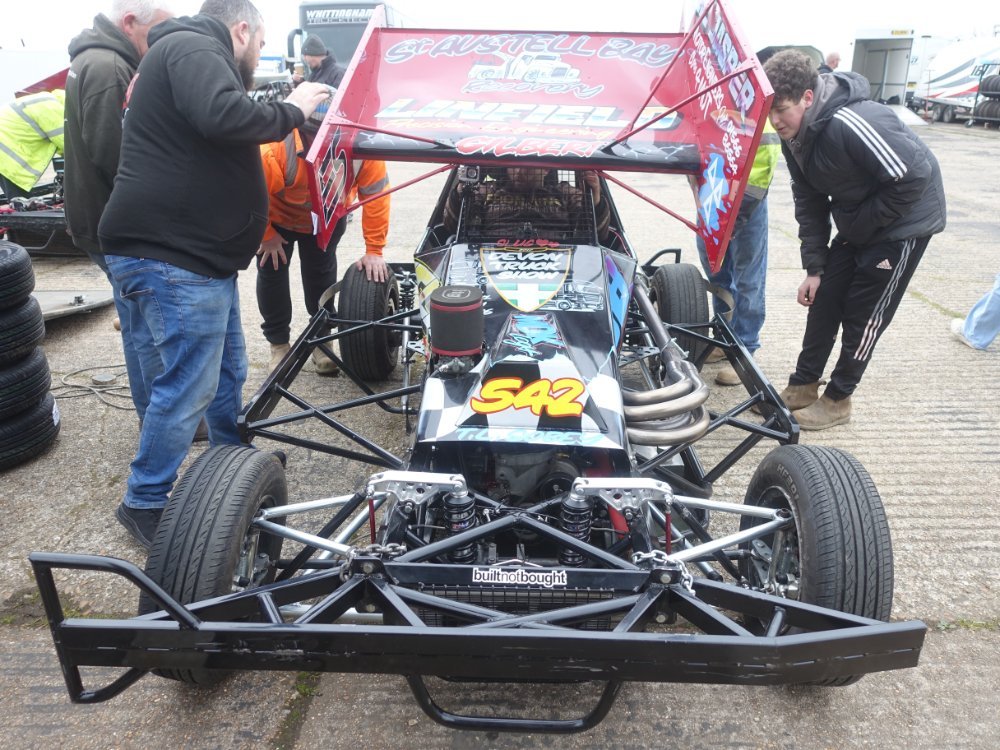
A self-build from Steven Gilbert
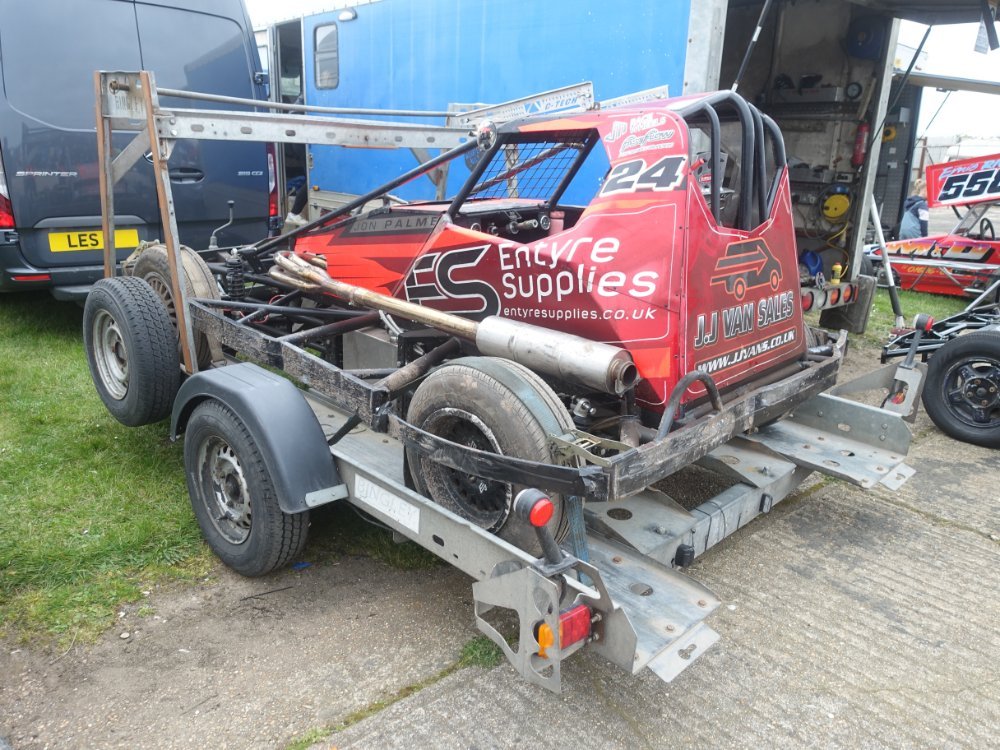
JPs shale car on the way home from Scunthorpe the night before
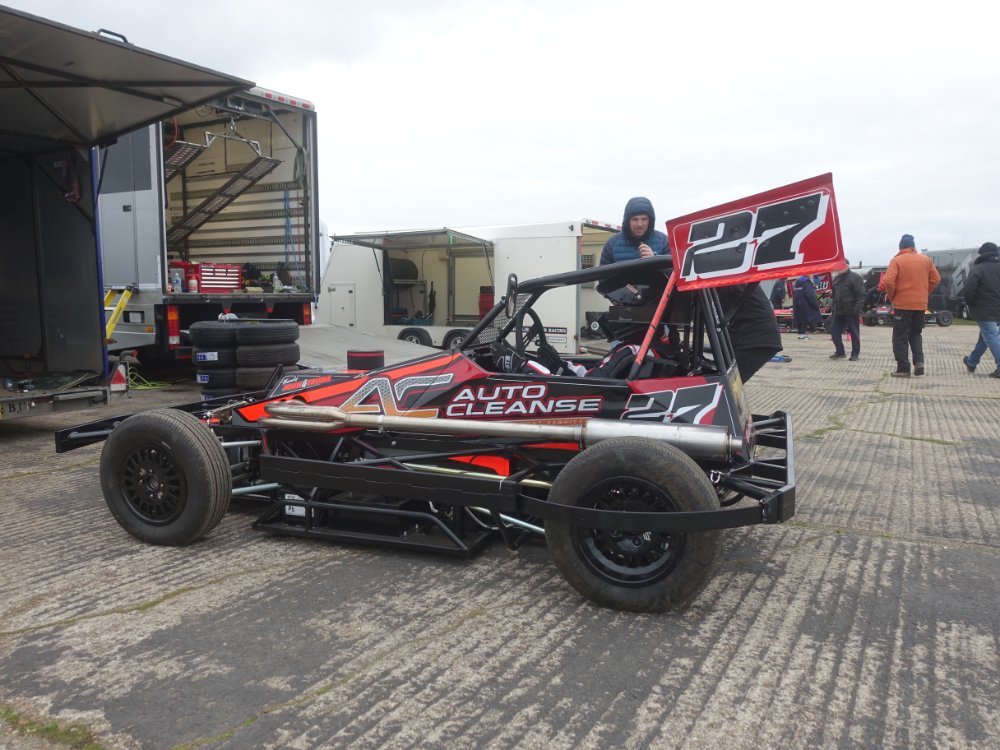
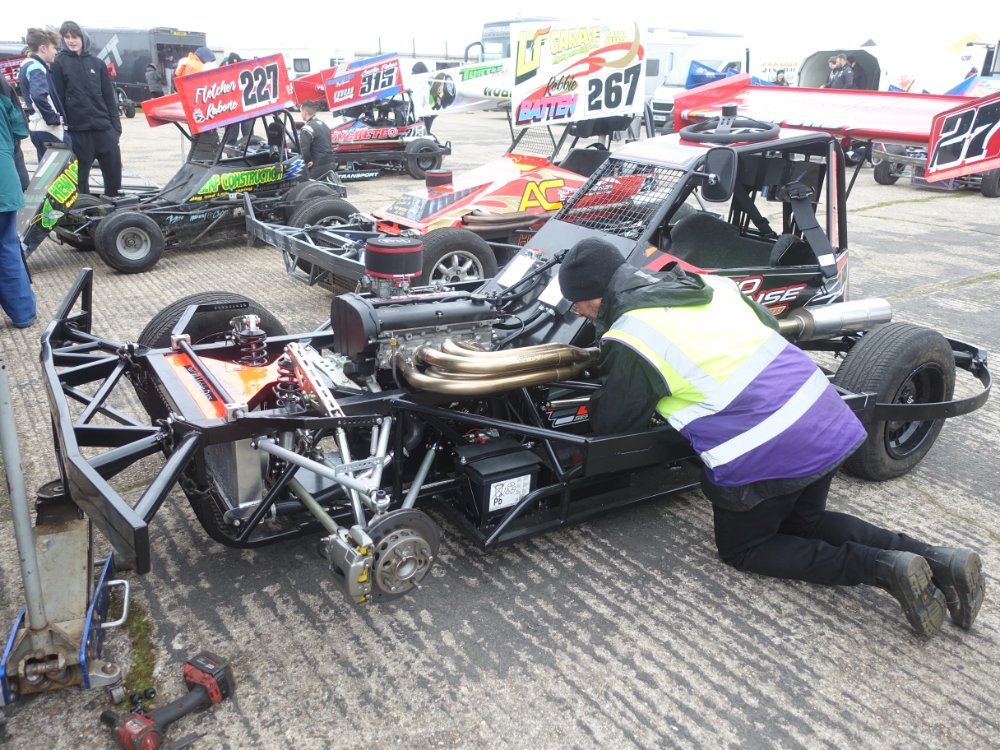
Motorworld’s John Harding works on the 27 car during pre-meeting practice
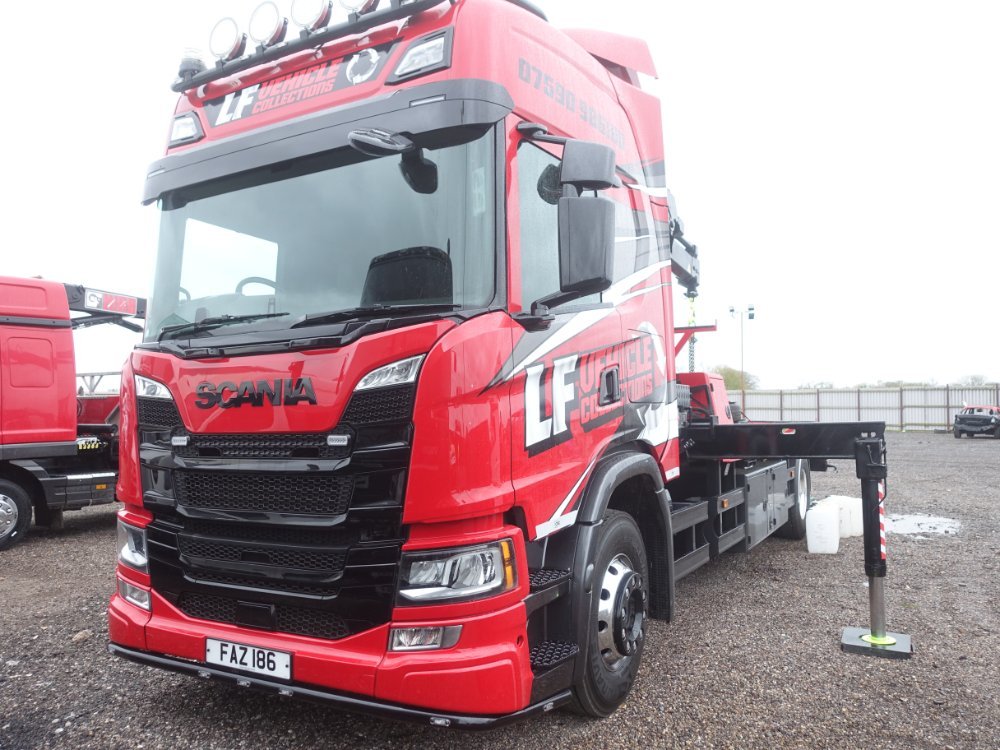
A very smart seven year old Scania P280 from LF Vehicle Collections
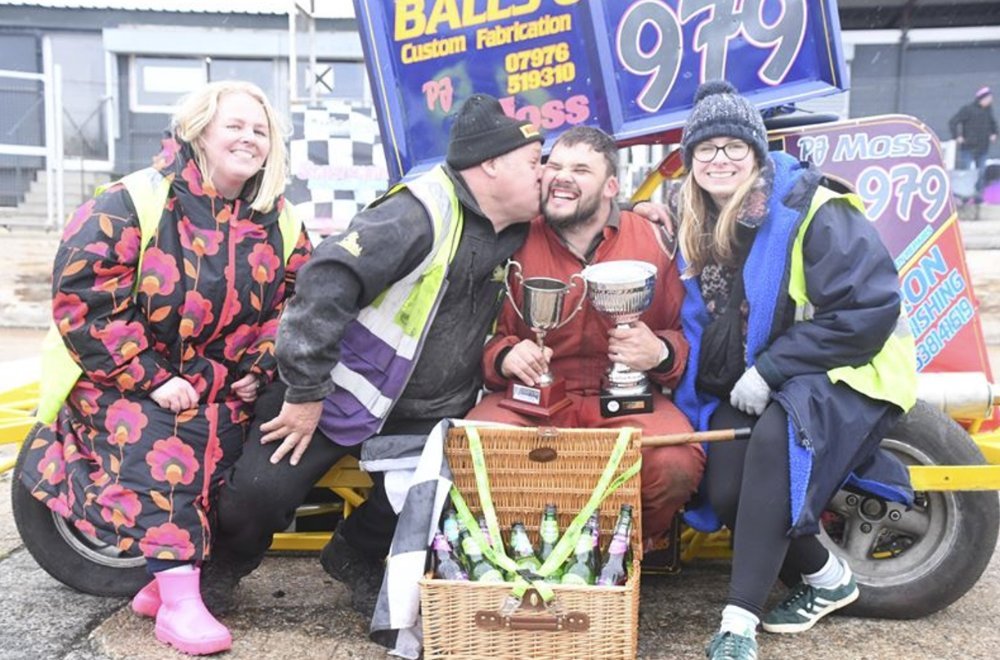
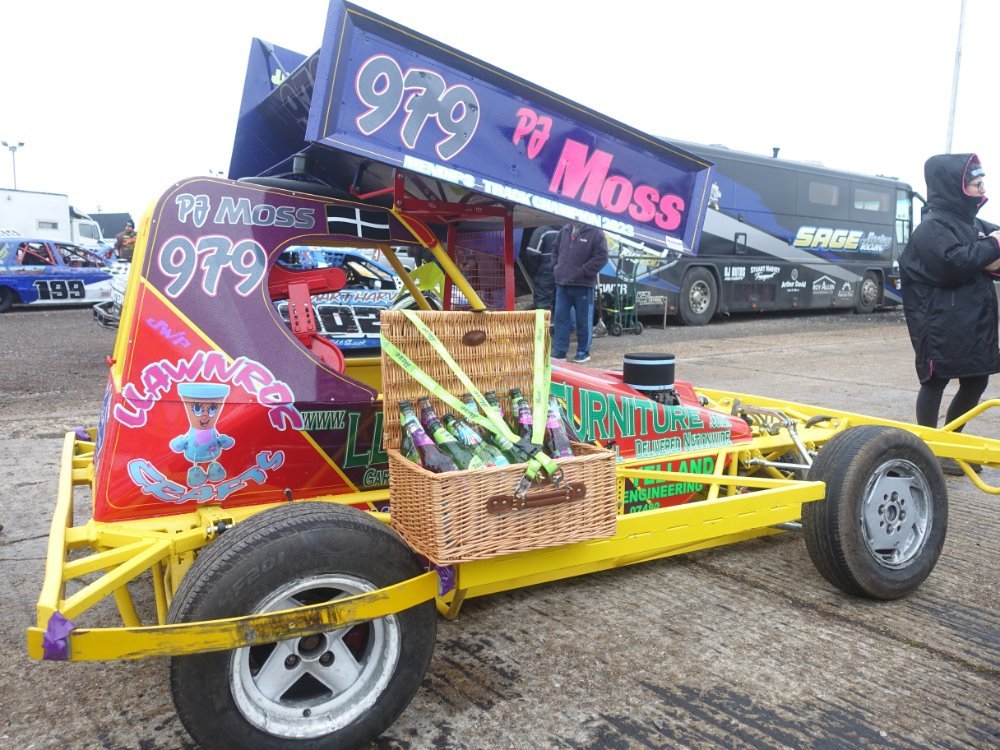
Paul Moss won the Final and a hamper of Thatcher’s from Mike Priddy
Section 2
Out and About 1
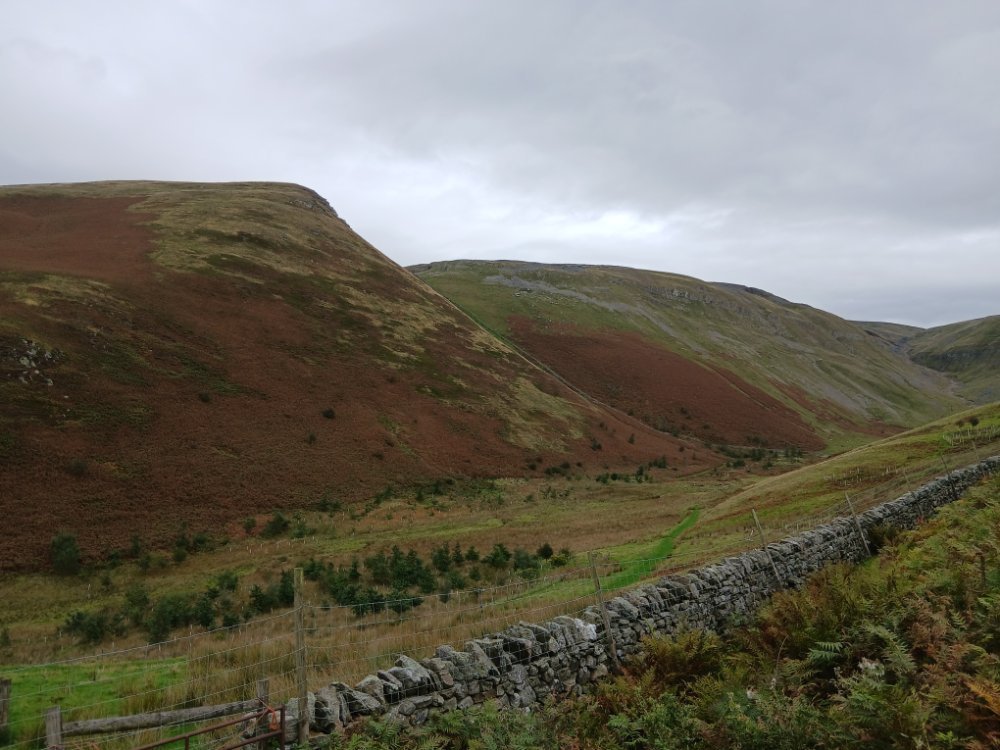
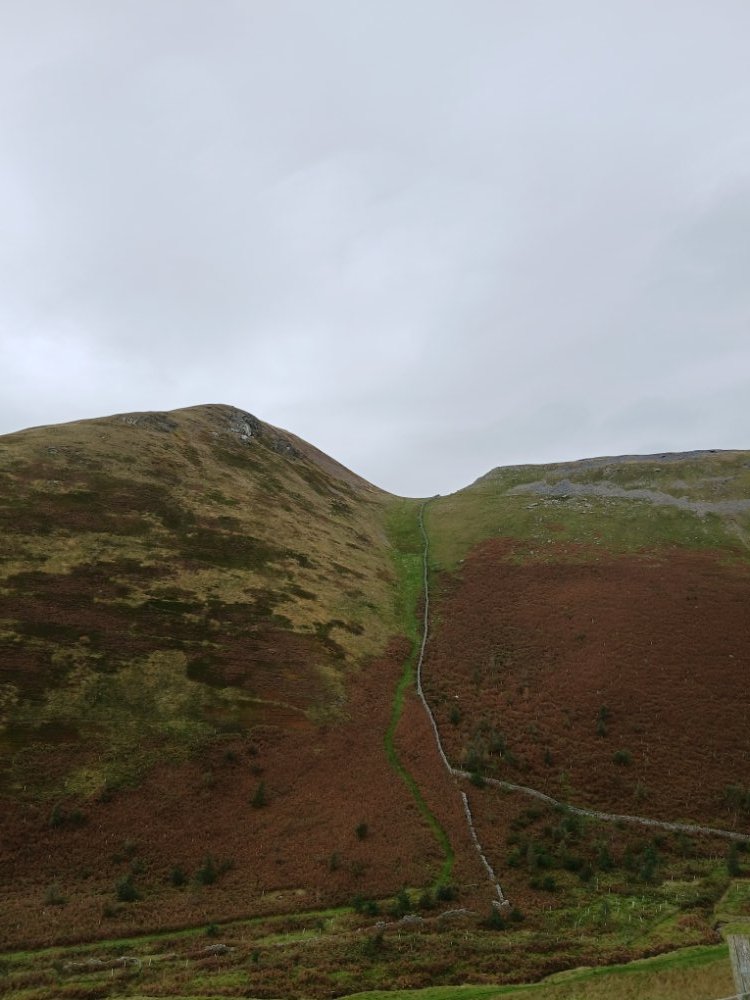
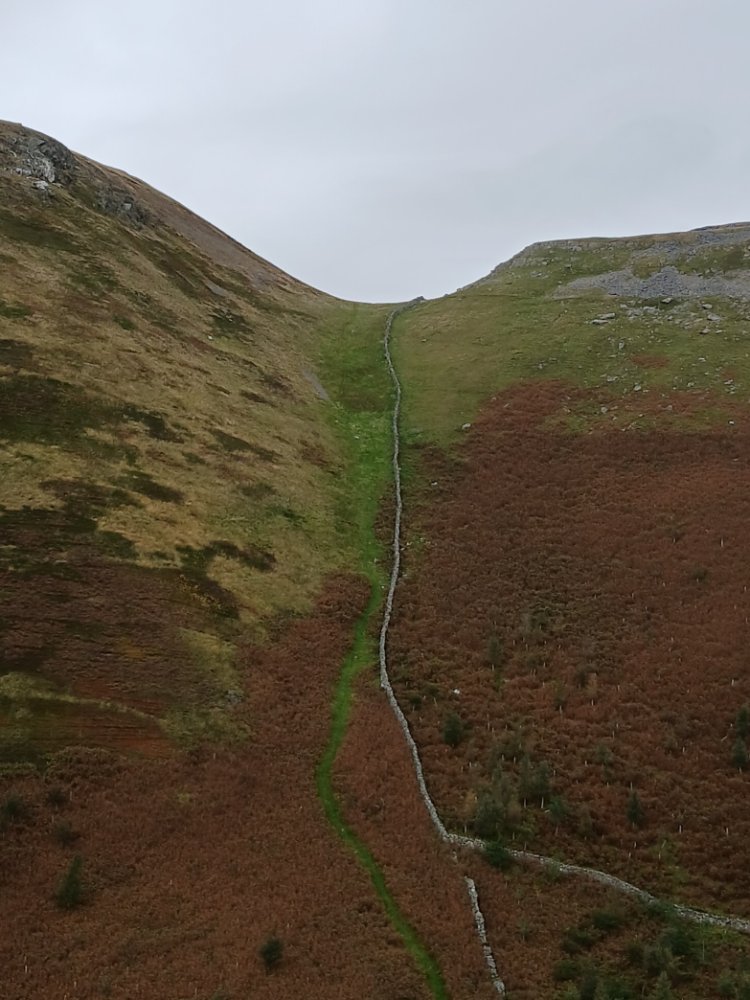
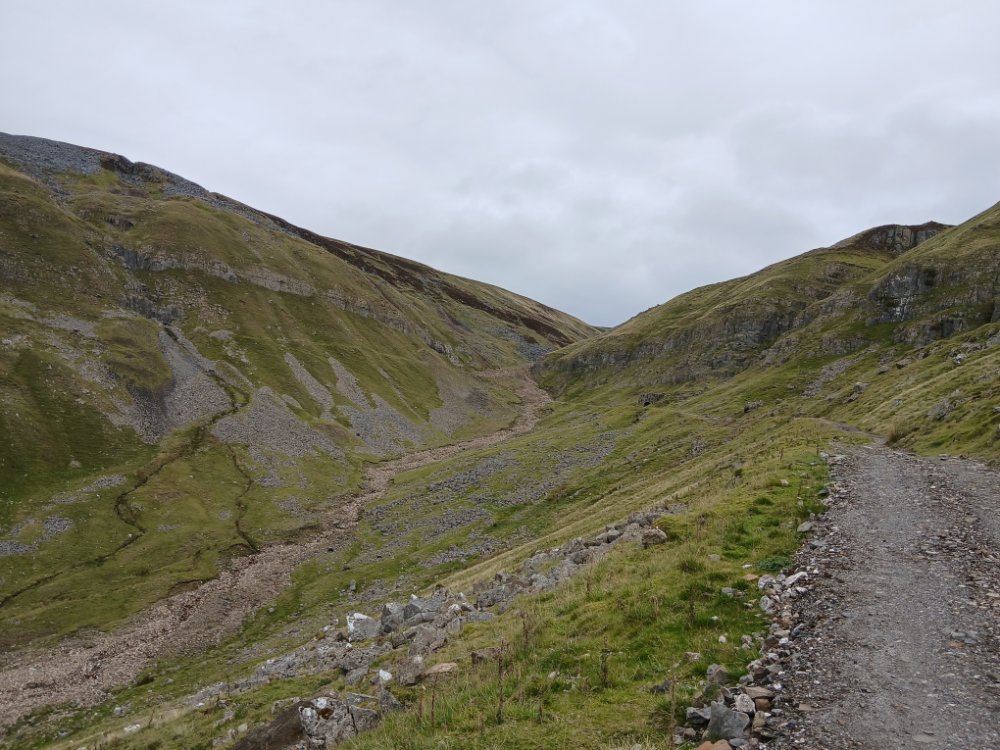
High Cup Nick
Join me as we take a walk through this outstanding area in the North Pennines.
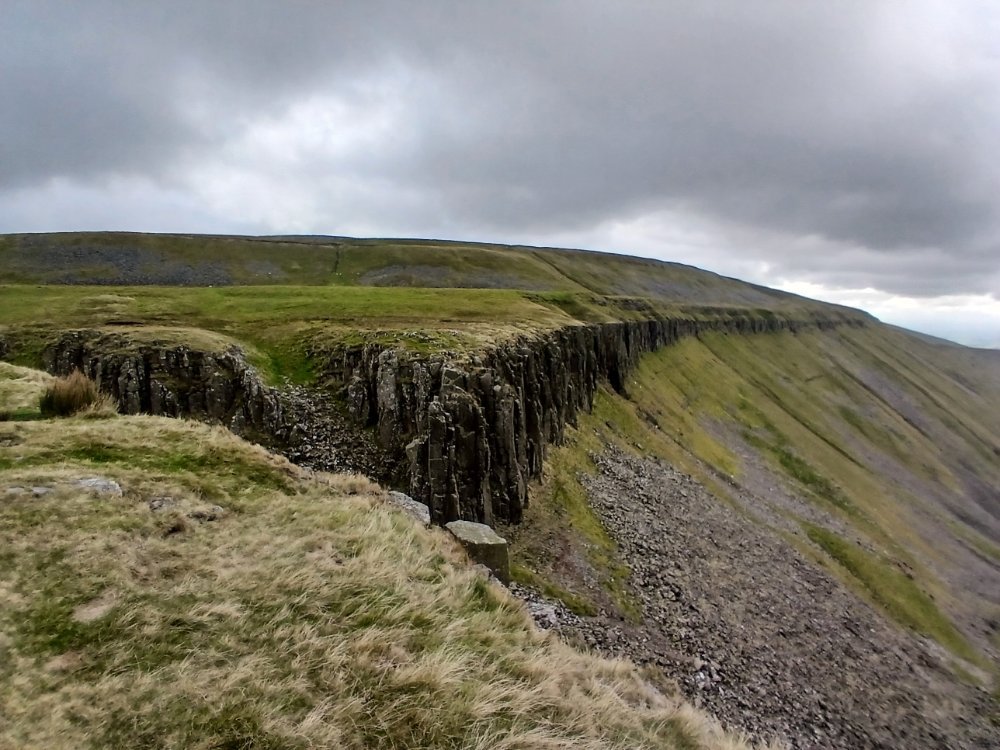
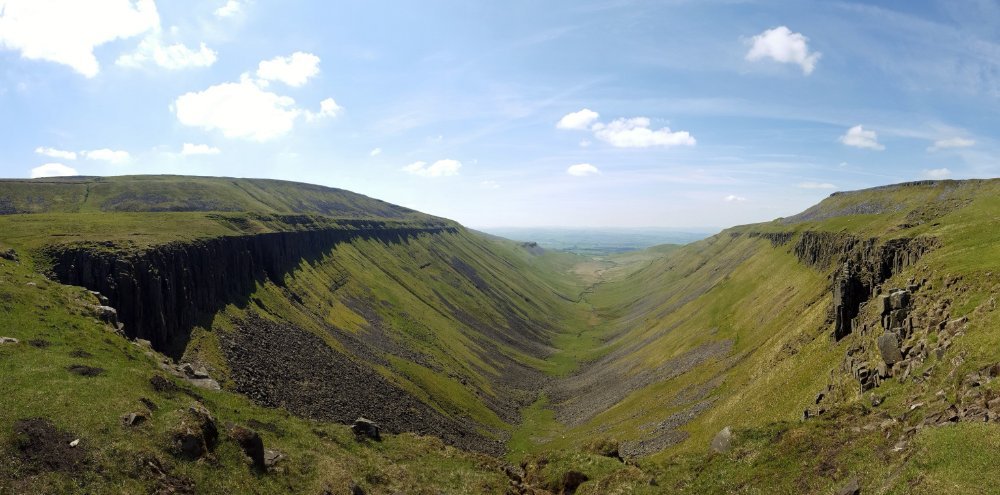
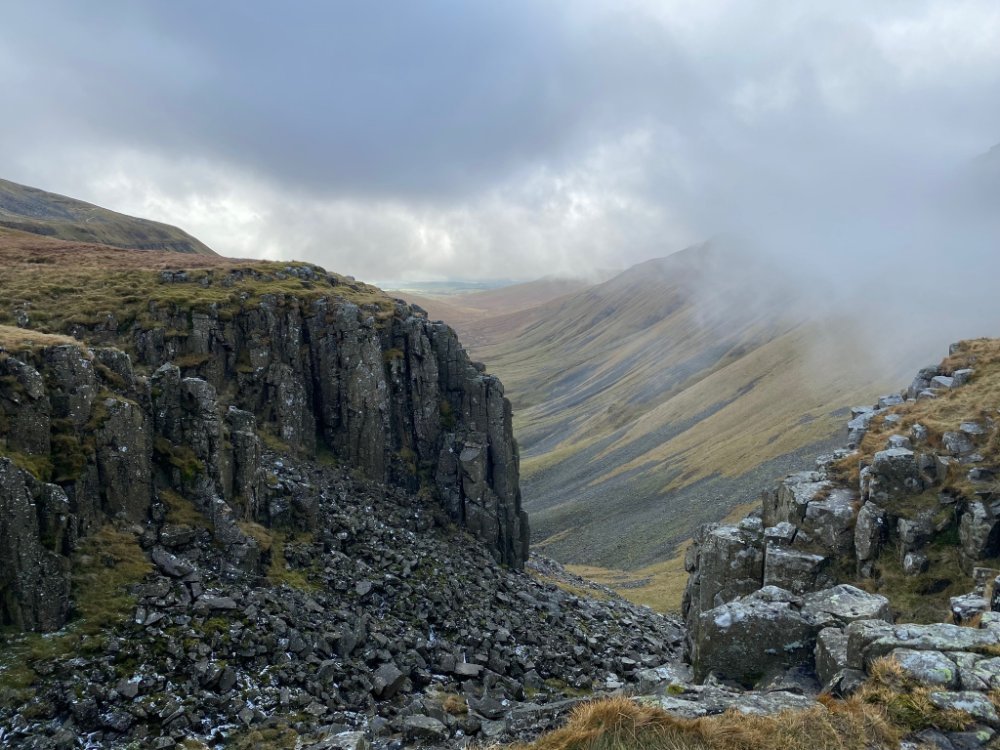
High Cup Nick is a dramatic, U-shaped glacial valley (ravine) formed during the last ice age around 20,000 years ago when glaciers carved through hard dolerite rock and softer limestone/sandstone. It is situated in the Cumbrian Pennines and is famously known as "England's Grand Canyon". There are panoramic views towards the Eden Valley from the top of the valley.
The surrounding area is a "scarred landscape" featuring shake holes and moorland.
The area nearby, particularly around Murton, has a history of 18th and 19th-century lead mining.
The area is near an active military firing range (often indicated by a red flag).
We start from the village of Dufton (more about the village at the end of the walk)
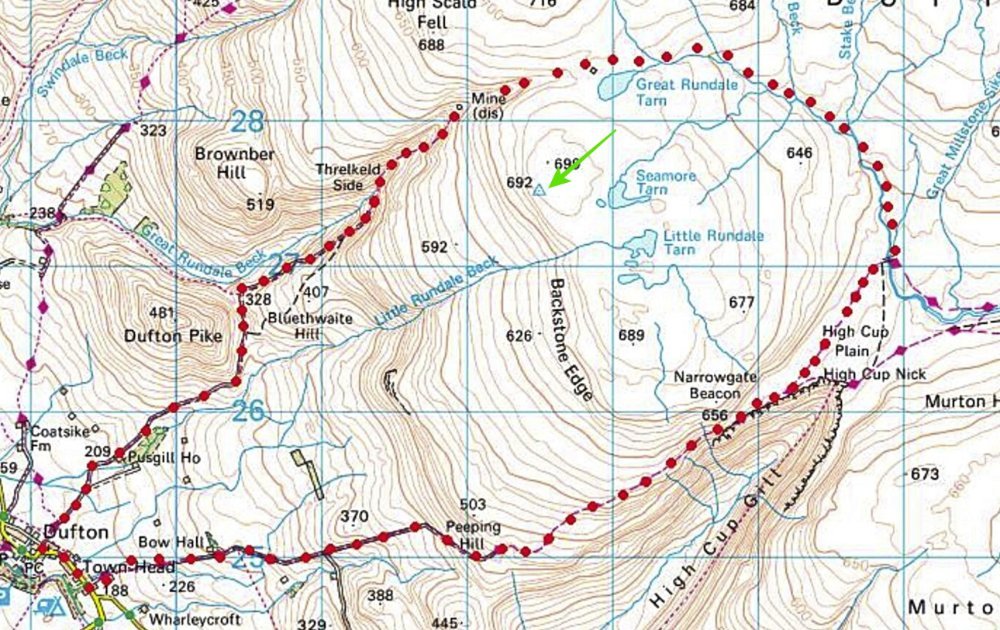
Our 10-mile route clockwise from Dufton
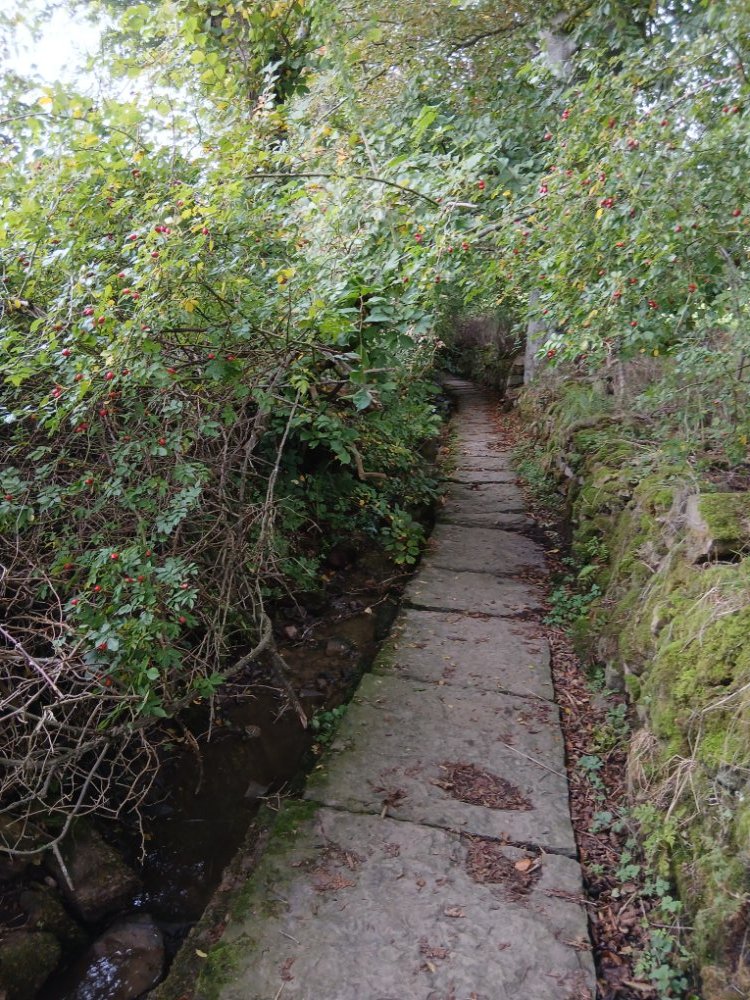
Leading us out of the village is an ancient way
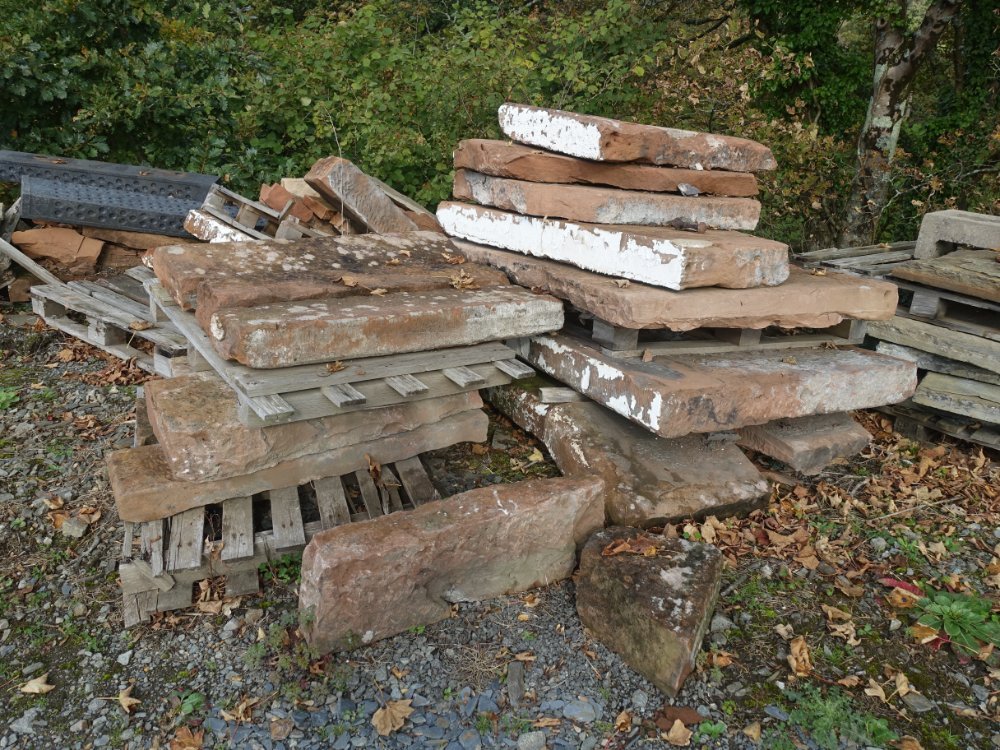
Huge blocks of stone used to support the pillars of old Lancashire mills are being put to use here and are frequently used in the restoration of footpaths, particularly in Northern England.
The flagstones have been reclaimed from the cotton mills of the Lancashire towns of Colne, Burnley and Blackburn
Many of Lancashire’s mills are now demolished and have given way for modern developments.
During the late 18th Century when the mills were built in Lancashire stone was quarried from the Pennine moorland fringe around Rochdale and Bury.
With the introduction of steam power to power the engines in the mills during the early 19th century the building design had to change in order to fasten the huge engines to the floors of the mills.
Huge square blocks of Rossendale stone were bought into the mills and placed into the floor. These pieces of rock were used to not only support the cast iron pillars supporting the building but also to anchor the steam engines to the ground.
Until now these engine blocks were crushed after the mills had been demolished as there was no further use for them.
If you are out walking, take some time to think about the history of the flag stones and how many men, women and children have walked upon them over the past 250 years and the stories they could tell.
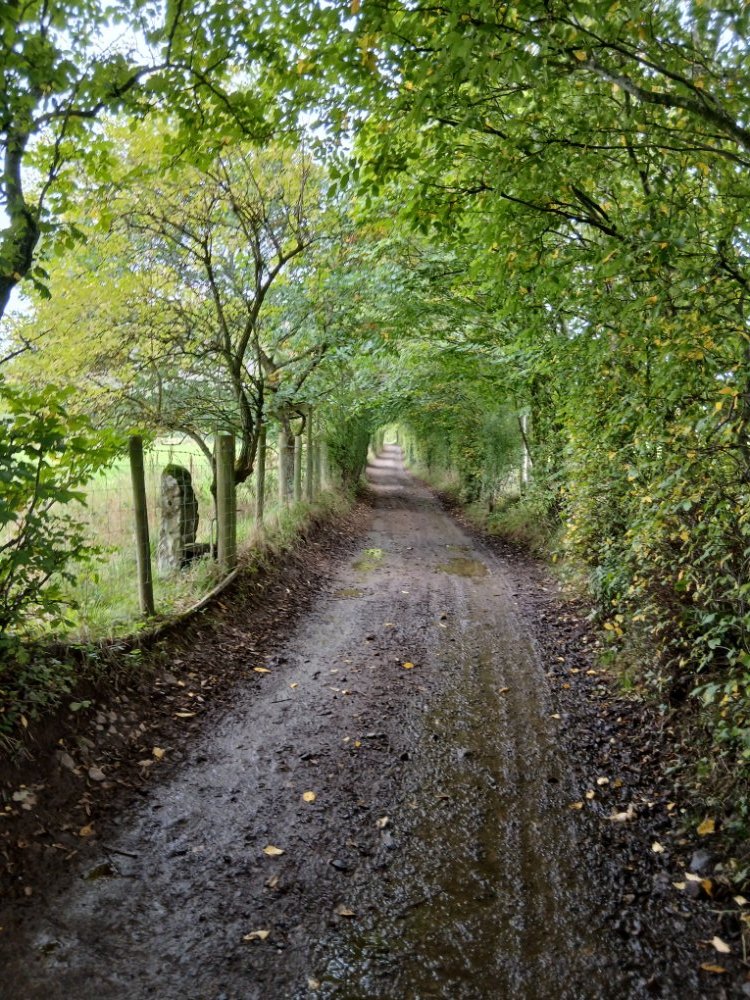
The path joins a magnificent green lane
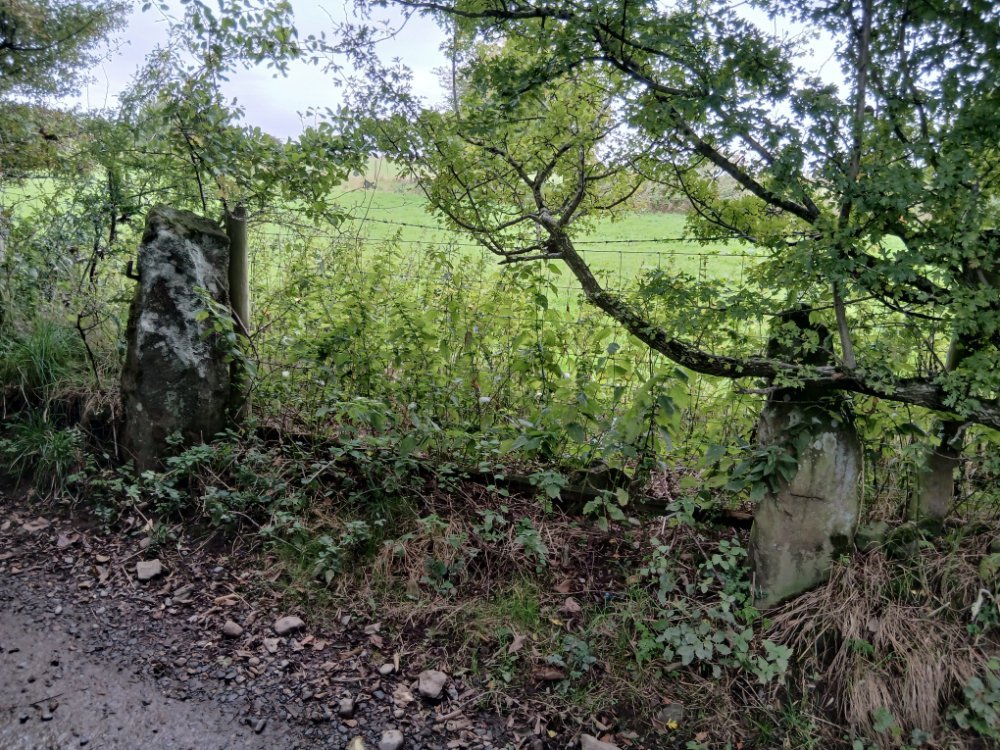
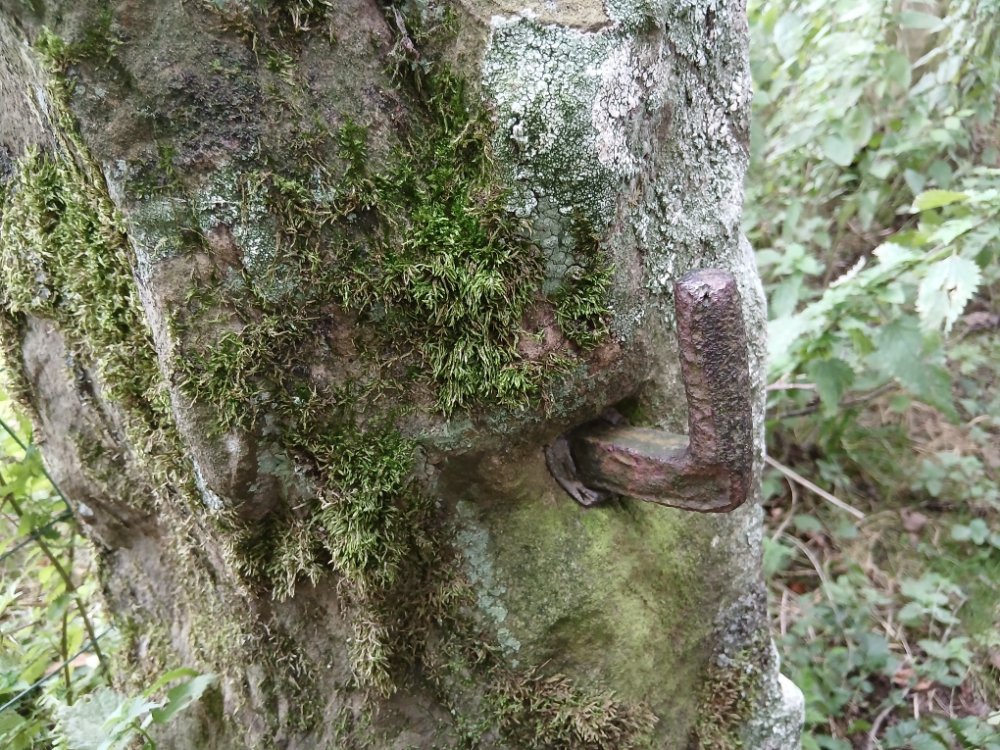
Some old gate posts
Complete with gate hanger. The moss growing on the stonework is a sign of a clean air quality around here.
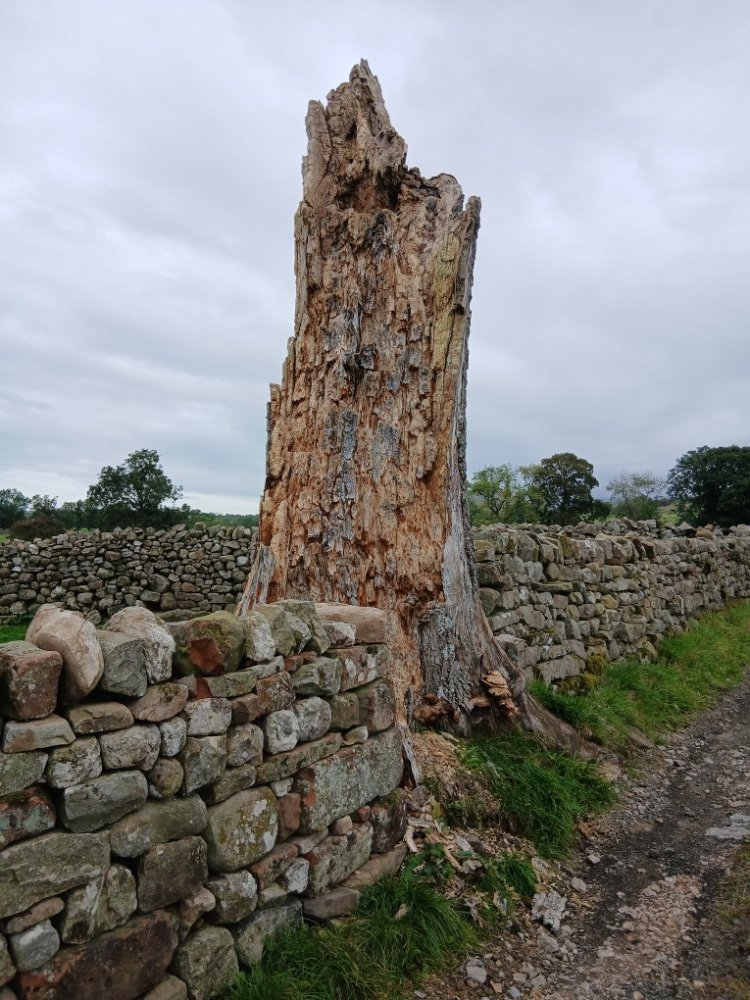
The dry stone wall has been built around this ancient tree
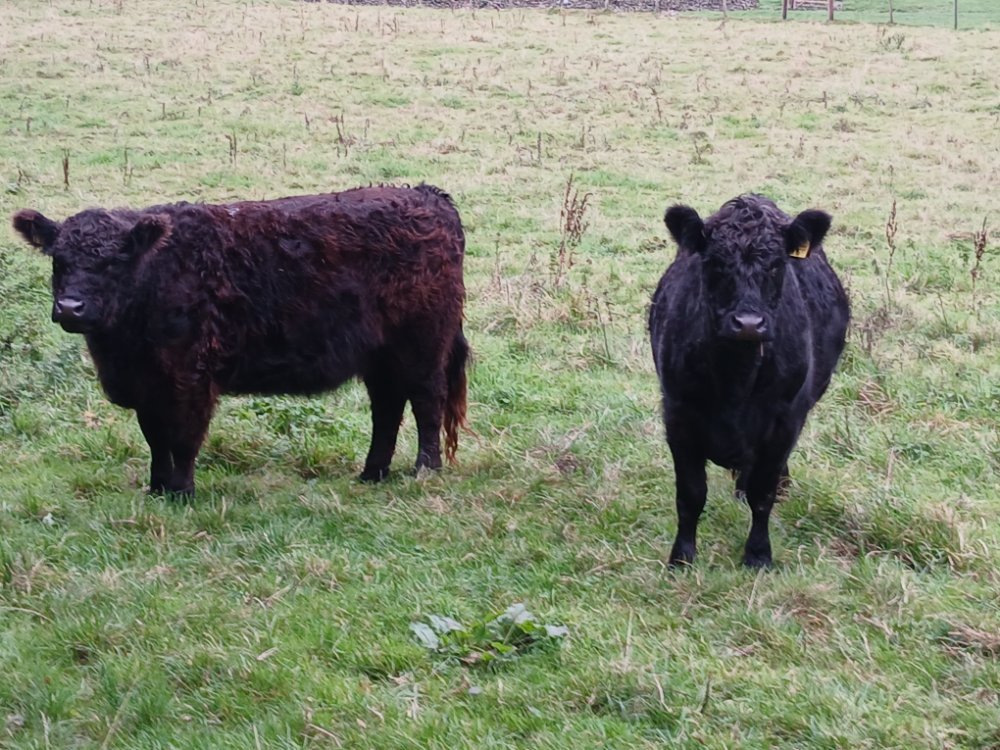
The locals
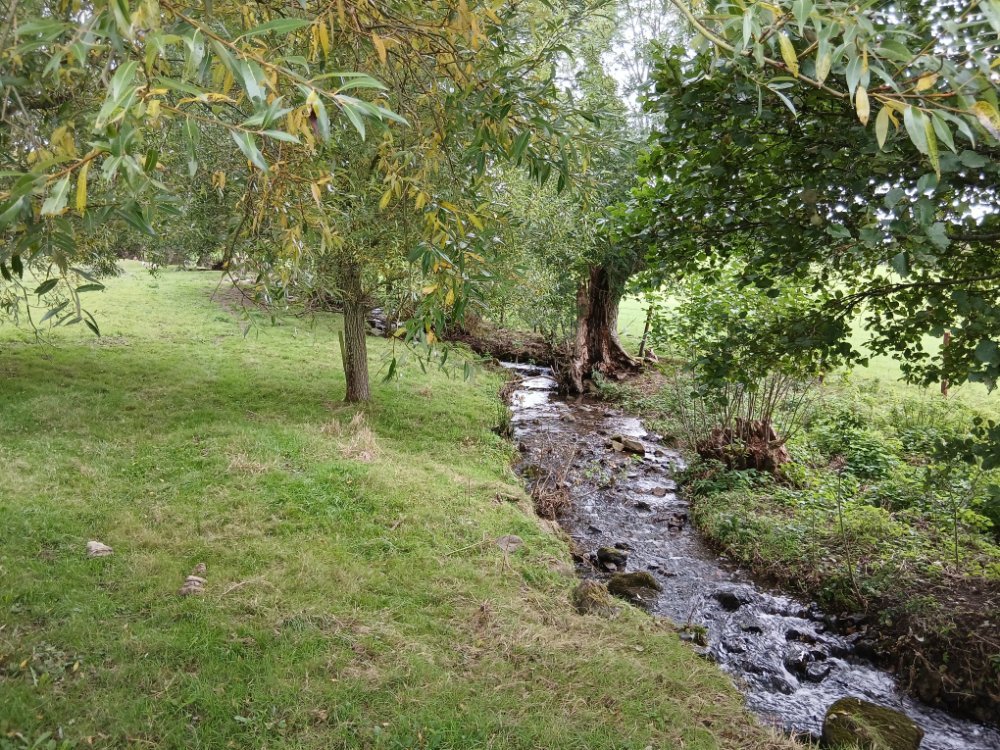
The delightful Eller Beck is crossed
We are now heading out into the wild country
The skill of the drystone wallers of times past
The track was used to access mine workings now long disused
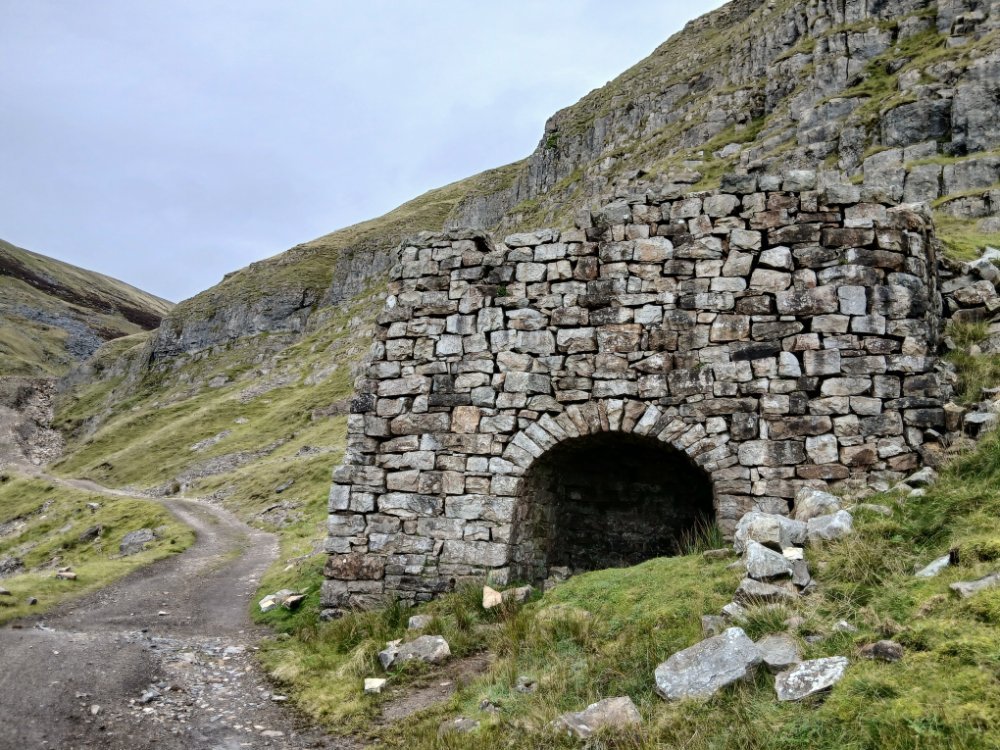
A lime kiln from the 1700s
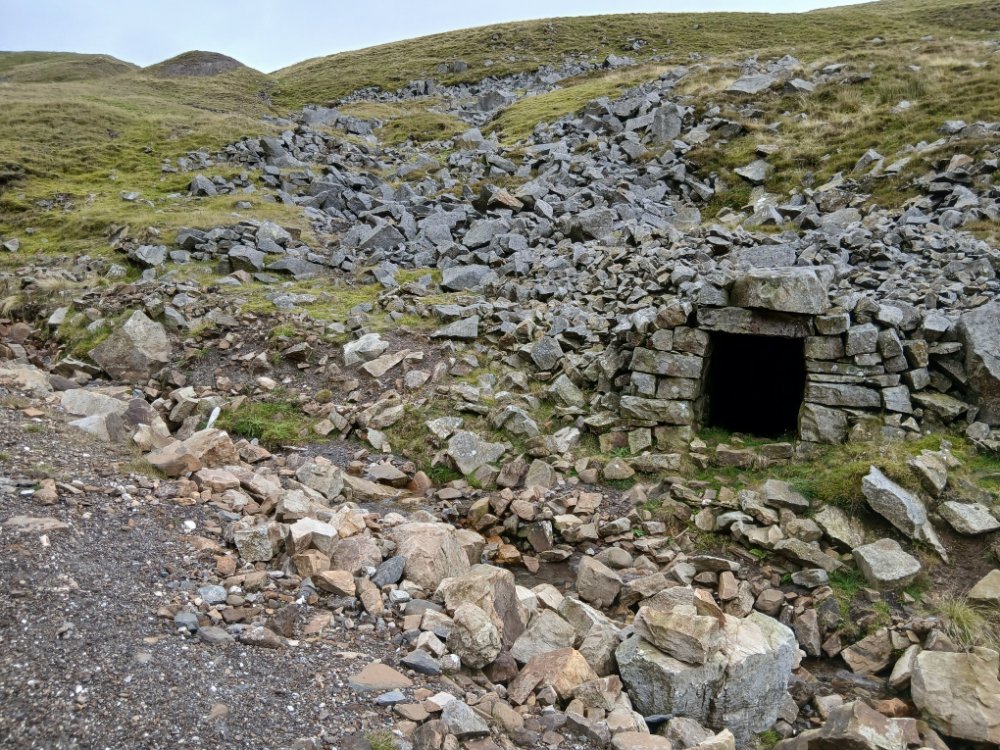
Here we find an adit. These are a horizontal, or near-horizontal entrance or passageway leading into a mine or underground excavation. Primarily used in mining for access, ventilation, drainage, or ore transport. Adits differ from vertical shafts by allowing entry on a level plane.
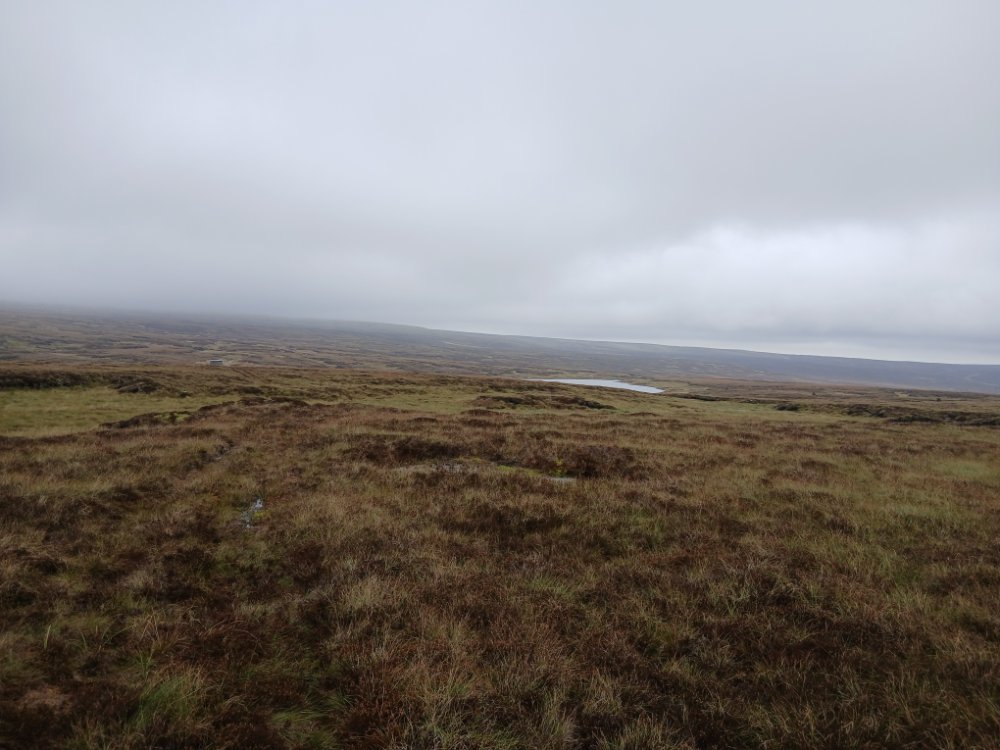
This next section is a pathless terrain with no visible marker points for a fair distance. In thick fog or driving rain you have to trust your compass as it is so easy to head in the wrong direction.
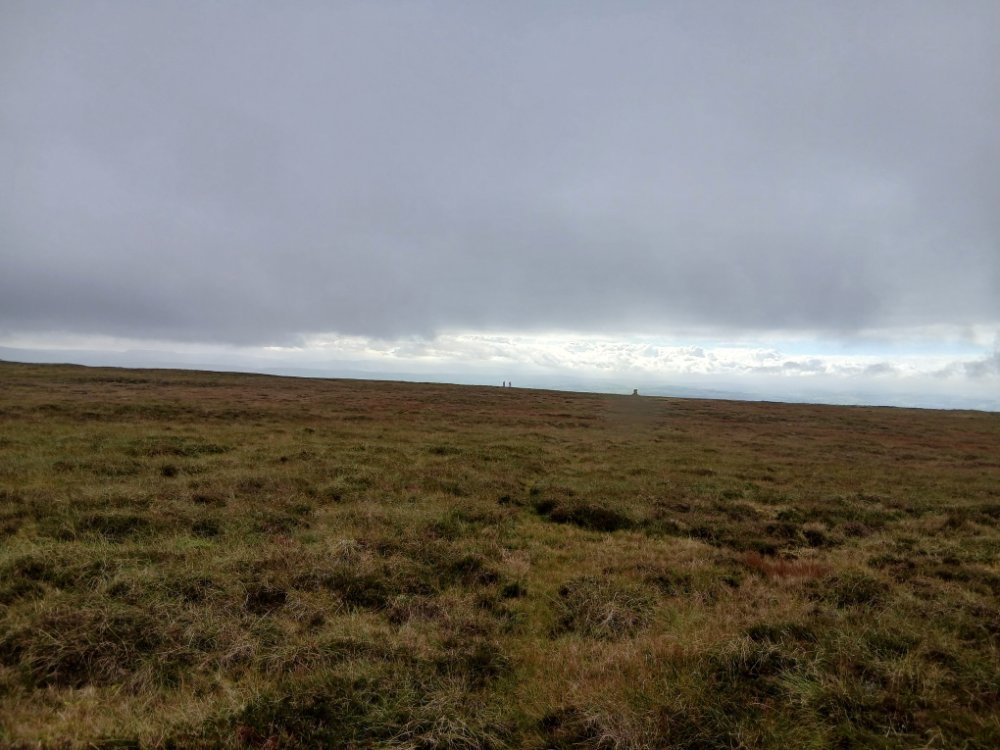
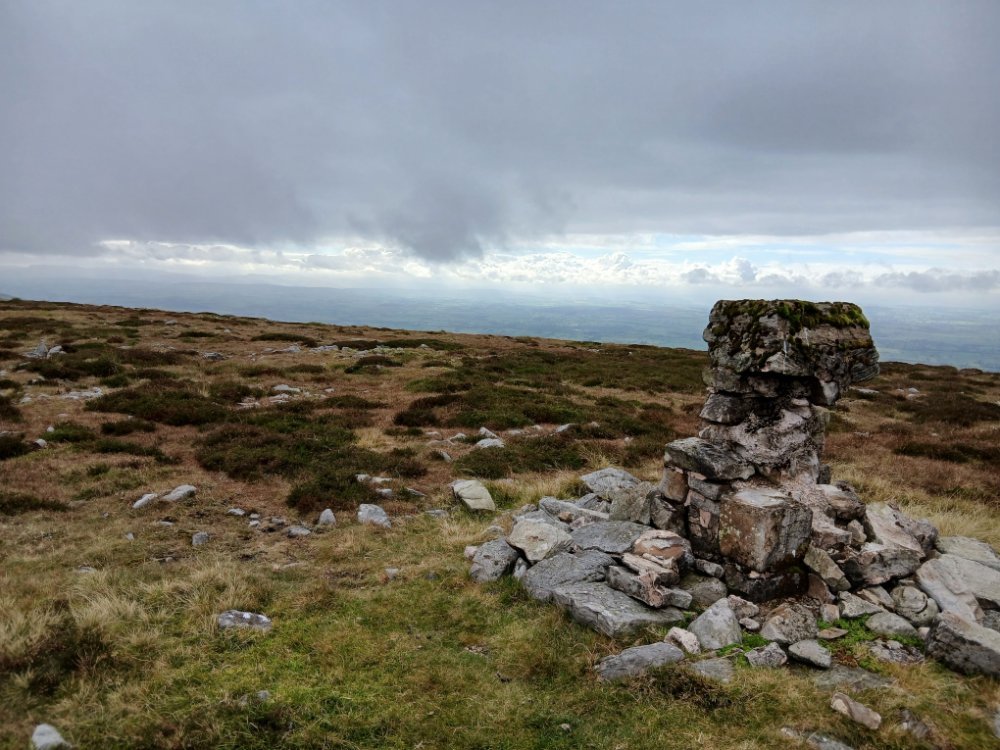
I made a deviation to a trig point (arrowed green on the route map) situated at the highest point. You can just see the trig to the right of two other walkers in the far distance.
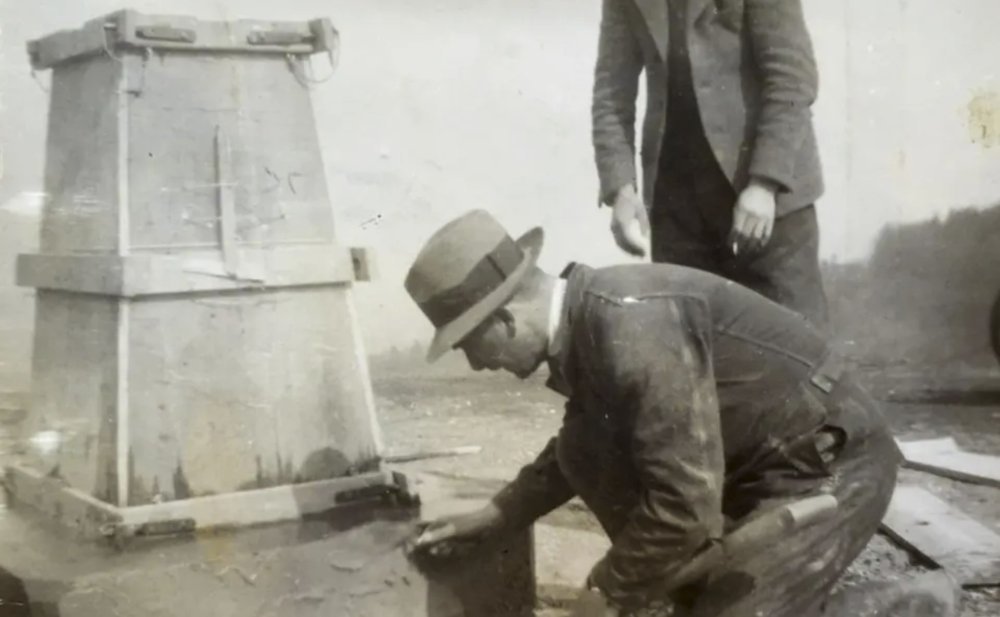
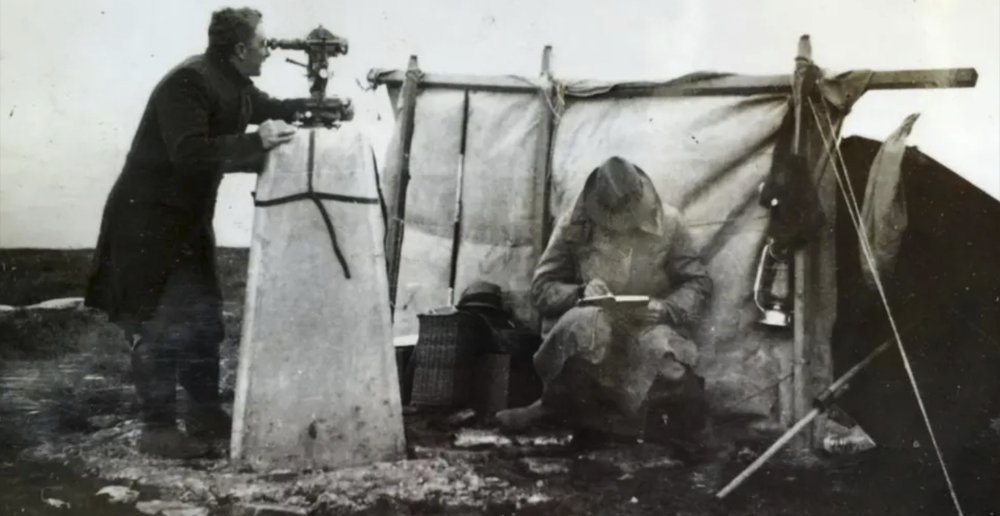
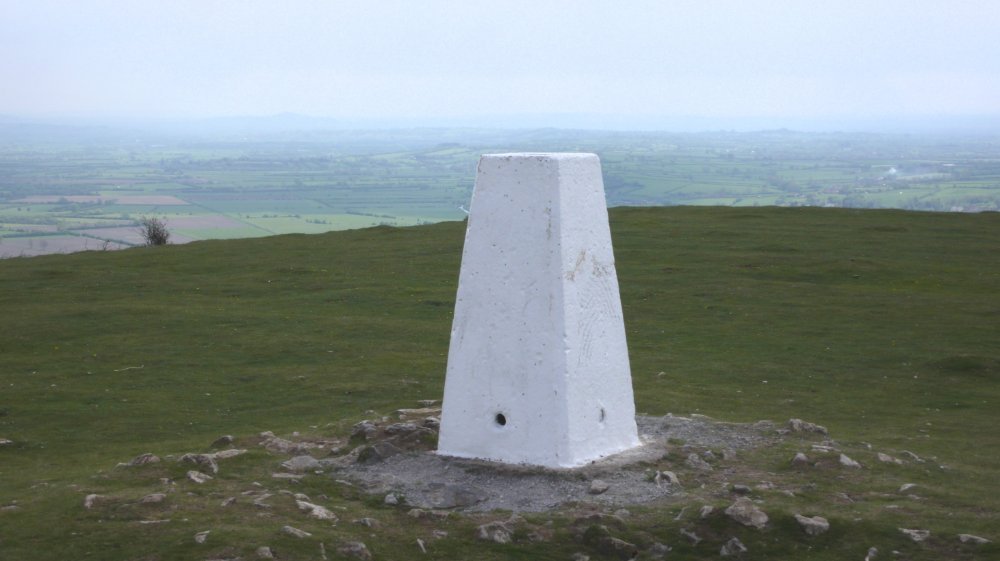
A trig point, or triangulation pillar, is a 4ft concrete pillar installed by the Ordnance Survey (starting in 1936) on high ground to map Great Britain. They are found on hill summits or high points to ensure clear visibility to at least two other trig points.
They enabled precise mapping via angular measurements using a theodolite. There were once about 6,500 trig pillars, built by the early surveyors at OS. Now mostly obsolete due to GPS, they serve as landmarks and targets for hikers.
There are still a number of them in good condition dotted around the country
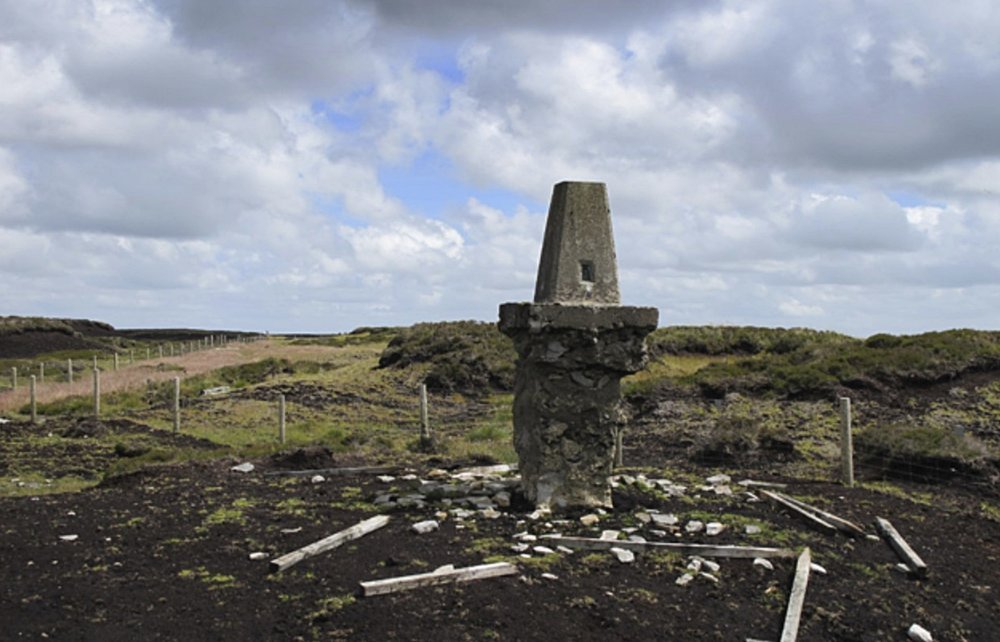
However, our one here has suffered the ravages of the extremes of weathering at this spot
This one at Hawthornthwaite Fell in the Forest of Bowland has had the base exposed owing to the erosion of the peat surrounding it
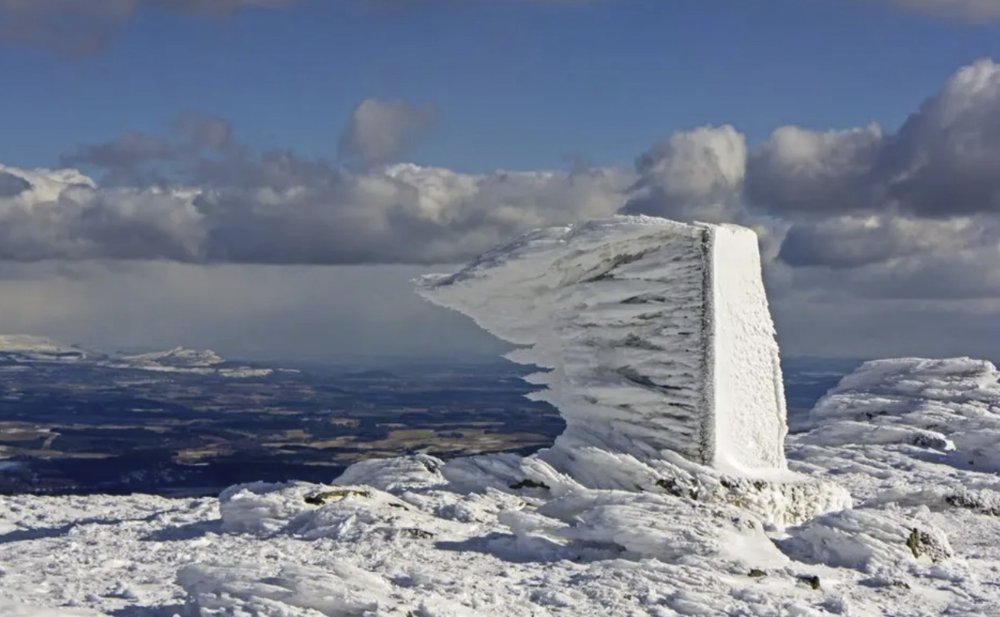
Vicious winter winds, snow, and ice can coat the pillars in spectacular style
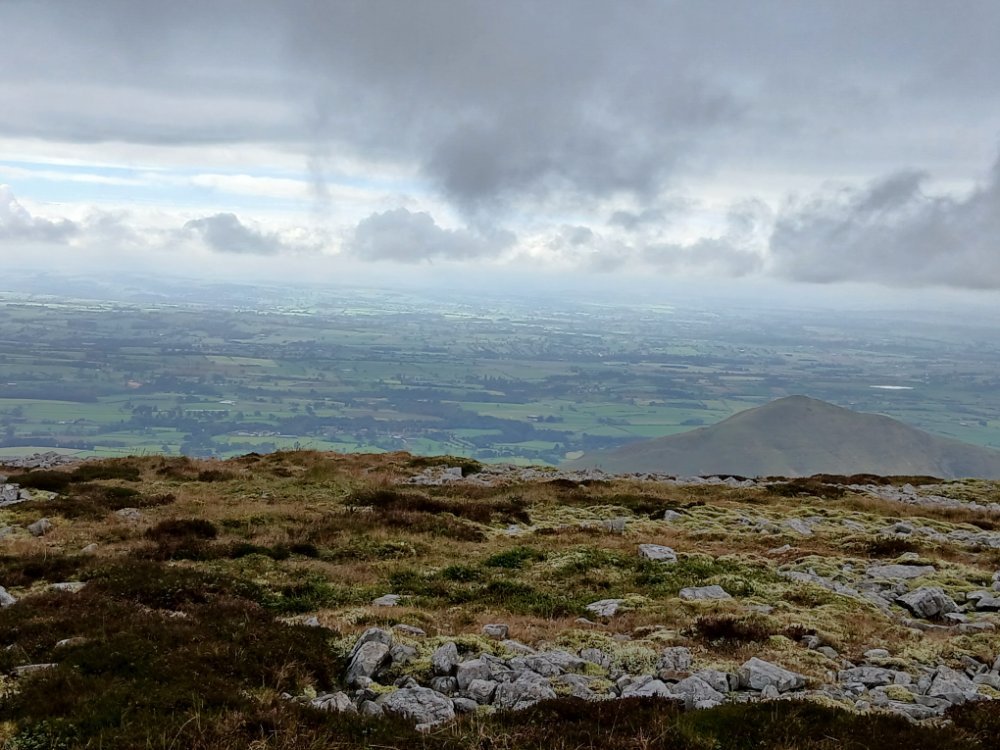
The view looking west towards the Lake District
We have now reached the stand-out part of our walk
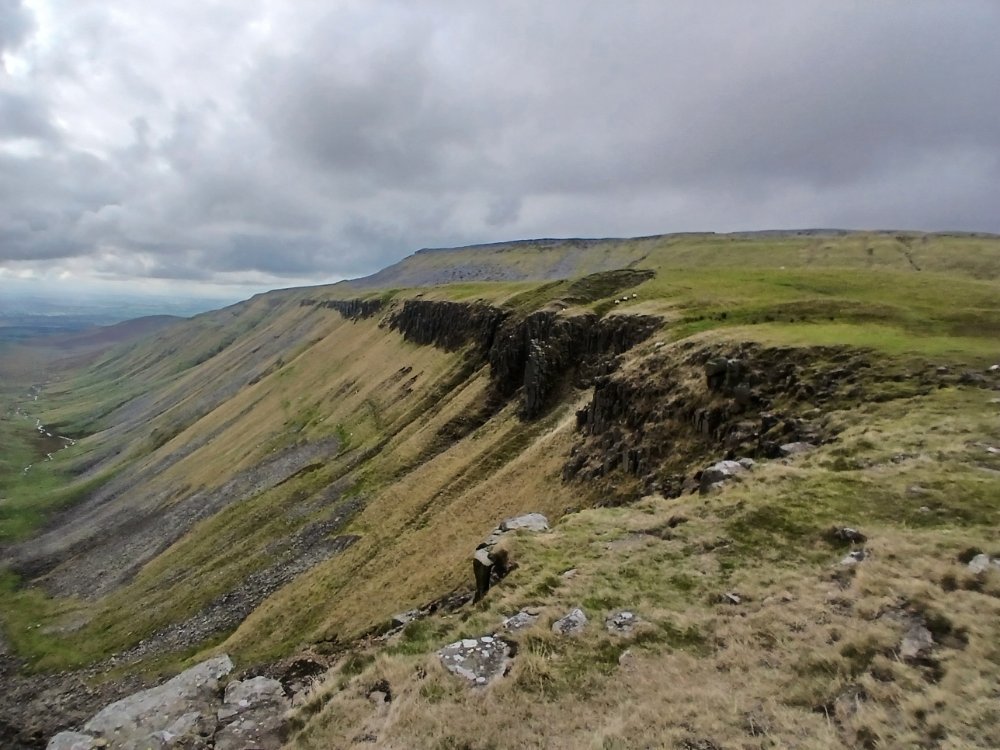
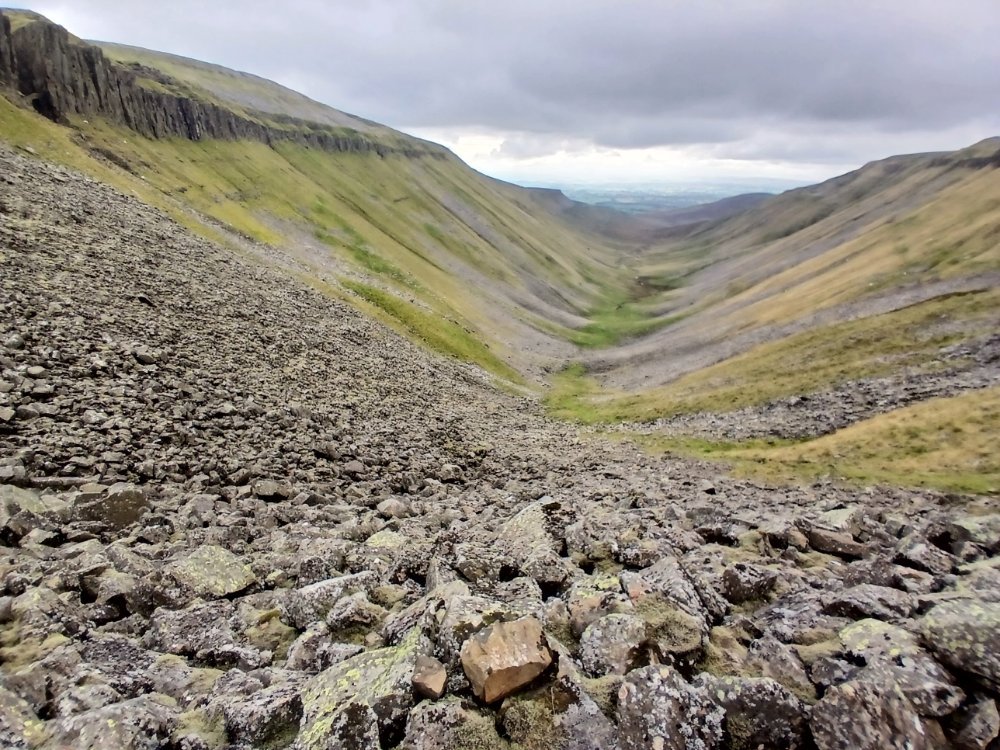
High Cup Nick in all its splendour
To get into the bottom of the valley involves a descent down the side to begin with
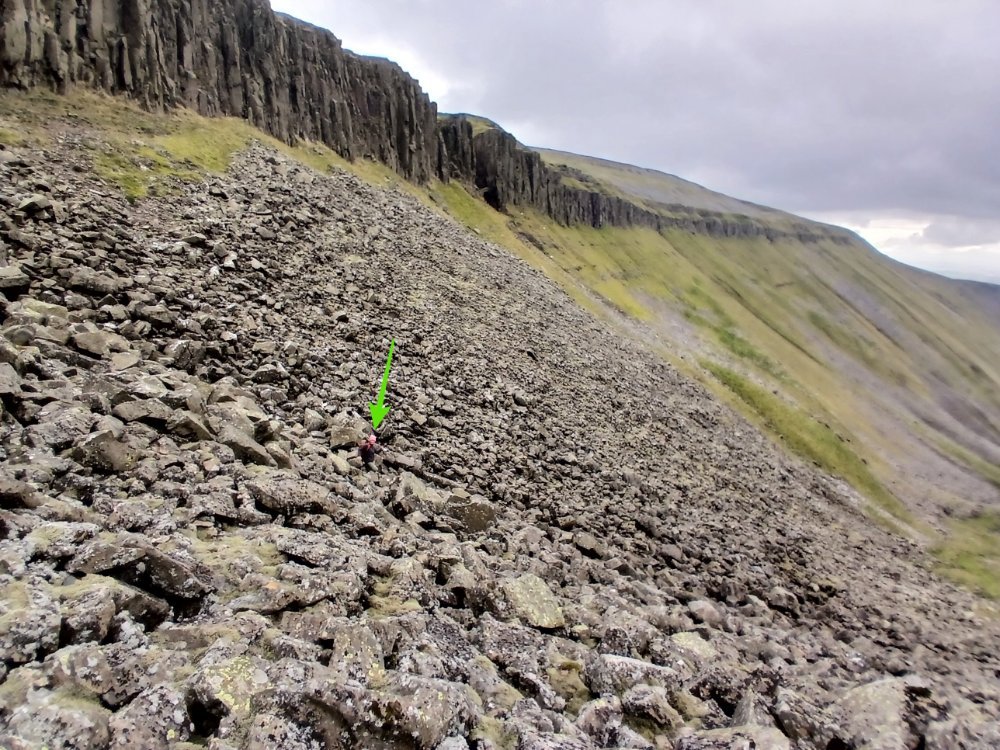
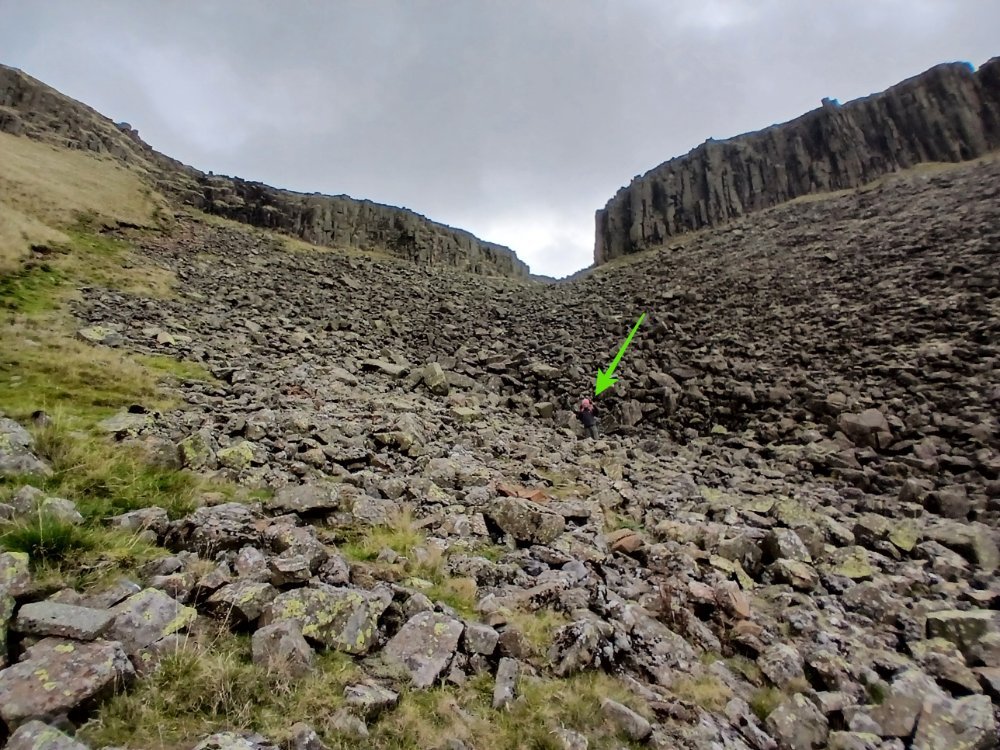
Followed by a massive boulderfield to negotiate. Arrowed is a human figure.
Nearly at the bottom
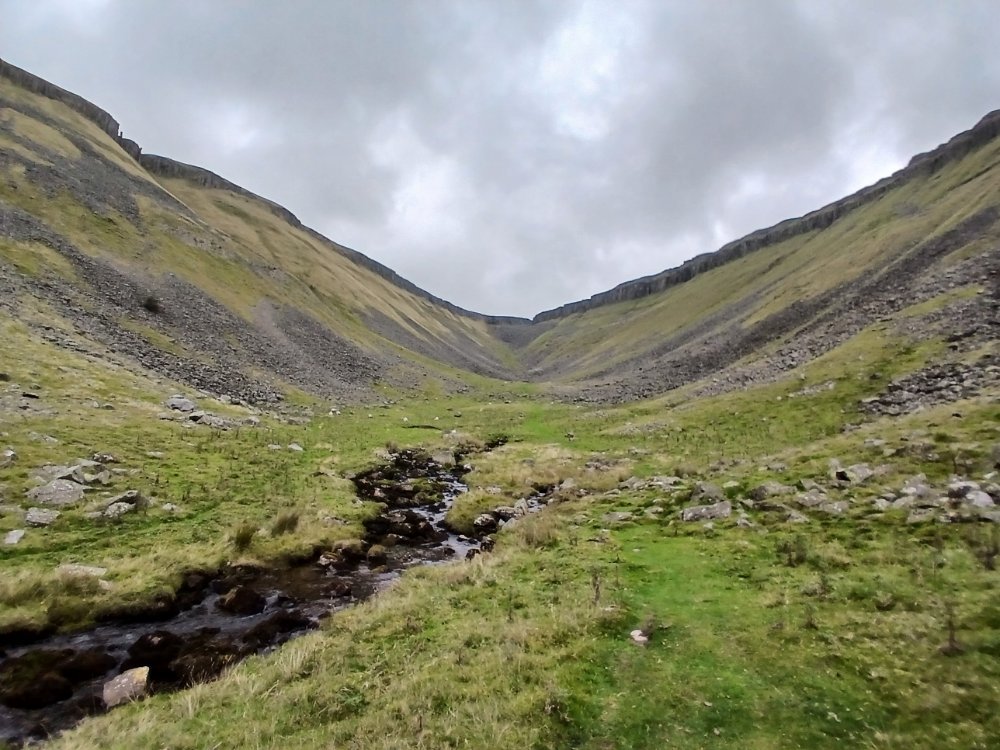
At the far end looking back
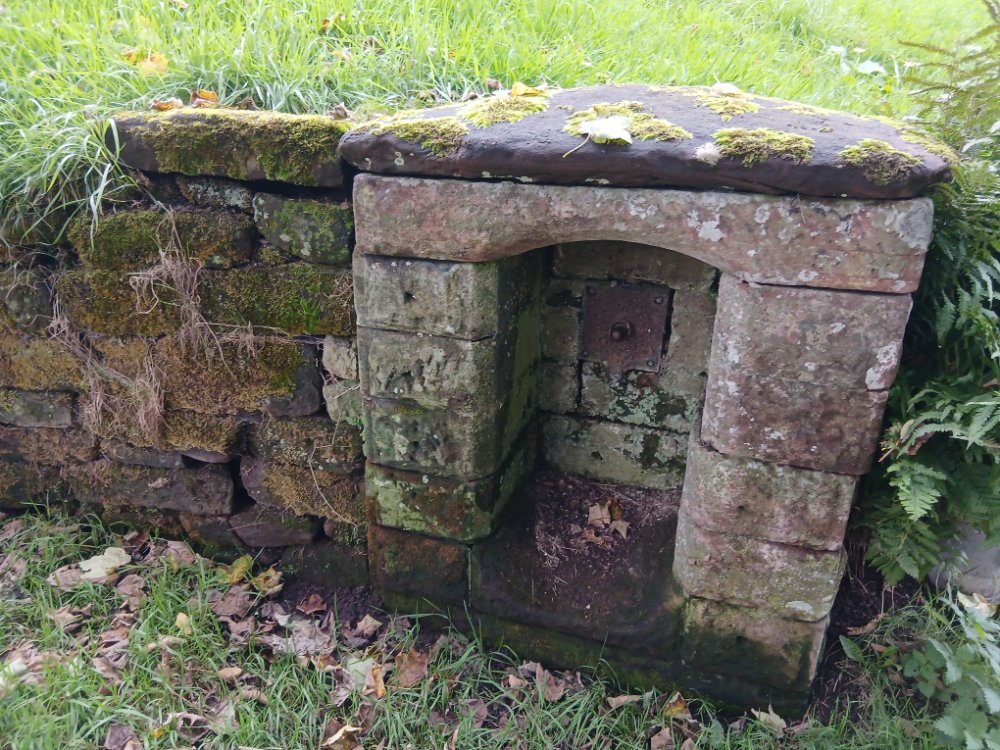
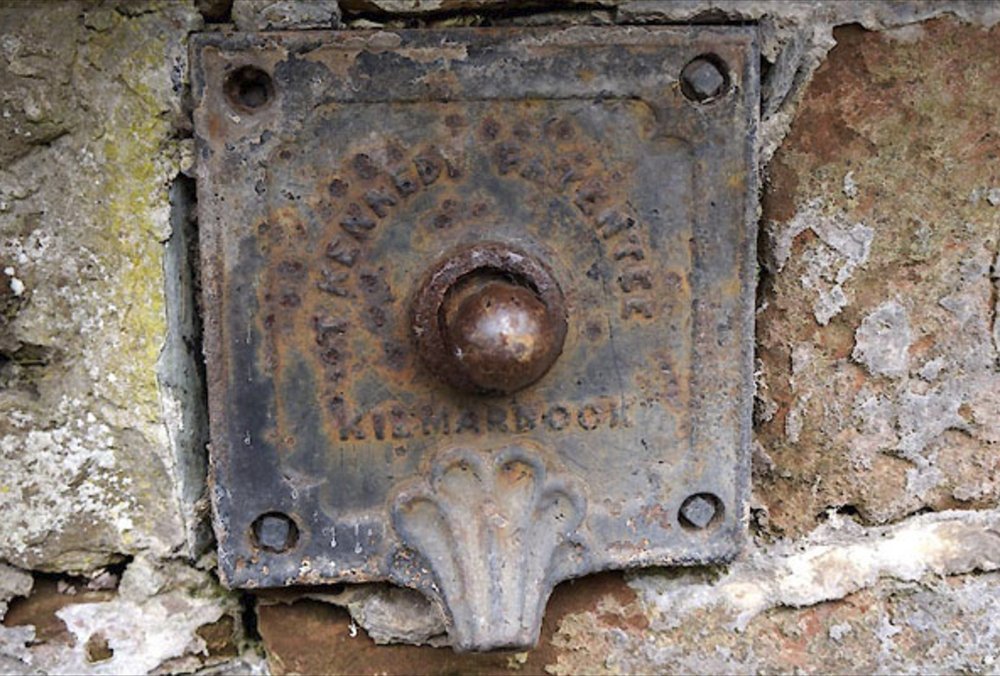
On the approach to Dufton is this old water trough
T KENNEDY PATENTEE KILMARNOCK
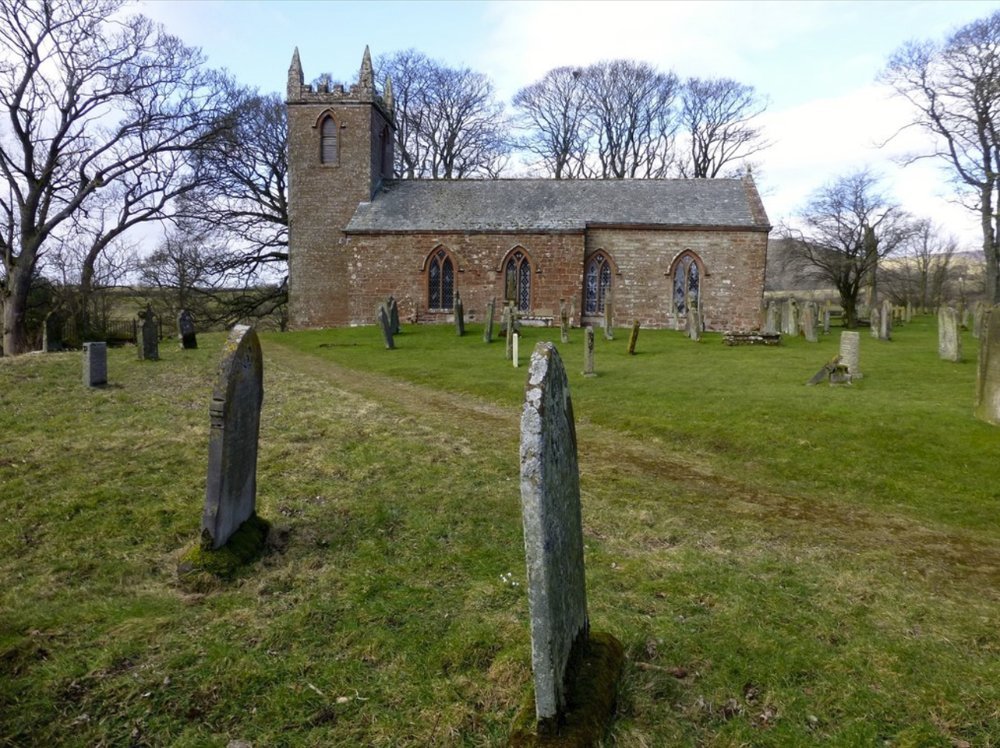
St Cuthbert's church is found along the quiet lane between the villages of Dufton and Knock. It is signposted off the road, along a track, nestling at the foot of the high Pennines.
The present St Cuthbert's church is late 18th century and replaces an earlier stone building dating back to 1293. Many of the miners who worked in the area are buried in the churchyard, their corpses carried on horseback across the fells. The church is named after St Cuthbert whose body was carried across the North Pennines by monks from Lindisfarne attempting to flee the Vikings in 875 AD.
Dufton
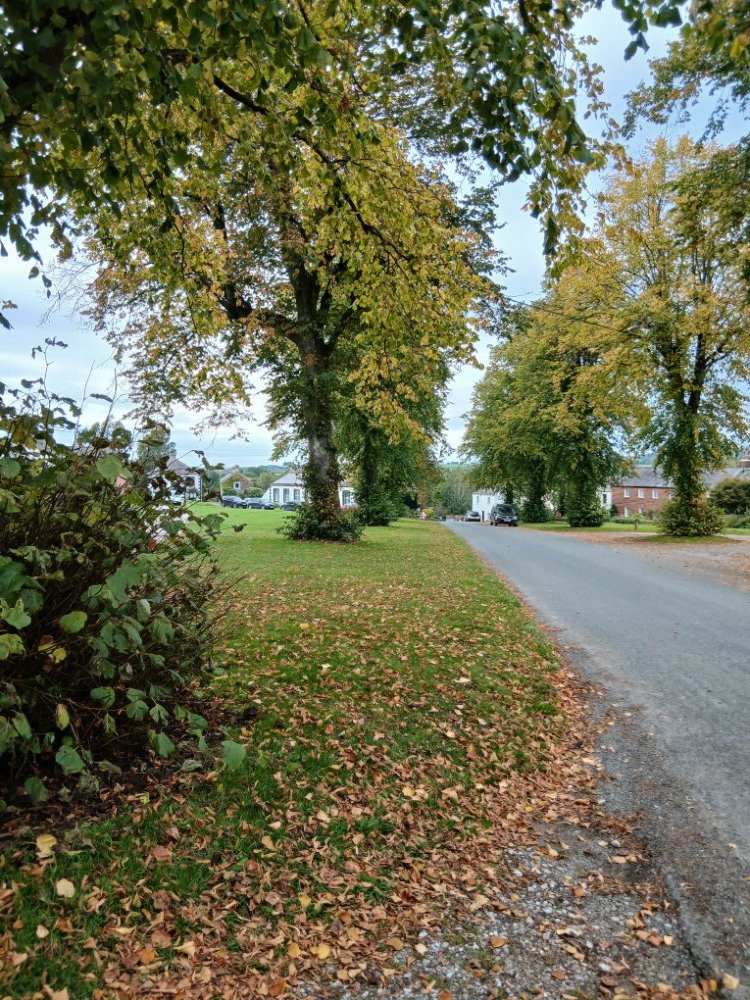
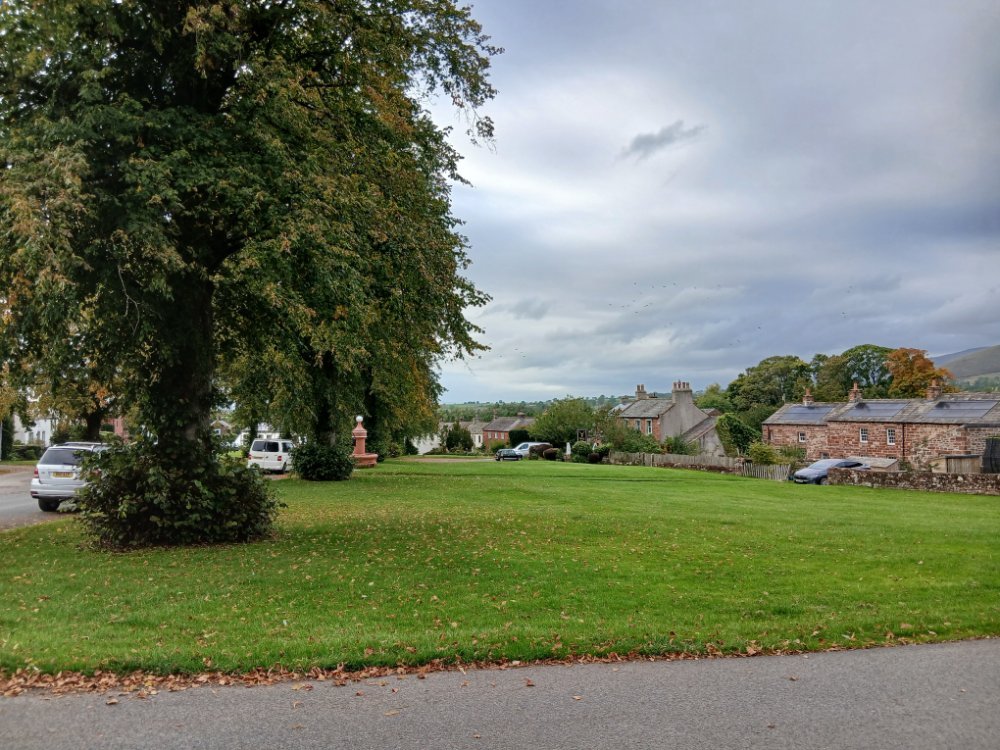
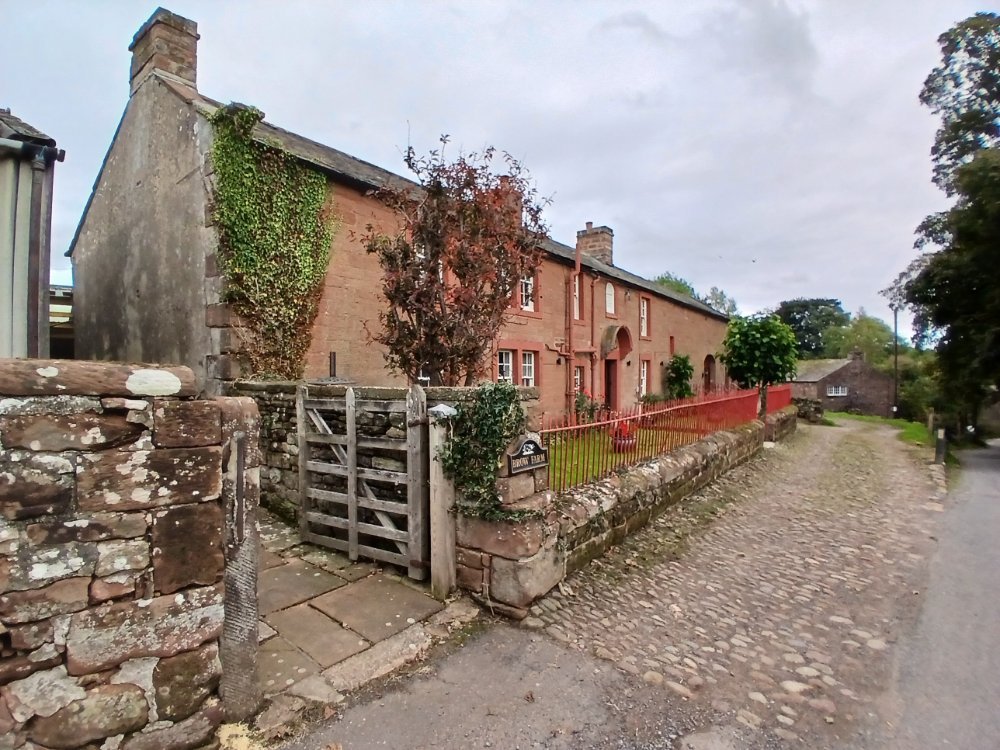
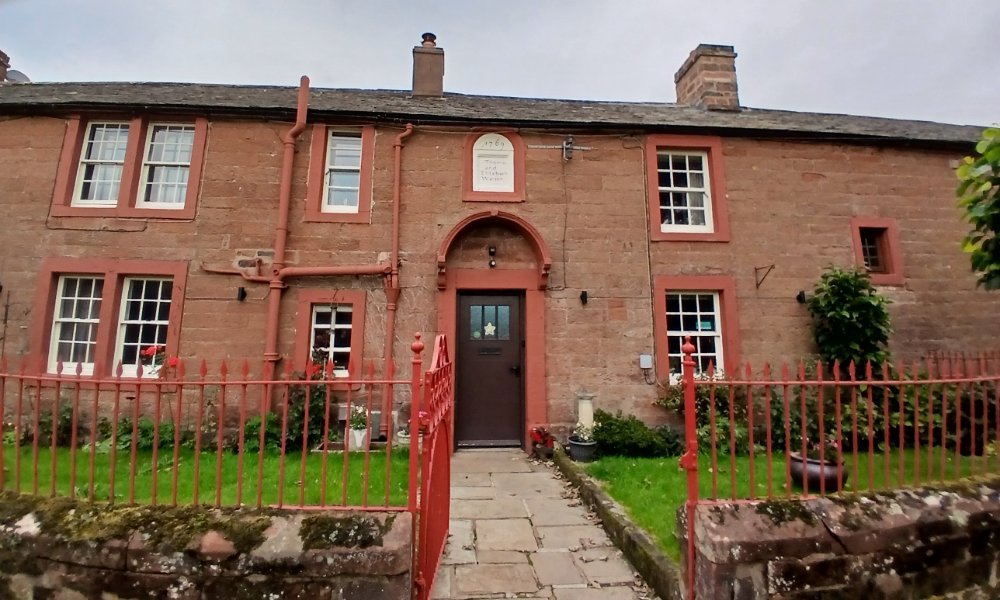
Dufton is a very attractive village three miles north of Appleby.
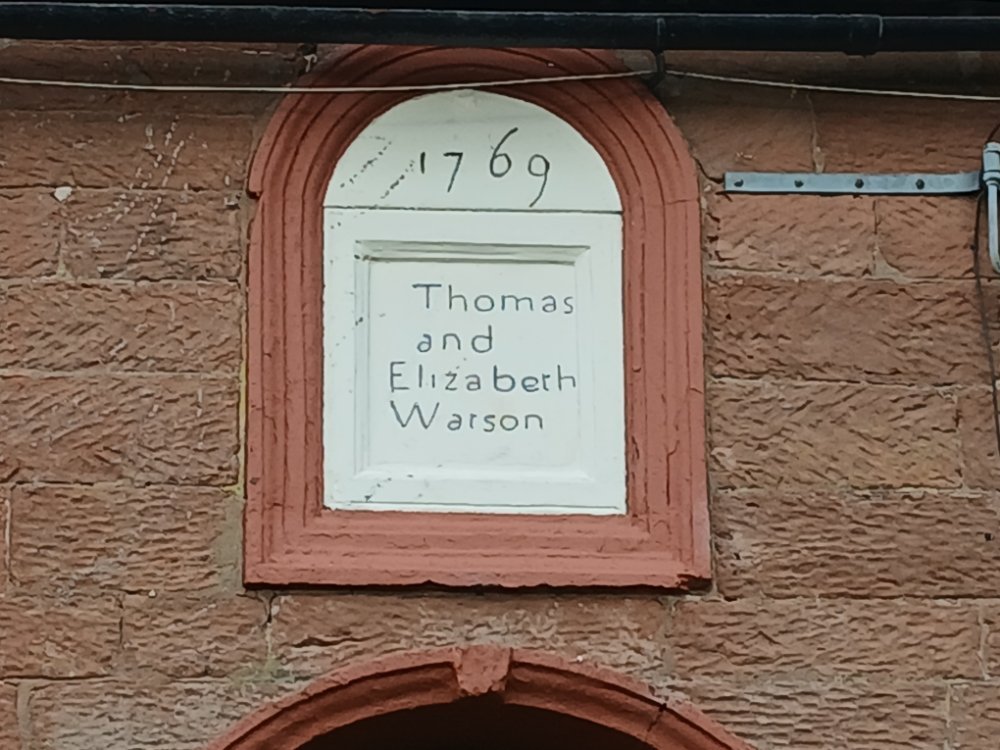
Many old houses, some from the 17th, 18th and 19th centuries, border the rectangular village green, with its avenue of lime trees marching down the centre.
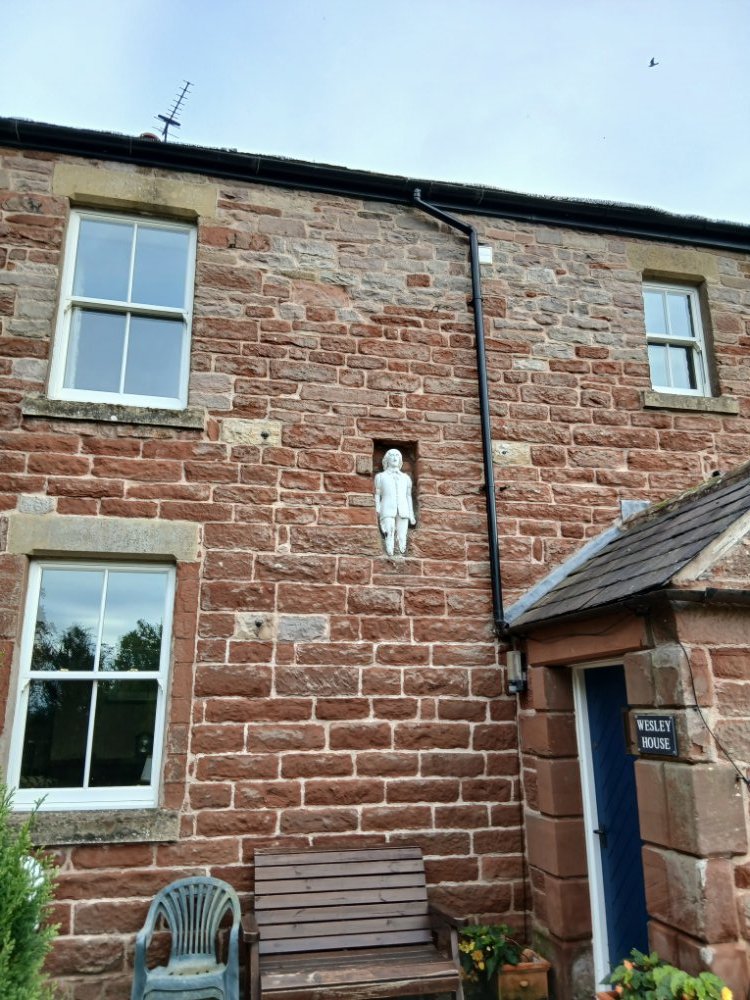
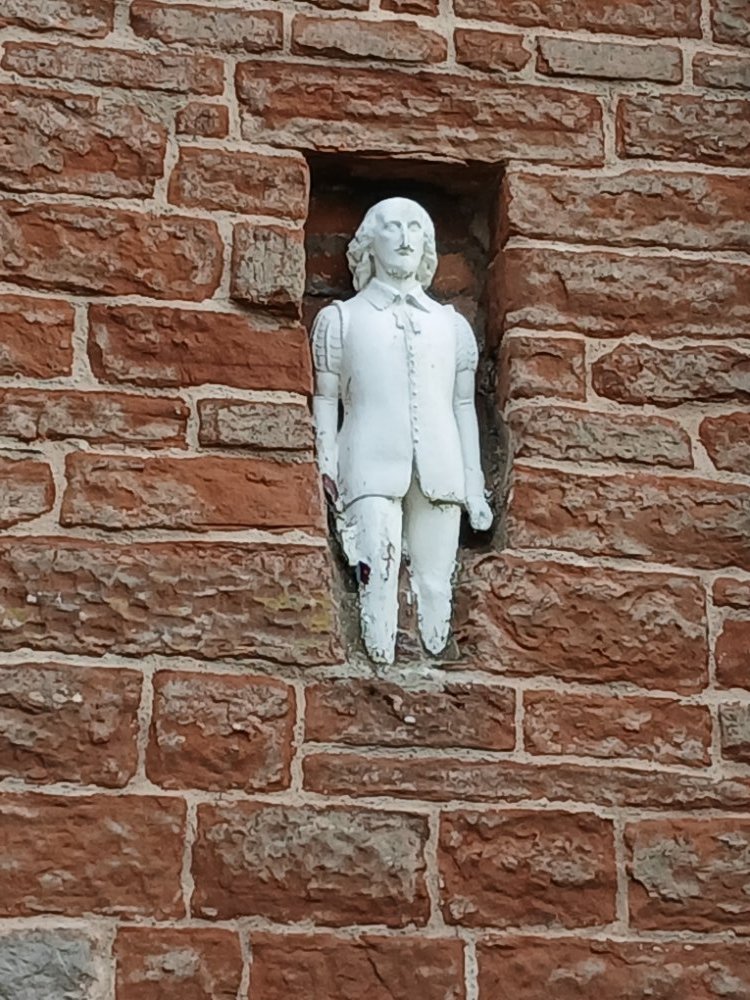
Wesley House was originally built as a Methodist chapel in 1820 and was converted into a private residence during 1935/36. In the days when Dufton had a stone mason living in the village, he made for himself a statue of William Shakespeare. One night someone broke the statue’s feet off. The mason was intending to throw the damaged statue out, but the family who were in the process of converting the chapel heard about this and decided to have a niche built to house it.
Lead mining was an important industry in the 1800’s, and the London Lead Company (owned by Quakers) was instrumental in building village cottages for their workers and families. They provided Dufton with a school, a library, and piped water in 1858. There are four taps still in evidence, along with the sandstone trough.
Out and About 2
Minffordd Yard
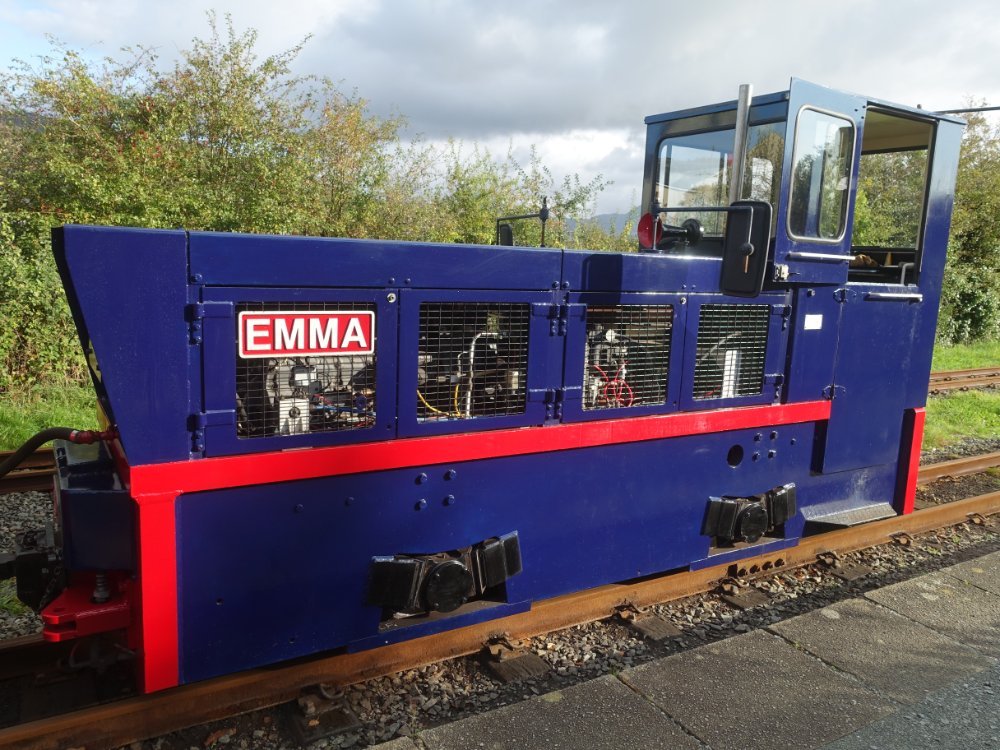
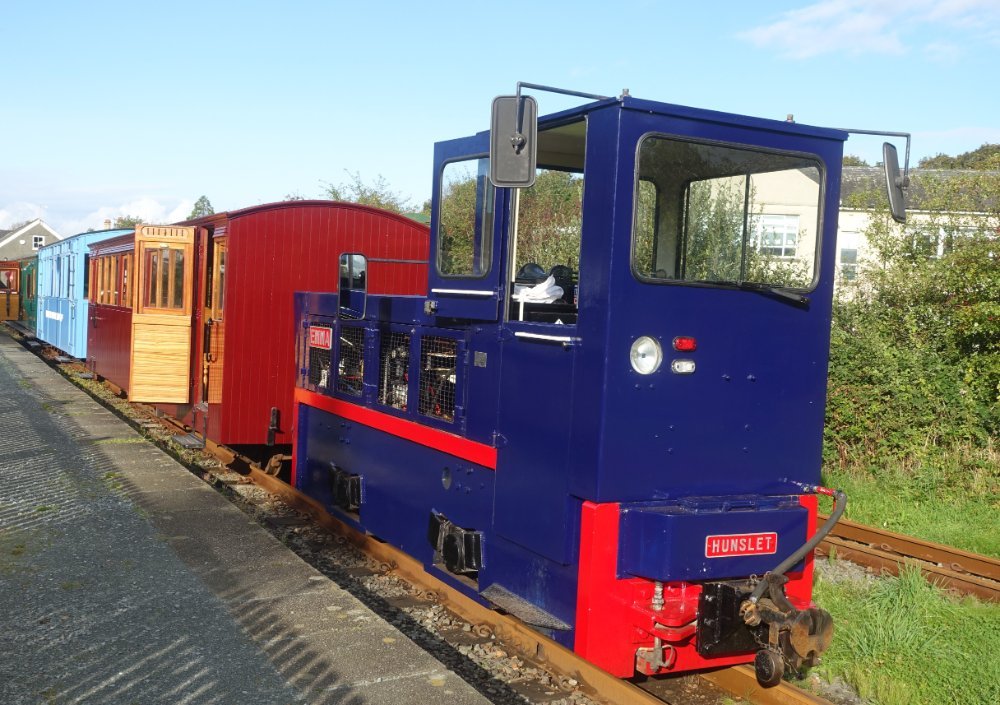
Before we head to the yard we’ll have a brief look at a loco at the Welsh Highland Heritage Railway’s Porthmadog terminus.
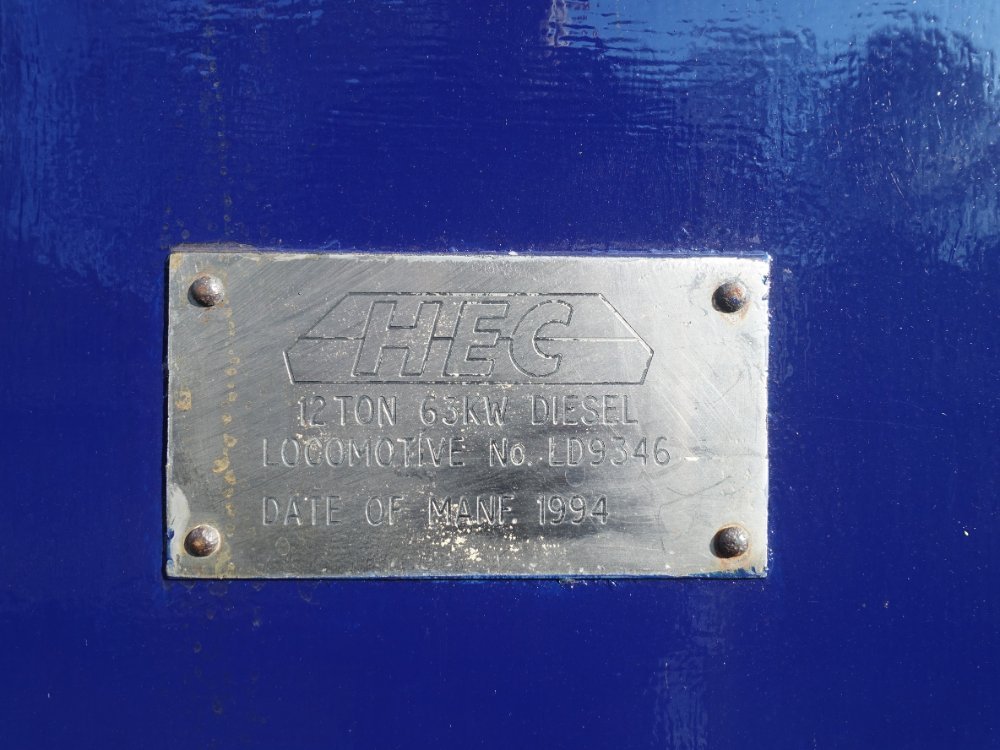
This is an ex-tunnelling loco manufactured by Hunslet Barclay, Leeds. It is four wheeled, just over 16ft long, and weighs in at twelve tons. Built for the mining industry, the locomotive is typical of compact low-speed high tractive effort narrow gauge diesels.
The Deutz air cooled engine is of the 912W type widely used underground, and throughout the construction and marine industries. It is a six cylinder in-line engine designed for high torque at low speed, rated at 63kW (84 hp), maximum revolutions around 2500 rpm.
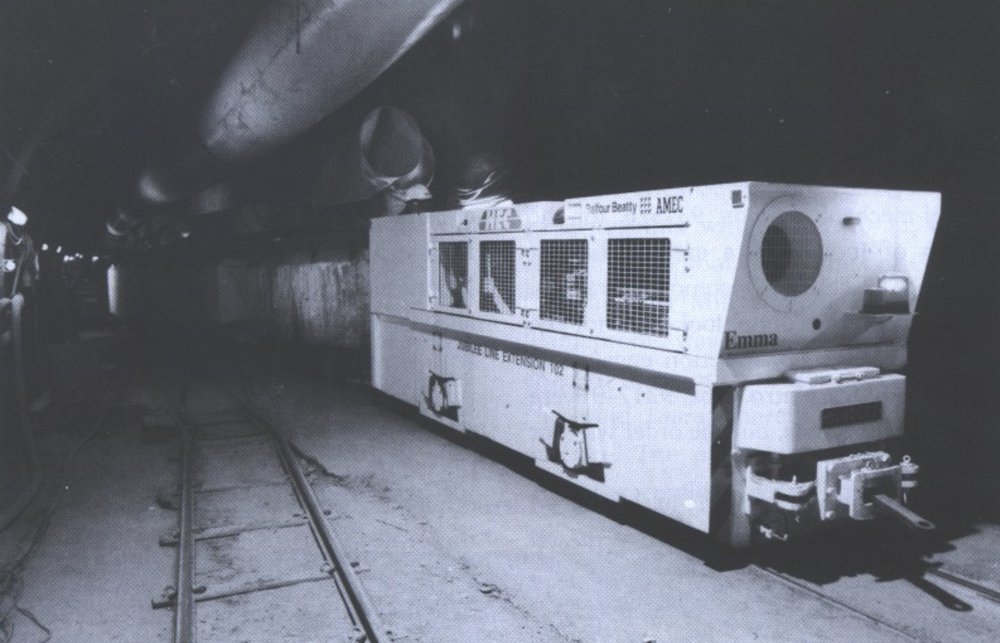
The locomotive was named Emma by her previous owners. She was one of the penultimate locomotives built at Jack Lane, Hunslet, Leeds. She last worked on the Jubilee Line Extension project, London, operated by a consortium of Balfour Beatty and Amec, although owned by Hunslet Barclay. When the extension project finished, she was sold along with several other similar locos.
Arrival at Porthmadog in March 2003 saw rebuilding commence. Emma has been commissioned with air brakes, couplings and a basic cab.
HB 12t shown in construction-company livery. It carries the marking "Jubilee Line Extension 102"
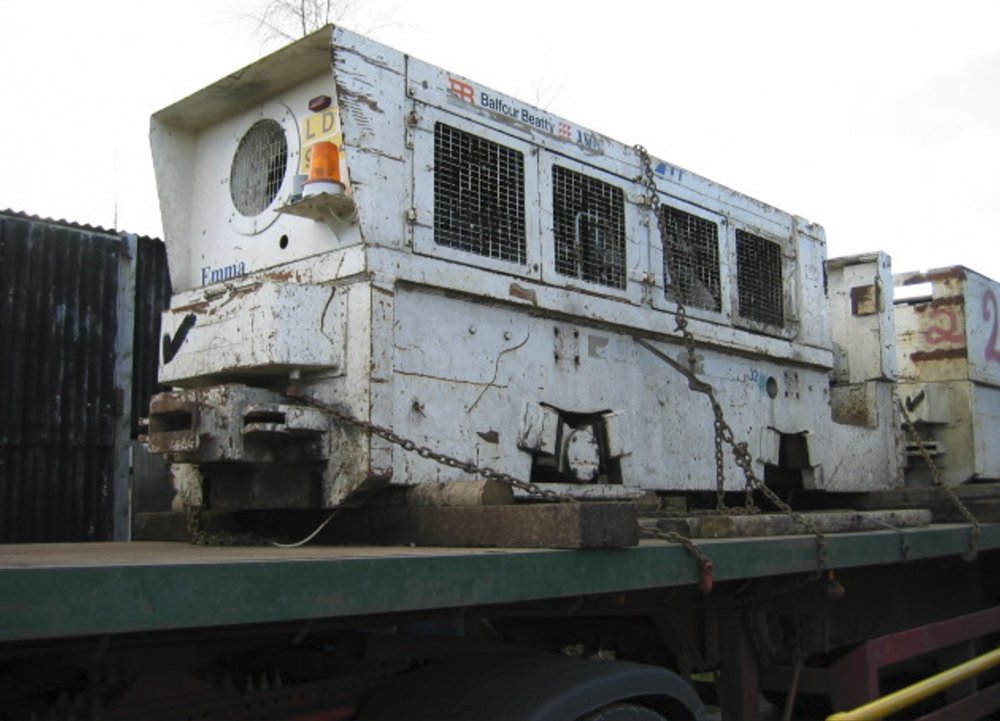
Somewhat decrepit but in mechanically good condition, here is the loco on arrival at Gelert's Farm
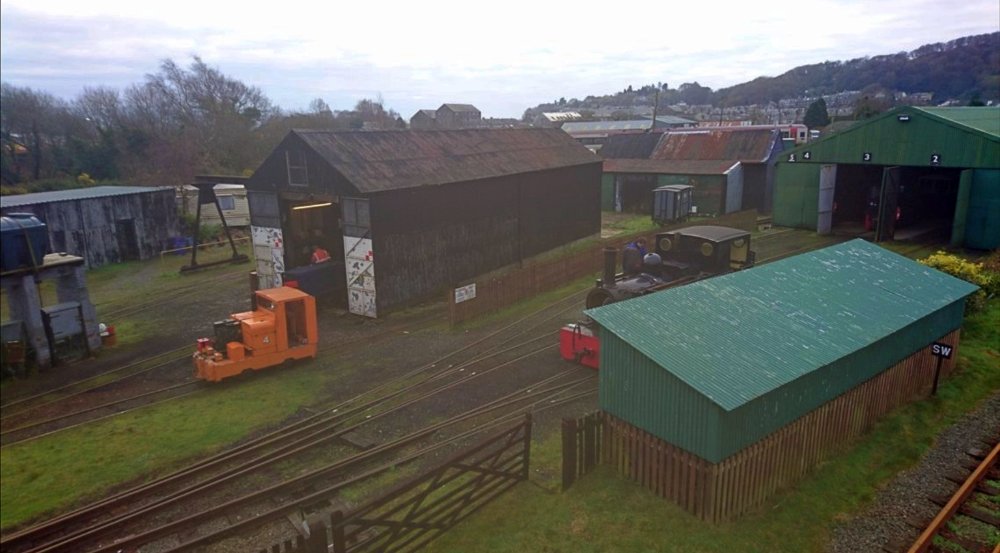
Gelert's Farm Works is the operating centre for the Welsh Highland Heritage Railway (WHHR). It was, as the name suggests, a working farm. After the Welsh Highland Railway Ltd purchased Beddgelert Siding in 1975 from British Rail the ramshackle collection of farm buildings known as Gelert's Farm came up for sale. The farm which is situated between Beddgelert Siding and the Cambrian line was purchased to become the operating centre for the rebuilt WHR Ltd. After possession of the land was obtained in late 1975 track was laid into the site. Over the next couple of years five sidings were laid into the yard and another back towards Pen-y-mount. The old hay barn was converted into a loco shed, and a large pole barn became the carriage shed. The stone buildings were converted to workshops and a machine shop.
A third plot of land was purchased in the 1980's and this consisted of the area where the old crossing box, and the attendant keeper’s cottage were located. This also included a short length of track of the Ffestiniog Railway link line.
This short length of track makes a physical connection to the WHR just under a mile away
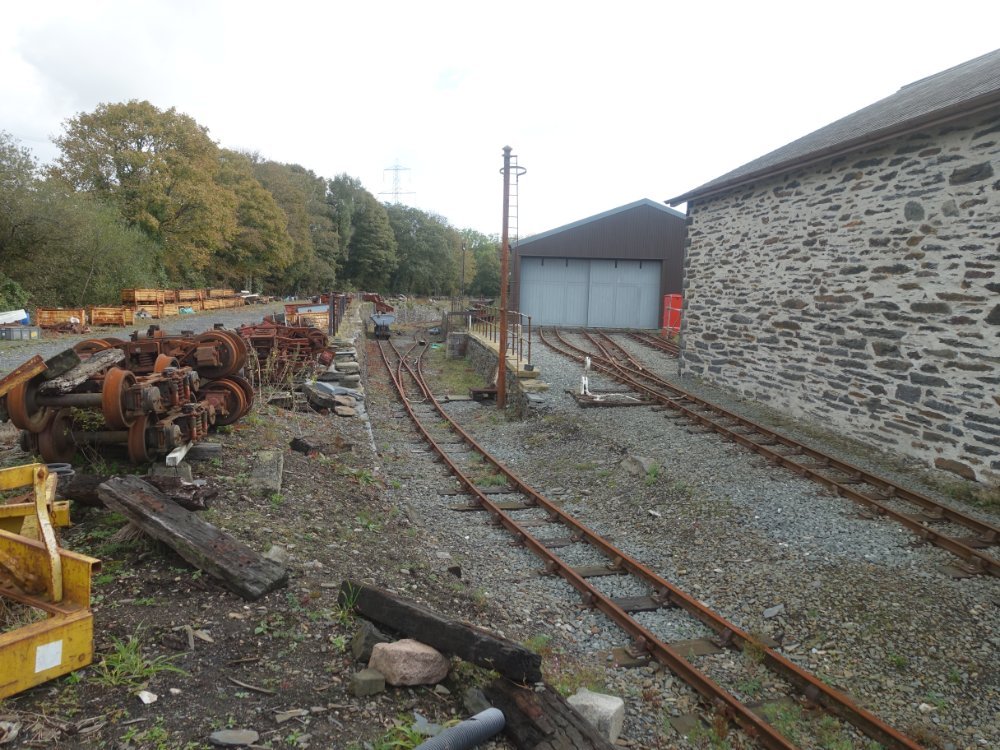
We now move to the railway yard at Minffordd.
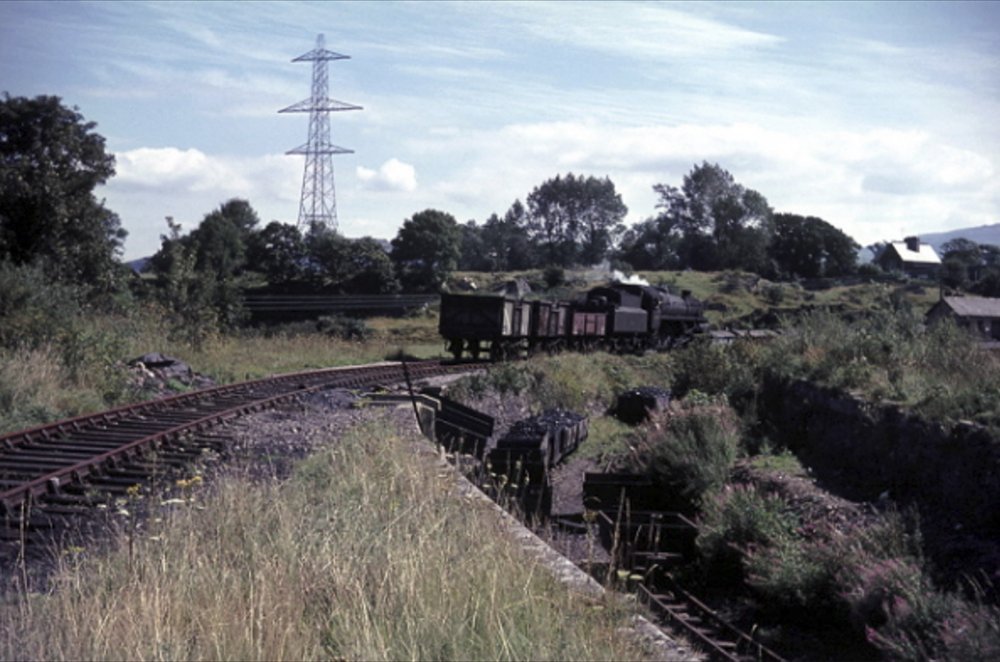
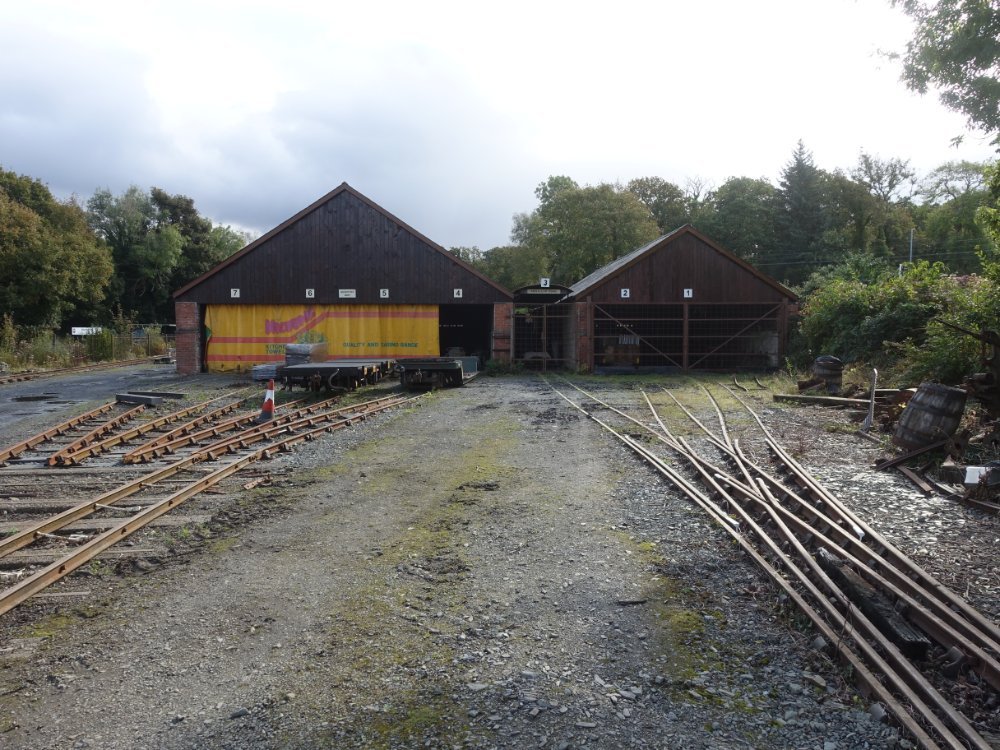
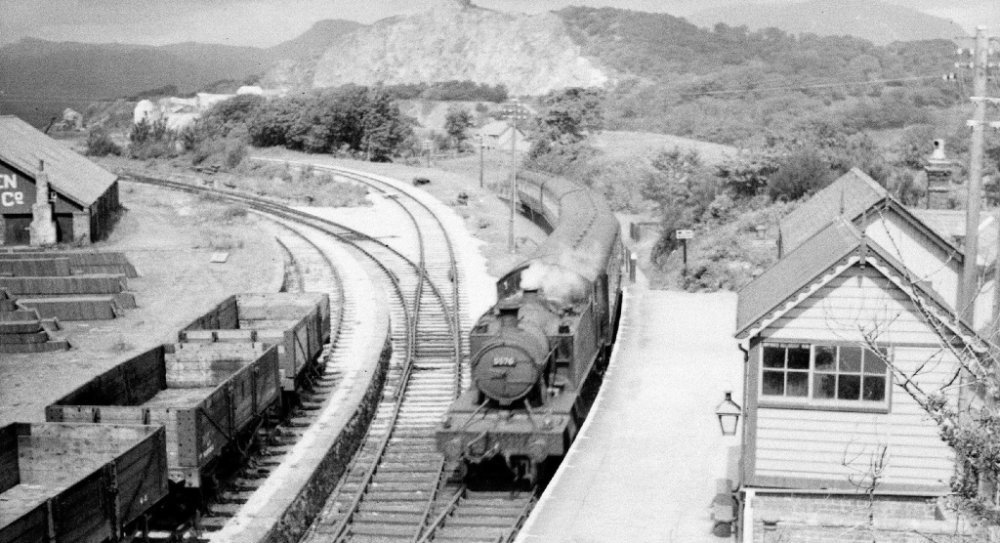
Minffordd Yard is located to the north of the Ffestiniog Railway main line just west of Minffordd station. In old company days traffic was transhipped here to and from the standard gauge Cambrian Railways (later GWR, then BR Western Region). Slate brought down from the quarries on narrow-gauge tracks was shipped out whilst incoming traffic included coal, for the railway's locomotives and for local domestic use.
Standard gauge transhipment ended in 1970, and the yard is now the headquarters of the Ffestiniog and Welsh Highland Railways' Infrastructure Department and one of their main depots.
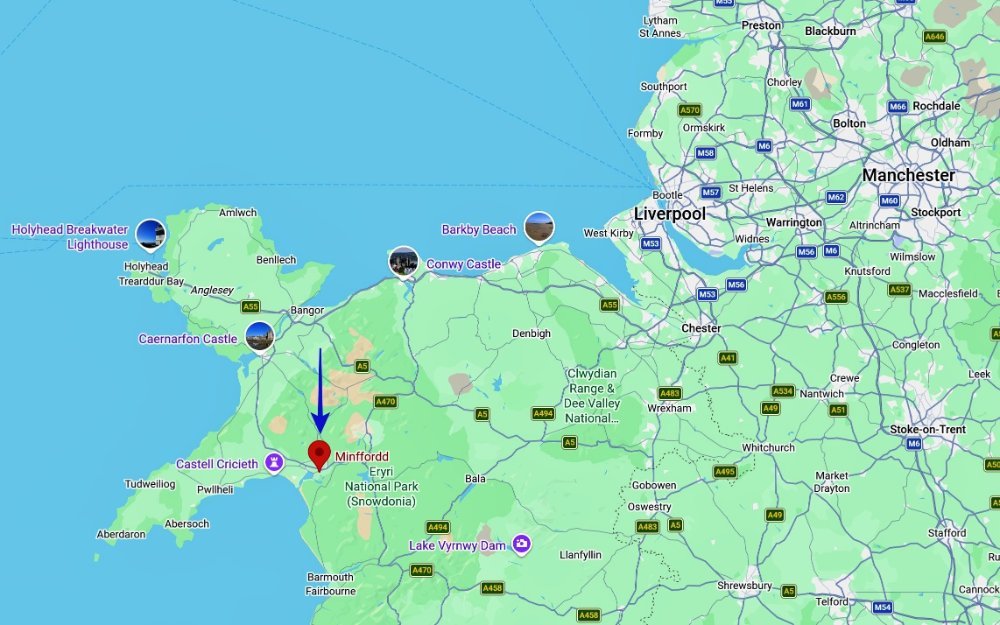
The location of Minffordd arrowed in blue
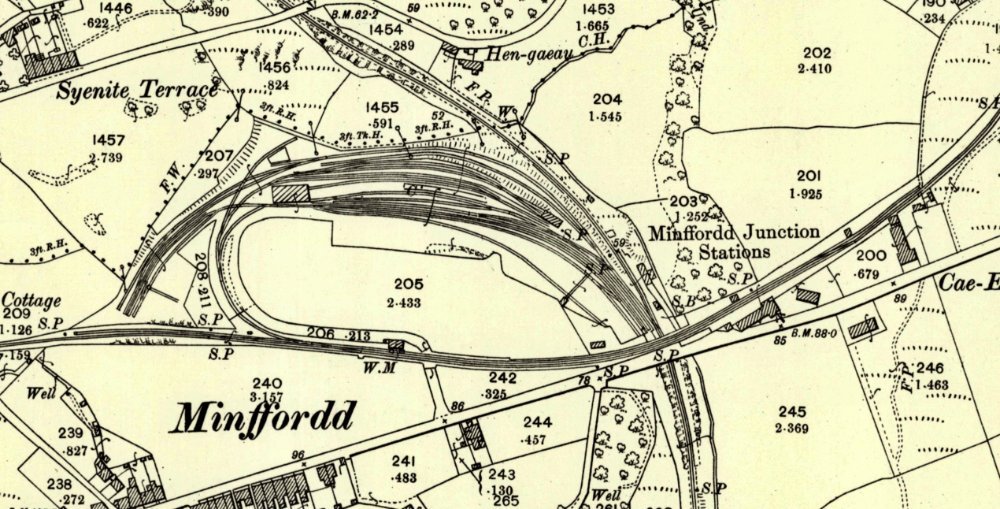
The site in the early 1900s
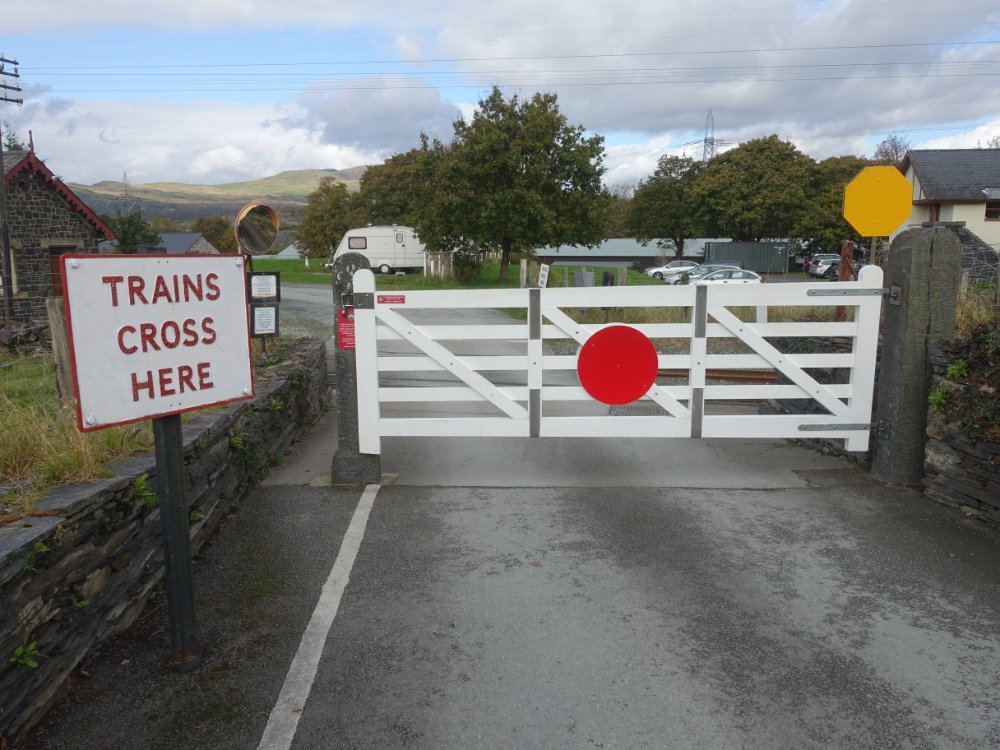
The entrance to the yard
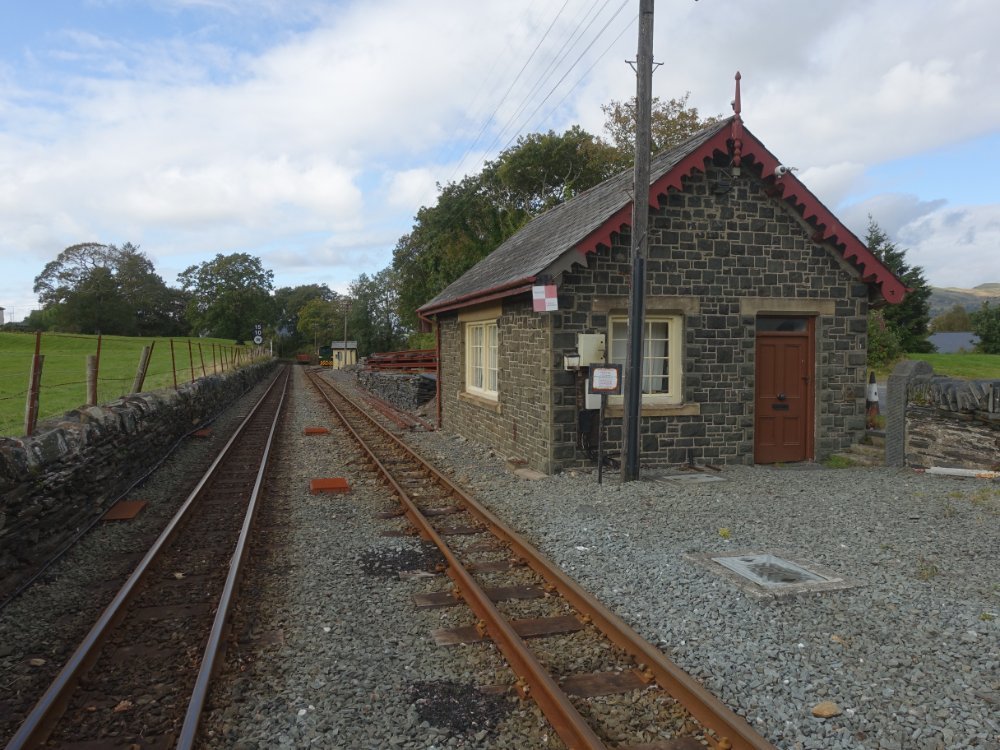
One of the lineside buildings
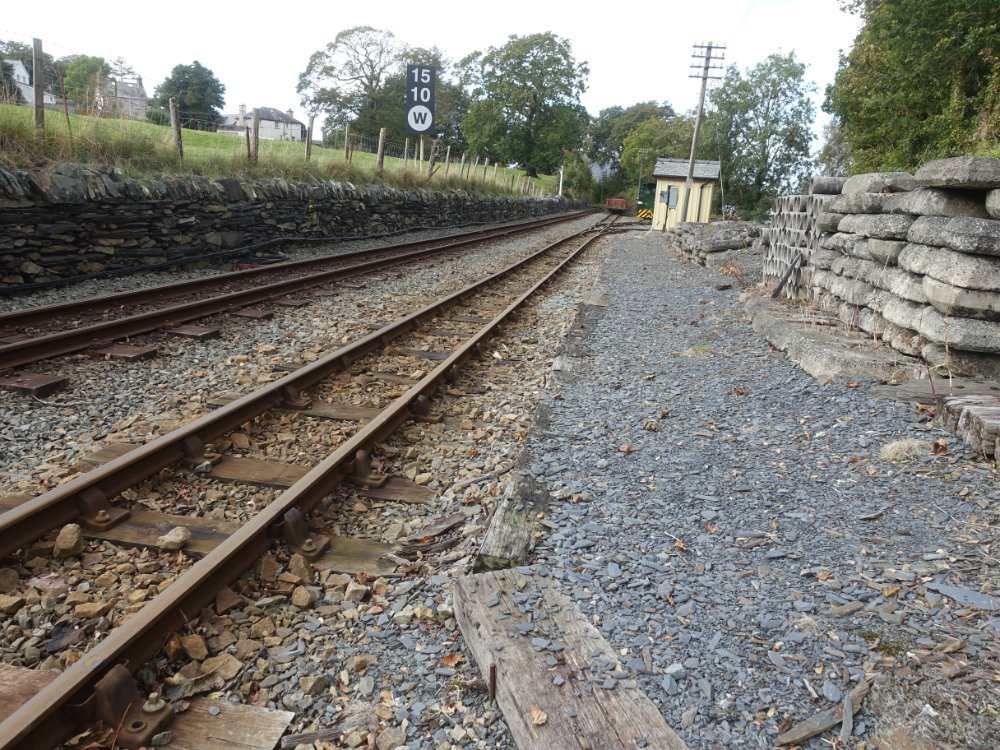
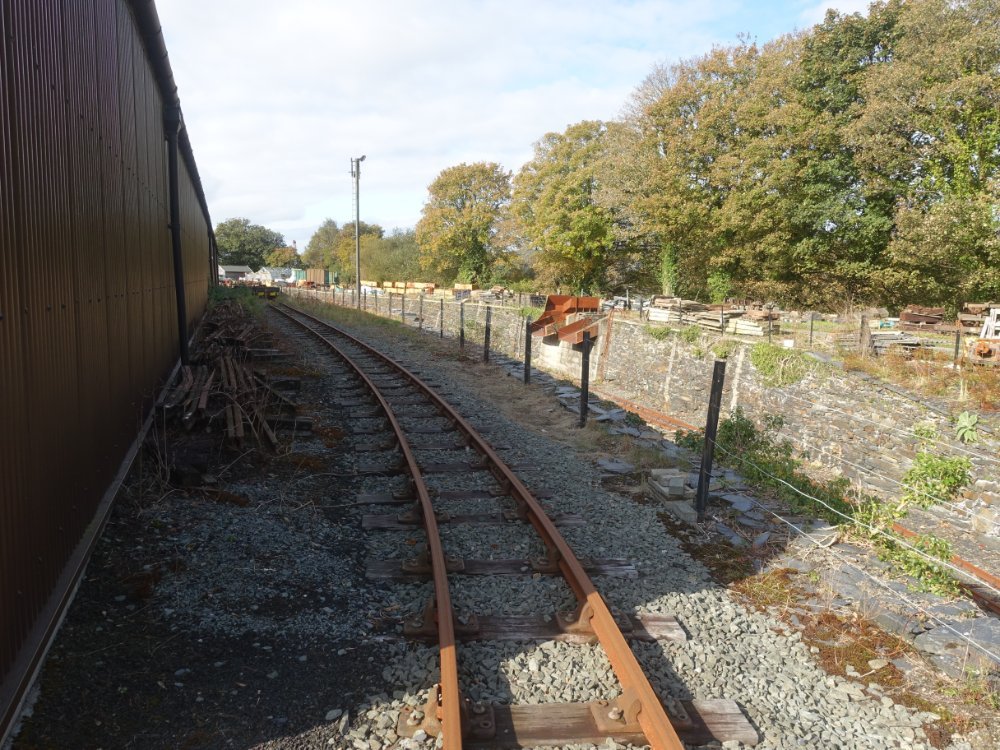
The view west
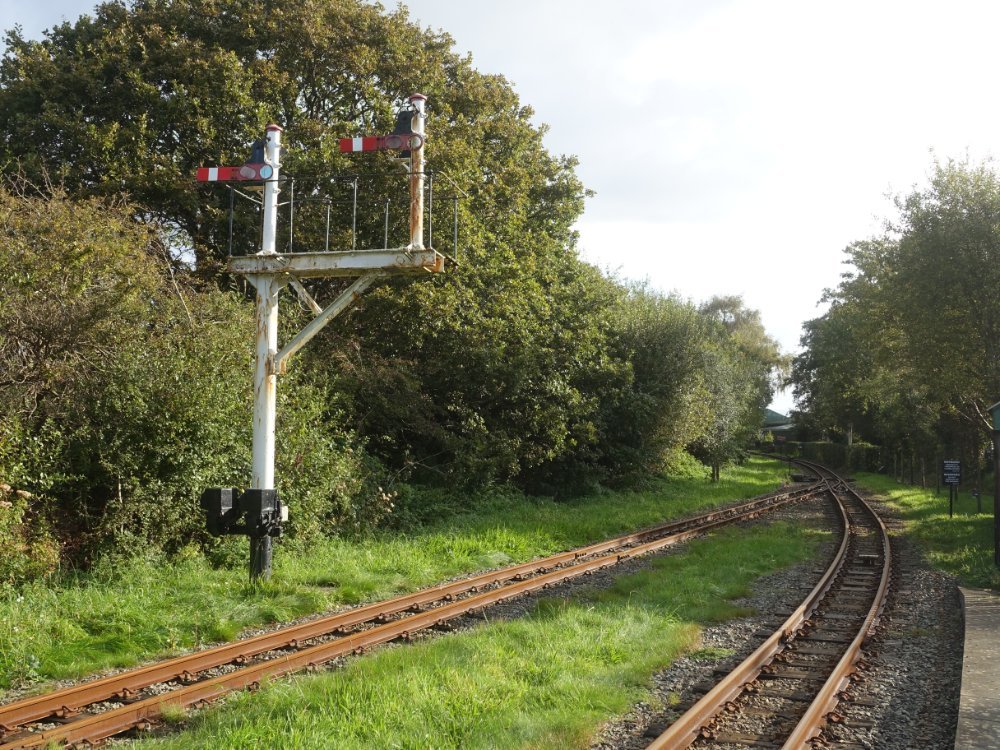
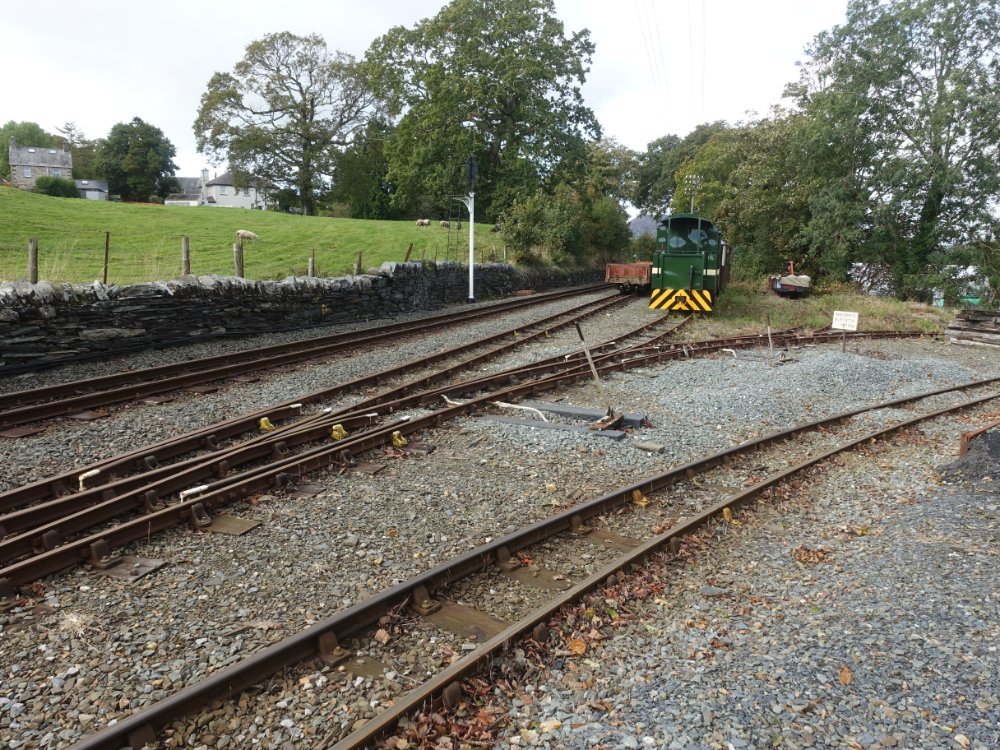
The junction for the yard
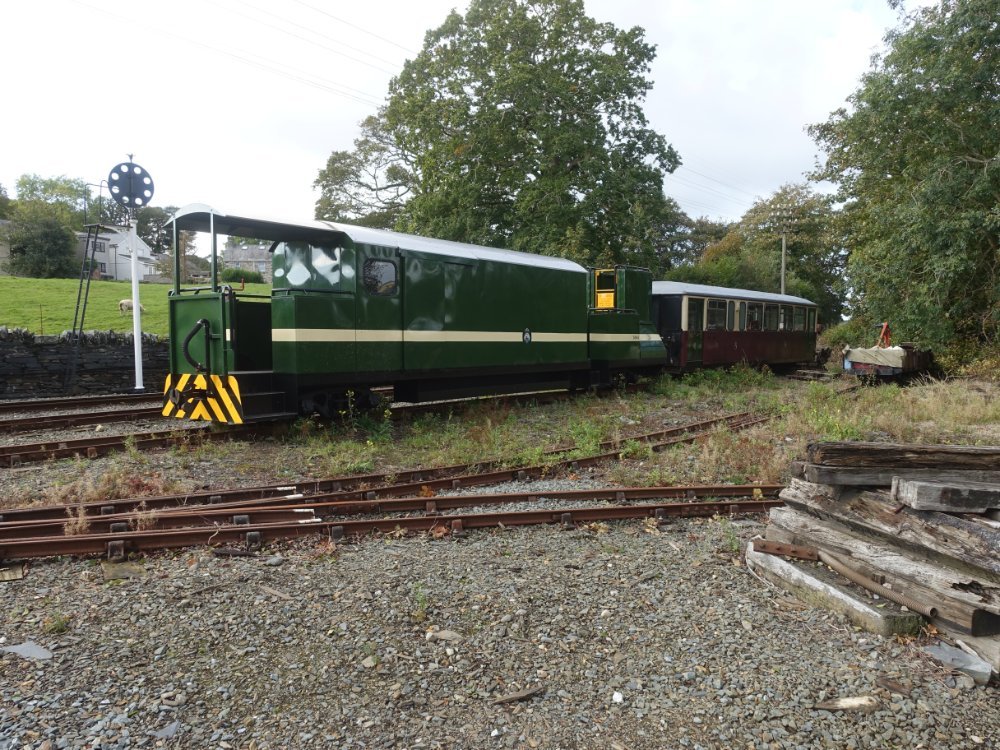
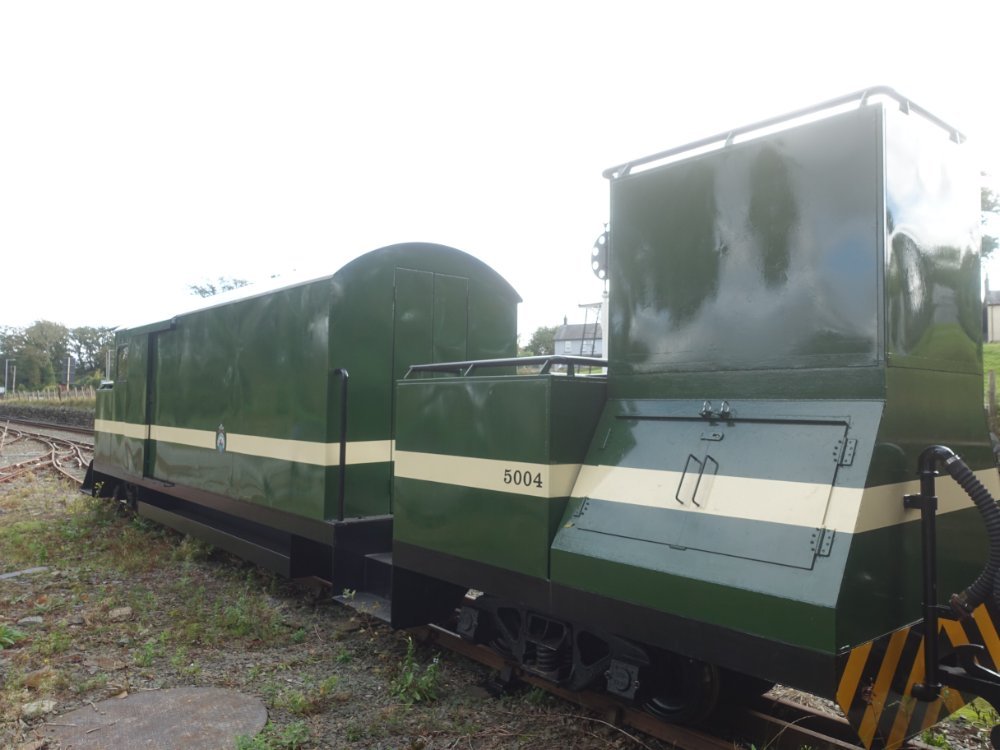
Locomotive 5004 on the Ffestiniog Railway refers to a custom-built service vehicle rather than a steam engine. It is a specialized, modern steel-bodied bogie van manufactured at the railway's Boston Lodge Works to support lineside clearance and maintenance projects.
The versatile wagon supports right-of-way upkeep by combining a multi-section tool van with an elevating working platform to clear overhanging branches and other obstructions.
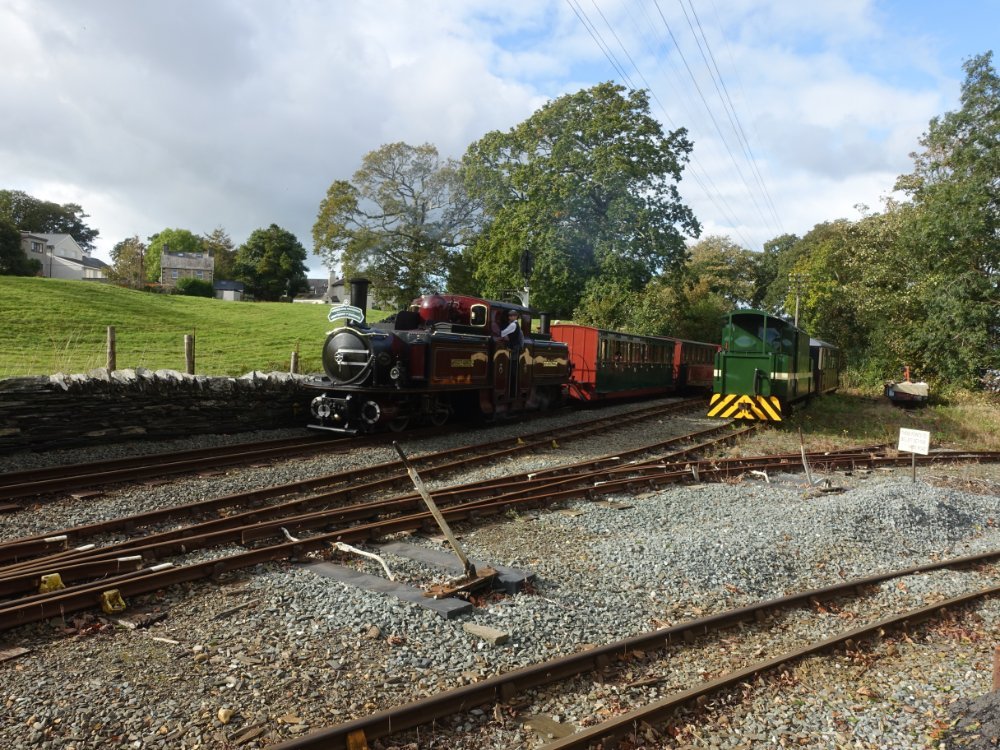
No 10 Merddin Emrys heads the 11:10 from Porthmadog to Blaenau Ffestiniog
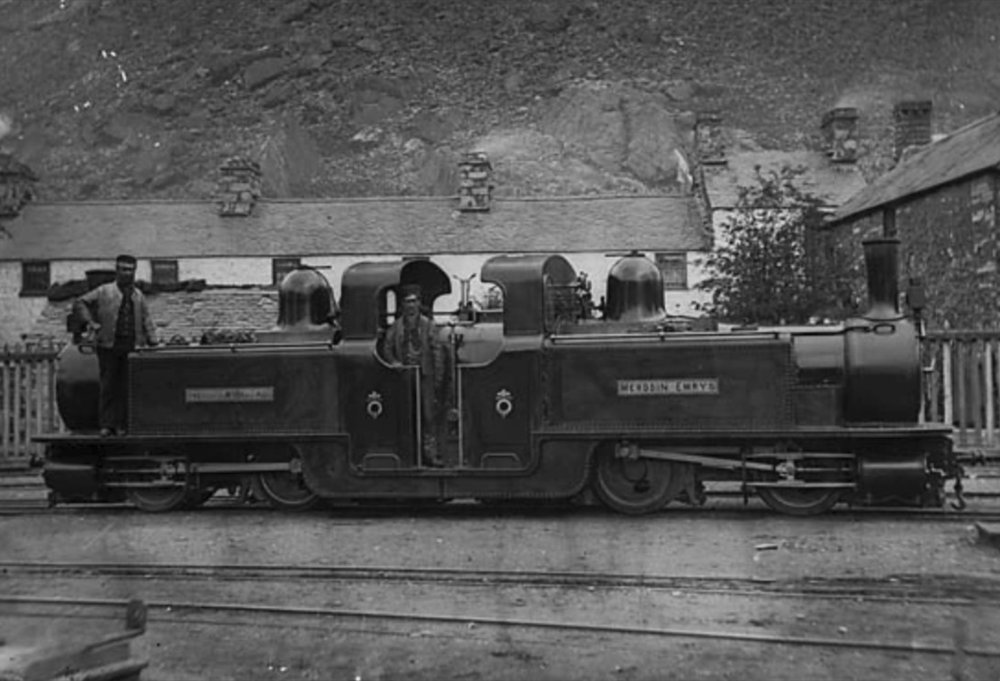
Merddin Emrys was the third double Fairlie loco on the Ffestiniog Railway but also the first loco constructed at Boston Lodge in 1879.
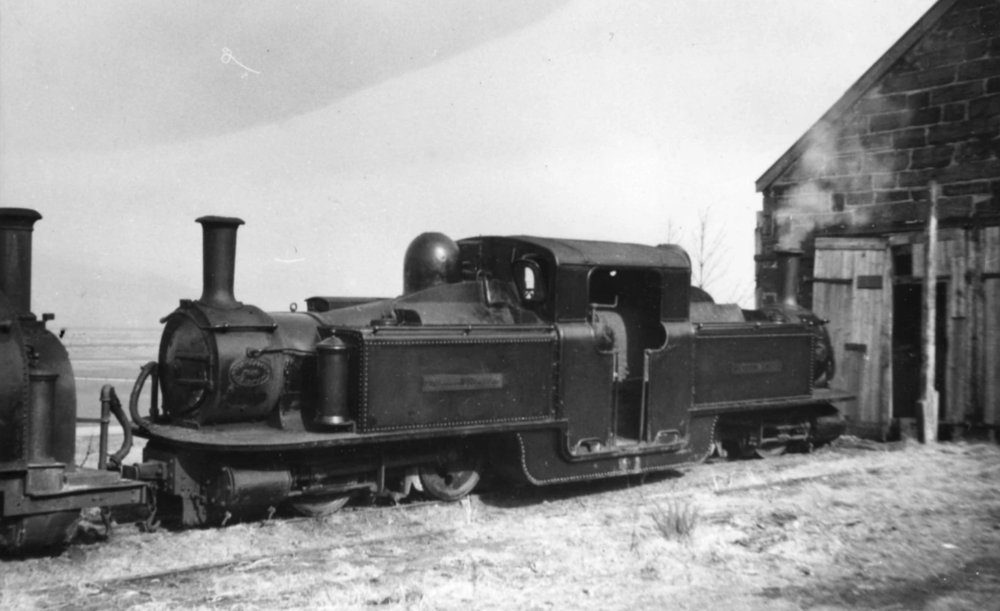
Left in the shed at the cessation of operations in 1946, Merddin Emrys condition deteriorated such that it required extensive repairs and new tanks before entering service under the new regime in 1961.
Reboilered in 1970 and rebuilt, Merddin regained its elegant lines in 1987. A subsequent overhaul completed in 2005 saw boiler repairs and new power bogies paid for by the Ffestiniog Railway Society. Merdddin was withdrawn in September 2015 for boiler overhaul which saw it return to traffic with new chimneys and smokeboxes.
In 1875
March 1956
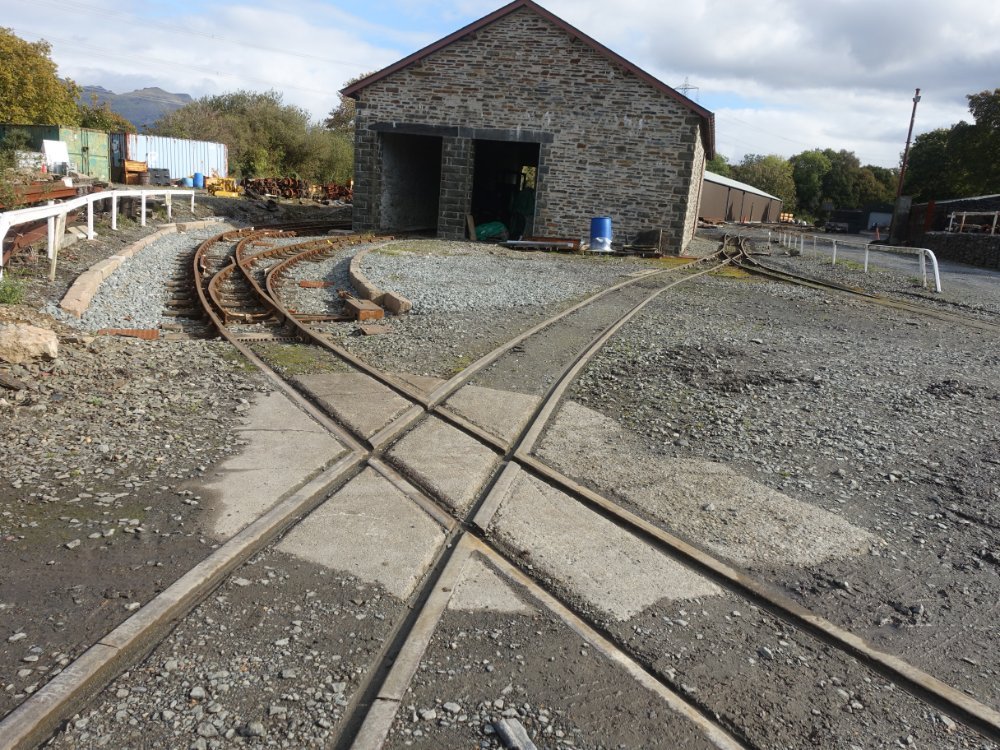
The old goods shed. Note the diamond crossing.
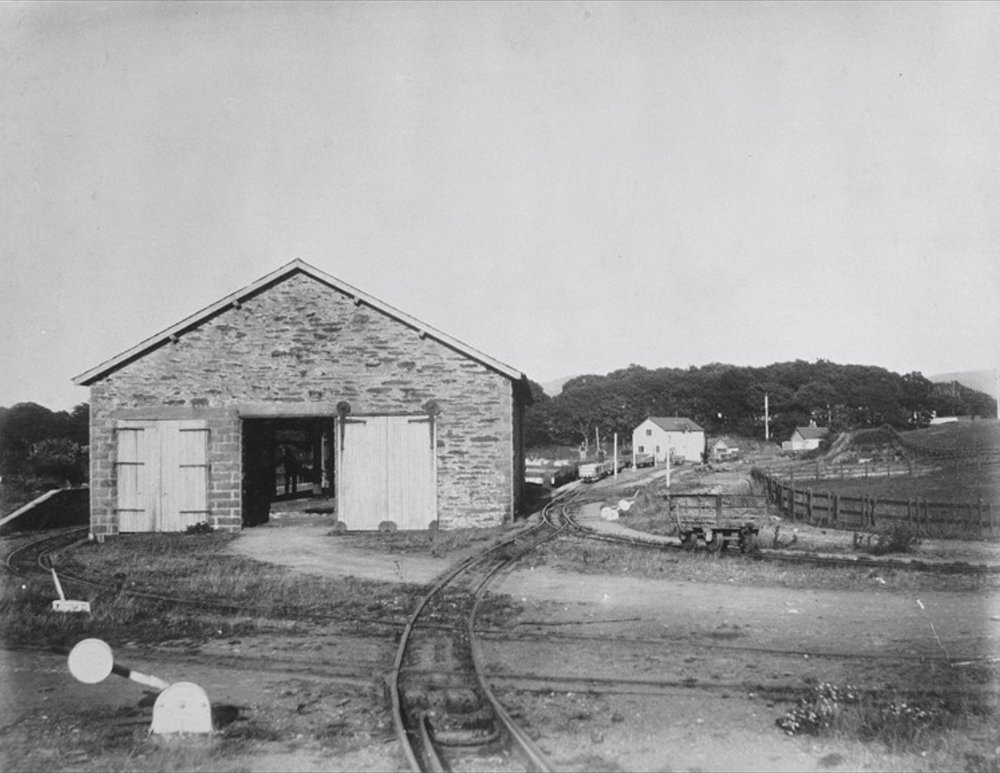
The shed in 1887
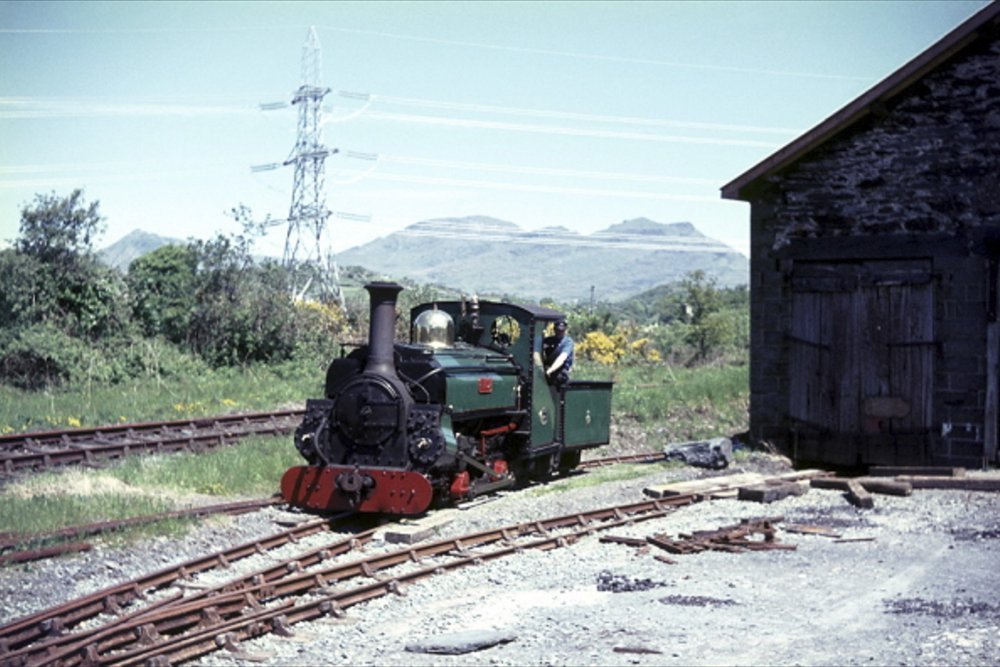
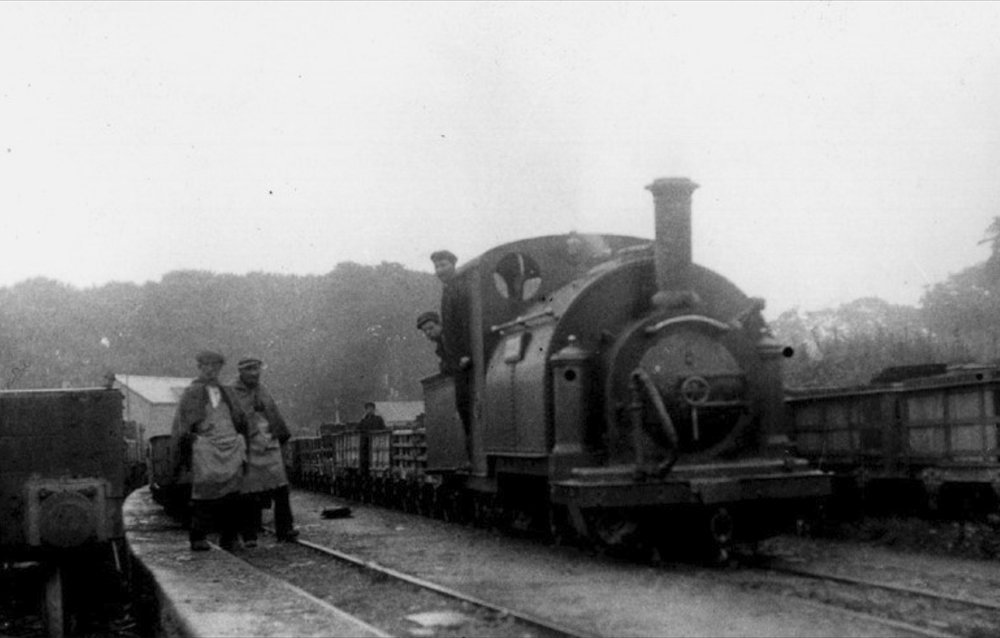
Linda reversing through Minffordd Yard into the "Coal Hole" in May 1966 to pick up some coal wagons from the exchange sidings with BR.
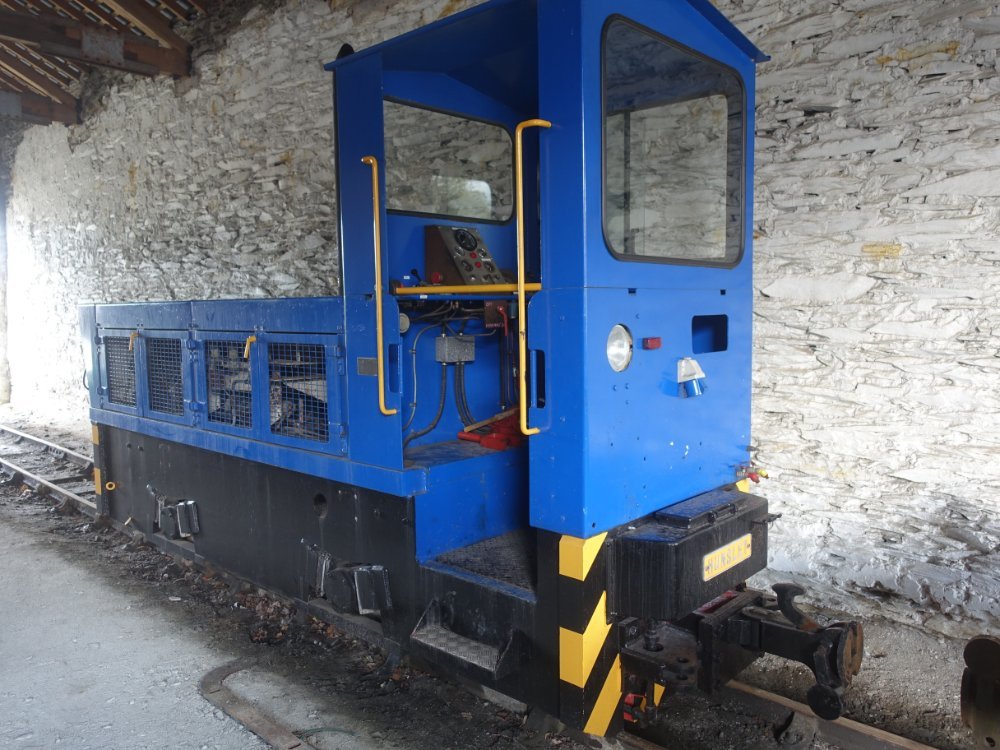
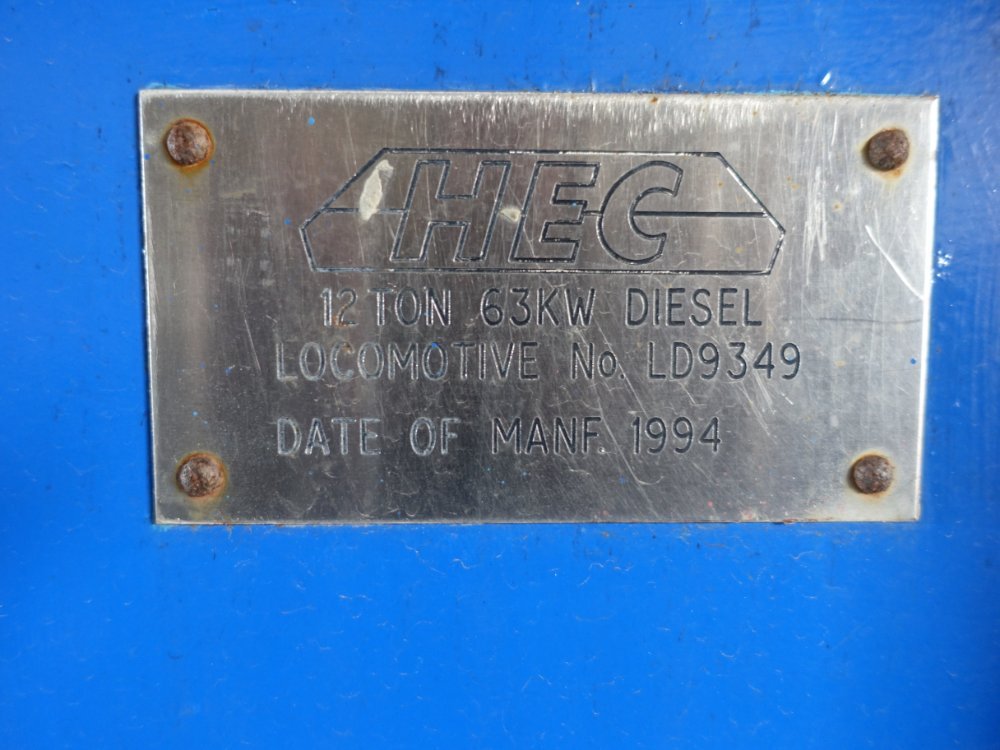
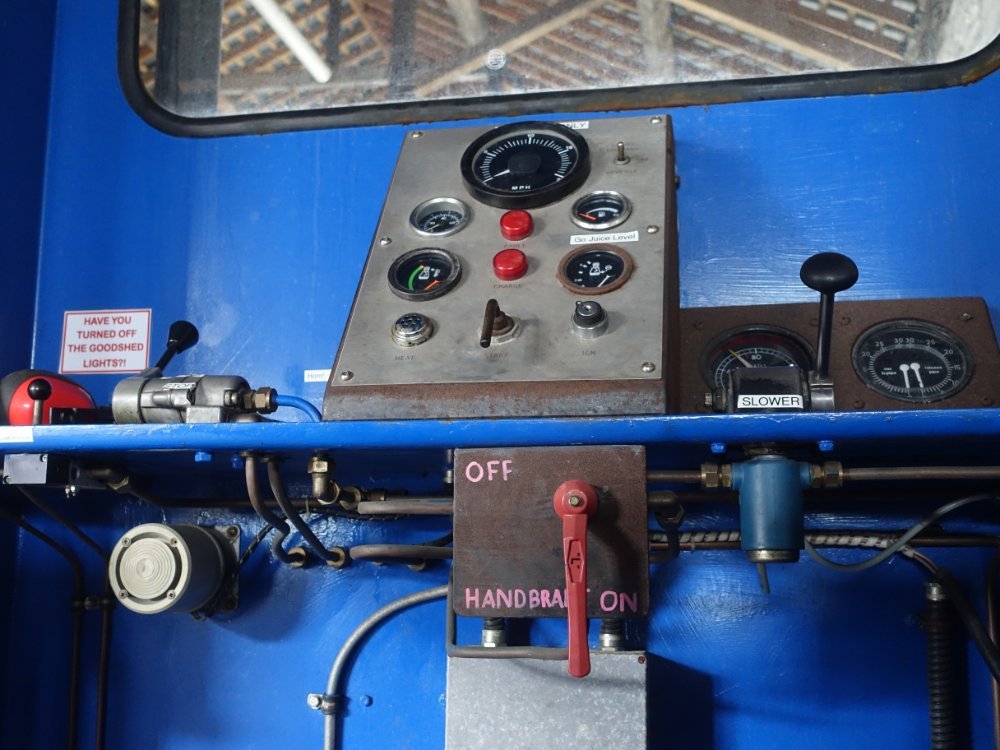
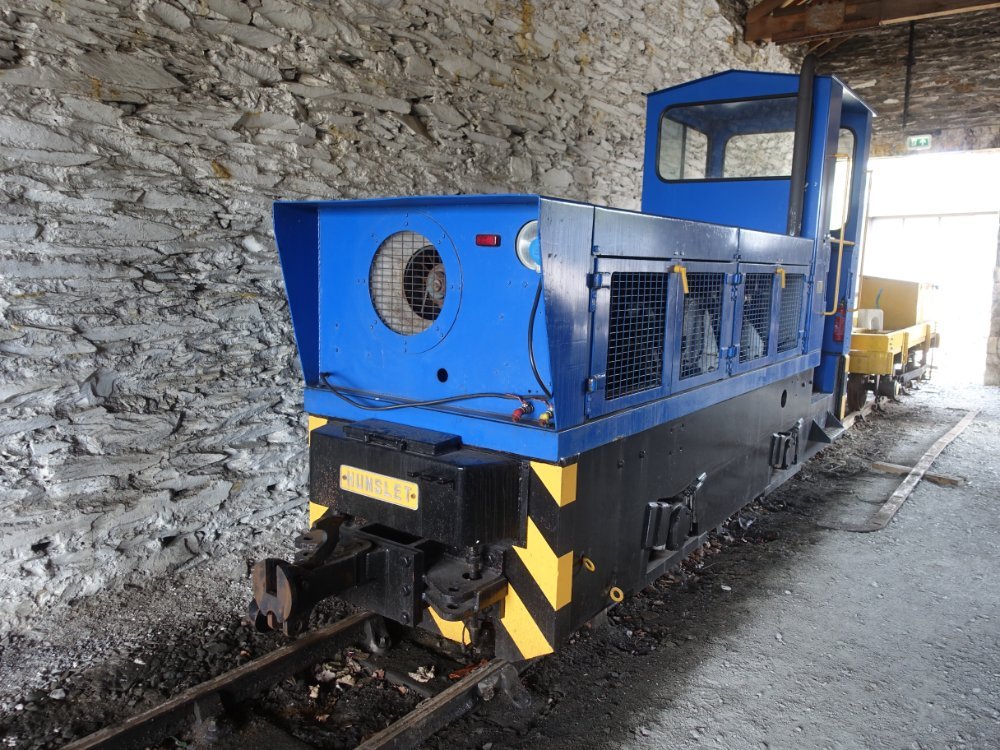
In the goods shed is this HEC diesel loco
LD 9349 (also named Stacey) is a narrow-gauge, ex-tunnelling locomotive. It was manufactured by Hunslet Barclay in Leeds, featuring a Deutz air-cooled engine, and like Emma above previously saw heavy use on the Jubilee Line Extension project in London.
To the left of the shed
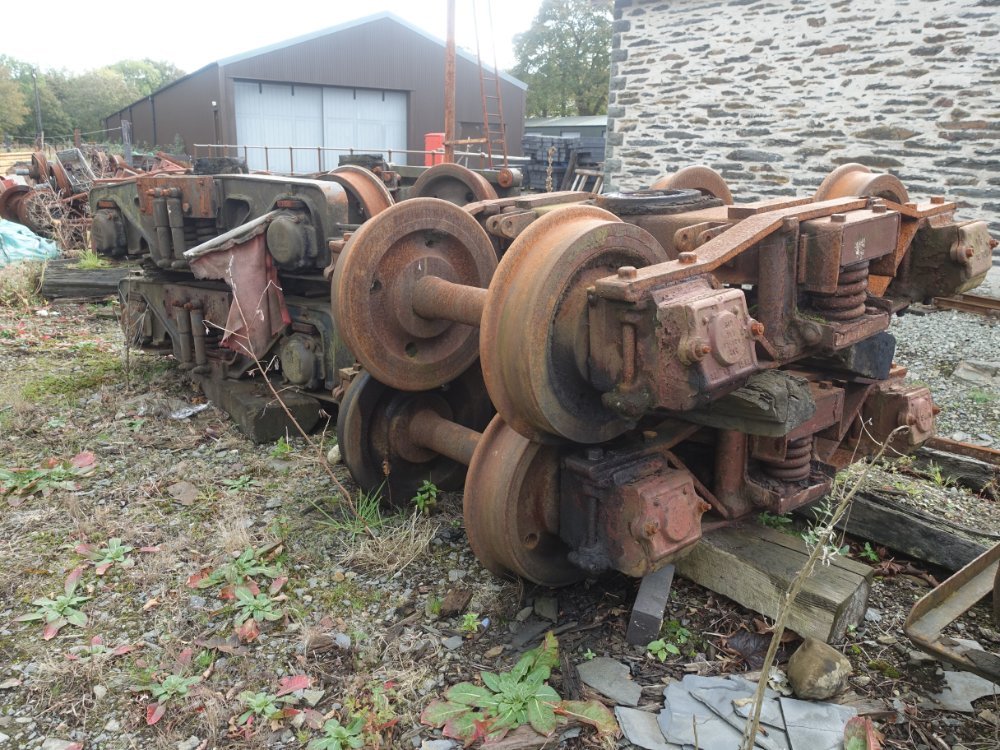
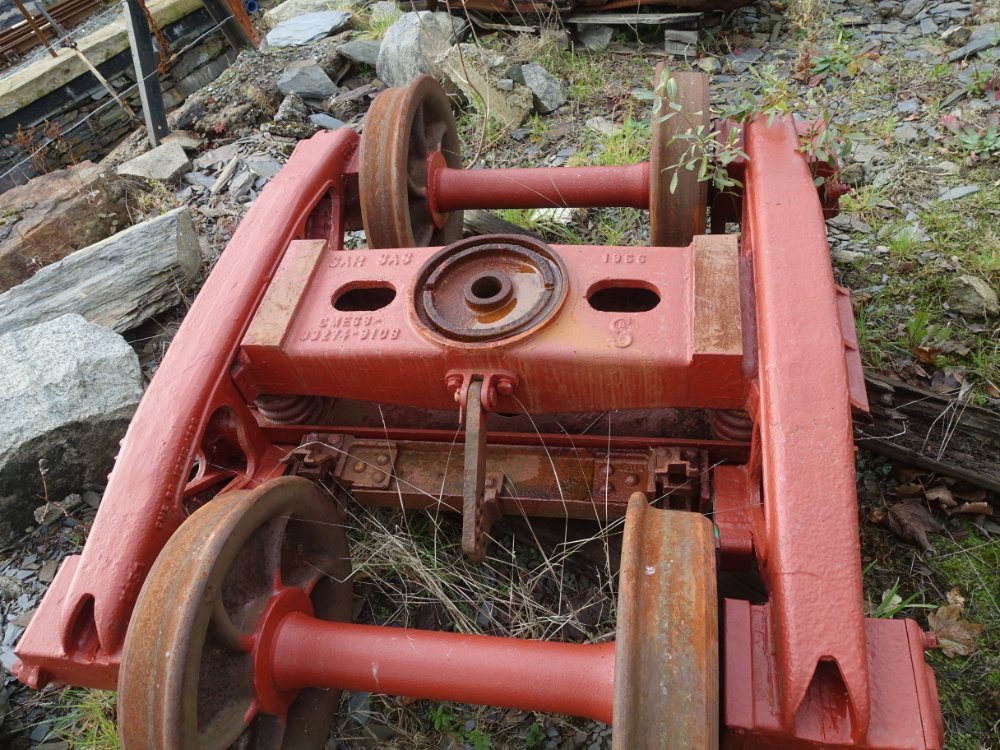
Spare bogies dated 1966
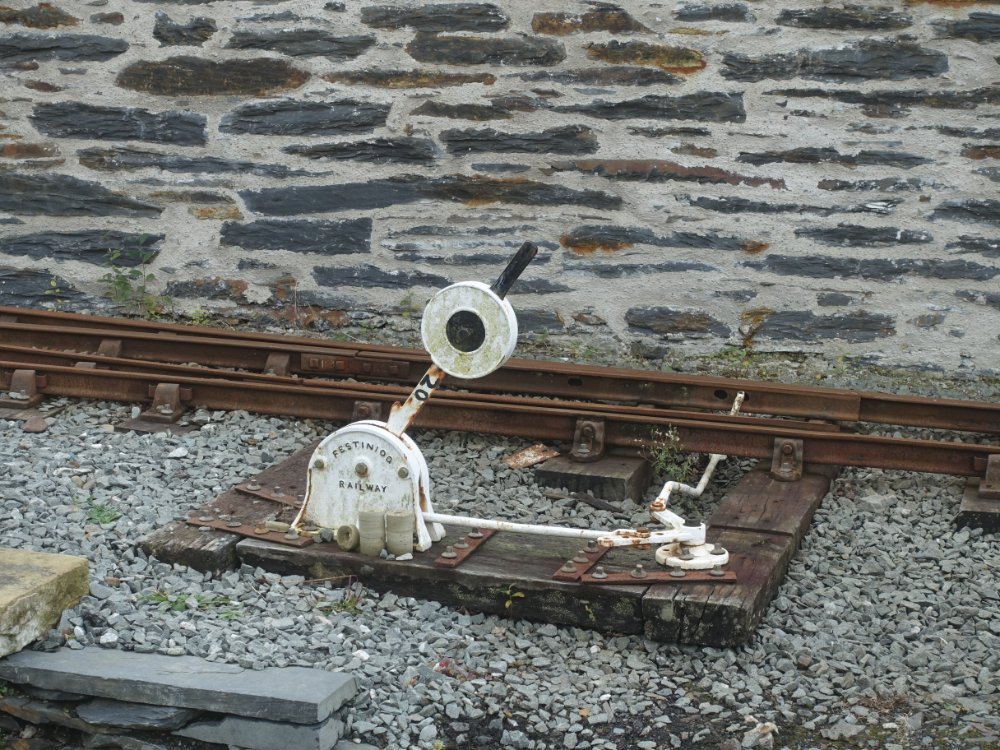
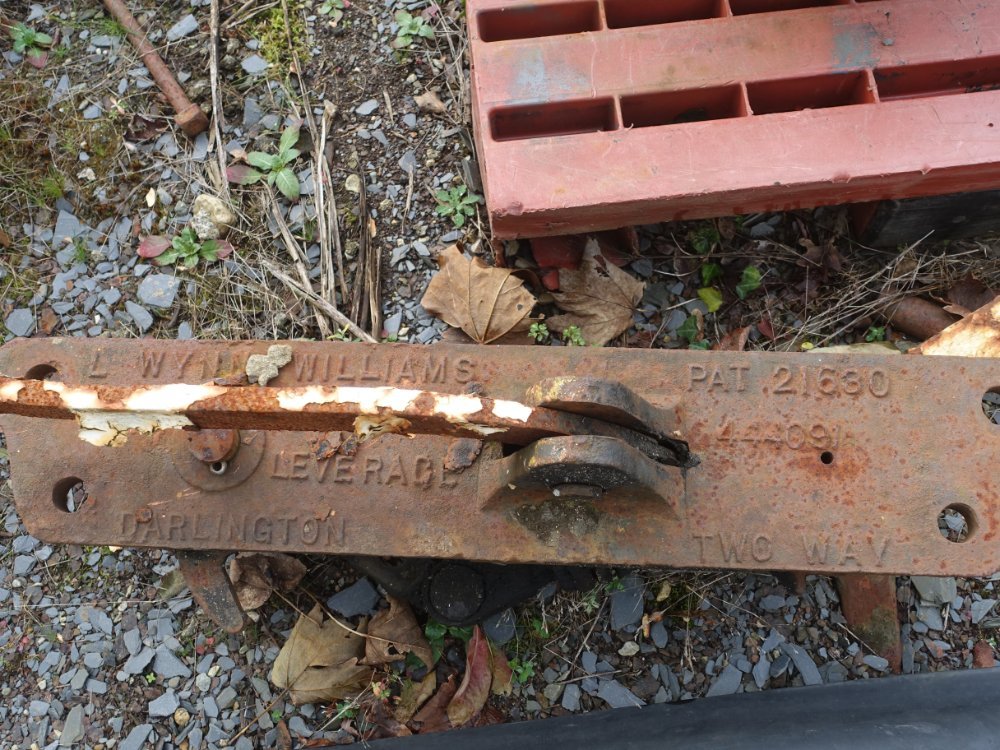
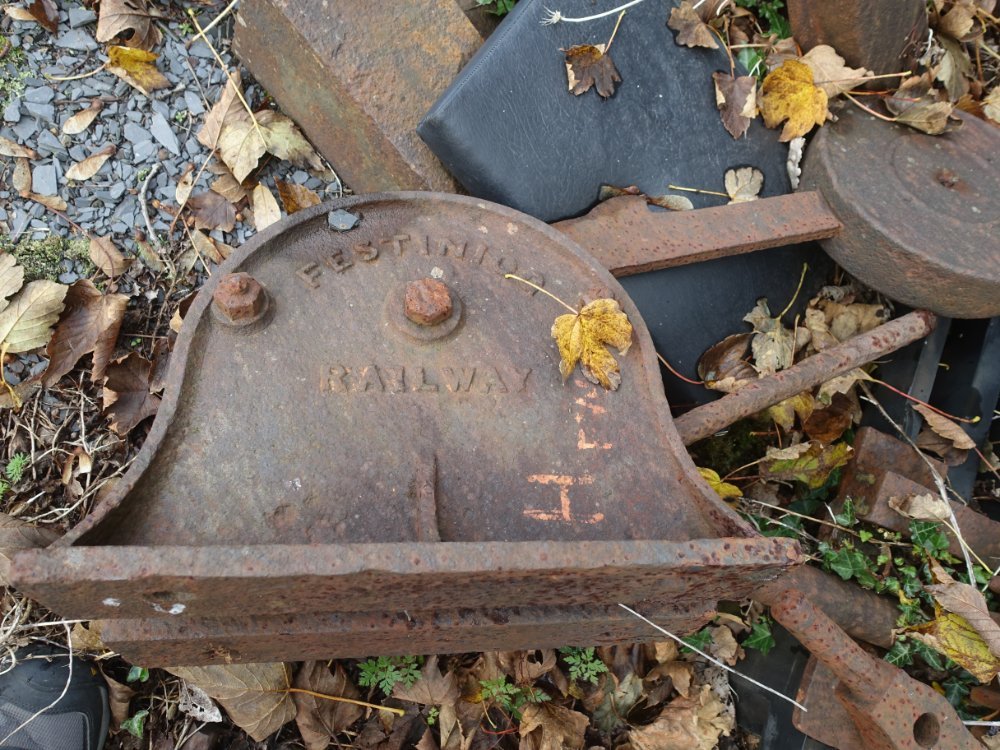
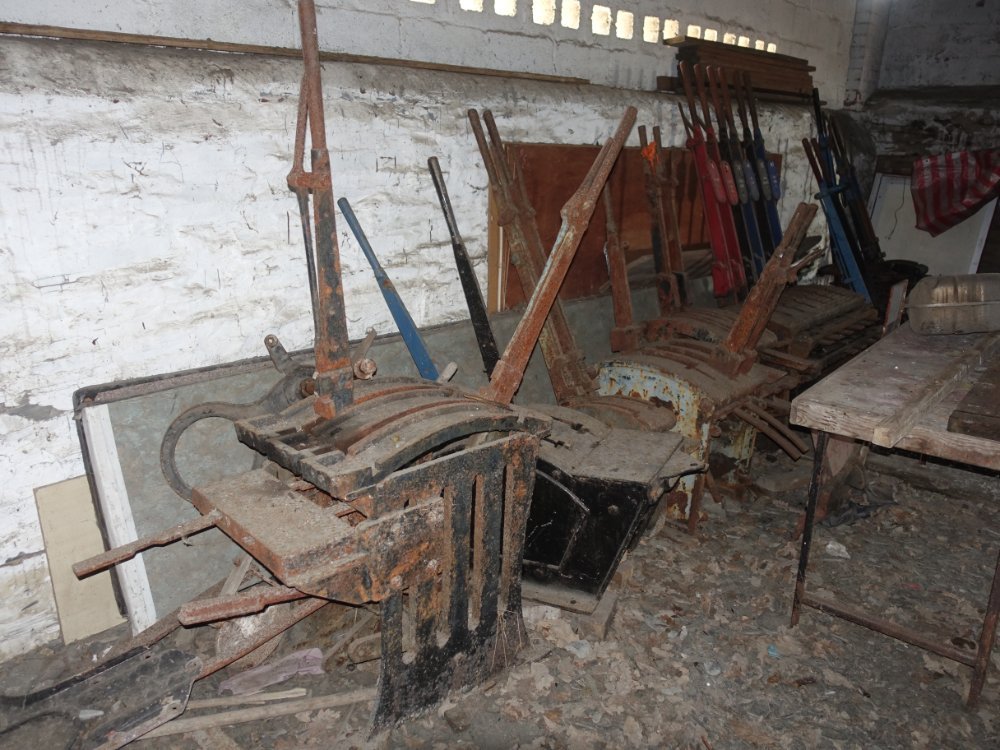
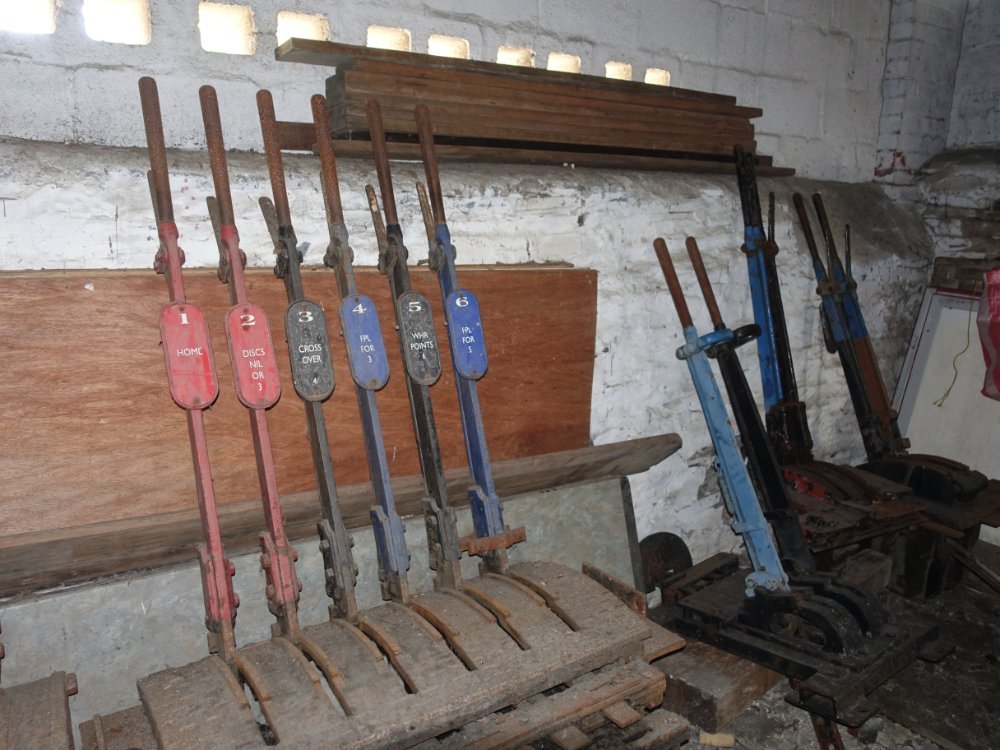
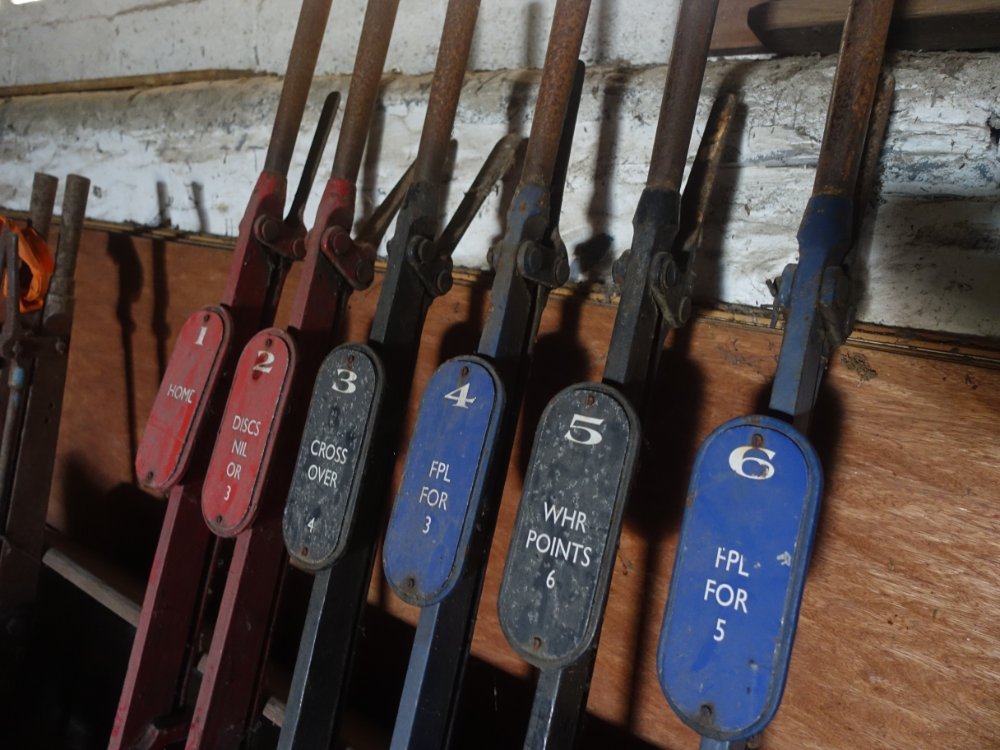
Note the spelling on this points lever. In the past only one ‘F’ was used.
Llewellyn Wynn Williams, of Darlington, England. Lever for railway points.
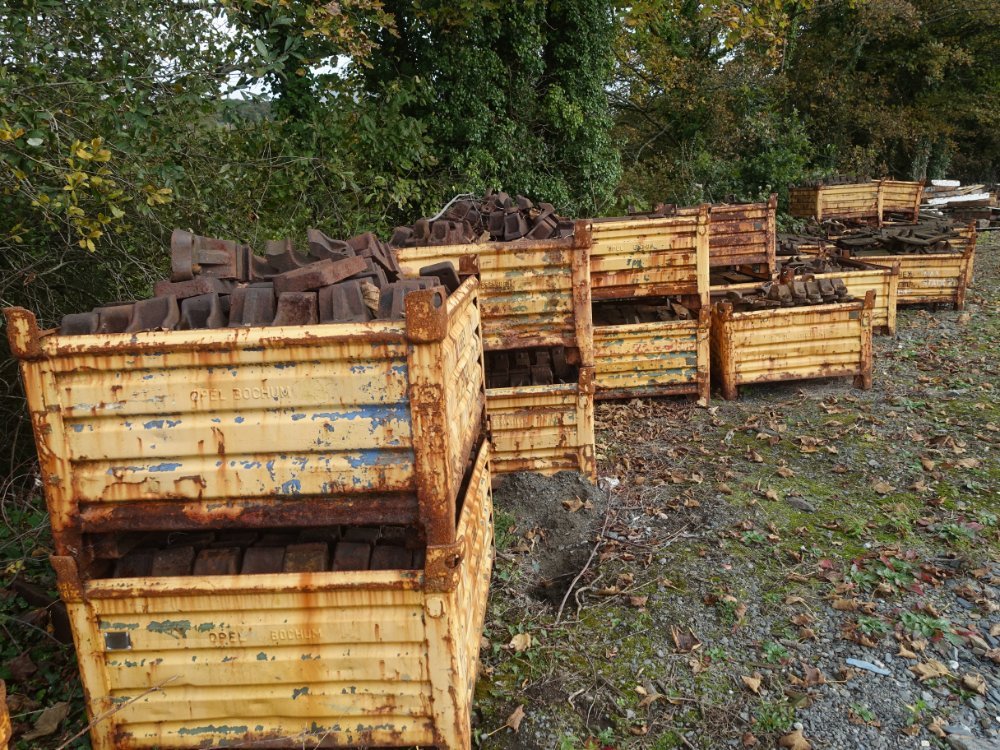
Crates of rail chairs
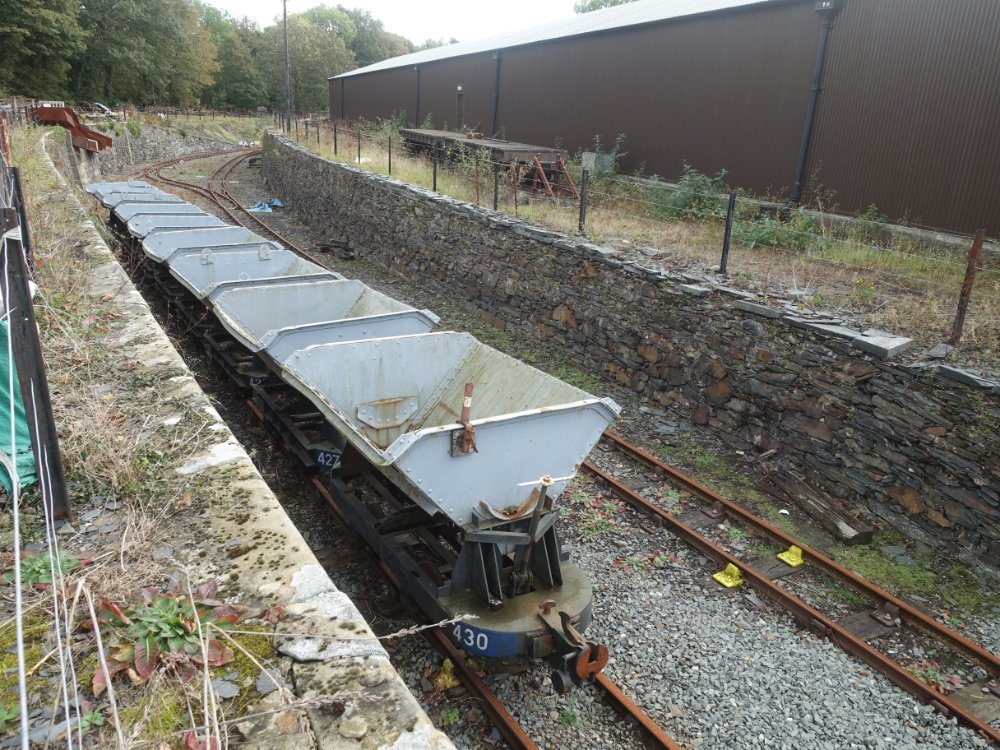
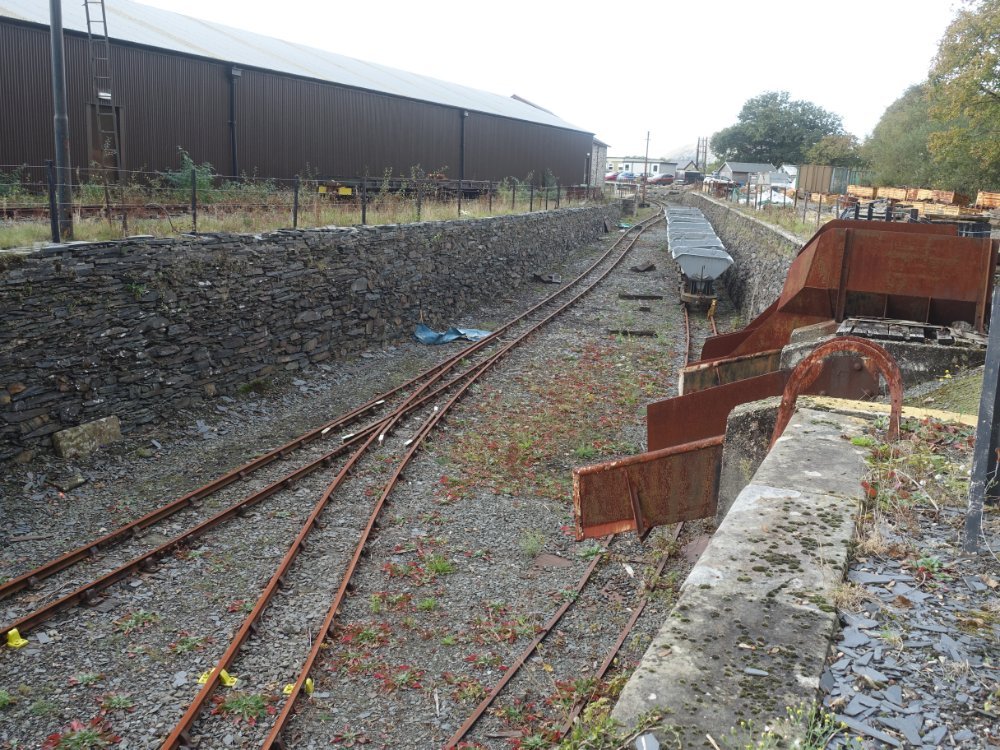
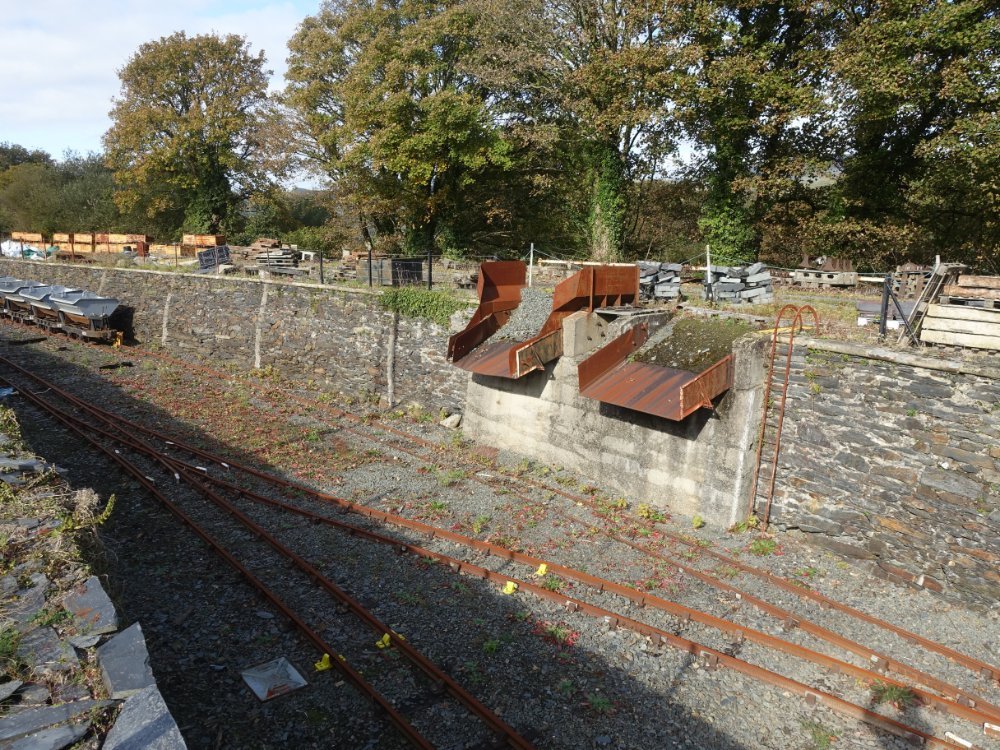
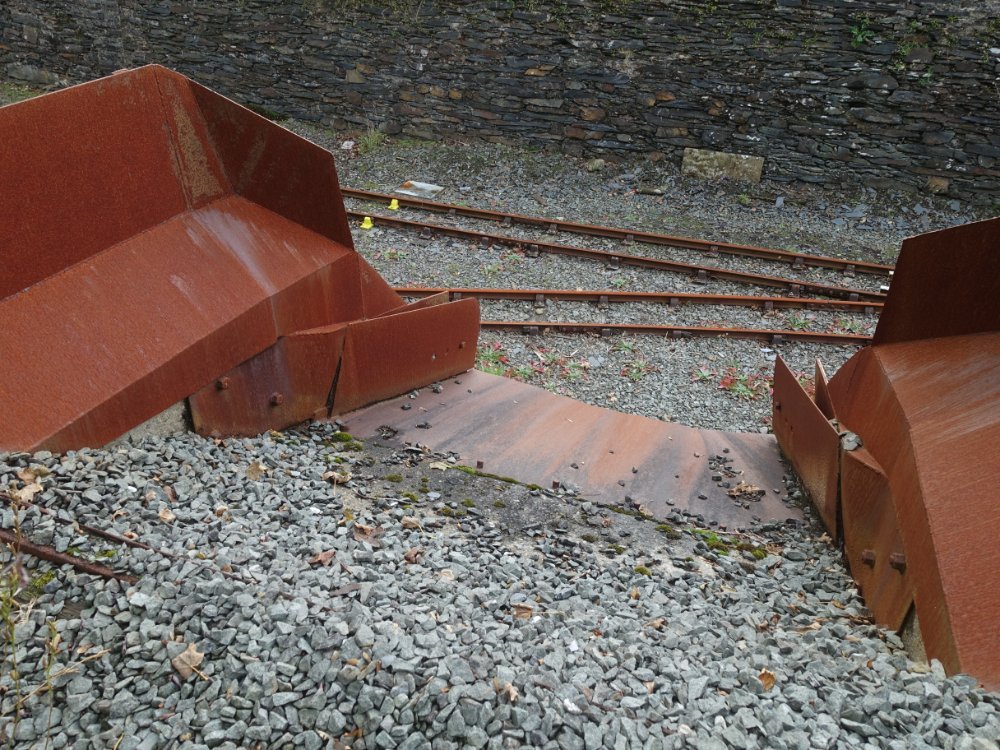
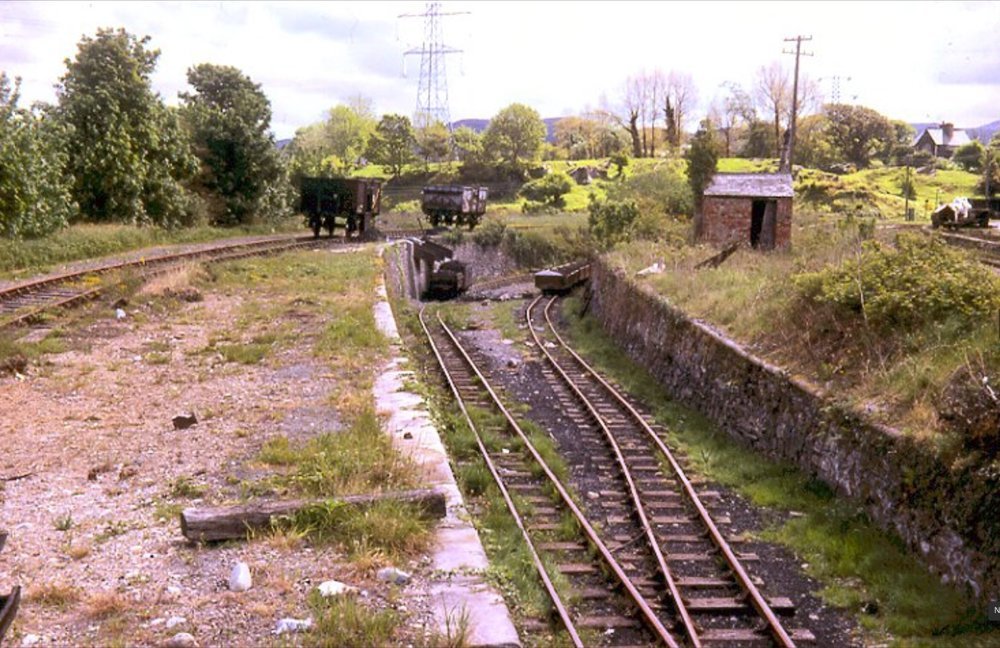
The exchange sidings. This is a sunken road known as the Coal Hole. Here there is a loop with chutes for coal and ballast. Originally provided for coal delivered by standard gauge wagons and used as such into the 1960s, when the standard gauge side of the yard was closed. They were then mostly used for deliveries of ballast by road. In the early preservation period the FR bought used ballast from BR and this, too, was delivered by rail to the chutes. As the FR moved to buying new ballast, delivered by lorries, so the use of the chutes was adapted.
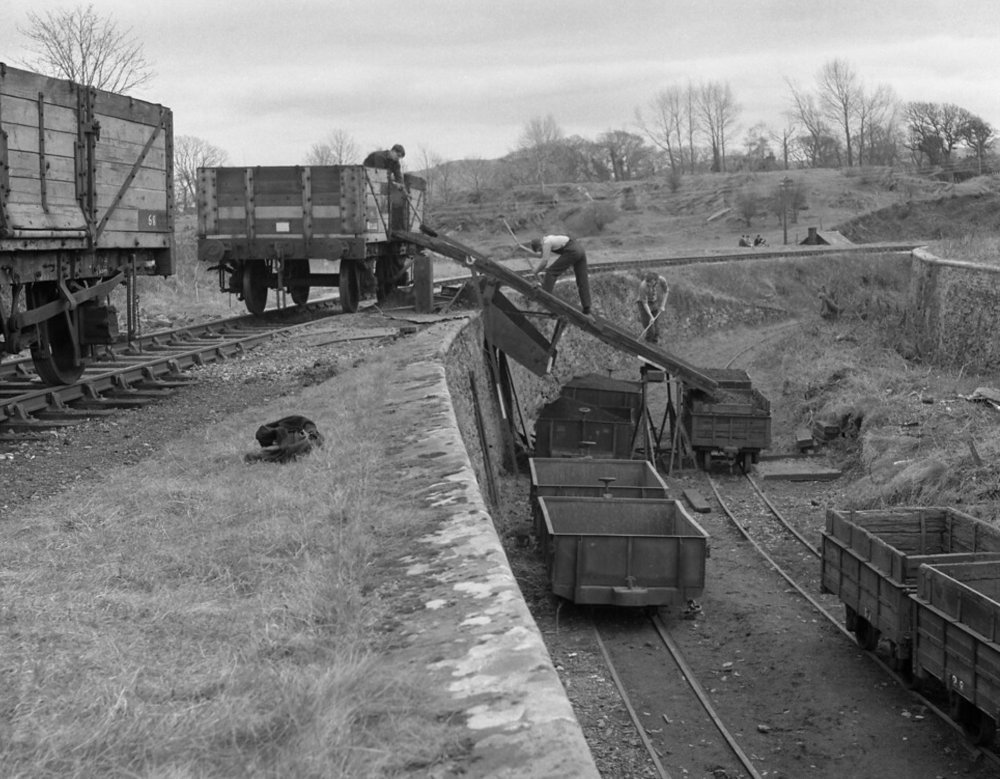
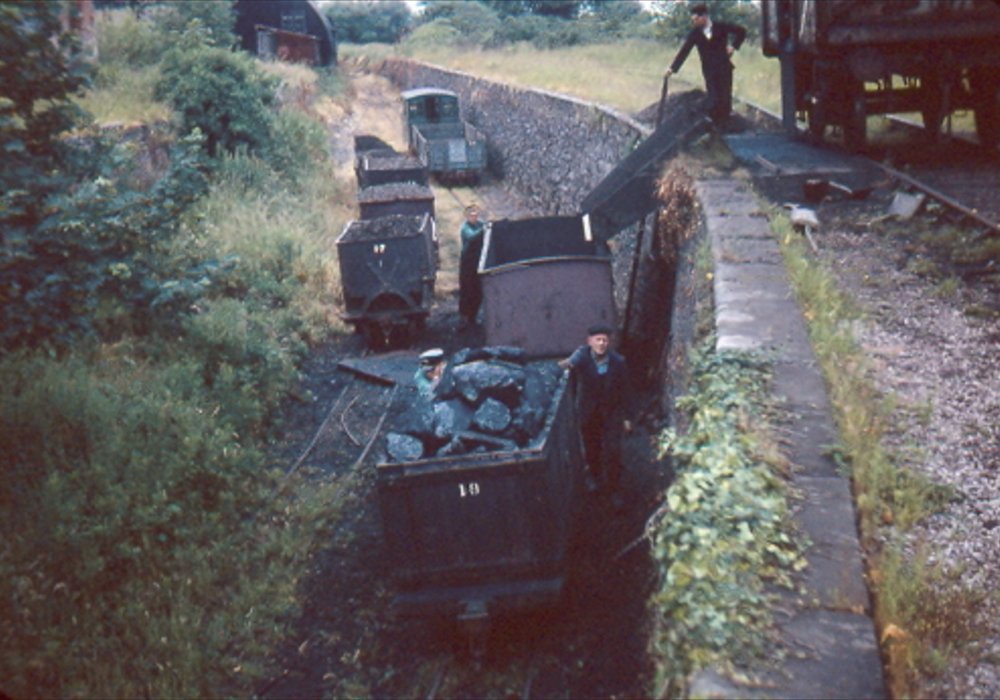
One of the tasks carried out by the Ffestiniog Railway Society London Area Group working party over the Easter weekend in 1964 was unloading spent British Railways ballast in Minffordd yard.
When B.R. sold their spent ballast, it really was spent! It contained a mixture of useless mud, dirt and ash besides at least some useful stone. It was better than nothing and certainly superior to the mud and turf that was holding the Ffestiniog Railway track together at that time, but not really what was preferred.
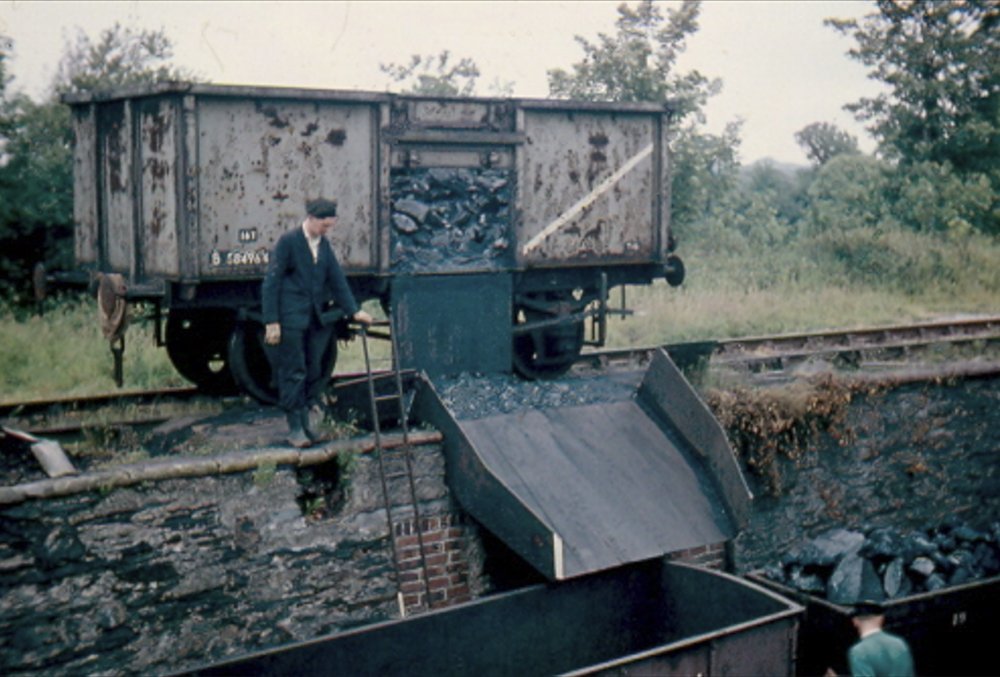
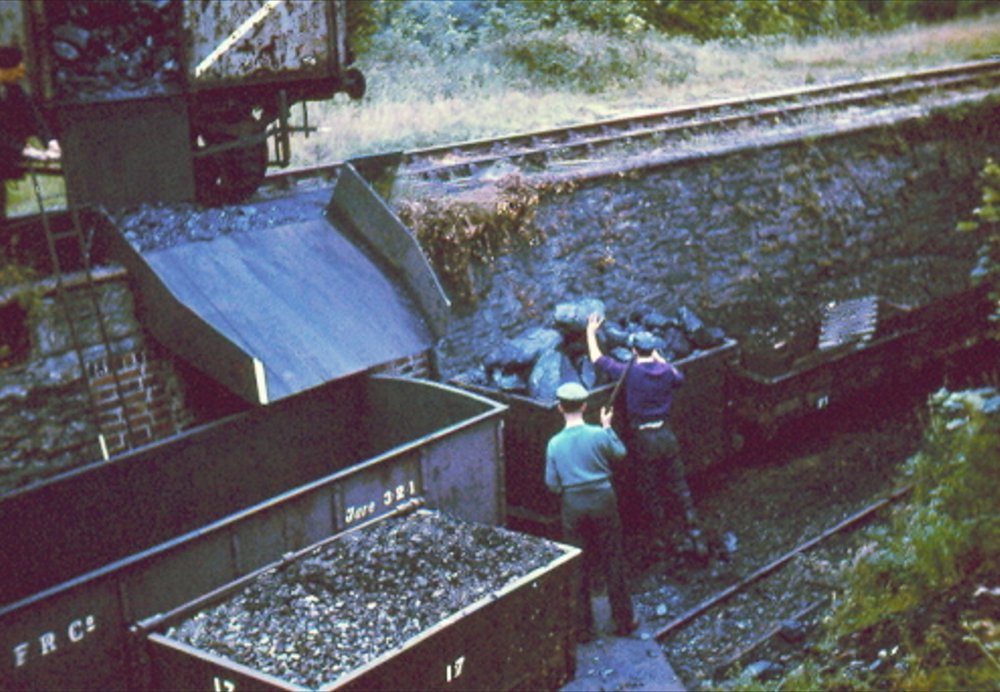
Paul Dukes, the Works Manager at the railway's Boston Lodge Works, rigged up a griddle / sieve arrangement in Minffordd Yard where the B.R. wagons were unloaded. The spent ballast was shovelled out of the B.R. wagon onto the top part of the chute which had a fine wire mesh surface. The ballast was scraped over this so that all the dirt, ash and other small bits of muck would fall through into the F.R. waiting below on the left-hand track. The larger bits of usable ballast would then continue down the rest of chute into the wagon waiting on the right-hand track.
Later, the F.R. was able to afford new ballast from a local quarry and Paul Dukes's concoction became redundant.
March, 1964. Credit to Ron Fisher.
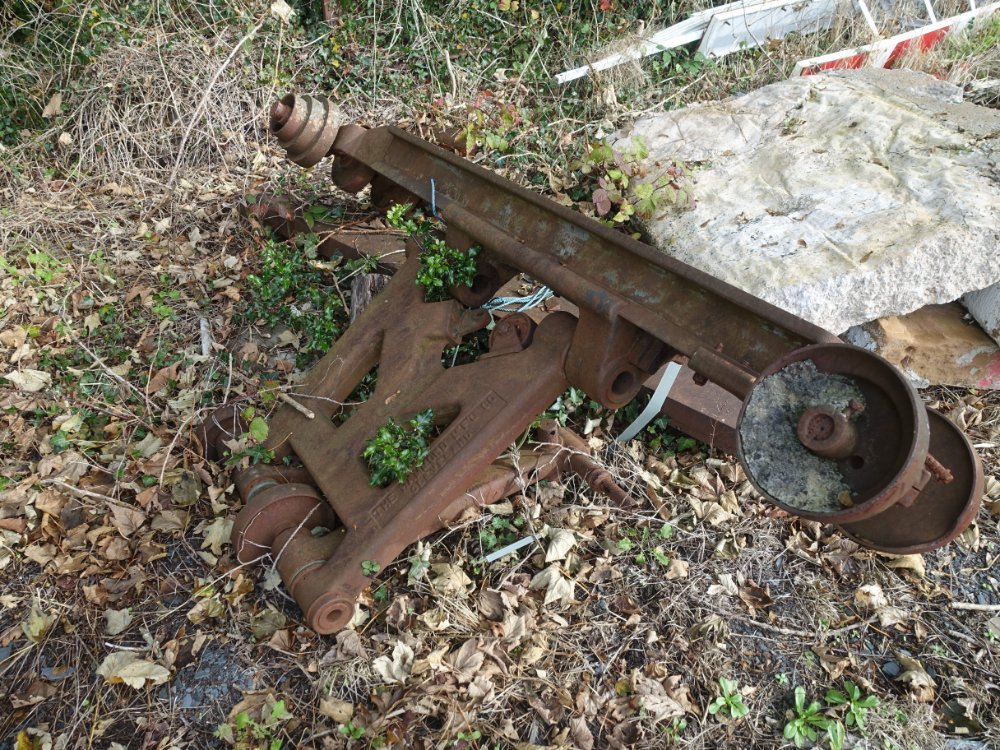
Platform edging
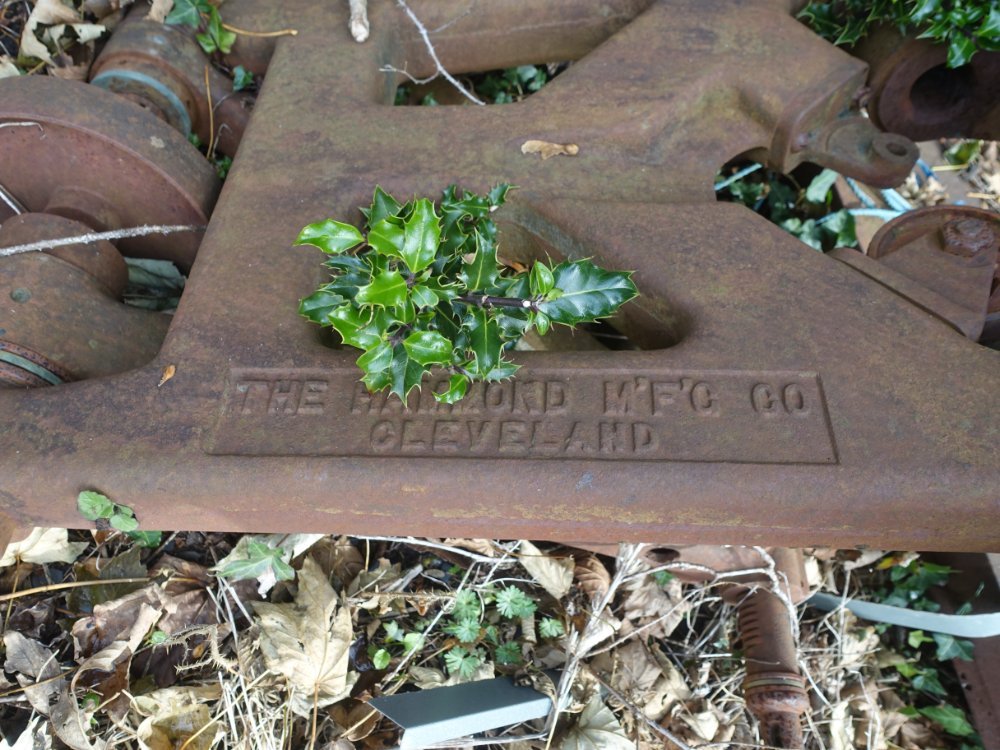
This item stamped with ‘The Hammond M’F’G Co Cleveland
In 1916 the Almond Manufacturing Co. of Cleveland was established to manufacture machinery. It seems likely that they discovered that their name conflicted with that of drill chuck maker T. R. Almond Manufacturing Co., because only a year later the name was changed to Hammond Manufacturing Co. Under that name they made wall and post-mounted radial drilling machines that were especially useful in engine manufacture. The company only survived until about 1922.
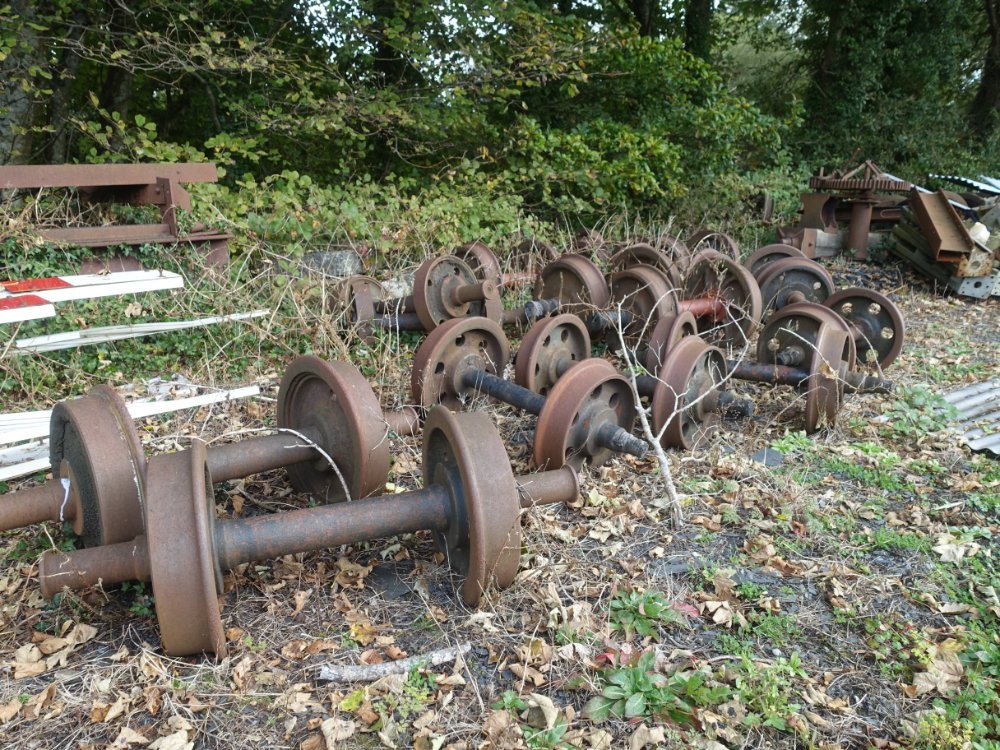
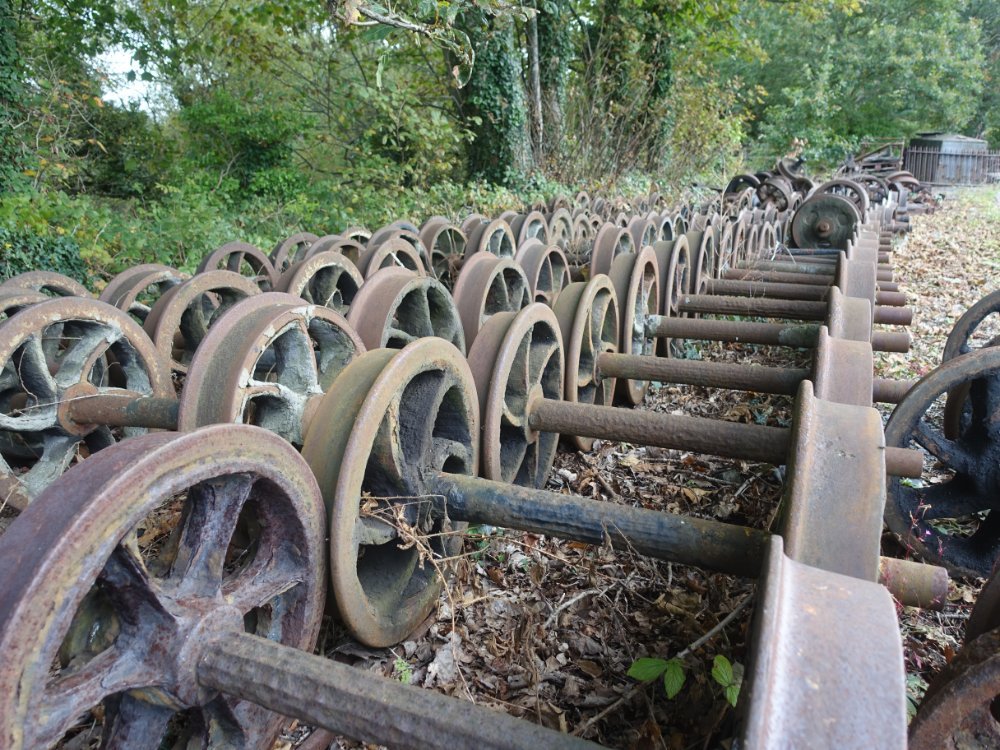
Axle sets
The exchange sidings from the other end
Unloading coal from BR to FR wagons in 1961
What remains today
In 1961
Prince shunting in 1913. The engine is fitted with Welsh Pony's smokebox at this time.
BR Standard 4MT Class 4-6-0 No. 75004 collects three empty coal wagons from the exchange sidings in 1965
The exchange sidings in May 1970
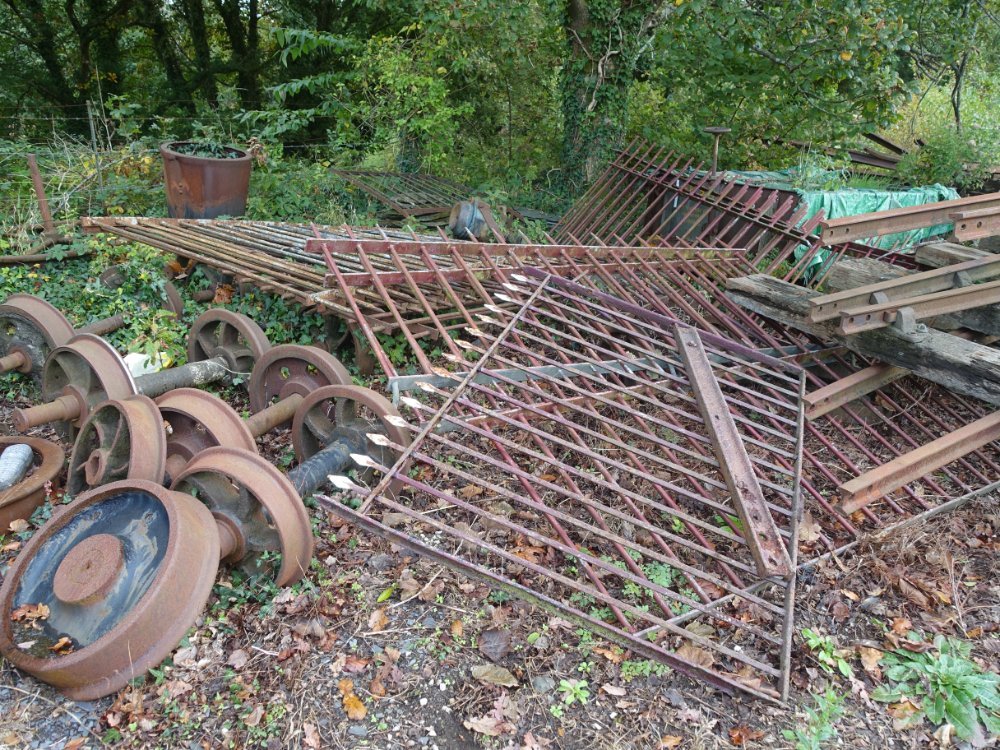
A load more axles
Points lever
Railings
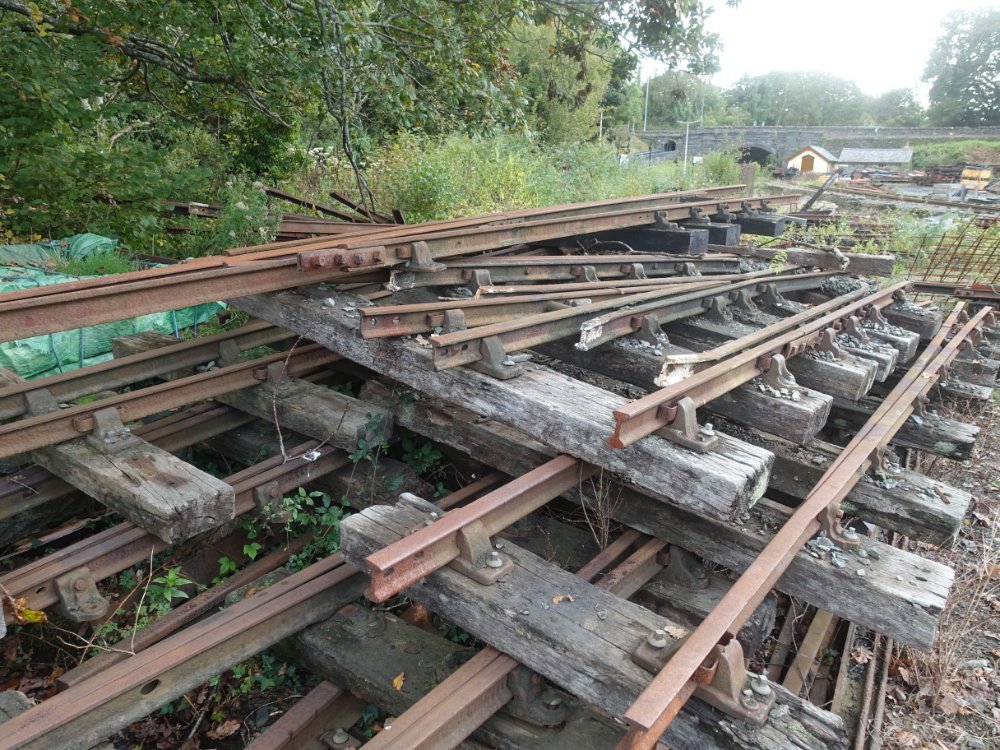
Track panels
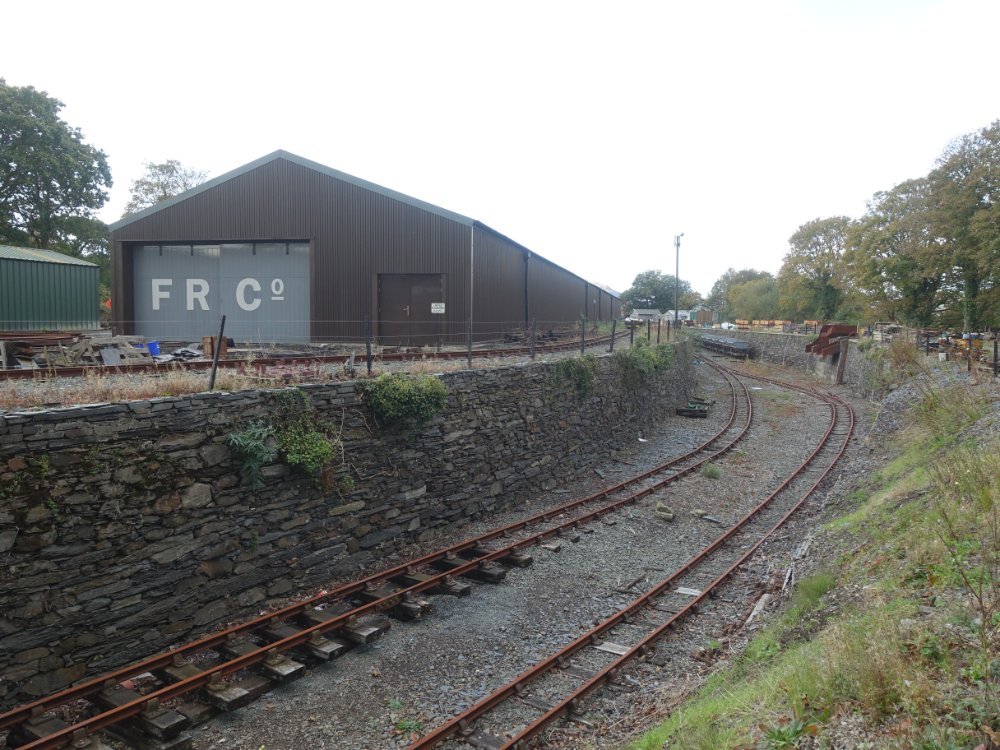
The far end of the exchange sidings
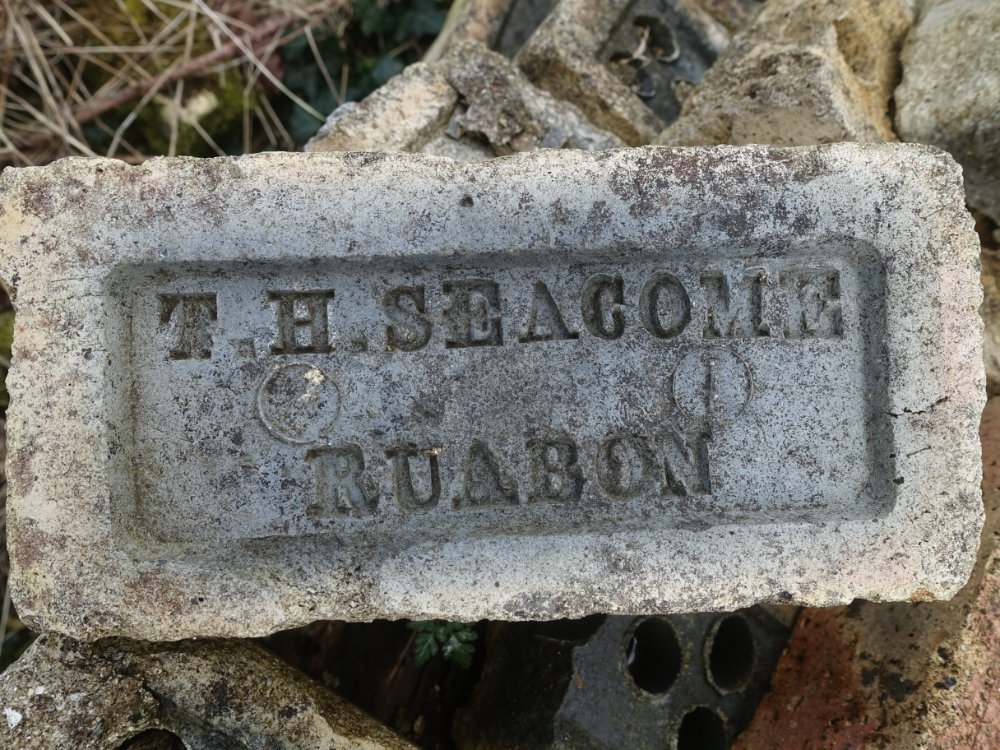
The 1881 census for Wem, Shropshire describes the occupants of a house called Bodwyn in Noble St. as 'Thomas Harrison Seacombe, aged 51, a brickmaker employing 46 men and 22 boys'. His wife Francis, two daughters, a governess, and two servants were also resident.
Thomas founded his brickworks at Delph Quarry, Acrefair near Ruabon in 1868. The brickworks were taken over by Wyndham and Phillips in 1883. Following closure in 1995 the site became an opencast coal and clay quarry.
The end of this line
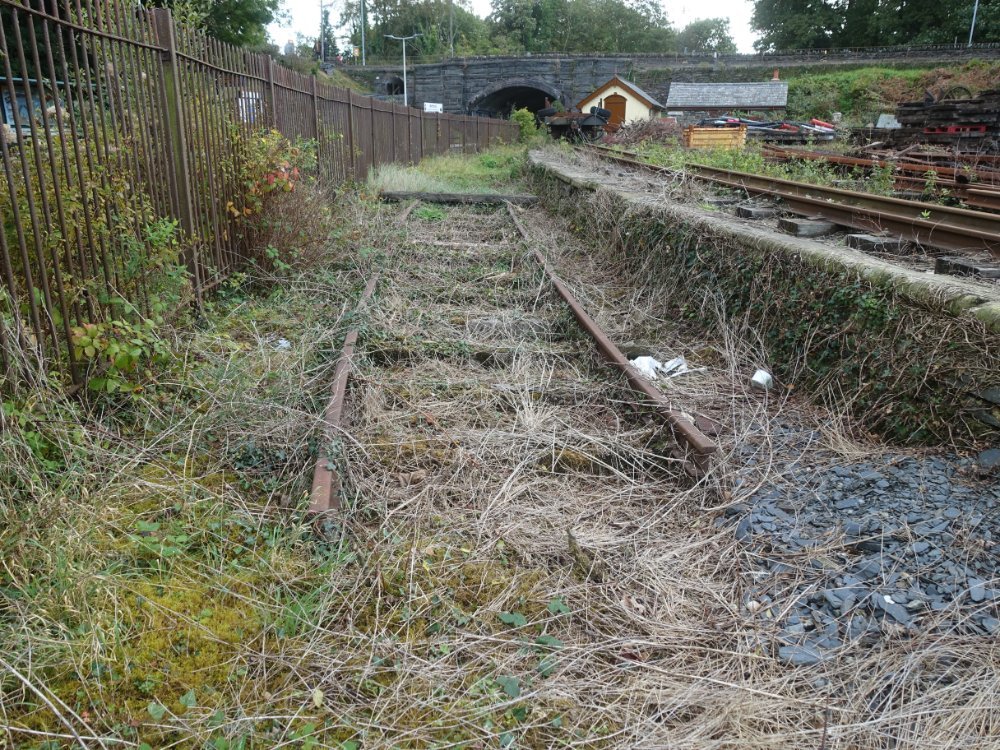
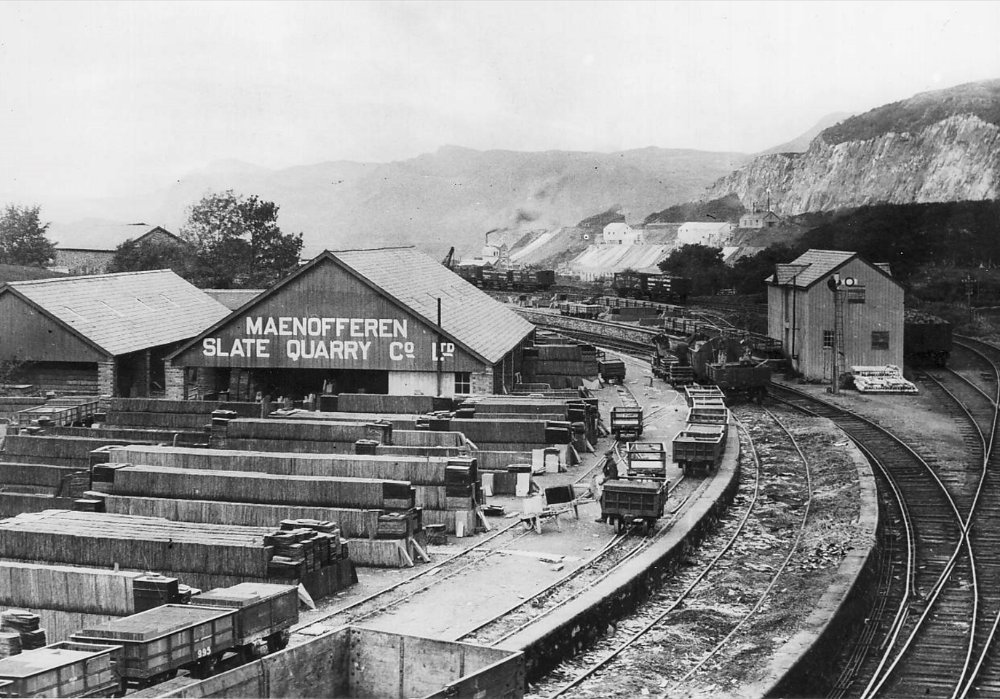
A 1920s view from the FR main line at Minffordd station looking down onto the Maenofferen wharf within the yard. Notice how much slate is piled up!
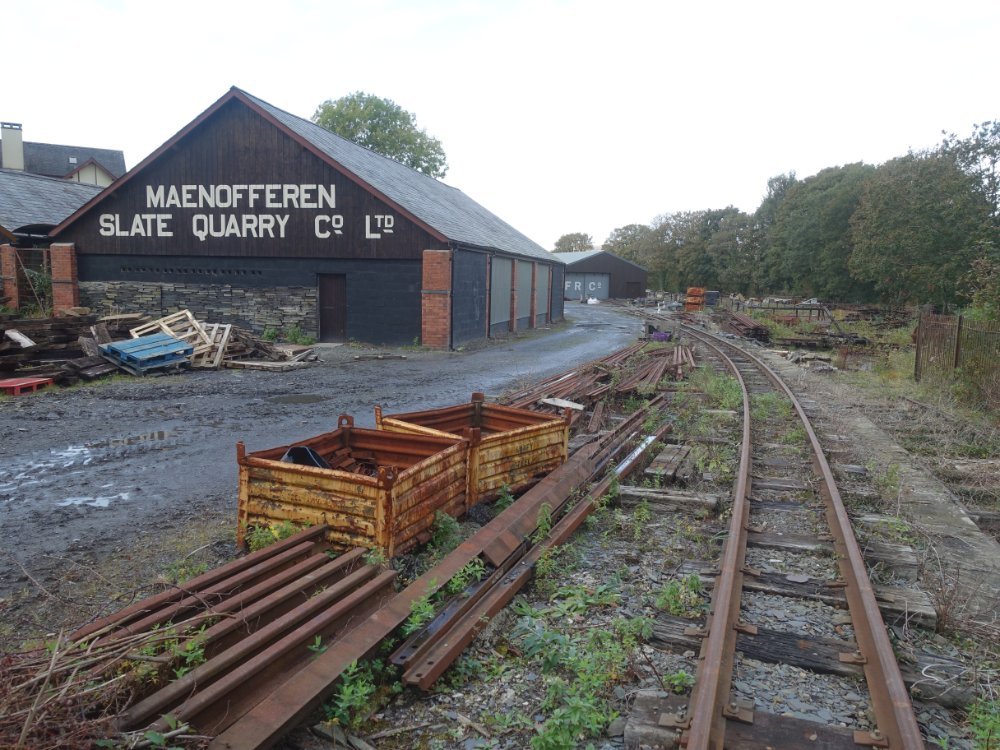
Minffordd Yard and standard gauge station July 1957. The Maenofferen Shed once had a chimney on the back corner.
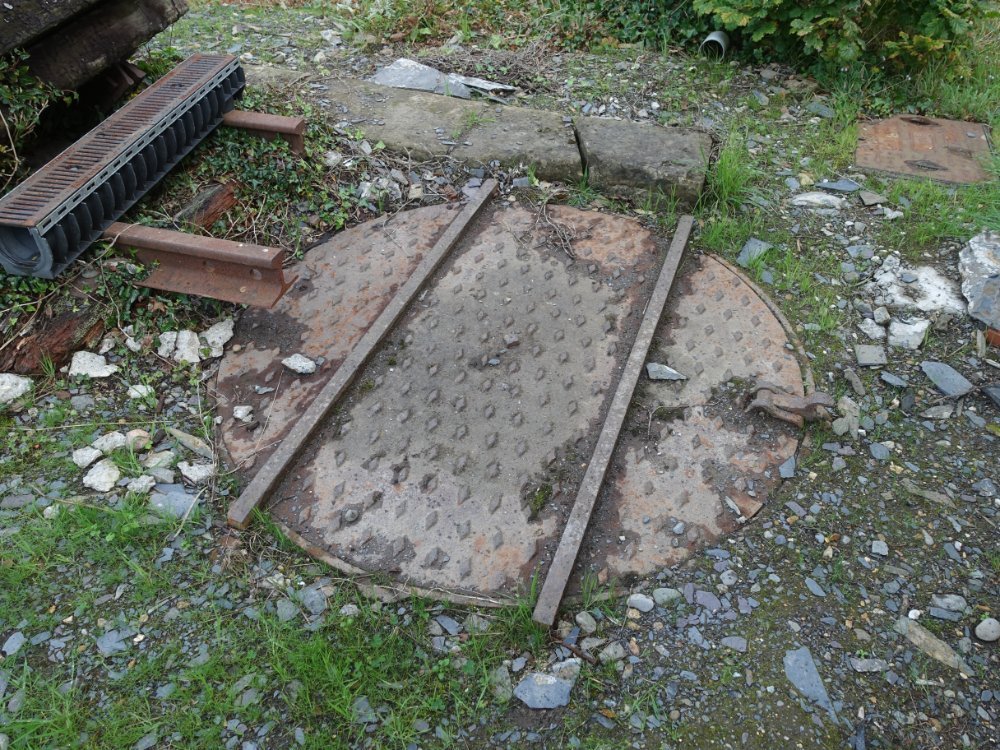
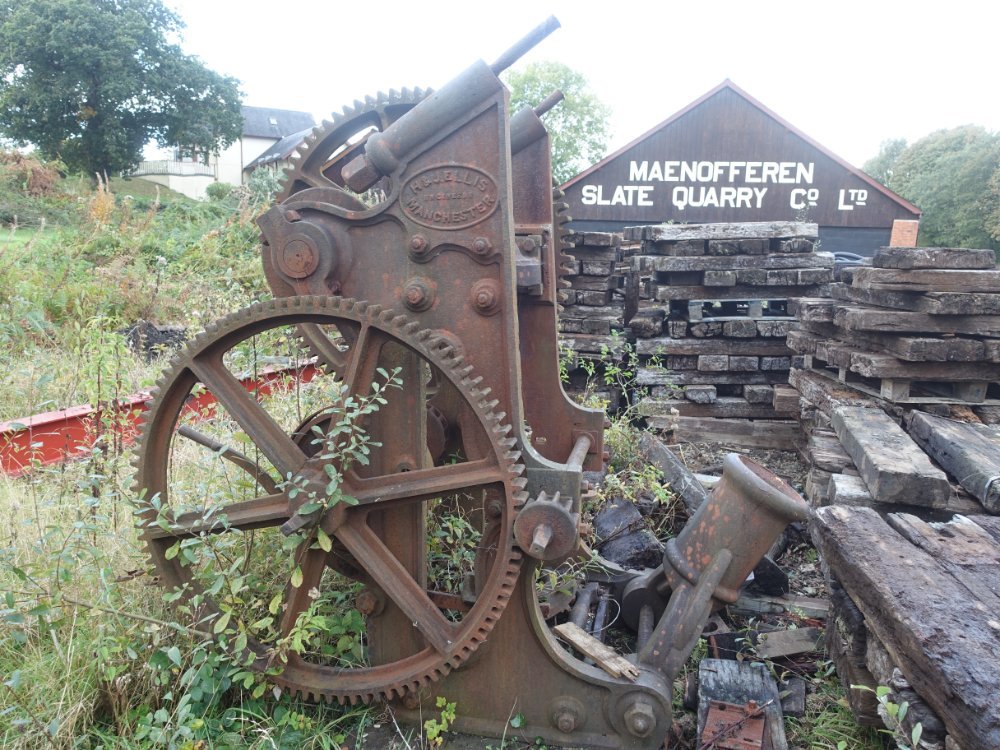
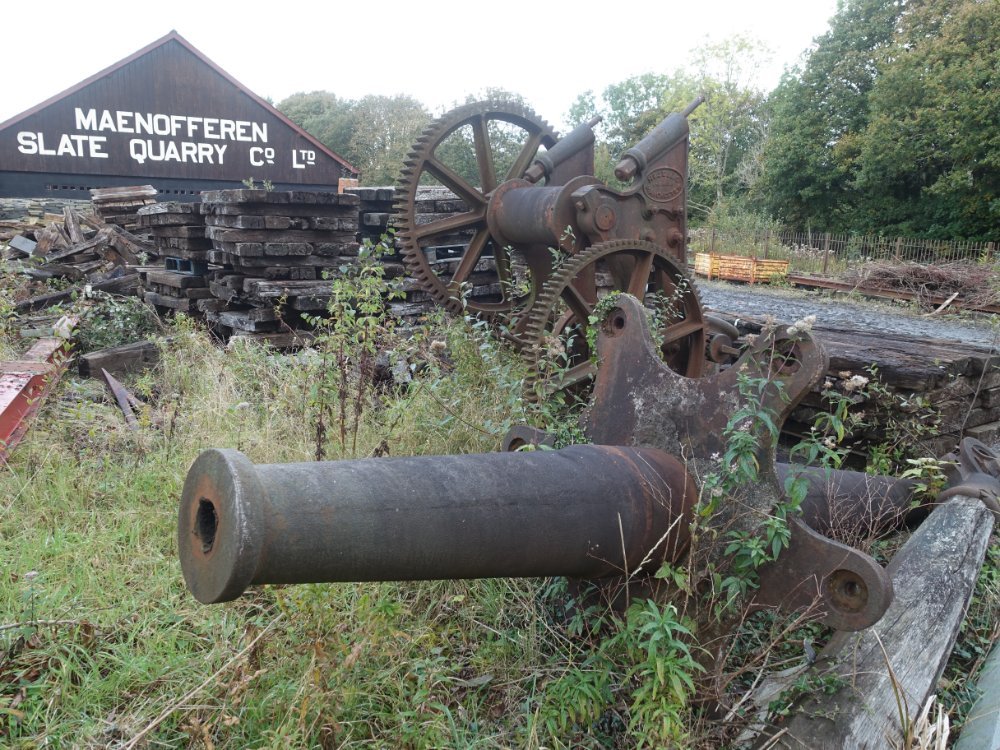
A turntable survives
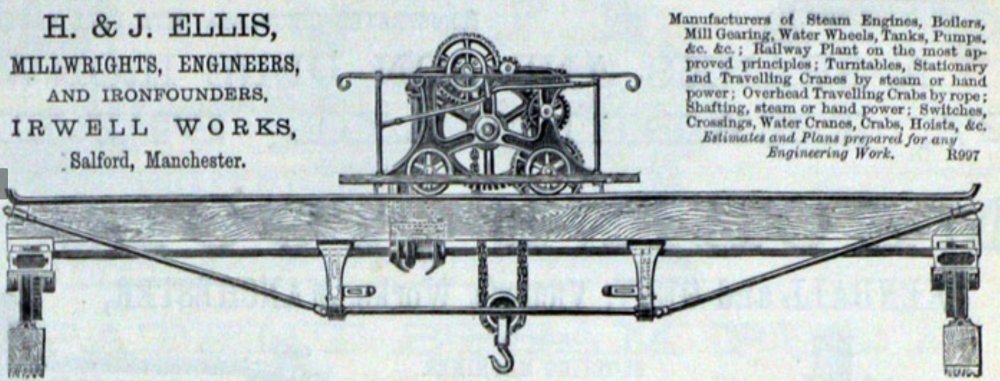
H & J Ellis, Manchester
H & J Ellis (historically known as Samuel Ellis & Co) was a prominent 19th-century British engineering and iron-founding company based at the Irwell Foundry on Stanley Street in Salford, Greater Manchester.
Operating primarily between 1832 and 1887, the business was owned and managed by proprietors Hugh and John Ellis. They were well-known for manufacturing steam engines, iron cranes, and industrial turntables. The firm also produced locomotives for the slate quarrying industry in Wales.
The works was located next to the River Irwell, at the former 'Irwell Foundry'. A detailed 1848 map shows Irwell Foundry located on Stanley Street between the New Bailey Prison and the River Irwell.
The site was by no means large, with an area of approx 80 ft by 240 ft. There was a small central yard, about 45 ft square. This was presumably where large cranes were assembled, and that overhead cranes of more than 45 ft span were made.
There are many cases where good products were often produced in difficult circumstances, in small factories which were far from ideally suited to the work. This was evidently the case here. Reference in an 1848 report states that the outline of the eastern half of the building was very similar to that in 1831, at which time the building was labelled as a 'Deaf and Dumb School' and 'Lying-in Hospital'. More is revealed in a report of an 1842 fire: '...the premises now known as the Irwell Foundry but formerly used as the School for the Deaf and Dumb..... the whole pile of building, which was formerly two very large double four-storied houses...'. 'All the floors of the building (except in the basement story) were filled with machinery and machine making tools and implements of various kinds. There were two marine steam engines, in a forward state to which Messrs. Ellis are under a forfeiture of so much per day if not completed within a time fixed. They were totally destroyed.
1872 - 'Fatal Accident in an Engineering Yard. Yesterday morning, while a labourer named Charles Walton, 28 years of age, was at work on a travelling crane in the yard of Messrs. H. and J. Ellis, engineers, Stanley-street, Salford, he was accidentally struck by the break handle and thrown to the ground. He was taken to the Salford Royal Hospital and Dispensary, where it was found that he was severely injured about the head, and he died about an hour after being admitted.
In 1884, another major fire broke out at the foundry, seriously damaging the works and causing its closure. It is believed that the foundry did not re-open after this date and in 1887, the foundry and all its remaining equipment and inventory was put up for sale.
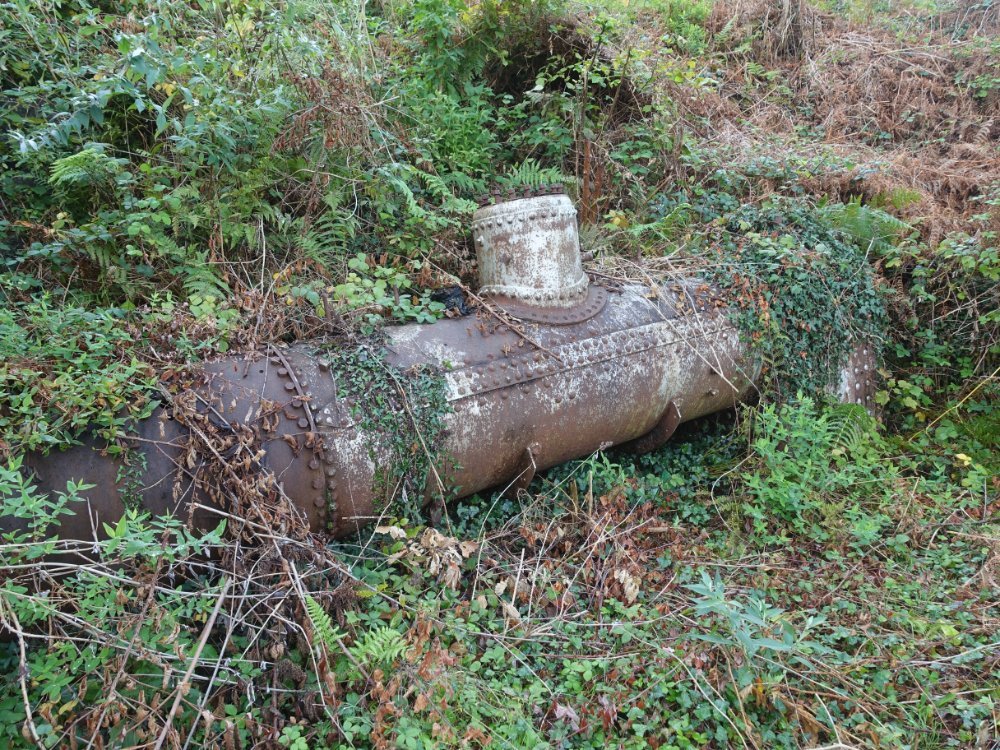
A boiler succumbing to nature
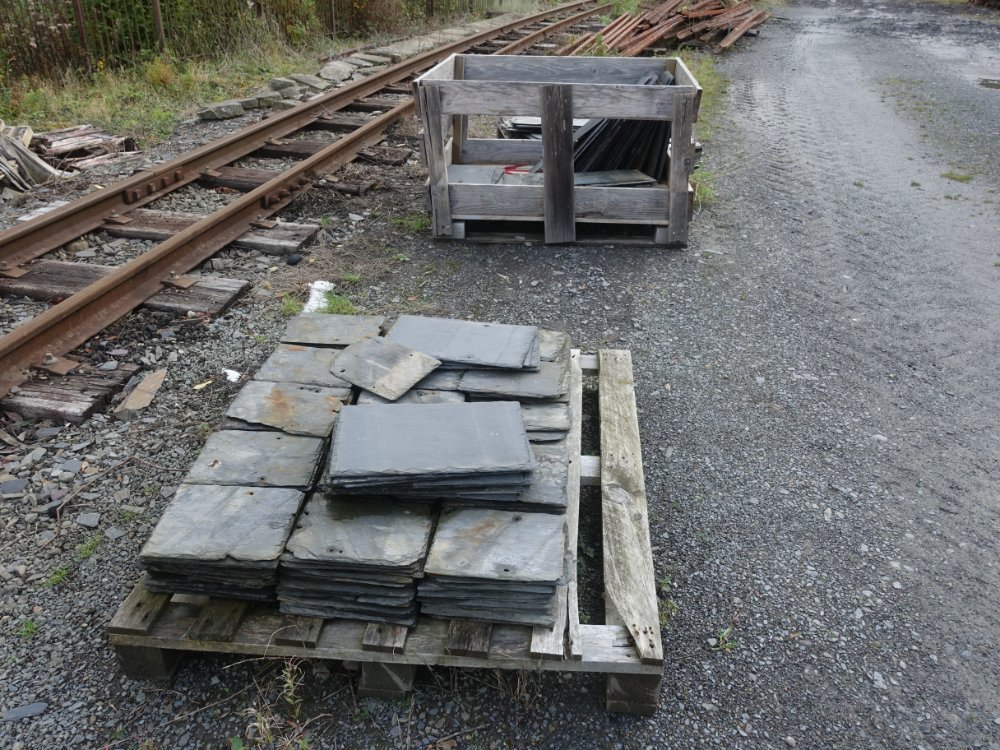
A small amount of used slate
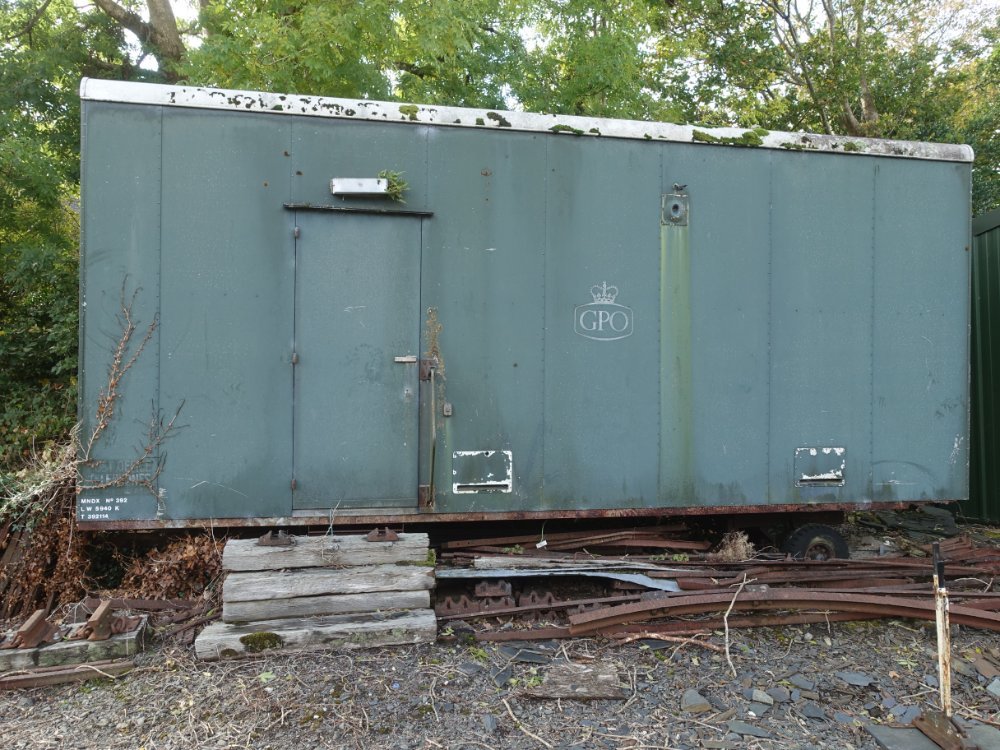
A few things of interest in here
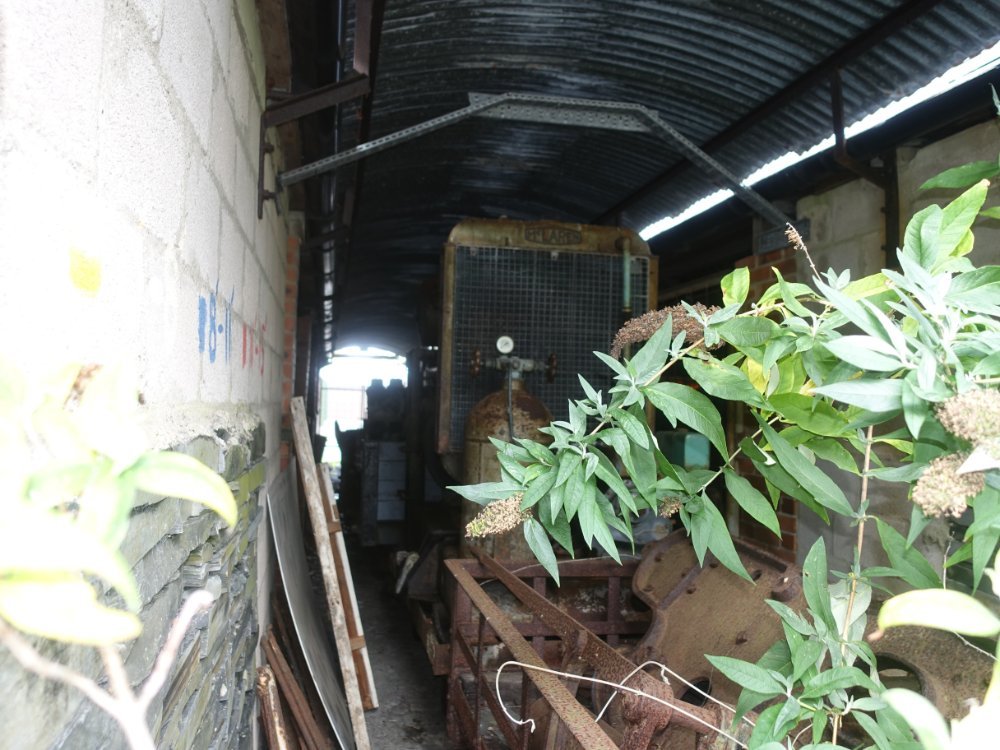
In an inaccessible part of the site lurks a McLaren
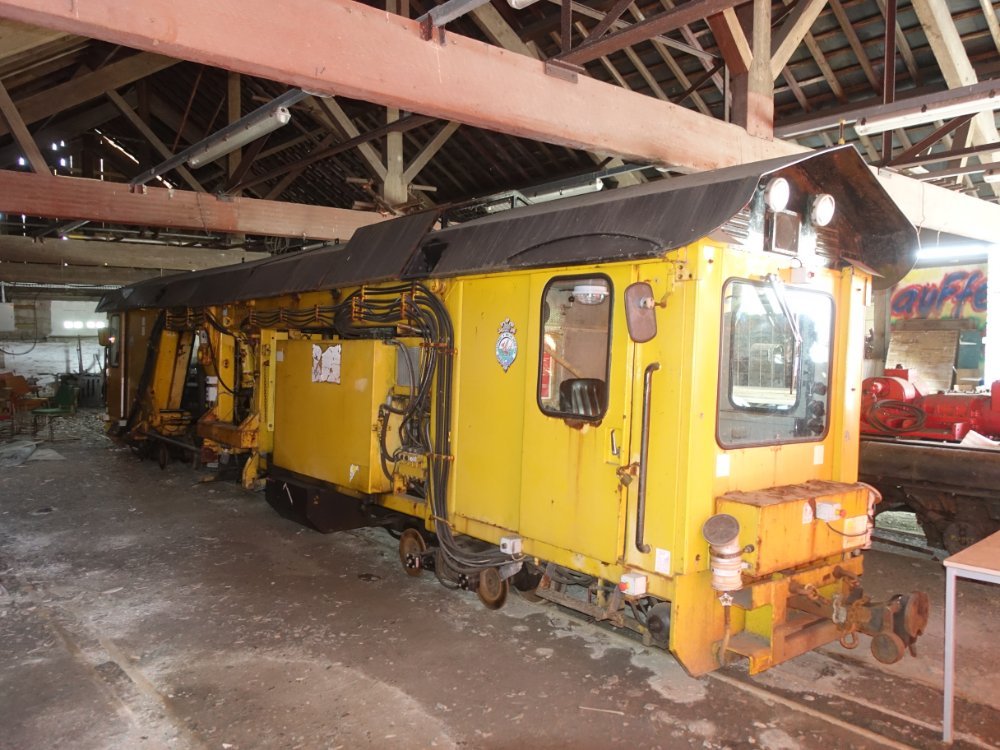
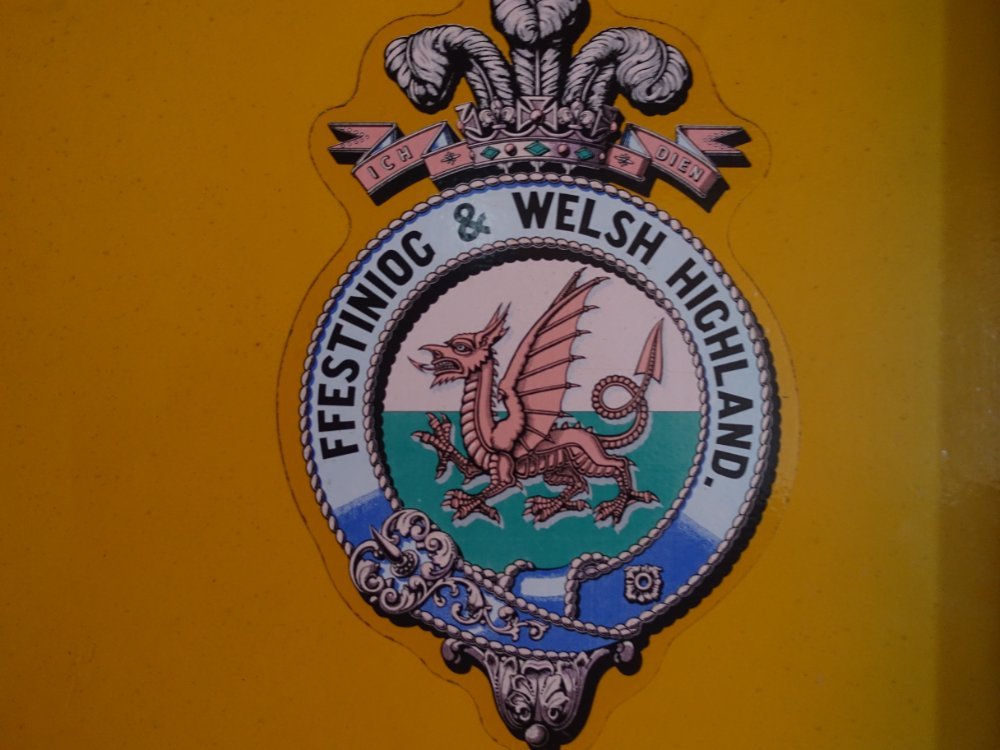
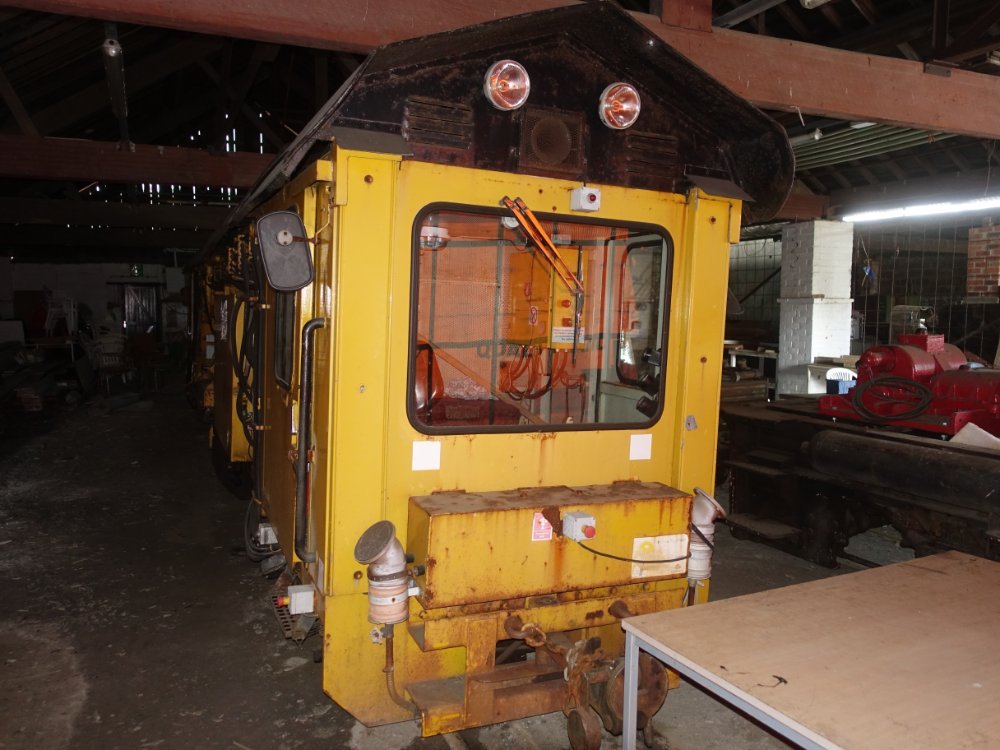
KMX Tamper
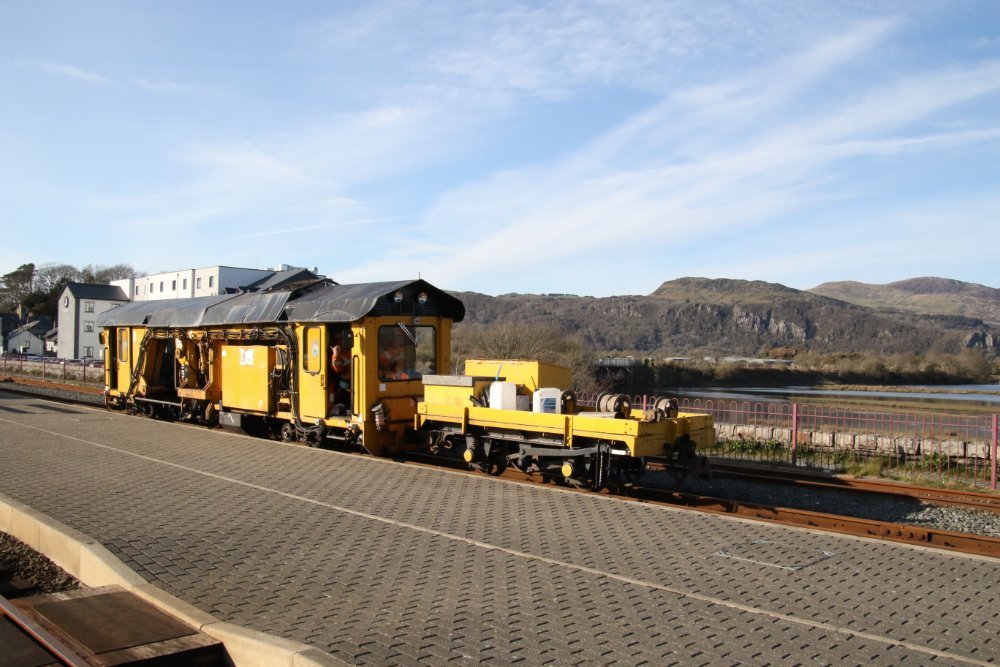
In March 2005 Welsh Highland Railway Construction Ltd announced the purchase of this machine for use in construction of Phase 4 from Rhyd-Ddu to Porthmadog, and the maintenance and upgrading of the existing railway. Built in Austria in 1995, it was metre gauge and had been supplied by Plasser & Theurer's French subsidiary FRAMAFER for use in an underground coal mine in France. Its last such use is believed to have been at the Mines de la Houve at Creutzwald in the Lorraine coalfield; this was France's last deep coal mine, closed in Spring 2004.
It was delivered to Minffordd Yard on the FR on 29 March 2005 and taken to Boston Lodge for regauging and overhaul. In the course of the overhaul the unit was also fitted with roof sections for above ground use. Also, various systems were modified or removed; those dispensed with included facilities for aligning turnouts, and a pantograph which had been used to check that the overhead power supply was energised while the tamper was in operation. Although this seems contrary to safe working, it is how the mine safety systems worked, the 400V overhead system had to be live for the tamper to operate.
KMX at Harbour Station after a day working on the Welsh Highland Railway - 27 March 2023
Lever frames
Levers
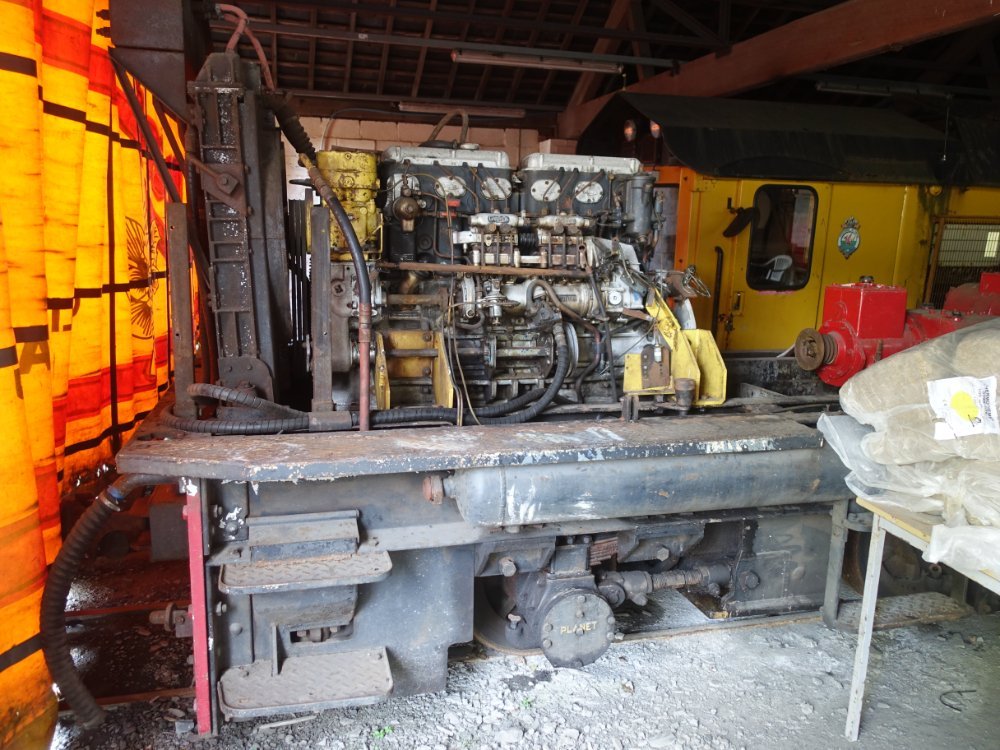
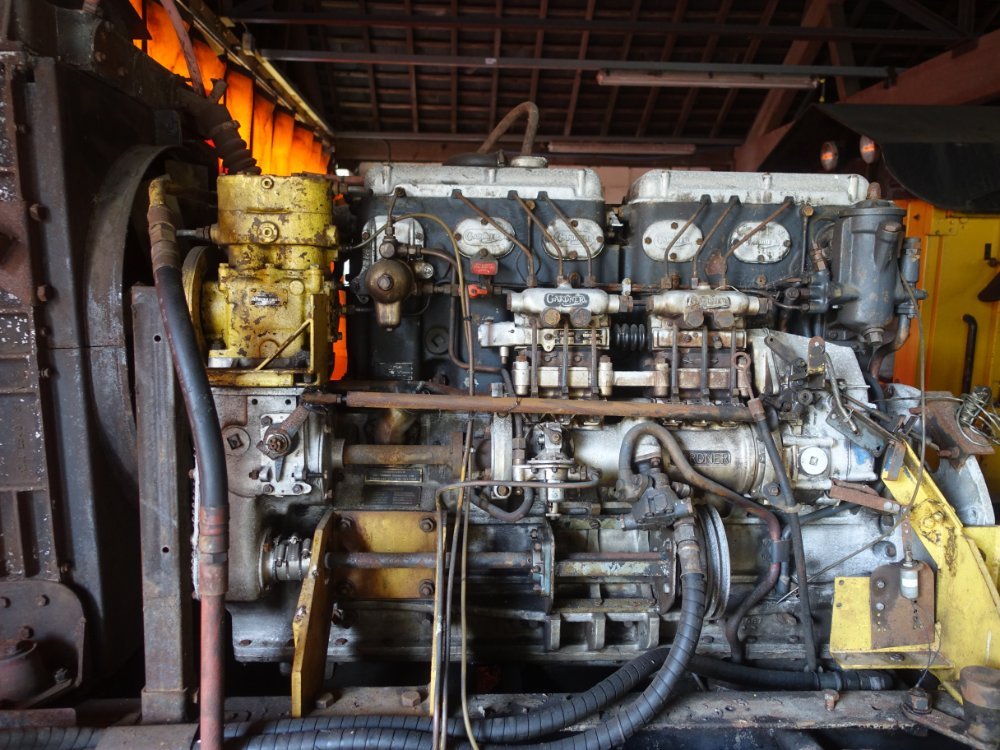
A Planet with Gardner engine
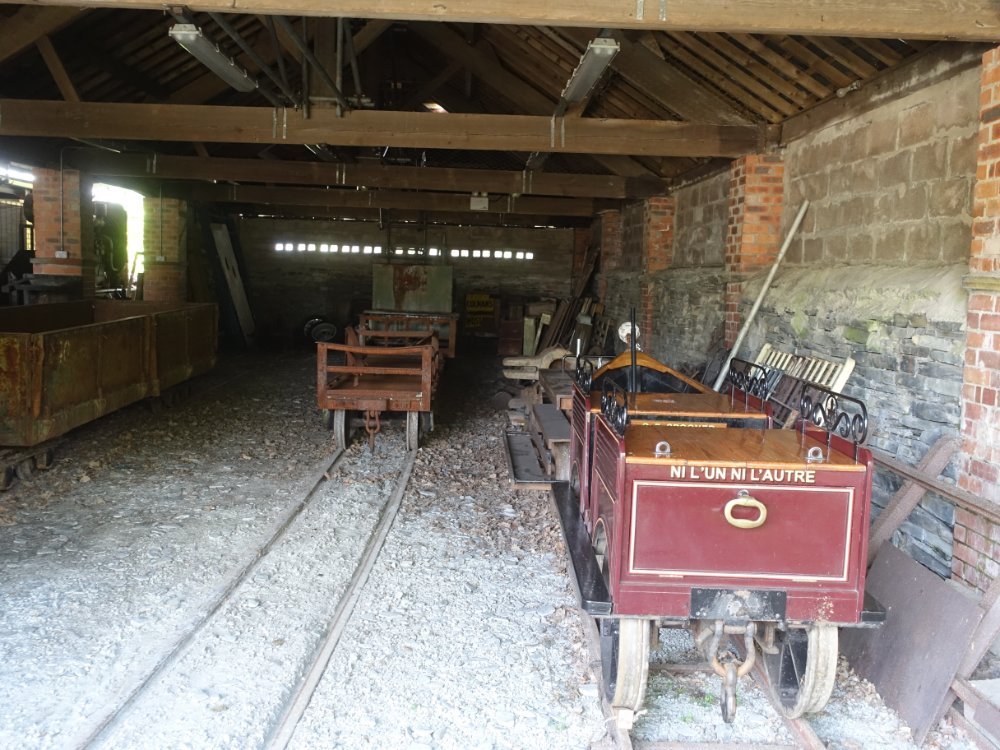
"Ni l'un ni l'autre" (French for "Neither one nor the other") is the inscription painted on this highly unusual, historic vehicle known simply as "The Boat".
It was a peculiar, lightweight conveyance built like the section of a boat mounted on wheels. It was designed to run on the railway tracks, specifically powered by a sail when the wind allowed, or pushed along as a form of velocipede/inspection car. The French name "Ni l'un ni l'autre" was given to it because it was neither a true boat nor a standard train carriage.
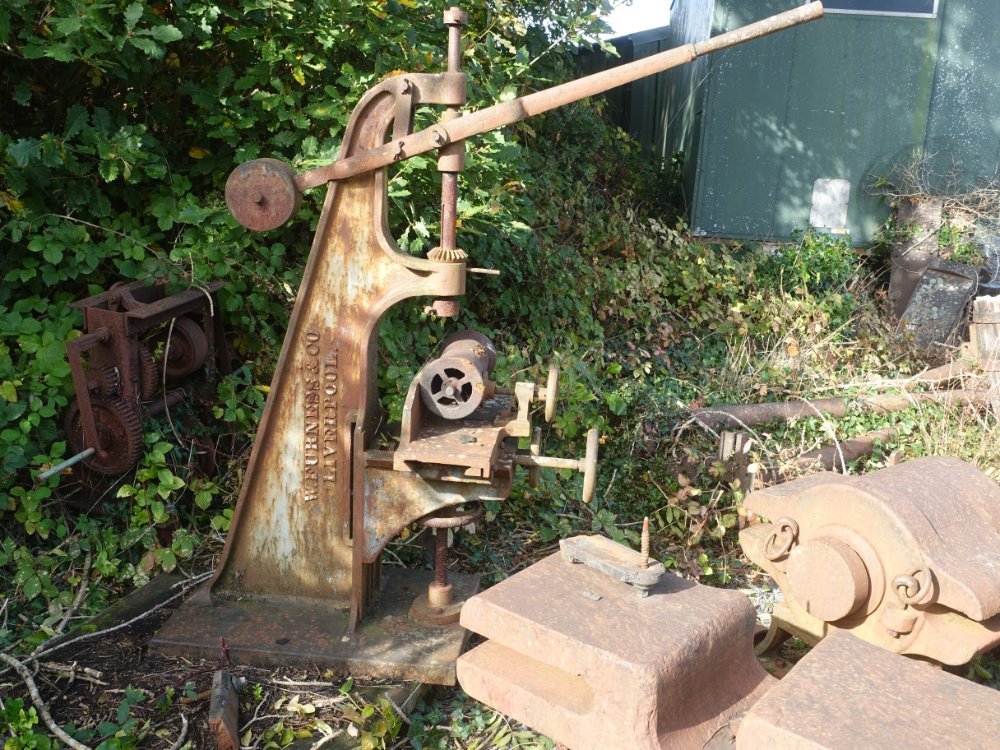
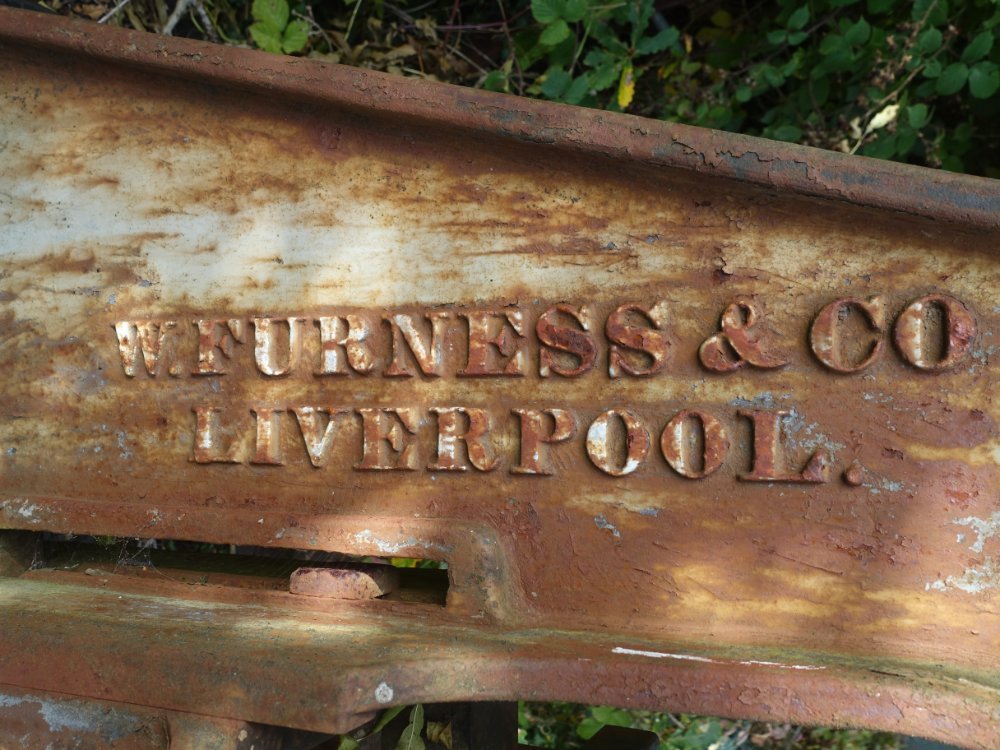
A product from W. Furness & Co
W. Furness & Co. was a prominent 19th-century British engineering firm based in Liverpool, specializing in woodworking machinery. Operating out of the Globe Ironworks in Bankhall, the company was historically significant for supplying tools used in the construction of the Great Exhibition hall.
They were known for inventing and manufacturing advanced carpentry tools, including combined rack and rope feed saw benches, dovetailing machines, and bandsaws.
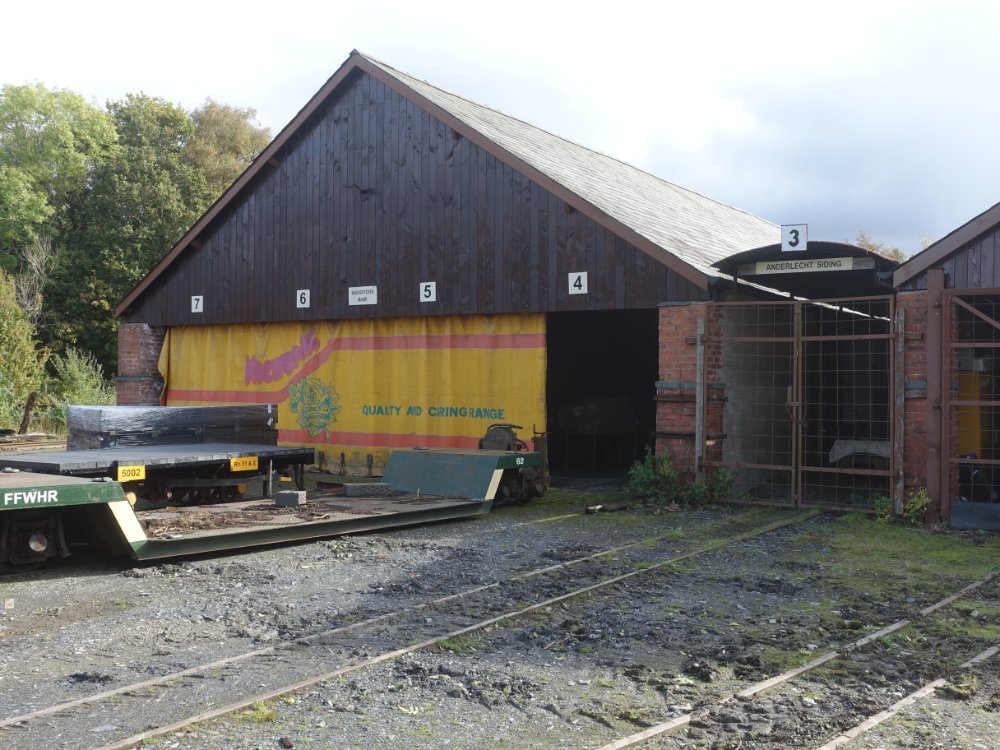
Back outside the sheds
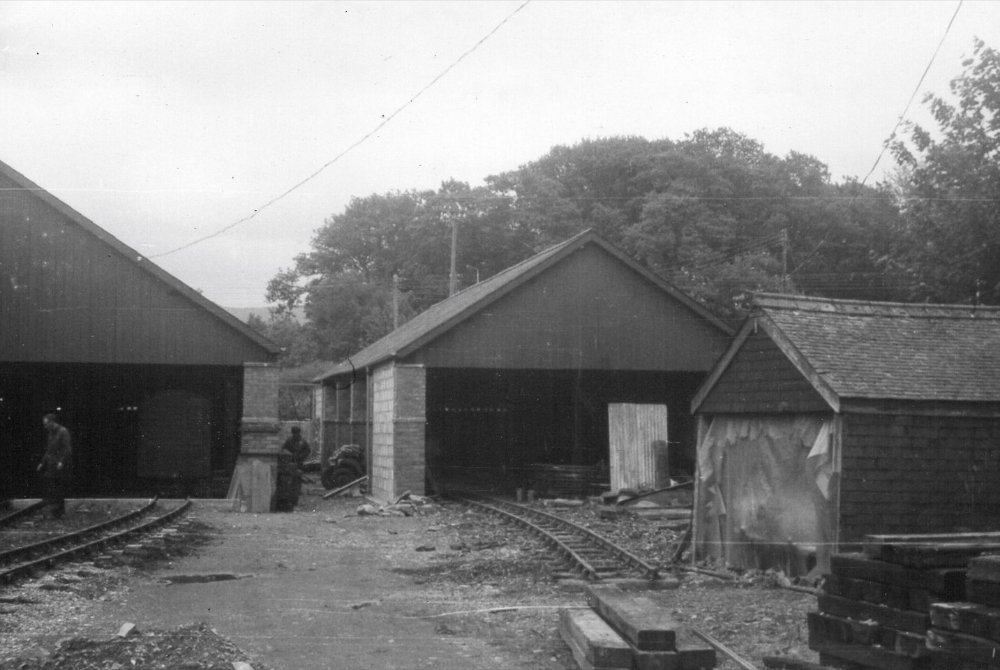
The two sheds in June 1972 with new track laid
These were originally slate storage sheds and were not rail served. The roof of the larger, left hand, shed (Maenofferen Mawr) was raised towards the end of 1970 so that it could be used for winter storage of rolling stock, usually smaller vehicles. It is accessed via a 'point' comprising a pair of rails held to gauge by tie rods and able to be slewed to connect to each of the four lines leading into the shed. It is a giant, crude, stub point and requires the rail to be positively aligned at the loose end by short fishplates. Slewing the rails requires a large crowbar and is a back-breaking task for one man! This shed continues to be used to store heritage vehicles, mainly four-wheel carriages.
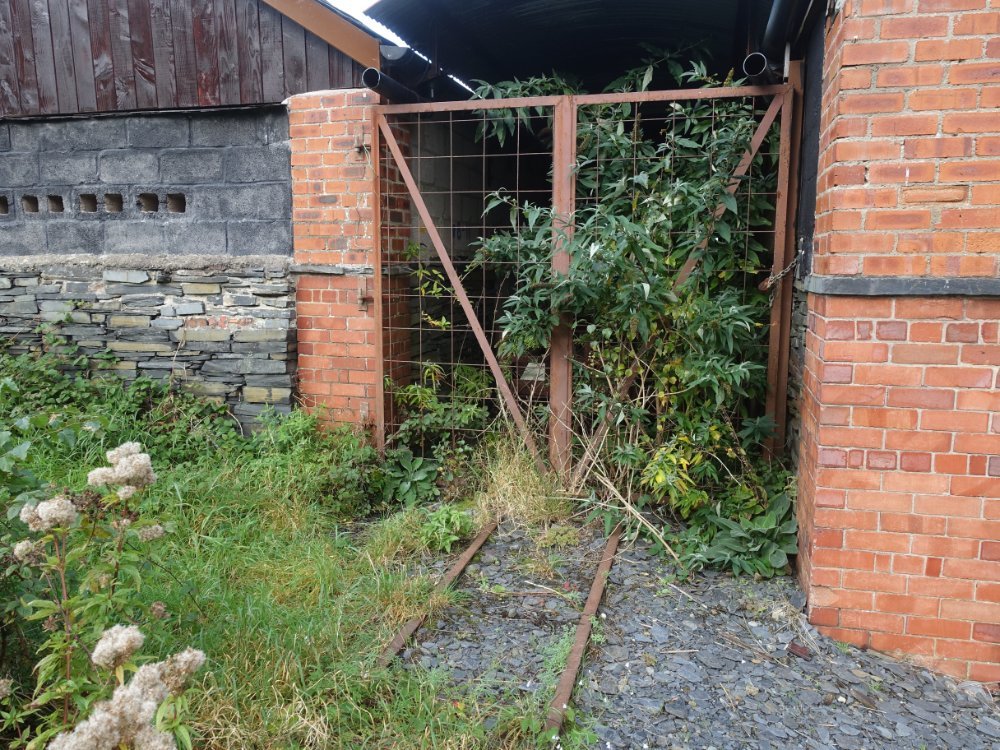
The right hand shed (Maenofferen Bach) had its roof raised a little later and is reached via a 3-way stub point, previously used at Harbour Station, which was possibly an apprentice piece by George Percival Spooner (1850-1917).
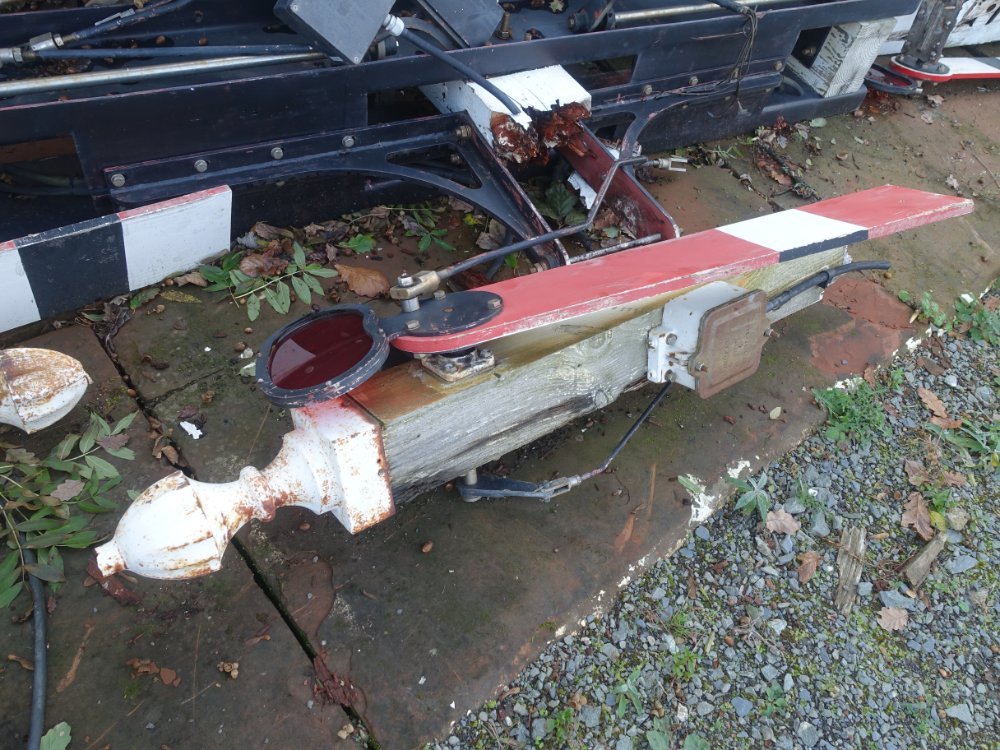
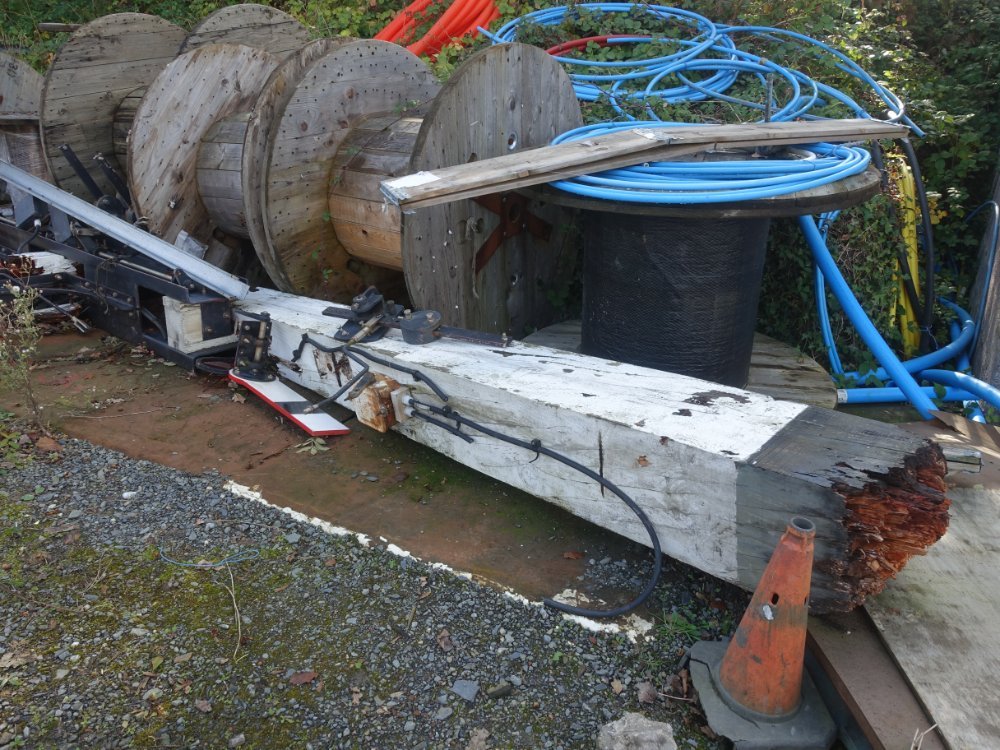
Signal posts
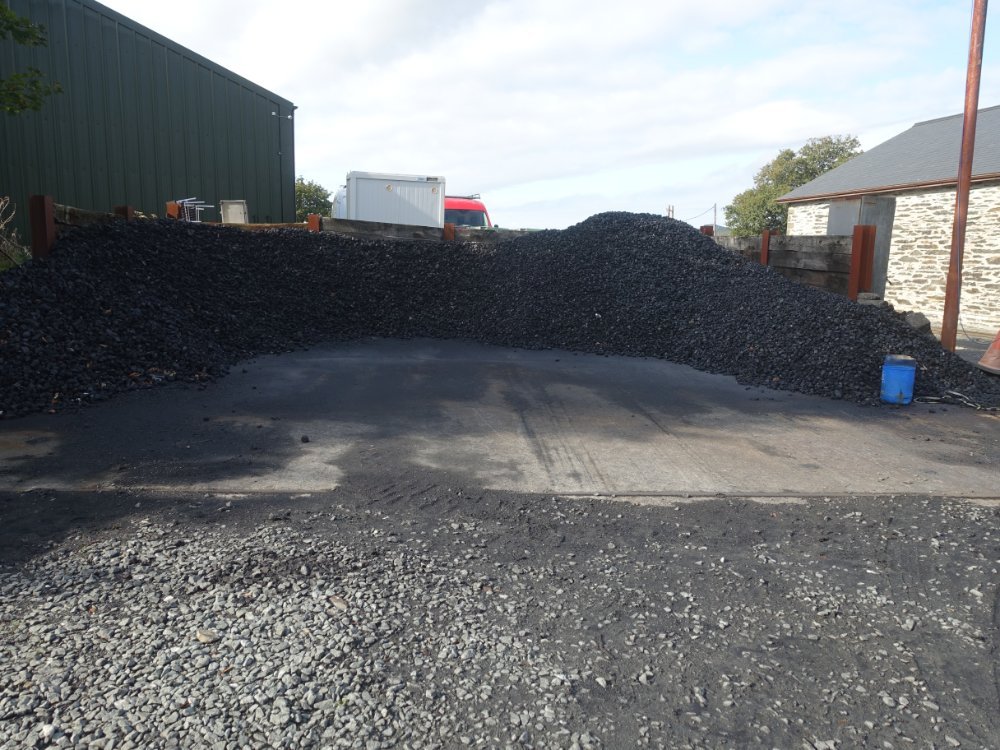
The coal stock is diminishing
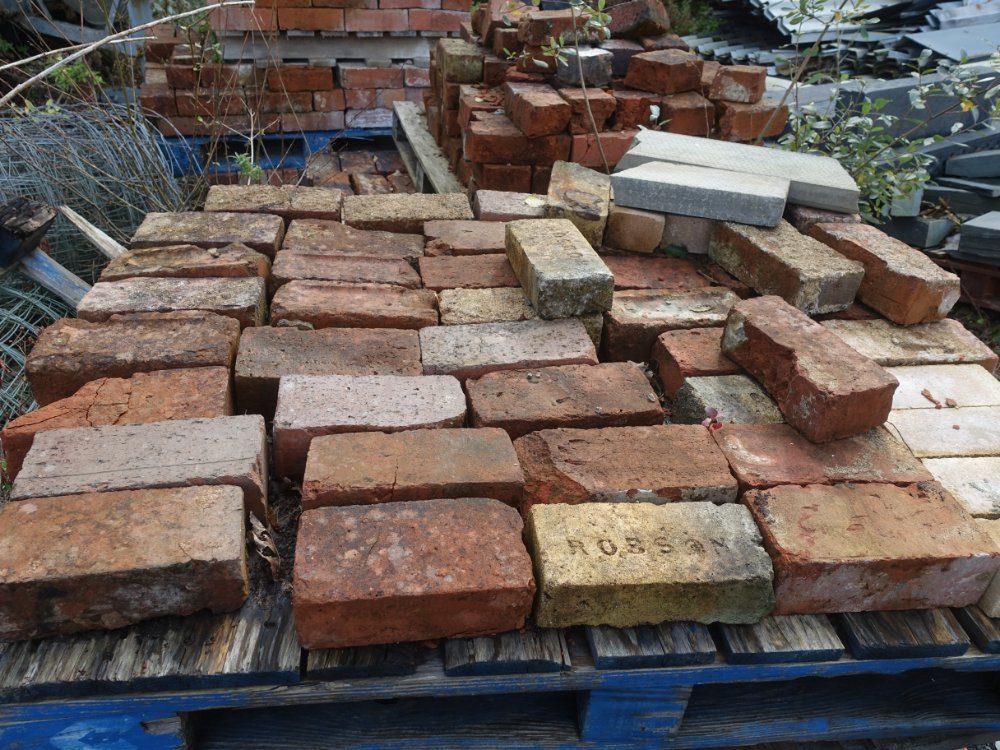
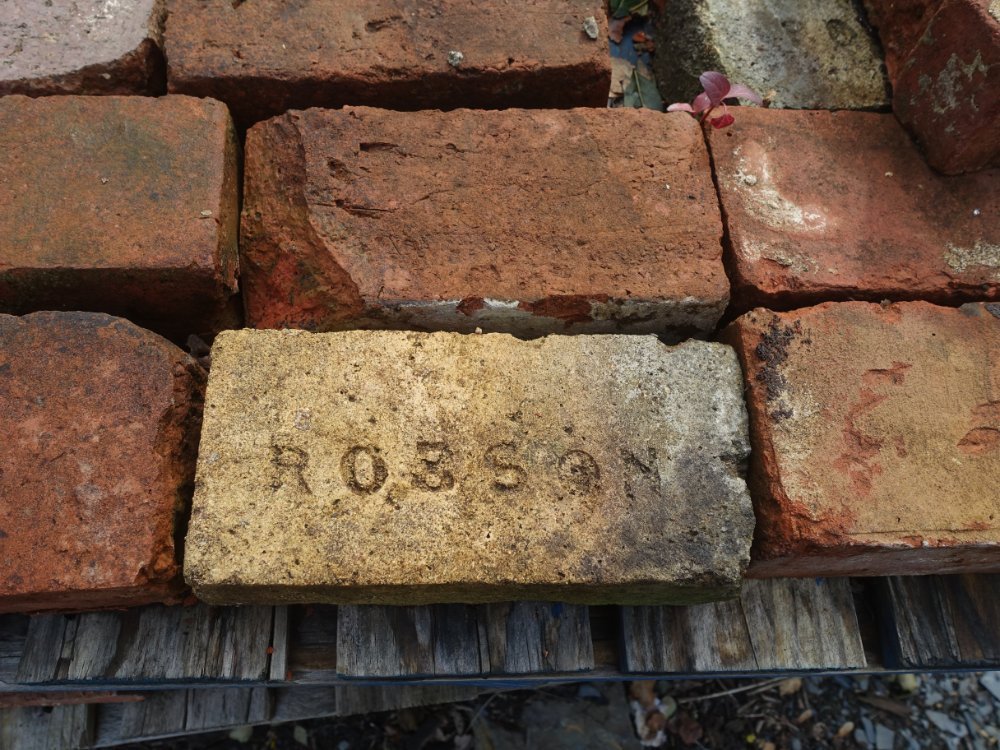
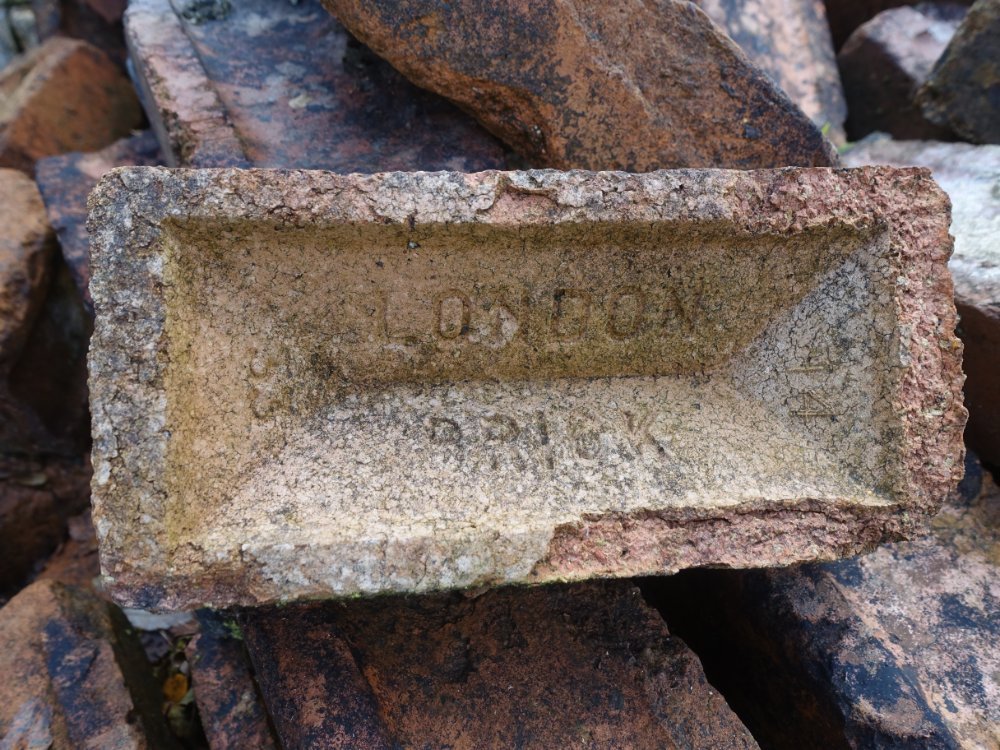
A brick-spotters paradise!
Robert & William Robson, Newcastle upon Tyne, 1863-1908
It has been estimated that a third of all the brick houses in England are built from London Brick Company bricks. The London Brick Company started production just over a century ago and usage peaked in the post-war rebuilding period up to the 1960s. Maximum production rose, at one point, to an amazing 16,000,000 bricks per day. In other words - quite common bricks!
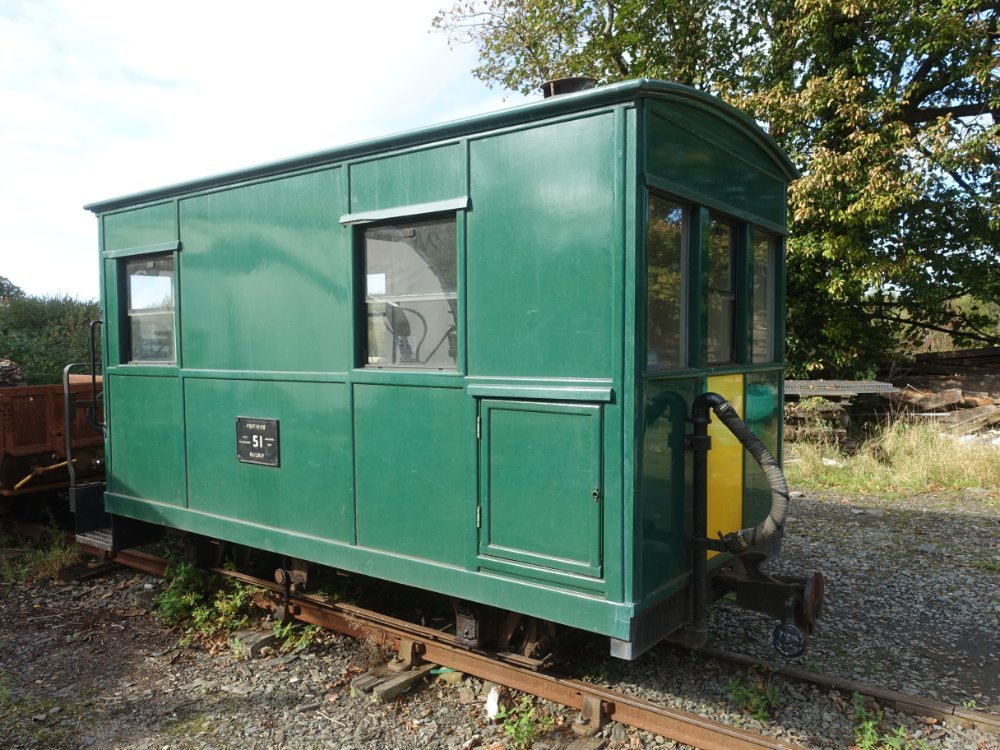
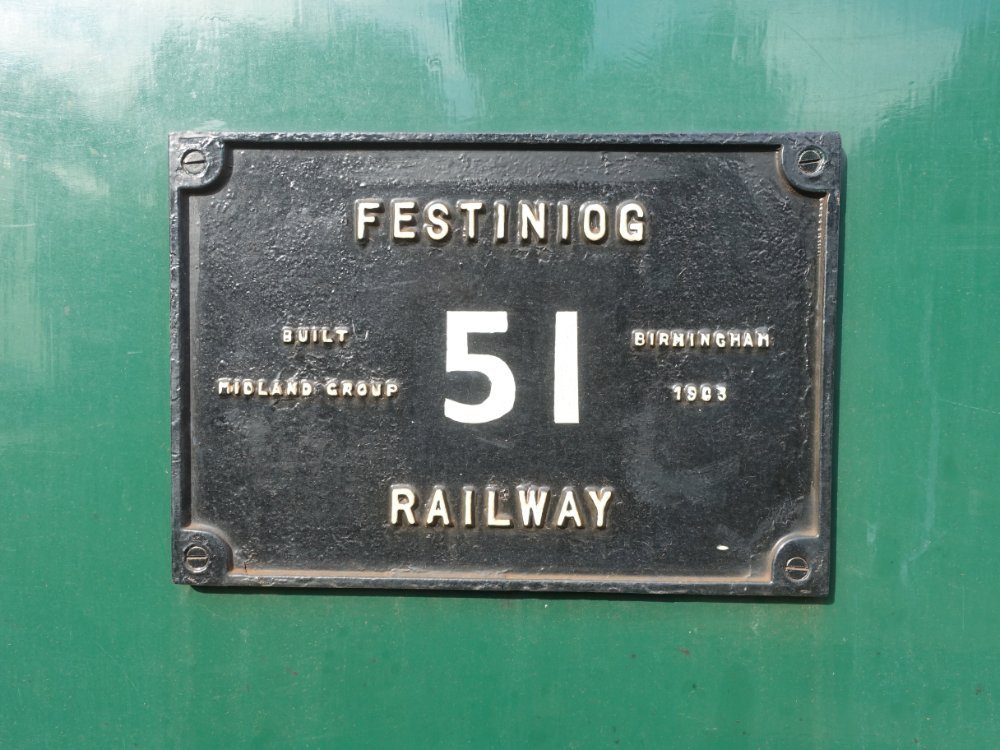
Van 51 was built in 1964 as Van 1 by the Midland Area group of the Ffestiniog Railway Society as a replacement for the previous Van 1. It was the first item of coaching stock built under the new administration. It uses running gear components from old quarryman's carriages and couplings from the Ashover Light Railway (these have subsequently been replaced by standard FR chopper couplings). The seats came from Birmingham buses. Vacuum braked, it has a handbrake for running in works trains.
As built it had full-length coachwork, no end platform, and was painted green. It was fitted with vinyl covered seating and was sometimes used as the top end vehicle in passenger trains when unbraked bugboxes were used. In the mid-70s it was fitted with a gangway at one end so it could be used with modern stock in a fourth passenger set.
In the mid-1980s it was transferred to the Permanent Way Department. In 1987 it had a major overhaul, and the bodywork was shortened leaving an open platform at one end, fitted with a handrail recovered from Glan y Mor yard. It received yellow livery with a grey stripe. In 2000 this was inverted to the correct Howesian corporate style, though with the wrong shades of yellow and grey! It was renumbered from 1 to 51 in the late 1990s, after a replica of the old Van 1 was built. Now regularly used by the S & T department.
There is a separate compartment for gas cylinders, hence the small yellow warning panels.
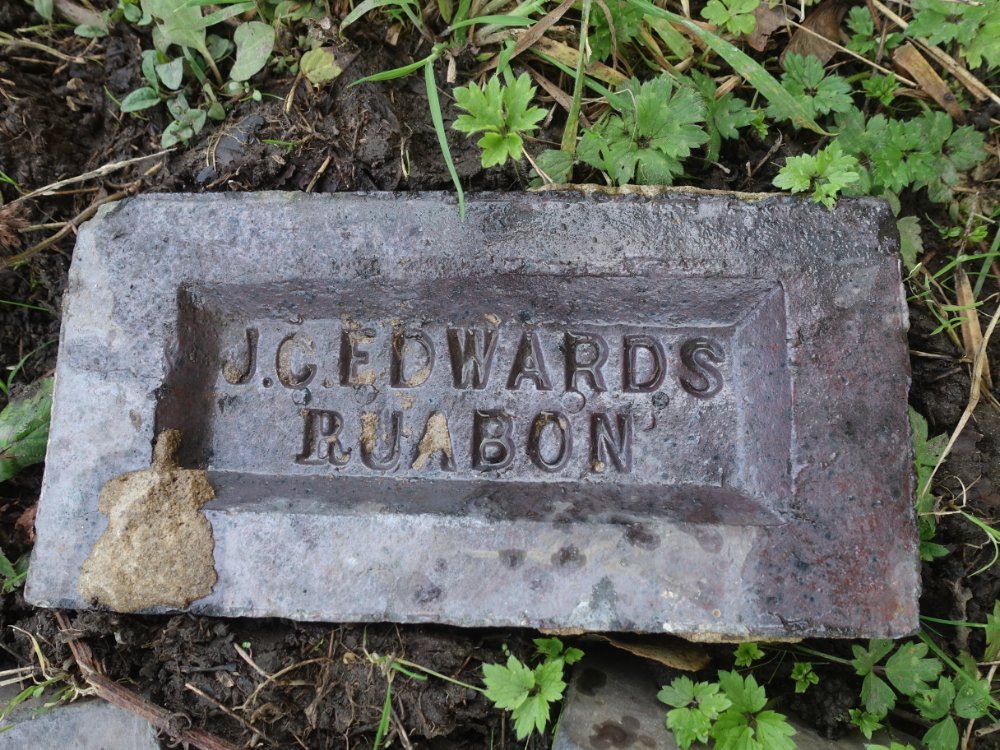
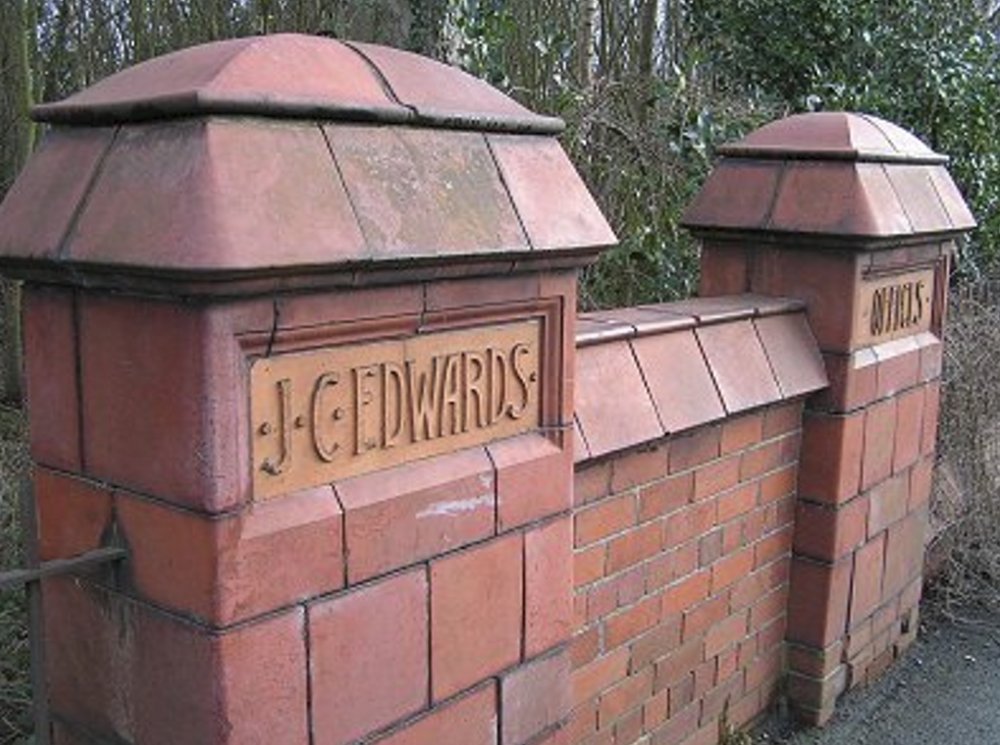
The company of J. C. Edwards (Ruabon) Ltd, was based in Ruabon, Denbighshire, and was active from 1903 to 1956 as a brick, tile and terracotta manufacturer from its works at Tref-y-Nant, Acrefair, Albert Works, Rhosllannerchrugog, and Pen-y-bont, Newbridge, Denbighshire. James Coster Edwards (1828-1896) founded the company; it was sold in 1956.
The entrance to J.C.Edwards works - the rest of the plant has been demolished.
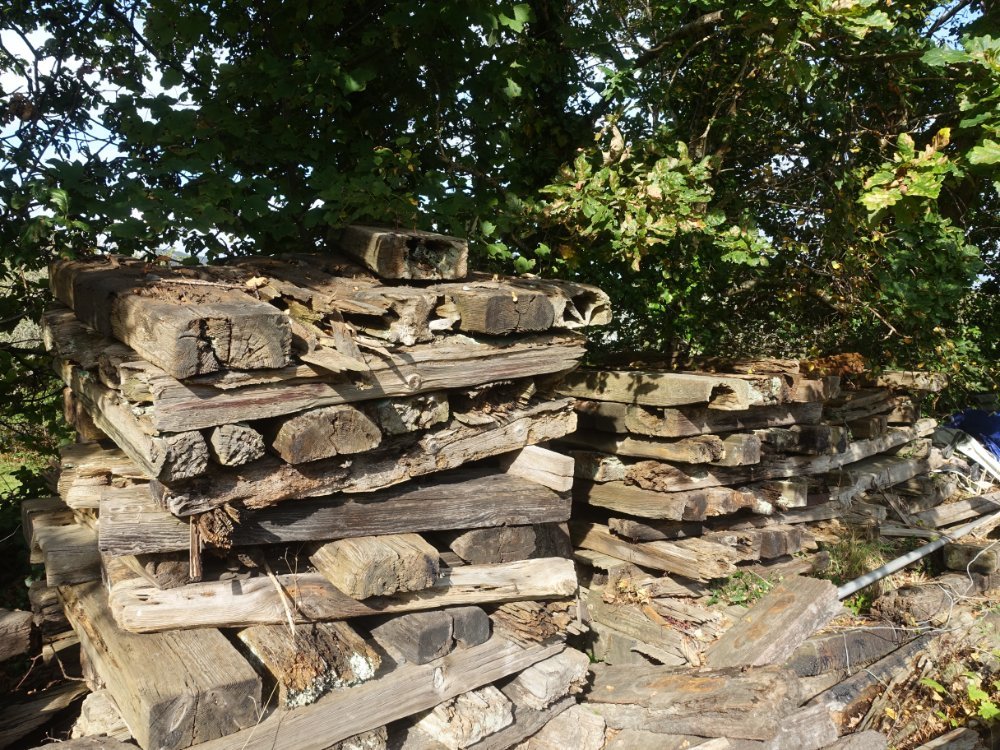
Piles of sleepers
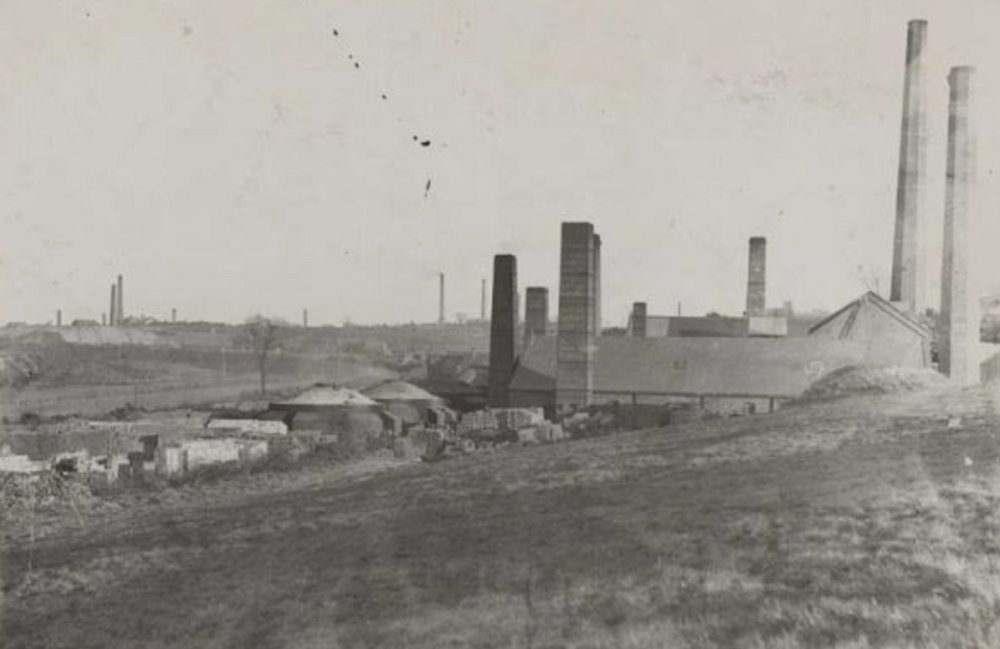
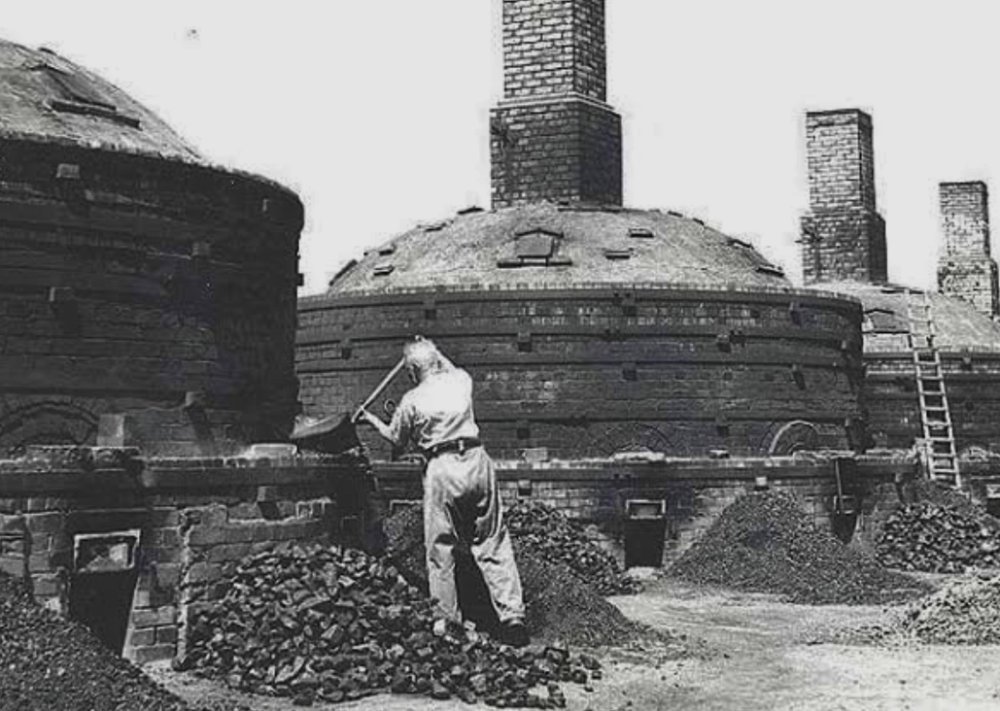
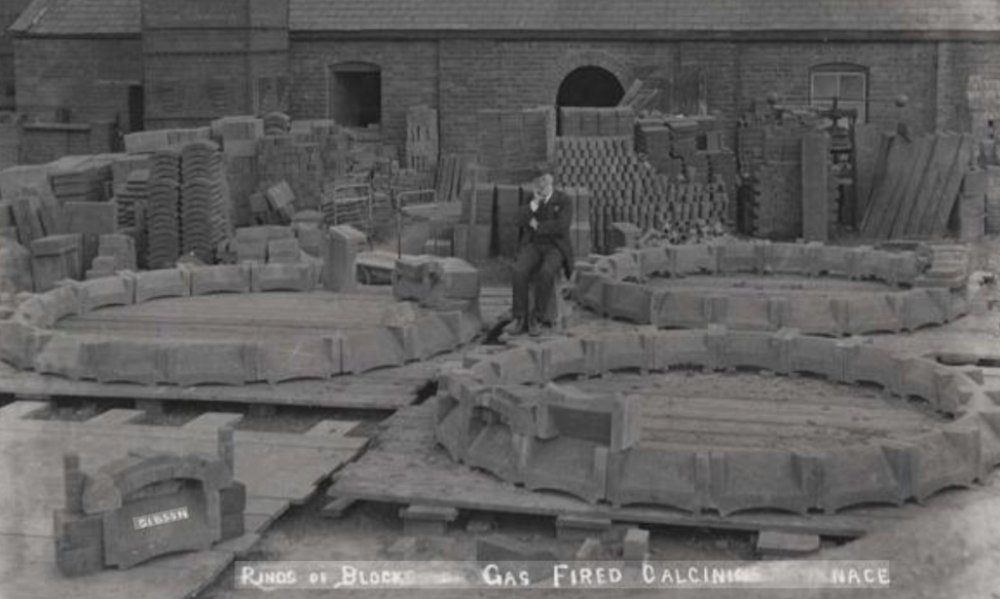
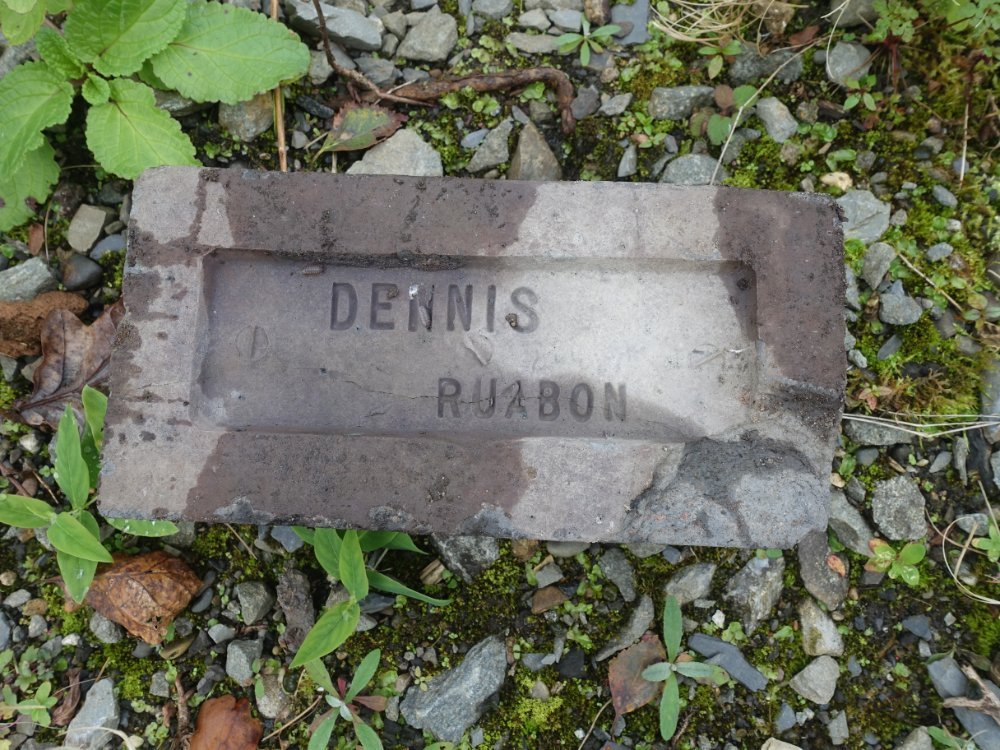
The most famous of the industrialists in Wrexham in the late 19th Century was Henry Dennis, who founded the company in 1878 that would later become Dennis Ruabon Tiles Ltd. Dennis, born in Bodmin, Cornwall, studied civil engineering and travelled to Wales to supervise construction of a tramway at a slate quarry near Llangollen. After a stint in Spain at a lead mine, he later returned to Wales after amassing a considerable personal fortune. Dennis became managing director of the Hafod Colliery and by 1878, had established the Hafod Brickworks. By 1893, a new factory which became known as the "Red Works", was constructed on the site where the present-day building still stands. There, workers produced ridge tiles, chimney pots, tiles and other products using 24 coal-fired "Beehive" kilns. The business flourished at a time when demand for the red bricks and terracotta was high. By the time of his death in 1906, Dennis had established himself as a giant of the industry, ensuring that his firm - and the name of Ruabon - had been forever cemented in British architectural history. He also had interests in collieries, lead mines and water and gas, and is thought to have employed up to 10,000 people. Under the control of his son, Henry Dyke Dennis, the Hafod brickworks became a private limited company in 1934 - Dennis Ruabon Limited - and continued to produce materials including tiles, chimney pots and ornamental terracotta. In 1944, Dennis's grandson, Patrick Gill Dyke Dennis, took control and launched a modernisation programme. By the end of the 1970s, brick production had largely ended, and the company concentrated its efforts on making quarry tiles.
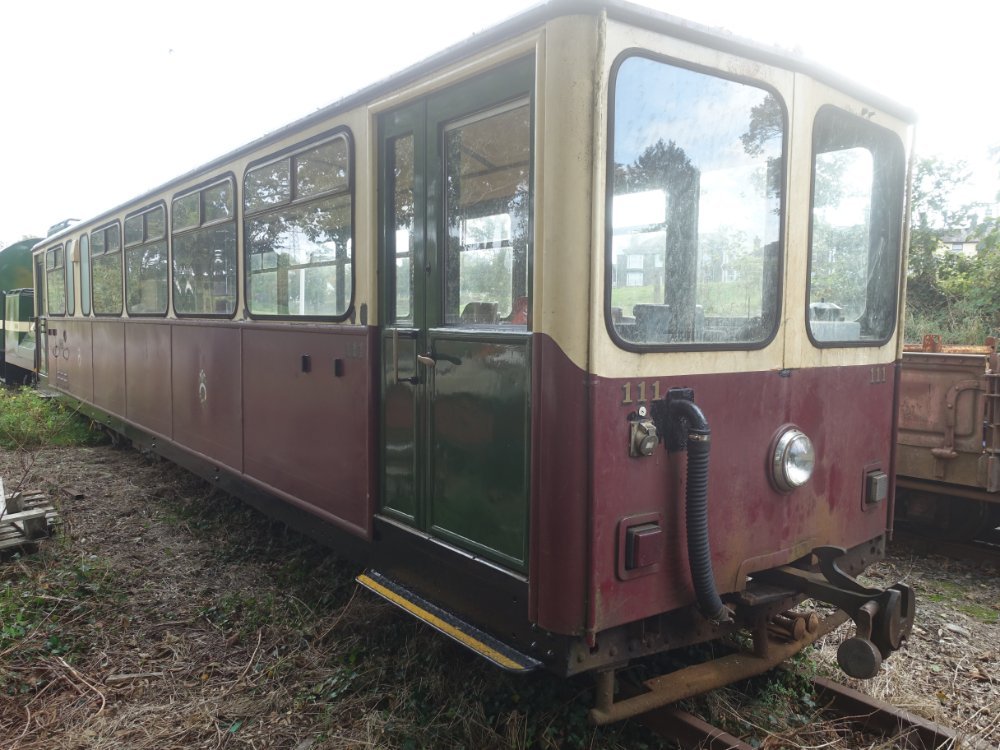
Carriage 1111 is the Permanent Way Department's mess carriage. It is a key vehicle in their works train, along with the tool van, a welding van and various wagons. The train is hauled by Harlech Castle, the department's diesel locomotive (normally known as Ina).
That completes our look around this historic yard.
Section 3
Martin Auto Museum - Part 1
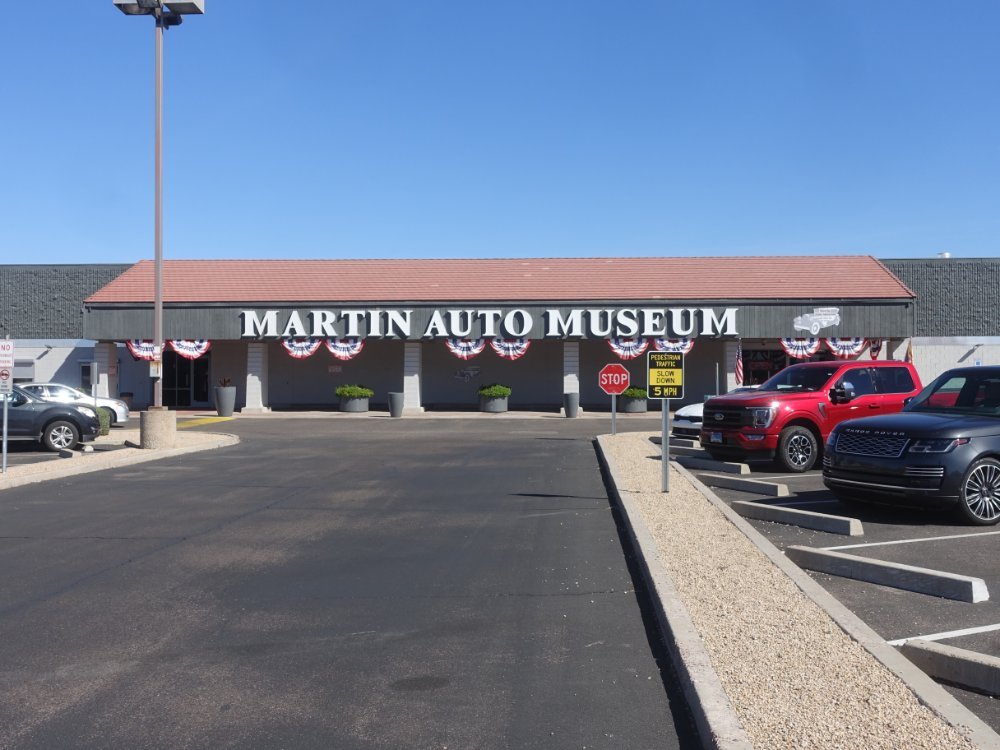
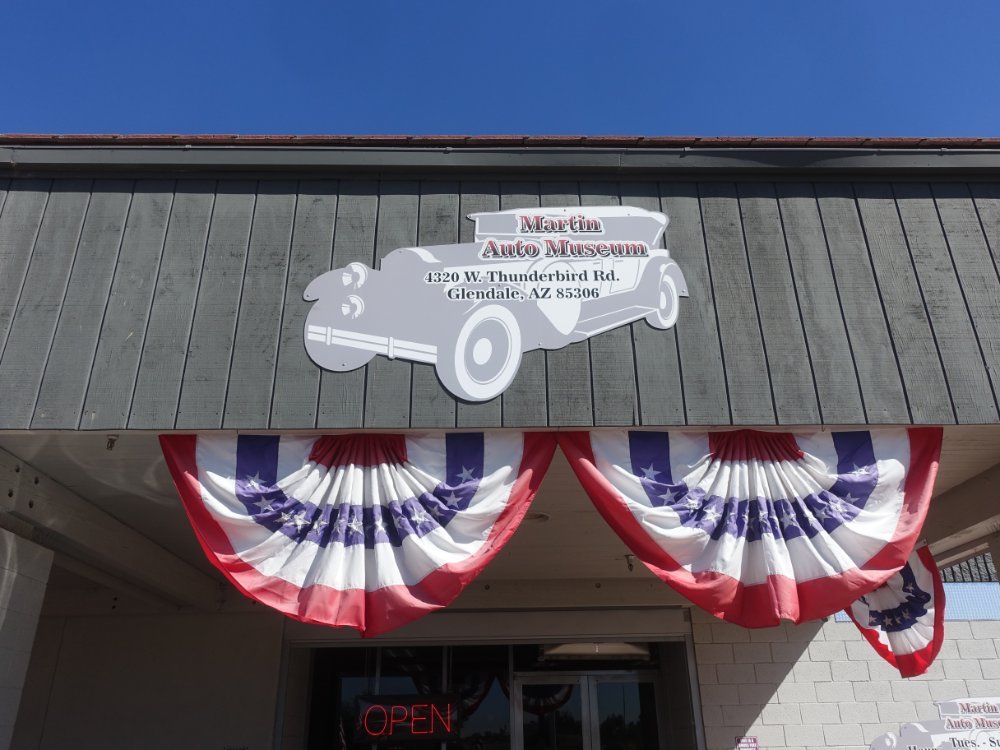
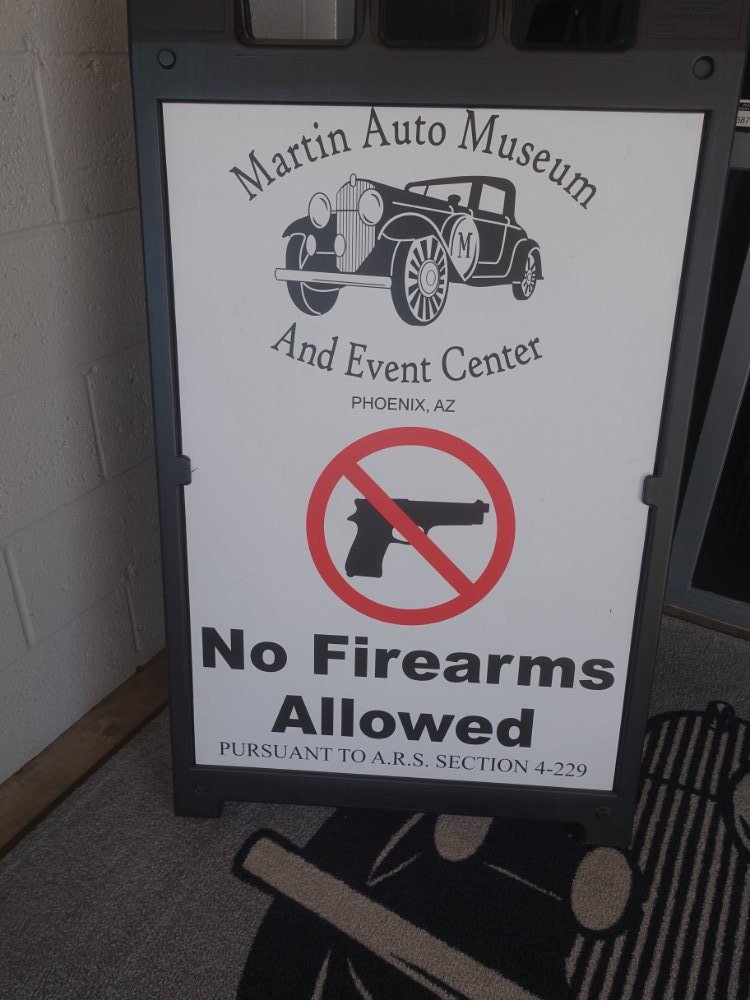
Last March on a road trip around Arizona/Nevada I came across the wonderful Martin Auto Museum:
Here is the first part of an off-season look at the stunning vehicles in this museum.
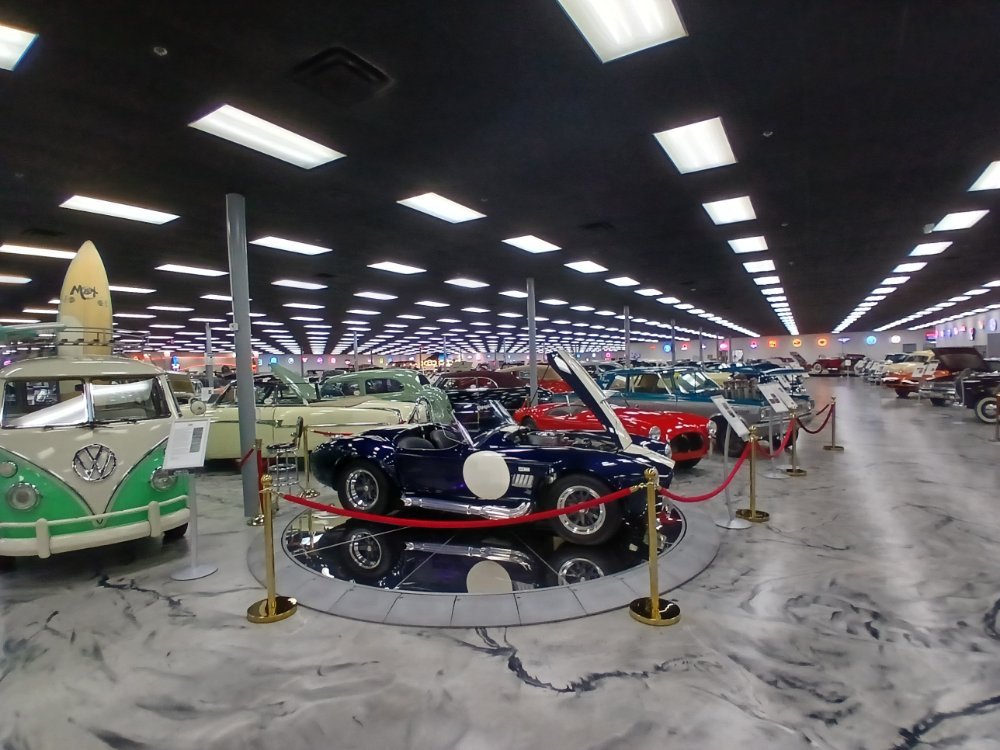
Mel Martin founded Martin Auto Museum and Event Space in 2005. Martin, 94, created the museum out of a need to share a collection of vehicles that represent significant periods in automotive history. After 12 years, Martin had more vehicles in storage than he did in the museum. That necessitated the move. The new location features more than 170 vehicles, including classic cars, hot rods, customs and imports. The museum also boasts one of the largest collections of auto memorabilia, antique gas pumps and signage anywhere.
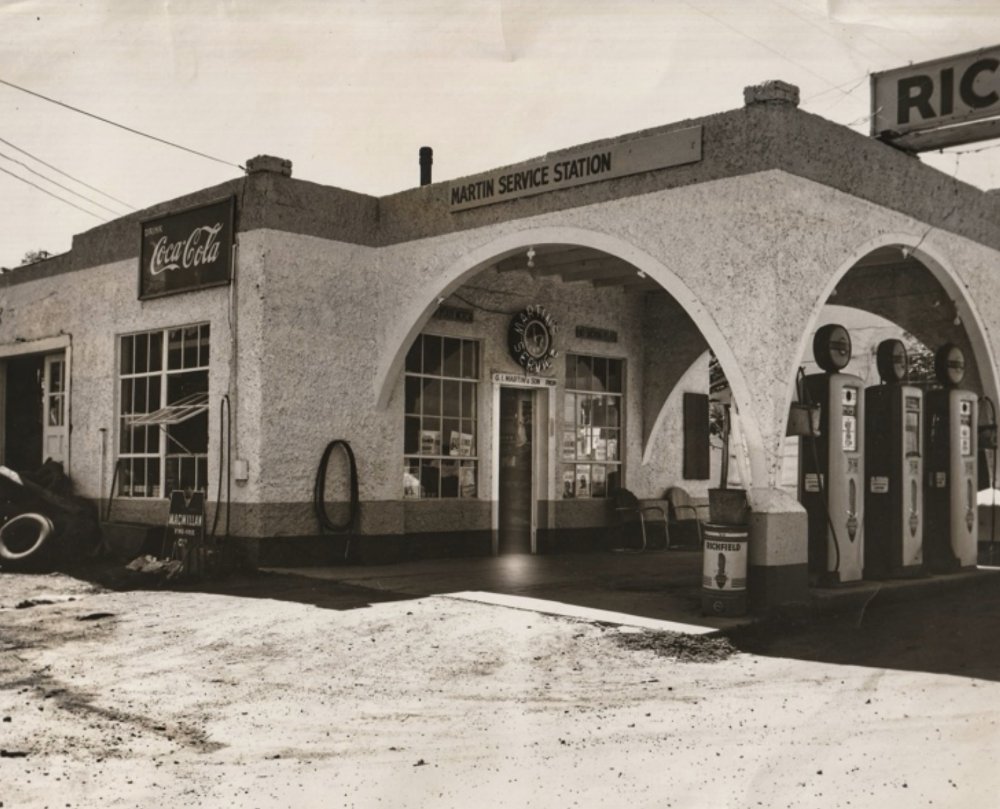
When Mel was 17, his great-uncle gifted him a Douglas truck. After moving to Mayer, Arizona, Mel opened his first repair garage and gas station. Thus, began a lifelong love affair with the automotive world.
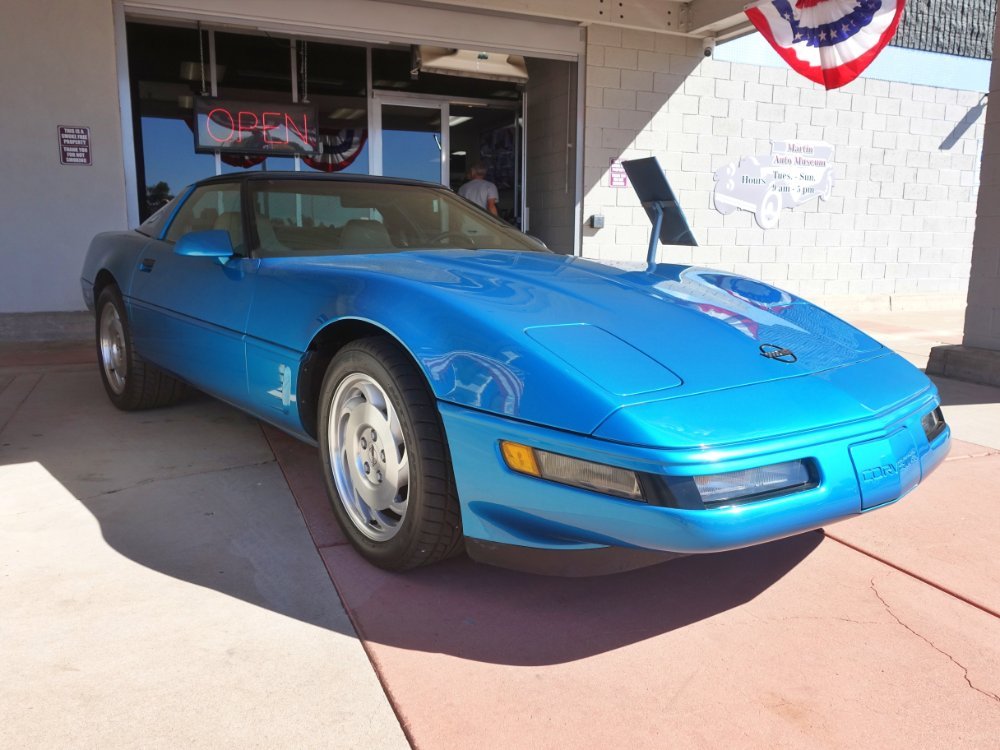
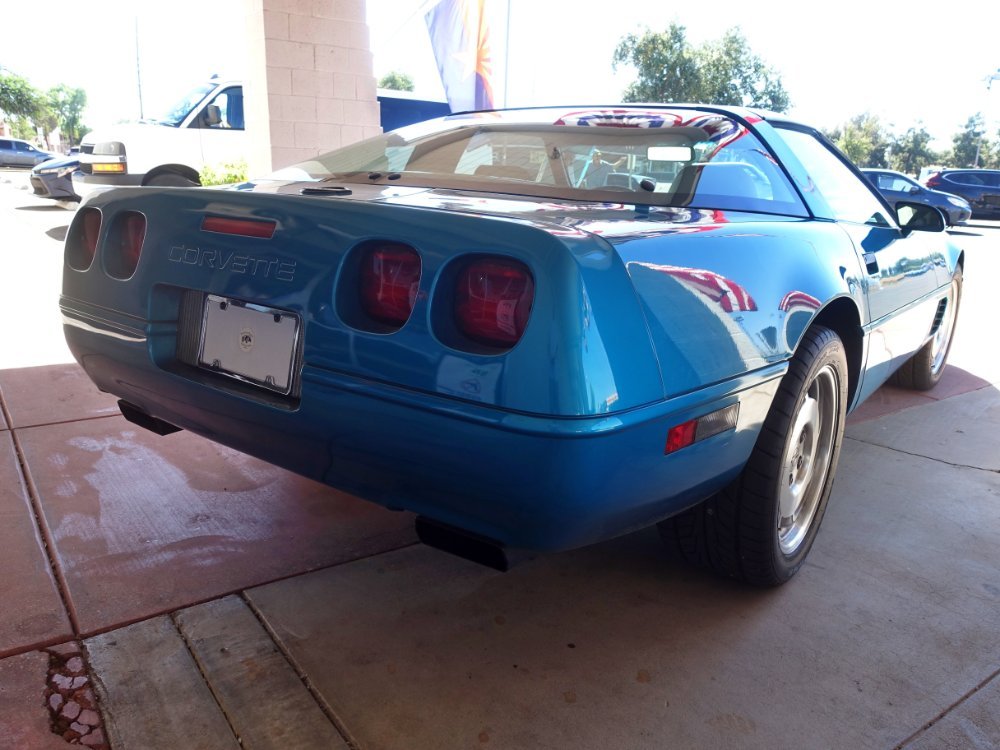
At the entrance to the museum is this 1995 Chevrolet C4 Corvette Coupe
Even with eleven years already behind it, the C4 Corvette still managed to receive the accolades of enthusiasts and critics alike. It received praise for its jaw-dropping acceleration and equally for its intense road grip and superior handling. However, with the announcement that an all-new, fifth generation Corvette was under development and on track for the 1997 model year, there were few who were surprised by Chevrolet's decision to make minimal changes to the existing C4 Corvette coupe, and to completely eliminate the ZR-1 early in the 1995 production year. That's not to say that there weren't any changes made to the 1995 Corvette. Mechanically, the already robust LT1 engine received additional refinements. The connecting rods were revised to improve strength and weight uniformity, the engine fan was made quieter, and the fuel injection system was improved to utilize alcohol-blend fuels, which began to have an increased appearance at gas pumps around the world at about that same time. Additionally, the new fuel injectors were developed to reduce fuel dripping when the engine was turned off. Beyond the engine, additional mechanical improvements were also made to the drive train and other areas of the car. The electronically controlled four-speed automatic transmission was refined to provide smoother shifting, and the torque converter was made stronger and lighter.
Specs…
• 350 cubic-inch V-8 engine, 300 horsepower
• Multi-port fuel injection
• 4-speed automatic transmission
• 96.2-inch wheelbase
• $36,785 base price new
• 20,742 C4 Corvettes produced in 1995, with 15,771 of those being coupes
Once inside you are greeted with this glorious sight
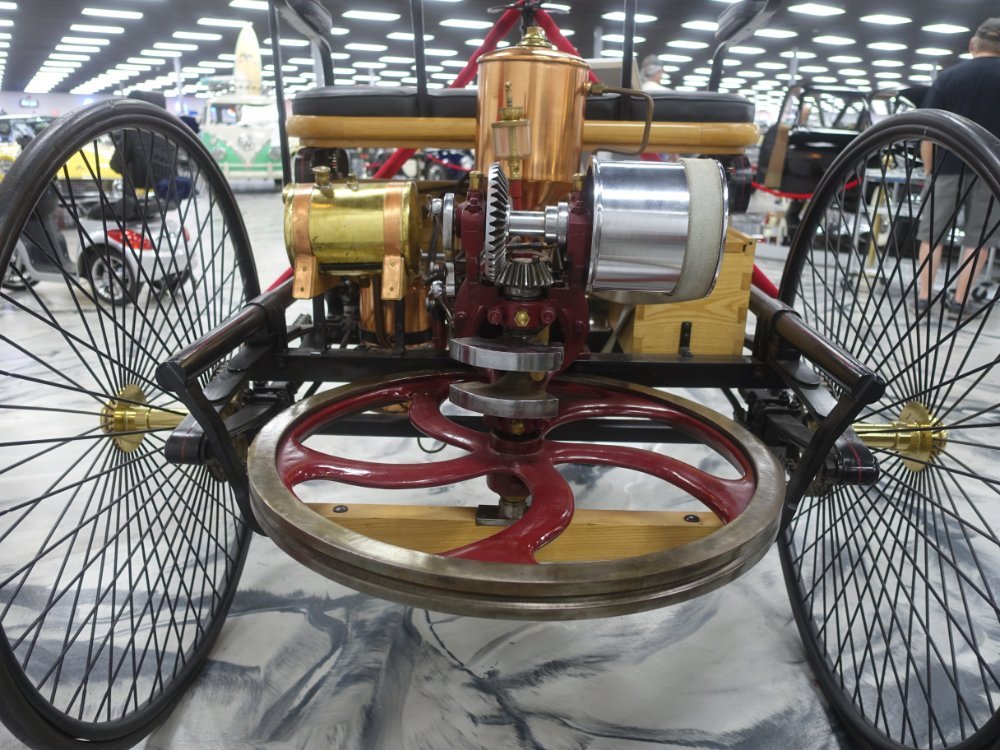
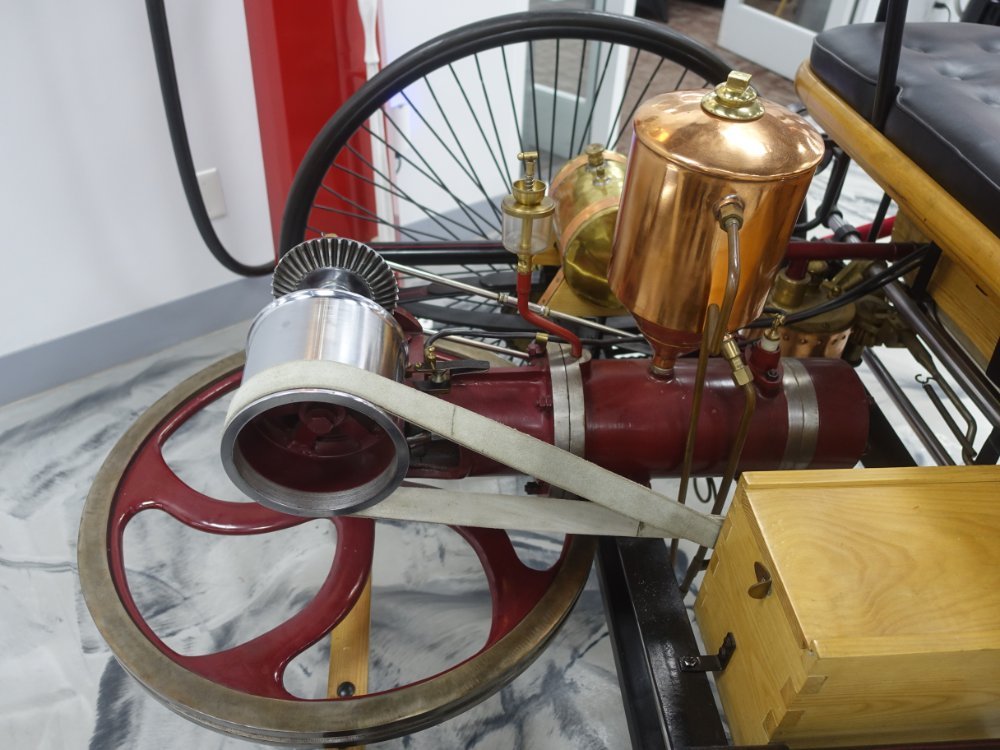
The Benz Patent-Motorwagen (built in 1885), is widely regarded as the world’s first piston-powered production automobile. On January 29, 1886, Karl Benz patented the three-wheeled Patent-Motorwagen (patent number 37435). Later in the same year, just 60 miles away, Gottlieb Daimler patented an internal combustion engine and began with the construction of a four-wheeled horseless carriage. Neither Benz nor Daimler were aware of the other's work. Karl's wife Bertha Benz, whose dowry financed their enterprise, was aware of the need for publicity. She took the Patent-Motorwagen No. 3 and drove it on the first long distance internal combustion automobile road trip to demonstrate its feasibility. She took her sons Eugen and Richard, fifteen and fourteen years old, on the 121-mile trip in August 1888. As well as being the driver, Benz acted as mechanic on the drive, cleaning the carburettor with her hat pin and using a garter to insulate wire. She refueled at a local pharmacy along the route, taking on ligroin as fuel, making it the first filling station in history. As the brakes wore down, Benz asked a local shoemaker to nail leather on the brake blocks, thus inventing brake linings.
Specs...
• 9 horsepower engines at 400 pm
• Total loss oiling system
• Steered by a tiller, not a steering wheel
• Top speed of 12 mph
• Chain drive on both sides
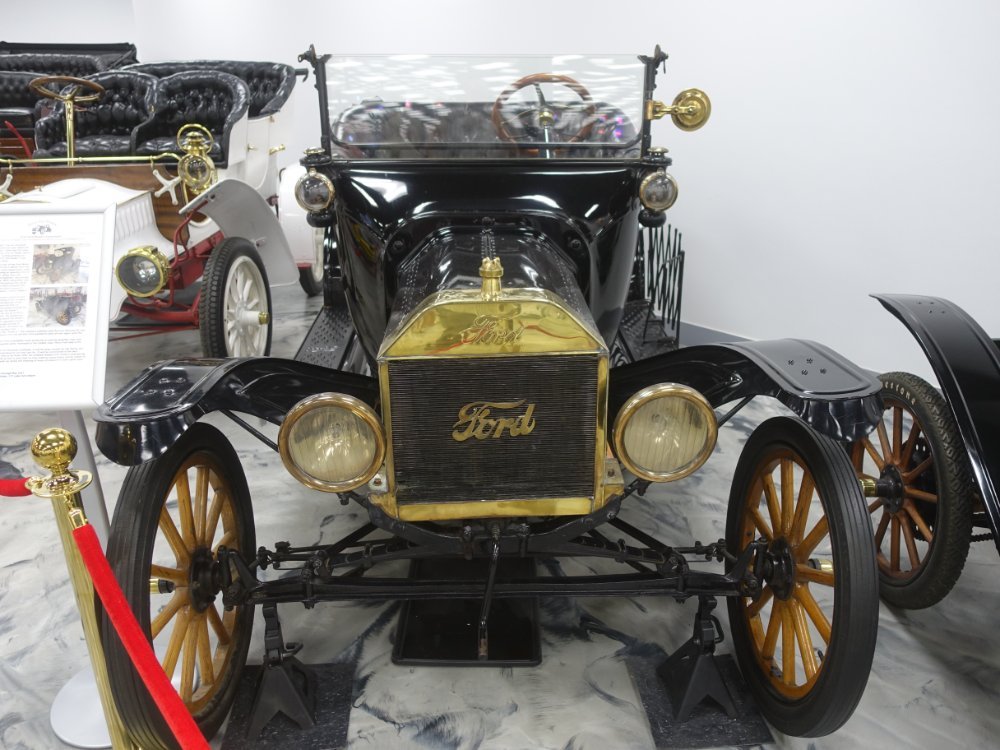
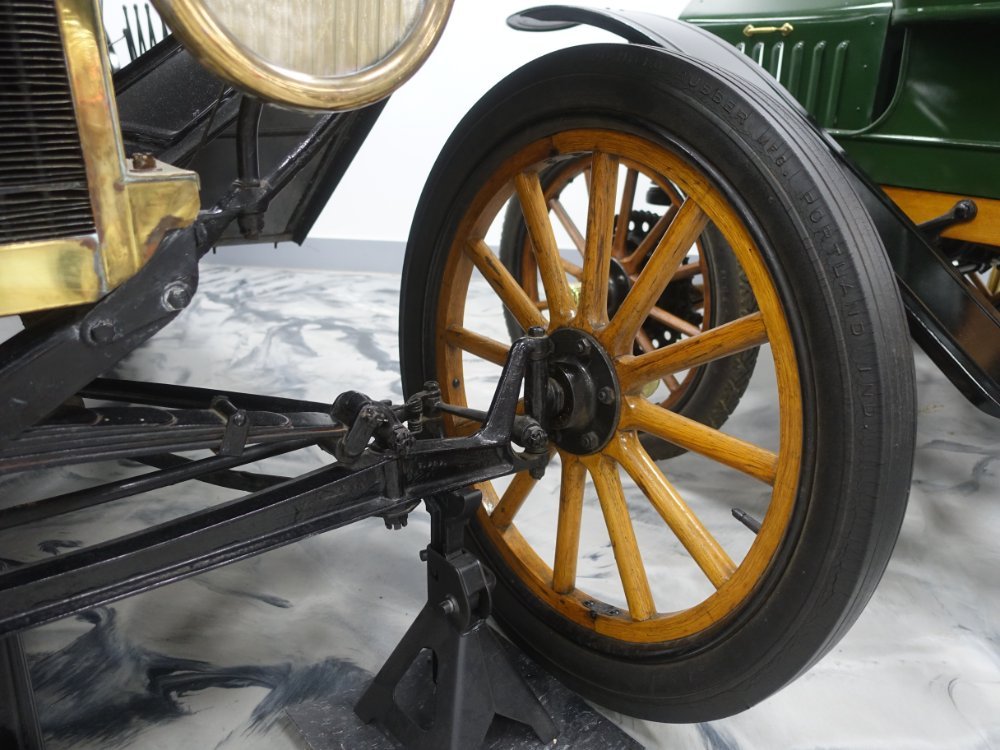
1915 Ford Model T Convertible
The Ford Model T has an extensive history that stretched over nearly 20 years. It is often called the Tin Lizzie, Flivver, Leaping Lena, or Jitney, and is credited with "putting America on wheels." In 1915, the Model T cost approximately $440. Henry Ford, founder of the Ford Motor Company, produced a vehicle that was affordable, but more importantly, mass produced. By using an assembly line to construct parts, rather than the traditional hand assembly, the process was streamlined. With dealerships and factories setup throughout the world, the Model T was mass produced and easily available to many buyers. In 1915, Ford produced 1-million Model T vehicles. Henry Ford conceived a series of cars between the founding of the company in 1903, and the introduction of the Model T Ford. He named his first car the Model A and proceeded through the alphabet up through to the Model T. Twenty models in all, not all of which went into production. The production model immediately before the Model T was the Model S, an upgraded version of the company's largest success to that point, the Model N. The follow-up to the Model T was another Ford Model A, rather than the "Model U". The company publicity said this was because the new car was such a departure from the old that Ford wanted to start all over again with the letter A. The Model T was Ford's first automobile mass-produced on moving assembly lines with completely interchangeable parts, marketed to the middle class.
Henry Ford said of the vehicle: “I will build a motor car for the great multitude. It will be large enough for the family, but small enough for the individual to run and care for. It will be constructed of the best materials, by the best men to be hired, after the simplest designs that modern engineering can devise. But it will be so low in price that no man making a good salary will be unable to own one – and enjoy with his family the blessing of hours of pleasure in God's great open spaces.
Specs…
• Production Oct 1908 through May 1927
• Front-mounted 4-cylinder, 177 cubic inch engine
• 20 horsepower
• Magneto ignition
• Electric start
1909 REO Five-Passenger Touring Car
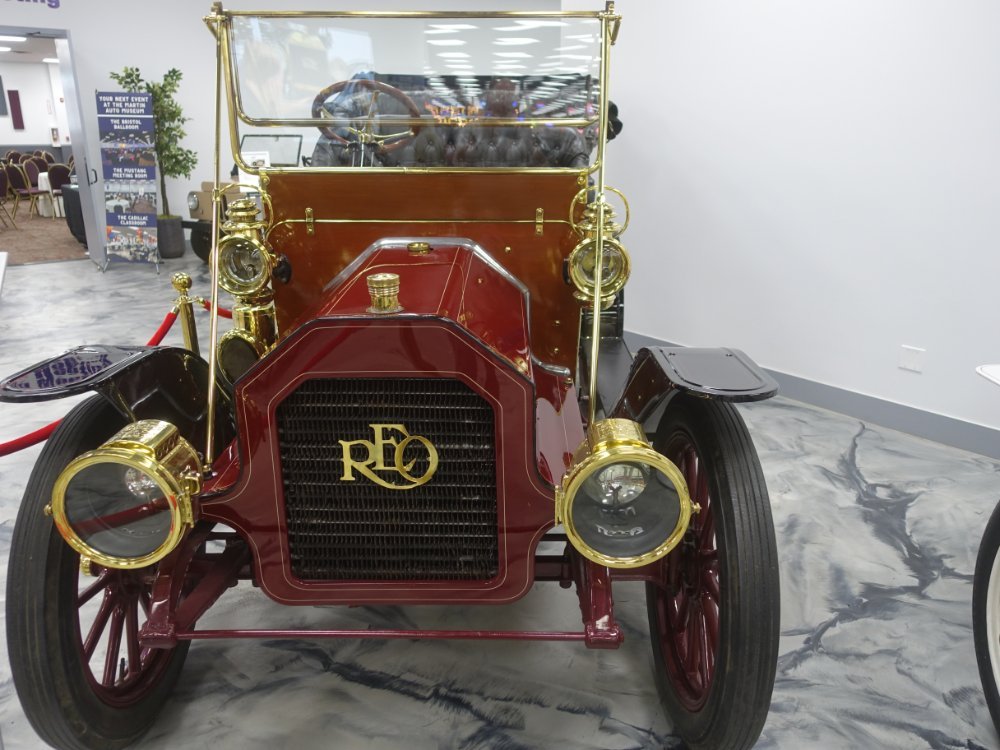
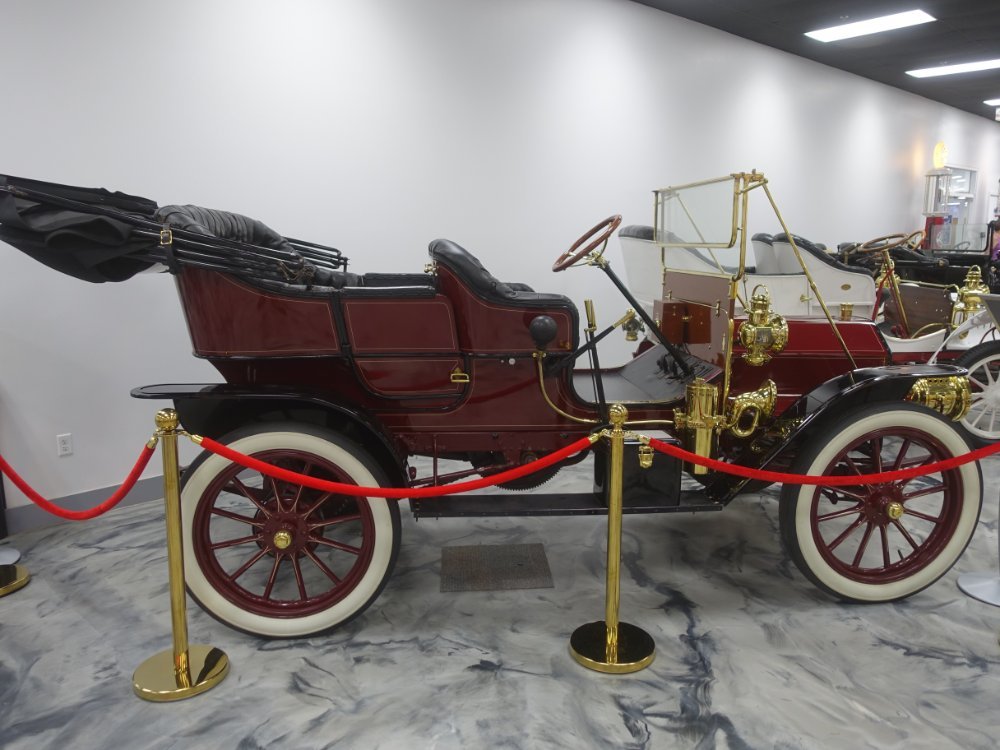
REO was an American automotive manufacturer founded in 1905. Named for its founder, Ransom E. Olds, REO created a wide range of trucks and cars during the company's history. REO is most well-known for its Royale and Flying Cloud models, but it also produced a wide array of trucks and buses. By 1907, REO had gross sales of $4.5 million, and the company was one of the four wealthiest automobile manufacturers in the U.S. After 1908, despite the introduction of improved cars designed by Olds, REO's share of the automobile market decreased due in part to competition from emerging companies like Ford and General Motors. REO was purchased by the White Motor Company and merged with Diamond T Trucks to create Diamond REO Trucks in 1967 - ending the REO brand. Perhaps the most historical REO event was the 1912 TransCanada journey. Travelling 4,176 miles from Halifax, Nova Scotia, to Vancouver, British Columbia, in a 1912 REO special touring car, mechanic/driver Fonce V. (Jack) Haney, and journalist Thomas W. Wilby made the first trip by automobile across Canada (including one short jaunt into northeastern Washington State when the Canadian roads were virtually impassable). This 1909 REO Five-Passenger Touring Car is a running and fully operational vehicle and an excellent example of the brand.
Specs…
• 213 cubic-inch, two-cylinder
• 20 horsepower
• Two-speed planetary transmission
• Three-quarter elliptic front springs with full elliptic rear springs
• Rear wheel drum brakes
• 96-inch wheelbase
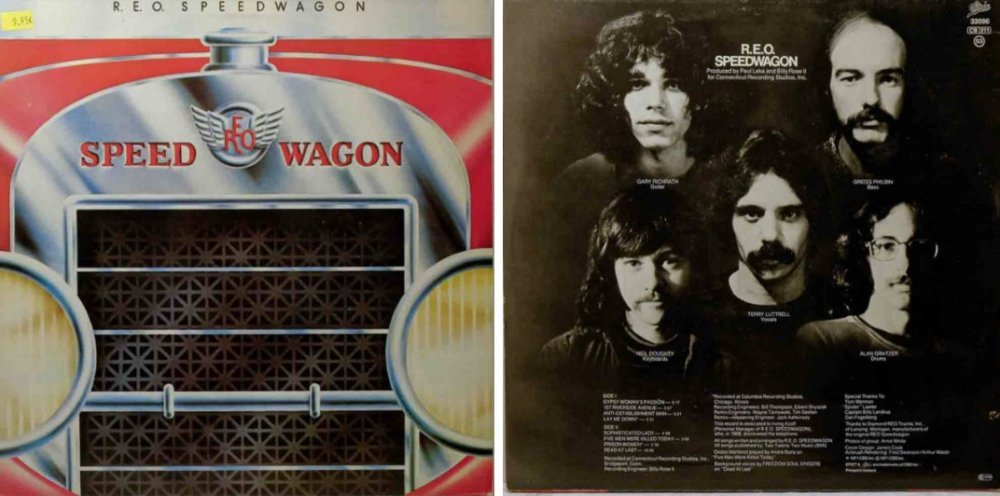
The American rock band REO Speedwagon’s founder Neal Doughty is credited with coming up with the group’s moniker. While taking a class in college on “The History of Transportation,” he saw the term “R.E.O. Speedwagon” written on the blackboard.
1905 Cadillac Model F Touring
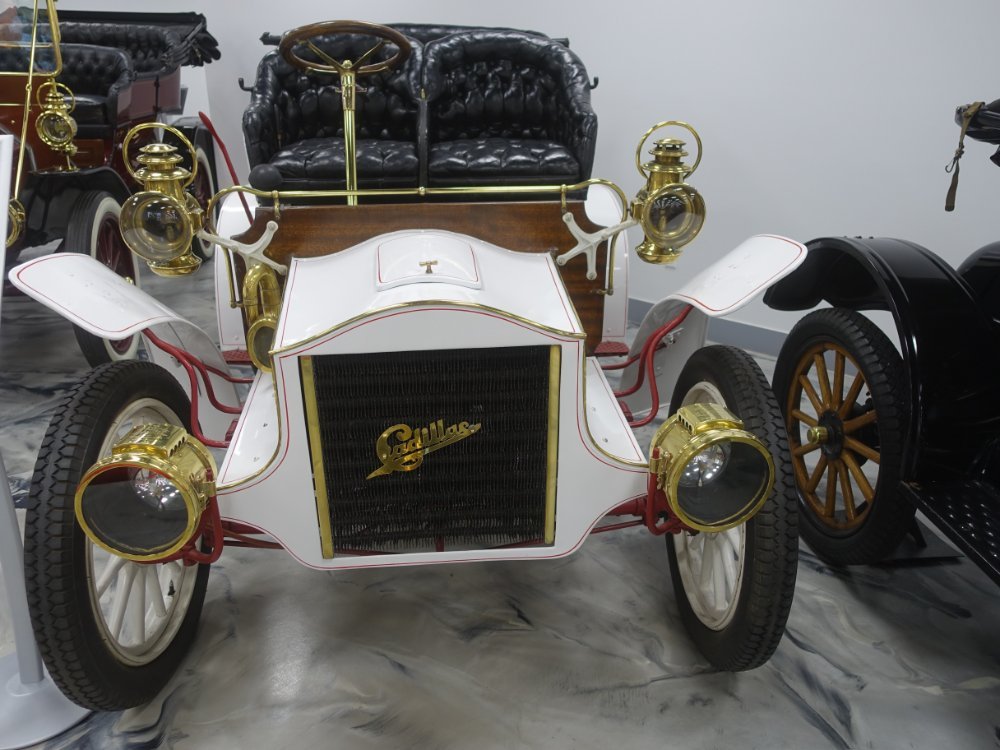
The Model F was the primary new Cadillac model of 1905. It had a sharper hood and radiator, prompting the update of the Model B (which became the Model C) and even spawning an aftermarket of updates to existing Model A and Model B cars. Models E and F shared the same chassis, although the latter was lengthened by two inches. The Model F was available as either a 4- seater, 2-door touring car with a side-entrance to the fixed tonneau, or a 2- seat delivery vehicle. Both were priced at $950 in 1905. The 1905 Cadillac Model F Touring is a four-passenger car with a 98.2 cubic inch, 9 horsepower, single-cylinder, horizontal engine. The engine is located under the car, and a chain drive powers the rear wheels. The Model F has a top speed of 32 miles per hour, which is notable for the time due to its streamlined body and powerful engine. It has two forward gears and one reverse, and the brakes are controlled externally.
Specs…
• 98.2 cubic-inch engine
• 9 horsepower
• Planetary transmission
• 4-passenger seating
• 2-wheel mechanical brakes
• Weight is 1,450 pounds
A couple of more recent design are alongside:
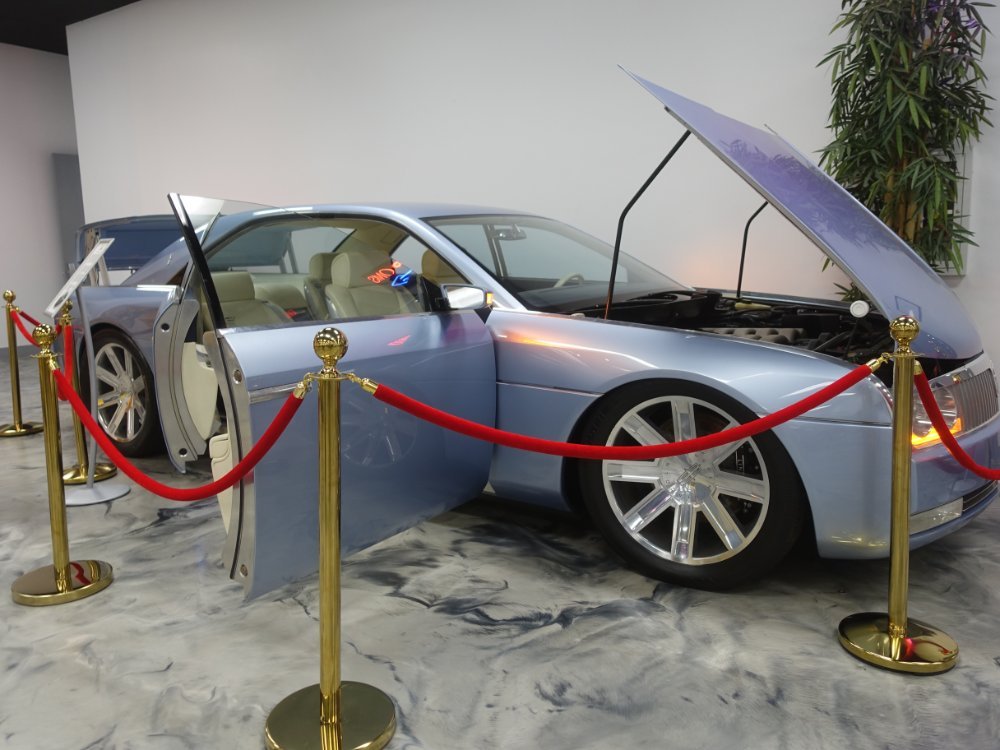
2002 Lincoln Continental Concept
The 2002 Lincoln Continental concept was a bold, retro-futuristic vision of American luxury sedans, unveiled at the Los Angeles Auto Show in November 2002. Designed as a flagship executive car, it blended sharp, slab-sided styling inspired by the iconic 1961 Lincoln Continental with modern, high-tech elements. Powered by a potent V-12 engine, it promised effortless power and supreme comfort, embodying Lincoln’s ambition to reclaim its throne against European rivals like Mercedes and BMW. Though it generated massive buzz and was seen as a potential successor to the aging Town Car, the rising SUV boom led Ford to shelve production plans. Today, it stands as one of the most lamented “what ifs” in American automotive history—a car that could have redefined Lincoln’s image but remains a static dream. History and Creation Lincoln developed the Continental concept over nearly two years as part of a broader effort to revitalize the brand amid slumping sales and stiff competition. It debuted at the 2002 LA Auto Show, where it stole the spotlight with its elegant proportions and innovative features, drawing praise for evoking the grandeur of mid-century Lincolns while feeling utterly contemporary. Ford built two versions: a fully functional prototype with a running engine and a lighter, non-powered “pusher” display model for easier transport to shows. The concept toured events like the Detroit Auto Show in January 2003, fuelling speculation of a production model by 2005. However, shifting market trends toward SUVs and crossovers doomed it. Lincoln instead pursued more conservative paths, like the Fusion-based Zephyr (later MKZ), which borrowed some interior cues but lacked the concept’s drama. The Continental nameplate was retired until a lacklustre 2017 revival on the Ford CD6 platform. The functional prototype has been in private collections, last auctioned in 2010 for $56,100 at RM Sotheby’s Monterey sale. The display model sold at RM’s 2014 Dallas event from the Sam Pack Collection. As of September 2025, the running prototype was auctioned at Mecum’s “Larry’s Legacy” event in Chicago without reserve, highlighting renewed interest in Lincoln’s lost opportunities.
Design and Features
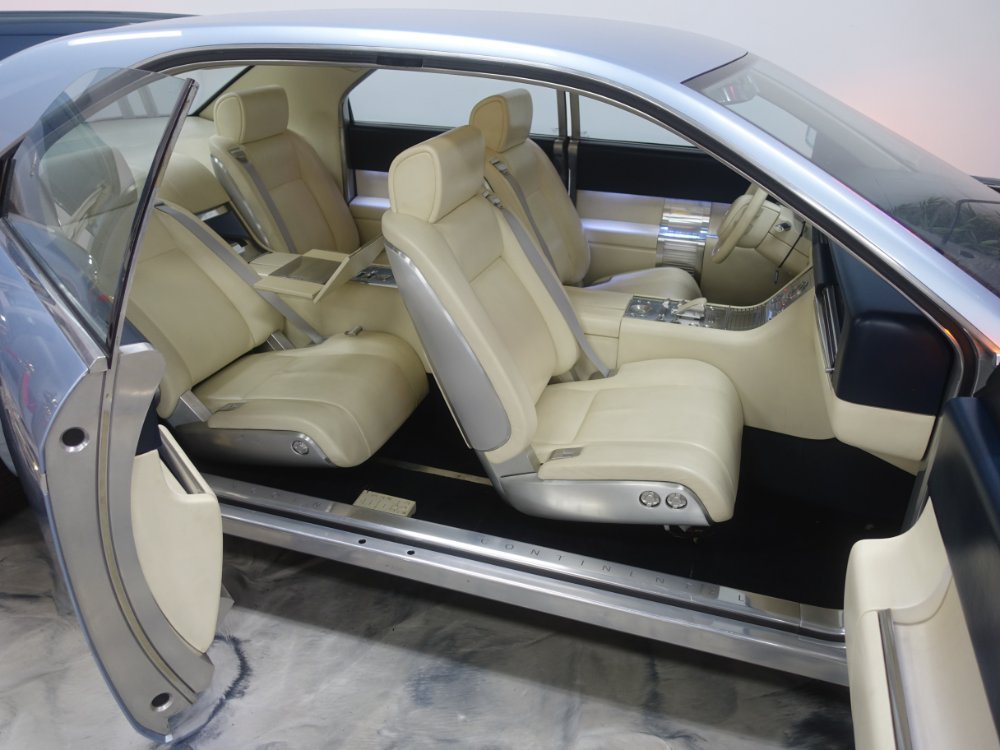
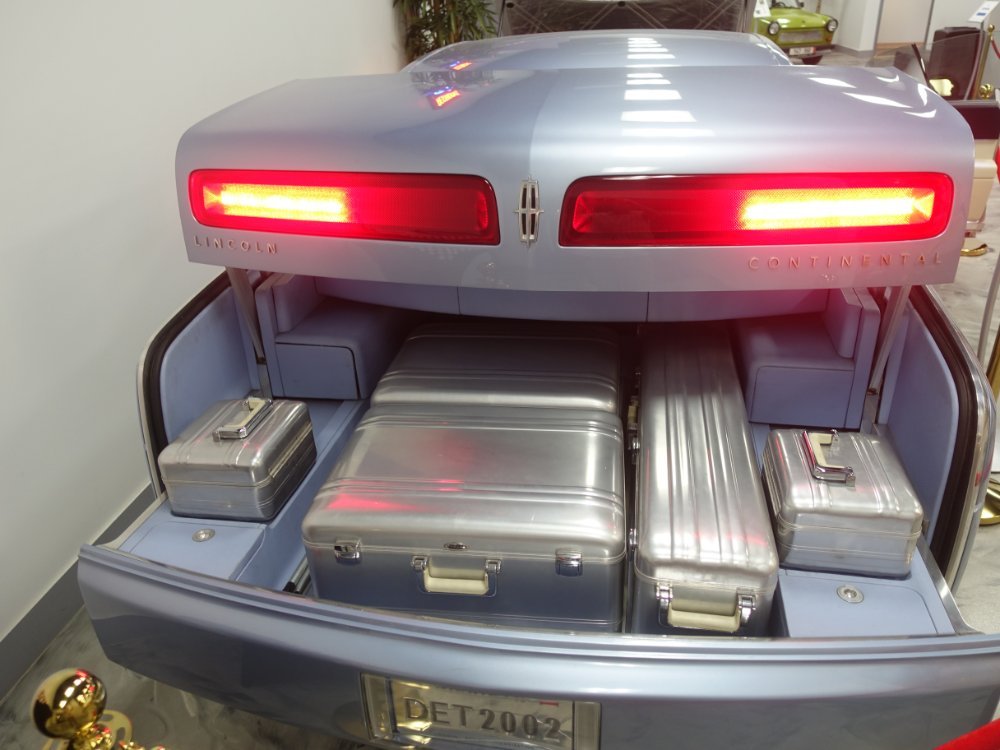
The Continental’s design was a masterclass in restrained opulence, with a long, low profile that maximized interior space while nodding to Lincoln’s suicide-door heritage. Its “centre-opening” doors (powered and pillarless) swung outward from the centre, creating a cavernous 6-foot entry for rear passengers—a clever homage to the 1961 model. The exterior featured flush aluminium handles, a full-length chrome beltline accent, and massive 22- inch polished aluminium wheels, all finished in Silver Sea Spray paint that shimmered under lights. Inside, the cabin prioritized serenity and personalization: a full-width dashboard with reconfigurable digital displays for navigation, telematics, and a THX-certified audio system; fibre-optic ambient lighting woven into the headliner and doors; and supple leather seats with a central spine console echoing the ’61 Continental. Rear doors hid bespoke touches like umbrella holders and cigar humidors. The trunk was a showstopper, with a parallelogram-liftgate that kept contents level and revealed three sliding Zero Halliburton aluminium cases for luggage or golf clubs. LED taillights and a Lincoln star badge split the grille, blending tradition with cutting-edge tech for an era when such innovations felt revolutionary. The V-12 delivered smooth, silent propulsion, paired with projected IRS for a plush ride—far beyond the body-on-frame Town Car it aimed to replace.
Cultural Impact
The 2002 Continental concept remains a touchstone for enthusiasts dreaming of a bolder Lincoln era, often topping lists of “greatest unbuilt cars” for its timeless appeal and missed potential to challenge Cadillac’s Escalade dominance, or BMW’s 7-Series with true American flair. It influenced subtle elements in later Lincolns, like the MKX’s chrome grille, and has inspired modern renders and fan art. In online forums and retrospectives, it’s hailed as a “retro-futurist masterpiece” that could have thrived today amid the EV luxury surge. As the functional example crossed the block in 2025, it reminded us: in a world of crossovers, sometimes what we need is a sedan that looks to the stars. If Lincoln revives the name, this concept deserves a spiritual successor—V-12 optional.
Specs... Body Style 4- door luxury sedan (pillarless)
Dimensions Length: 214.3 in; Width: 76.8 in; Height: 59 in; Wheelbase: 136.6 in
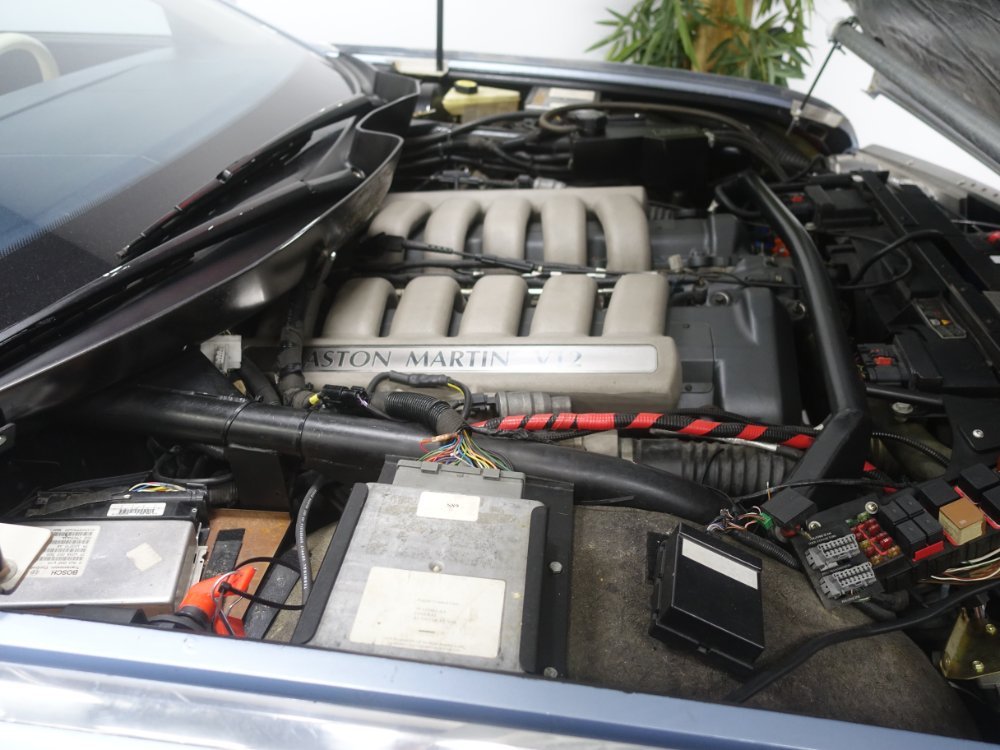
Engine 6.0L DOHC V-12 (Aston Martin-sourced, 414 hp, 414 Ib-ft torque)
Suspension Multi-link independent front/rear
Brakes 4-wheel anti-lock disc
Wheels/ Tires 22-inch polished aluminium; performance tyres
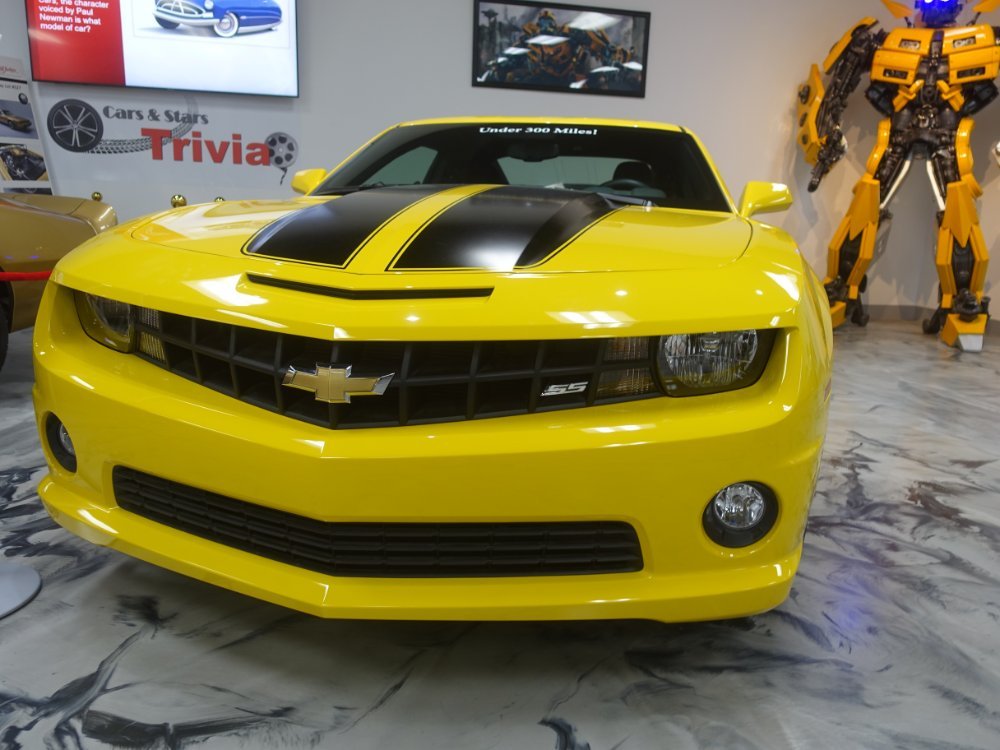
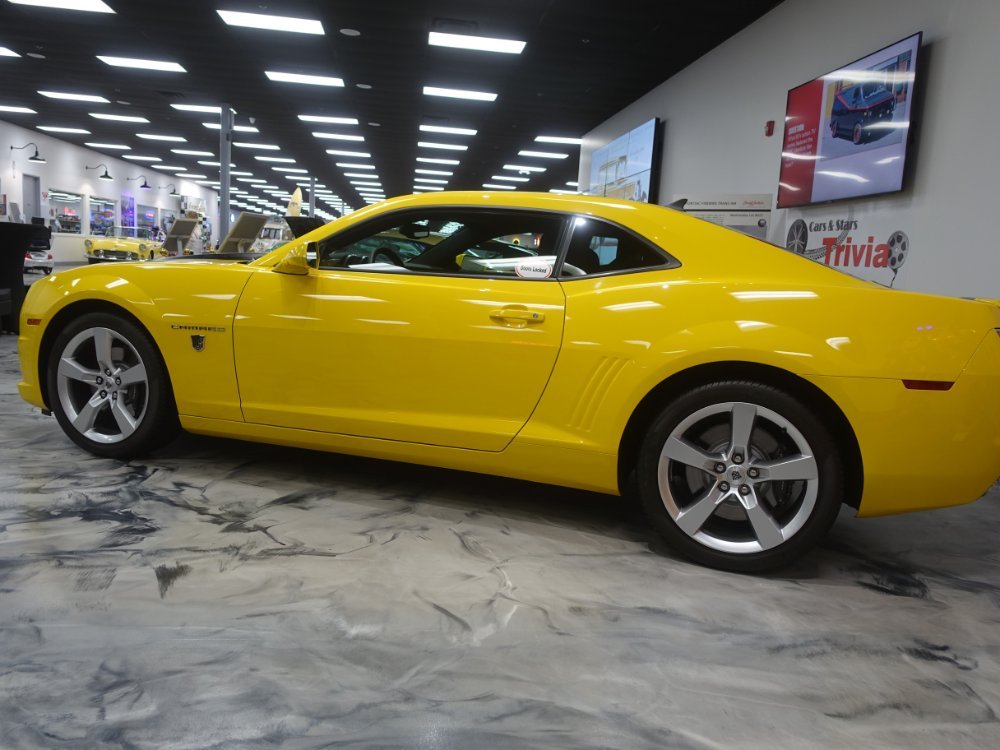
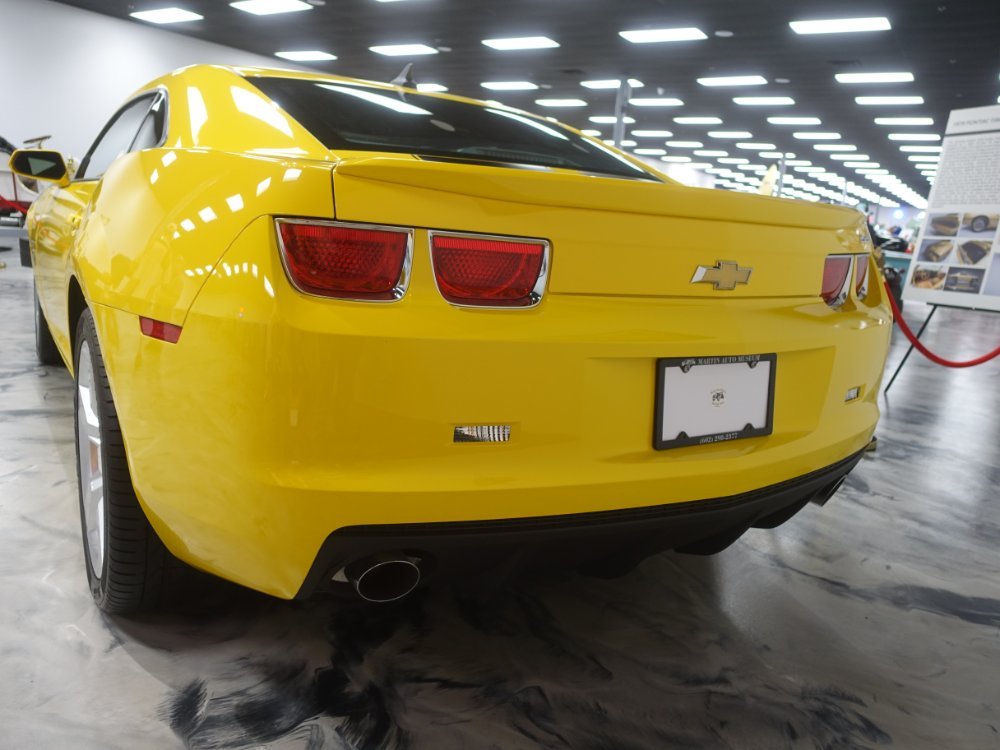
2010 Chevrolet Camaro Transformer Edition
On July 22, 2009, to coincide with the release of Transformers: Revenge of the Fallen, GM announced a Transformers Special Edition appearance package for the 2010 Camaro at the 2009 San Diego ComicCon. The US $995 appearance package (RPO code: CTH) could be applied to LT and SS trims with or without the optional RS package and could only be applied to orders made in the Rally Yellow exterior scheme. The package included an Autobot shield badge on the driver and passenger side fenders underneath the Camaro nameplate, an Autobot shield on each of the four wheels’ centre cap, an Autobot shield embroidered on the interior centre console, a Transformers logo on the driver and passenger doors' sill plates replacing the original "Camaro" labeled plates, and high gloss black centre rally stripes with the Transformers ghost logo embedded. This then made the 2010 Camaro resemble the Bumblebee Camaro from the 2007 movie, often referred to as T1 Bumblebee. Production of the add-on package ceased on January 12, 2010, with an estimated 1,500 units produced. 1,916 units were finally produced at the end of 2010.
Specs…
• 6.2-liter LS3 V-8 engine
• 426 horsepower
• 6-speed manual transmission
• Less than 300 miles when purchased
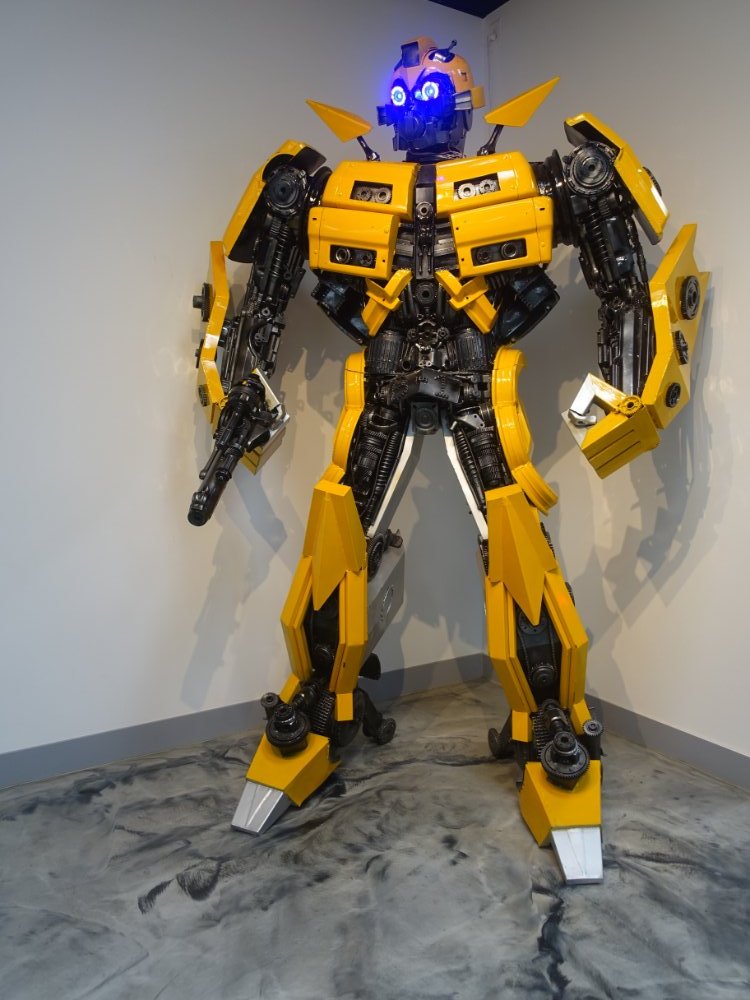
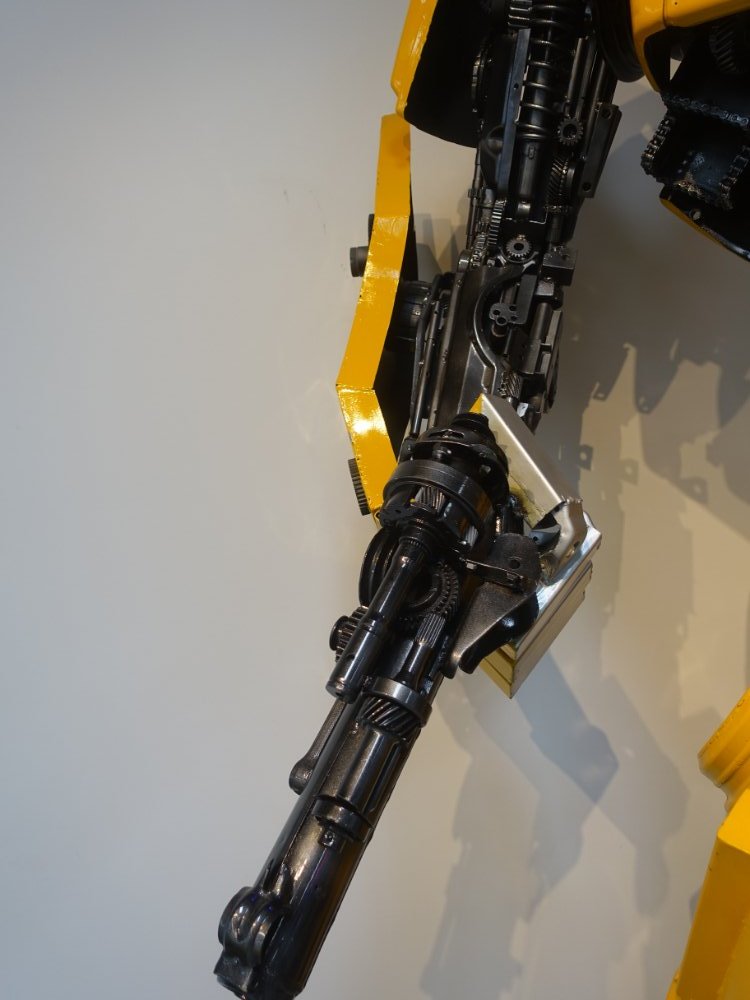
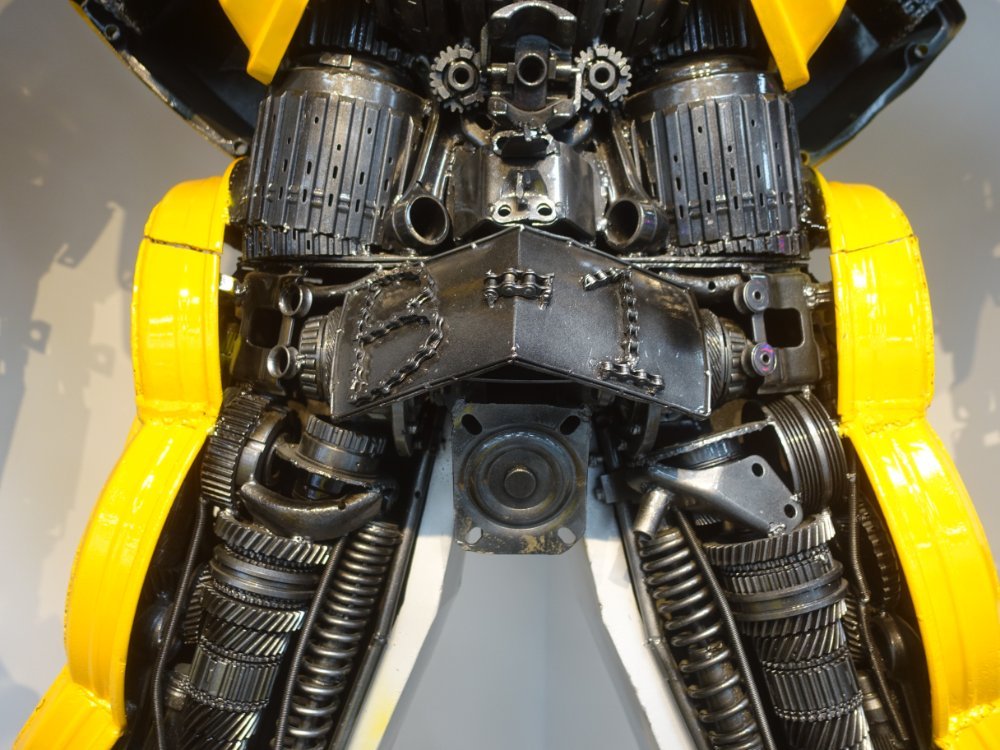
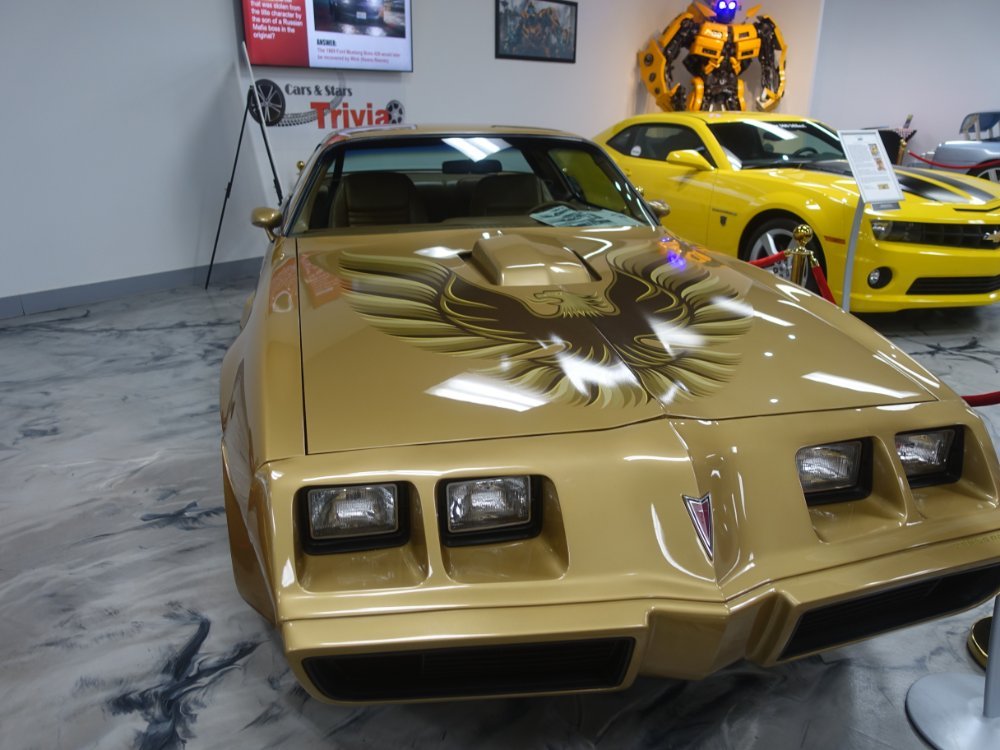
Upon acquiring the car, the Martin Auto Museum reached out to a sculpture artist in Los Angeles to build the "life-size" Bumblebee Transformer sculpture displayed behind the car. The Bumblebee Transformer sculpture took months to build and is constructed of hundreds of car parts and pieces of scrap metal.
1979 Pontiac Firebird Trans Am
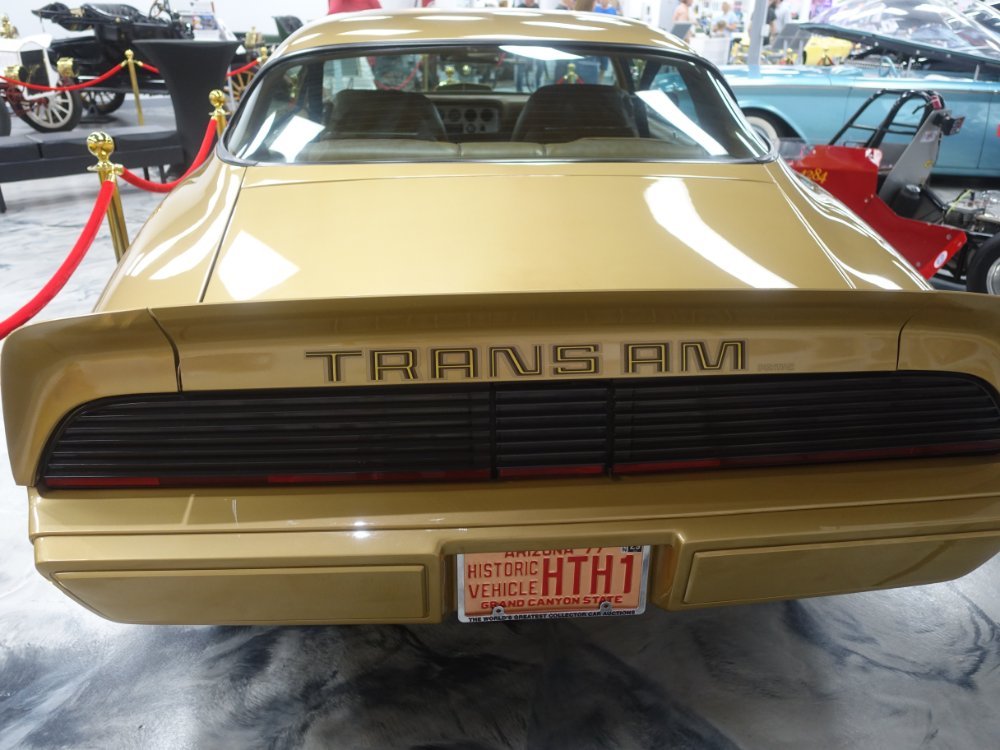
This matching numbers 1979 Pontiac Firebird Trans Am is powered by a 400ci 6.6-liter V8 engine mated to a BorgWarner Super T10 4-speed manual transmission with the WS6 Special Performance Package. It is also equipped with a posi-traction limited-slip rear end. The WS6 Special Performance Package provided a stiffened suspension and improved handling with new springs, anti-roll bars, rear disc brakes and bushings. Additional options include air conditioning, power steering, power disc brakes, electric rear window defroster, AM&M stereo radio and space-saver spare tire. The 1979 Trans Am WS6 would also be awarded Best Handling Car of the Year from Car and Driver. The 1979 model year also saw the introduction of new aerodynamic styling, along with new wide fender flares for the Trans Am. This example is finished in Solar Gold with gold Trans Am decals and gold trim 15-inch snowflake wheels wrapped in BFGoodrich radial T/A tires. The interior is finished in its original Camel Tan and includes front bucket seats, machined-turned dash and a formula steering wheel. 23,311 miles on the clock.
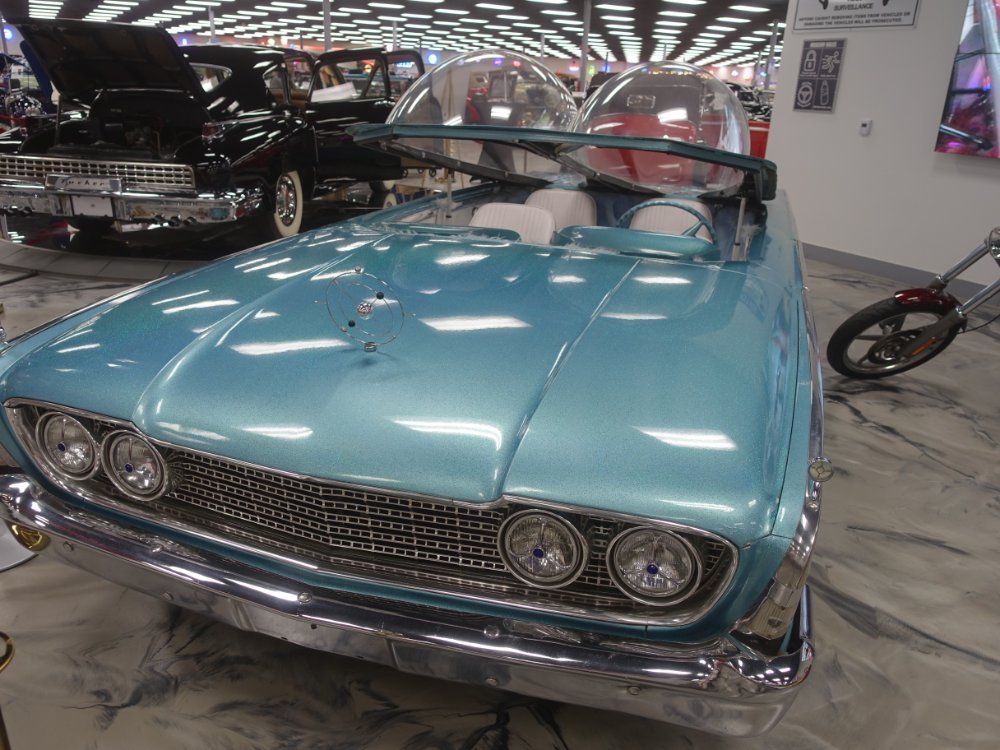
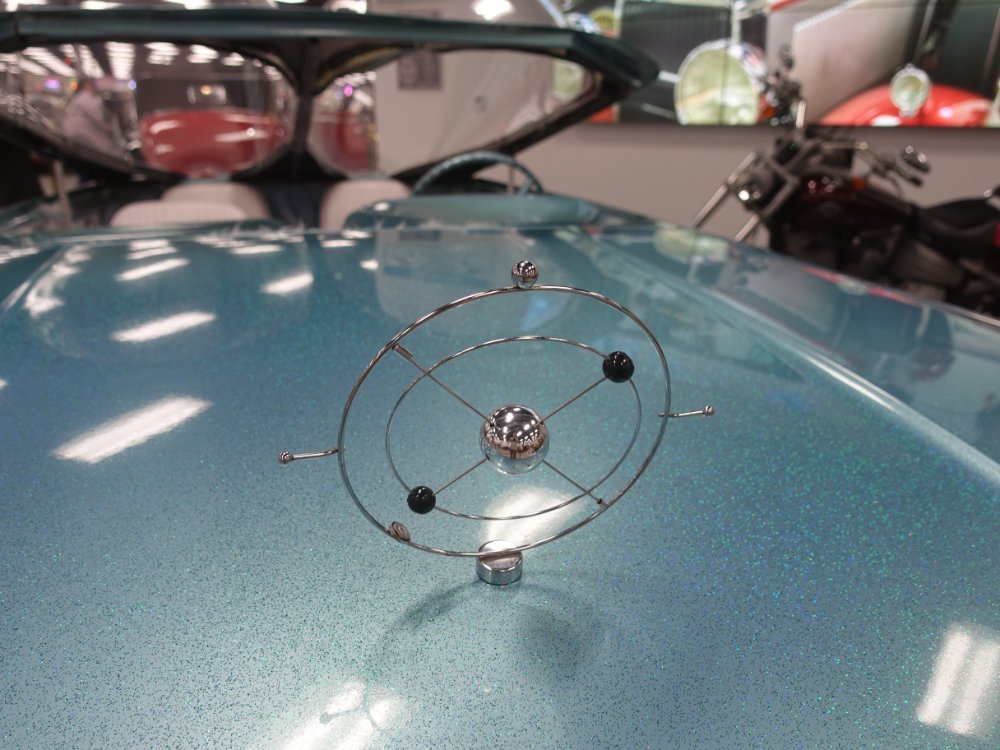
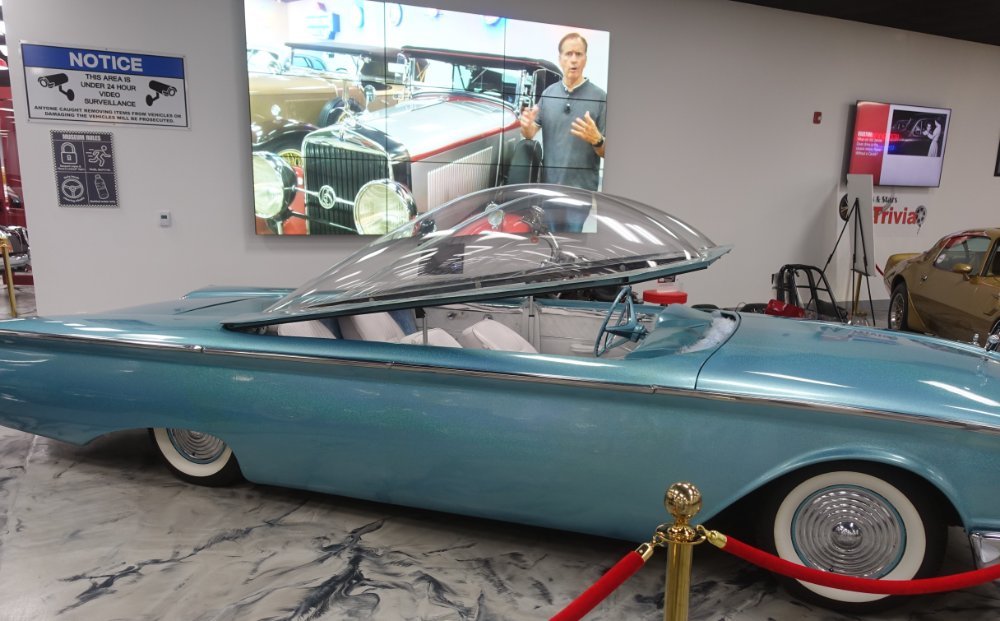
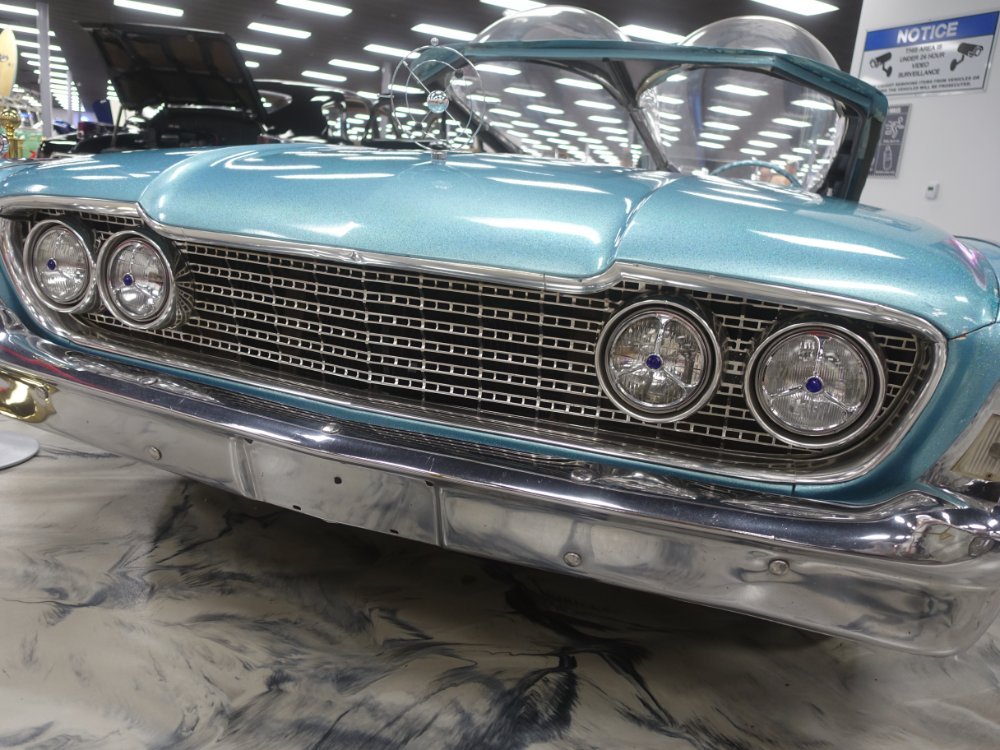
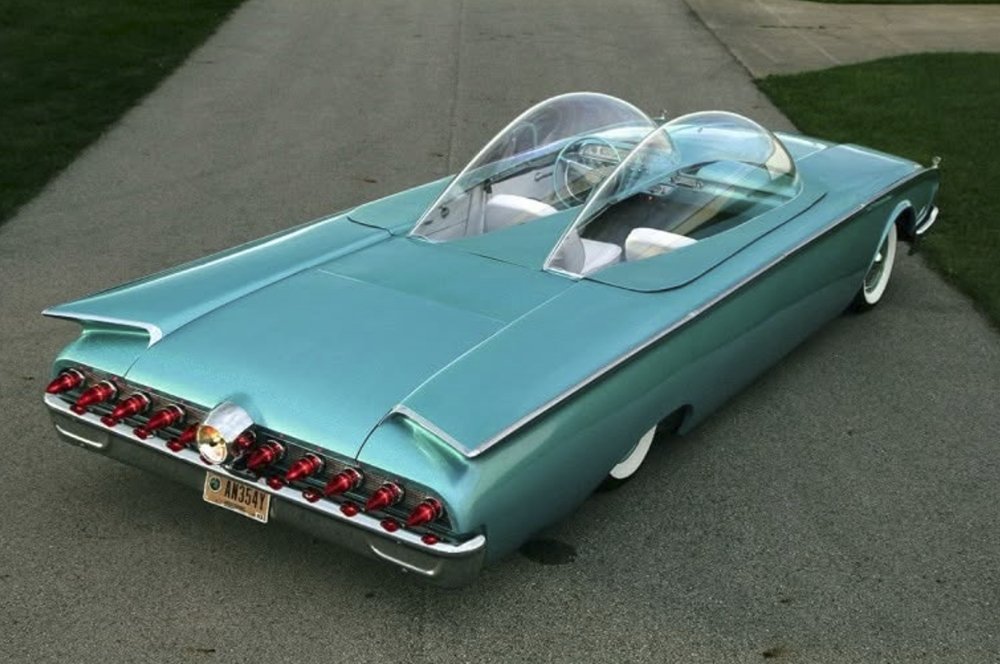
1960 Ford Fairlane “The Spaceliner” Custom Concept
The 1960 Ford Fairlane “Spaceliner” is a one-of-a-kind custom concept car that embodies the retro-futuristic optimism of the Atomic Age, blending jet age aesthetics with mid-century American automotive design. Built as a showpiece rather than an official Ford factory prototype, it captures the era’s fascination with space travel, rockets, and sci-fi visions of tomorrow— think a real-world version of the flying cars from The Jetsons. Despite its wild appearance, it’s a fully drivable vehicle that prioritizes visual spectacle over high performance.
History and Creation
The Spaceliner started life as a standard 1960 Ford Fairlane four-door sedan, a mid-range model from Ford’s third-generation lineup that year, which introduced sleeker styling alongside the new Galaxie flagship. In around 1963, legendary custom car builders Gene Winfield (known for his work on films like Blade Runner and The Beach Boys vehicles) and Darryl Starbird (a pioneer in show car culture) transformed it into this radical custom at their respective shops. It was never commissioned by the Ford Motor Company but was designed specifically for the booming 1960s custom car show circuit, where it wowed crowds with its spaceship-like flair. The car spent much of its post-show life in storage, resurfacing in 2017 after a meticulous restoration. It debuted at Art Basel Miami that year, earning the Judges’ Favorite award. Since then, it’s been a highlight of the Klairmont Kollections Museum in Chicago.
Design and Features
Winfield and Starbird radically reimagined the Fairlane’s body to evoke a spacecraft on wheels.
Exterior: The roof was chopped off and replaced with twin forward-hinging Perspex (acrylic) bubble canopies over the front seats, inspired by fighter jet cockpits—giving it a panoramic, enclosed vibe but sacrificing some headroom. The original doors were welded shut for a seamless look, with access via the bubbles and a functional rear door. The rear features exaggerated fins, a central “jet thruster” (actually a repurposed 1951 Ford bullet nose ornament acting as a reverse light), and ten taillights sourced from a 1959 Cadillac for a rocket-launch effect. Up front, it retains the Fairlane’s signature quad circular headlights and chrome bumper. The body is finished in Roth Metalflake “Trippin’ See Sic Blue,” a shimmering metallic paint that shifts hues in the light.
Wheels and Stance: It rolls on steel wheels with full hubcaps and wide whitewall tires, keeping the stock Fairlane ride height for practicality.
Interior: The cabin seats four in white-upholstered bucket seats with fluffy, luxurious accents reminiscent of mid-century modern lounges. The dashboard matches the exterior’s blue hue for cohesion, with simple gauges and controls—no over-the-top gadgets, emphasizing the era’s blend of fantasy and functionality. This design wasn’t just for show; it was engineered to tour exhibitions while remaining street-legal in its time, highlighting the ingenuity of 1960s custom culture. The Spaceliner’s modest powertrain underscores its role as a design experiment—it’s more about turning heads than burning rubber.
Cultural Impact
The Spaceliner has become an icon of retrofuturism, frequently featured in online communities like Reddit’s WeirdWheels and RetroFuturism, where it’s praised for its quirky charm and historical nod to a time when cars dreamed of the stars. Videos of it have racked up millions of views, inspiring modern custom builds and model kits. It’s a testament to how Winfield and Starbird pushed boundaries, influencing everything from hot rod culture to today’s concept cars. If you’re into automotive oddities, it’s a must-see—pure 1960s imagination on four wheels.
Specs...
• Base Model: 1960 Ford Fairlane 4-door sedan
• Engine: 223 cubic inch (3.6L) inline-6 "Mileage Maker", (original, -90 hp)
• Transmission: Ford-O-Matic 2-speed automatic
• Body Style: Custom 2+2 coupe (modified sedan)
• Weight: ~3,000 Ibs (estimated, similar to stock Fairlane)
• Top Speed: ~100 mph (stock performance)
• Odometer Reads: 41,830 miles
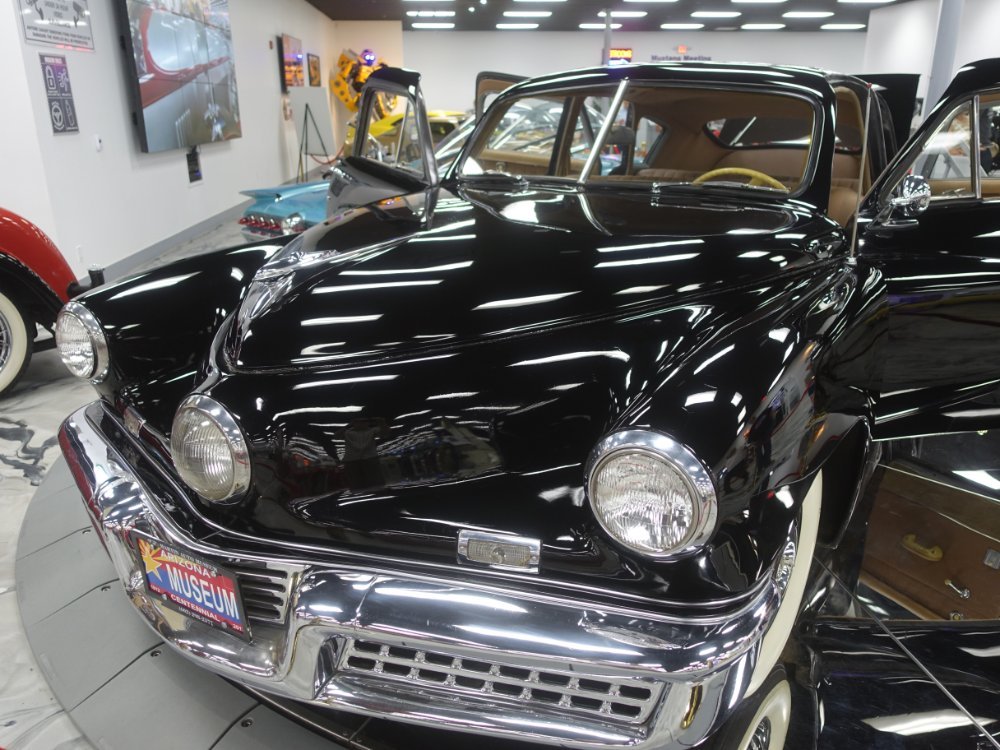
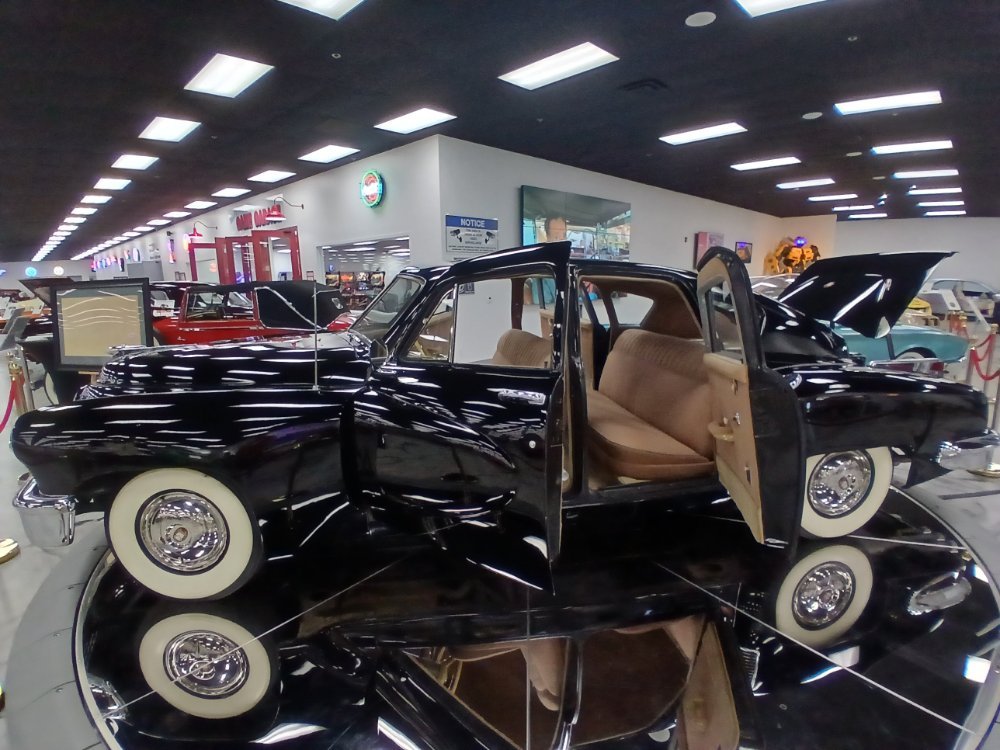
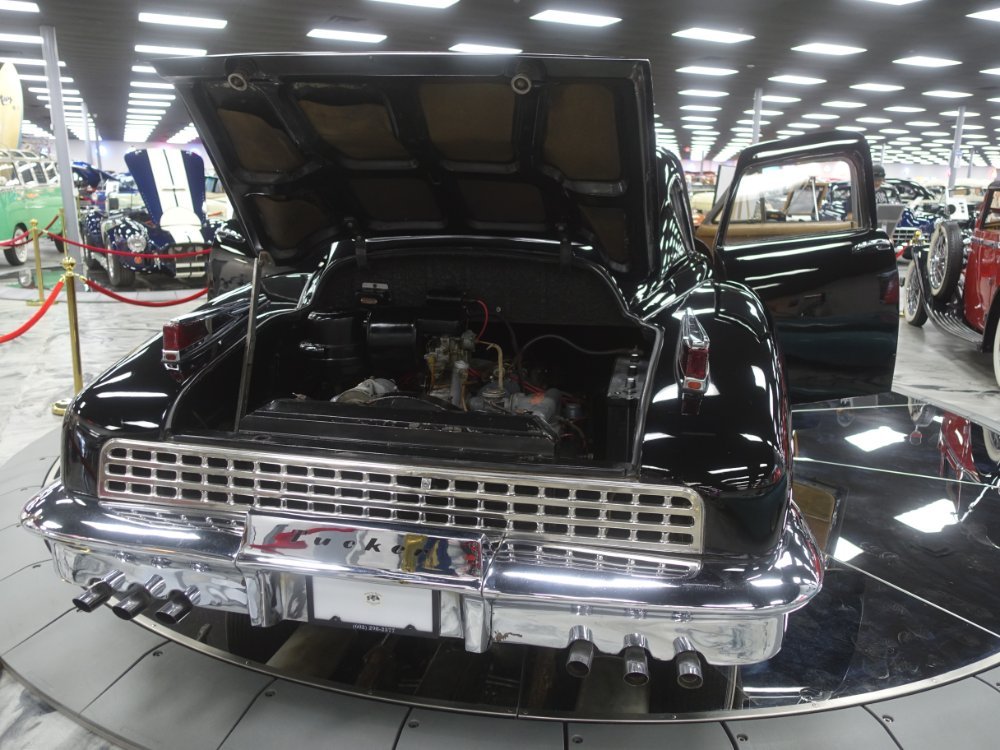
1948 Tucker 48 SN 1021 “The Car of Tomorrow”
This car (21 of only 51 ever built) was originally sold from the Tucker Corporation on February 16, 1949 to one of Tucker’s Californian dealers, Charles De Costa, who loved the Tucker automobile and kept this car until May 1967, when he sold it to another California-based Tucker enthusiast, Gene Clarke, an active member of the Tucker Automobile Club of America. He maintained the car and kept it roadworthy until 2021 when failing health intervened. In 2023, following Mr. Clarke’s passing, No. 1021 was purchased by Mark Lieberman, senior director of the Tucker Automobile Club and noted Tucker historian.
An extremely original example, No. 1021 is presented largely in “as found” condition and wears its original colour scheme of black paint and beige interior. The car had been repainted only once in preparation for its role in the movie, “Tucker: The Man and His Dream,” starring Jeff Bridges in the title role. It retains original body paint in its door jambs, luggage compartment, and engine bay. The original carpeting remains inside the luggage compartment as well. The interior was reupholstered just prior to the movie’s production, although the robe rail, grab straps and sun visors remain original and quite exceptional.
The Tucker’s engine bay remains largely original with minor deviations added for convenience by Mr. Clarke, including a fuel sight bowl and filter in front of the carburettor, machined valve cover fasteners and a ventilation breather tube. Original vented wheel covers with enameled medallions are at all four wheels. The original radio antenna with red plastic ball remains on the driver’s side fender and is paired to the original early-style Tucker radio by Motorola. Other highlights include an optional under-seat-heater and ashtrays in the doors. The suspension was converted in the late 1960s to coil springs, as there were no replacements available for the Tucker’s OEM Torsilastic rubber system. However, today such parts are now available to convert the car back to the original Torsilastic suspension if desired. A new water pump is in place, the ignition distributor was rebuilt, and recent maintenance work includes a fluid service and installation of a new battery.
With just three owners from new, this irreplaceable, investment-grade 1948 Tucker 48 retains all original body panels and floors. Outstanding documentation includes a copy of the original bill of sale from Tucker Corp., an original letter from the first owner offering to sell the car to the second owner, a copy of factory production details, and various other Tucker related documents.
Specs:
• Assembled in Chicago, Illinois
• Air Cooled 335ci, 166 HP, 372 lbs./ft
• Y1 4 speed pre-selector transmission
• 6-volt system
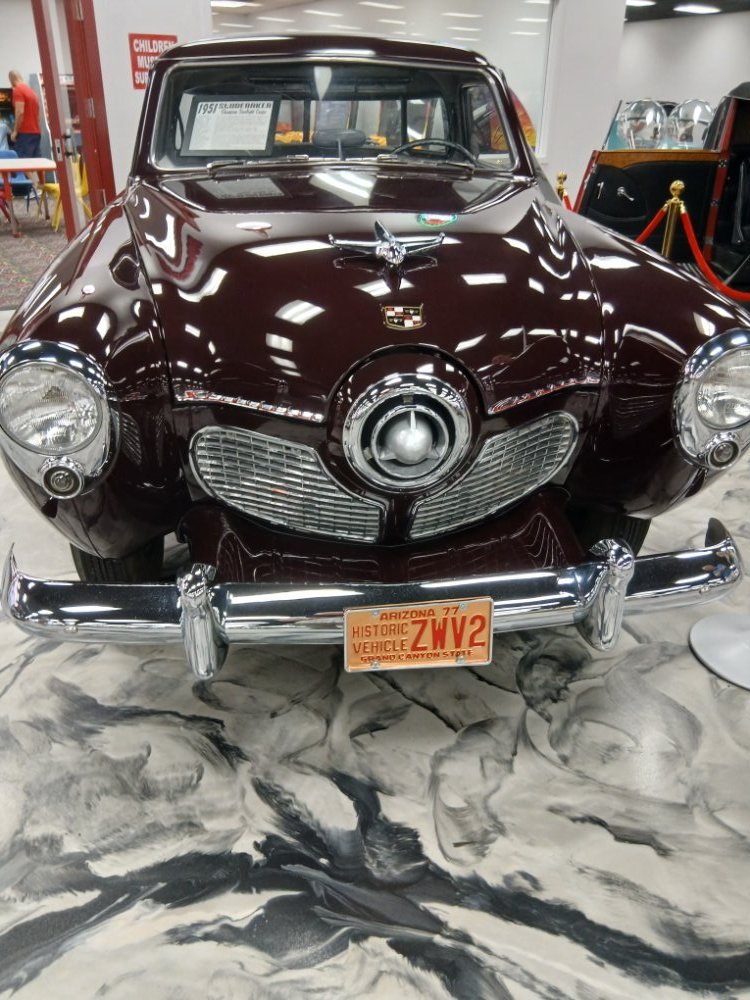
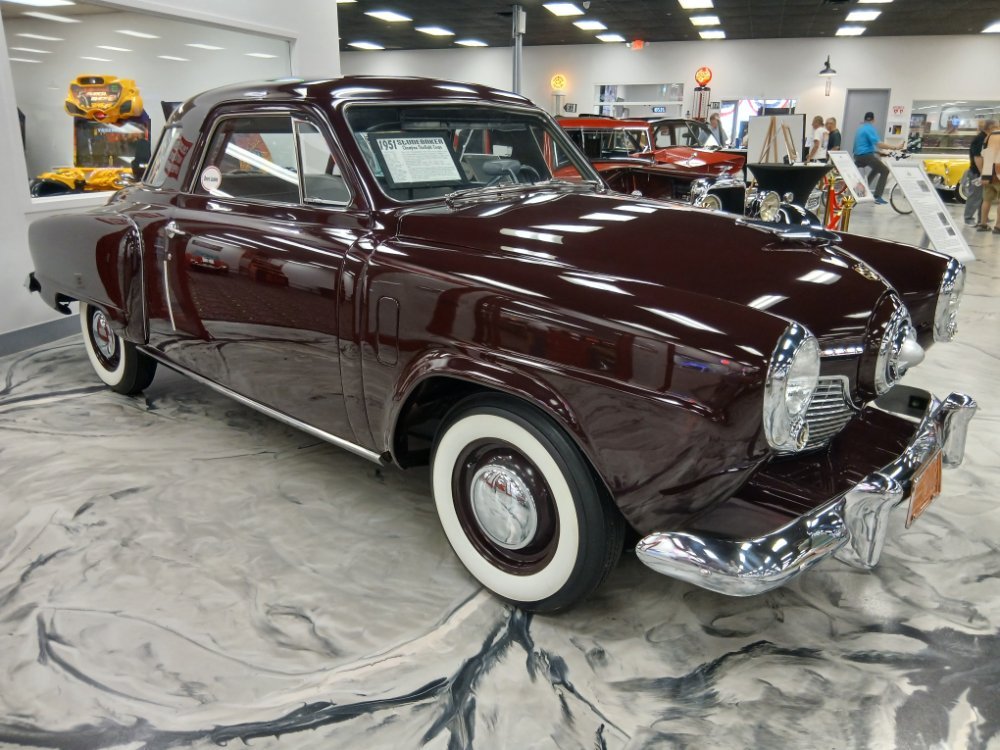
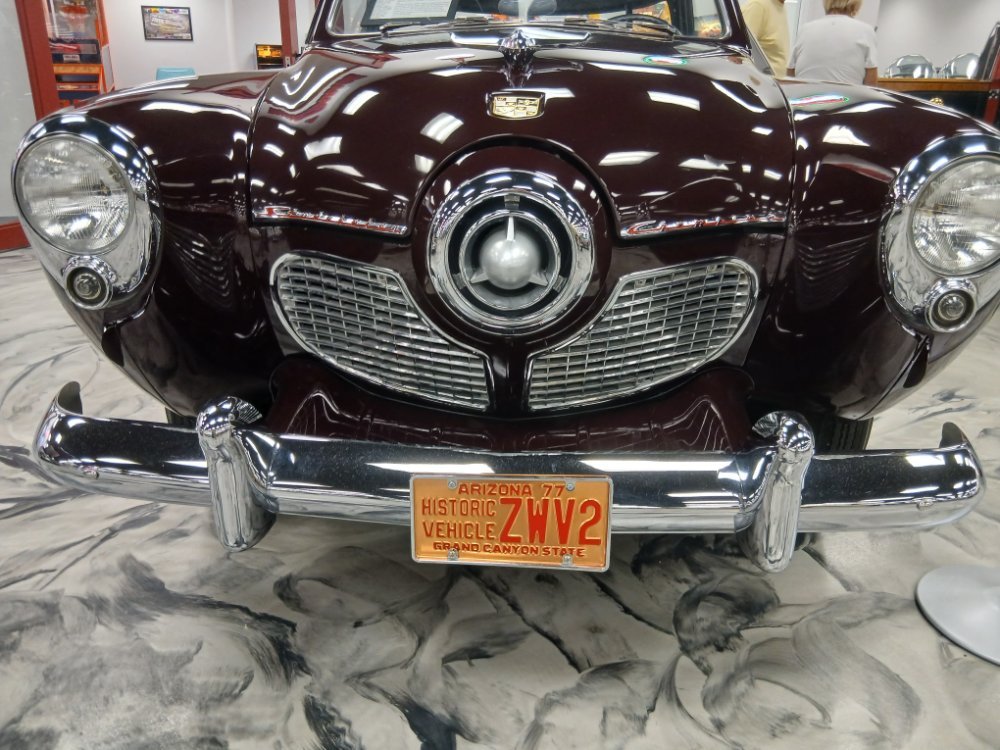
1951 Studebaker Champion Starlight Sedan
This '51 Studebaker was one of six classic cars from the Estate of Senator Howard H. Baker Jr.
The Senator loved his car collection. Sparing no expense on their restoration and preservation. He had a special climate controlled garage built to house this car as well as his 1937 Cord B12 Beverly, 1941 Lincoln Continental, 1951 Hudson Hornet Conv., 1962 Ford Galaxie 500 XL Conv., 1963 Lincoln Continental 4-door Conv. His records also showed that all his cars were checked, cleaned, maintained and started weekly, and the miles driven once a month weather permitting. The Senator's restoration documents also showed that he had invested over $40,000.00 in restoring this car.
The Studebaker Champion was produced by the Studebaker Corporation of South Bend, Indiana, from the beginning of the 1939 model year until 1958. It was a full-size car in its first three generations, and a mid-size car in its fourth and fifth generation models, serving as the junior model to the Commander. The 1951 Studebaker Champion Starlight Sedan is the 3rd generation Champion which ran from 1947 through 1952, distinguished by its unique design and historical significance in the automotive industry.
Design and Styling
Body Style: The Starlight Sedan is a two-door coupe characterized by its distinctive wraparound rear window, which provided a panoramic view. This design element was quite innovative for its time and contributed to the car’s futuristic appearance.
Front End: The front end of the 1951 model featured a more pronounced “bullet nose” design, which was a carryover from the 1950 models. This was a hallmark of Studebaker’s post-war styling.
Dimensions: The car had a relatively low and sleek profile, which contributed to its sporty look compared to other sedans of the era.
Specs... Price (New): $ 1644.00
Number Built: 9,444
Engine: Cast-Iron Inline L-Head Six Cylinder 169.6 Cubic Inches Horsepower: (rpm) 85 @ 4000
Transmission: 3-Speed Manual Synchromesh on 2nd & 3rd Gears, Column mounted Shifter with Lock-out 6 Speed High / Low Overdrive
Shock Absorbers: Front & Rear Tubular (First Year)
Brake Type: Hydraulic Auto-adjusting 4-Wheel Cast-iron Drums
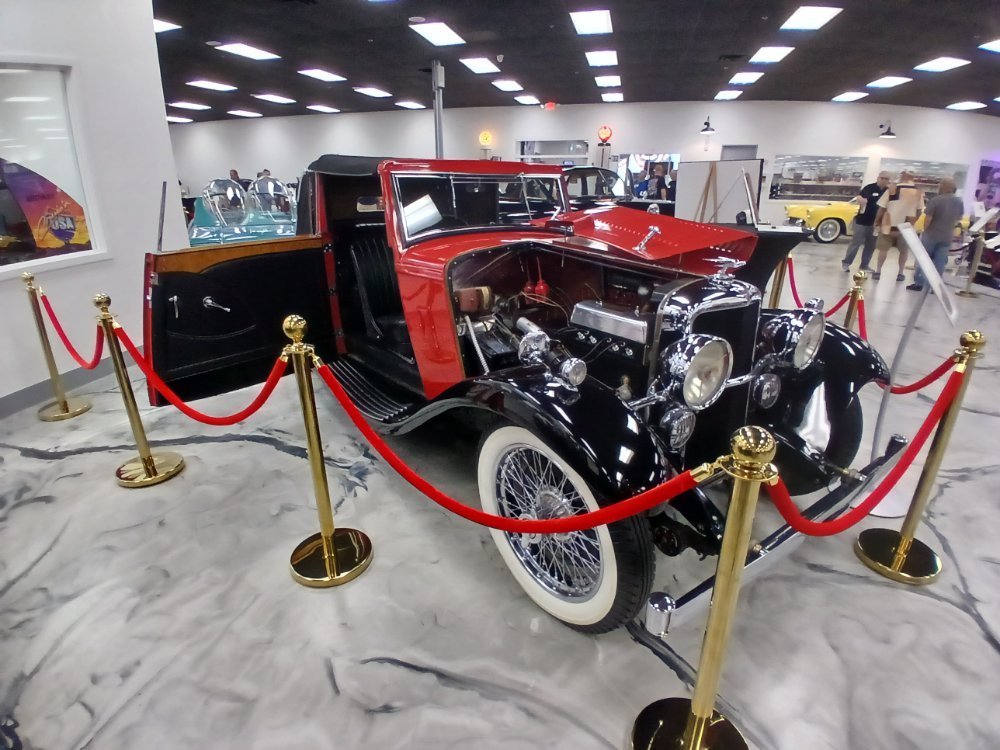
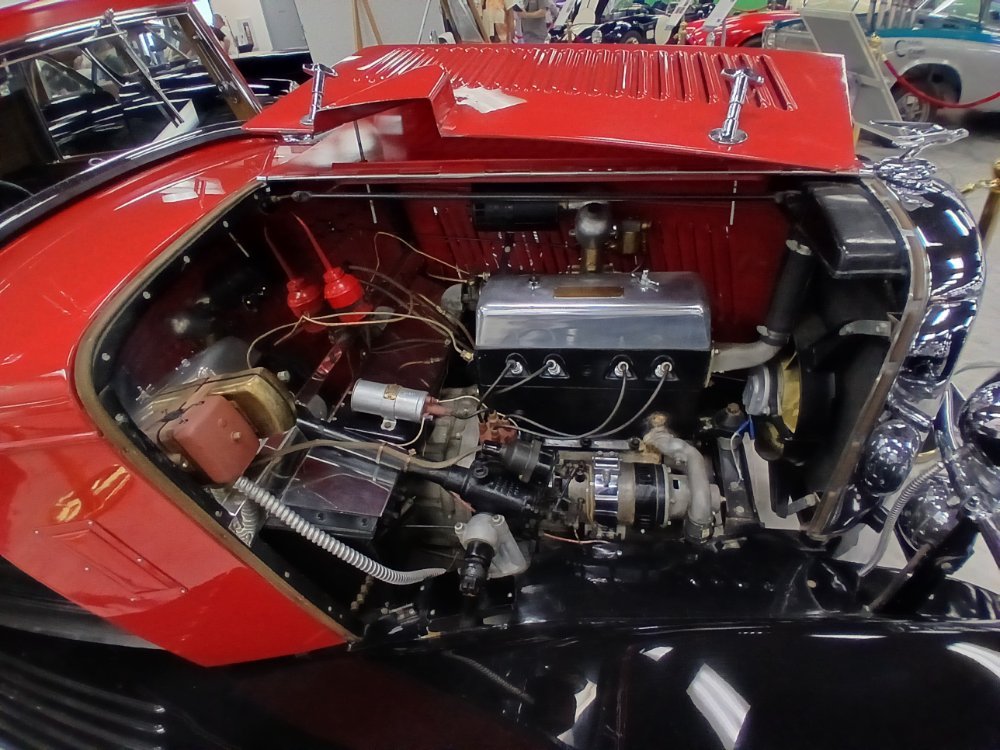
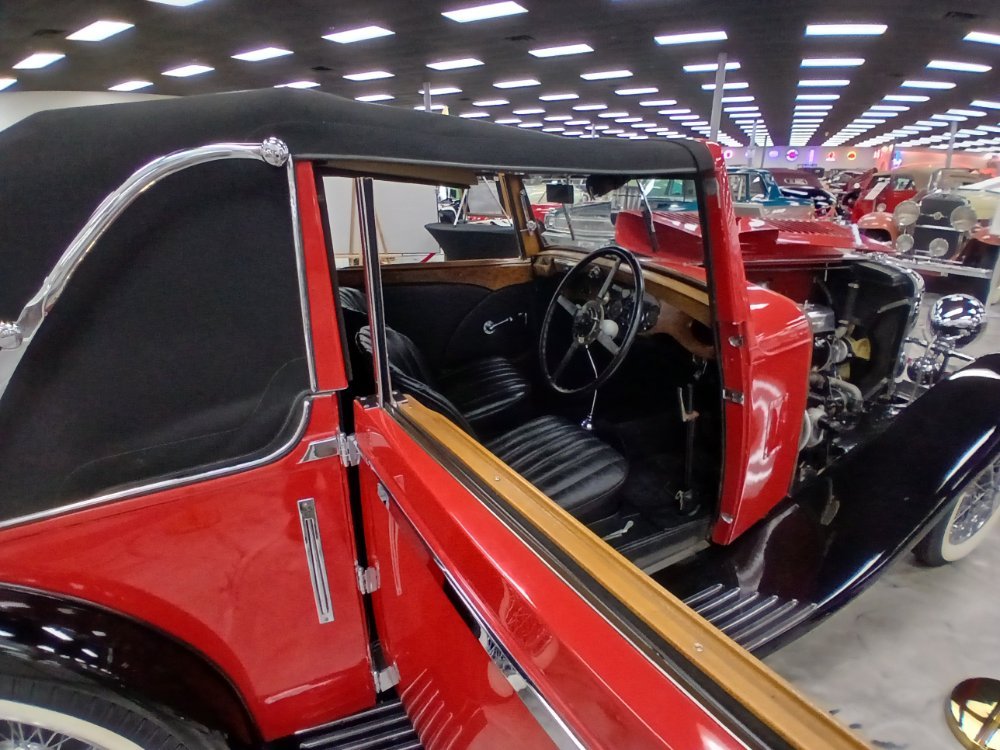
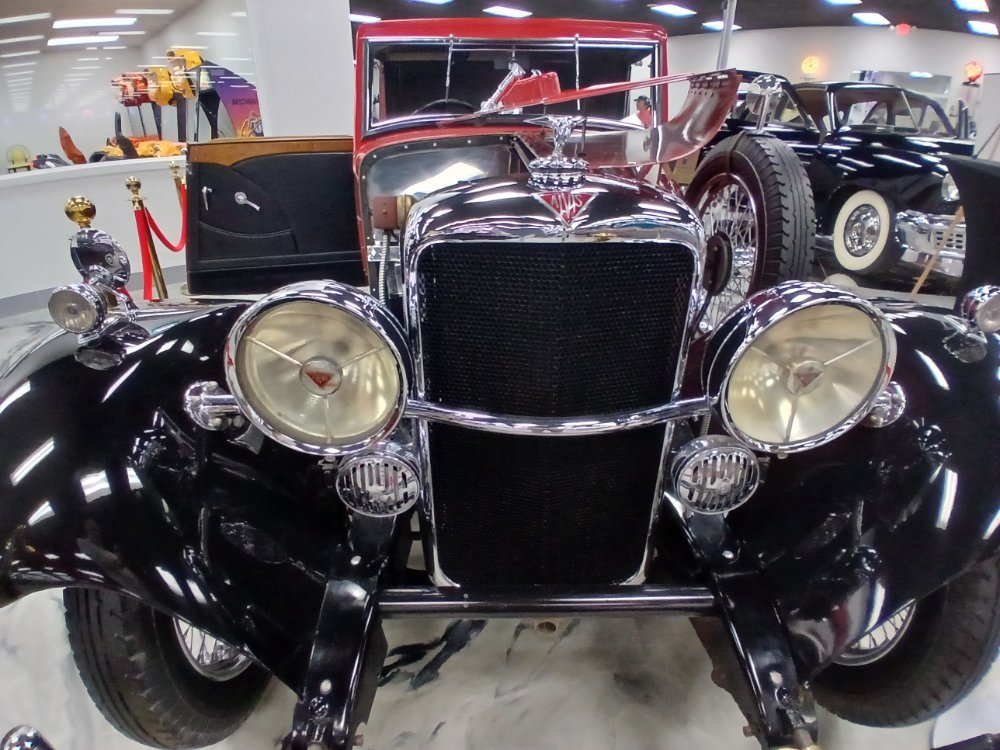
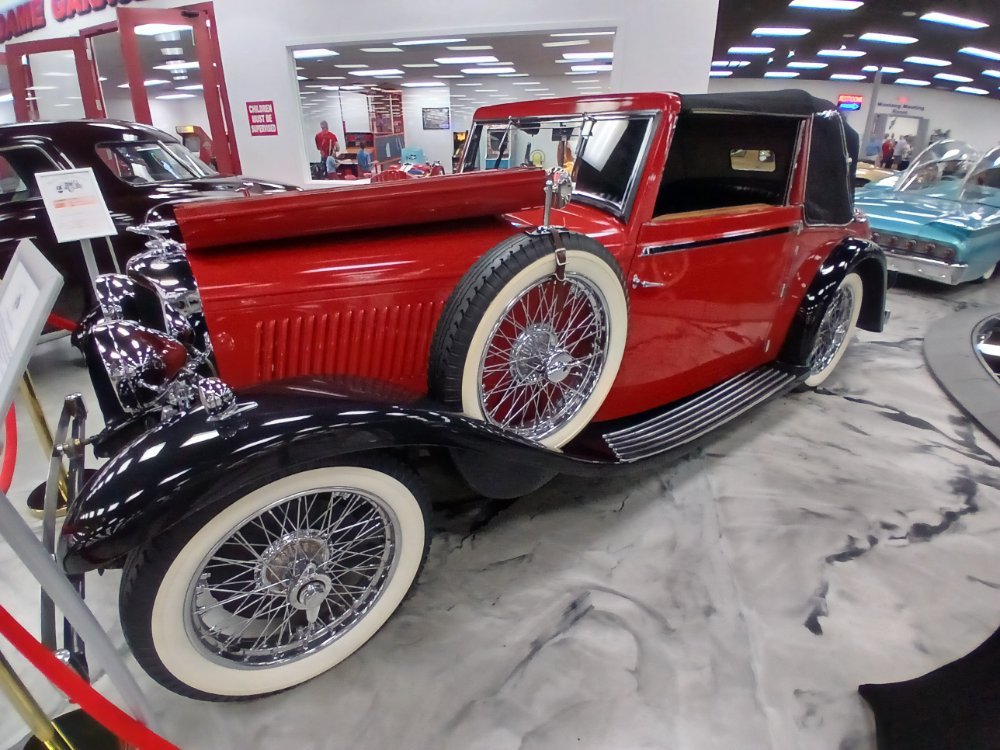
1936 Alvis Firebird Drophead Coupe
The Alvis Firebird was a British touring car made between 1935 and 1936, and only 449 were made. The car has an aluminium body on an ash wood frame. As with other Alvis cars, the Firebird was built as a rolling chassis then sent to the coachbuilders Cross & Ellis, to be finished to the customer's requirements — so all Alvis Firebirds are different.
In 1939, World War II halted Alvis car production to make aircraft engines. A German Luftwaffe bomb destroyed the Alvis car factory in 1940.
This is a frame-off, fully restored, and incredibly rare car. An aftermarket electric radiator fan was installed for the desert heat of Arizona. It is the only known right hand drive Firebird Drophead Coupe in the U.S.
The Specs…
• Production 1935 to 1936
• Assembly Coventry, England
• Sporting chassis, bodied to suit owner's requirements
• 1842 cc straight 4-cylinder engine
• 118.5-inch wheelbase
1965 Shelby AC Cobra MK III
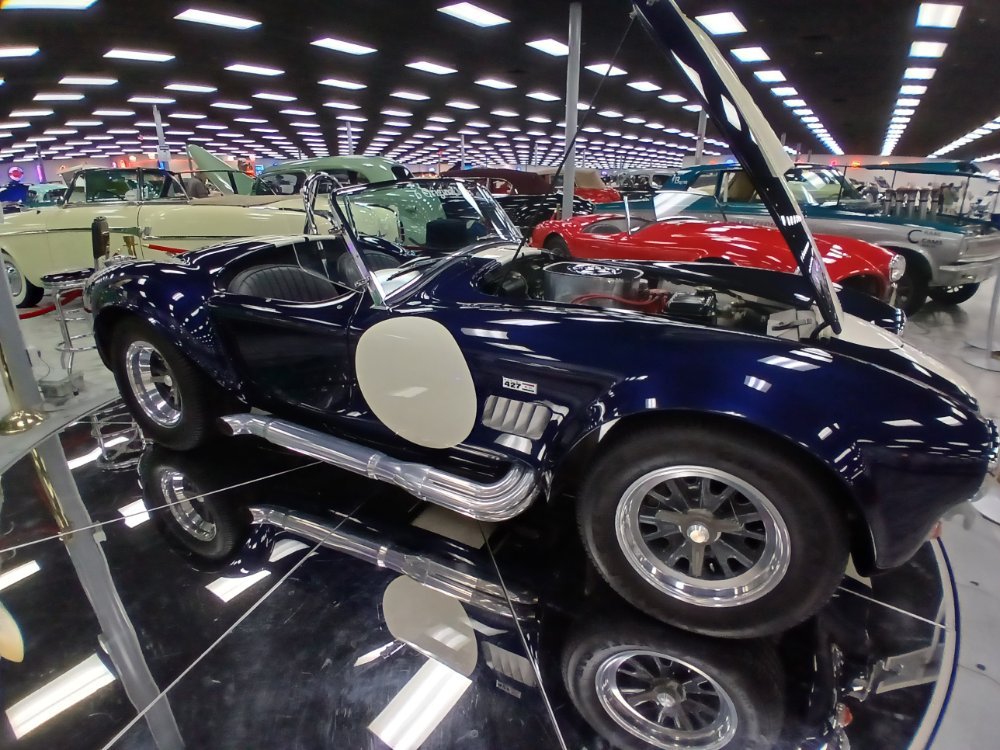
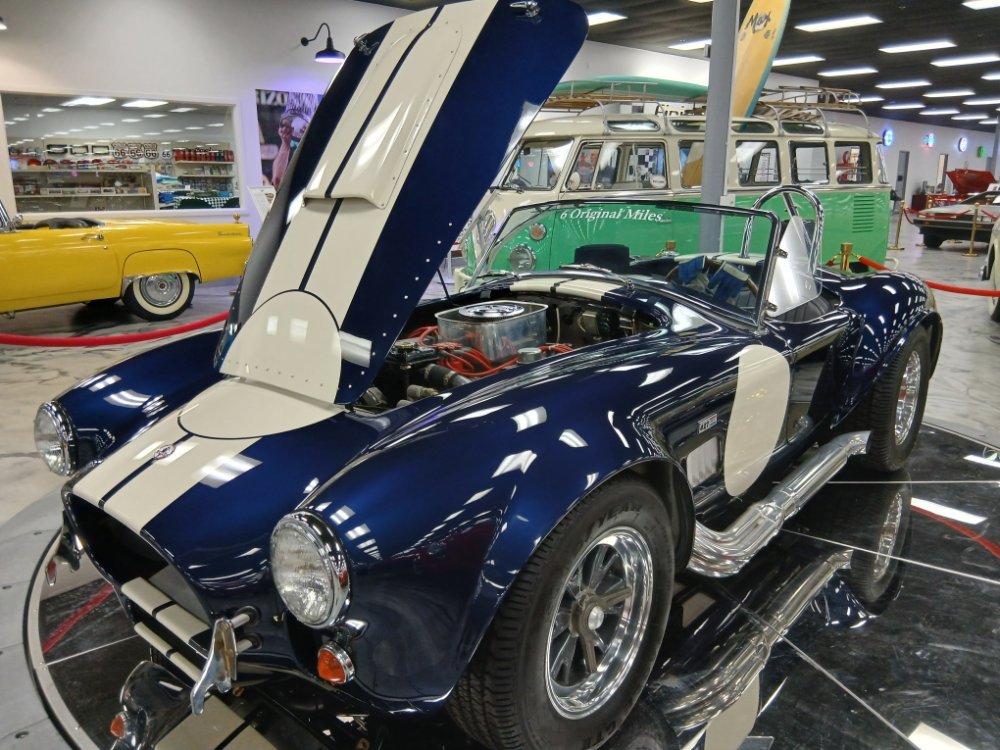
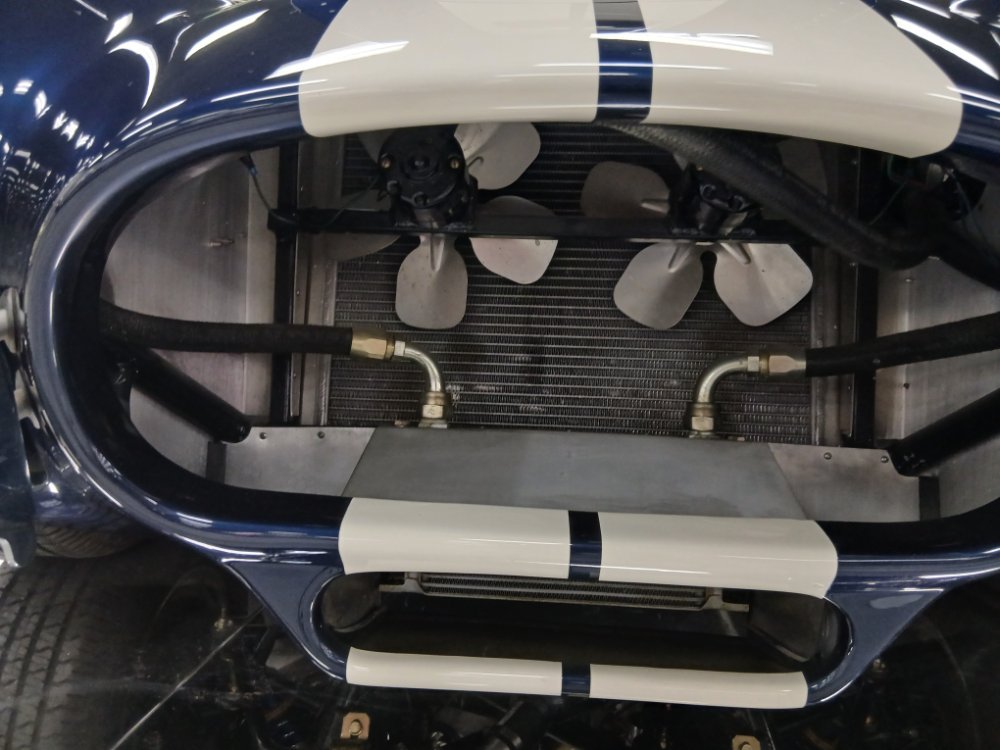
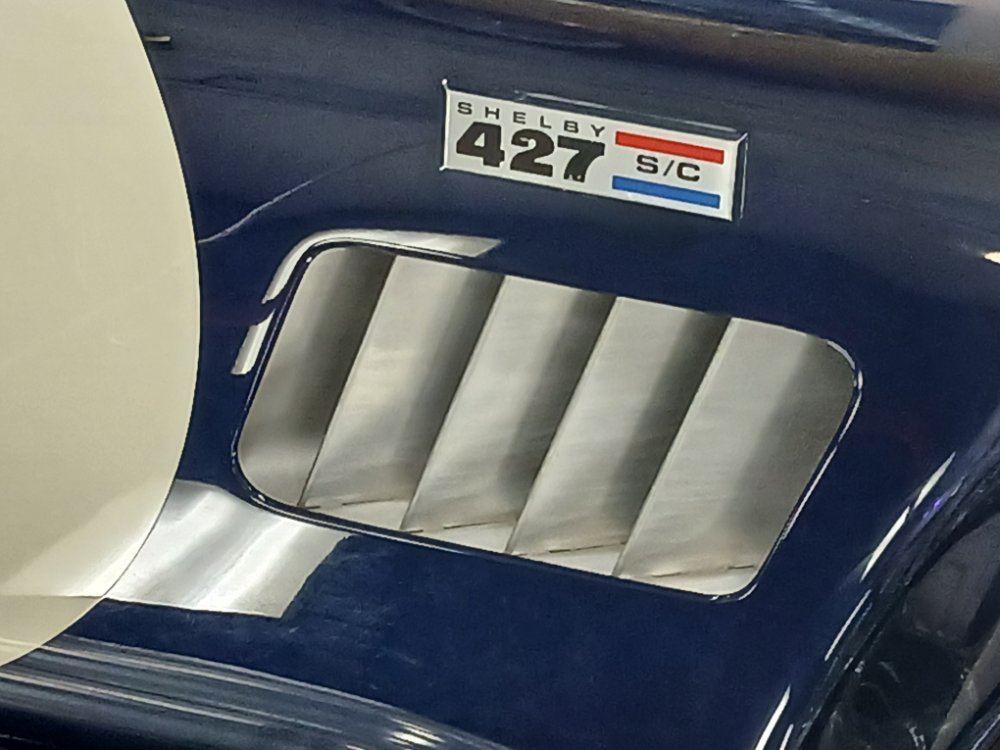
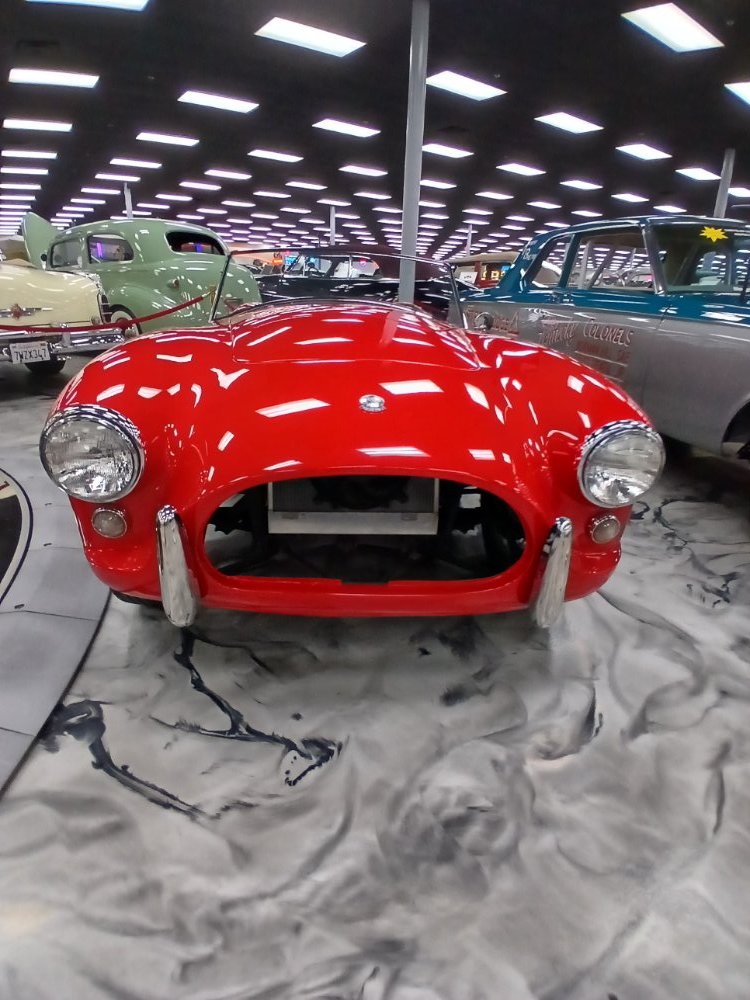
This car is very special to museum founder Mel Martin. It has only six original miles and the dash was signed by the legendary car designer Carroll Shelby (January 11, 1923 - May 10, 2012). The AC Cobra was designed by Shelby to race. He wanted it to be a "Corvette-beater" and it did just that. In 1963, at Riverside International Raceway, Shelby's car outran an impressive field of Corvettes, Jaguars, Porsches, and Maserati's to give the Cobra its first win.
Shelby was an American automotive designer, race driver, and entrepreneur. In addition to the AC Cobra, he is also known for his involvement with the Ford Mustang, which he modified during the late 1960s and early 2000s. He established Shelby American Inc. in 1962 to manufacture and market performance vehicles, as well as Carroll Shelby Licensing in 1988, which grew into Carroll Shelby International.
The Specs...
• Production: 1965 to 1967
• 56 of the 100 planned were produced. Of those, 31 were unsold competition models and were detuned and fitted with windscreens for street use.
• Assembly: Los Angeles, CA Shelby America, Inc.
• Engine: Ford 427 engine
• Power: 500 horsepower
• Transmission: 4-speed manual
• Brakes: 4-wheel disc
• Top speed: 164 miles per hour
1959 Bristol AC Ace Roadster
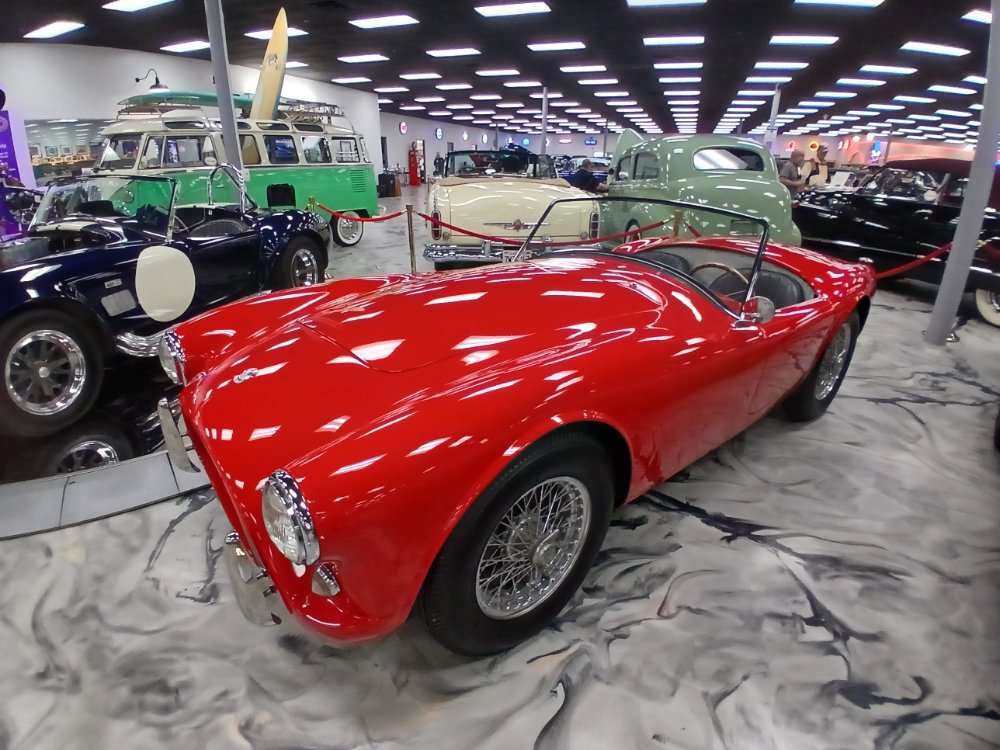
This vehicle was the 46th Bristol Roadster built in model year 1959. London-based AC Cars, Ltd, produced these vehicles from 1956 through 1963. There was a total of 463 produced during this eight-year period with an original list price of $5,649. When Bristol ceased building their 6-cylinder engine in 1961, AC's owner Charles Hurlock was approached by Carroll Shelby to use a Ford V-8 in the Ace chassis, producing the AC Cobra in 1962. Production of the Ace ended the same year.
The Specs...
• Production 1953 to 1962
• Produced: 463
• Orig. Price: $5,649
• 1,971 cc engine
• 125 horsepower
• 4-speed transmission
• 4-wheel independent suspension
• Front disc-brakes
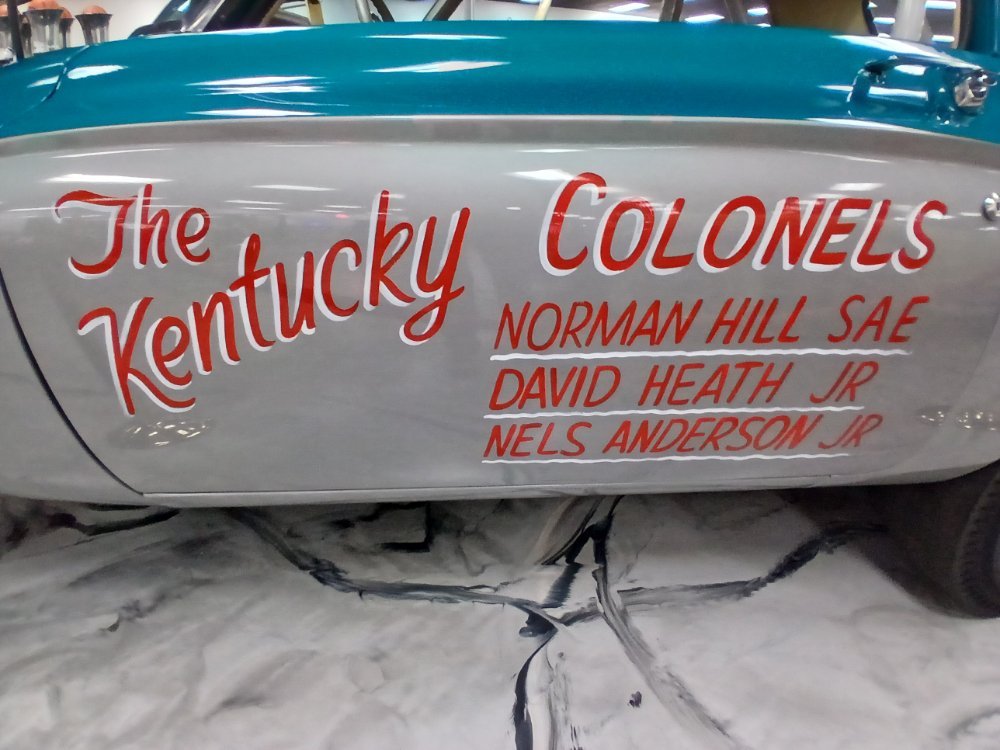
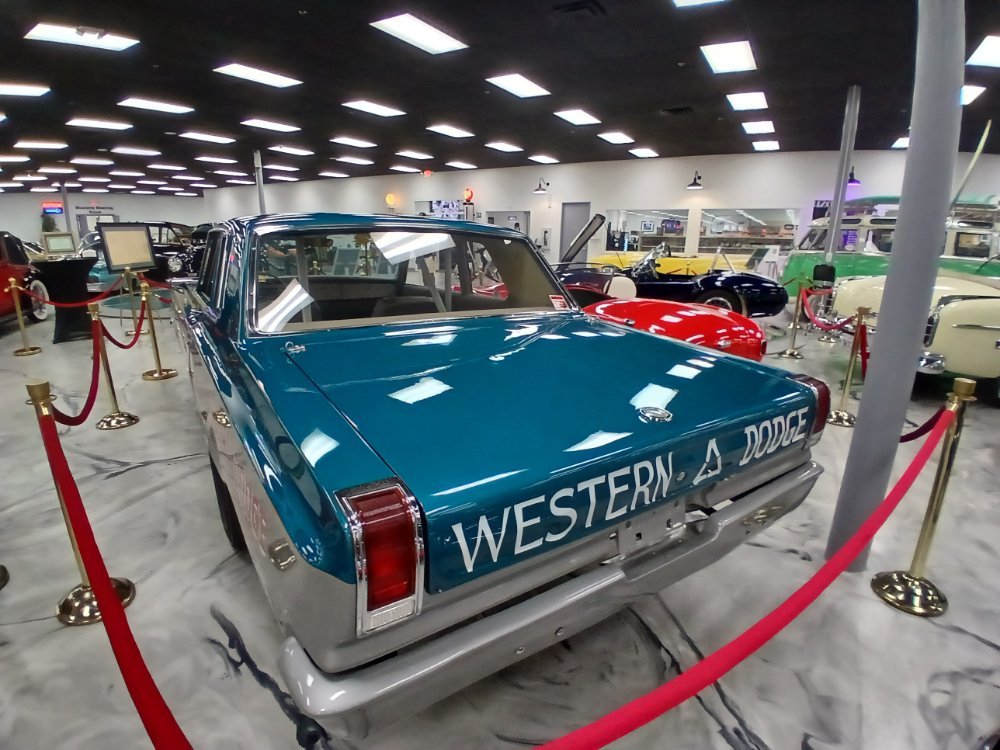
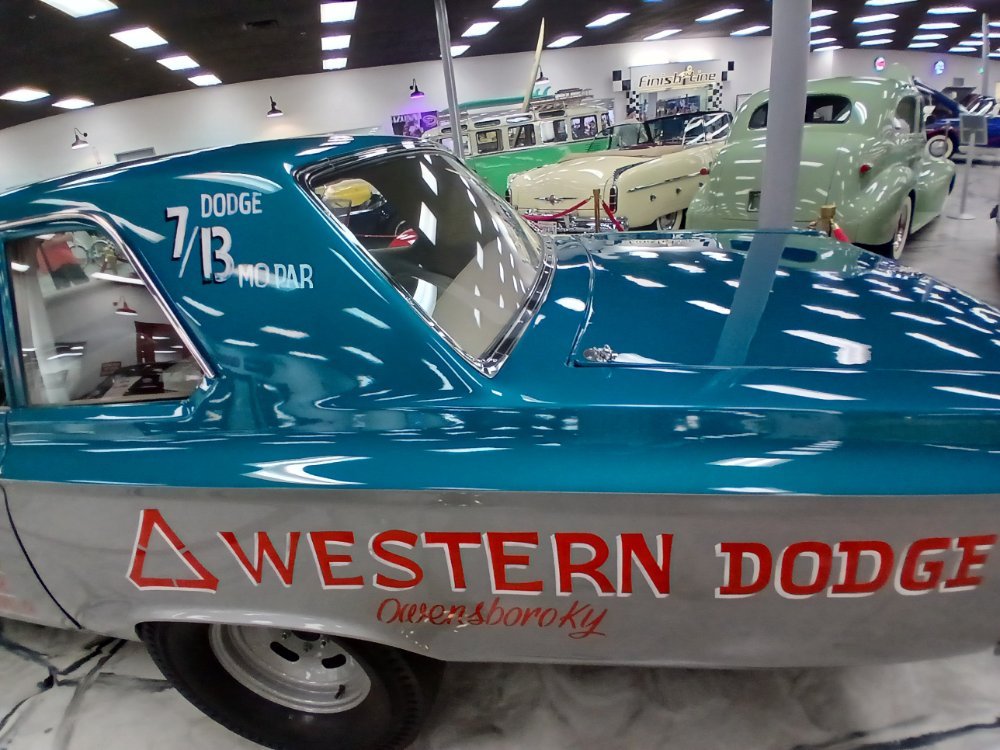
1965 Dodge Coronet A/FX Kentucky Colonels
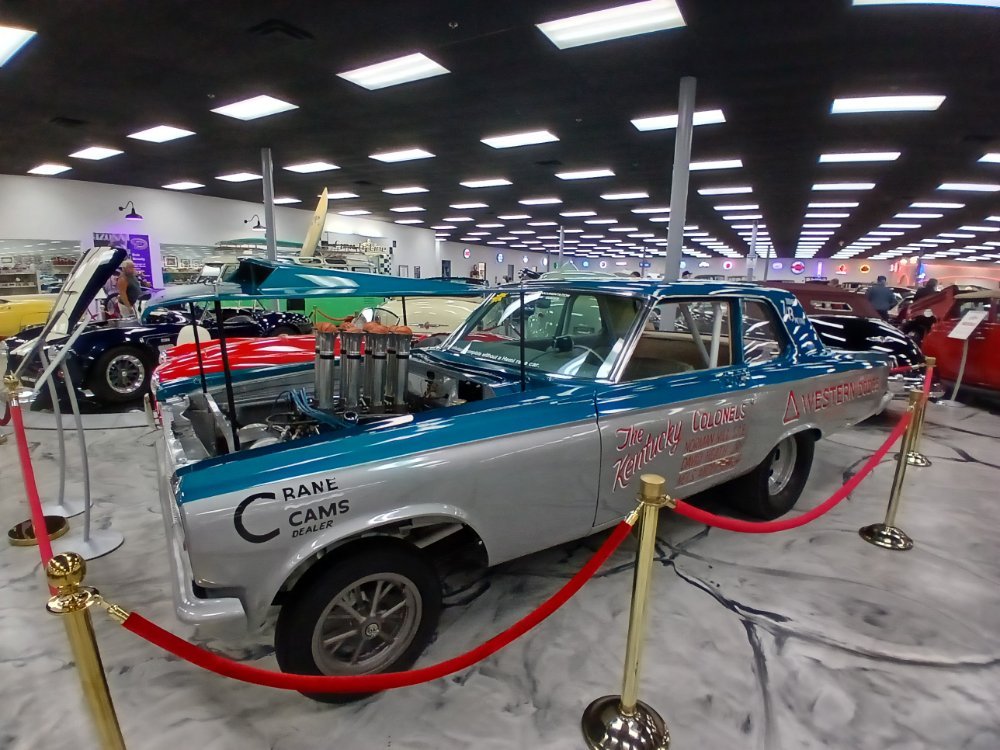
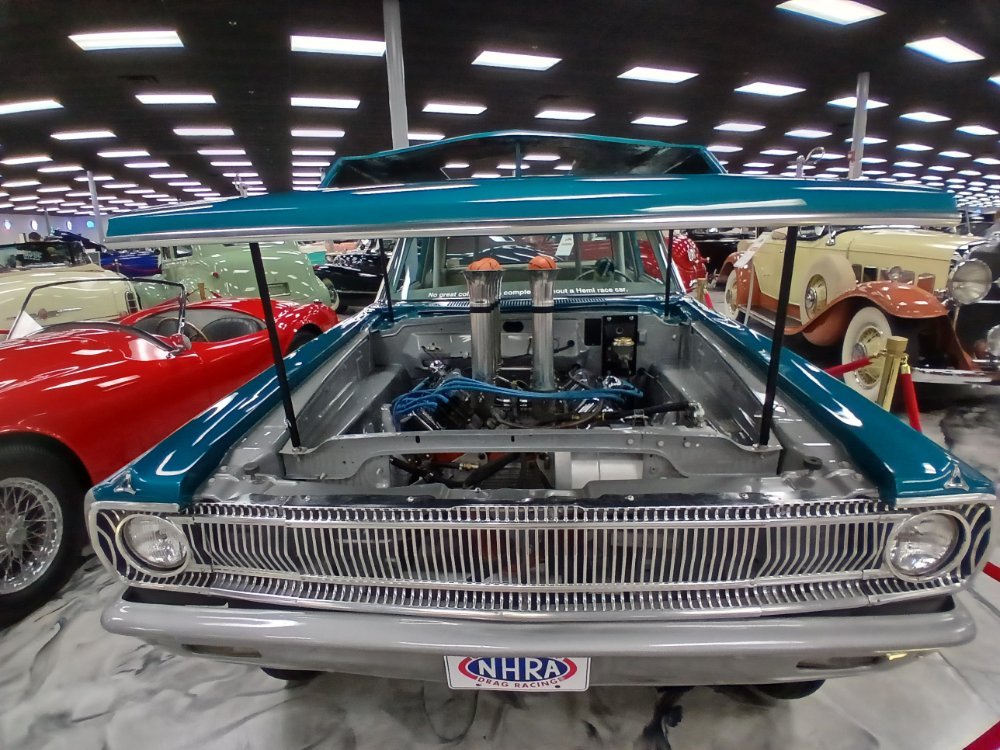
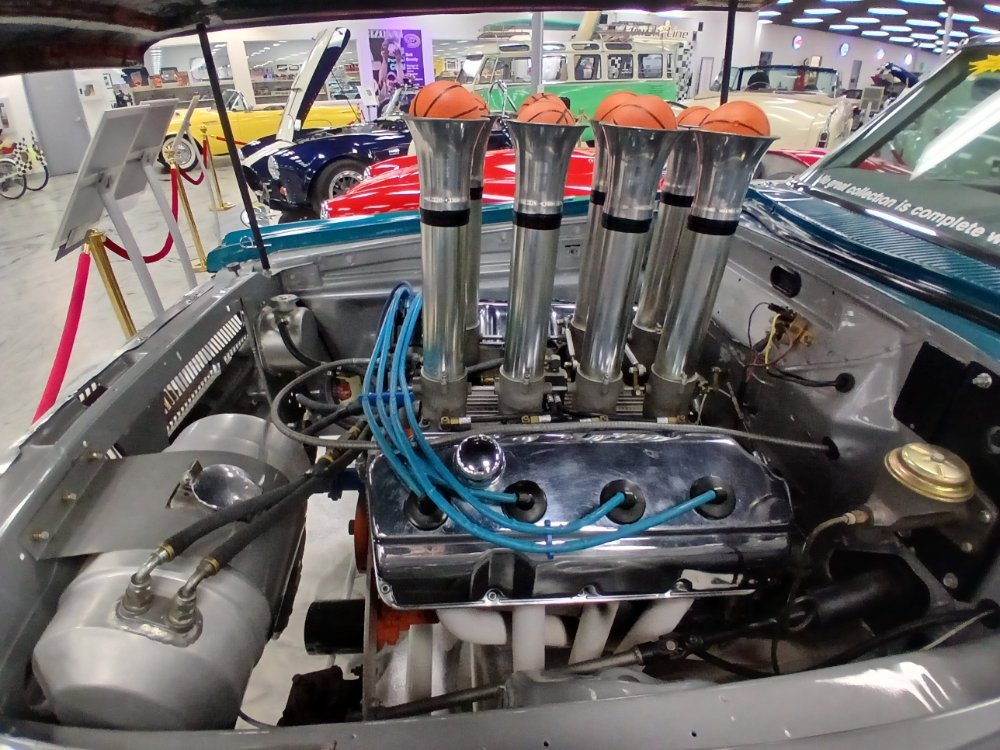
Things were not funny in 1965, at least not to Ford racing management, who called foul when Chrysler engineers went “big” with radical wheelbase changes. The car offered here is one of a handful to survive that era when Super Stock changed “FX” into what the Ford guys derisively called “funny cars.” This vehicle is one of the 101 examples built for Super Stock that year, coming off the assembly line at Lynch Road on January 13, 1965. As a code-W051 race package, the car was sent to Western Dodge Sales and Service in Owensboro, Kentucky, on January 25, 1965. Affectionately considered the seventh 1965 A/FX Dodge and the 13th A/FX Mopar—12 were created directly by Chrysler engineers and a subcontractor named Amblewagon—the Kentucky Colonels Dodge showcases the wheelbase and engine changes that made history, along with the special factory-designed fiberglass fenders, hood with large scoop, bumpers and decklid. Previously on display at the Floyd Garrett Muscle Car Museum, the car has received an extensive restoration to its as-raced configuration, and it retains the legendary outrageousness of the “ultra-stock” revolution. Lift off the hood and find an authentic 426 Hemi race block—dated December 1964—with the A990-correct factory Alcoa-marked aluminum heads, high-dome pistons, Prestolite transistor ignition including the distributor, and Hilborn tall-stack injection. These special engines were designed originally to remove weight for Super Stock and were never again released by the factory in a package car. A forged-steel crankshaft and Crane camshaft are here, but most importantly this car has a set of ultra-rare original S&S A/FX headers. Behind this behemoth of power is a reworked Art Carr race-prepped TorqueFlite transmission with an A990 stall converter and a 4.56:1-geared rear end. Inside are lightweight seats, heater and radio delete, a well-designed roll cage and a period-correct Hurst dual-gate shifter. With fit and finish better than new, a Chrysler Registry report and painted-on race lettering, this A990 Dodge with its “one step beyond” race modifications will be eye-opening to the knowledgeable and curious alike.
Highlights
This car was Built January 13, 1965 at the Lynch Road assembly plant as a 426 Hemi Coronet W051 Coronet Super Stock. Shipped to Western Dodge Sales and Service in Owensboro, Kentucky on January 25, 1965 along with fiberglass fenders, hood, bumpers and deck lid. It wast he 7th 1965 A/FX Dodge and the 13th A/FX Mopar. Previously on display at the Floyd Garrett Muscle Car Museum. Extensive restoration to as-raced configuration. Factory Alcoa-marked aluminum heads, High dome pistons, Transistor ignition, Forged steel crankshaft, Hilborn injection, Crane camshaft, Original S&S A/FX headers, Original Prestolite distributor, Aluminum racing oil pan, Art Carr race-prepped Torqueflite transmission, Original A990 stall converter, 4.56 geared rear end, Radio and heater delete, Extensive Chrysler Registry inspection report.
ENGINE: 426CI, Hemi race block, dated December 1964
TRANSMISSION: Automatic
EXTERIOR COLOR: Silver/Blue
INTERIOR COLOR: Beige
MAKE: Dodge
MODEL: Coronet A/FX
VIN / SERIAL: W051197574
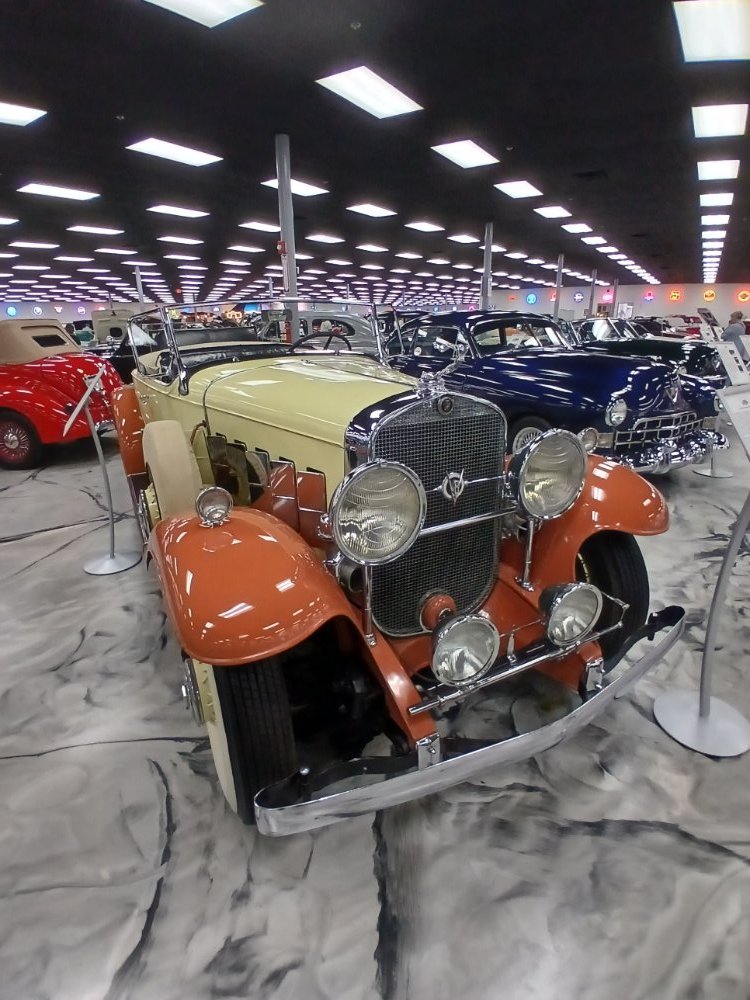
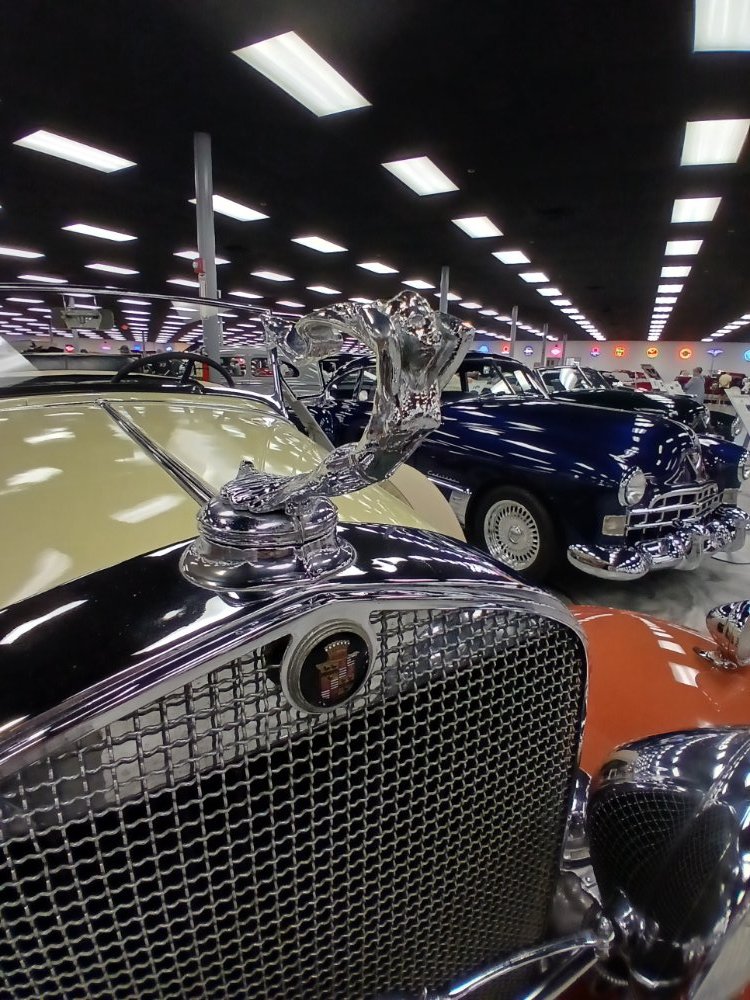
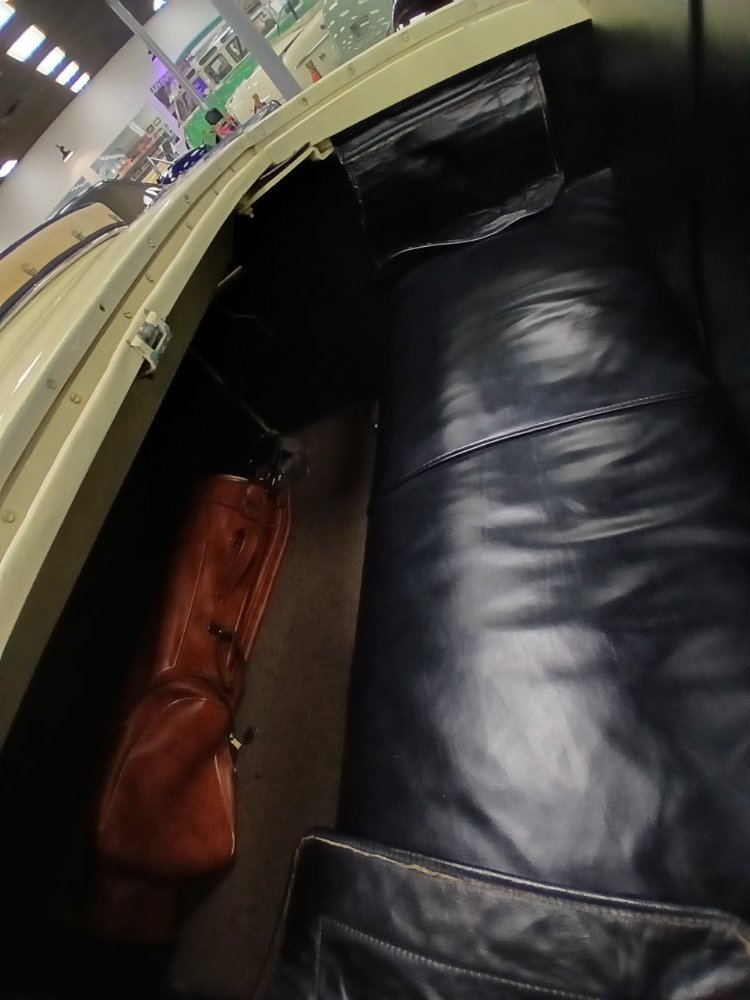
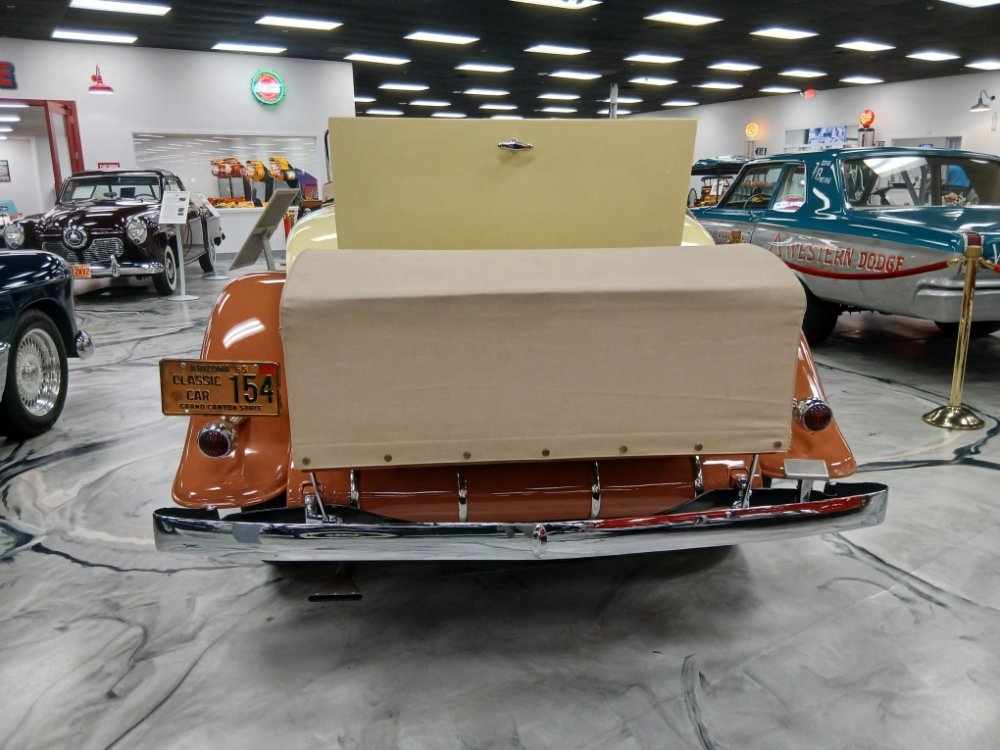
1931 Cadillac Fleetwood Convertible Model 355A
Many consider 1931 to be the pinnacle of the "Classic Era" for Cadillac. As a convertible coupe with a rumble seat, this Fleetwood-bodied car is one of the most desired among collectors.
With the introduction of its new V-12, Cadillac became the only car company to offer V-8, V-12, and V-16 models. Cadillac offered 134-, 140-, and 143-inch wheelbases, bodies by Fisher and Fleetwood, three different engine configurations, and the more moderately priced LaSalle as part of its lineup. It arguably began a trend that eventually led to Cadillac's domination of the luxury car field over rival Packard.
While the flagship V-12 and V-16 gathered all the fanfare, the V-8 powered models like this convertible coupe sold in steady numbers, helping Cadillac's bottom line during difficult economic times. Cadillac produced a total of 10,717 V-8 models in 1931. All Series 355 Cadillacs rode a new 134-inch wheelbase, six inches shorter than 1930 models giving the cars a sporty appearance.
The 1931 Series 355A was very similar to the Series 353 except it was longer and lower, had a longer hood with five hood ports, with matching doors in the cowl. There was a modified coach sill with no compartments in the splash pan. The battery and tool compartment were now under the front seat. Floor boards were made of metal for the first time. The instrument panel was oval with the same gauge groupings as in the Series 353. The Series 355 featured a radiator screen, a single bar bumper and dual horns. The headlight diameter was reduced by one inch. There was a new frame with divergent side rails. The suspension springs now had metal covers. The radiator was mounted lower in the frame and there was now a condenser tank for cooling operation. The engine was the same 353 cu in (5.8 L) L-Head V8 as on the Series 353, thus the series designation no longer matched the displacement and was the basis for the "series" naming convention. Engine horsepower was 95. A five-point engine suspension, similar to the V-16 was used. An intake muffler was added and the distributor was mounted 1.5 in (38 mm) higher. The fan was mounted lower to match the lower radiator. Model year sales totaled 10,717.
353 cubic-inch L-Head V-8 engine
Single updraft carburetor
3-speed transmission
4-wheel semi elliptic leaf spring suspension
4-wheel drum brakes
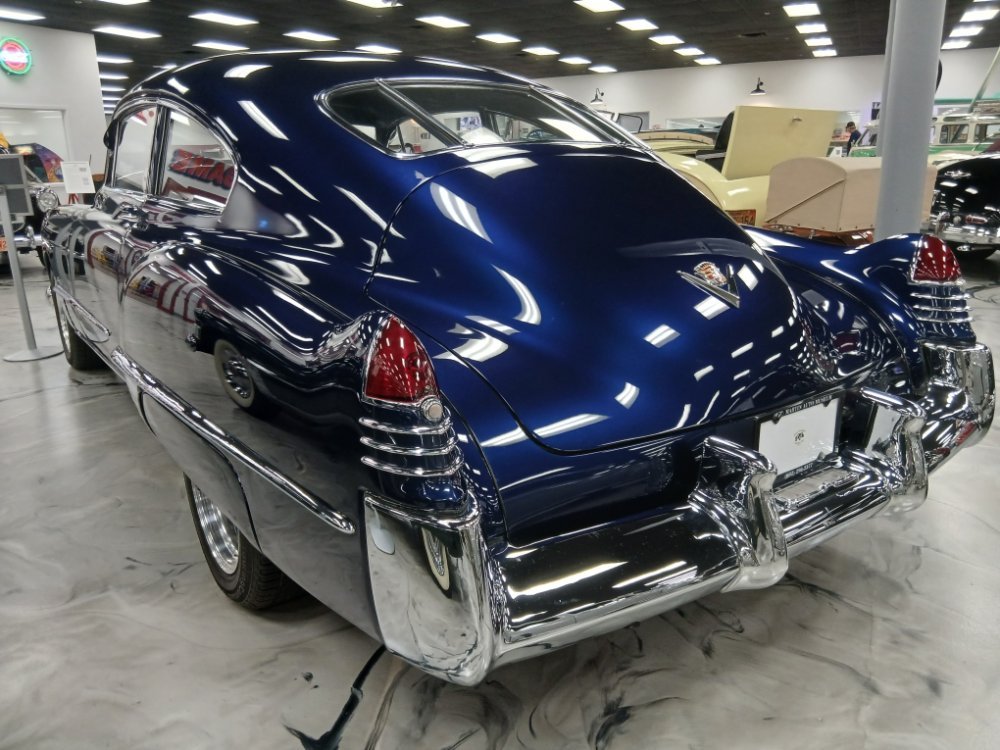
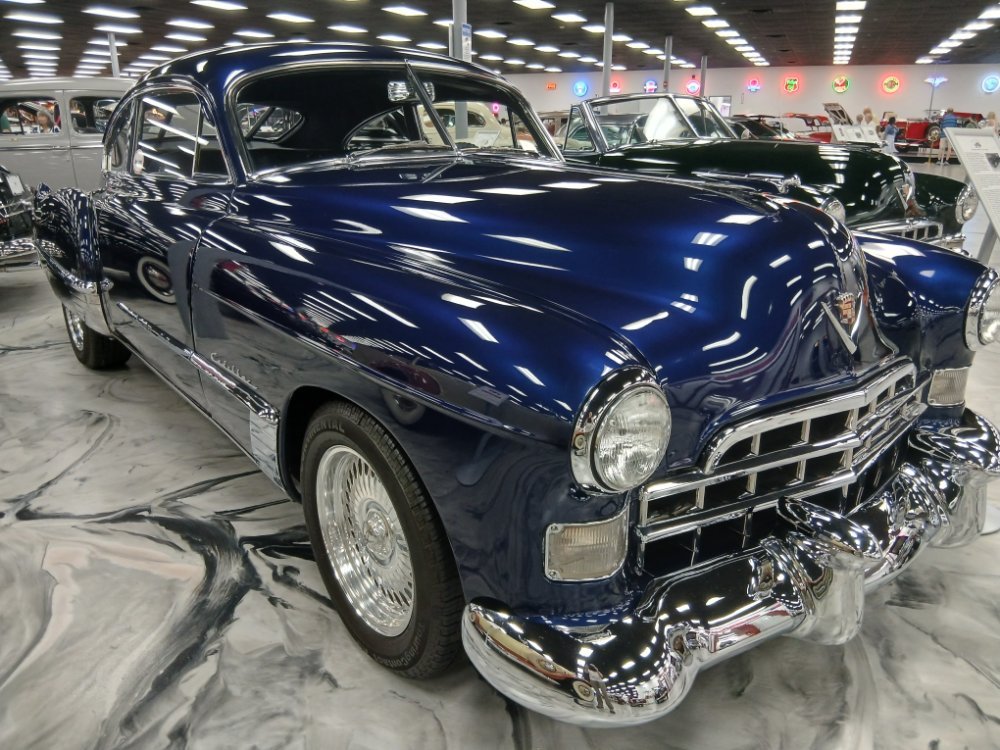
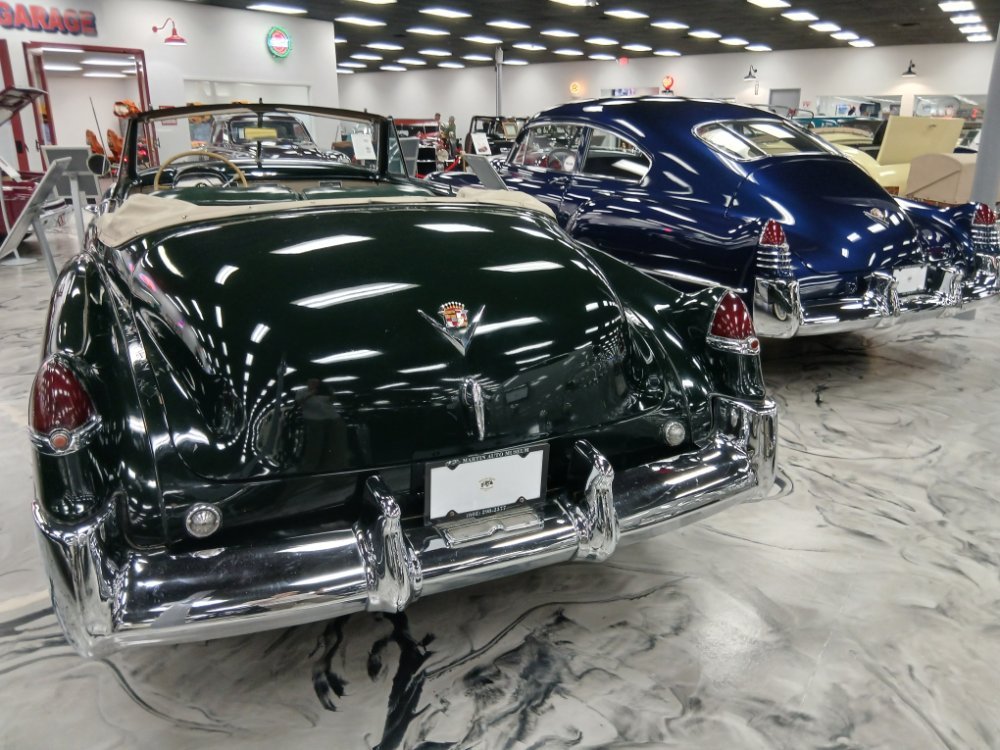
1948 Cadillac Series 62 2-Door Fastback
For the 1948 model year, General Motors designers Harley Earl and Frank Hershey struck gold with their new Cadillac line. Fresh, beautiful styling combined with a well-built chassis and robust, though dated L-head V-8 engine.
What set the car apart was a subtle design cue that led to one of the most iconic, heavily copied trends in motoring history - the tailfin. The inspiration for the small kicked-up fin at the end of each rear fender came from Lockheed's P-38 Lightning, America's finest heavy fighter plane during World War II.
The Series 62 had the broadest range of bodies, including a convertible coupe, four-door sedan, pillarless Coupe De Ville, and the gorgeous fastback two-door coupe, also known as the Sedanette. Series 62 production totaled 34,213 vehicles for the 1948 model year, accounting for 68% of Cadillac's volume. Just 4,764 of the fastbacks were produced, and they stand among the most sought-after and collectible of all post-war Cadillacs.
The Series 62 included a lower sleeker body, a new cellular grille insert, and inverted gull wing front bumpers and tapered dagmar style bumper guards. Round jet-style dual exhaust outlets were incorporated into the vertical bumper extensions and the rear bumper was entirely redesigned. An Eldorado-style wraparound windshield was seen on all models. Sedans used a distinctive style of window reveal molding, which created a built-in sun visor effect. For coupes a smoothly curved wraparound backlight was referred to as the "Florentine"-style rear window. A wide ventilator intake was now stretched across the base of the windshield on all body styles and the chrome visored headlamp look was emphasized. The Series 62 could be distinguished by the lack of rear fender louvers. V-shaped ornaments and crests were used in the hood and deck and there were full length body underscores in bright metal. Coupe de Ville script was seen on rear corner pillars of the luxury hardtop, which also had wider sill moldings. The Eldorados had golden identifying crests centered directly behind the air-slot fender breaks and wide fluted beauty panels to decorate the lower rear body sides. These panels were made of extruded aluminum and also appeared on a unique one-of-a-kind Eldorado coupe built for the Reynolds Aluminum Corporation. Also included in the production Eldorado convertible were monogram plates on the doors, wire wheels, and custom interior trimmings with the Cadillac crest embossed on the seat bolsters. Automatic windshield washers, power steering, 12-volt electrical system, and aluminum alloy pistons made the long list of standard equipment for the first time this year. Power steering, windows, seats, and auto headlight dimming were optional. A parking brake release reminder light was new. Popular Mechanics rated the 0-60 mph time as 17.3 seconds. Air conditioning was provided by Frigidaire optionally on sedans and hardtops, which consisted of a self-contained unit that was retrofitted at the customer’s request.
Rick DeBruhl Commentary - The fins that started an automotive revolution!
327 cubic-inch L-head inline 8-cylinder engine
Highly-modified Cadillac
Special paint and custom Interior
500 cubic-inch engine
375 horsepower
Turbo 400 automatic transmission
Torsion bar front suspension
Front disc brakes
Original cost of $2,728
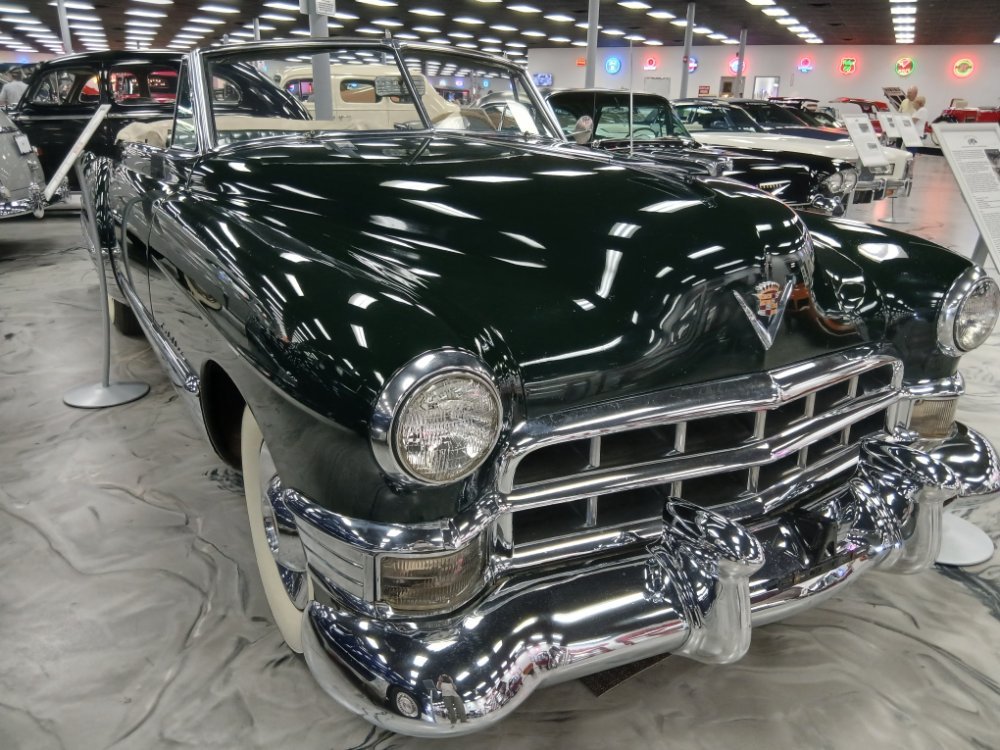
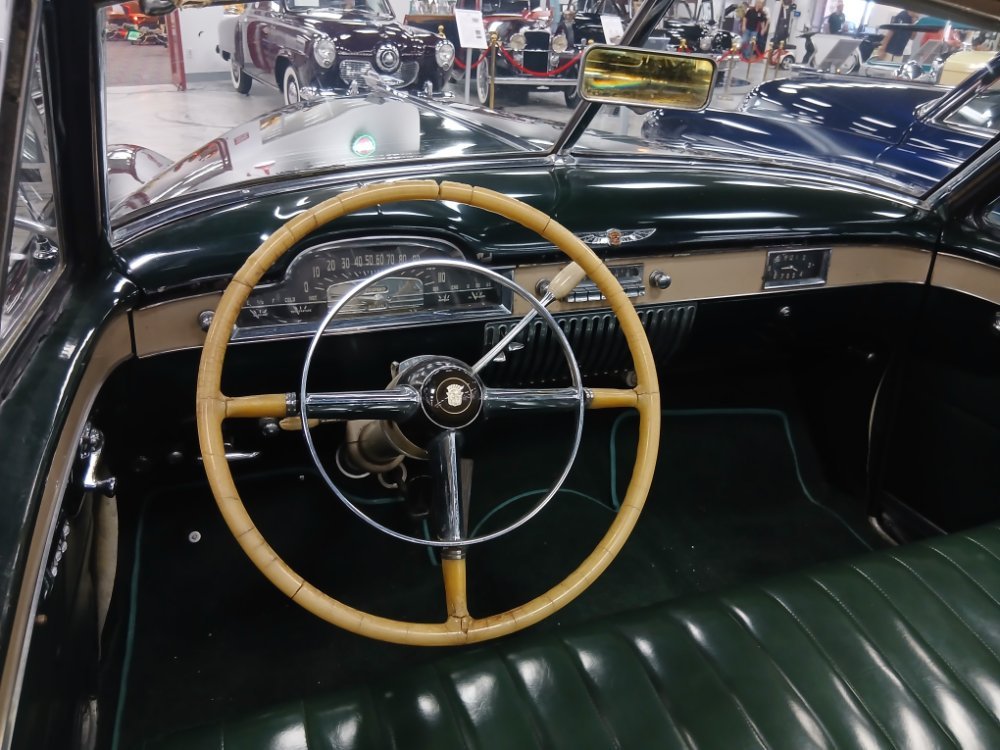
1949 Cadillac Series 62 Convertible Coupe
Originally designed to complement the entry level Series 61, the Cadillac Series 62 was produced by Cadillac from 1940 through 1964. This car is part of the third generation of the model produced between 1948 and 1953. The Series 62 was also marketed as the Sixty-Two and the Series Sixty-Two.
The Series 62 was used to introduce the Cadillac Coupe de Ville and the Cadillac Eldorado, which started out as special appearance packages that were later placed into production. Series 62 Cadillacs had a slightly shortened wheelbase, but the track width was increased by two inches, increasing interior room.
The new Cadillac V-8 engine was the big news for 1949, with minor trim differences otherwise. The new engine could handle higher compression levels to take advantage of improved, higher octane post-war gasoline. The major difference between Series 61 and Series 62 models of similar body style was minor trim variations. The higher-priced series again had grooved, front fender stone shields and bright rocker panel moldings. Chevrons below the taillights were no longer seen. The convertible was an exclusive offering. A heater was optional - as shown on the car.
331 cubic-inch V-8 engine
160 horsepower
4-speed Hydra-Matic automatic transmission
126-inch wheelbase
New price was $3,496
8,000 Convertible Coupes were produced in 1949
History
The first all-new postwar Cadillacs arrived in 1948, sporting tail fins inspired by the Lockheed P-38 fighter plane on a Cadillac. Series 62 Cadillacs had a slightly shortened wheelbase, but the track width was increased by two inches, increasing interior room. However, updated drivetrains would have to wait another year and for the time being, the new Cadillacs were still powered by the same 346 CID flathead V8 used across the board since 1941, which delivered only fair performance (0-60 in 16 seconds with a top speed of 93 mph). Fuel mileage was an estimated 14 mpg highway, 10 mpg city with the Hydramatic transmission, which was rapidly becoming the norm — by 1949, only 10% of Cadillacs were ordered with the 3-speed manual gearbox. Series 62 production totaled 34,213 vehicles for the 1948 model year, accounting for 68% of Cadillac's volume. The 1948 models had been slow to get into production and did not arrive in showrooms until February 1948, consequently Cadillac produced only 50,599 total vehicles for the abbreviated model year.
The new Cadillac OHV V8 was the big news for 1949, with minor trim differences otherwise. This 331 cu in (5.4 L) engine produced 160 hp (119 kW) and weighed 200 pounds less than the old flathead V8 in addition to being shorter and lower. The 331 V8 could also handle higher compression levels to take advantage of improved, higher octane postwar gasoline formulations. The major difference between Series 61 and Series 62 models of similar body style was minor trim variations. The higher-priced series again had grooved, front fender stone shields and bright rocker panel moldings. Chevrons below the taillights were no longer seen. The convertible was an exclusive offering. A heater was optional. Sales reached a record 55,643.
The Cadillac Series 62 Coupe de Ville was introduced late in the 1949 model year. Along with the Buick Roadmaster Riviera, and the Oldsmobile 98 Holiday, it was among the first pillarless hardtop coupes ever produced. At $3,496 ($44,768 in 2023 dollars) it was only a dollar less than the Series 62 convertible, and like the convertible, it came with power windows standard. It was luxuriously trimmed, with leather upholstery and chrome 'bows' in the headliner to simulate the ribs of a convertible top.
55,643 Series 62 Cadillacs were produced in 1949 out of a total volume of 92,554 vehicles.
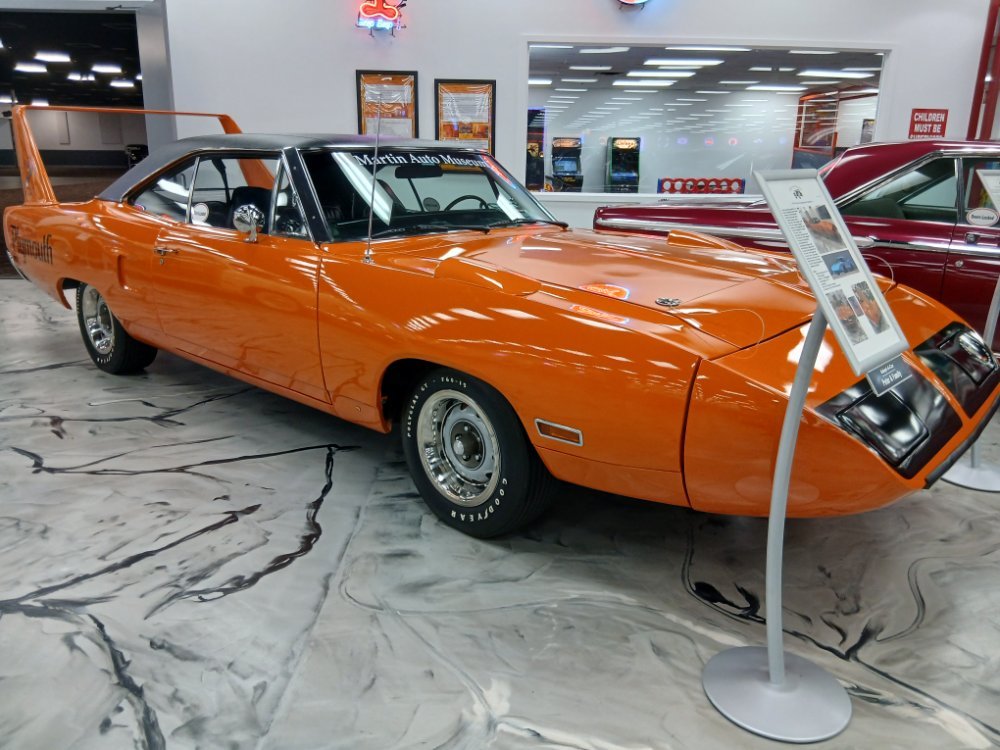
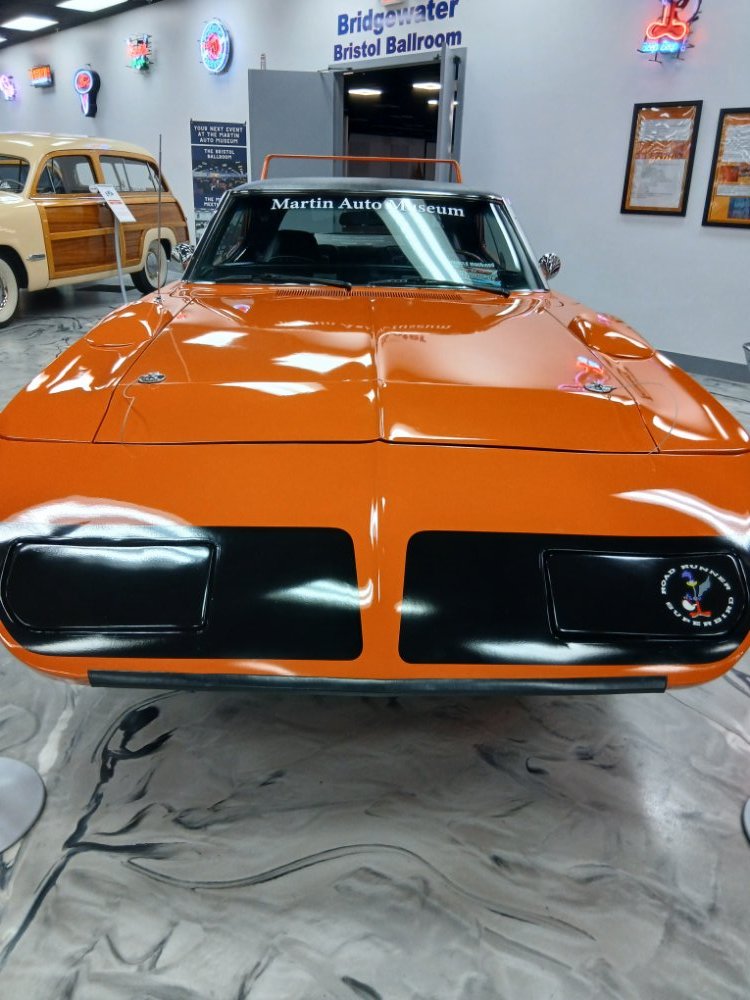
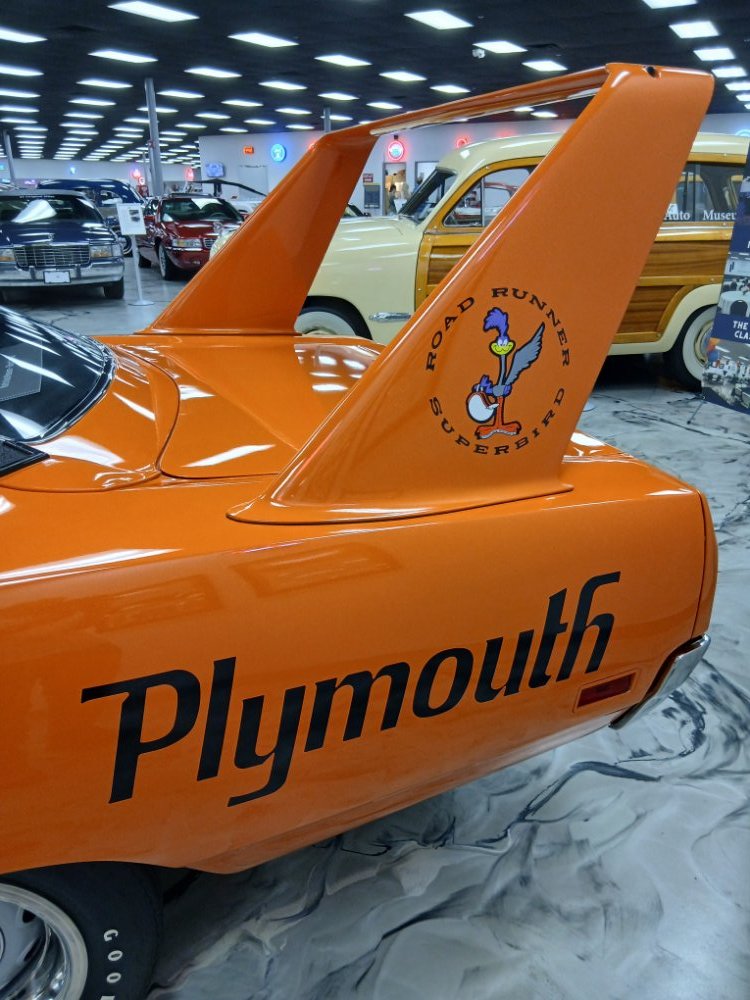
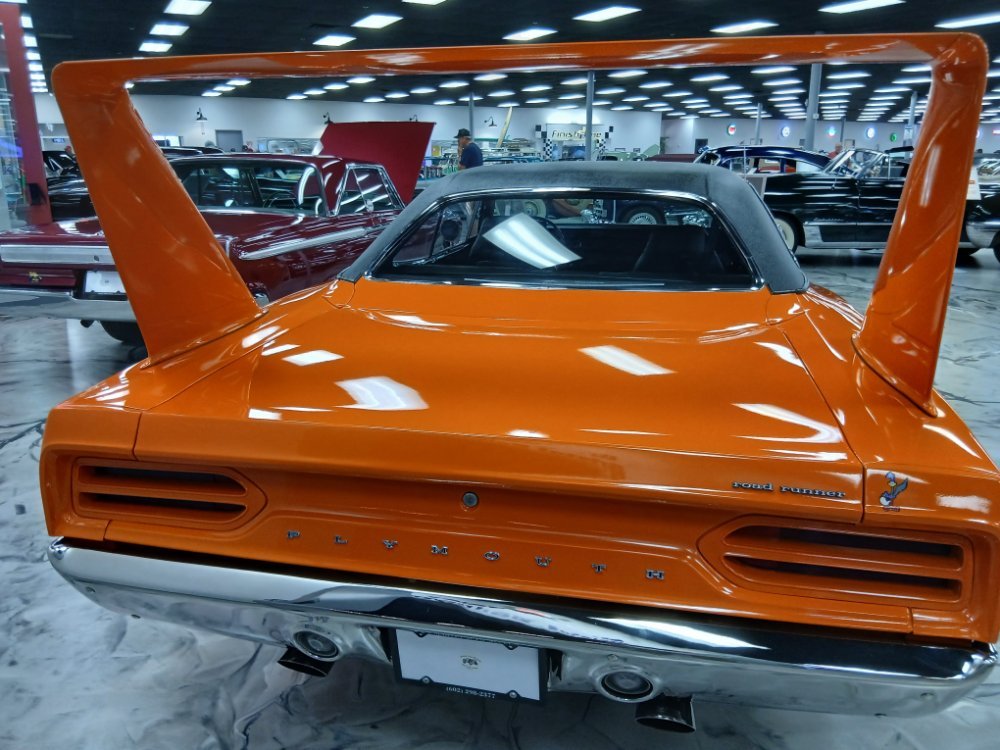
1970 Plymouth Roadrunner Superbird
The Plymouth Superbird is a highly modified, short-lived version of the Plymouth Road Runner with well-known graphics and a distinctive horn sound. Like the 1969 Dodge Charger Daytona, the Superbird was largely designed for stock car racing. Using information garnered from the Daytona's 1969 season in racing, the Superbird incorporated many engineering changes and modifications. Despite the success of the Superbird on the track, 1970 would be the only year it was made.
Base factory pricing for the Road Runner in 1970 was $3,024, while the Superbird started at $4,298.
Engine: 440 cubic inch V-8 (correct coded)
Power: 375 horsepower
Transmission: A727 automatic
Paint: EK2 Vitamin C Orange
Production: 626 in this configuration
Rick DeBruhl Commentary - "This Superbird is Outrageous!"
A few facts about Richard Petty and Petty Enterprise
Richard Petty, one of the most iconic figures in NASCAR history, has an impressive list of race wins throughout his career. He won a total of 200 NASCAR Cup Series races. Some of the notable races he won include:
Daytona 500: Petty won the Daytona 500 a record seven times in his career (1964, 1966, 1971, 1973, 1974, 1979, 1981).
Coca-Cola 600: Petty won the Coca-Cola 600, one of NASCAR’s premier events, four times (1961, 1975, 1977, 1984).
Southern 500: He also won the Southern 500 at Darlington Raceway a record four times (1967, 1970, 1971, 1974).
World 600: Petty secured victories in the World 600 (now the Coca-Cola 600) three times (1975, 1977, 1984).
Firecracker 400: Petty triumphed in the Firecracker 400 at Daytona International Speedway seven times (1959, 1960, 1962, 1964, 1967, 1973, 1984).
These are just a few highlights from Richard Petty’s illustrious career. His 200 Cup Series wins remain a record in NASCAR’s top division. Richard Petty did consider leaving Plymouth to drive for Ford in 1969. In 1968, Ford introduced the sleek and aerodynamic Ford Torino Talladega, which was designed specifically for NASCAR racing. Richard Petty was impressed by the performance of the Ford Torino Talladega and expressed interest in driving for Ford.
However, Plymouth recognized the threat of losing one of its most prominent drivers and worked to retain Petty. They developed the Plymouth Superbird, a high-performance version of the Plymouth Road Runner, which featured a distinctive aerodynamic design with a large rear wing and a pointed nose cone. Ultimately, Petty decided to stay with Plymouth after they offered him a lucrative deal to race the Superbird. His decision to remain with Plymouth was influenced by both financial considerations and his loyalty to the brand. Petty’s continued success with Plymouth, including winning the 1970 Daytona 500 in a Superbird, further solidified his legacy with the manufacturer.
Odds and Ends
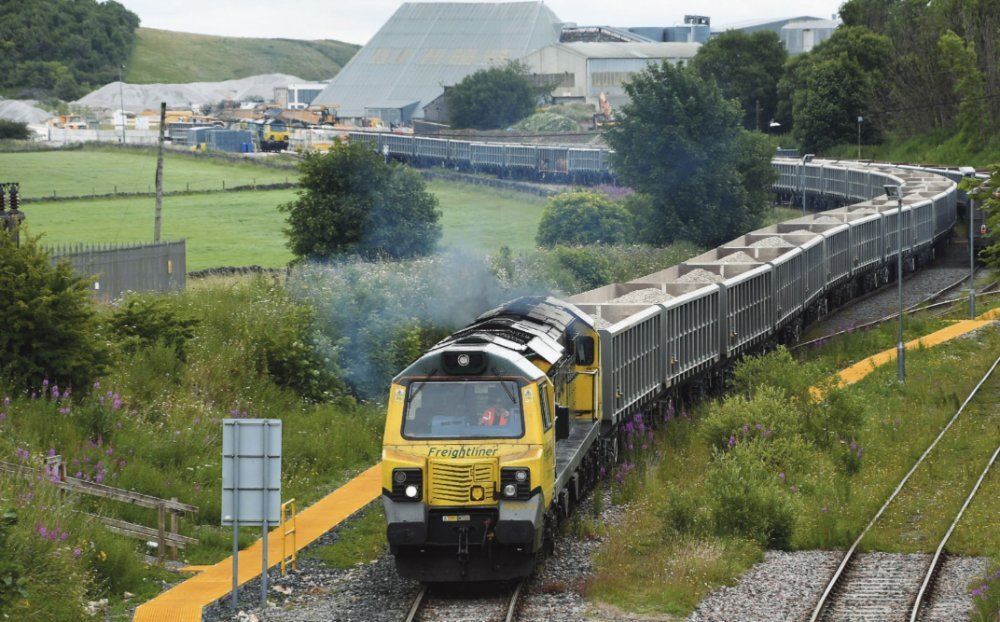
Peak stone from the Cromford & High Peak
70011 leaves Dowlow quarry near Buxton with 6L90 limestone to Norwich Goods Yard on 5th July. Located at 1,2350ft. above sea level, the section in view is the only surviving trackbed of the Cromford & High Peak Railway. (Credit to Ian Pilkington)
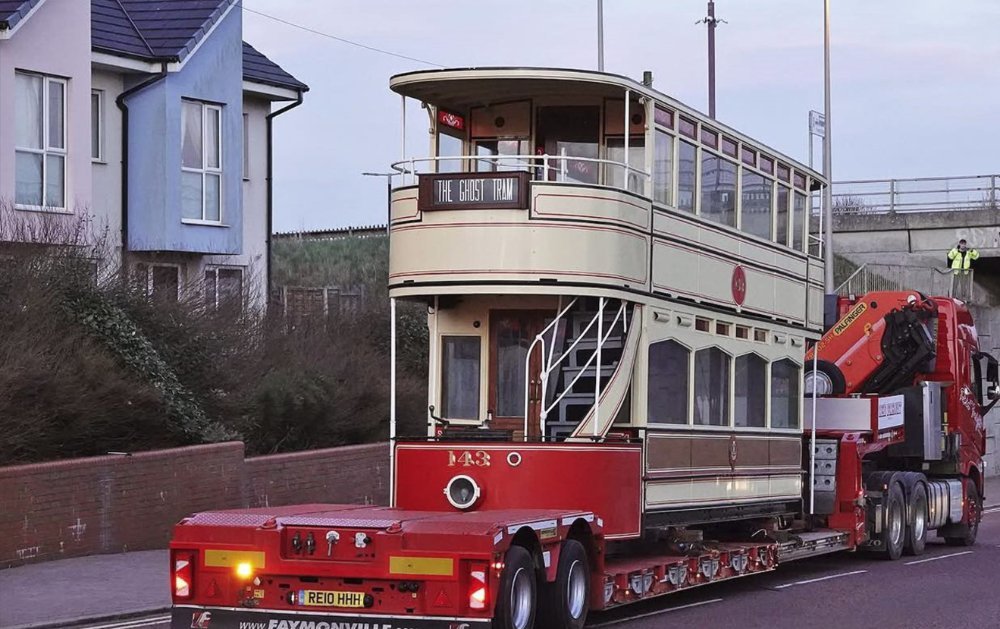
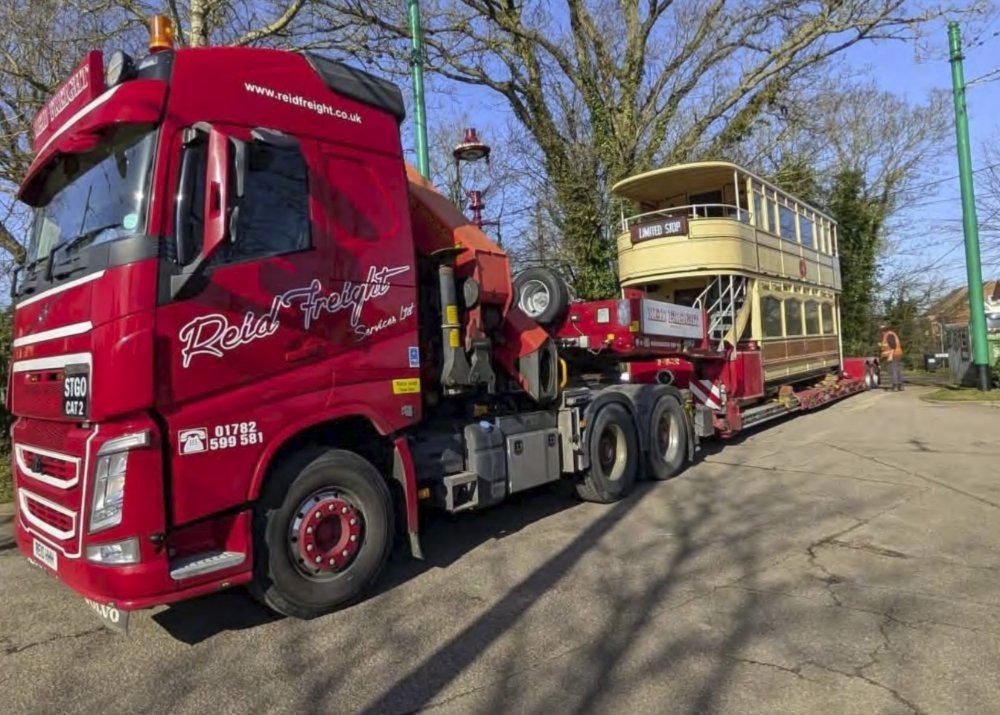
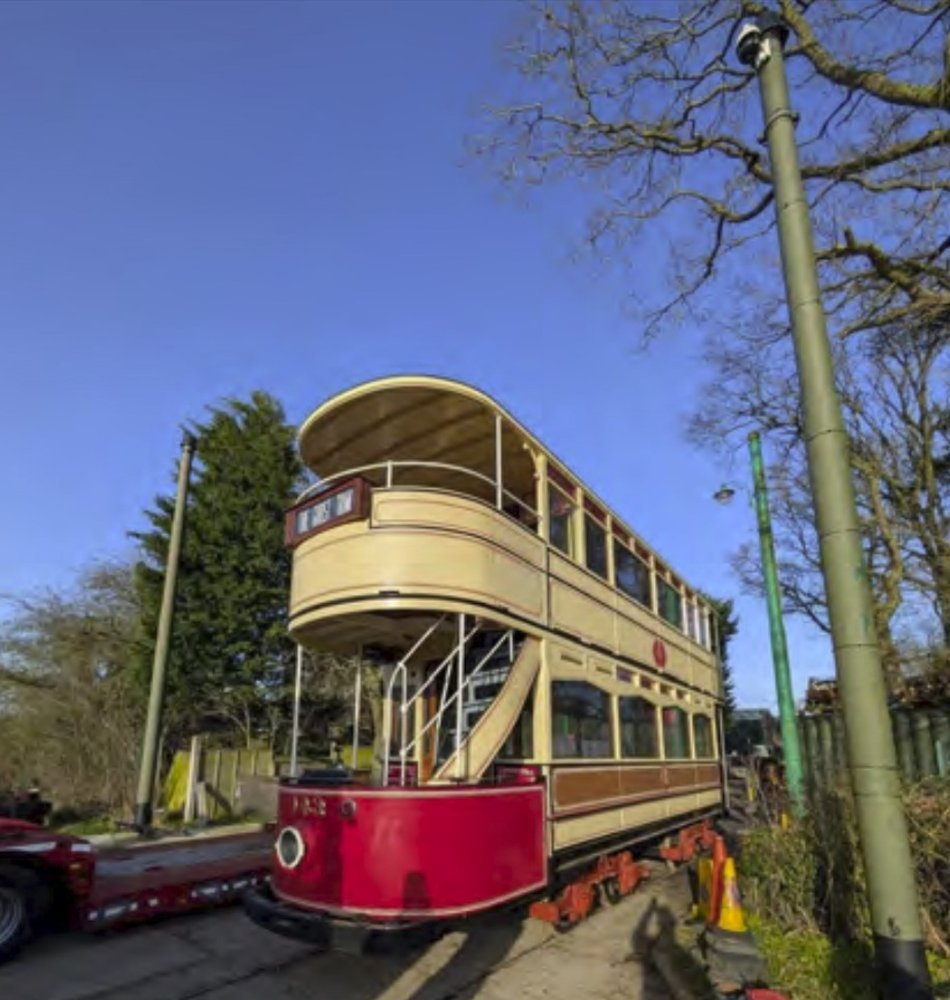
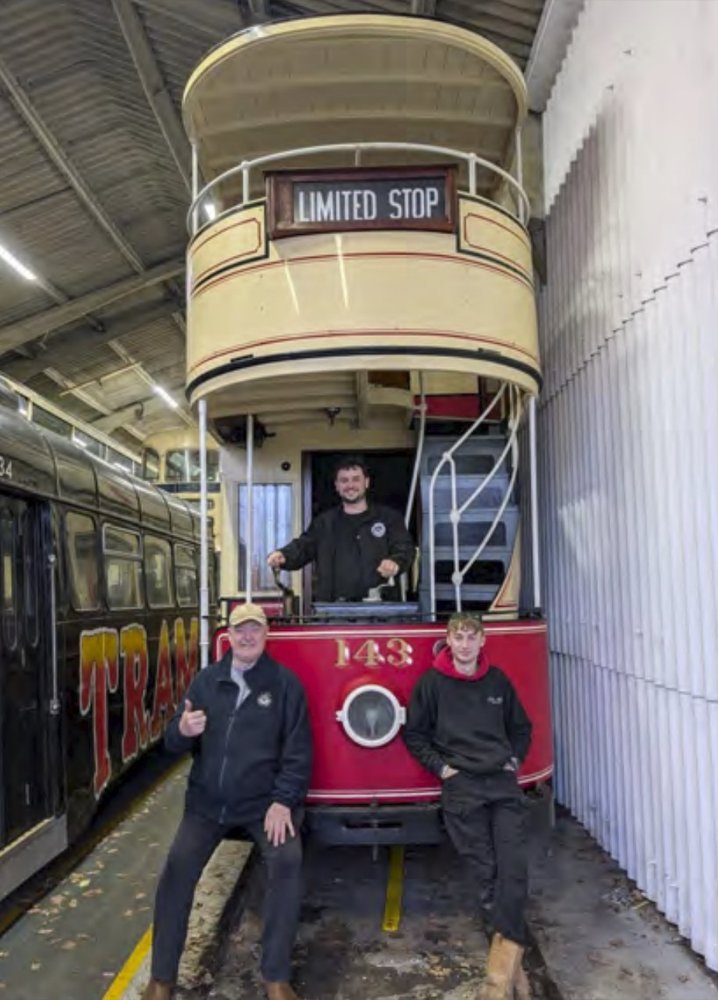
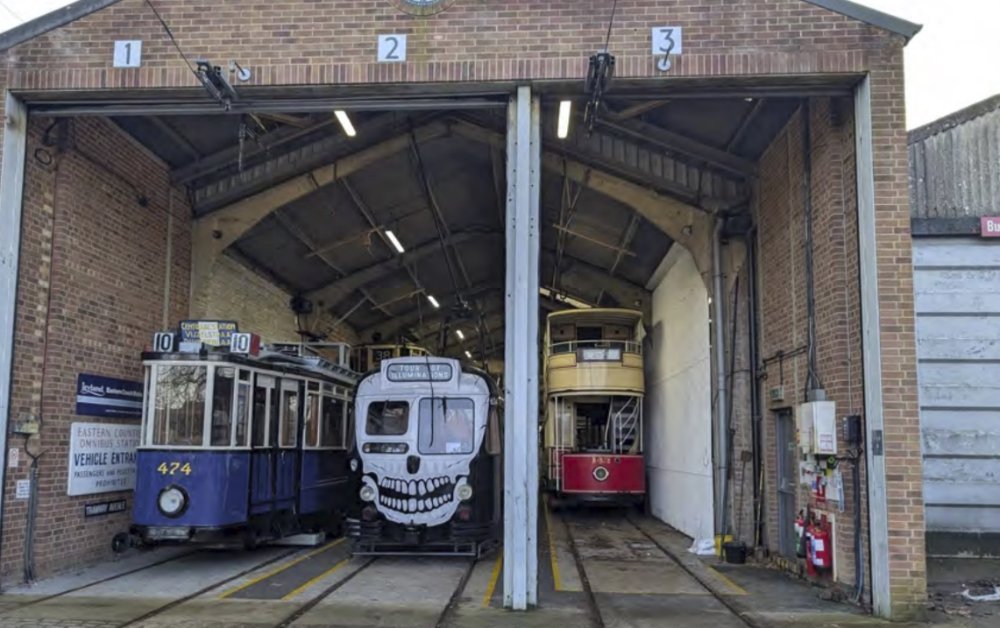
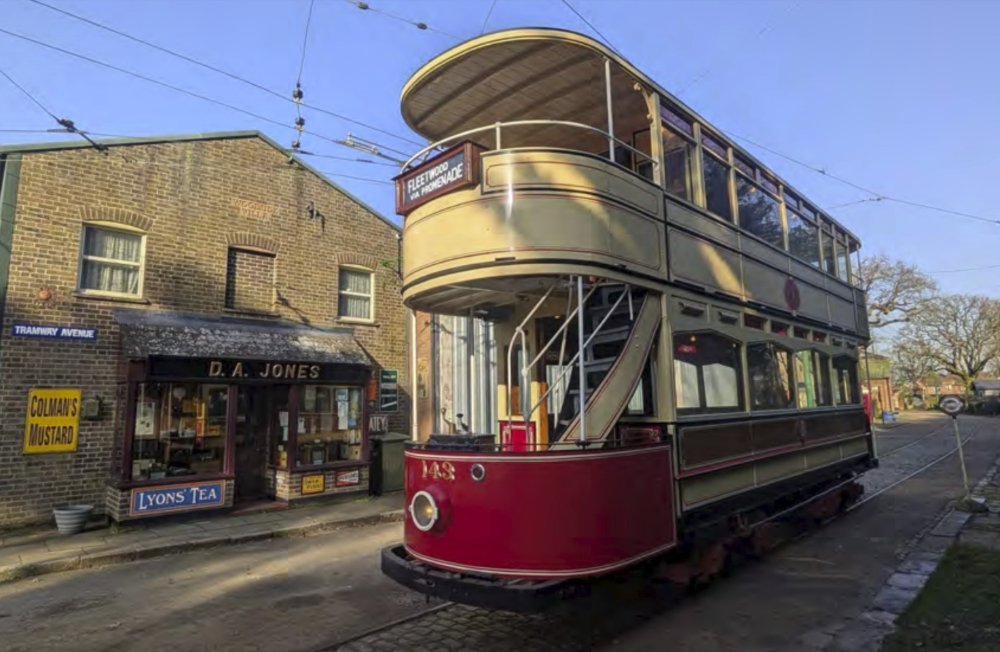
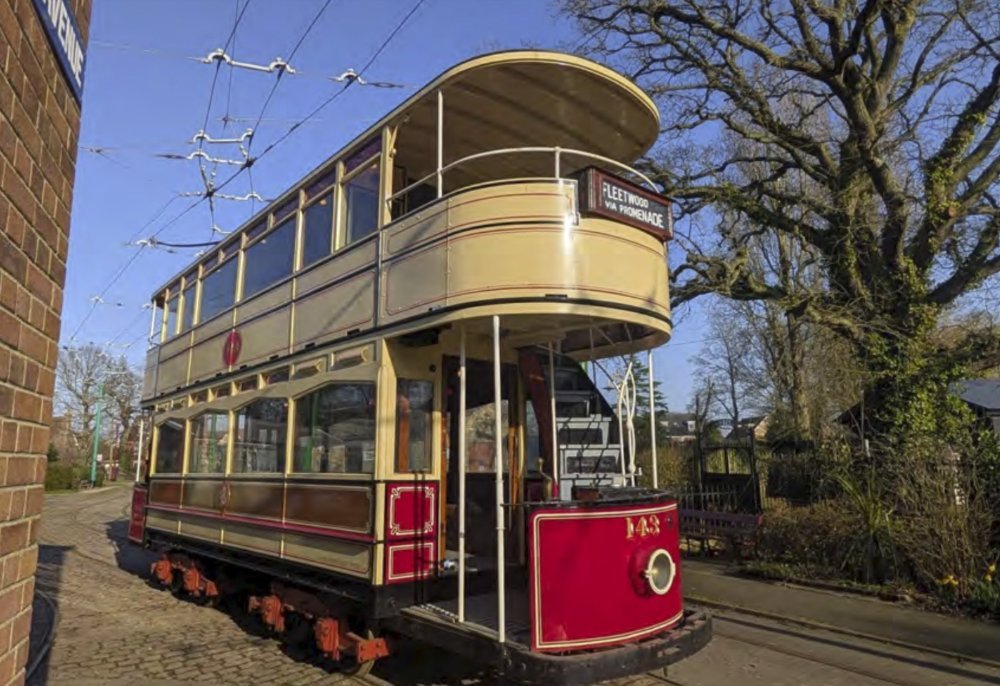
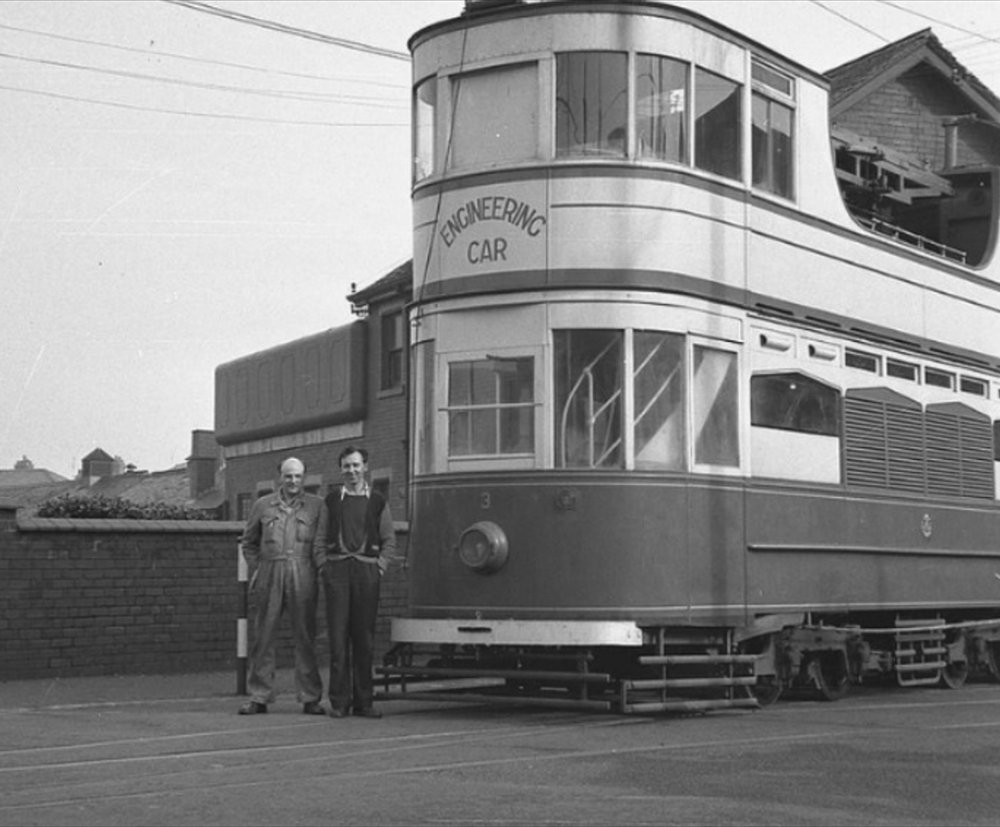
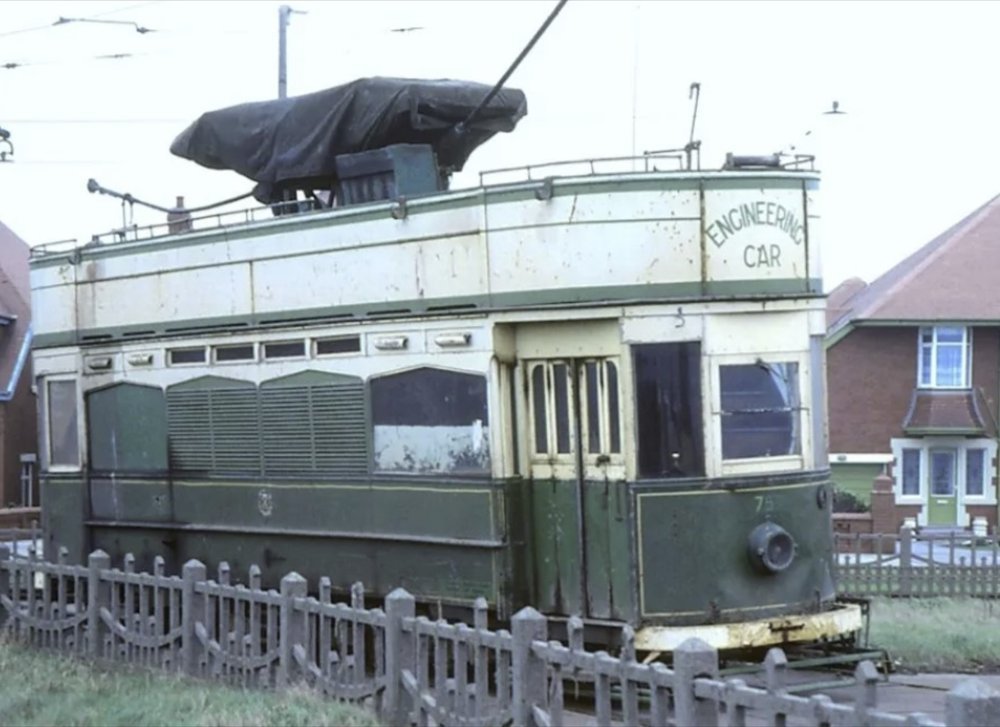
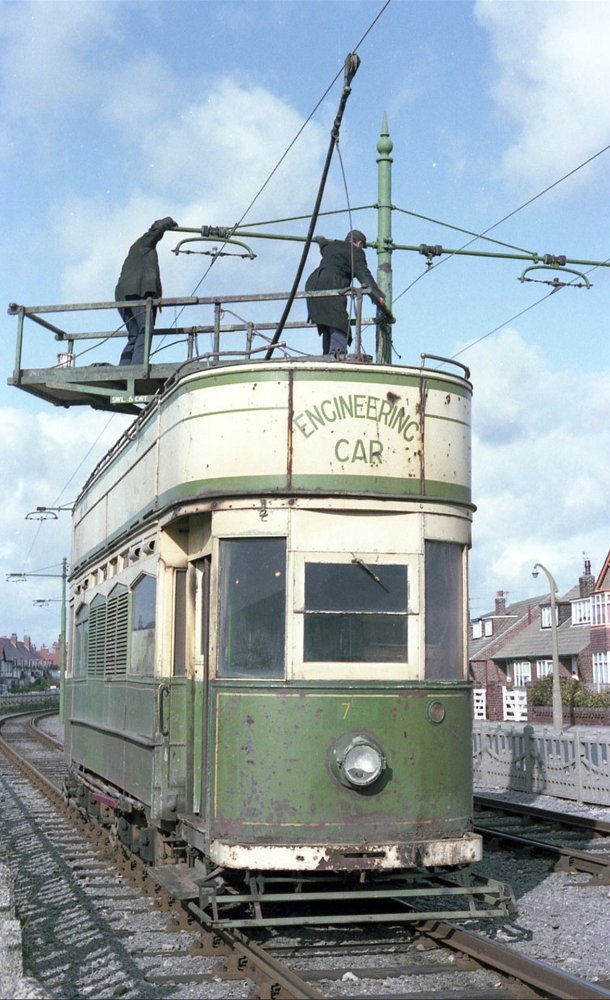
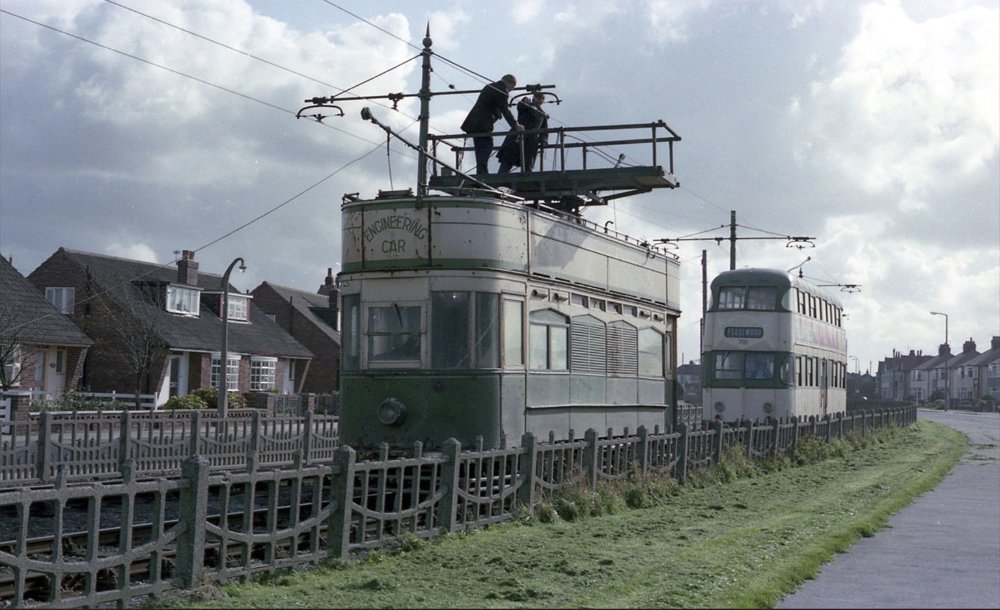
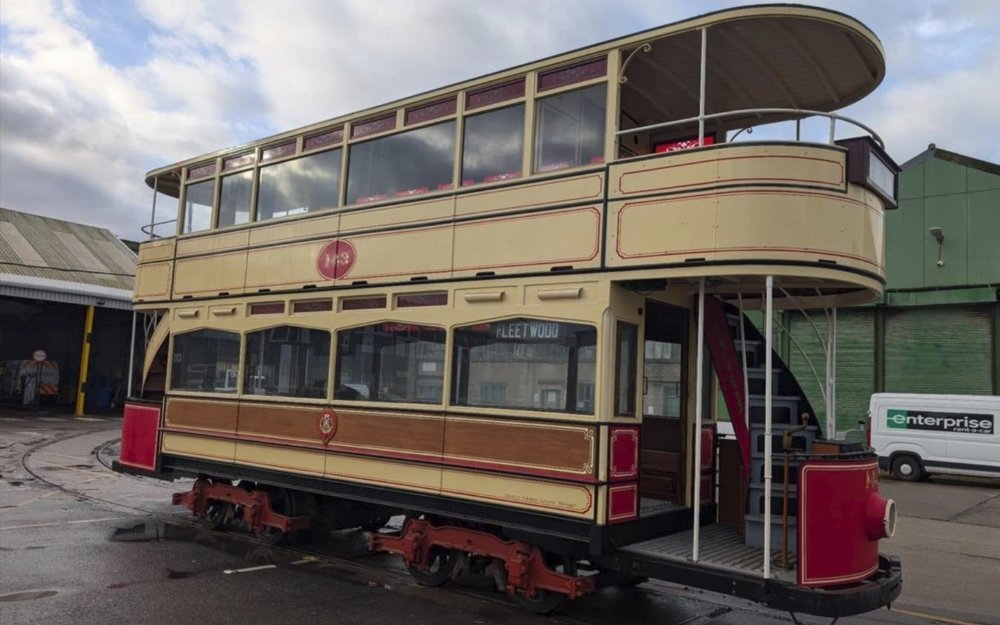
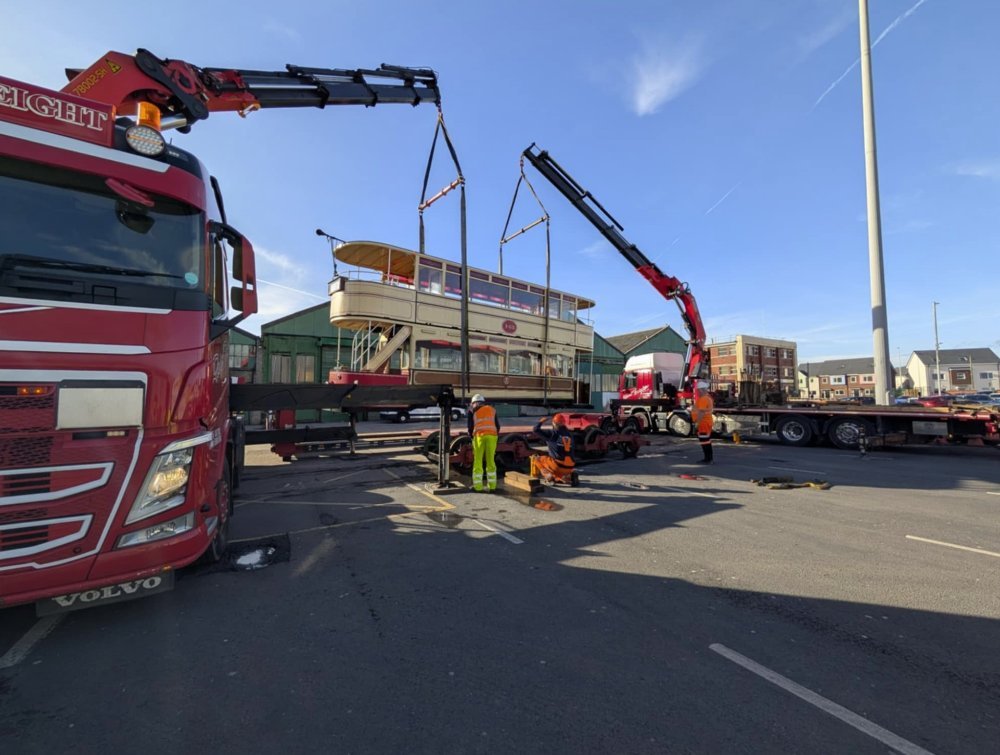
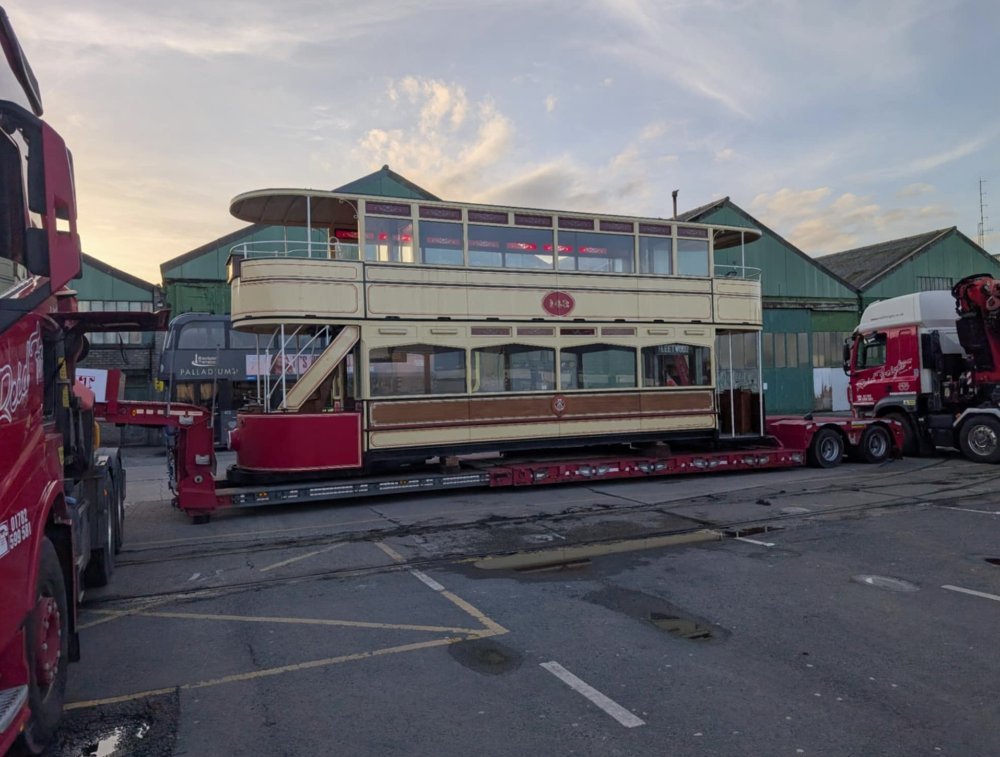
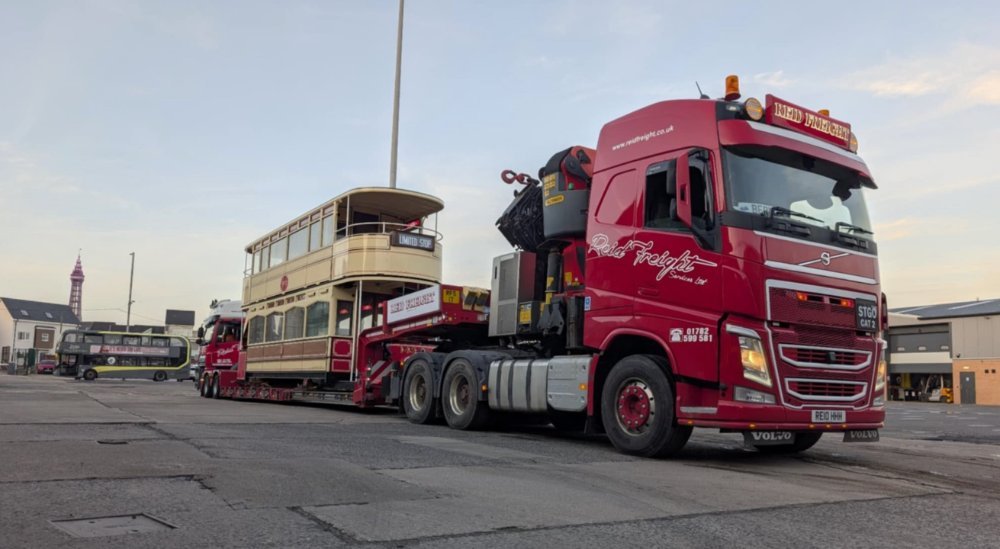
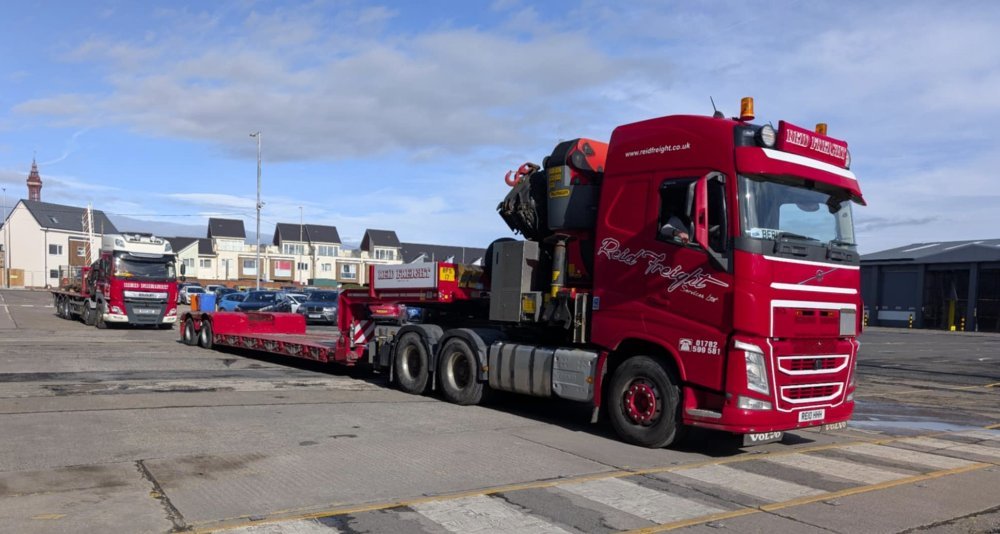
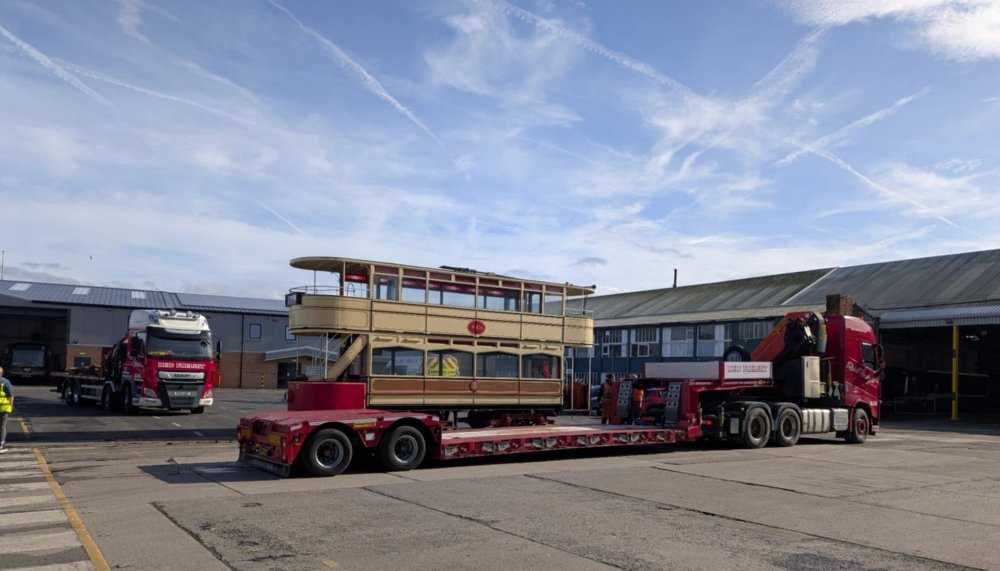
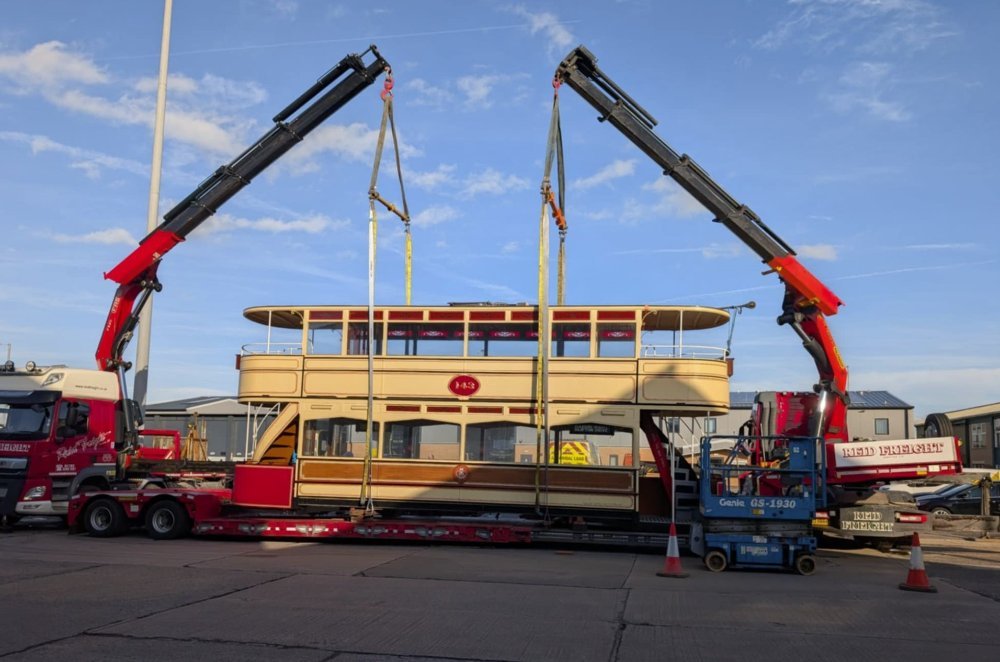
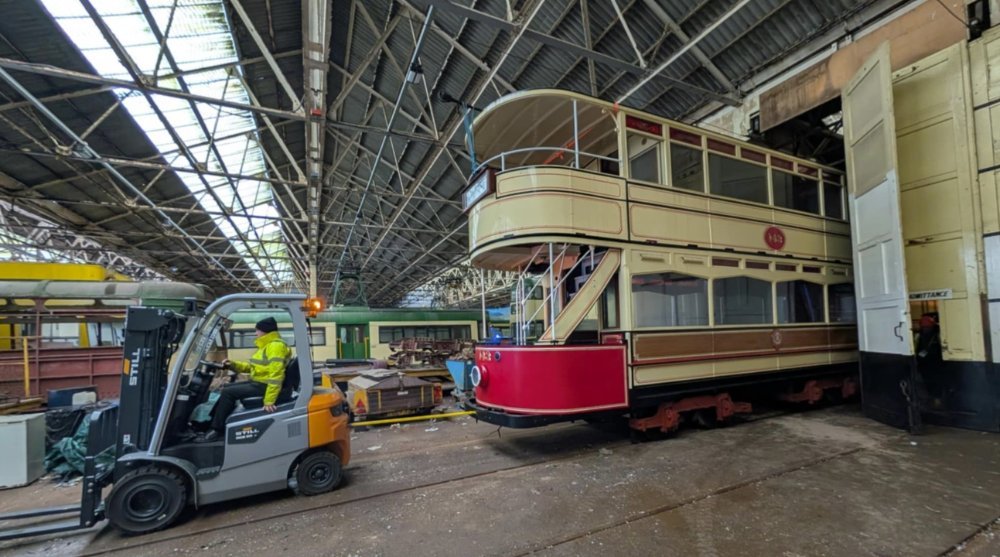
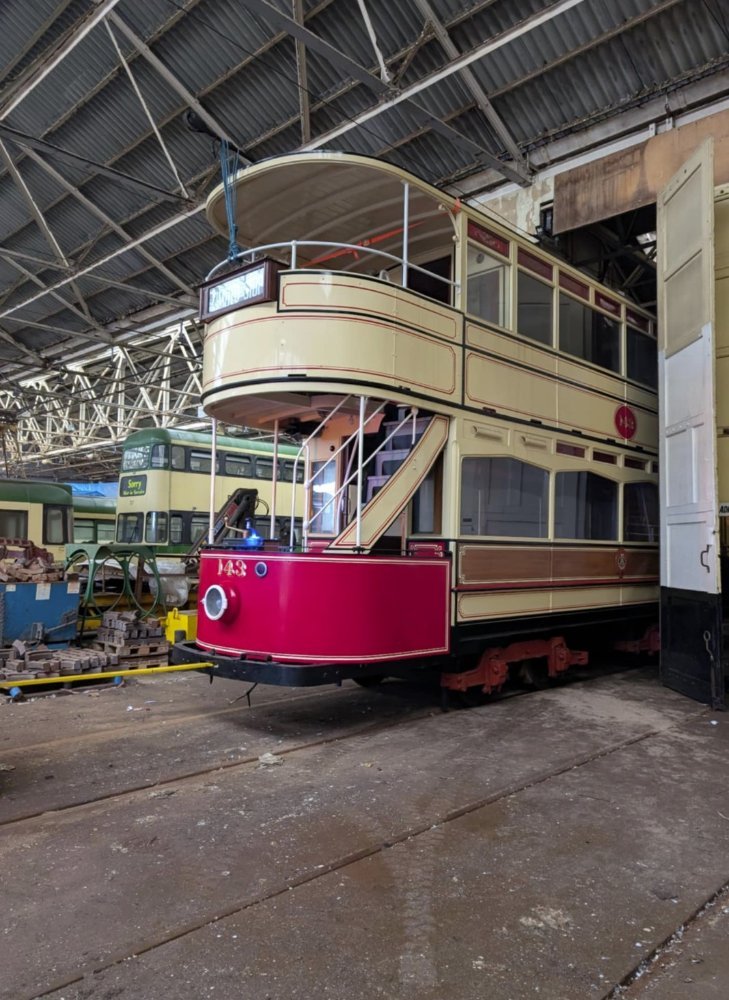
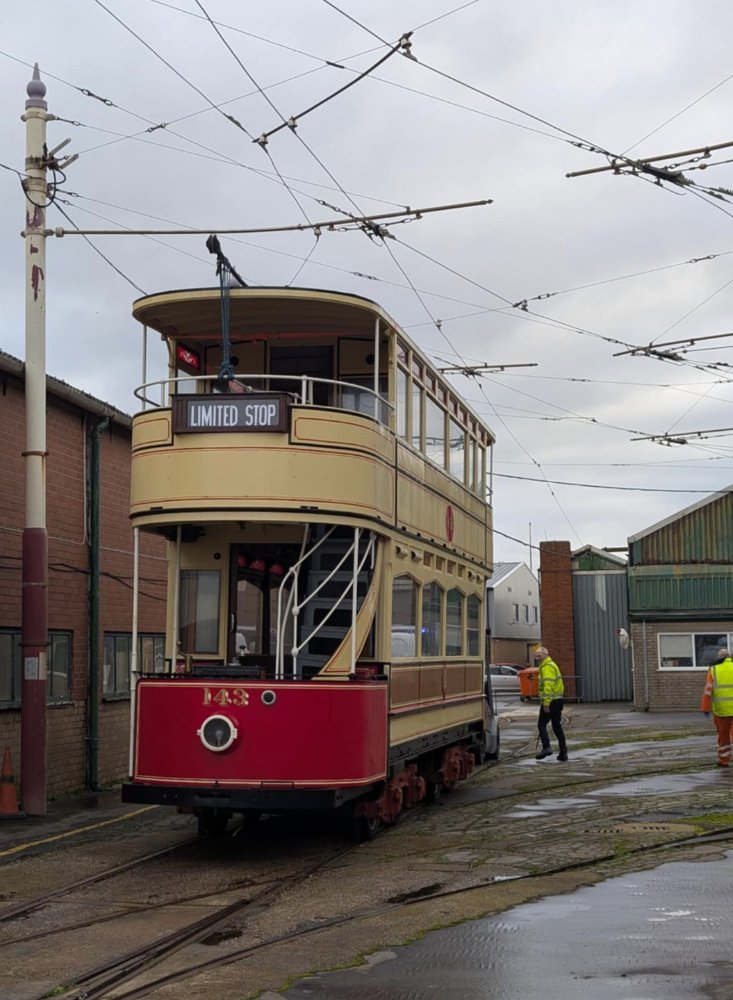
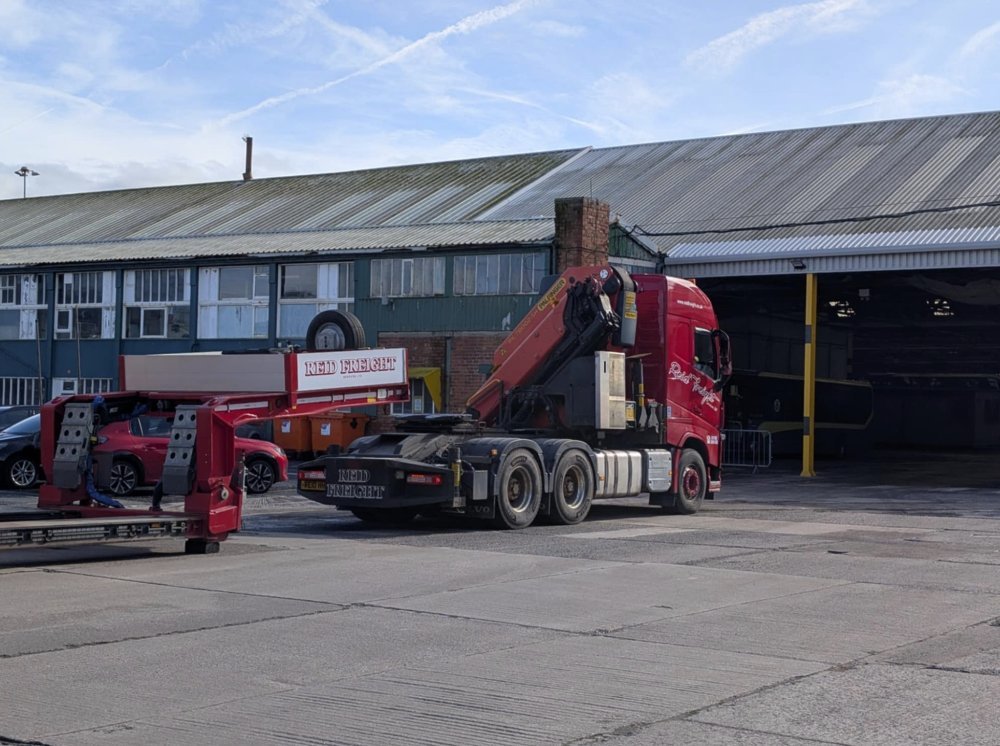
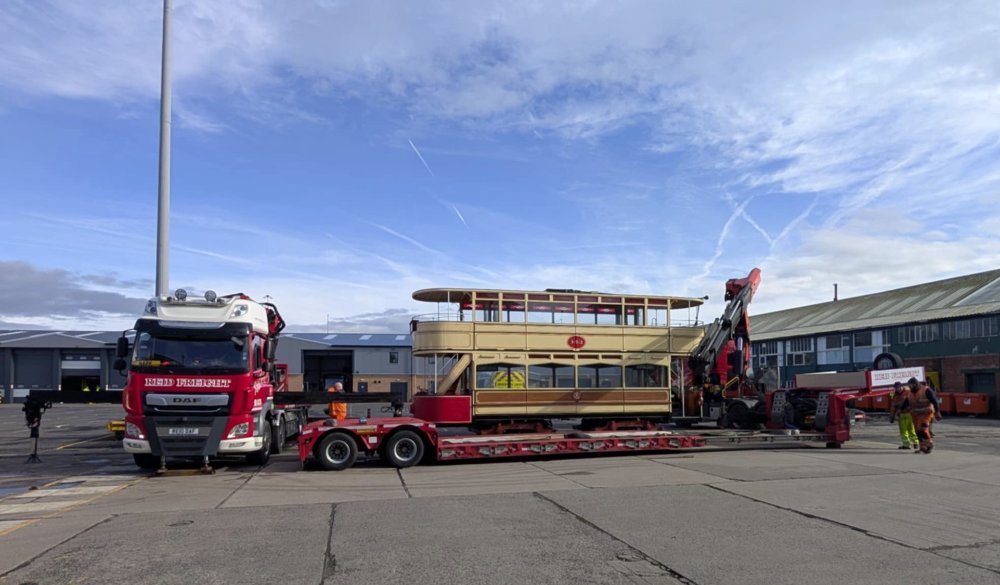
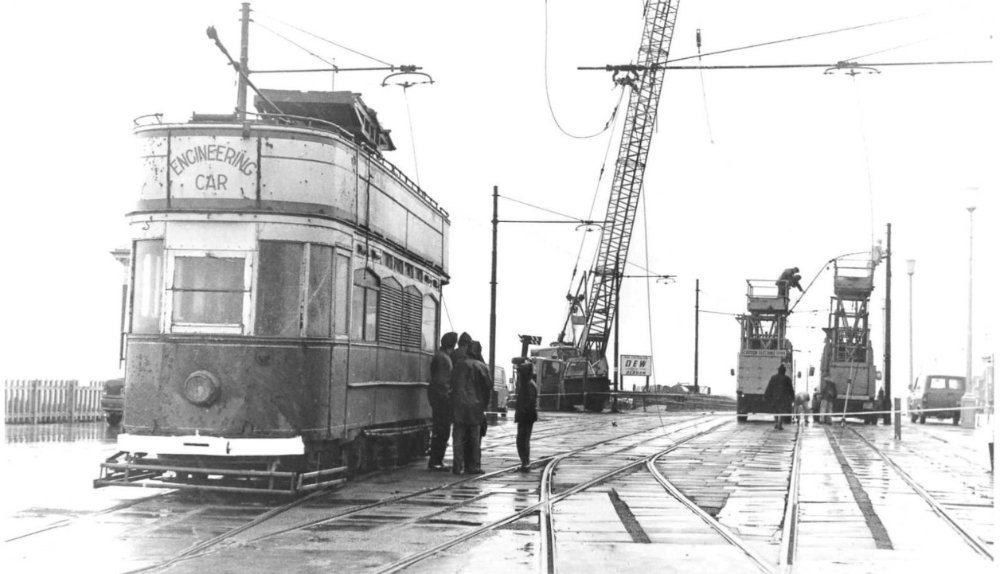
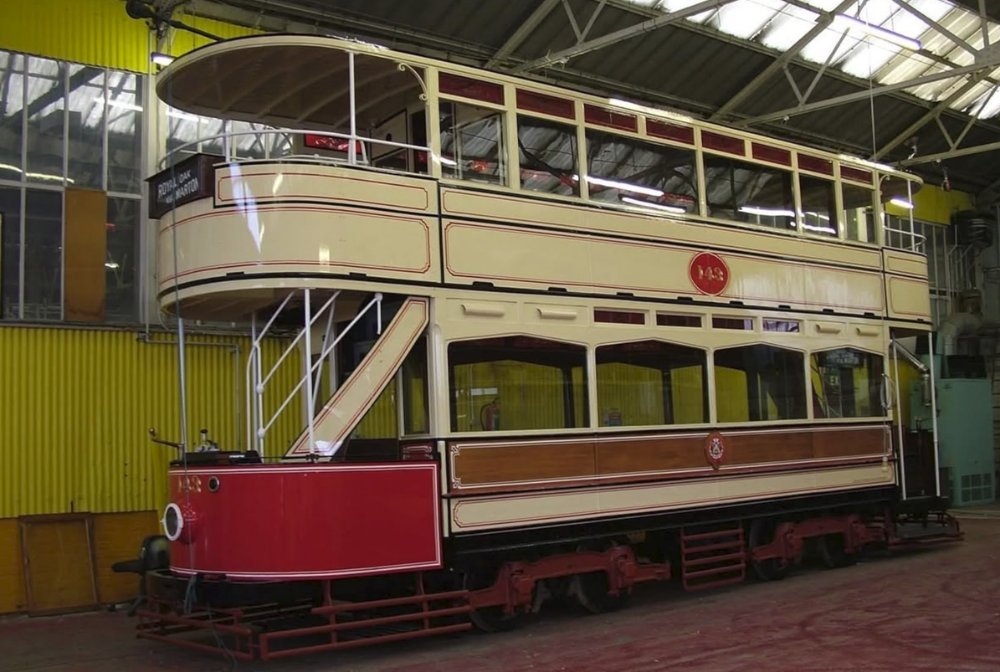
The story of Standard 143
Blackpool Corporation built a fleet of 42 ‘Standard’ cars during the 1920s in response to both growing patronage on the tram routes and a need to rationalise the assortment of tram types, many originating from the early 1900s.
No.143 was built by the Corporation in 1924 as an unvestibuled, open balcony ‘Standard’. Later, in December 1929 the tram received enclosed drivers vestibules and upper deck. The red and cream livery was replaced by green in June 1934.
Withdrawal of the Standards began in the 1940s and the numbers thinned out during the 1950s as the Coronation class arrived. However, a handful survived in service as late as 1966 and a number of them survive in preservation.
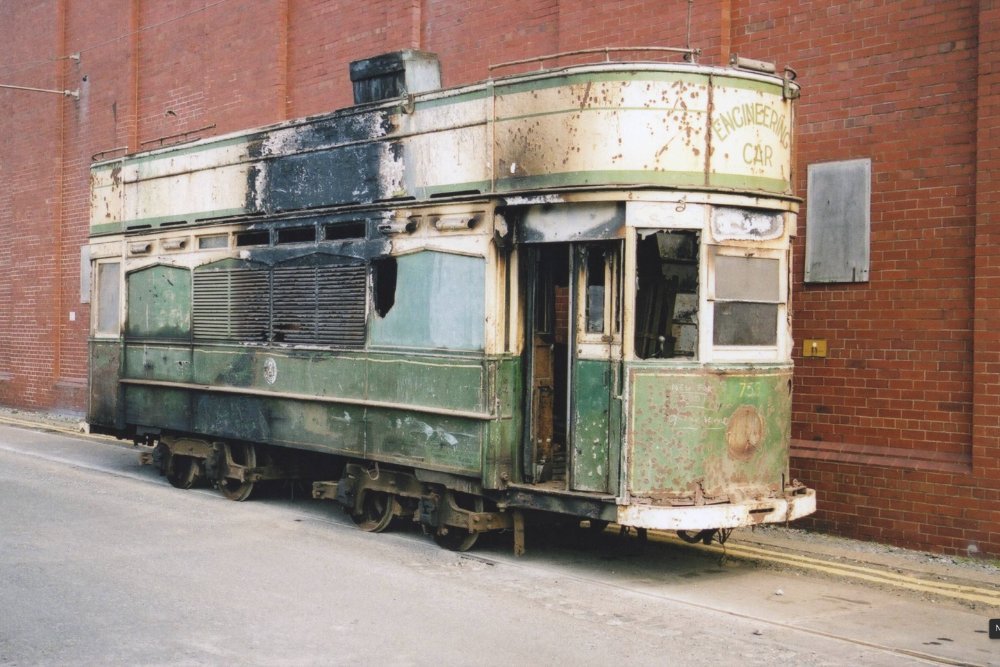
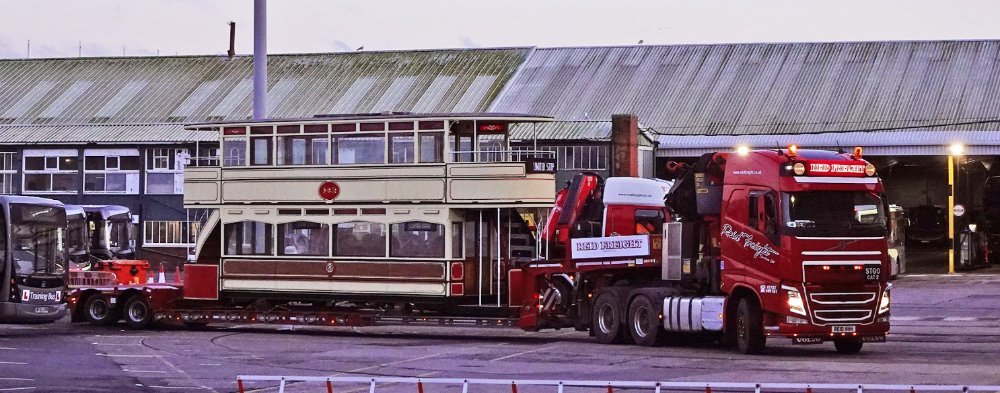
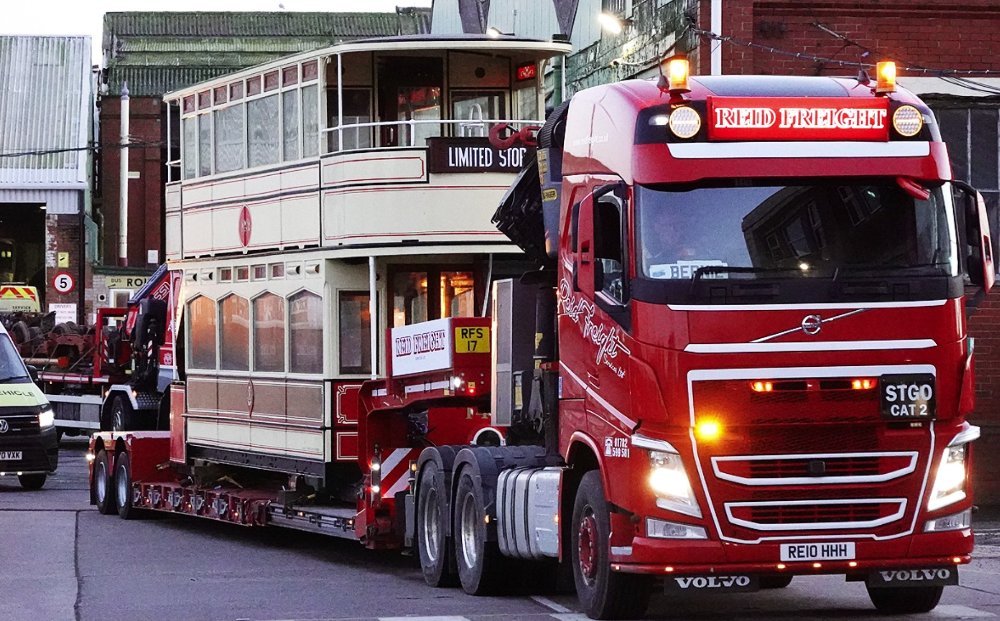
This car has a rather unique history. Withdrawn from passenger duties in October 1957, it was fitted with a bus engine and generator set to allow it to operate separate from the overhead. An inspection tower was fitted on the upper deck and the tram transferred to Engineering car duties. Later renumbered 753 in the works car fleet, it survived on such duties until June 1990 when the engine caught fire and gutted the lower deck saloon. Retained by Blackpool Transport for possible restoration as a Standard car, a project to acquire sister car No.147 from an American museum led to 753 being cannibalised and withdrawn surplus to requirements.
Unwilling to see such an historic tram broken up, the car was donated to the Lancastrian Transport Trust in February 2002 and was transferred to our Clifton Road depot on 13 April 2003 to await future restoration.
A grant application was submitted to the Local Heritage Initiative in August 2005 for a project to fully restore the tram to original 1924 condition, as an open platform, open vestibule tram, a type not represented by any of the other preserved Blackpool Standards. Work on the project started in November 2005 and 143 returned back to Rigby Road depot in August 2010 for completion by Blackpool Transport.
Unfortunately, the pressure of work to upgrade the tramway and the retained double deck cars resulted in no work being undertaken on 143 and the realisation that the extent of heritage operation would be minimal led to BTS not being in a position to honour their pledged partnership agreement dating back to 2005. As a result, car 143 was stored until November 2018 when a revised agreement was negotiated with Blackpool Transport.
During the remainder of 2018 and throughout 2019, the work on 143 was completed in a joint project involving Blackpool Transport staff, contractors and volunteers and the car was launched, looking superb, on 23rd September 2019. Unfortunately a motor problem was apparent which has proved time consuming to resolve.
With the significant downsizing of the Blackpool heritage tram operation, 143 was placed on loan to the East Anglia Transport Museum nr Lowestoft from February 2026. This move is part of a loan agreement which will see the team at the museum complete repairs to the tram and then it will be completing mileage accumulation in service.
143 departed Rigby Road Depot on Tuesday 24th February on the back of a Reid Freight low loader, having been separated from its trucks to ensure it was low enough to take the most appropriate route (the trucks travelling on a separate lorry). After travelling through the night it then arrived at Carlton Colville the following day – Wednesday 25th February 2026.
Soon after arrival it was unloaded from the lorry and placed upon its trucks once again. It was then moved into the depot where the required maintenance work will be undertaken.
Over £200,000 has already been spent on the restoration of 143 but the work required will need more outlay. To help achieve this the East Anglia Transport Museum have launched a “Let’s Get 143 Back on Track” fundraising campaign.
In its engineering car role:
We see 753 – albeit with only the gold 7 visible as its fleet number – at Cleveleys in October 1983. The overhead line crew are on the raised platform of the tram and seem to be undertaking repairs to one of the overhead line bracket arms.
In this second image we see the repairs continuing as Balloon 709 approaches from behind as it heads north with a service to Fleetwood.
Parked up at Little Bispham loop
Fire damaged
Looking magnificent in the paintshop after restoration
Emerging from the depot
Half way in, half way out
Transport preparations commence
Tractor and trailer unit involved in the transportation
One of the cranes/tractor units being used for the lift
Low loader parked alongside 143 awaiting the lift
Preparing to be craned onto the low loader
Off the trucks and onto the trailer
Touchdown on the trailer
All loaded up
Loaded and ready for 300 miles
Leaving the depot via the bus entrance
Onto Rigby Road
Blue skies met 143 at its new home. Its seen here still sitting on the back of the low loader.
Back on the trucks, 143 is on East Anglia Transport Museum rails for the first time. (EATM photographs by Tim Major, 25th February 2026)
Safely in the depot alongside another Blackpool tram - Brush 634 - The Terror Tram
On test
That's it folks. Next time:
A look around a Manchester depot
Part 2 from Martin Auto Museum

 Hi there folks. Welcome to episode 1. In this one: Section 1: F2 pics from Taunton Section 2: Out and About 1 – High Cup Nick Out and About 2 - Minffordd Yard Section 3: Martin Auto Museum – Part 1 Section 1 Taunton – Sunday 29th March 2026 Smeatharpe’s second race day of the 2026 season was a four-formula affair with national formulas at the centre of the action. The British Spring weather continued to surprise and disappoint with chilly weather turning to drizzle later in the day that made track conditions tricky. The race action may have slowed a little, but it certainly didn’t suffer. A cracking entry of 45 Formula Two’s ran a full format meeting with 22 cars taking part in heat one. The two white tops had very different fortunes. 770 Austin Farrell dropped quickly to sixth place but fought back to fourth with a well-timed hit that forced both 828 Julian Coombes and 464 Matt Linfield wide. Farrell then ran wide with a driving error of his own in the next lap and fell to the bottom of the top ten. The other white top, 509 Jordan Butcher, led a few laps but then left a gap up the inside of turn one on the fifth lap which 654 Harley Soper was quick to go through. Soper was chased by 501 Jason Ward who used a bit of bumper to move Soper off-line on the same lap and Ward then pulled clear to a comfortable victory. The remaining interest in the race was the charge from the back of 127 Matt Stoneman who again found a gap to pass 207 Alfie Flecken two laps from the end to finish in second place. Heat two featured the other 23 cars and had white top 262 Charlie Cocks making the early running. None of the yellow grade got close to him and it was a charge from blue that settled the race with 727 Luke Syrett-Barsby, 2026 sensation 220 Freddie Hunter-Johnson and 405 Josh Hamstead all coming through the field in convoy. Cocks was moved wide and surrendered the lead to Syrett-Barsby when a telling hit came in and despite best efforts, Hunter-Johnson was unable to get close enough to his former National Ministox colleague to challenge for the victory. Syrett-Barsby won with Superstar 213 Tom Bennett making a late dash to get amongst the convoy of blues and finish third ahead of Hamstead. 24 of the 25 eligible cars returned for the Consolation which started in scenes of chaos. 185 Jessica Ward crashed out in turn three at the drop of the green flag and was collected hard by 890 Paul Rice whilst 828 Julian Coombes went spinning in the dense field of yellow graders on the home straight and was hit several times. 728 Jack Bunter went skyward off a marker tyre as he took avoiding action. Medical assistance was required to safely get a shaken Coombes from his car, and a complete re-run of the race was ordered. The restart was equally fraught with 128 Jake Ralfs pirouetting down the home straight plating on the opening lap to be hit by 359 Gary Wrench bringing out yellows. Farrell led the restart but left a gap for 234 Tom Shilling on lap three and by the next lap 542 Steven Gilbert was already on the scene using a great push to move from fifth to second in one corner. By half-way, Gilbert had passed Shilling to lead but a lap ten hit from 890 Paul Rice was enough to hand Rice the lead which he converted into race victory. As the damp weather really set in, there were two non-starters in the Final which gridded 28 cars. Gary Wrench was the first of many to misjudge the level of grip and put himself around the turn three plating in the very early stages. Butcher once again had a turn at the front but this only lasted until the third lap when 464 Matt Linfield passed him and pulled clear to build up a decent lead. Butcher held second until just before halfway when he left a space that 979 Paul Moss couldn’t resist on the inside of the pits turn. Moss continued to reel in Linfield and grabbed the lead four laps from the end with Flecken stealing second a couple of laps later. Moss held on at the front despite Flecken gobbling up the gap between him and the leader as the track dried, but that was how they finished at the chequered flag. Linfield was penalised for a blatant jump start, which promoted 194 Luke Johnson to third place and Butcher to fourth. The 29-car Grand National was the biggest grid of cars of the day. Flecken was an early back straight spinner whilst 560 Luke Wrench found the wall hard in turn three and retired with a damaged bumper catching the front wheels, after a clash with 12 Craig Driscoll. The early leaders were a repeat of the Final with Butcher giving way to Linfield after four laps. Further behind, a fierce battle between 355 Aidan Grindey and 27 Kieren Bradford spilled over when Grindey launched Bradford so hard into the pits turn that both ended up hitting the plating hard and Grindey ended up facing where he had just come from. Bradford then got tripped up by the conditions on the next lap, running very wide, where he collected Grindey bringing out the yellows for a race caution. On the restart, Shilling and 468 Sam Weston crashed out together and Driscoll span trying to avoid them. Linfield stayed at the front until the lap boards were showing but was then moved off-line by 736 Josh Weare who survived a spirited attack from Ward at both ends of the track on the last lap to take the victory. A great day of Formula Two action, as Smeatharpe always is! Words by Crispen Rosevear Pics: Kieren Bradford’s new one Charlie Fisher Jake Ralfs Josh Weare won the GN Harley Soper JCB sponsorship for Alfie Brimble Sam Weston Paul Moss Luke Syrett-Barsby won Heat 2 Ryan Hall Gary Wrench – WRC#1 Luke Wrench – WRC#100 Phil Mann Robbie Batten Josh Hamstead Charlie Knight Luke Johnson Reece Bawden Fred Hunter-Johnson Jessica Webb Kasey Jones A self-build from Steven Gilbert JPs shale car on the way home from Scunthorpe the night before Motorworld’s John Harding works on the 27 car during pre-meeting practice A very smart seven year old Scania P280 from LF Vehicle Collections Paul Moss won the Final and a hamper of Thatcher’s from Mike Priddy Section 2 Out and About 1 High Cup Nick Join me as we take a walk through this outstanding area in the North Pennines. High Cup Nick is a dramatic, U-shaped glacial valley (ravine) formed during the last ice age around 20,000 years ago when glaciers carved through hard dolerite rock and softer limestone/sandstone. It is situated in the Cumbrian Pennines and is famously known as "England's Grand Canyon". There are panoramic views towards the Eden Valley from the top of the valley. The surrounding area is a "scarred landscape" featuring shake holes and moorland. The area nearby, particularly around Murton, has a history of 18th and 19th-century lead mining. The area is near an active military firing range (often indicated by a red flag). We start from the village of Dufton (more about the village at the end of the walk) Our 10-mile route clockwise from Dufton Leading us out of the village is an ancient way Huge blocks of stone used to support the pillars of old Lancashire mills are being put to use here and are frequently used in the restoration of footpaths, particularly in Northern England. The flagstones have been reclaimed from the cotton mills of the Lancashire towns of Colne, Burnley and Blackburn Many of Lancashire’s mills are now demolished and have given way for modern developments. During the late 18th Century when the mills were built in Lancashire stone was quarried from the Pennine moorland fringe around Rochdale and Bury. With the introduction of steam power to power the engines in the mills during the early 19th century the building design had to change in order to fasten the huge engines to the floors of the mills. Huge square blocks of Rossendale stone were bought into the mills and placed into the floor. These pieces of rock were used to not only support the cast iron pillars supporting the building but also to anchor the steam engines to the ground. Until now these engine blocks were crushed after the mills had been demolished as there was no further use for them. If you are out walking, take some time to think about the history of the flag stones and how many men, women and children have walked upon them over the past 250 years and the stories they could tell. The path joins a magnificent green lane Some old gate posts Complete with gate hanger. The moss growing on the stonework is a sign of a clean air quality around here. The dry stone wall has been built around this ancient tree The locals The delightful Eller Beck is crossed We are now heading out into the wild country The skill of the drystone wallers of times past The track was used to access mine workings now long disused A lime kiln from the 1700s Here we find an adit. These are a horizontal, or near-horizontal entrance or passageway leading into a mine or underground excavation. Primarily used in mining for access, ventilation, drainage, or ore transport. Adits differ from vertical shafts by allowing entry on a level plane. This next section is a pathless terrain with no visible marker points for a fair distance. In thick fog or driving rain you have to trust your compass as it is so easy to head in the wrong direction. I made a deviation to a trig point (arrowed green on the route map) situated at the highest point. You can just see the trig to the right of two other walkers in the far distance. A trig point, or triangulation pillar, is a 4ft concrete pillar installed by the Ordnance Survey (starting in 1936) on high ground to map Great Britain. They are found on hill summits or high points to ensure clear visibility to at least two other trig points. They enabled precise mapping via angular measurements using a theodolite. There were once about 6,500 trig pillars, built by the early surveyors at OS. Now mostly obsolete due to GPS, they serve as landmarks and targets for hikers. There are still a number of them in good condition dotted around the country However, our one here has suffered the ravages of the extremes of weathering at this spot This one at Hawthornthwaite Fell in the Forest of Bowland has had the base exposed owing to the erosion of the peat surrounding it Vicious winter winds, snow, and ice can coat the pillars in spectacular style The view looking west towards the Lake District We have now reached the stand-out part of our walk High Cup Nick in all its splendour To get into the bottom of the valley involves a descent down the side to begin with Followed by a massive boulderfield to negotiate. Arrowed is a human figure. Nearly at the bottom At the far end looking back On the approach to Dufton is this old water trough T KENNEDY PATENTEE KILMARNOCK St Cuthbert's church is found along the quiet lane between the villages of Dufton and Knock. It is signposted off the road, along a track, nestling at the foot of the high Pennines. The present St Cuthbert's church is late 18th century and replaces an earlier stone building dating back to 1293. Many of the miners who worked in the area are buried in the churchyard, their corpses carried on horseback across the fells. The church is named after St Cuthbert whose body was carried across the North Pennines by monks from Lindisfarne attempting to flee the Vikings in 875 AD. Dufton Dufton is a very attractive village three miles north of Appleby. Many old houses, some from the 17th, 18th and 19th centuries, border the rectangular village green, with its avenue of lime trees marching down the centre. Wesley House was originally built as a Methodist chapel in 1820 and was converted into a private residence during 1935/36. In the days when Dufton had a stone mason living in the village, he made for himself a statue of William Shakespeare. One night someone broke the statue’s feet off. The mason was intending to throw the damaged statue out, but the family who were in the process of converting the chapel heard about this and decided to have a niche built to house it. Lead mining was an important industry in the 1800’s, and the London Lead Company (owned by Quakers) was instrumental in building village cottages for their workers and families. They provided Dufton with a school, a library, and piped water in 1858. There are four taps still in evidence, along with the sandstone trough. Out and About 2 Minffordd Yard Before we head to the yard we’ll have a brief look at a loco at the Welsh Highland Heritage Railway’s Porthmadog terminus. This is an ex-tunnelling loco manufactured by Hunslet Barclay, Leeds. It is four wheeled, just over 16ft long, and weighs in at twelve tons. Built for the mining industry, the locomotive is typical of compact low-speed high tractive effort narrow gauge diesels. The Deutz air cooled engine is of the 912W type widely used underground, and throughout the construction and marine industries. It is a six cylinder in-line engine designed for high torque at low speed, rated at 63kW (84 hp), maximum revolutions around 2500 rpm. The locomotive was named Emma by her previous owners. She was one of the penultimate locomotives built at Jack Lane, Hunslet, Leeds. She last worked on the Jubilee Line Extension project, London, operated by a consortium of Balfour Beatty and Amec, although owned by Hunslet Barclay. When the extension project finished, she was sold along with several other similar locos. Arrival at Porthmadog in March 2003 saw rebuilding commence. Emma has been commissioned with air brakes, couplings and a basic cab. HB 12t shown in construction-company livery. It carries the marking "Jubilee Line Extension 102" Somewhat decrepit but in mechanically good condition, here is the loco on arrival at Gelert's Farm Gelert's Farm Works is the operating centre for the Welsh Highland Heritage Railway (WHHR). It was, as the name suggests, a working farm. After the Welsh Highland Railway Ltd purchased Beddgelert Siding in 1975 from British Rail the ramshackle collection of farm buildings known as Gelert's Farm came up for sale. The farm which is situated between Beddgelert Siding and the Cambrian line was purchased to become the operating centre for the rebuilt WHR Ltd. After possession of the land was obtained in late 1975 track was laid into the site. Over the next couple of years five sidings were laid into the yard and another back towards Pen-y-mount. The old hay barn was converted into a loco shed, and a large pole barn became the carriage shed. The stone buildings were converted to workshops and a machine shop. A third plot of land was purchased in the 1980's and this consisted of the area where the old crossing box, and the attendant keeper’s cottage were located. This also included a short length of track of the Ffestiniog Railway link line. This short length of track makes a physical connection to the WHR just under a mile away We now move to the railway yard at Minffordd. Minffordd Yard is located to the north of the Ffestiniog Railway main line just west of Minffordd station. In old company days traffic was transhipped here to and from the standard gauge Cambrian Railways (later GWR, then BR Western Region). Slate brought down from the quarries on narrow-gauge tracks was shipped out whilst incoming traffic included coal, for the railway's locomotives and for local domestic use. Standard gauge transhipment ended in 1970, and the yard is now the headquarters of the Ffestiniog and Welsh Highland Railways' Infrastructure Department and one of their main depots. The location of Minffordd arrowed in blue The site in the early 1900s The entrance to the yard One of the lineside buildings The view west The junction for the yard Locomotive 5004 on the Ffestiniog Railway refers to a custom-built service vehicle rather than a steam engine. It is a specialized, modern steel-bodied bogie van manufactured at the railway's Boston Lodge Works to support lineside clearance and maintenance projects. The versatile wagon supports right-of-way upkeep by combining a multi-section tool van with an elevating working platform to clear overhanging branches and other obstructions. No 10 Merddin Emrys heads the 11:10 from Porthmadog to Blaenau Ffestiniog Merddin Emrys was the third double Fairlie loco on the Ffestiniog Railway but also the first loco constructed at Boston Lodge in 1879. Left in the shed at the cessation of operations in 1946, Merddin Emrys condition deteriorated such that it required extensive repairs and new tanks before entering service under the new regime in 1961. Reboilered in 1970 and rebuilt, Merddin regained its elegant lines in 1987. A subsequent overhaul completed in 2005 saw boiler repairs and new power bogies paid for by the Ffestiniog Railway Society. Merdddin was withdrawn in September 2015 for boiler overhaul which saw it return to traffic with new chimneys and smokeboxes. In 1875 March 1956 The old goods shed. Note the diamond crossing. The shed in 1887 Linda reversing through Minffordd Yard into the "Coal Hole" in May 1966 to pick up some coal wagons from the exchange sidings with BR. In the goods shed is this HEC diesel loco LD 9349 (also named Stacey) is a narrow-gauge, ex-tunnelling locomotive. It was manufactured by Hunslet Barclay in Leeds, featuring a Deutz air-cooled engine, and like Emma above previously saw heavy use on the Jubilee Line Extension project in London. To the left of the shed Spare bogies dated 1966 Note the spelling on this points lever. In the past only one ‘F’ was used. Llewellyn Wynn Williams, of Darlington, England. Lever for railway points. Crates of rail chairs The exchange sidings. This is a sunken road known as the Coal Hole. Here there is a loop with chutes for coal and ballast. Originally provided for coal delivered by standard gauge wagons and used as such into the 1960s, when the standard gauge side of the yard was closed. They were then mostly used for deliveries of ballast by road. In the early preservation period the FR bought used ballast from BR and this, too, was delivered by rail to the chutes. As the FR moved to buying new ballast, delivered by lorries, so the use of the chutes was adapted. One of the tasks carried out by the Ffestiniog Railway Society London Area Group working party over the Easter weekend in 1964 was unloading spent British Railways ballast in Minffordd yard. When B.R. sold their spent ballast, it really was spent! It contained a mixture of useless mud, dirt and ash besides at least some useful stone. It was better than nothing and certainly superior to the mud and turf that was holding the Ffestiniog Railway track together at that time, but not really what was preferred. Paul Dukes, the Works Manager at the railway's Boston Lodge Works, rigged up a griddle / sieve arrangement in Minffordd Yard where the B.R. wagons were unloaded. The spent ballast was shovelled out of the B.R. wagon onto the top part of the chute which had a fine wire mesh surface. The ballast was scraped over this so that all the dirt, ash and other small bits of muck would fall through into the F.R. waiting below on the left-hand track. The larger bits of usable ballast would then continue down the rest of chute into the wagon waiting on the right-hand track. Later, the F.R. was able to afford new ballast from a local quarry and Paul Dukes's concoction became redundant. March, 1964. Credit to Ron Fisher. Platform edging This item stamped with ‘The Hammond M’F’G Co Cleveland In 1916 the Almond Manufacturing Co. of Cleveland was established to manufacture machinery. It seems likely that they discovered that their name conflicted with that of drill chuck maker T. R. Almond Manufacturing Co., because only a year later the name was changed to Hammond Manufacturing Co. Under that name they made wall and post-mounted radial drilling machines that were especially useful in engine manufacture. The company only survived until about 1922. Axle sets The exchange sidings from the other end Unloading coal from BR to FR wagons in 1961 What remains today In 1961 Prince shunting in 1913. The engine is fitted with Welsh Pony's smokebox at this time. BR Standard 4MT Class 4-6-0 No. 75004 collects three empty coal wagons from the exchange sidings in 1965 The exchange sidings in May 1970 A load more axles Points lever Railings Track panels The far end of the exchange sidings The 1881 census for Wem, Shropshire describes the occupants of a house called Bodwyn in Noble St. as 'Thomas Harrison Seacombe, aged 51, a brickmaker employing 46 men and 22 boys'. His wife Francis, two daughters, a governess, and two servants were also resident. Thomas founded his brickworks at Delph Quarry, Acrefair near Ruabon in 1868. The brickworks were taken over by Wyndham and Phillips in 1883. Following closure in 1995 the site became an opencast coal and clay quarry. The end of this line A 1920s view from the FR main line at Minffordd station looking down onto the Maenofferen wharf within the yard. Notice how much slate is piled up! Minffordd Yard and standard gauge station July 1957. The Maenofferen Shed once had a chimney on the back corner. A turntable survives H & J Ellis, Manchester H & J Ellis (historically known as Samuel Ellis & Co) was a prominent 19th-century British engineering and iron-founding company based at the Irwell Foundry on Stanley Street in Salford, Greater Manchester. Operating primarily between 1832 and 1887, the business was owned and managed by proprietors Hugh and John Ellis. They were well-known for manufacturing steam engines, iron cranes, and industrial turntables. The firm also produced locomotives for the slate quarrying industry in Wales. The works was located next to the River Irwell, at the former 'Irwell Foundry'. A detailed 1848 map shows Irwell Foundry located on Stanley Street between the New Bailey Prison and the River Irwell. The site was by no means large, with an area of approx 80 ft by 240 ft. There was a small central yard, about 45 ft square. This was presumably where large cranes were assembled, and that overhead cranes of more than 45 ft span were made. There are many cases where good products were often produced in difficult circumstances, in small factories which were far from ideally suited to the work. This was evidently the case here. Reference in an 1848 report states that the outline of the eastern half of the building was very similar to that in 1831, at which time the building was labelled as a 'Deaf and Dumb School' and 'Lying-in Hospital'. More is revealed in a report of an 1842 fire: '...the premises now known as the Irwell Foundry but formerly used as the School for the Deaf and Dumb..... the whole pile of building, which was formerly two very large double four-storied houses...'. 'All the floors of the building (except in the basement story) were filled with machinery and machine making tools and implements of various kinds. There were two marine steam engines, in a forward state to which Messrs. Ellis are under a forfeiture of so much per day if not completed within a time fixed. They were totally destroyed. 1872 - 'Fatal Accident in an Engineering Yard. Yesterday morning, while a labourer named Charles Walton, 28 years of age, was at work on a travelling crane in the yard of Messrs. H. and J. Ellis, engineers, Stanley-street, Salford, he was accidentally struck by the break handle and thrown to the ground. He was taken to the Salford Royal Hospital and Dispensary, where it was found that he was severely injured about the head, and he died about an hour after being admitted. In 1884, another major fire broke out at the foundry, seriously damaging the works and causing its closure. It is believed that the foundry did not re-open after this date and in 1887, the foundry and all its remaining equipment and inventory was put up for sale. A boiler succumbing to nature A small amount of used slate A few things of interest in here In an inaccessible part of the site lurks a McLaren KMX Tamper In March 2005 Welsh Highland Railway Construction Ltd announced the purchase of this machine for use in construction of Phase 4 from Rhyd-Ddu to Porthmadog, and the maintenance and upgrading of the existing railway. Built in Austria in 1995, it was metre gauge and had been supplied by Plasser & Theurer's French subsidiary FRAMAFER for use in an underground coal mine in France. Its last such use is believed to have been at the Mines de la Houve at Creutzwald in the Lorraine coalfield; this was France's last deep coal mine, closed in Spring 2004. It was delivered to Minffordd Yard on the FR on 29 March 2005 and taken to Boston Lodge for regauging and overhaul. In the course of the overhaul the unit was also fitted with roof sections for above ground use. Also, various systems were modified or removed; those dispensed with included facilities for aligning turnouts, and a pantograph which had been used to check that the overhead power supply was energised while the tamper was in operation. Although this seems contrary to safe working, it is how the mine safety systems worked, the 400V overhead system had to be live for the tamper to operate. KMX at Harbour Station after a day working on the Welsh Highland Railway - 27 March 2023 Lever frames Levers A Planet with Gardner engine "Ni l'un ni l'autre" (French for "Neither one nor the other") is the inscription painted on this highly unusual, historic vehicle known simply as "The Boat". It was a peculiar, lightweight conveyance built like the section of a boat mounted on wheels. It was designed to run on the railway tracks, specifically powered by a sail when the wind allowed, or pushed along as a form of velocipede/inspection car. The French name "Ni l'un ni l'autre" was given to it because it was neither a true boat nor a standard train carriage. A product from W. Furness & Co W. Furness & Co. was a prominent 19th-century British engineering firm based in Liverpool, specializing in woodworking machinery. Operating out of the Globe Ironworks in Bankhall, the company was historically significant for supplying tools used in the construction of the Great Exhibition hall. They were known for inventing and manufacturing advanced carpentry tools, including combined rack and rope feed saw benches, dovetailing machines, and bandsaws. Back outside the sheds The two sheds in June 1972 with new track laid These were originally slate storage sheds and were not rail served. The roof of the larger, left hand, shed (Maenofferen Mawr) was raised towards the end of 1970 so that it could be used for winter storage of rolling stock, usually smaller vehicles. It is accessed via a 'point' comprising a pair of rails held to gauge by tie rods and able to be slewed to connect to each of the four lines leading into the shed. It is a giant, crude, stub point and requires the rail to be positively aligned at the loose end by short fishplates. Slewing the rails requires a large crowbar and is a back-breaking task for one man! This shed continues to be used to store heritage vehicles, mainly four-wheel carriages. The right hand shed (Maenofferen Bach) had its roof raised a little later and is reached via a 3-way stub point, previously used at Harbour Station, which was possibly an apprentice piece by George Percival Spooner (1850-1917). Signal posts The coal stock is diminishing A brick-spotters paradise! Robert & William Robson, Newcastle upon Tyne, 1863-1908 It has been estimated that a third of all the brick houses in England are built from London Brick Company bricks. The London Brick Company started production just over a century ago and usage peaked in the post-war rebuilding period up to the 1960s. Maximum production rose, at one point, to an amazing 16,000,000 bricks per day. In other words - quite common bricks! Van 51 was built in 1964 as Van 1 by the Midland Area group of the Ffestiniog Railway Society as a replacement for the previous Van 1. It was the first item of coaching stock built under the new administration. It uses running gear components from old quarryman's carriages and couplings from the Ashover Light Railway (these have subsequently been replaced by standard FR chopper couplings). The seats came from Birmingham buses. Vacuum braked, it has a handbrake for running in works trains. As built it had full-length coachwork, no end platform, and was painted green. It was fitted with vinyl covered seating and was sometimes used as the top end vehicle in passenger trains when unbraked bugboxes were used. In the mid-70s it was fitted with a gangway at one end so it could be used with modern stock in a fourth passenger set. In the mid-1980s it was transferred to the Permanent Way Department. In 1987 it had a major overhaul, and the bodywork was shortened leaving an open platform at one end, fitted with a handrail recovered from Glan y Mor yard. It received yellow livery with a grey stripe. In 2000 this was inverted to the correct Howesian corporate style, though with the wrong shades of yellow and grey! It was renumbered from 1 to 51 in the late 1990s, after a replica of the old Van 1 was built. Now regularly used by the S & T department. There is a separate compartment for gas cylinders, hence the small yellow warning panels. The company of J. C. Edwards (Ruabon) Ltd, was based in Ruabon, Denbighshire, and was active from 1903 to 1956 as a brick, tile and terracotta manufacturer from its works at Tref-y-Nant, Acrefair, Albert Works, Rhosllannerchrugog, and Pen-y-bont, Newbridge, Denbighshire. James Coster Edwards (1828-1896) founded the company; it was sold in 1956. The entrance to J.C.Edwards works - the rest of the plant has been demolished. Piles of sleepers The most famous of the industrialists in Wrexham in the late 19th Century was Henry Dennis, who founded the company in 1878 that would later become Dennis Ruabon Tiles Ltd. Dennis, born in Bodmin, Cornwall, studied civil engineering and travelled to Wales to supervise construction of a tramway at a slate quarry near Llangollen. After a stint in Spain at a lead mine, he later returned to Wales after amassing a considerable personal fortune. Dennis became managing director of the Hafod Colliery and by 1878, had established the Hafod Brickworks. By 1893, a new factory which became known as the "Red Works", was constructed on the site where the present-day building still stands. There, workers produced ridge tiles, chimney pots, tiles and other products using 24 coal-fired "Beehive" kilns. The business flourished at a time when demand for the red bricks and terracotta was high. By the time of his death in 1906, Dennis had established himself as a giant of the industry, ensuring that his firm - and the name of Ruabon - had been forever cemented in British architectural history. He also had interests in collieries, lead mines and water and gas, and is thought to have employed up to 10,000 people. Under the control of his son, Henry Dyke Dennis, the Hafod brickworks became a private limited company in 1934 - Dennis Ruabon Limited - and continued to produce materials including tiles, chimney pots and ornamental terracotta. In 1944, Dennis's grandson, Patrick Gill Dyke Dennis, took control and launched a modernisation programme. By the end of the 1970s, brick production had largely ended, and the company concentrated its efforts on making quarry tiles. Carriage 1111 is the Permanent Way Department's mess carriage. It is a key vehicle in their works train, along with the tool van, a welding van and various wagons. The train is hauled by Harlech Castle, the department's diesel locomotive (normally known as Ina). That completes our look around this historic yard. Section 3 Martin Auto Museum - Part 1 Last March on a road trip around Arizona/Nevada I came across the wonderful Martin Auto Museum: Here is the first part of an off-season look at the stunning vehicles in this museum. Mel Martin founded Martin Auto Museum and Event Space in 2005. Martin, 94, created the museum out of a need to share a collection of vehicles that represent significant periods in automotive history. After 12 years, Martin had more vehicles in storage than he did in the museum. That necessitated the move. The new location features more than 170 vehicles, including classic cars, hot rods, customs and imports. The museum also boasts one of the largest collections of auto memorabilia, antique gas pumps and signage anywhere. When Mel was 17, his great-uncle gifted him a Douglas truck. After moving to Mayer, Arizona, Mel opened his first repair garage and gas station. Thus, began a lifelong love affair with the automotive world. At the entrance to the museum is this 1995 Chevrolet C4 Corvette Coupe Even with eleven years already behind it, the C4 Corvette still managed to receive the accolades of enthusiasts and critics alike. It received praise for its jaw-dropping acceleration and equally for its intense road grip and superior handling. However, with the announcement that an all-new, fifth generation Corvette was under development and on track for the 1997 model year, there were few who were surprised by Chevrolet's decision to make minimal changes to the existing C4 Corvette coupe, and to completely eliminate the ZR-1 early in the 1995 production year. That's not to say that there weren't any changes made to the 1995 Corvette. Mechanically, the already robust LT1 engine received additional refinements. The connecting rods were revised to improve strength and weight uniformity, the engine fan was made quieter, and the fuel injection system was improved to utilize alcohol-blend fuels, which began to have an increased appearance at gas pumps around the world at about that same time. Additionally, the new fuel injectors were developed to reduce fuel dripping when the engine was turned off. Beyond the engine, additional mechanical improvements were also made to the drive train and other areas of the car. The electronically controlled four-speed automatic transmission was refined to provide smoother shifting, and the torque converter was made stronger and lighter. Specs… • 350 cubic-inch V-8 engine, 300 horsepower • Multi-port fuel injection • 4-speed automatic transmission • 96.2-inch wheelbase • $36,785 base price new • 20,742 C4 Corvettes produced in 1995, with 15,771 of those being coupes Once inside you are greeted with this glorious sight The Benz Patent-Motorwagen (built in 1885), is widely regarded as the world’s first piston-powered production automobile. On January 29, 1886, Karl Benz patented the three-wheeled Patent-Motorwagen (patent number 37435). Later in the same year, just 60 miles away, Gottlieb Daimler patented an internal combustion engine and began with the construction of a four-wheeled horseless carriage. Neither Benz nor Daimler were aware of the other's work. Karl's wife Bertha Benz, whose dowry financed their enterprise, was aware of the need for publicity. She took the Patent-Motorwagen No. 3 and drove it on the first long distance internal combustion automobile road trip to demonstrate its feasibility. She took her sons Eugen and Richard, fifteen and fourteen years old, on the 121-mile trip in August 1888. As well as being the driver, Benz acted as mechanic on the drive, cleaning the carburettor with her hat pin and using a garter to insulate wire. She refueled at a local pharmacy along the route, taking on ligroin as fuel, making it the first filling station in history. As the brakes wore down, Benz asked a local shoemaker to nail leather on the brake blocks, thus inventing brake linings. Specs... • 9 horsepower engines at 400 pm • Total loss oiling system • Steered by a tiller, not a steering wheel • Top speed of 12 mph • Chain drive on both sides 1915 Ford Model T Convertible The Ford Model T has an extensive history that stretched over nearly 20 years. It is often called the Tin Lizzie, Flivver, Leaping Lena, or Jitney, and is credited with "putting America on wheels." In 1915, the Model T cost approximately $440. Henry Ford, founder of the Ford Motor Company, produced a vehicle that was affordable, but more importantly, mass produced. By using an assembly line to construct parts, rather than the traditional hand assembly, the process was streamlined. With dealerships and factories setup throughout the world, the Model T was mass produced and easily available to many buyers. In 1915, Ford produced 1-million Model T vehicles. Henry Ford conceived a series of cars between the founding of the company in 1903, and the introduction of the Model T Ford. He named his first car the Model A and proceeded through the alphabet up through to the Model T. Twenty models in all, not all of which went into production. The production model immediately before the Model T was the Model S, an upgraded version of the company's largest success to that point, the Model N. The follow-up to the Model T was another Ford Model A, rather than the "Model U". The company publicity said this was because the new car was such a departure from the old that Ford wanted to start all over again with the letter A. The Model T was Ford's first automobile mass-produced on moving assembly lines with completely interchangeable parts, marketed to the middle class. Henry Ford said of the vehicle: “I will build a motor car for the great multitude. It will be large enough for the family, but small enough for the individual to run and care for. It will be constructed of the best materials, by the best men to be hired, after the simplest designs that modern engineering can devise. But it will be so low in price that no man making a good salary will be unable to own one – and enjoy with his family the blessing of hours of pleasure in God's great open spaces. Specs… • Production Oct 1908 through May 1927 • Front-mounted 4-cylinder, 177 cubic inch engine • 20 horsepower • Magneto ignition • Electric start 1909 REO Five-Passenger Touring Car REO was an American automotive manufacturer founded in 1905. Named for its founder, Ransom E. Olds, REO created a wide range of trucks and cars during the company's history. REO is most well-known for its Royale and Flying Cloud models, but it also produced a wide array of trucks and buses. By 1907, REO had gross sales of $4.5 million, and the company was one of the four wealthiest automobile manufacturers in the U.S. After 1908, despite the introduction of improved cars designed by Olds, REO's share of the automobile market decreased due in part to competition from emerging companies like Ford and General Motors. REO was purchased by the White Motor Company and merged with Diamond T Trucks to create Diamond REO Trucks in 1967 - ending the REO brand. Perhaps the most historical REO event was the 1912 TransCanada journey. Travelling 4,176 miles from Halifax, Nova Scotia, to Vancouver, British Columbia, in a 1912 REO special touring car, mechanic/driver Fonce V. (Jack) Haney, and journalist Thomas W. Wilby made the first trip by automobile across Canada (including one short jaunt into northeastern Washington State when the Canadian roads were virtually impassable). This 1909 REO Five-Passenger Touring Car is a running and fully operational vehicle and an excellent example of the brand. Specs… • 213 cubic-inch, two-cylinder • 20 horsepower • Two-speed planetary transmission • Three-quarter elliptic front springs with full elliptic rear springs • Rear wheel drum brakes • 96-inch wheelbase The American rock band REO Speedwagon’s founder Neal Doughty is credited with coming up with the group’s moniker. While taking a class in college on “The History of Transportation,” he saw the term “R.E.O. Speedwagon” written on the blackboard. 1905 Cadillac Model F Touring The Model F was the primary new Cadillac model of 1905. It had a sharper hood and radiator, prompting the update of the Model B (which became the Model C) and even spawning an aftermarket of updates to existing Model A and Model B cars. Models E and F shared the same chassis, although the latter was lengthened by two inches. The Model F was available as either a 4- seater, 2-door touring car with a side-entrance to the fixed tonneau, or a 2- seat delivery vehicle. Both were priced at $950 in 1905. The 1905 Cadillac Model F Touring is a four-passenger car with a 98.2 cubic inch, 9 horsepower, single-cylinder, horizontal engine. The engine is located under the car, and a chain drive powers the rear wheels. The Model F has a top speed of 32 miles per hour, which is notable for the time due to its streamlined body and powerful engine. It has two forward gears and one reverse, and the brakes are controlled externally. Specs… • 98.2 cubic-inch engine • 9 horsepower • Planetary transmission • 4-passenger seating • 2-wheel mechanical brakes • Weight is 1,450 pounds A couple of more recent design are alongside: 2002 Lincoln Continental Concept The 2002 Lincoln Continental concept was a bold, retro-futuristic vision of American luxury sedans, unveiled at the Los Angeles Auto Show in November 2002. Designed as a flagship executive car, it blended sharp, slab-sided styling inspired by the iconic 1961 Lincoln Continental with modern, high-tech elements. Powered by a potent V-12 engine, it promised effortless power and supreme comfort, embodying Lincoln’s ambition to reclaim its throne against European rivals like Mercedes and BMW. Though it generated massive buzz and was seen as a potential successor to the aging Town Car, the rising SUV boom led Ford to shelve production plans. Today, it stands as one of the most lamented “what ifs” in American automotive history—a car that could have redefined Lincoln’s image but remains a static dream. History and Creation Lincoln developed the Continental concept over nearly two years as part of a broader effort to revitalize the brand amid slumping sales and stiff competition. It debuted at the 2002 LA Auto Show, where it stole the spotlight with its elegant proportions and innovative features, drawing praise for evoking the grandeur of mid-century Lincolns while feeling utterly contemporary. Ford built two versions: a fully functional prototype with a running engine and a lighter, non-powered “pusher” display model for easier transport to shows. The concept toured events like the Detroit Auto Show in January 2003, fuelling speculation of a production model by 2005. However, shifting market trends toward SUVs and crossovers doomed it. Lincoln instead pursued more conservative paths, like the Fusion-based Zephyr (later MKZ), which borrowed some interior cues but lacked the concept’s drama. The Continental nameplate was retired until a lacklustre 2017 revival on the Ford CD6 platform. The functional prototype has been in private collections, last auctioned in 2010 for $56,100 at RM Sotheby’s Monterey sale. The display model sold at RM’s 2014 Dallas event from the Sam Pack Collection. As of September 2025, the running prototype was auctioned at Mecum’s “Larry’s Legacy” event in Chicago without reserve, highlighting renewed interest in Lincoln’s lost opportunities. Design and Features The Continental’s design was a masterclass in restrained opulence, with a long, low profile that maximized interior space while nodding to Lincoln’s suicide-door heritage. Its “centre-opening” doors (powered and pillarless) swung outward from the centre, creating a cavernous 6-foot entry for rear passengers—a clever homage to the 1961 model. The exterior featured flush aluminium handles, a full-length chrome beltline accent, and massive 22- inch polished aluminium wheels, all finished in Silver Sea Spray paint that shimmered under lights. Inside, the cabin prioritized serenity and personalization: a full-width dashboard with reconfigurable digital displays for navigation, telematics, and a THX-certified audio system; fibre-optic ambient lighting woven into the headliner and doors; and supple leather seats with a central spine console echoing the ’61 Continental. Rear doors hid bespoke touches like umbrella holders and cigar humidors. The trunk was a showstopper, with a parallelogram-liftgate that kept contents level and revealed three sliding Zero Halliburton aluminium cases for luggage or golf clubs. LED taillights and a Lincoln star badge split the grille, blending tradition with cutting-edge tech for an era when such innovations felt revolutionary. The V-12 delivered smooth, silent propulsion, paired with projected IRS for a plush ride—far beyond the body-on-frame Town Car it aimed to replace. Cultural Impact The 2002 Continental concept remains a touchstone for enthusiasts dreaming of a bolder Lincoln era, often topping lists of “greatest unbuilt cars” for its timeless appeal and missed potential to challenge Cadillac’s Escalade dominance, or BMW’s 7-Series with true American flair. It influenced subtle elements in later Lincolns, like the MKX’s chrome grille, and has inspired modern renders and fan art. In online forums and retrospectives, it’s hailed as a “retro-futurist masterpiece” that could have thrived today amid the EV luxury surge. As the functional example crossed the block in 2025, it reminded us: in a world of crossovers, sometimes what we need is a sedan that looks to the stars. If Lincoln revives the name, this concept deserves a spiritual successor—V-12 optional. Specs... Body Style 4- door luxury sedan (pillarless) Dimensions Length: 214.3 in; Width: 76.8 in; Height: 59 in; Wheelbase: 136.6 in Engine 6.0L DOHC V-12 (Aston Martin-sourced, 414 hp, 414 Ib-ft torque) Suspension Multi-link independent front/rear Brakes 4-wheel anti-lock disc Wheels/ Tires 22-inch polished aluminium; performance tyres 2010 Chevrolet Camaro Transformer Edition On July 22, 2009, to coincide with the release of Transformers: Revenge of the Fallen, GM announced a Transformers Special Edition appearance package for the 2010 Camaro at the 2009 San Diego ComicCon. The US $995 appearance package (RPO code: CTH) could be applied to LT and SS trims with or without the optional RS package and could only be applied to orders made in the Rally Yellow exterior scheme. The package included an Autobot shield badge on the driver and passenger side fenders underneath the Camaro nameplate, an Autobot shield on each of the four wheels’ centre cap, an Autobot shield embroidered on the interior centre console, a Transformers logo on the driver and passenger doors' sill plates replacing the original "Camaro" labeled plates, and high gloss black centre rally stripes with the Transformers ghost logo embedded. This then made the 2010 Camaro resemble the Bumblebee Camaro from the 2007 movie, often referred to as T1 Bumblebee. Production of the add-on package ceased on January 12, 2010, with an estimated 1,500 units produced. 1,916 units were finally produced at the end of 2010. Specs… • 6.2-liter LS3 V-8 engine • 426 horsepower • 6-speed manual transmission • Less than 300 miles when purchased Upon acquiring the car, the Martin Auto Museum reached out to a sculpture artist in Los Angeles to build the "life-size" Bumblebee Transformer sculpture displayed behind the car. The Bumblebee Transformer sculpture took months to build and is constructed of hundreds of car parts and pieces of scrap metal. 1979 Pontiac Firebird Trans Am This matching numbers 1979 Pontiac Firebird Trans Am is powered by a 400ci 6.6-liter V8 engine mated to a BorgWarner Super T10 4-speed manual transmission with the WS6 Special Performance Package. It is also equipped with a posi-traction limited-slip rear end. The WS6 Special Performance Package provided a stiffened suspension and improved handling with new springs, anti-roll bars, rear disc brakes and bushings. Additional options include air conditioning, power steering, power disc brakes, electric rear window defroster, AM&M stereo radio and space-saver spare tire. The 1979 Trans Am WS6 would also be awarded Best Handling Car of the Year from Car and Driver. The 1979 model year also saw the introduction of new aerodynamic styling, along with new wide fender flares for the Trans Am. This example is finished in Solar Gold with gold Trans Am decals and gold trim 15-inch snowflake wheels wrapped in BFGoodrich radial T/A tires. The interior is finished in its original Camel Tan and includes front bucket seats, machined-turned dash and a formula steering wheel. 23,311 miles on the clock. 1960 Ford Fairlane “The Spaceliner” Custom Concept The 1960 Ford Fairlane “Spaceliner” is a one-of-a-kind custom concept car that embodies the retro-futuristic optimism of the Atomic Age, blending jet age aesthetics with mid-century American automotive design. Built as a showpiece rather than an official Ford factory prototype, it captures the era’s fascination with space travel, rockets, and sci-fi visions of tomorrow— think a real-world version of the flying cars from The Jetsons. Despite its wild appearance, it’s a fully drivable vehicle that prioritizes visual spectacle over high performance. History and Creation The Spaceliner started life as a standard 1960 Ford Fairlane four-door sedan, a mid-range model from Ford’s third-generation lineup that year, which introduced sleeker styling alongside the new Galaxie flagship. In around 1963, legendary custom car builders Gene Winfield (known for his work on films like Blade Runner and The Beach Boys vehicles) and Darryl Starbird (a pioneer in show car culture) transformed it into this radical custom at their respective shops. It was never commissioned by the Ford Motor Company but was designed specifically for the booming 1960s custom car show circuit, where it wowed crowds with its spaceship-like flair. The car spent much of its post-show life in storage, resurfacing in 2017 after a meticulous restoration. It debuted at Art Basel Miami that year, earning the Judges’ Favorite award. Since then, it’s been a highlight of the Klairmont Kollections Museum in Chicago. Design and Features Winfield and Starbird radically reimagined the Fairlane’s body to evoke a spacecraft on wheels. Exterior: The roof was chopped off and replaced with twin forward-hinging Perspex (acrylic) bubble canopies over the front seats, inspired by fighter jet cockpits—giving it a panoramic, enclosed vibe but sacrificing some headroom. The original doors were welded shut for a seamless look, with access via the bubbles and a functional rear door. The rear features exaggerated fins, a central “jet thruster” (actually a repurposed 1951 Ford bullet nose ornament acting as a reverse light), and ten taillights sourced from a 1959 Cadillac for a rocket-launch effect. Up front, it retains the Fairlane’s signature quad circular headlights and chrome bumper. The body is finished in Roth Metalflake “Trippin’ See Sic Blue,” a shimmering metallic paint that shifts hues in the light. Wheels and Stance: It rolls on steel wheels with full hubcaps and wide whitewall tires, keeping the stock Fairlane ride height for practicality. Interior: The cabin seats four in white-upholstered bucket seats with fluffy, luxurious accents reminiscent of mid-century modern lounges. The dashboard matches the exterior’s blue hue for cohesion, with simple gauges and controls—no over-the-top gadgets, emphasizing the era’s blend of fantasy and functionality. This design wasn’t just for show; it was engineered to tour exhibitions while remaining street-legal in its time, highlighting the ingenuity of 1960s custom culture. The Spaceliner’s modest powertrain underscores its role as a design experiment—it’s more about turning heads than burning rubber. Cultural Impact The Spaceliner has become an icon of retrofuturism, frequently featured in online communities like Reddit’s WeirdWheels and RetroFuturism, where it’s praised for its quirky charm and historical nod to a time when cars dreamed of the stars. Videos of it have racked up millions of views, inspiring modern custom builds and model kits. It’s a testament to how Winfield and Starbird pushed boundaries, influencing everything from hot rod culture to today’s concept cars. If you’re into automotive oddities, it’s a must-see—pure 1960s imagination on four wheels. Specs... • Base Model: 1960 Ford Fairlane 4-door sedan • Engine: 223 cubic inch (3.6L) inline-6 "Mileage Maker", (original, -90 hp) • Transmission: Ford-O-Matic 2-speed automatic • Body Style: Custom 2+2 coupe (modified sedan) • Weight: ~3,000 Ibs (estimated, similar to stock Fairlane) • Top Speed: ~100 mph (stock performance) • Odometer Reads: 41,830 miles 1948 Tucker 48 SN 1021 “The Car of Tomorrow” This car (21 of only 51 ever built) was originally sold from the Tucker Corporation on February 16, 1949 to one of Tucker’s Californian dealers, Charles De Costa, who loved the Tucker automobile and kept this car until May 1967, when he sold it to another California-based Tucker enthusiast, Gene Clarke, an active member of the Tucker Automobile Club of America. He maintained the car and kept it roadworthy until 2021 when failing health intervened. In 2023, following Mr. Clarke’s passing, No. 1021 was purchased by Mark Lieberman, senior director of the Tucker Automobile Club and noted Tucker historian. An extremely original example, No. 1021 is presented largely in “as found” condition and wears its original colour scheme of black paint and beige interior. The car had been repainted only once in preparation for its role in the movie, “Tucker: The Man and His Dream,” starring Jeff Bridges in the title role. It retains original body paint in its door jambs, luggage compartment, and engine bay. The original carpeting remains inside the luggage compartment as well. The interior was reupholstered just prior to the movie’s production, although the robe rail, grab straps and sun visors remain original and quite exceptional. The Tucker’s engine bay remains largely original with minor deviations added for convenience by Mr. Clarke, including a fuel sight bowl and filter in front of the carburettor, machined valve cover fasteners and a ventilation breather tube. Original vented wheel covers with enameled medallions are at all four wheels. The original radio antenna with red plastic ball remains on the driver’s side fender and is paired to the original early-style Tucker radio by Motorola. Other highlights include an optional under-seat-heater and ashtrays in the doors. The suspension was converted in the late 1960s to coil springs, as there were no replacements available for the Tucker’s OEM Torsilastic rubber system. However, today such parts are now available to convert the car back to the original Torsilastic suspension if desired. A new water pump is in place, the ignition distributor was rebuilt, and recent maintenance work includes a fluid service and installation of a new battery. With just three owners from new, this irreplaceable, investment-grade 1948 Tucker 48 retains all original body panels and floors. Outstanding documentation includes a copy of the original bill of sale from Tucker Corp., an original letter from the first owner offering to sell the car to the second owner, a copy of factory production details, and various other Tucker related documents. Specs: • Assembled in Chicago, Illinois • Air Cooled 335ci, 166 HP, 372 lbs./ft • Y1 4 speed pre-selector transmission • 6-volt system 1951 Studebaker Champion Starlight Sedan This '51 Studebaker was one of six classic cars from the Estate of Senator Howard H. Baker Jr. The Senator loved his car collection. Sparing no expense on their restoration and preservation. He had a special climate controlled garage built to house this car as well as his 1937 Cord B12 Beverly, 1941 Lincoln Continental, 1951 Hudson Hornet Conv., 1962 Ford Galaxie 500 XL Conv., 1963 Lincoln Continental 4-door Conv. His records also showed that all his cars were checked, cleaned, maintained and started weekly, and the miles driven once a month weather permitting. The Senator's restoration documents also showed that he had invested over $40,000.00 in restoring this car. The Studebaker Champion was produced by the Studebaker Corporation of South Bend, Indiana, from the beginning of the 1939 model year until 1958. It was a full-size car in its first three generations, and a mid-size car in its fourth and fifth generation models, serving as the junior model to the Commander. The 1951 Studebaker Champion Starlight Sedan is the 3rd generation Champion which ran from 1947 through 1952, distinguished by its unique design and historical significance in the automotive industry. Design and Styling Body Style: The Starlight Sedan is a two-door coupe characterized by its distinctive wraparound rear window, which provided a panoramic view. This design element was quite innovative for its time and contributed to the car’s futuristic appearance. Front End: The front end of the 1951 model featured a more pronounced “bullet nose” design, which was a carryover from the 1950 models. This was a hallmark of Studebaker’s post-war styling. Dimensions: The car had a relatively low and sleek profile, which contributed to its sporty look compared to other sedans of the era. Specs... Price (New): $ 1644.00 Number Built: 9,444 Engine: Cast-Iron Inline L-Head Six Cylinder 169.6 Cubic Inches Horsepower: (rpm) 85 @ 4000 Transmission: 3-Speed Manual Synchromesh on 2nd & 3rd Gears, Column mounted Shifter with Lock-out 6 Speed High / Low Overdrive Shock Absorbers: Front & Rear Tubular (First Year) Brake Type: Hydraulic Auto-adjusting 4-Wheel Cast-iron Drums 1936 Alvis Firebird Drophead Coupe The Alvis Firebird was a British touring car made between 1935 and 1936, and only 449 were made. The car has an aluminium body on an ash wood frame. As with other Alvis cars, the Firebird was built as a rolling chassis then sent to the coachbuilders Cross & Ellis, to be finished to the customer's requirements — so all Alvis Firebirds are different. In 1939, World War II halted Alvis car production to make aircraft engines. A German Luftwaffe bomb destroyed the Alvis car factory in 1940. This is a frame-off, fully restored, and incredibly rare car. An aftermarket electric radiator fan was installed for the desert heat of Arizona. It is the only known right hand drive Firebird Drophead Coupe in the U.S. The Specs… • Production 1935 to 1936 • Assembly Coventry, England • Sporting chassis, bodied to suit owner's requirements • 1842 cc straight 4-cylinder engine • 118.5-inch wheelbase 1965 Shelby AC Cobra MK III This car is very special to museum founder Mel Martin. It has only six original miles and the dash was signed by the legendary car designer Carroll Shelby (January 11, 1923 - May 10, 2012). The AC Cobra was designed by Shelby to race. He wanted it to be a "Corvette-beater" and it did just that. In 1963, at Riverside International Raceway, Shelby's car outran an impressive field of Corvettes, Jaguars, Porsches, and Maserati's to give the Cobra its first win. Shelby was an American automotive designer, race driver, and entrepreneur. In addition to the AC Cobra, he is also known for his involvement with the Ford Mustang, which he modified during the late 1960s and early 2000s. He established Shelby American Inc. in 1962 to manufacture and market performance vehicles, as well as Carroll Shelby Licensing in 1988, which grew into Carroll Shelby International. The Specs... • Production: 1965 to 1967 • 56 of the 100 planned were produced. Of those, 31 were unsold competition models and were detuned and fitted with windscreens for street use. • Assembly: Los Angeles, CA Shelby America, Inc. • Engine: Ford 427 engine • Power: 500 horsepower • Transmission: 4-speed manual • Brakes: 4-wheel disc • Top speed: 164 miles per hour 1959 Bristol AC Ace Roadster This vehicle was the 46th Bristol Roadster built in model year 1959. London-based AC Cars, Ltd, produced these vehicles from 1956 through 1963. There was a total of 463 produced during this eight-year period with an original list price of $5,649. When Bristol ceased building their 6-cylinder engine in 1961, AC's owner Charles Hurlock was approached by Carroll Shelby to use a Ford V-8 in the Ace chassis, producing the AC Cobra in 1962. Production of the Ace ended the same year. The Specs... • Production 1953 to 1962 • Produced: 463 • Orig. Price: $5,649 • 1,971 cc engine • 125 horsepower • 4-speed transmission • 4-wheel independent suspension • Front disc-brakes 1965 Dodge Coronet A/FX Kentucky Colonels Things were not funny in 1965, at least not to Ford racing management, who called foul when Chrysler engineers went “big” with radical wheelbase changes. The car offered here is one of a handful to survive that era when Super Stock changed “FX” into what the Ford guys derisively called “funny cars.” This vehicle is one of the 101 examples built for Super Stock that year, coming off the assembly line at Lynch Road on January 13, 1965. As a code-W051 race package, the car was sent to Western Dodge Sales and Service in Owensboro, Kentucky, on January 25, 1965. Affectionately considered the seventh 1965 A/FX Dodge and the 13th A/FX Mopar—12 were created directly by Chrysler engineers and a subcontractor named Amblewagon—the Kentucky Colonels Dodge showcases the wheelbase and engine changes that made history, along with the special factory-designed fiberglass fenders, hood with large scoop, bumpers and decklid. Previously on display at the Floyd Garrett Muscle Car Museum, the car has received an extensive restoration to its as-raced configuration, and it retains the legendary outrageousness of the “ultra-stock” revolution. Lift off the hood and find an authentic 426 Hemi race block—dated December 1964—with the A990-correct factory Alcoa-marked aluminum heads, high-dome pistons, Prestolite transistor ignition including the distributor, and Hilborn tall-stack injection. These special engines were designed originally to remove weight for Super Stock and were never again released by the factory in a package car. A forged-steel crankshaft and Crane camshaft are here, but most importantly this car has a set of ultra-rare original S&S A/FX headers. Behind this behemoth of power is a reworked Art Carr race-prepped TorqueFlite transmission with an A990 stall converter and a 4.56:1-geared rear end. Inside are lightweight seats, heater and radio delete, a well-designed roll cage and a period-correct Hurst dual-gate shifter. With fit and finish better than new, a Chrysler Registry report and painted-on race lettering, this A990 Dodge with its “one step beyond” race modifications will be eye-opening to the knowledgeable and curious alike. Highlights This car was Built January 13, 1965 at the Lynch Road assembly plant as a 426 Hemi Coronet W051 Coronet Super Stock. Shipped to Western Dodge Sales and Service in Owensboro, Kentucky on January 25, 1965 along with fiberglass fenders, hood, bumpers and deck lid. It wast he 7th 1965 A/FX Dodge and the 13th A/FX Mopar. Previously on display at the Floyd Garrett Muscle Car Museum. Extensive restoration to as-raced configuration. Factory Alcoa-marked aluminum heads, High dome pistons, Transistor ignition, Forged steel crankshaft, Hilborn injection, Crane camshaft, Original S&S A/FX headers, Original Prestolite distributor, Aluminum racing oil pan, Art Carr race-prepped Torqueflite transmission, Original A990 stall converter, 4.56 geared rear end, Radio and heater delete, Extensive Chrysler Registry inspection report. ENGINE: 426CI, Hemi race block, dated December 1964 TRANSMISSION: Automatic EXTERIOR COLOR: Silver/Blue INTERIOR COLOR: Beige MAKE: Dodge MODEL: Coronet A/FX VIN / SERIAL: W051197574 1931 Cadillac Fleetwood Convertible Model 355A Many consider 1931 to be the pinnacle of the "Classic Era" for Cadillac. As a convertible coupe with a rumble seat, this Fleetwood-bodied car is one of the most desired among collectors. With the introduction of its new V-12, Cadillac became the only car company to offer V-8, V-12, and V-16 models. Cadillac offered 134-, 140-, and 143-inch wheelbases, bodies by Fisher and Fleetwood, three different engine configurations, and the more moderately priced LaSalle as part of its lineup. It arguably began a trend that eventually led to Cadillac's domination of the luxury car field over rival Packard. While the flagship V-12 and V-16 gathered all the fanfare, the V-8 powered models like this convertible coupe sold in steady numbers, helping Cadillac's bottom line during difficult economic times. Cadillac produced a total of 10,717 V-8 models in 1931. All Series 355 Cadillacs rode a new 134-inch wheelbase, six inches shorter than 1930 models giving the cars a sporty appearance. The 1931 Series 355A was very similar to the Series 353 except it was longer and lower, had a longer hood with five hood ports, with matching doors in the cowl. There was a modified coach sill with no compartments in the splash pan. The battery and tool compartment were now under the front seat. Floor boards were made of metal for the first time. The instrument panel was oval with the same gauge groupings as in the Series 353. The Series 355 featured a radiator screen, a single bar bumper and dual horns. The headlight diameter was reduced by one inch. There was a new frame with divergent side rails. The suspension springs now had metal covers. The radiator was mounted lower in the frame and there was now a condenser tank for cooling operation. The engine was the same 353 cu in (5.8 L) L-Head V8 as on the Series 353, thus the series designation no longer matched the displacement and was the basis for the "series" naming convention. Engine horsepower was 95. A five-point engine suspension, similar to the V-16 was used. An intake muffler was added and the distributor was mounted 1.5 in (38 mm) higher. The fan was mounted lower to match the lower radiator. Model year sales totaled 10,717. 353 cubic-inch L-Head V-8 engine Single updraft carburetor 3-speed transmission 4-wheel semi elliptic leaf spring suspension 4-wheel drum brakes 1948 Cadillac Series 62 2-Door Fastback For the 1948 model year, General Motors designers Harley Earl and Frank Hershey struck gold with their new Cadillac line. Fresh, beautiful styling combined with a well-built chassis and robust, though dated L-head V-8 engine. What set the car apart was a subtle design cue that led to one of the most iconic, heavily copied trends in motoring history - the tailfin. The inspiration for the small kicked-up fin at the end of each rear fender came from Lockheed's P-38 Lightning, America's finest heavy fighter plane during World War II. The Series 62 had the broadest range of bodies, including a convertible coupe, four-door sedan, pillarless Coupe De Ville, and the gorgeous fastback two-door coupe, also known as the Sedanette. Series 62 production totaled 34,213 vehicles for the 1948 model year, accounting for 68% of Cadillac's volume. Just 4,764 of the fastbacks were produced, and they stand among the most sought-after and collectible of all post-war Cadillacs. The Series 62 included a lower sleeker body, a new cellular grille insert, and inverted gull wing front bumpers and tapered dagmar style bumper guards. Round jet-style dual exhaust outlets were incorporated into the vertical bumper extensions and the rear bumper was entirely redesigned. An Eldorado-style wraparound windshield was seen on all models. Sedans used a distinctive style of window reveal molding, which created a built-in sun visor effect. For coupes a smoothly curved wraparound backlight was referred to as the "Florentine"-style rear window. A wide ventilator intake was now stretched across the base of the windshield on all body styles and the chrome visored headlamp look was emphasized. The Series 62 could be distinguished by the lack of rear fender louvers. V-shaped ornaments and crests were used in the hood and deck and there were full length body underscores in bright metal. Coupe de Ville script was seen on rear corner pillars of the luxury hardtop, which also had wider sill moldings. The Eldorados had golden identifying crests centered directly behind the air-slot fender breaks and wide fluted beauty panels to decorate the lower rear body sides. These panels were made of extruded aluminum and also appeared on a unique one-of-a-kind Eldorado coupe built for the Reynolds Aluminum Corporation. Also included in the production Eldorado convertible were monogram plates on the doors, wire wheels, and custom interior trimmings with the Cadillac crest embossed on the seat bolsters. Automatic windshield washers, power steering, 12-volt electrical system, and aluminum alloy pistons made the long list of standard equipment for the first time this year. Power steering, windows, seats, and auto headlight dimming were optional. A parking brake release reminder light was new. Popular Mechanics rated the 0-60 mph time as 17.3 seconds. Air conditioning was provided by Frigidaire optionally on sedans and hardtops, which consisted of a self-contained unit that was retrofitted at the customer’s request. Rick DeBruhl Commentary - The fins that started an automotive revolution! 327 cubic-inch L-head inline 8-cylinder engine Highly-modified Cadillac Special paint and custom Interior 500 cubic-inch engine 375 horsepower Turbo 400 automatic transmission Torsion bar front suspension Front disc brakes Original cost of $2,728 1949 Cadillac Series 62 Convertible Coupe Originally designed to complement the entry level Series 61, the Cadillac Series 62 was produced by Cadillac from 1940 through 1964. This car is part of the third generation of the model produced between 1948 and 1953. The Series 62 was also marketed as the Sixty-Two and the Series Sixty-Two. The Series 62 was used to introduce the Cadillac Coupe de Ville and the Cadillac Eldorado, which started out as special appearance packages that were later placed into production. Series 62 Cadillacs had a slightly shortened wheelbase, but the track width was increased by two inches, increasing interior room. The new Cadillac V-8 engine was the big news for 1949, with minor trim differences otherwise. The new engine could handle higher compression levels to take advantage of improved, higher octane post-war gasoline. The major difference between Series 61 and Series 62 models of similar body style was minor trim variations. The higher-priced series again had grooved, front fender stone shields and bright rocker panel moldings. Chevrons below the taillights were no longer seen. The convertible was an exclusive offering. A heater was optional - as shown on the car. 331 cubic-inch V-8 engine 160 horsepower 4-speed Hydra-Matic automatic transmission 126-inch wheelbase New price was $3,496 8,000 Convertible Coupes were produced in 1949 History The first all-new postwar Cadillacs arrived in 1948, sporting tail fins inspired by the Lockheed P-38 fighter plane on a Cadillac. Series 62 Cadillacs had a slightly shortened wheelbase, but the track width was increased by two inches, increasing interior room. However, updated drivetrains would have to wait another year and for the time being, the new Cadillacs were still powered by the same 346 CID flathead V8 used across the board since 1941, which delivered only fair performance (0-60 in 16 seconds with a top speed of 93 mph). Fuel mileage was an estimated 14 mpg highway, 10 mpg city with the Hydramatic transmission, which was rapidly becoming the norm — by 1949, only 10% of Cadillacs were ordered with the 3-speed manual gearbox. Series 62 production totaled 34,213 vehicles for the 1948 model year, accounting for 68% of Cadillac's volume. The 1948 models had been slow to get into production and did not arrive in showrooms until February 1948, consequently Cadillac produced only 50,599 total vehicles for the abbreviated model year. The new Cadillac OHV V8 was the big news for 1949, with minor trim differences otherwise. This 331 cu in (5.4 L) engine produced 160 hp (119 kW) and weighed 200 pounds less than the old flathead V8 in addition to being shorter and lower. The 331 V8 could also handle higher compression levels to take advantage of improved, higher octane postwar gasoline formulations. The major difference between Series 61 and Series 62 models of similar body style was minor trim variations. The higher-priced series again had grooved, front fender stone shields and bright rocker panel moldings. Chevrons below the taillights were no longer seen. The convertible was an exclusive offering. A heater was optional. Sales reached a record 55,643. The Cadillac Series 62 Coupe de Ville was introduced late in the 1949 model year. Along with the Buick Roadmaster Riviera, and the Oldsmobile 98 Holiday, it was among the first pillarless hardtop coupes ever produced. At $3,496 ($44,768 in 2023 dollars) it was only a dollar less than the Series 62 convertible, and like the convertible, it came with power windows standard. It was luxuriously trimmed, with leather upholstery and chrome 'bows' in the headliner to simulate the ribs of a convertible top. 55,643 Series 62 Cadillacs were produced in 1949 out of a total volume of 92,554 vehicles. 1970 Plymouth Roadrunner Superbird The Plymouth Superbird is a highly modified, short-lived version of the Plymouth Road Runner with well-known graphics and a distinctive horn sound. Like the 1969 Dodge Charger Daytona, the Superbird was largely designed for stock car racing. Using information garnered from the Daytona's 1969 season in racing, the Superbird incorporated many engineering changes and modifications. Despite the success of the Superbird on the track, 1970 would be the only year it was made. Base factory pricing for the Road Runner in 1970 was $3,024, while the Superbird started at $4,298. Engine: 440 cubic inch V-8 (correct coded) Power: 375 horsepower Transmission: A727 automatic Paint: EK2 Vitamin C Orange Production: 626 in this configuration Rick DeBruhl Commentary - "This Superbird is Outrageous!" A few facts about Richard Petty and Petty Enterprise Richard Petty, one of the most iconic figures in NASCAR history, has an impressive list of race wins throughout his career. He won a total of 200 NASCAR Cup Series races. Some of the notable races he won include: Daytona 500: Petty won the Daytona 500 a record seven times in his career (1964, 1966, 1971, 1973, 1974, 1979, 1981). Coca-Cola 600: Petty won the Coca-Cola 600, one of NASCAR’s premier events, four times (1961, 1975, 1977, 1984). Southern 500: He also won the Southern 500 at Darlington Raceway a record four times (1967, 1970, 1971, 1974). World 600: Petty secured victories in the World 600 (now the Coca-Cola 600) three times (1975, 1977, 1984). Firecracker 400: Petty triumphed in the Firecracker 400 at Daytona International Speedway seven times (1959, 1960, 1962, 1964, 1967, 1973, 1984). These are just a few highlights from Richard Petty’s illustrious career. His 200 Cup Series wins remain a record in NASCAR’s top division. Richard Petty did consider leaving Plymouth to drive for Ford in 1969. In 1968, Ford introduced the sleek and aerodynamic Ford Torino Talladega, which was designed specifically for NASCAR racing. Richard Petty was impressed by the performance of the Ford Torino Talladega and expressed interest in driving for Ford. However, Plymouth recognized the threat of losing one of its most prominent drivers and worked to retain Petty. They developed the Plymouth Superbird, a high-performance version of the Plymouth Road Runner, which featured a distinctive aerodynamic design with a large rear wing and a pointed nose cone. Ultimately, Petty decided to stay with Plymouth after they offered him a lucrative deal to race the Superbird. His decision to remain with Plymouth was influenced by both financial considerations and his loyalty to the brand. Petty’s continued success with Plymouth, including winning the 1970 Daytona 500 in a Superbird, further solidified his legacy with the manufacturer. Odds and Ends Peak stone from the Cromford & High Peak 70011 leaves Dowlow quarry near Buxton with 6L90 limestone to Norwich Goods Yard on 5th July. Located at 1,2350ft. above sea level, the section in view is the only surviving trackbed of the Cromford & High Peak Railway. (Credit to Ian Pilkington) The story of Standard 143 Blackpool Corporation built a fleet of 42 ‘Standard’ cars during the 1920s in response to both growing patronage on the tram routes and a need to rationalise the assortment of tram types, many originating from the early 1900s. No.143 was built by the Corporation in 1924 as an unvestibuled, open balcony ‘Standard’. Later, in December 1929 the tram received enclosed drivers vestibules and upper deck. The red and cream livery was replaced by green in June 1934. Withdrawal of the Standards began in the 1940s and the numbers thinned out during the 1950s as the Coronation class arrived. However, a handful survived in service as late as 1966 and a number of them survive in preservation. This car has a rather unique history. Withdrawn from passenger duties in October 1957, it was fitted with a bus engine and generator set to allow it to operate separate from the overhead. An inspection tower was fitted on the upper deck and the tram transferred to Engineering car duties. Later renumbered 753 in the works car fleet, it survived on such duties until June 1990 when the engine caught fire and gutted the lower deck saloon. Retained by Blackpool Transport for possible restoration as a Standard car, a project to acquire sister car No.147 from an American museum led to 753 being cannibalised and withdrawn surplus to requirements. Unwilling to see such an historic tram broken up, the car was donated to the Lancastrian Transport Trust in February 2002 and was transferred to our Clifton Road depot on 13 April 2003 to await future restoration. A grant application was submitted to the Local Heritage Initiative in August 2005 for a project to fully restore the tram to original 1924 condition, as an open platform, open vestibule tram, a type not represented by any of the other preserved Blackpool Standards. Work on the project started in November 2005 and 143 returned back to Rigby Road depot in August 2010 for completion by Blackpool Transport. Unfortunately, the pressure of work to upgrade the tramway and the retained double deck cars resulted in no work being undertaken on 143 and the realisation that the extent of heritage operation would be minimal led to BTS not being in a position to honour their pledged partnership agreement dating back to 2005. As a result, car 143 was stored until November 2018 when a revised agreement was negotiated with Blackpool Transport. During the remainder of 2018 and throughout 2019, the work on 143 was completed in a joint project involving Blackpool Transport staff, contractors and volunteers and the car was launched, looking superb, on 23rd September 2019. Unfortunately a motor problem was apparent which has proved time consuming to resolve. With the significant downsizing of the Blackpool heritage tram operation, 143 was placed on loan to the East Anglia Transport Museum nr Lowestoft from February 2026. This move is part of a loan agreement which will see the team at the museum complete repairs to the tram and then it will be completing mileage accumulation in service. 143 departed Rigby Road Depot on Tuesday 24th February on the back of a Reid Freight low loader, having been separated from its trucks to ensure it was low enough to take the most appropriate route (the trucks travelling on a separate lorry). After travelling through the night it then arrived at Carlton Colville the following day – Wednesday 25th February 2026. Soon after arrival it was unloaded from the lorry and placed upon its trucks once again. It was then moved into the depot where the required maintenance work will be undertaken. Over £200,000 has already been spent on the restoration of 143 but the work required will need more outlay. To help achieve this the East Anglia Transport Museum have launched a “Let’s Get 143 Back on Track” fundraising campaign. In its engineering car role: We see 753 – albeit with only the gold 7 visible as its fleet number – at Cleveleys in October 1983. The overhead line crew are on the raised platform of the tram and seem to be undertaking repairs to one of the overhead line bracket arms. In this second image we see the repairs continuing as Balloon 709 approaches from behind as it heads north with a service to Fleetwood. Parked up at Little Bispham loop Fire damaged Looking magnificent in the paintshop after restoration Emerging from the depot Half way in, half way out Transport preparations commence Tractor and trailer unit involved in the transportation One of the cranes/tractor units being used for the lift Low loader parked alongside 143 awaiting the lift Preparing to be craned onto the low loader Off the trucks and onto the trailer Touchdown on the trailer All loaded up Loaded and ready for 300 miles Leaving the depot via the bus entrance Onto Rigby Road Blue skies met 143 at its new home. Its seen here still sitting on the back of the low loader. Back on the trucks, 143 is on East Anglia Transport Museum rails for the first time. (EATM photographs by Tim Major, 25th February 2026) Safely in the depot alongside another Blackpool tram - Brush 634 - The Terror Tram On test That's it folks. Next time: A look around a Manchester depot Part 2 from Martin Auto Museum